Categories
Accountability crime and punishment government transparency national politics & policies

The Servers of the Self-Serving

Feel like Charlie Brown? That football . . . yanked away again.

Yesterday, FBI Director James Comey announced he’s not recommending prosecution of former Secretary of State Hillary Clinton, the presumptive Democratic presidential candidate.

“Although there is evidence of potential violations of the statutes regarding the handling of classified information,” Comey stated, “our judgment is that no reasonable prosecutor would bring such a case.” He saw the evidence as not strong enough, “especially regarding intent.”

It doesn’t appear that Mrs. Clinton purposely divulged classified material, though her “intent” in setting up a private server for State Department work was self-centered, and purposely not transparent. She was clearly more concerned with shielding her communications from the U.S. Government and the public, than shielding classified information from the Russians, Chinese, Iranians or ISIS.

While the FBI noted that Clinton and her aides lacked any apparent intent “to violate laws governing the handling of classified information,” the investigation discovered ample “evidence that they were extremely careless in their handling of very sensitive, highly classified information.”

Not a sterling report card for someone seeking to be the commander-in-chief.

Donald Trump’s negative standing with voters, 70 percent disapproval in a recent survey, may save Mrs. Clinton. Still, standing in her way remains the fact that a majority of voters just don’t trust her.

That won’t change with yesterday’s news.

“Key assertions by Hillary Clinton in defense of her email practices have collapsed under FBI scrutiny,” read the lead of an Associated Press story, detailing six public statements made by her that the investigation found to be false.

Let’s split the difference: neither prosecute Hillary nor elect her president.

This is Common Sense. I’m Paul Jacob.


Printable PDF

Hillary Clinton, investigation, FBI, crime, server, email


Photo credit: Toms Norde / Valsts kanceleja on Flickr

Categories
crime and punishment responsibility

Don’t Demand Too Much

It’s commonly said that government is here to protect us. Well, that’s one theory.

In the wake of the horrible massacre at the Pulse in Orlando, Florida, I’ve been hearing a lot of murmuring. People are wondering why a man who had been interviewed by the FBI several times in relation to possible terrorist activities could have legally purchased firearms without flagging greater attention.

Others complain that it took the police three long hours to gather themselves and enter the Pulse, to rescue the living, and kill (as they ended up doing) the shooter, Omar Mateen.

Where’s the protection? Where’s the security?

Governments don’t seem to be much good at that.

And why should we expect them to be?

It’s hard to collate information well — though the government had everything it needed, what it lacked was the sense and the willpower to do it. Why? Because novel, dispersed information is hard to deal with.

And let’s not second-guess the Orlando police. It’s a tough job dealing with a killer who wants to kill as many people as he can before he is, himself, killed.

If we wanted real security, real protection, we’d be more armed ourselves (the Pulse had security personnel, but the night club was a gun-free zone, so that’s not much protection), and we’d hire, by contract, security professionals to protect us.

Government police aren’t here to protect us. We have them to clean up after something terrible has happened. Re-establish order. Seek justice against the perpetrators. And, thus, provide “security theater,” more than security itself.

Governments are good at some things.

Just don’t expect more than they can deliver.

This is Common Sense. I’m Paul Jacob.


Printable PDF

police, law enforcement, prevention, law, response, illustration, photo


Photo credit: Elvert Barnes on Flickr


Categories
Accountability crime and punishment moral hazard national politics & policies property rights too much government U.S. Constitution

Return to Robbery

Last week, the crooks in Washington proved themselves nice enough to let us know that their rip-off machine is back in action. The Obama Justice Department announced the resumption of the “equitable sharing” program, whereby the Feds sing Kumbaya with state and local police while sharing the loot they snatch from innocent folks through “civil asset forfeiture.”

Yes, there again is that strange three-word, legalistic, police-pocketing term: civil asset forfeiture.

Free country? Not so long as local police and federal government agencies seize people’s stuff without ever charging or convicting those people of a crime. Simply by claiming suspicion . . . about their stuff.

To get their money or property back, the victims must hire an attorney and sue the government. Guilty until proven innocent. Only those raking in the ill-gotten gains are shameless enough to defend this completely un-American practice.

Which more than doubled in use during President Obama’s first five years in office, according to The Washington Post. Today, police and various government agents actually take more value from innocent Americans through civil asset forfeiture than do burglars through burglary.

“As President Obama counts down the days of his last year in office,” the Cato Institute’s Adam Bates wrote back in January, “one positive step he could take for his legacy would be to halt the federal government’s use of civil asset forfeiture and make the suspension of the equitable sharing program permanent.”

Yet, despite Mr. Obama’s talk about criminal justice reform, and despite his ability to bring justice with a stroke of his pen (and actually within his constitutional authority), last week the Feds instead went back to business as usual, ripping people off.

This is Common Sense. I’m Paul Jacob.


Printable PDF

civil asset forfeiture, asset, forfeiture, police, abuse, stealing, theft, property, Common Sense


Common Sense Needs Your Help!

Also, please consider showing your appreciation by dropping something in our tip jar  (this link will take you to the Citizens in Charge donation page… and your contribution will go to the support of the Common Sense website). Maintaining this site takes time and money.

Your help in spreading the message of common sense and liberty is very much appreciated!


Categories
Accountability crime and punishment education and schooling insider corruption local leaders responsibility

Schooled in Corruption

Michigan’s governor just signed a $49 million emergency funding bill, designed by legislators to keep Detroit’s public schools open.

Open for what?

Will any of that dough actually make it to the classroom, where children might possibly be educated?

Or, as I inquired at Townhall yesterday, is it merely another opening for . . . graft?

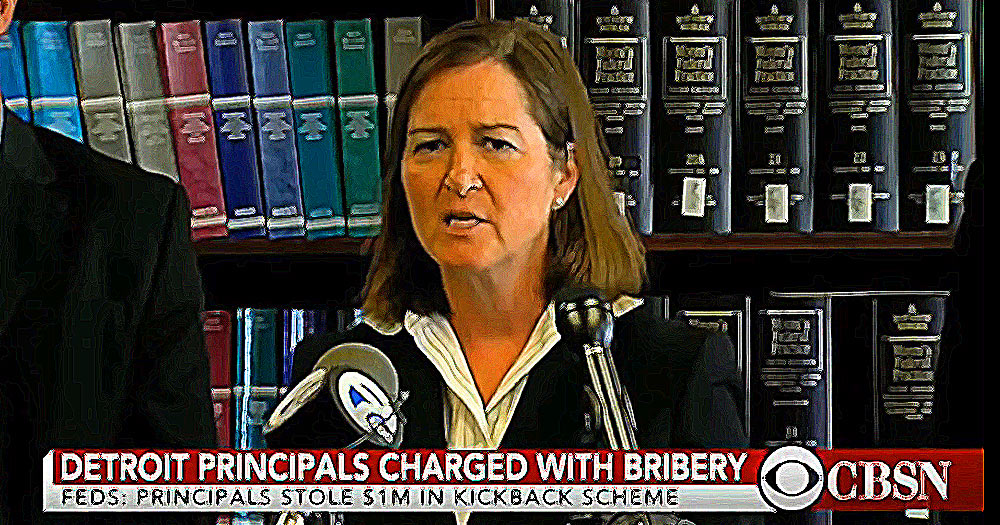
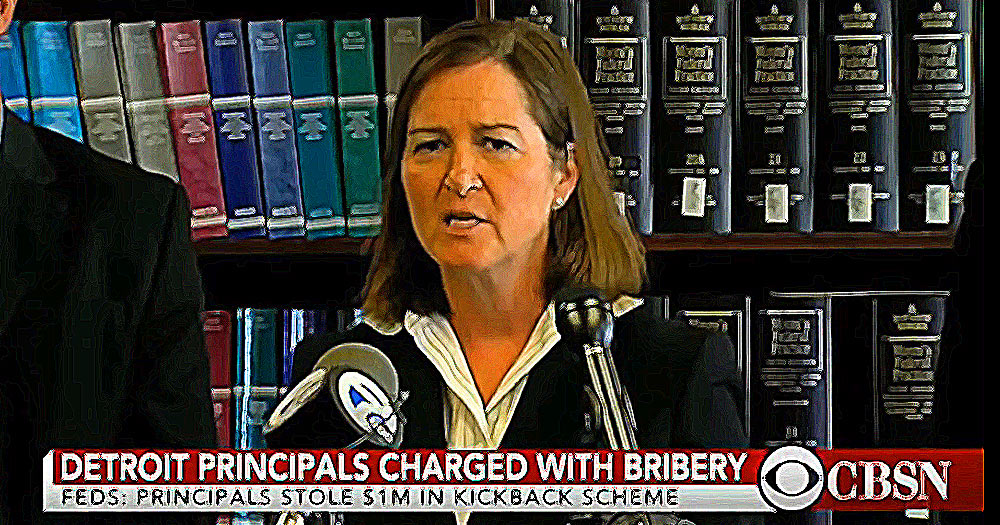
Less than a week after the rescue bill, U. S. Attorney Barbara McQuade brought criminal charges against more than a dozen DPS principals and administrators, as well as a vendor of school supplies. Their kickback scheme was simple: school officials received big, fat bribes from the vendor for school supplies that, as the Detroit Free Press put it, “were rarely ever delivered.”

The scam involved at least twelve separate Detroit schools over as long as 13 years. During that time, more than $900,000 was paid in bribes to DPS officials.

The newspaper highlighted how “shocked” teachers were that their principals had been indicted. “It’s pitiful that they’re going after principals who are probably just doing what they need to do even if it might be a little bit unethical in order to provide the students in their schools with the supplies and materials that they need that district and the state should be providing us,” was the excuse one teacher offered.

“A little bit unethical”?

Frankly, the fraud didn’t deliver, but deny “supplies and materials” to students — supplies taxpayers had sacrificed to provide.

This same teacher added that her indicted principal is “always putting students’ interests first. It’s not just rhetoric with her. It’s actual practice.”

Except for the graft.

This is Common Sense. I’m Paul Jacob.


Printable PDF

Detroit, kickbacks, bribes, crime, education, schools


Common Sense Needs Your Help!

Also, please consider showing your appreciation by dropping something in our tip jar  (this link will take you to the Citizens in Charge donation page… and your contribution will go to the support of the Common Sense website). Maintaining this site takes time and money.

Your help in spreading the message of common sense and liberty is very much appreciated!


Categories
crime and punishment folly ideological culture responsibility too much government

Pincher, Pinchee

Limited government sports several rationales. The need for it pertains on many levels. One such level we don’t think about enough? This: Not every rights violation warrants calling in the law.

Take the strange case of Breana Evans, 12-year-old assailant, charged with misdemeanor battery.

What did she do?

She pinched the gluteal posterior of a boy she did not know.

Now, pinching the butt-end of strangers is a breach not only of decorum (to the extent that this standard we call “decorum” even exists any more), but of a pinchee’s rights.

Yet it was a mere pinch.

And the boy did not press charges.

The school’s “resource deputy” did not arrest her; she was merely suspended from school.

It would have remained a minor matter (so to speak) had not the boy’s mother “insisted to police that he was the victim of battery, and so they had no choice but to arrest Breana,” as Robby Soave explained over at Reason. “She was Mirandized and put in a patrol car. They took her mugshot and booked her into juvenile detention.”

The escalation of the dispute over carnal rites and personal rights into a matter fit for the police is, it seems to me, a grave result of a sort of cultural hysteria about all sorts of things. The willingness of some adults to push children through our harsh, bureaucratic, and often ruthless criminal justice system is sad to behold.

It is more indecent than a pinch.

This is Common Sense. I’m Paul Jacob.


Printable PDF

police, crime, law, rights, pinch, juvenile, illustration


Common Sense Needs Your Help!

Also, please consider showing your appreciation by dropping something in our tip jar  (this link will take you to the Citizens in Charge donation page… and your contribution will go to the support of the Common Sense website). Maintaining this site takes time and money.

Your help in spreading the message of common sense and liberty is very much appreciated!


Categories
Accountability crime and punishment general freedom national politics & policies U.S. Constitution

Mr. Most Merciless

Usually, when contemplating the Office of the President of the United States, our cause for complaint is excess of power. Our country was founded on opposition to such centralized power — initially directed against King George III — and the Constitution written, in part, to allow a strong federal government without feeding the beast of Tyranny.

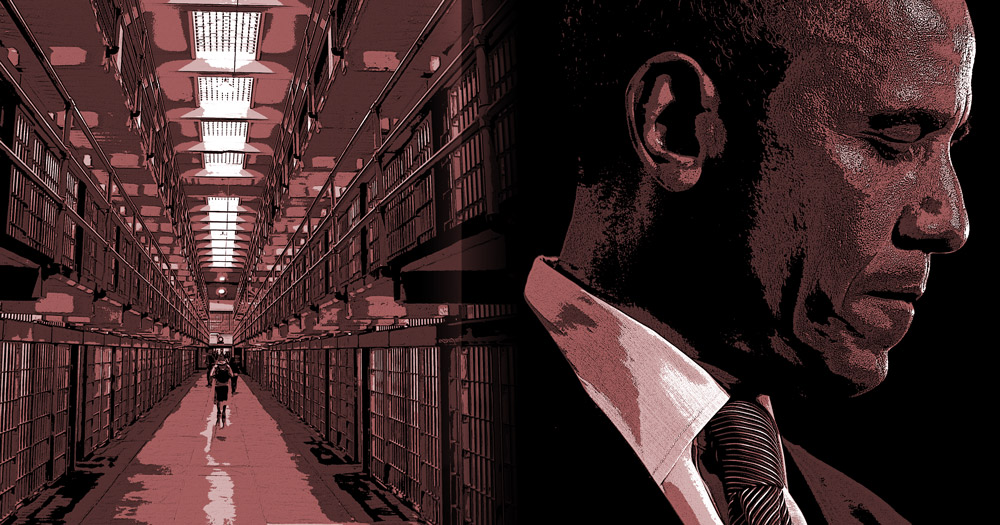
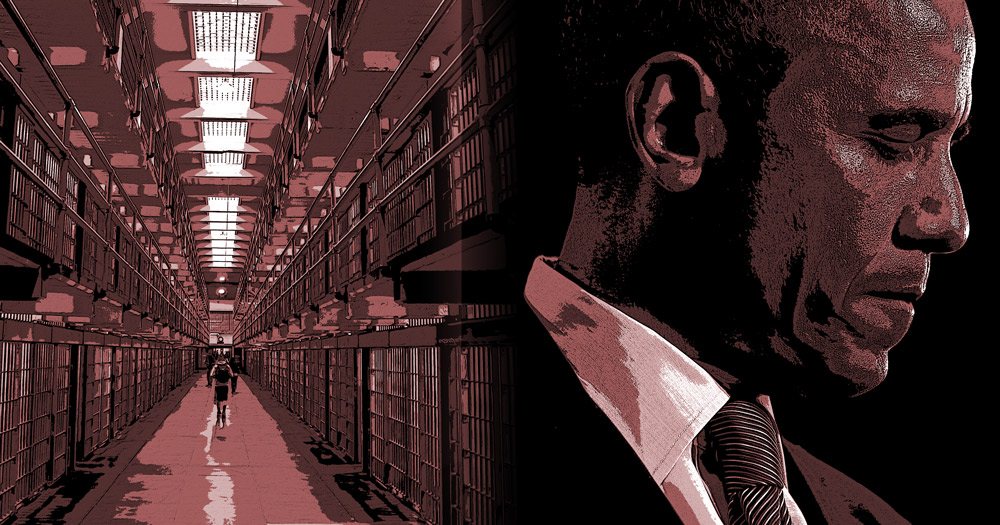
Yet, today, I’m not bemoaning unchecked presidential power. Instead, the opposite: an important presidential power that Mr. Obama lets lie unused.

What is that power?

The executive’s power to pardon, defined in Article II, Section 2 of the U.S. Constitution.

Yesterday, George Lardner Jr., a scholar with the Investigative Reporting Workshop at American University, and Political Science Professor P. S. Ruckman Jr., the editor of the Pardon Power Blog, reported in an op-ed for The Washington Post, that “Obama has a clemency record comparable to the least merciful presidents in history. He has granted just 70 pardons, the lowest mark for any full-term president since John Adams, and 187 commutations of sentence.”

“Obama’s record is all the more deplorable because of assurances that he has made,” argue Lardner and Ruckman, noting that the Department of Justice’s Clemency Project 2014 — designed to provide relief to non-violent drug offenders and announced “to great fanfare” — has “become a bureaucratic disaster.”

With all the injustice found even in the best justice systems, I cannot understand how a compassionate person could ignore this power. Or use it, as President Bill Clinton did, to provide last-minute pardons for cronies and high-rolling campaign contributors.

Have mercy.

This is Common Sense. I’m Paul Jacob.


Printable PDF

Obama, clemency, pardon, mercy, crime, Common Sense, illustration


Common Sense Needs Your Help!

Also, please consider showing your appreciation by dropping something in our tip jar  (this link will take you to the Citizens in Charge donation page… and your contribution will go to the support of the Common Sense website). Maintaining this site takes time and money. Your help in spreading the message of common sense and liberty is very much appreciated!


Categories
Accountability crime and punishment free trade & free markets general freedom moral hazard nannyism national politics & policies

The Peace Dividend

Has the War on Drugs actually, finally, made some progress?

Well, yes . . . but, really, no.

“Legal marijuana may be doing at least one thing that a decades-long drug war couldn’t,” explains Christopher Ingraham in The Washington Post’s Wonkblog, “taking a bite out of Mexican drug cartels’ profits.”

Certainly “legal marijuana” is not the drug war. It’s that war’s antithesis.

Let’s recall, too, that legalization didn’t come about after five decades of drug war failure because politicians came to their senses, admitted their mistakes and advocated a different approach.

Instead, frustrated citizen leaders teamed up with successful entrepreneurs to launch ballot initiatives, allowing voters to directly decide the issue.

Domestic production isn’t driven merely by Colorado, Oregon, Washington State and the other Washington, the nation’s capital, where voters fully legalized possession. Marijuana for medical use is legal in 23 states, including California, where most domestic marijuana is grown. In these states, pot is widely prescribed.

Thus, a quasi-legal domestic marijuana industry was created. Lo and behold, now pot produced in the good old USA is outperforming pot grown south of the border.

The Drug Enforcement Agency (DEA) acknowledges that U.S. marijuana is being illegally smuggled into Mexico. (Maybe the smugglers will pay for the wall.)

On the other hand, what does it matter that the Mexican drug cartels are losing market share to non-violent American businesses?

Well, those cartels have waged a war with the Mexican government killing more than 164,000 citizens between 2007 and 2014. Less profit to fuel the Mexican drug lords in that bloody war is more for our peace and security.

This is Common Sense. I’m Paul Jacob.


Printable PDF

legalization, pot, marijuana, crime, drug war, illustration


Categories
Accountability crime and punishment folly general freedom moral hazard national politics & policies U.S. Constitution

Forfeiting Forfeiture

“The Department of Justice announced [last] week that it’s suspending a controversial program that allows local police departments to keep a large portion of assets seized from citizens under federal law and funnel it into their own coffers,” reports the Washington Post.

The Feds call the paused program “equitable sharing”; as I explained last month, I call it “equitable stealing.”

Even when state and local laws prohibit it, local police have been using this federal program to continue taking people’s money and property without ever convicting them of a crime.

The loophole? They split the loot with the Feds.

Now that has ended. According to the Post, this is the result of “budget cuts” in the recently passed omnibus spending bill; the Wall Street Journal calls it a “reallocation of funds.”

Either way, Happy Holidays!

Yet, sadly, the return to freedom, justice and the American Way may be short-lived.

“The Department does not take this step lightly,” wrote M. Kendall Day, the chief of DOJ’s Asset Forfeiture and Money Laundering Section. “We explored every conceivable option that would have enabled us to preserve some form of meaningful equitable sharing. . . .”

In his letter, he proclaiming a commitment to the principle of guilty-until-proven-innocent and to grabbing people’s stuff, telling state and local and tribal police departments, “We will take all appropriate and necessary measures to minimize the impact of the rescission and reinstate sharing distributions as soon as practical and financially feasible.”

As the Wall Street Journal editorialized, “Congress should make sure that never happens.”

Of course, Congress will likely need a mighty nudge from us.

This is Common Sense. I’m Paul Jacob.


Printable PDF

Asset, Forfeiture, police, crime, Department of Justice, DOJ, illustration, Common Sense


Categories
Accountability crime and punishment responsibility

Do-It-Yourself Policing

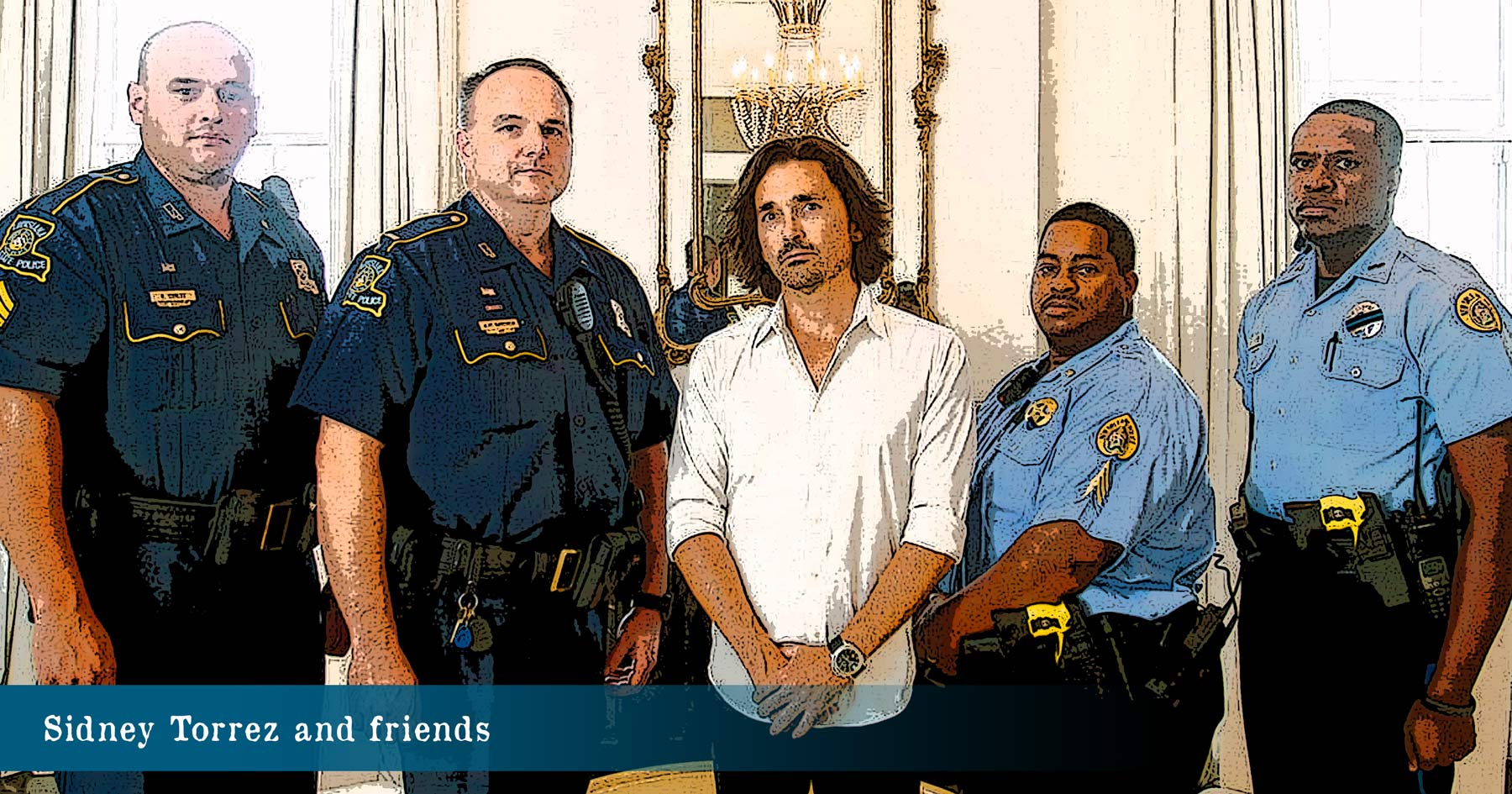
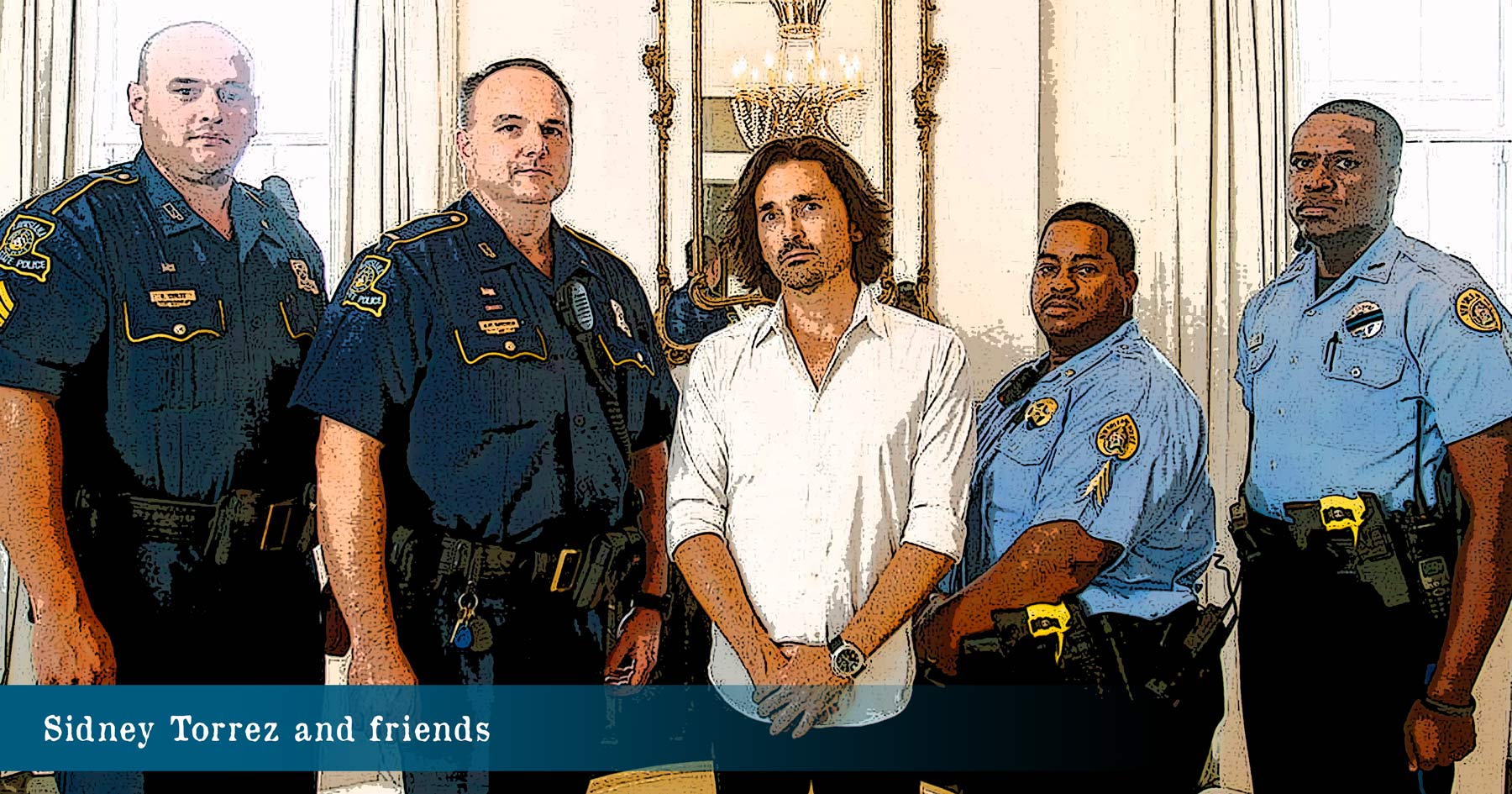
While crime was plummeting throughout the country, last year New Orleans experienced a surge — rapes up 39 percent and armed robberies up 37 percent.

Having reduced its police force by 500 officers due to budget problems, the Big Easy called in Louisiana State Troopers to assist a force “historically mired in corruption.” Yet, there was scant progress in keeping citizens safe.

Then crooks broke into Sidney Torrez’s home and Torrez, known as the “trash king” because he made a fortune hauling trash out of the city after Hurricane Katrina, responded with a $100,000 television ad campaign. “The French Quarter is under siege by criminals,” his TV spot declared; it encouraged citizens to “hold the administration accountable.”

Mayor Mitch Landrieu wasn’t pleased, shooting back that, “If it’s so easy, maybe [Torrez] should just take some of that money and do it himself.”

So, Torrez did, teaming up with Bob Simms, a retired aerospace engineer.

In no time, they developed a downloadable app for smartphones, allowing folks to contact police much like we use Uber to contact a car ride. Torrez donated $500,000 and the Batman and Robin-esque duo hired off-duty policemen outfitted with Polaris golf carts to patrol the French Quarter, the city’s “golden goose.”

Other private donations arrived to support the effort. In just months, crime dropped 45 percent in the Quarter. Now the city’s Convention and Visitors Bureau is paying the monthly cost.

Torrez notes that the effort allows “the community a way to self-police,” adding, “I think it can work anywhere.”

“It’s not rocket science,” says Bob Simms . . . the former rocket scientist.

It’s citizen-led government.

This is Common Sense. I’m Paul Jacob.


Printable PDF

New Orleans, crime, police, Common Sense, illustration


Categories
Accountability crime and punishment general freedom government transparency moral hazard national politics & policies property rights

Equitable Stealing?

Is freedom a simple matter of drafting a lofty document about respecting the rights of citizens?

Alas, no.

Our Constitution does that, as does Turkey’s and, for that matter, so did the now-defunct Soviet Constitution. Obviously, vigilance is also required. Keeping powerful government agencies respectful of the law — our liberties — and, when not, fully accountable for transgressions, is crucial.

That necessary vigilance is lacking here in America, today.

Your local police — the guys and gals who might respond if, heaven forbid, your home were broken into, or come upon your spouse broken down on a dark, rainy highway — are being encouraged to take people’s stuff . . . for “profit.”

It’s called civil asset forfeiture. This “legal” ability to stop people and snatch their money (or car or what-have-you) without ever charging anyone with a crime forces victims to hire a lawyer to sue the government to prove their stuff is innocent.

Last Friday, I heralded a new Institute for Justice report on the growth of this dangerous practice of official police thievery. At Townhall on Sunday, I pointed out that even when reforms are enacted at the state and local level, federal law enforcement still facilitates civil forfeiture. The Feds encourage locals to continue taking stuff through a federal program known as “equitable stealing.”

No, my bad, it’s actually called “equitable sharing.”

But it’s the same thing, just with the Feds and locals splitting the loot.

We need new laws at the federal, state and local level that abolish forfeiture without a criminal conviction. If our “leaders” won’t act, we can petition at the local level to end this pernicious policy, forbidding any involvement with the Feds.

This is Common Sense. I’m Paul Jacob.


Printable PDF

civil asset forfeiture, asset, forfeiture, police, abuse, stealing, theft, property, Common Sense