Categories
crime and punishment government transparency subsidy

Learing in Minnesota

These days, we are apt to see the “meme” (joke) about the news before the news itself.

Take “Learing.” If you haven’t seen Nick Shirley’s YouTube video blowing the lid off what has quickly become the biggest fraud story of our time, you may not get the joke.

Some 30 days ago, my “Red-​Flagged Welfare Fraud” decried “the more than $1 billion in fraud” conducted mostly by Somalis in Minnesota, taking taxpayer money and siphoning it off for personal and perhaps even terrorist benefit. Two weeks later, a weekend update — “Walz Waltzes, Spins” — discussed the Governor of Minnesota’s lame attempts to seem “in charge.”

Now, the fraud total is estimated to be over nine billion!

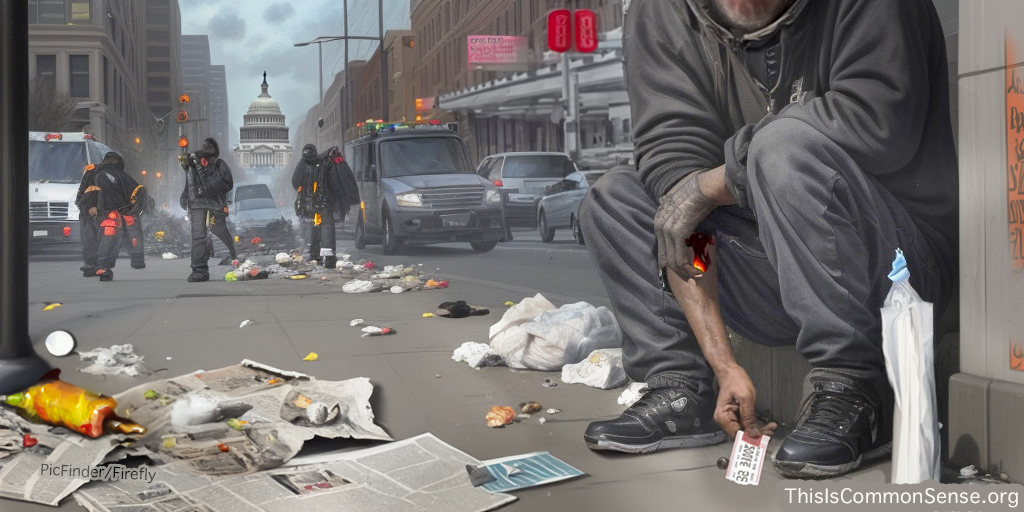
A new element of the story is young Mr. Shirley’s reporting. He went to “day care centers” all over Minneapolis, confronting “workers” and noticing there were no children actually being fed or taught. These were sham programs. 

In a partly funny moment, he appeared in front of one alleged day care that had misspelled its own name on the building’s sign: “Quality Learing Center.” 

A whole lot of folks on X — but not on BlueSky — thought this was funny-haha. 

The rest of us shake our heads. It may not even be funny-peculiar, as inquiries into more states have begun, with Washington and Ohio receiving the most attention so far.

We’ll need more Nick Shirleys to cover it all, for the mainstream press has shown … some reluctance to put in much elbow grease.

Meanwhile, there is a silver lining, expressed last night on Hannity by Terry Schilling of the American Principles Project: “It actually kind of makes me relieved that there were no children in these obviously corrupt and probably dangerous daycare facilities.”

This is Common Sense. I’m Paul Jacob.


PDF for printing

Illustration created with Nano Banana

See all recent commentary
(simplified and organized)
See recent popular posts
Categories
Accountability ideological culture subsidy

Red-​Flagged Welfare Fraud

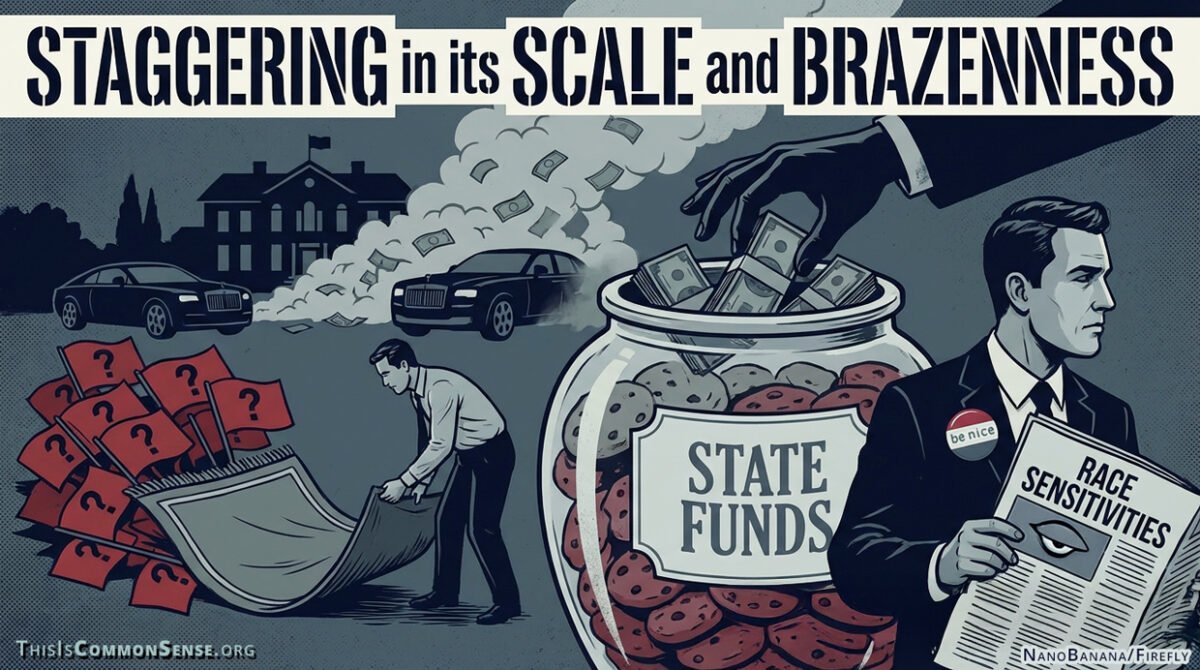
“Staggering in its scale and brazenness.” 

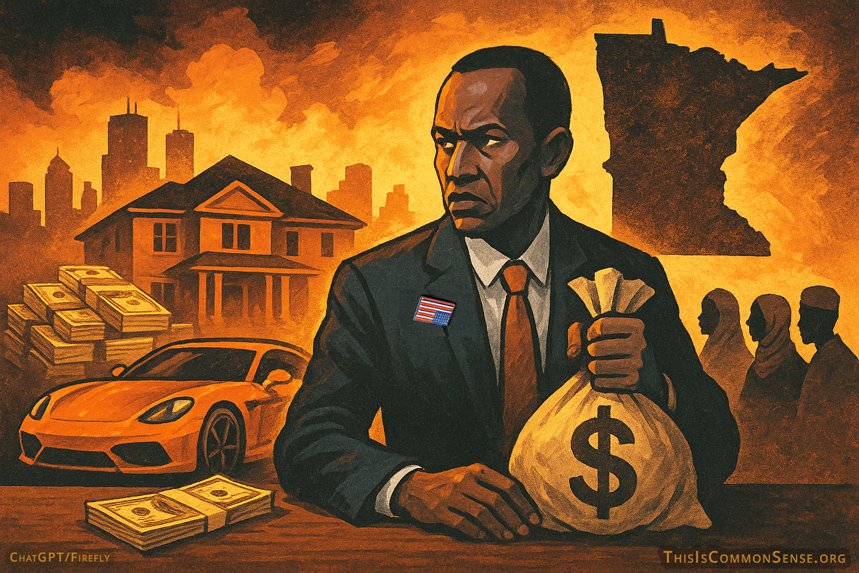
That’s how The New York Times describes the more than $1 billion in fraud that “took root in pockets of Minnesota’s Somali diaspora as scores of individuals made small fortunes by setting up companies that billed state agencies for millions of dollars’ worth of social services that were never provided.”

Quite a lucrative business model: Stealing from programs to prevent homelessness and keep children fed during the pandemic, the crooks instead “spent the funds on luxury cars, houses and even real estate projects abroad.” 

So far, prosecutors have convicted 59 people, with “all but eight of the 86 people charged” of “Somali ancestry.”

According to Ryan Pacyga, an attorney representing several defendants, The Times reports that “some involved became convinced that state agencies were tolerating, if not tacitly allowing, the fraud.”

What?

“No one was doing anything about the red flags,” argues Pacyga. “It was like someone was stealing money from the cookie jar and they kept refilling it.”

Why was nothing done?

Well … the federal prosecutor contends that what The Times calls “race sensitivities” (read: fear of being called racist) were “a huge part of the problem.” 

One former fraud investigator, a Somali American named Kayseh Magan, blames “the state’s Democratic-​led administration” which was “reluctant to take more assertive action in response to allegations in the Somali community.”

“There is a perception that forcefully tackling this issue might cause political backlash among the Somali community,” Magan explains, “which is a core voting bloc.” 

For Democrats.

Very expensive votes.

This is Common Sense. I’m Paul Jacob.


PDF for printing

Illustrations created with ChatGPT, NanoBanana and Firefly

See all recent commentary
(simplified and organized)
See recent popular posts
Categories
crime and punishment

The Dorito Bandito Threat

A student at Kenwood High School in Baltimore County didn’t know what he was inviting when he munched on Doritos after football practice.

“They made me get on my knees, put my hands behind my back, and cuffed me,” Taki Allen said of the police in about “eight cop cars” who surged to his location.

“They searched me, and they figured out I had nothing,” Allen recalled. “Then, they went over to where I was standing and found a bag of chips on the floor. I was just holding a Doritos bag — it was two hands and one finger out, and they said it looked like a gun.…

“The first thing I was wondering was, was I about to die? Because they had a gun pointed at me.”

The school’s security system is “AI-​powered.” 

It “saw” a gun, not Doritos plus finger. 

An alert went out before the security system’s finding had been confirmed. The alert was soon cancelled, but the school principal didn’t know this when she called the police, who in turn acted with leap-​first/​look-​afterward brio.

We can’t blame AI. We cannot blame insensate artificial intelligence, so-​called, any more than we can blame knives and guns for the way these inanimate objects “act.” The humans in this case bungled bigtime. They should reform.

Steps to take include never acting on the basis of unverified AI claims and never using drunken, hallucinogenic AI as one of your call-​the-​cops triggers to begin with.

This is Common Sense. I’m Paul Jacob.


PDF for printing

Illustration created with Krea and Firefly

See all recent commentary
(simplified and organized)
See recent popular posts

Categories
crime and punishment social media

Talking About Crime in DC

How bad is Washington’s crime problem? Well, that’s hard to know precisely, what with rampant fudging of crime statistics.

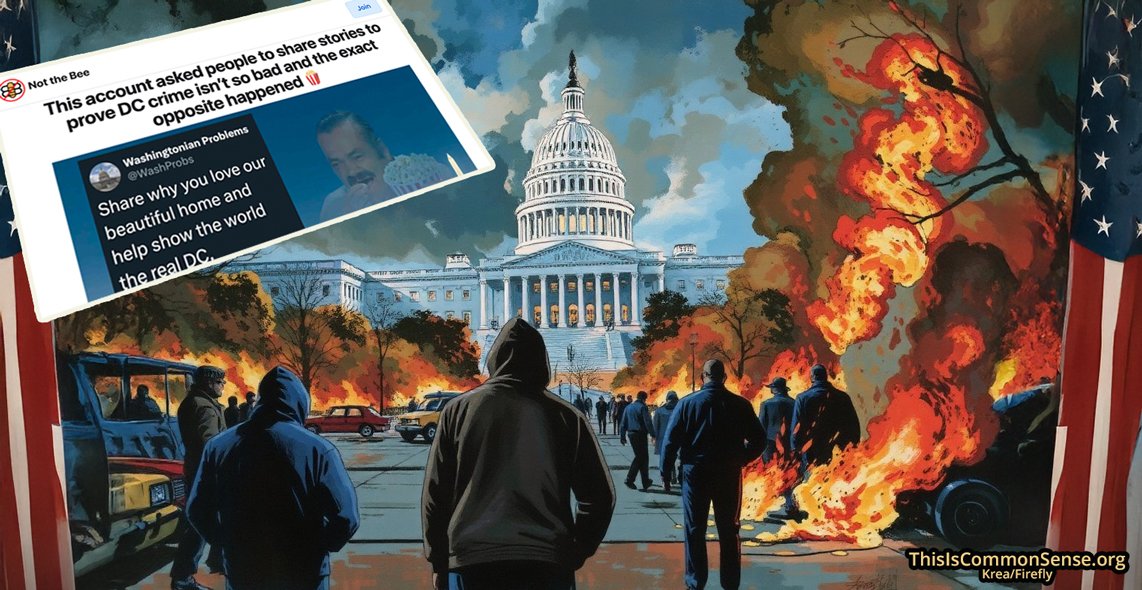
We get anecdotes. For example, via tweeted responses to an invitation by the X account Washingtonian Problems to “push back against the negative narrative about our city. Share why you love our beautiful home and help show the world the real DC.”

Whether the appeal was meant ironically, a possibility suggested by Not the Bee, I don’t know. But a good many reports of non-​beauty ensued.

● “I was called into court to give a statement about a man who’d exposed himself to me on the metro. He had over 200 charges to date. Court was delayed four hours for him to ‘calm down’.… Once he had, she dismissed the new charges and let him go.”

● “Less than a mile from the Capitol, kids tried to steal my backpack. Punched, for no reason, by a guy on the Metro.… Cops recently showed me videos they can’t release. What’s happening out there is more insane than most imagine.”

● “I watched a man kick a plate-​glass door in at a 7‑Eleven. 911 kept me on hold for almost five minutes before telling me not to call back, it was a property crime.”

Then there’s the news-​making disgruntled DoJ employee who threw a Subway sandwich at a Customs and Border Protection officer.

From these reports and plenty others I think we can conclude that yes, crime has been a problem in Washington DC.

As has law enforcement.

This is Common Sense. I’m Paul Jacob.


PDF for printing

Illustration created with Krea and Firefly

See all recent commentary
(simplified and organized)
See recent popular posts
Categories
crime and punishment ideological culture

Rethinking What Safety Means

Joe Scarborough threw kindling onto the fire. 

In the context of President Trump calling up the National Guard to help police the streets of Washington, D.C. — “you’ll have more police and you’ll be so happy, ’cause you’d be safe” said Trump — Scarborough prompted Symone Sanders, a Democratic strategist, fellow MSNBC host, and wife of a former night mayor of the city, with cedar soaked in kerosene: “You don’t think more police makes streets safer?”

“No, Joe,” she said, helping Morning Joe viewers decipher her racial identity: “I’m a black woman in America.

“I do not always think that more police makes streets safer.” 

Before you have time to wonder whether she’s advancing the law of diminishing returns in criminology, she quickly goes on: “When you walk down the streets of Georgetown” — a predominantly wealthy and white D.C. neighborhood — “you don’t see a police officer on every corner but you don’t feel unsafe. So what is it about talking about places like South D.C., right, Ward Eight (if you will), that people say ‘we need more officers to make us safe’?

“I think we have to rethink what safety means in America.”

While adding more police officers to a peaceful society won’t likely decrease crime much, a violent community is another story. People in these communities need greater safety to live their lives. Without becoming a statistic. Law enforcement that is visible on the street can surely help.

But rethinking the meaning of “safety” won’t. 

So what’s burning?

Democratic hopes, maybe. We’ll see how Trump’s move to clean up the capital goes.

Yet, if he tries to use the National Guard in other cities without constitutional warrant, that’d go beyond mere policing, into police-​state territory. 

Just don’t consult Democratic strategists for a “rethink” of such distinctions.

This is Common Sense. I’m Paul Jacob.


PDF for printing

Illustration created with Krea and Firefly

See all recent commentary
(simplified and organized)
See recent popular posts
Categories
crime and punishment media and media people

Crime’s Ups and Downs

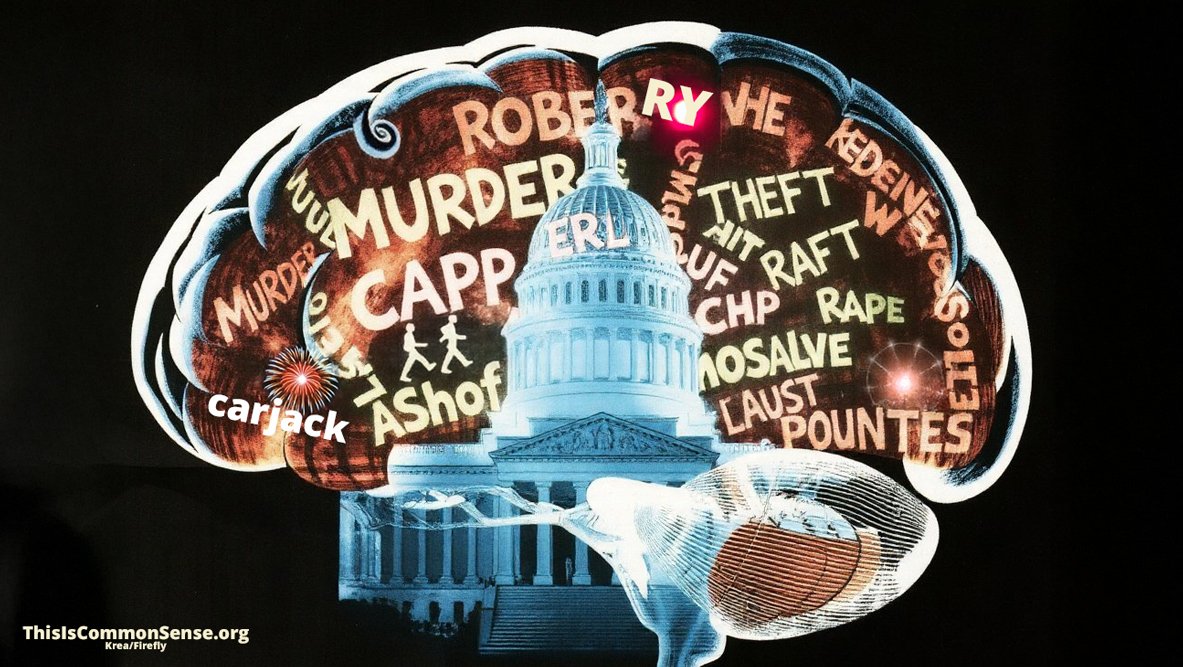
“Our crime rate is going up,” proclaimed former President Donald Trump during the Republican National Convention. 

But no, says Reason magazine: “Promising To Restore ‘Law and Order,’ Trump Falsely Claims Crime Is Rising.”

I often refer to Reason’s Jacob Sullum for these kinds of statistics, but Sullum may be missing something this time.

Setting aside the new journalistic cliché of accusing Trump of “falsely claiming” in the headline, what of the stats?

1. “Violent crime in the United States has fallen precipitously since 1993, when the homicide rate was 9.5 per 100,000 residents. By 2013, the rate was less than half that number.”

2. “[T]he most notable recent increase in the homicide rate happened on Trump’s watch, and violent crime has been falling since then.”

Crime did indeed spike under “Trump’s watch.” But was Trump to blame? 

Crime spiked in the “Summer of Love” as a result of the mass protests against George Floyd’s death, the left’s demands to “defund the police,” and the climate of approved (“mostly peaceful”) violent riot. Trump’s enemies caused all this. Much of it may have been fueled by pandemic anxieties, but there was another factor: the Democrats’ anarcho-​tyranny push to pry Trump out of office in annus horribilis 2020.

Since then crime, which is usually under-​reported, now appears to be increasingly under-​reported for systemic reasons. Some crimes, such as theft, have been demoted in the law books, allowing theft to run rampant in several major American cities — not just San Francisco — thereby disallowing the uptick in crime to even hit the stats.

What if bad data is the consequence of such policy

Meaning the perception of an increase in crime is true … at least in some places.

This is Common Sense. I’m Paul Jacob.


PDF for printing

Illustration created with PicFinder and Firefly

See all recent commentary
(simplified and organized)
See recent popular posts

Categories
crime and punishment folly

Crime Fighters Give Up

Fight crime — give criminals all your stuff today!

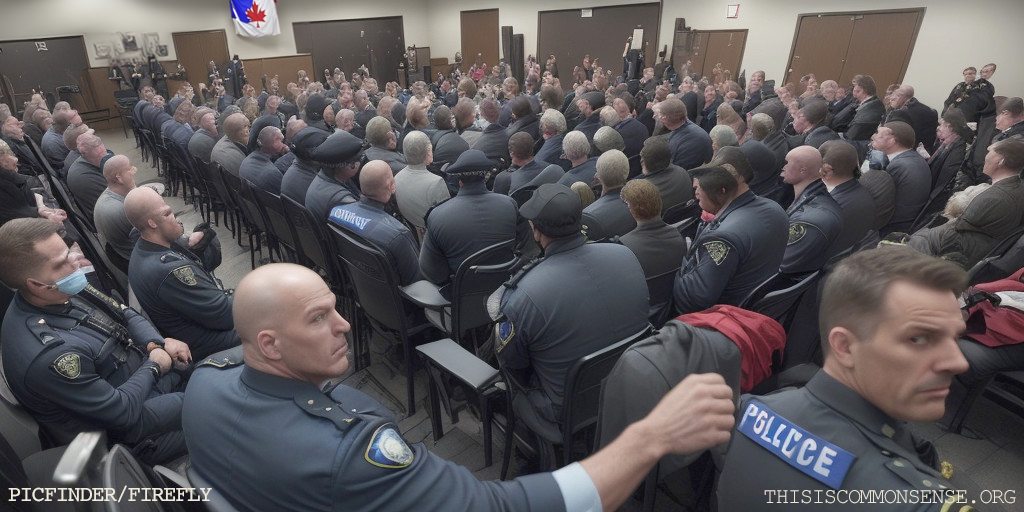
This isn’t my view. But it’s the apparent view of some — I hope not many — Canadian police officers.

At a recent public meeting about coping with crime, a Toronto police officer told people that to reduce the chances “of being attacked in your home, leave your [car key] fobs at your front door. Because they’re breaking into your home to steal your car. They don’t want anything else.”

To reduce the risk to you personally, give up in advance.

Are you following the reasoning? Because I’m not. And I am very disinclined to leave my car keys and cash and my Taiwanese history library in a heap near the front door to buy off home invaders.

Instead, perhaps everybody in high-​risk neighborhoods should install a trap door in their vestibule, rigged in such a way that anybody who forcibly breaks into the home is immediately dropped into a vat of starving piranhas.

AIER’s John Miltimore sees an “obvious problem” with the policeman’s helpful advice. The problem is that he is asking people to encourage burglary and theft, to make it “easier, not harder, to steal vehicles, diminishing the time it takes to commit the crime, thus lowering the risk involved.” If a lot of people follow the advice, this would tend to increase car thefts.

It all reminds Miltimore of the movie Robocop and its crime-​ridden landscape. “There’s something dystopian in normalizing this kind of violence.…”

To avoid dystopia, let’s defend ourselves instead.

And our cars. And car keys. And …

This is Common Sense. I’m Paul Jacob.


PDF for printing

Illustration created with PicFinder and Firefly

See all recent commentary
(simplified and organized)
See recent popular posts
Categories
crime and punishment ideological culture judiciary

Violent Double Standard

Trying to find justice in the justice system is sometimes like panning for gold in a dry river. But what ho, hey, we’ve found some.

Victoria Taft points us to “a federal judge who believes in justice” … or a reasonable facsimile thereof.

Recently, California District Court Judge Cormac Carney chastised a purportedly anti-​crime department of the Department of Justice for prosecuting two men who “became members of a group characterized as ‘white supremacist’” for alleged violence while carefully ignoring the often worse conduct of Antifa and BAMN members.

Carney dismissed the federal charges against the two men.

He argued that “prosecuting only members of the far right and ignoring members of the far left leads to the troubling conclusion that the government believes it is permissible to physically assault and injure Trump supporters to silence speech.…

“At the same Trump rallies that form the basis for Defendants’ prosecution, members of Antifa and related far-​left groups engaged in organized violence to stifle protected speech.”

There’s something wrong when people who had been holding a peaceful event full of speeches and flag-​waving are prosecuted — not just prosecuted, but selectively prosecuted — for defending themselves when violent leftists show up and act violently.

If a speaker commits an actual crime, sure, he should be punished, in a proportionate way and without regard to the ideology of the speaker. Equal justice under the law, that’s all.

How about it, Justice Department? Care to earn your name?

This is Common Sense. I’m Paul Jacob.


PDF for printing

Illustration created with PicFinder and Firefly

See all recent commentary
(simplified and organized)
See recent popular posts

Categories
crime and punishment partisanship

Caveat Preemptive

Were Donald J. Trump an exemplar of strict Kantian honesty; had he a reputation for exactitude about his achievements and acumen; if hyperbole had not become his own very public modus — then, and only then, would the near half a billion judgment against him make even a modicum of sense.

But the former U.S. president and infamous branding entrepreneur is and has always been known to be something of a b.s. artist. No one has excuse to take what he says literally. Business partners and all who make deals with Trump should do their own diligence. Their watchword should be: caveat emptor.

Yet, last week, New York State regulators and prosecutors bent over backwards to find Trump guilty. “On Friday, New York County Supreme Court Justice Arthur Engoron ordered Donald Trump to pay a staggering $355 million for repeatedly inflating asset values in statements of financial condition submitted to lenders and insurers,” explains Jacob Sullum of Reason. “When the interest that Engoron also approved is considered, the total penalty rises to $450 million. All told, Trump and his co-​defendants, including three of his children and former Trump Organization CFO Allen Weisselberg, are on the hook for $364 million, or about $464 million with interest.”

That is a lot of money to protect other businesses from Trump’s characteristic exaggerations, which so appalled the court. But not any of the banks Trump did business with.

No one has been harmed, for Trump repaid all the loans.

There is no victim — making Trump the biggest-​name victim of victimless crime prosecution of all time.

We, the people, know that “honesty is the best policy” is not standard business practice, and that Trump doesn’t always follow it. But we are also not demanding that our governments insert themselves into every successful transaction looking for fibs and fakery.

That would be a recipe for selective prosecution.

Which is just what this case is: selective prosecution of a political opponent.

This is Common Sense. I’m Paul Jacob.


PDF for printing

Illustration created with PicFinder and Firefly

See all recent commentary
(simplified and organized)
See recent popular posts

Categories
crime and punishment sports subsidy

A Big Step Over the Vomit

“Two hours before the Washington Capitals play in Chinatown on a crisp November evening,” Candace Buckner wrote recently in The Washington Post, “a man stretches out on the pavement near Sixth and F streets NW, wrapped beneath a gray hoodie that he’s using as a blanket. Around the corner, a woman rolls a blunt outside the arena’s sportsbook entrance, and soon the waft of marijuana will perfume the area. There’s a spillage of vomit, green, near the tree on the sidewalk. Another man, this one cradling his arms behind his back and mumbling, doesn’t seem to notice the mess as he walks over it and bends over to pick up old cigarette butts.”

Might there be some connection between the state of downtown Washington, D.C., and the decision by the owner of both the Washington Capitals hockey team and the Washington Wizards NBA team to relocate them outside the city to Virginia?

“The District faced competition from Virginia,” explained a separate news story, “only because Leonsis had begun quietly exploring a new home for his teams in 2022, after years of complaining about crime and the noise of buskers outside his arena.”

There was not only less vomit but more room to be had in Virginia. For an even more expensive “public-​private partnership” project. 

My fellow Virginia taxpayers and I are not crowing — Washington’s loss is our loss. We will no doubt pay for the privilege of experiencing even worse traffic and pricier tickets to hockey and basketball games … with higher taxes. 

Politicians can make names for themselves with these big sports franchise grabs. That’s what happened 30 years ago in the District of Columbia’s Chinatown. 

But the names have moved on, and now so have the games.

This is Common Sense. I’m Paul Jacob. 


PDF for printing

Illustration created with PicFinder and Firefly

See all recent commentary
(simplified and organized)
See recent popular posts