Categories
Accountability government transparency national politics & policies responsibility

Overkill, Not Parsimony

Two truths: national defense is a necessity; national defense is a racket.

The latter is the case because the former is the case. Big spenders rely on “better safe than sorry” to always push the envelope, over-investing rather than under-investing.

So, we are trapped — and our new president knows this. Before Trump ran for office, he said that sequestration cuts to the Pentagon budget had not gone far enough. But when he threw his hat into the ring, he promised to “make our military so big, so powerful, so strong that nobody — absolutely nobody — is going to mess with us.”

President Trump now proposes over fifty billion dollars in new defense spending. More soldiers, more ships, more fighter jets.

John Stossel argues that Americans are not necessarily suckers for this game. At least, a majority does not support increasing military spending.

More importantly, Stossel challenges the whole “overkill always” strategy. “America is going broke, and our military already spends almost $600 billion dollars [annually],” Stossel says. “That’s more than the next seven nations spend — combined.”

Now would be a good time to not only rethink Middle East policy, but to re-consider our expensive role as world policeman (speaking of “national” defense). During the campaign, Trump was criticized for questioning our alliances and demanding more of our allies. But he was right. I hope he’ll get tough in prodding our allies to ultimately provide their own defense.

Even more basic? Demand an audit of the Pentagon before new funds are thrown into the five-sided money pit.

This is Common Sense. I’m Paul Jacob.


Printable PDF


Categories
Today

25th Anniversary

On March 3, 1991, an amateur videographer captured the beating of Rodney King by Los Angeles police officers, thus ushering in the age of citizen surveillance of the state.

Categories
Thought

Penn Jillette

That’s the beauty of the Web: You can roll around in a stranger’s obsession without having to smell his or her house. You can amscray whenever you want without being rude. The site gets its ‘hit’ and you know more about our species’ diversity.


Penn Jillette, “Free Celebrity Nudes!” in Penn’s Columns (15 October 1997) at Penn & Teller.com.

Categories
Accountability initiative, referendum, and recall moral hazard nannyism responsibility

Whose Constitution Is It, Anyway?

Last November’s biggest mistake? Colorado voters passing Amendment 71. It makes the Rocky Mountain State’s constitution exceedingly more difficult for voters to amend through the initiative petition process.

And more like it may be in the offing. Legislation is moving in Florida to require a 66.7 percent vote to amend the state constitution. Already, a 60 percent vote is required, but legislators remain fearful voters can muster that.

The Ohio Modernization Commission, a legislatively created mix of legislators and insiders, is recommending a new constitutional amendment to — you guessed it — make it tougher for voters to pass amendments. Future voter-initiated amendments must pass twice, by a 55 percent supermajority.

There are also efforts to weaken citizen initiatives in Arizona and Maine.*

The big money behind Colorado’s Amendment 71 told whopper after whopper to win. They pretended to love and revere the constitution. Finally, they put former Denver Broncos Super Bowl champion quarterback John Elway on television — spot after spot — telling voters the amendment “protects our constitution.”

But . . . from whom?

You see, politicians and special interests don’t have to amend the state constitution to spend money on themselves or their cronies. From their perch in the state capitol, they can do that with a simple statute.

But you and I need the ability to pass constitutional amendments. Why? Only through the constitution can we limit the power of those same politicians — the power of government. Legislators can overrule a mere statutory ballot initiative (and often do).

That’s what this battle is all about. Politicians mean to limit our power to limit theirs.

This is Common Sense. I’m Paul Jacob.

 

* Thankfully, South Dakota legislators defeated several bills aimed at making it tougher to place initiatives on the ballot.


Printable PDF


Categories
Thought

Mary Shelley

All judges had rather that ten innocent should suffer than that one guilty should escape.


Mary Wollstonecraft Shelley, Victor Frankenstein of Justine Moritz in Frankenstein; or, The Modern Prometheus (1818), Ch. 8

Categories
Today

Rothbard and Houston

On March 2, 1793, Sam Houston was born.

On March 2, 1926, American economist and political theorist Murray N. Rothbard was born.

As President of the Republic of Texas, Houston cut the size of the Republic’s budget by a whopping amount, including selling the navy for scrap. Rothbard theorized about even more daring — and more permanent — cuts to (and limits upon) government.


On March 2, 1781, the Second Continental Congress convened as the new Congress of the Confederation, under the Articles of Confederation, ratified the day before. The congress elected no new president upon adoption of the Articles. This Confederation Congress oversaw the conclusion of the American Revolution.

Categories
Accountability folly free trade & free markets local leaders moral hazard nannyism porkbarrel politics responsibility too much government

Small Target, Big Subsidy

Something has gone wrong when, to get a tenant to move into an empty space in your prime-location building, you need a $4 million subsidy.

And when I say “prime location,” I’m not engaging in Trumpian over-statement. The downtown Denver, Colorado, property location sees over 35,000 pedestrians per day . . . and that’s with the primo slot empty.

But to get that slot filled, the owners have negotiated with the city government to nab a $2 million “incentive” to fix the place up for Target, which is thinking of leasing the location to put up a smaller-than-usual “flexible-format” store. Oh, and another $2 million for “operational” costs, which seems to be some kind of a loan to be paid back from taxes to be collected — and shared by the city for 20 years with the owners.

In other words, it’s the darnedest business deal you’ll ever see (and never get): up-front money not from a bank or investors, but from Denver’s city government “BIF” — Business Investment Fund — which is obviously part of a convoluted scheme fed by taxes and devised by . . . people I wouldn’t trust with my money.

Structuring deals like this is how modern cronies — er, cities — operate, I know. Am I alone in judging it corrupt on the surface and corrupting in the details?

If prime commercial property has gone unused for about a decade — as this three-storied mall space has — I’d think that maybe the owners have set the rents too high or the city has been a bit too greedy with taxes.

Or both.

This is Common Sense. I’m Paul Jacob.


Printable PDF


Categories
Today

March First Firsts

March 1st Firsts (and a 17th and a 37th):

| The first United States census was authorized, in 1790.

| Ohio was admitted as the 17th U.S. state, in 1803.

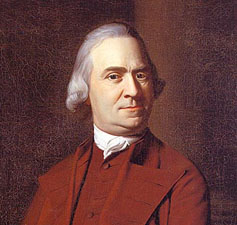
| President John Tyler [pictured above] signed a bill authorizing the United States to annex the Republic of Texas, in 1845.

| The state of Michigan formally abolished capital punishment, 1847.

| Nebraska became the 37th of the United States, in 1867.

| Yellowstone National Park was established as the world’s first national park, 1872.

On March 1, 1781, the Continental Congress of the United States adopted the Articles of Confederation. With this, the governing body became known, officially, as United States of America in Congress Assembled, less officially as the Congress of the Confederation. The first session of this newly styled Confederation Congress took over without a break from the Second Continental Congress, adjourning on November 3. Samuel Huntington and Thomas McKean served as presidents during this first session.

Categories
Thought

Yves Guyot

[O]ver two-thirds of the railways of the world belong to private companies. Moreover, of the 24,500 miles of railway belonging to the state of British India, 18,000 miles are operated by private companies. In Holland all the lines are operated by companies. In Belgium the tramway lines are longer than the state railways, and they are operated by private companies. Lines in Great Britain, which have three, four, or even more tracks, are included in these figures on the line and not the track basis. The total length of line is 23,287 miles. The length of main track, however, is 39,851 miles, and of main track and sidings, 54,311 miles.

The greatest system in the world, that of the United States, is owned by private companies. Mr. Bryan, on returning from Europe in 1903, introduced nationalization of railways into his platform, without informing any of the members of the Democratic party of his intention. This brilliant inspiration helped to destroy his chances for the presidency.

The operating ratios suffice to show that superior administrative capacity is not to be found on the side of the several states which exercise it in this direction.


Yves Guyot, Where and Why Public Ownership Has Failed, Book II: Financial Results of Government and Municipal Ownership; Chapter IX, Public vs. Private Operation” (American edition, 1913).

Categories
Accountability folly ideological culture media and media people national politics & policies political challengers

Bigly Truthiness

“Journalists should be tough when powerful people say untrue things,” writes the Books and Arts columnist for The Economist.

I’m with “Johnson,” that pseudonymous author, except for one thing. In calling President Trump a Big League liar, he himself seems to miss the whole truth, nothing but the truth.

At the very least, The Economist scrivener proves himself rather obtuse . . . especially for a column de plume tipping the hat to the great Samuel Johnson. Many of the Trumpian falsehoods he mentions are indeed whoppers. No doubt. But a few cry out for a more subtle reading.

After distinguishing between falsity, lying, and fantasizing, “Johnson” speculates that Trump may actually believe “his own guff.”

But then, about Trump’s murder rate statements, Johnson quickly runs off the rails: “Mr. Trump said something wildly wrong about something easily checkable, leaving an adviser, Kellyanne Conway, flailing to cover for him. . . .” But Conway did suggest that Trump may have been speaking about certain cities wherein the murder rate has gone up.

Trump often speaks as hyperbolist: murder has gone up in a few major cities; he relates the fact as if murder had gone up generally. This annoys sticklers. Me, included. But Trump’s been using the rhetoric of exaggeration.

You could call it the rhetoric of inexactitude.

It’s how he trolls.

Trump could also be charged with “truthiness,” comedian Stephen Colbert’s signature 2005 coinage about confidence in factoids for intuitive reasons, sans evidence.

But so might this “Johnson.” When subtle men miss homespun subtleties, one has to wonder whether they might miss it for . . . intuitive reasons.

This is Common Sense. I’m Paul Jacob.


Printable PDF