Categories
Today

Spain Conquered

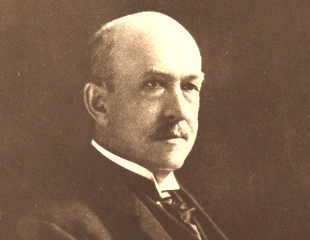
On this day in 1898, an Armistice ended the Spanish-American War, a war commemorated best by sociologist and economist William Graham Sumner in his classic essay “The Conquest of the United States by Spain.”

Categories
Thought

Tolstoy

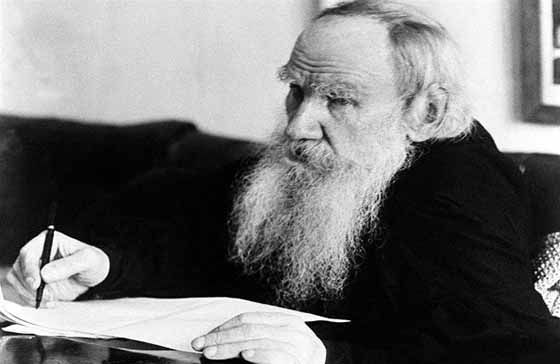
We shall soon cease completely to understand the language of the people. Now we say: ‘The theory of progress,’ ‘the role of the individual in history,’ ‘the evolution of science’ and a peasant says: ‘You can’t hide an awl in a sack,’ and all theories, histories, evolutions become pitiable and ridiculous, because they are incomprehensible and unnecessary to the people. But the peasant is stronger than we; he is more tenacious of life, and there may happen to us what happened to the tribe of Atzurs, of whom it was reported to a scholar:

‘All the Atzurs have died out, but there is a parrot here who knows a few words of their language.’


Leo Tolstoy, quoted in Maxim Gorky, Reminiscences of Leo Nicolayevitch Tolstoi, (1919; English, 1920), S. S. Koteliansky and Leonard Woolf, translators.

Categories
general freedom individual achievement

Hardy at 89

Hardy Johnson marked his 89th birthday by doing what he’s always doing, working as a cobbler at Custom Shoe Builders in Knoxville, Tennessee. His son, who manages the business that his dad founded in 1953, was out of town. The back orders had been piling up. And Johnson takes only one day off each week anyway.

In a profile for The Knoxville Focus, Steve Williams observes that many people make it to 89, but few “still work six days a week like Hardy . . . or on their birthday.”

Friends dropped by all week long, and on the day itself neighbors at Henson’s Automotive and Alignment swung by with cupcakes and coffee. Johnson also enjoys an ongoing sweet barter deal with the owner: Johnson supplies Steven Henson with shoe and other repair work, Henson supplies brake jobs and oil changes.

Henson testifies to the cobbler’s work ethic, saying he “can set my clock to Hardy every morning at 7:15 when he pulls into the parking lot. He’s the best neighbor I’ve ever had. He’s a great guy.”

Why didn’t Hardy Johnson take it easy on his birthday?

Maybe because doing work that he enjoys and does well is one of the things he’s celebrating as he enters his golden years. Maybe that — and being a great guy — is how you get to be 89 to begin with.

Not that he’s perfect. It doesn’t seem to bother him that his dog is an admitted Democrat.

This is Common Sense. I’m Paul Jacob.


PDF for printing


Categories
Thought

Adam Ferguson

Men are to be estimated, not from what they know, but from what they are able to perform.


Adam Ferguson, An Essay on the History of Civil Society (1767) Part I, Section V.

Categories
Today

Vietnam

On August 11, 1972, the last of American ground combat troops exited South Vietnam.

Categories
Accountability crime and punishment folly ideological culture moral hazard national politics & policies responsibility

Excepting Responsibility

Responsibility: demand it of others, expect it demanded of you.

So you might think that those who try to redress old grievances with compensatory (“reverse”) discrimination would be a bit more careful.

Yesterday I wrote about the bizarre Google Memo case, wherein an employee was fired for (basically) warning of a groupthink ideological monoculture at Google . . . thus proving him right.*

Last weekend I wrote about racial quotas in college entrance.

In both cases, there’s this idea that moderns in general and white males in particular must “accept responsibility” for the past.

And the evidence is undeniable: Our pale-faced ancestors — or more likely a very small percentage of other white people’s ancestors — held human beings in bondage. So, too, did almost all peoples around the world; slavery’s old. Here in these United States, after our bloodiest war, our forebears ended that ancient crime. Then there was another century of Jim Crow discrimination, with systemic violence committed against blacks in many areas of the country, often with government acquiescence or involvement.

Harvard and other educational institutions are trying to right those wrongs.

But there’s a problem: the principle behind their affirmative action schemes is lunatic: Each person of one race bears responsibility for the crimes committed by any person of that same race.

Far better is individual responsibility. Individuals have every right to compensation for any harm another has caused them, certainly. But folks have no right to create new harms against innocent people who happen merely to be of the same race or gender as those who have caused them past harm.

Justice is supposed to be blind, not crazy.

This is Common Sense. I’m Paul Jacob.


* The author, it is worth noting, addressed this monoculture in his title, “Google’s Ideological Echo Chamber.” I wonder if being proven right by one’s enemies compensates for job loss.


PDF for printing

 

Categories
Today

Failed Independence

On August 10, 1809, Ecuadorans attempted independence from Spain with the Declaration of Independence of Quito, but failed with the execution of all the conspirators a few days less than a year later.

Independence finally occurred in 1822.

Categories
Thought

Adam Ferguson

Every step and every movement of the multitude, even in what are termed enlightened ages, are made with equal blindness to the future; and nations stumble upon establishments, which are indeed the result of human action, but not the execution of any human design. If Cromwell said, that a man never mounts higher, than when he knows not whither he is going; it may with more reason be affirmed of communities, that they admit of the greatest revolutions where no change is intended, and that the most refined politicians do not always know whither they are leading the state by their projects.


Adam Ferguson, An Essay on the History of Civil Society (1767). The first sentence has been cited often, becoming a byword for Austrian economist and social philosopher F. A. Hayek.

Categories
Accountability folly general freedom ideological culture moral hazard nannyism national politics & policies

Google Has the Memo

A Google employee, James Damore, internally distributed a memo, reprinted by Gizmodo* to widespread (if inch-deep) horror. The memo controversially takes apart Google’s efforts to increase its number of female employees.

Per the memo, it is surely unjust to discriminate against members of some groups in the cause of opposing alleged discrimination against members of other groups.**

But Damore (who has now been fired for his temerity) undermines this case. In the opening gambit we hear a note of appeasement: “I value diversity and inclusion. . . .”

Sounds harmless. Yet . . .

I don’t know about you, but when hiring somebody to do a job, I don’t rationally pursue “diversity and inclusion” in addition to the goal of hiring someone skillful, punctual, cooperative, bottom-line-enhancing. Not if I’m free to use my best judgment. I’d only also consider impacts on “diversity and inclusion” to avoid suffering politically-induced legal costs if I don’t.

The memo has other problems, but surely we can all agree: discriminating against members of particular groups is an unjust way to enhance workforce “diversity” . . . even if racial-sexual-age-height-width “diversity” were a legitimate goal for a company with the purpose of selling technology.

I’ve argued elsewhere against affirmative action in universities. Quotas based on group characteristics are always unjust when the qualifications for achieving a reasonable purpose have nothing to do with those group characteristics. That’s true whether we’re talking about students or workers, and whether the persons being sacrificed to serve “diversity” are white, black or Asian, male or female, gay or straight.

This is Common Sense. I’m Paul Jacob.


* Conveniently, Gizmodo neglected to include Damore’s extensive links to research that backed up his points, or his killer graph — even in its update.

** It is also far from self-evident that the disproportionately high number of male technology workers finds its root cause in sexual discrimination.


PDF for printing


Categories
Thought

Tolstoy

Friedrich of Prussia said very truly: ‘Everyone must save himself in his own way.’ He also said: ‘Argue as much as you like, but obey.’ But when dying he confessed: ‘I have grown weary of ruling slaves.’ So-called great men are always terribly contradictory: that is forgiven them with all their other follies. Though contradictoriness is not folly: a fool is stubborn, but does not know how to contradict himself. Yes, Friedrich was a strange man: among the Germans he won the reputation of being the best king, yet he could not bear them; he disliked even Goethe and Wieland.


Leo Tolstoy, quoted in Maxim Gorky, Reminiscences of Leo Nicolayevitch Tolstoi, (1919; English, 1920), S. S. Koteliansky and Leonard Woolf, translators.