Categories
Thought

Lord Acton

Power tends to corrupt and absolute power corrupts absolutely. Great men are almost always bad men, even when they exercise influence and not authority: still more when you superadd the tendency or the certainty of corruption by authority. There is no worse heresy than that the office sanctifies the holder of it.

John Dalberg-Acton, 1st Baron Acton, Letter to Mandell Creighton (April 5, 1887), published in Essays on Freedom and Power (1972)
Categories
Accountability moral hazard national politics & policies responsibility U.S. Constitution

The Chicken-Ostrich Congress

Those who work for the president must tell the POTUS hard truths — on matters of war, most of all. Citizens must also be told hard truths. After all, we are, at least theoretically, the ultimate decision-makers . . . the president works for us.

That was my point yesterday.

But when it comes to life-and-death decisions about war and peace, there is also a congressional check on executive power.

Well, theoretically.

The big problem isn’t chicken-hawks in Congress, but chicken-ostriches. Bird-brained members of Congress implant their heads deep into the sand when it comes to foreign policy.

Where is the congressional debate over what to do in Afghanistan, our nation’s longest war? Rather than helping shape policy, Congress gladly lets the commander-in-chief control every aspect of foreign and military policy.

This gives the president unitary war-making power, anathema to the original character of our Republic, but it also means precious members of Congress are never held accountable for the disasters. After all, they didn’t do anything.

When mistakes are made or policy fails, the legislative branch can hold hearings to carp and moan and pontificate for the TV cameras.

American citizens, on the other hand, cannot so easily dodge the consequences of unaccountable foreign policies. In addition to engaging in military action in seven countries at present, the U.S. Government has pledged to defend another 50 countries, about one-fourth of the world.

Should more conflicts erupt, Congress won’t fight them. But our sons and daughters will.

This is Common Sense. I’m Paul Jacob.


Printable PDF


Categories
Today

John Hancock

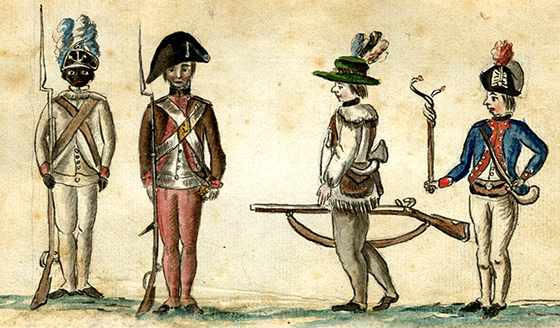
On May 24, 1775, John Hancock was elected president of the Second Continental Congress.

Hancock’s involvement with Samuel Adams and his radical group, the Sons of Liberty, won the wealthy merchant the dubious distinction of being one of only two Patriots (the other being Sam Adams) that the Redcoats marching to Lexington in April 1775 to confiscate Patriot arms were ordered to arrest. When British General Thomas Gage offered amnesty to the colonists holding Boston under siege, he excluded those same two men from his offer.

Categories
Thought

Jorge Luis Borges

Dictatorships foster oppression, dictatorships foster servitude, dictatorships foster cruelty; more abominable is the fact that they foster idiocy.


Jorge Luis Borges statement to the Argentine Society of Letters (c.1946)

Categories
Accountability general freedom national politics & policies responsibility

The First Casualty

Former Marine Lt. Gen. H.R. McMaster, President Trump’s current national security advisor, is the author of Dereliction of Duty, a look at how President Lyndon Johnson conducted the Vietnam War. 

Last Sunday, the Washington Post’s Carlos Lozada reviewed the 1997 non-fiction book, noting that McMaster hadn’t minced words. 

McMaster argues, for instance, that LBJ had a “real propensity for lying.” McMaster also takes Defense Secretary Robert McNamara and the Joint Chiefs of Staff to task for not telling Johnson hard truths about the war, and going along with what they knew were poor policies. 

Life-and-death policies. 

“McMaster explains how a culture of deceit and deference, of divided and misguided loyalties, of policy overrun by politics, resulted in an ever-deeper U.S. involvement in Vietnam,” Lozada reports. 

Lozada then compares the dishonest bubble within which LBJ made decisions about Vietnam to the people around President Trump today, fearing they too will fail to tell the president inconvenient truths or dare risk his wrath by opposing his policy whims. 

That tilted Trump focus is the 24/7 obsession of the national press corps.

But this problem isn’t new with Trump. It’s universal. 

The wise have long understood that truth is the first casualty of war. If not taken out before hostilities even begin.

It is critical to find people of integrity to work at the White House and tell presidents the unvarnished truth. And even more critical is to pick presidents with integrity to tell the American people — the ultimate decision-makers — the truth. 

It’s long past time that U.S. foreign policies be publicly discussed — and decided — by an informed electorate.

This is Common Sense. I’m Paul Jacob.

Printable PDF


Whisper cc photo by Jamin Gray on Flickr

Categories
Today

Eighth State and Drew Carey

On May 23, 1788, South Carolina became the 8th state to ratify the U.S. Constitution.

Other May 23 events include:

* 1813: South American independence leader Simón Bolívar entered Mérida, where he was proclaimed El Libertador (“The Liberator”), leading the invasion of Venezuela.

* 1900: Sergeant William Harvey Carney became the first African American to be awarded the Medal of Honor, for his heroism in a Civil War battle fought 37 years prior, in 1863.

* 1958: Birthday of American comedian and game show host Drew Carey.

Categories
Thought

J. S. Mill

Both in England and on the Continent a graduated property tax (l’impôt progressif) has been advocated, on the avowed ground that the state should use the instrument of taxation as a means of mitigating the inequalities of wealth. I am as desirous as any one that means should be taken to diminish those inequalities, but not so as to relieve the prodigal at the expense of the prudent. To tax the larger incomes at a higher percentage than the smaller is to lay a tax on industry and economy; to impose a penalty on people for having worked harder and saved more than their neighbours.

John Stuart Mill, Principles of Political Economy (1848), Book V, Chapter II.
Categories
Accountability folly national politics & policies

Weiner’s Place in History

As if to finalize the Great Derailment of 2016, disgraced former Congressman Anthony Weiner pleaded guilty in federal court to felony sexting: transferring obscene materials to a 15-year-old girl.

Prosecutors are asking he serve 21 to 27 months in federal prison, register as a sex offender and continue mental health therapy.

Also Friday, Huma Abedin, Weiner’s long-suffering wife, quietly filed an “Anonymous v. Anonymous” petition for divorce.

Though, apparently, not anonymously enough.

Personal train-wreck? Sure. But as I wrote yesterday at Townhall, because it so deeply affected last year’s presidential contest, the wreck is also very public.

Back in 2011, Anthony Weiner made Andrew Breitbart a hero, propelling Breitbart.com into the limelight. Weiner had tweeted a picture of his underwear-clad crotch to a woman . . . who was not his wife. Though quickly deleted from his Twitter account, a screenshot was shared with Breitbart, who ran with the story.

Weiner claimed a hack, challenging Breitbart’s credibility. This spurred Andrew Breitbart to commandeer a news conference called by Weiner — with more evidence to share. Soon, Rep. Weiner admitted his bad behavior and officially resigned his congressional seat.

Fast-forward to 2016, with wife Huma Abedin busy helping Hillary Clinton run for president. Weiner again becomes the subject of a sexting scandal — this time with an underage North Carolina girl. The FBI investigates, seizes Weiner’s laptop and discovers emails on it from Hillary Clinton to his wife, Huma. Then-FBI Director James Comey reopened his investigation of Hillary’s emails just ten days before Election Day.

Upshot? Trump is the 45th U.S. President, with Breitbart.com Editor Steve Bannon as key advisor.

Thanks to Weiner.

This is Common Sense. I’m Paul Jacob.


Printable PDF


Photo of “Anthony Weiner cut-out by the port-a-potties” by Katjusa Cisar on Flickr


Categories
Thought

Yves Guyot

For all except the very few of extraordinary gifts, the spur of gain is not only powerful, it is indispensable.


Yves Guyot, stating what he called “the third incentive of human action,” in Where and why Public Ownership Has Failed (H. F. Baker, trans., 1914).

Categories
Today

Term limits

On May 22, 1995, in the case U.S. Term Limits v. Thornton, the U.S. Supreme Court struck down Arkansas’s congressional term limits law, 5-4, overturning the congressional term limits then the law in 23 states: Arizona, Arkansas, California, Colorado, Florida, Idaho, Louisiana, Maine, Massachusetts, Michigan, Missouri, Montana, Nebraska, Nevada, New Hampshire, North Dakota, Oklahoma, Ohio, Oregon, South Dakota, Utah, Washington and Wyoming.

Other May 22 events include

* 1856: South Carolina Congressman Preston Brooks savagely beat Massachusetts Senator Charles Sumner in the halls of Congress as tensions rise over the expansion of slavery. Sumner did not return to the Senate for three years while he recovered.

* 1848: Slavery was abolished in Martinique.

* 1807: A grand jury indicted former Vice President of the United States Aaron Burr on a charge of treason. Burr (in portrait, above) was later acquitted.


On the hundredth day of 1998, the Northern Ireland peace talks ended with an historic agreement, dubbed the Belfast, or Good Friday Agreement. The accord was reached after nearly two years of talks and 30 years of conflict. A little more than a month later, on May 22, 1998, this Agreement was approved by voters across the island of Ireland in two referendums.

In Northern Ireland, voters were asked whether they supported the multi-party agreement.

In the Republic of Ireland, voters were asked whether they would allow the state to sign the agreement and allow necessary constitutional changes to facilitate it. The people of both jurisdictions needed to approve the Agreement in order to give effect to it.

The British-Irish Agreement came into force on December 2, 1999.