Categories
Thought

Arthur Kenyon Rogers

“Anything whatever can be made ridiculous; to see this side of it, and nothing more, is to become the mere jester, whose claim to be regarded as the ideal moralist is certainly very slight. But between a too solemn sense of high importance, and that conviction of the intrinsic smallness of everything in particular which some of our satirists have displayed, there is a middle ground.”


Arthur Kenyon Rogers, The Theory of Ethics (New York: The Macmillan Company, 1922).

Categories
crime and punishment folly general freedom nannyism privacy property rights responsibility

The New Ortho-Doxing

“What a nice Halloween,” my wife remarked as we turned out the lights. 

Well, not in nearby Oakton, Virginia, where Jamie Stevenson walked past her neighbor’s home last Saturday and saw “a racist display.”

“She knew it was a Halloween decoration,” the Washington Post reported.

Heedless, she contacted her homeowners association, the Southern Poverty Law Center, and the perpetrator: “What you appear to be displaying is an effigy of a black person being lynched. As your neighbor and a person of color [Stevenson is Asian], I find this racist . . . deeply offensive. I’m sure this is not your intent.”

“It is not my intent to offend anyone,” was her neighbor’s immediate and predictable response to her email. Shockingly, he had never noticed that his “Monster in the tree had darker skin.”

So, on a rainy Sunday, he took it down.

One might think that, with Stevenson’s sensitivity, she wouldn’t perform her own social media lynching — or doxing — against her neighbor. But on Monday, acknowledging that no offense had been intended and with the offending display removed, Stevenson still posted “a flier” on Facebook with a photo of an actual 1889 lynching next to the picture she had snapped of her neighbor’s Halloween display, declaring: “RACISM and HATE have no place in our neighborhood.”

She called for a boycott of her neighbor’s free Halloween candy . . . and handily provided his home address.

“[W]hen you point out racism, people have a choice to make,” she insisted. “They either acknowledge it and have to do something about it, or they deny it and are complicit in it.”

Or then again, neighbor, maybe you’ve got racism on the noggin and folks are only complicit in sharing a traditional joy with the neighborhood kids.

This is Common Sense. I’m Paul Jacob.


PDF for printing


Categories
Today

Committee of Correspondence

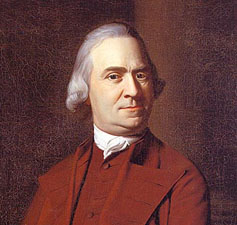
On November 2, 1772, Samuel Adams (pictured) and Joseph Warren formed the first Committee of Correspondence, which were instrumental in preparing the colonies from their 1776 breakaway from the British Empire of George III.

Categories
Accountability crime and punishment government transparency insider corruption media and media people moral hazard national politics & policies responsibility

Stranger Counsels

The office of special counsel, like that of the special prosecutor in days (and administrations) of yore, is a strange one. Not mentioned in the Constitution, it is institutionally slippery. An executive branch position designed to investigate the executive branch — there is no way it cannot be . . . “problematic.”

Just in time for Halloween, Special Counsel Robert Mueller, tasked with looking into the Russian connections of the Trump administration — particularly electoral mischief* — landed his first fish this week, Paul Manafort and Rick Gates. The two have been charged with, and pled innocent to, twelve criminal counts related to their activities in Ukraine before their association with Trump. There are tax dodging charges, too, including something called “conspiracy to commit money laundering.”

And while the whole bizarre Russia story has now launched into a feeding frenzy, it appears that it just became . . . mundane. “Legal experts said the court filings indicate Mueller is running a serious, deliberative, and far-sighted inquiry,” says The Atlantic.

Meanwhile, the weird relations between the Clintons and Russia loom on the horizon, rather like that smoky monster from the Upside Down on Stranger Things 2.

But hey, none of this is shocking. Troll through the modern state and you will find corruption. You can land all sorts of fish.

Including suckers.

Could we be those suckers?

Since this sort of thing can always be found — and the Manafort skullduggery seems somewhat tangential to Russian electoral influence, despite the man having served a stint as Trump’s campaign manager — is this just a way to get us to look the other direction from anything really meaningful?

This is Common Sense. I’m Paul Jacob.

*And let’s not pretend this is new. Foreign influence was an issue in the campaign of 1800.


PDF for printing

Categories
Thought

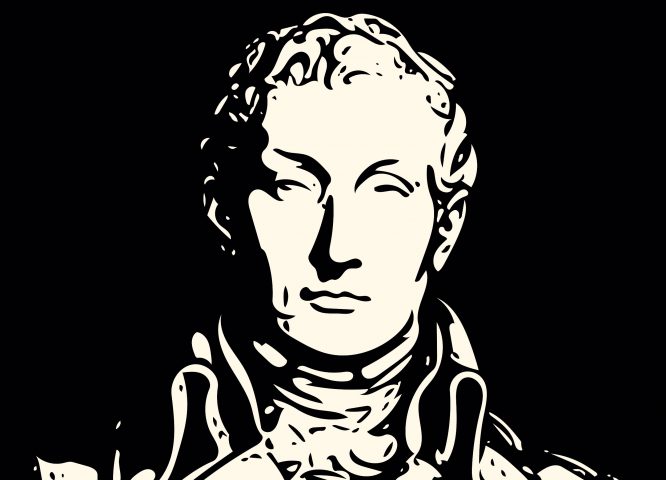
Comte de Volney

Politics is like the human body, beautiful when viewed from the outside, but if you open it up and look inside, it’s disgusting.

C.-F. Volney, as quoted by Thomas C. Williams, author of English-Turn: The Ruins of Empires.
Categories
Today

The French Revolution

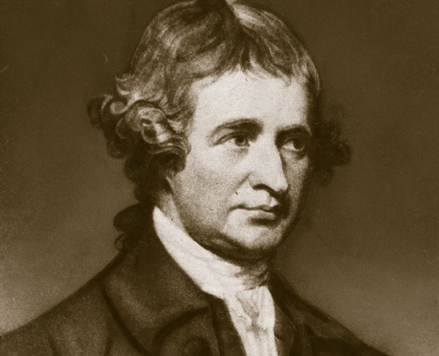
On November 1, 1790, Edmund Burke published his Reflections on the Revolution in France, predicting that the French Revolution would end in disaster. Though many have disputed his premises and reasoning, few dispute his prophecy, which proved spot on.

Categories
Today

Second Congress of the Confederation

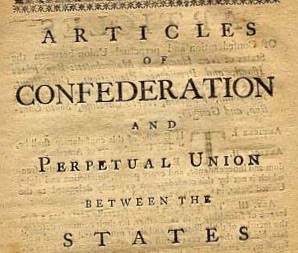
On November 5, 1781, the second session of the United States in Congress Assembled began, in Philadelphia, Pennsylvania. This “Second Confederation Congress,” as it is popularly known, ended on November 2, 1782.

And on that Fifth of November, 1781, John Hanson of Maryland was elected to serve as president of the United States in Congress Assembled. He would become the first president of Congress to serve a full one-year term as specified under the Articles of Confederation, for the second session of the Confederation Congress. Of course, this presidency was nothing like the presidencies under the Constitution. Hanson merely presided over Congress.


On November 5, 1872, Susan B. Anthony defied the law to vote, and was later fined $100.

Categories
Accountability Common Sense incumbents initiative, referendum, and recall local leaders moral hazard national politics & policies responsibility term limits

Agreeable America

Americans actually agree on a lot of things; it’s a pity that today’s media and political debates play up the discord.

Or so argues A. Barton Hinkle at The Richmond Times-Dispatch. Sure, he admits, “[a] lot of people seem willing to tear your head off over the smallest thing.” But “on some topics, the public is of one mind, or as close to that as you can get.”

Hinkle notes that “Nine out of 10 Americans think a background check should be required for every firearm purchase.”  A few percentage points fewer wish to keep “Dreamers” in the country; a mere one point fewer disapprove of civil asset forfeiture. Medical marijuana is approved of by 83 percent of Americans.

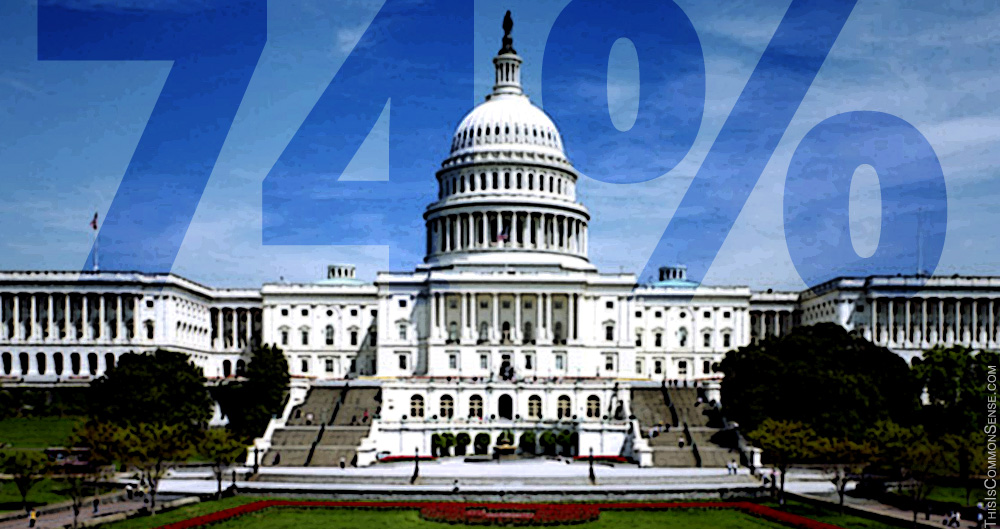
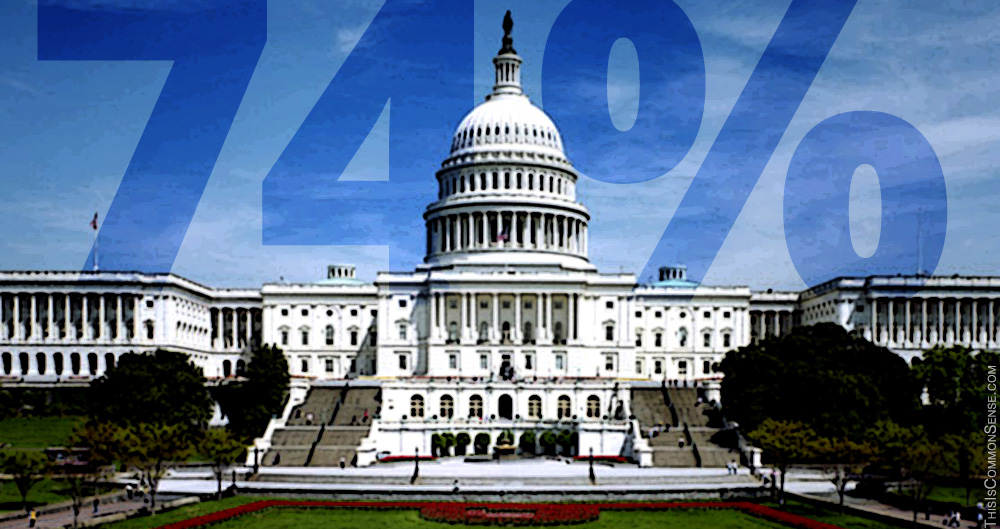
Not on Hinkle’s list? American agreement on term limits. A year ago, a Rasmussen Poll found support for limiting congressional terms at 74 percent of likely voters, with only 13 percent opposed and 13 percent undecided. This overwhelming public support has been consistent for many decades.

But consistently ignored by Congress. Not so surprisingly.

Can Americans put their united oomph behind their overwhelming agreement? U.S. Term Limits thinks so.

The group isn’t depending on cajoling the Congress, either. They’re mobilizing concerned citizens to convince 34 state legislatures to call a Term Limits Convention.* The convention’s purpose is to propose a constitutional amendment for congressional term limits, which then still requires 38 states to ratify it.

Rather than brewing up a civil war over tweets and “microaggressions,” join the Term Limits Team.

Let’s agree to agree. And make our representatives agree, too.

This is Common Sense. I’m Paul Jacob.

* As Article V of the U.S. Constitution states, “The Congress . . . on the application of the legislatures of two thirds of the several states, shall call a convention for proposing amendments, which, in either case, shall be valid to all intents and purposes, as part of this Constitution, when ratified by the legislatures of three fourths of the several states . . .”


PDF for printing


Categories
Today

Halloween

Ireland, Canada, United Kingdom, United States and other nations celebrate Halloween on October 31.

The word Halloween or Hallowe’en dates to about 1745 and is of Christian origin, meaning “hallowed evening” or “holy evening.” It comes from a Scottish term for All Hallows’ Eve (the evening before All Hallows’ Day). In Scots, the word “eve” is “even,” and this is contracted to “e’en” or “een.” Over time, (All) Hallow(s) E(v)en shortened into Halloween.

It is one of those darker-themed celebrations, often conjuring up images of death and horror. As if in keeping with this theme, Josef Stalin’s body was removed from Lenin’s Tomb on October 31, 1961.

N.B. The carving of pumpkins into mock-horrific faces is an old tradition. This Jack-o’-Lantern photo is taken from Dose of Funny.

Categories
Thought

Wendy McElroy

Freedom means self-fulfillment. It also means putting up with others’ irritating pursuit of the same. It means being confronted with disturbing images and ideas.