Categories
national politics & policies political economy Popular

Re-Packaging Nonsense as Wisdom

When committed to folly, clever people make it look wise.

An article last week in Forbes, “The Green New Deal: How We Will Pay For It Isn’t ‘A Thing’ — And Inflation Isn’t Either,” by Robert Hockett, says that “how could we pay for it?” challenges have already been answered best by Rep. Alexandria Ocasio-Cortez. 

She demands to know why only “useful ideas,” like hers, get challenged that way. “Where were the ‘pay-fors’ for Bush’s $5 trillion wars and tax cuts, or for last year’s $2 trillion tax giveaway to billionaires?”

Where? Here!

And anywhere there’s common sense.

Hockney has his own retort, though, retrieving from the peanut gallery of economics an idiocy called “Modern Monetary Theory” (MMT). 

“Congress will authorize necessary spending, and Treasury will spend,” he writes. Government funds are “never ‘raised’ first” because “federal spending is what brings that money into existence.” 

Look, the United States has indeed come to rely upon debt financing. But it wasn’t always the rule. More importantly, the widespread and long-term effects are where post-gold standard monetary creation gets tricky. 

So are MMT advocates. Tricky, that is. What they hide are the dispersed costs, many of which we pay in higher prices.

Their main “contribution” — as stated in the National Review, of all places, yesterday — is that “When a government issues its own currency, as our federal government does, it is in a financial situation different from those of most institutions or households.”

Not really. When a household writes checks it knows will bounce, it does pretty much the same thing.

When governments rely upon debt money, someone is still getting ripped off. With government, though, it isn’t the businesses holding bad checks, it is all of us.

This is Common Sense. I’m Paul Jacob.


N.B. This episode of Common Sense has been corrected from the email version: the author of the Forbes article is not the painter David Hockney.

PDF for printing

green new deal, AOC, money, folly

See all recent commentary
(simplified and organized)
See recent popular posts
Categories
Today

Stendhal

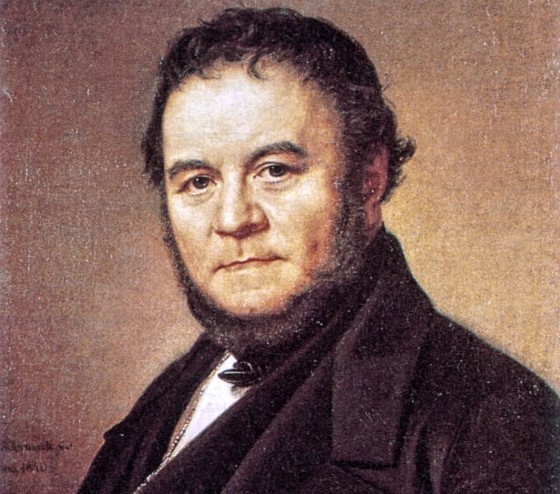
On January 23, 1783, journalist and novelist Marie-Henri Beyle, known by his pen name Stendhal (pictured above), was born. Stendhal was a follower of Destutt de Tracy and an attendant at the count’s salons. His most famous works include the novel The Red and the Black and a treatise on romantic love.

Stendhal died March 22, 1842.

On January 23, 1860, the Cobden–Chevalier Treaty was signed between France and Great Britain. The treaty was named after the two main proponents of the agreement, Richard Cobden (in England) and economist Michel Chevalier (in France). The treaty had been suggested the year earlier, in British Parliament, by Cobden’s colleague John Bright, who saw the measure as a peace measure, and an alternate to a military build-up.

Categories
Thought

Irving Kristol

Our youthful rebels are anything but inarticulate; and though they utter a great deal of nonsense, the import of what they are saying is clear enough. What they are saying is that they dislike — to put it mildly — the liberal, individualist, capitalist civilization that stands ready to receive them as citizens. They are rejecting this offer of citizenship and are declaring their desire to see some other kind of civilization replace it.

Irving Kristol, “‘When virtue loses all her loveliness’ — some reflections on Capitalism and ‘the free society,’” National Affairs, No. 21, Fall 1970.
Categories
First Amendment rights national politics & policies too much government

First Things First

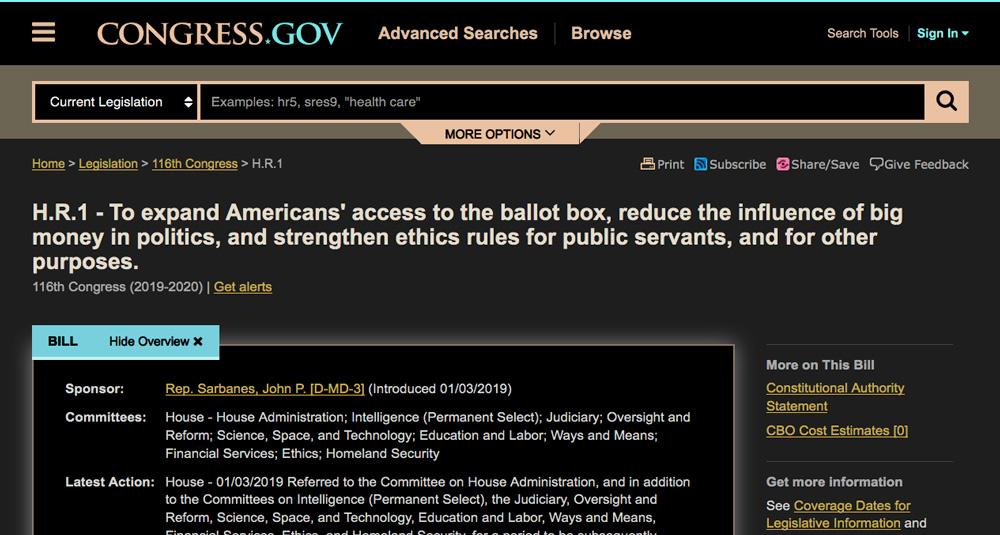
Surely there’s something good in the first legislation put forth by the brand-new Democratic House majority — though nothing jumps to mind. 

The 571-page smorgasbord bill “addresses voting rights, corruption, gerrymandering and campaign finance reform,” writes Thomas Edsall in The New York Times, “as well as the creation of a Select Committee on the Climate Crisis — a first step toward a ‘Green New Deal.’” 

H.R. 1 would mandate that states adopt automatic voter registration, a step too far. It establishes a system of public subsidies for candidates running for Congress, with taxpayers forking over a six-to-one match on donations of $200 or less. 

The legislation also empowers* the Federal Election Commission, including by ending its supposedly “neutral” composition, i.e. an equal number of Democrat and Republican commissioners. This would either allow the FEC to be more “decisive” or unleash the dogs of partisan political witch hunts . . . depending on the case and/or your politics.**

Speaker Nancy Pelosi (D-Calif.) and Rep. John Sarbanes (D-Md.), the lead sponsor of the legislation, bill it as the best way “to rescue our broken democracy.” 

“It should be called the Democrat Politician Protection Act,” argues Senate Majority Leader Mitch McConnell in the Washington Post. 

David Keating, president of the Institute for Free Speech, tells NPR, “A lot of [H.R.1] looks to be unconstitutional.”

No problem, for one provision calls for a constitutional amendment to partially repeal the First Amendment, so to authorize Congress to regulate campaign spending and speech.

Remember: the First Amendment is a single sentence, a mere 45 words.

Succinct and effective.

The former does not apply to this new bill, and the latter, I hope, does not apply to this new Congress.

This is Common Sense. I’m Paul Jacob.


* Let’s not give greater power to the FEC, which, according to a federal judge, “acted arbitrarily and capriciously and contrary to law” in the 2016 election.

** Of course, for Ross Perot in the 1990s or Libertarians, Greens and independents today, that “bipartisan” make-up isn’t neutral but stacked like a Star Chamber


PDF for printing

See all recent commentary
(simplified and organized)
See recent popular posts
Categories
Today

Kristol

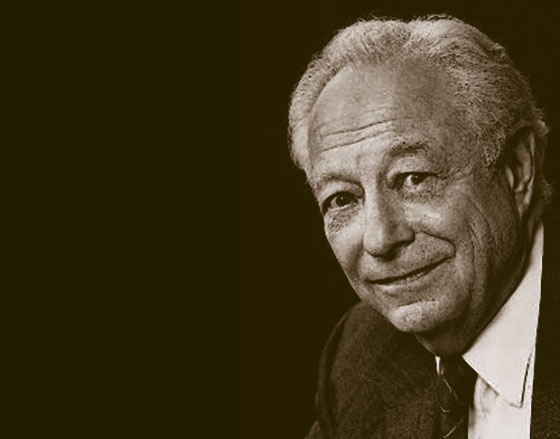
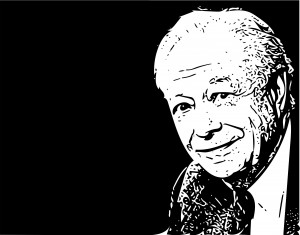
On January 22, 1920, American neoconservative pundit and author Irving Kristol was born.

Categories
Thought

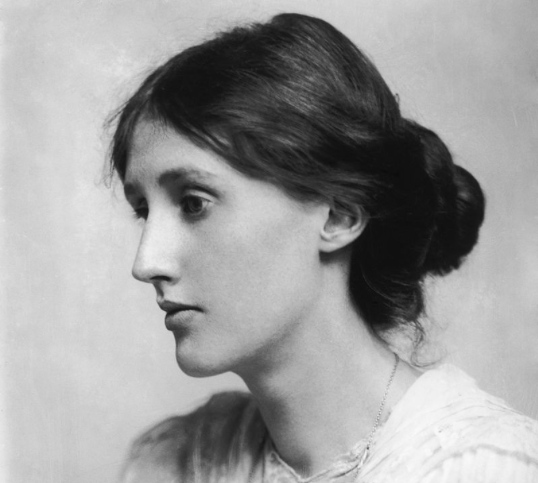
Virginia Woolf

Life is not a series of gig lamps symmetrically arranged; life is a luminous halo, a semi-transparent envelope surrounding us from the beginning of consciousness to the end.

Virginia Woolf, “Modern Fiction,” The Common Reader (1925).
Categories
folly ideological culture media and media people Popular

Inclusivity Not Included

The 3rd annual Woman’s March strolled by over the weekend — a tiny fraction of its former self. 

Two years ago, close to a million protesters converged on Washington, D.C., while this year’s event “appeared to attract only thousands,” The Washington Post reported, “mirroring lower turnout at marches . . . across the country.”

“[A] movement that once bragged about its inclusivity,” explained a separate news analysis, “has been roiled by reports of battles over diversity, hate speech and branding.”

In addition to squabbles over corporate ownership of the very name of the “Women’s March,” the leaders of the main organization have been accused of anti-Semitism. “Board members Linda Sarsour, Carmen Perez and Women’s March, Inc., co-president Tamika Mallory, have publicly affiliated with and praised anti-Semitic Nation of Islam leader Louis Farrakhan,” notes the Capital Research Center’s Influence Watch website.

March founder Teresa Shook called on them to resign, charging “they have allowed anti-Semitism, anti-LBGTQIA sentiment and hateful, racist rhetoric to become a part of the platform . . .” The Democratic National Committee and a number of progressive groups have withdrawn their support.  

But the “inclusivity” was always fake. As a “women’s” march, it started out excluding half the population. Nothing wrong with women having events or organizations that focus on issues of particular interest to females; it’s just not inclusive.

And let’s not ignore that pro-life women were specifically booted from participating in the original 2017 event.  

“Is the Women’s March more inclusive this year?” a USA Today article asked before last year’s pink-hatted festivities. 

Apparently not. This year, everyone was excluded fromthe Eureka Women’s March — cancelled because those hoping to participate were “overwhelmingly white.”

With all this inclusion, no wonder we are so divided.

This is Common Sense. I’m Paul Jacob.


PDF for printing

women, woman, march, inclusion, in group, out group

See all recent commentary
(simplified and organized)
See recent popular posts

Categories
Today

Witness

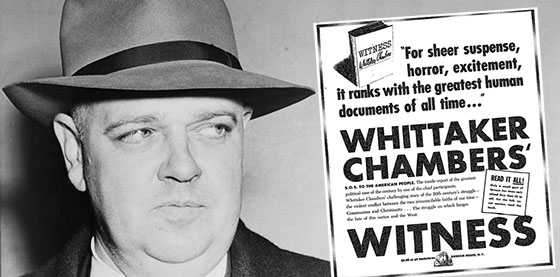
On January 21, 1950, Alger Hiss was convicted of perjury, with Whittaker Chambers being the main witness in Hiss’s prosecution. Chambers confessed to having been a Soviet spy, and accused Hiss as an accomplice, which Hiss denied to his dying day. Chambers gave a fascinating account of all this in his bestselling memoir, Witness.

Categories
Thought

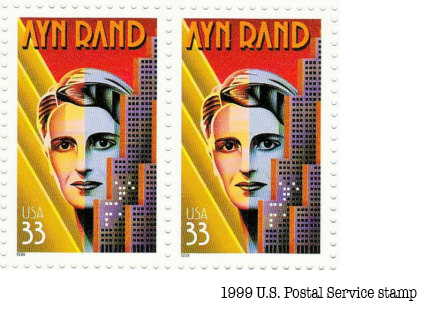
Ayn Rand

An individualist is a man who says: ‘I’ll not run anyone’s life — nor let anyone run mine. I will not rule nor be ruled. I will not be a master nor a slave. I will not sacrifice myself to anyone — nor sacrifice anyone to myself.

Ayn Rand, “Textbook of Americanism” (1946)
Categories
general freedom links

Service vs. Involuntary Servitude

The National Commission on Military, National, and Public Service will release an interim report this Wednesday at an event at the Newseum in Washington, DC, beginning at 9:00 A.M. The Commission was created by Congress “to consider and develop recommendations concerning the need for a military draft, and means by which to foster a greater attitude and ethos of service among American youth.”

Paul Jacob will attend to demand the government oppose their push for mandatory national service and expanding draft registration. Last April, Jacob testified before the commission and penned this commentary, entitled “Leave Those Kids Alone.”

Paul has long opposed both military and non-military conscription. Back in the 1980s, he served nearly six months in prison for refusing to register for the draft. 

See also: “Paul Jacob on the Draft”