On Jan. 27, 1973, President Richard Nixon’s Secretary of Defense, Melvin R. Laird, announced an end to the military draft in favor of a system of voluntary enlistment. Since 1973, the United States armed forces have been known as the All-Volunteer Force.
The Selective Service System, the federal agency that would administer a military draft, continues to be funded, however. Furthermore, American males continue to be forced to register for the draft.
“A personal commitment of time, energy and talent to a mission that contributes to the public good by protecting the nation and its citizens, strengthening communities or promoting the general welfare.” That’s how the National Commission on Military, National and Public Service (NCMNPS) officially defines service.
“It’s time to talk about a culture of service,” Commission Chairman Joe Hecktold reporters Wednesday at the release of an interim report, “where Americans not only aspire to serve, but face no barriers.”
Remove the impediments where possible, sure.
But the Commission, as created by Congress, is primarily charged with looking into whether draft registration should continue, and if so, whether to expand it to women.*
Face it, military conscription doesn’t have anything at all to do with “service.” Not by the NCMNPS’s own definition — or any reasonable one. Surely the commissioners weren’t thinking that “personal commitment” could simply be coerced.
The NCMNPS is also “exploring what a program that requires every American to complete a dedicated period of military, national, or public service might look like.”
Stop. It won’t resemble freedom.
Why even consider coercing young people? The All-Volunteer Force is working well and creating a massive civilian chain-gang will be expensive.
“There is an overwhelming desire to serve,” Chairman Heck confirmed. But he explained that while young people “want to do it. They just don’t want to be told to do it.”
* Nearly four decades ago, the U.S. Supreme Court upheld the current male-only registration program specifically predicated on women being blocked from combat roles. All those roles are now open to women. Eventually, a case will get back to the High Court, which will very, very likely strike down a registration program that does not include young women.
You can share your own opinion with the Commission here.
The early Thomas Jefferson had a dream: a society of honest yeomen, engaged in agricultural pursuits, without large cities, heavy industry, banks, military pretensions. The early (and the late) Alexander Hamilton wanted industry, banks, cities, and a military force capable of making itself felt in world politics. It is a nice irony that so many of today’s laissez-faire conservatives think that they descend from Hamilton, the proponent of a strong federal government, and that so many liberals believe themselves to be the heirs of the early Jefferson, who wanted little more than a police force and a judiciary.
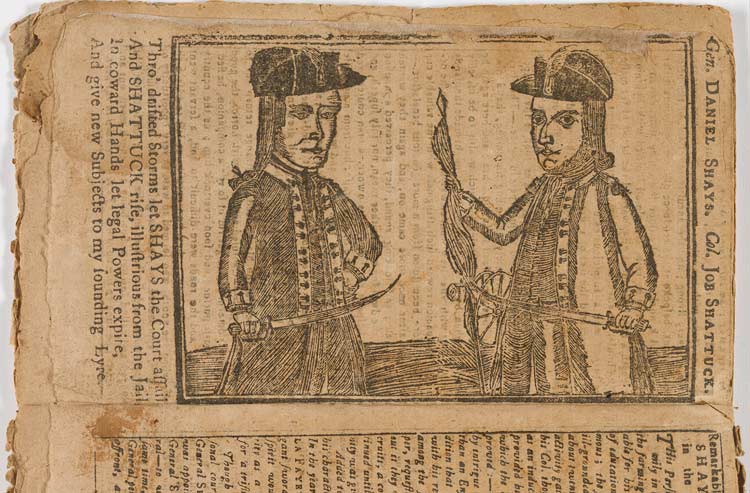
On January 25, 1787, Shays’s Rebellion experienced its largest confrontation, outside the Springfield Armory, with four of the rebels dead, 20 wounded.
The rebellion was a key moment in United States history. Daniel Shays and his followers objected to Massachussetts’s high taxes and rampant cronyism. The revolt, which was completely suppressed, led to the adoption of the U.S. Constitution and drawing George Washington from his retirement.
Smirking is a subset of smiling. But what is a grimace?
Nick Sandman, the offending Covington, Kentucky, Catholic high school student who triggered so much outrage last weekend, smiled. The effrontery!
Seeing a snippet of video, a social media mob formed, leaping to the conclusion that young Mr. Sandman was being disrespectful of an older Native American man who — chanting and drumming right up in his face — should have been “shown respect.”
And not smiled? Instead, what: frowned? Cried? Bowed?
Smirks are irksome. Sure. But the young man’s facial expression seemed to me an attempt, only half-successful, to smile — a covered-over grimace.
Understandable. The Covington youngsters — waiting to be picked up — had been targeted earlier by a group of nutty “Black Hebrew Israelites” who taunted at them for being . . . white. And the Native American man, Nathan Phillips, had singled Mr. Sandman out, violating his personal space. A grimace could be accounted for as putting “a brave smile on the situation,” as we used to say.
But that was not how the Twitter mobs interpreted it. And of course the young Catholic students were wearing “MAGA hats” (pro-Trump “Make America Great Again” baseball caps) which were later said to be racist. And the pro-life rally he and his friends attended was said to be sexist.
Can we all calm down? If we disagree on so much that even smiling is scandalous, maybe take a breath.
In the midst of it all, economist Bob Murphy reminded us of the previous culture-war fracas, the Gillette “toxic masculinity” ad, tweeting “if you see a mob picking on a boy, Gillette wants you to intervene.”
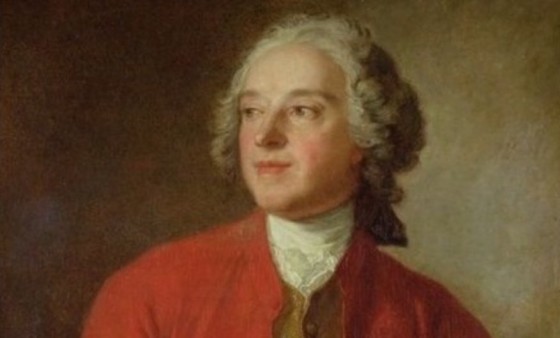
On January 24, 1732, French playwright, watchmaker, inventor, musician, diplomat, fugitive, spy, publisher, horticulturalist, arms dealer, satirist, financier, and revolutionary (both French and American) Pierre-Augustin Caron de Beaumarchais was born. He proved instrumental in securing armaments for the America Revolution, but remains best known for his three “Figaro” plays, Le Barbier de Séville, Le Mariage de Figaro and La Mère coupable. The plays remain memorable today chiefly for their operatic settings by Mozart and Rossini.