Andrew Klavan begins his show with satire, but then segues into a serious discussion of abortion. Oh, and Google, evil Google:
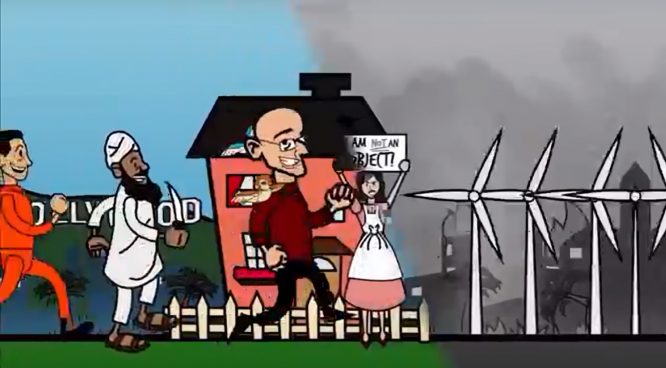
Andrew Klavan begins his show with satire, but then segues into a serious discussion of abortion. Oh, and Google, evil Google:
The future’s already here; it’s just not evenly distributed.
William Gibson, Distrust That Particular Flavor (2012).
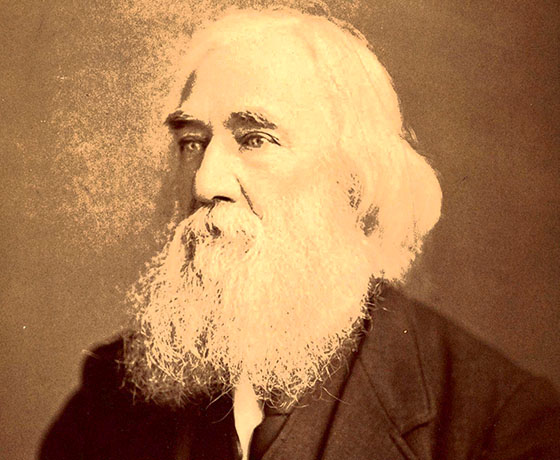
On January 19, 1808, Lysander Spooner was born.
Spooner’s achievements in American life, law, and political philosophy, are among the most colorful of the 19th century. Studying law privately, he sued to practice without joining the bar, and won the suit. He set up a postal service that directly competed with the United States Postal Service, delivering mail at a fraction of the cost. He wrote The Unconstitutionality of Slavery, and convinced noted Garrisonian abolitionist Frederick Douglass of his argument. (The book became the centerpiece of intellectual ammunition for the Free Soil Party.) Later in life Spooner turned against constiutionalism itself, and penned some of the most radical political works of his day, including Vices Are Not Crimes and The Constitution of No Authority. Spooner also clearly articulated a “jury nullification” position in his classic treatise Trial by Jury.
On January 19, 1808, Lysander Spooner was born.
Spooner’s achievements in American life, law, and political philosophy, are among the most colorful of the 19th century. Studying law privately, he sued to practice without joining the bar, and won the suit. He set up a postal service that directly competed with the United States Postal Service, delivering mail at a fraction of the cost. He wrote The Unconstitutionality of Slavery, and convinced noted Garrisonian abolitionist Frederick Douglass of his argument. (The book became the centerpiece of intellectual ammunition for the Free Soil Party.) Later in life Spooner turned against constitutionalism itself, and penned some of the most radical political works of his day, including Vices Are Not Crimes and The Constitution of No Authority. Spooner also clearly articulated a “jury nullification” position in his classic treatise Trial by Jury.
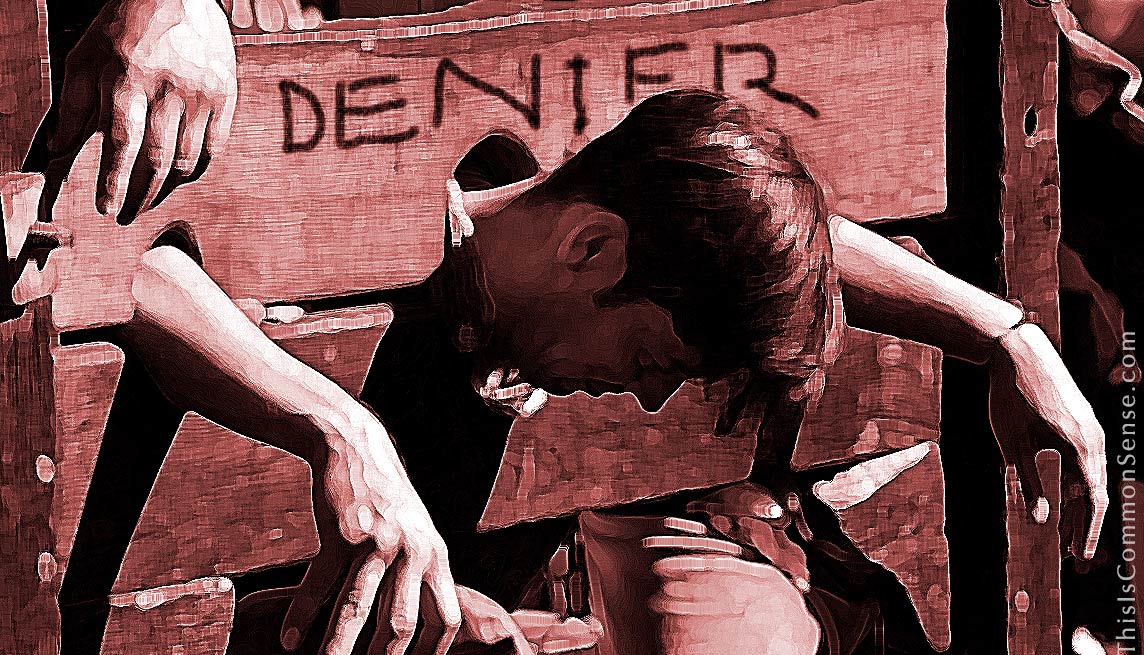
It is not a question of “belief,” says Anastasios Tsonis.
In “The overblown and misleading issue of global warming,” this emeritus distinguished professor at the University of Wisconsin-Milwaukee explains that in a “scientific problem ‘believing’ has no place,” going on to clarify:
“In science, we either prove or disprove.”
And regarding climate there is no “settled science.” Lacking unquestionable experimental context — “we have only one realization of climate evolution” — no matter how strong our opinions, skepticism is always in order.
But let us admit the obvious, the “global warming”/“climate change” debate has been frustrating for just about everybody. And much of this is the result of dogmatism.
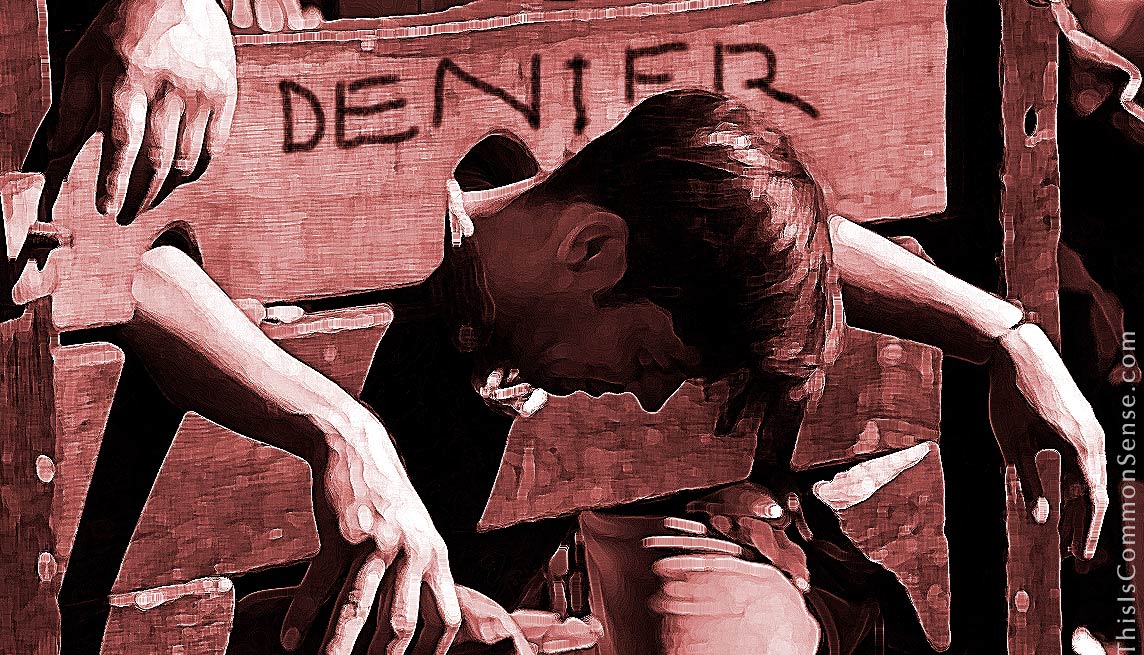
“The fact that scientists who show results not aligned with the mainstream are labeled deniers is the backward mentality,” Tsonis insists. “We don’t live in the medieval times, when Galileo had to admit to something that he knew was wrong to save his life.”
He argues that our lack of knowledge means that we should be circumspect about whether humans have caused the bulk of recent climate change. “Climate is too complicated to attribute its variability to one cause. We first need to understand the natural climate variability” — which, he says, “we clearly don’t.”
Tsonis concludes talking about problems more urgent than climate change. We can (and should) quibble with his list, but we should be open about our reasoning.
One reason for concentrating on these other issues is that we might be more likely to gain clarity on them.
And thus might be able to do something not foolish.
This is Common Sense. I’m Paul Jacob.
See all recent commentary
(simplified and organized)
See recent popular posts
“In my study of communist societies, I came to the conclusion that the purpose of communist propaganda was not to persuade or convince, not to inform, but to humiliate; and therefore, the less it corresponded to reality the better. When people are forced to remain silent when they are being told the most obvious lies, or even worse when they are forced to repeat the lies themselves, they lose once and for all their sense of probity. To assent to obvious lies is . . . in some small way to become evil oneself. One’s standing to resist anything is thus eroded, and even destroyed. A society of emasculated liars is easy to control.”
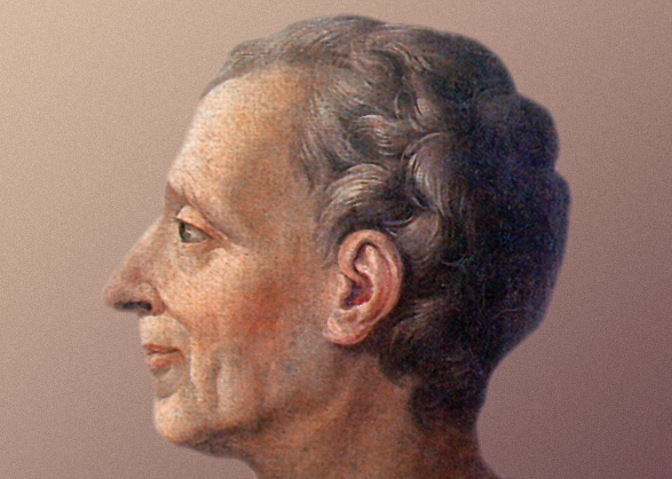
On January 18, 1689, Charles-Louis de Secondat, Baron de La Brède et de Montesquieu, French satirist and philosopher, was born.
His treatise The Spirit of the Laws was a major influence upon America’s founding generation. He is famous for his articulation of the theory of separation of powers, which is implemented in many constitutions throughout the world. He did more than any other author to secure the place of the word despotism in the political lexicon.
In 1811, former U.S. President Thomas Jefferson translated and published Destutt de Tracy’s Commentary and Review of Montesquieu’s ‘Spirit of Laws,’ a very popular review of republican principles — which helps demonstrate how important these French writers were to the American form of government.
Montesquieu died on February 10, 1755.
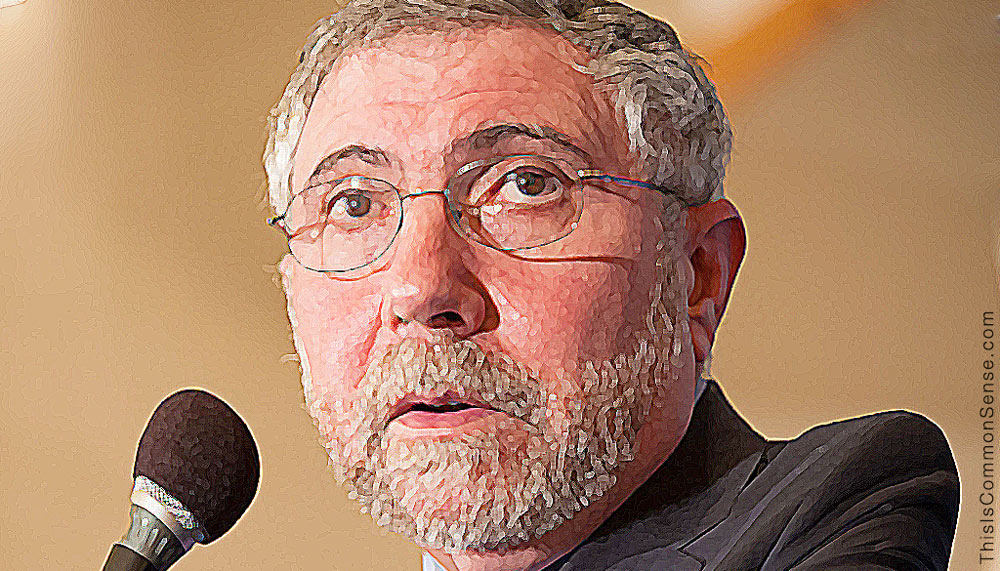
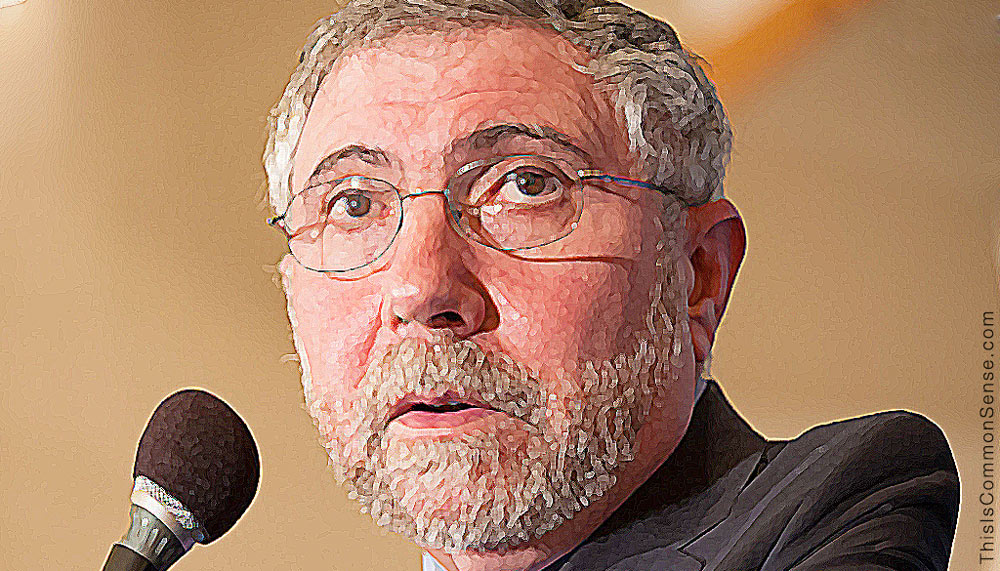
Paul Krugman, New York Times columnist and former economist, tested our patience last week with “Trump’s Big Libertarian Experiment.” How many non sequiturs will squeak past the Gray Lady’s editorial department?
Loads — and all about how the federal government shutdown gives limited government folks what they want: less government.
Subsidy checks to farmers aren’t going out, as “libertarian organizations like Cato” have long advocated. Sure. But it’s no policy change.
As soon as there’s a budget deal, those checks will be made up.
Further, “businesspeople are furious that the Small Business Administration isn’t making loans.”
Well, it’s high time businesses were weaned off the SBA teat — and a few whiners do not a case for subsidy make.
And then there’s the Food and Drug Administration, which can no longer inspect foods. Since “there’s a long conservative tradition, going back to Milton Friedman, that condemns the F.D.A.’s existence as an unwarranted interference in the free market” libertarians must be pleased, eh?
There is also a long tradition among economists that says businesses don’t get rich poisoning their customers, and that there are many mechanisms in place — and, barring the FDA, more would be in place — to ensure customers that they won’t be infected by eating . . . Romaine lettuce.
Which then Krugman admits . . . as if he had belatedly recalled Friedman’s lesson in Capitalism and Freedom. He concedes that the shutdown is not the way Friedman would go about limiting government. Besides, “libertarian ideology isn’t a real force within the G.O.P.”
So what’s the point?
Krugman ends with talk of a smell test: does lack of food inspections smell like freedom?
Something stinks here. But it isn’t spoiled food. Or freedom.
This is Common Sense. I’m Paul Jacob.
See all recent commentary
(simplified and organized)
See recent popular posts
“Government should be set up so that no man need be afraid of another.”
On January 17, 1937, Chicago School economist George Stigler was born. Stigler won a Nobel Memorial Prize for his work. His autobiography is entitled Memoirs of an Unregulated Economist.