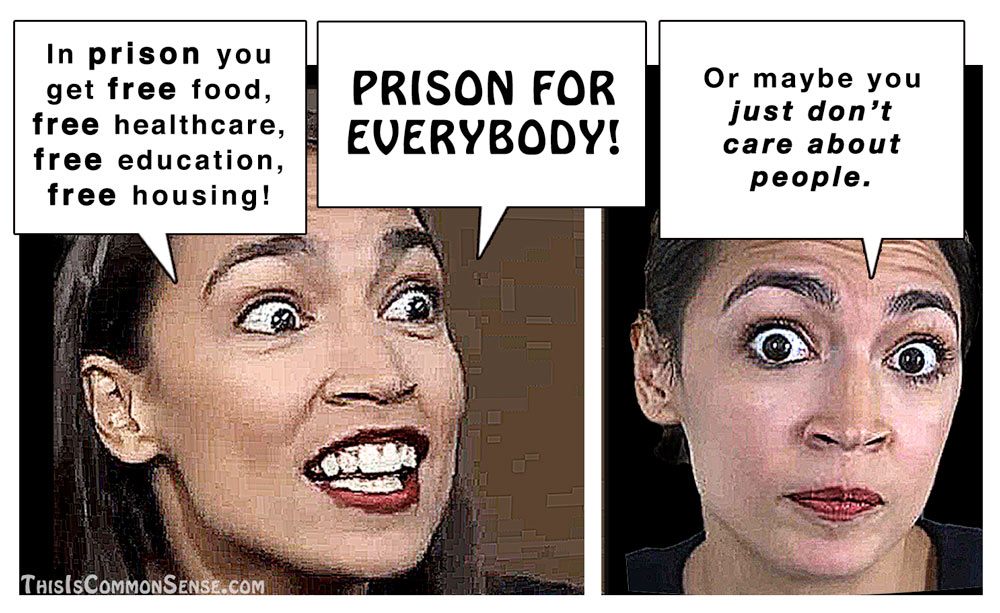
In the 20th century, 100 million people were killed by “caring” socialist ideologues who were certain they knew exactly what everybody else “deserved” and who were eager to use government violence to enforce those opinions.
Let’s builda wall, I said last week, between the Office of the President and all these emergency powers our Congress has recklessly given away to the chief executive.
After admittedly “scrambling to figure out” the emergency powers possessed by POTUS, the Washington Post’s editorial board lamented its discovery “that Congress has delegated a surprising amount of emergency or quasi-emergency power to the executive branch over the years, possibly too much.”
Possibly? Well . . . it is the Post.
Yet, the paper acknowledges, “The implications for constitutional government are potentially serious.”
The federal government currently operates under “31 presidentially declared national emergencies,” informsPost columnist Charles Lane. “[I]f Trump evades Congress’s refusal to fund a border wall by declaring a national emergency at the border . . . it would not be the first time a president took advantage of the inherent elasticity of the term.”
Congress last legislated on emergency presidential powers in 1976, a mere two years after Richard Nixon became the first president in U.S. history to resign in disgrace. Yet, even then, the law left presidential authority largely unchecked, and the term “emergency” completely undefined.
Why has Congress simply handed away so much power, writing laws with so little accountability? Has Congress been saddled with inexperienced rookies? No. There are no term limits. This is the product of very experienced career politicians.
Read between the lines.
“Only Congress can reclaim the emergency powers it has granted the president,” Lane writes, adding . . . “assuming, of course, that lawmakers want the responsibility back, too.”
Fundamentally, there are only two ways of coordinating the economic activities of millions. One is central direction involving the use of coercion — the technique of the army and of the modern totalitarian state. The other is voluntary co-operation of individuals — the technique of the market place.
Milton Friedman, Capitalism and Freedom (1962), Ch. 1 The Relation Between Economic Freedom and Political Freedom.
If it seems like each new government program is more intrusive than the last, there’s a reason. That last one did not work as planned. So a new one gets concocted to fix its mess.
The latest? New York City Mayor Bill de Blasio has established a new enforcement bureau, the Mayor’s Office to Protect Tenants, to sic a “new sheriff” on property owners.
“When a landlord tries to push out a tenant by making their home unlivable, a team of inspectors and law enforcement agents will be on the ground in time to stop it,” the mayor explained last week in his latest State of the City Address.
And he means business, er, government: “we will seize their buildings, and we will put them in the hands of a community nonprofit that will treat tenants with the respect they deserve.”
Well, that cannot possibly go wrong!
But what was the earlier program that put New York in its current situation?
Rent control protects current renters from rate hikes and the like, sure. But it discourages the production as well as the maintenance of rental properties, which in turn limits supply and ultimately hikes rents for future tenants.
Perhaps even worse, it incentivizes the landlords to boot out tenants while it more than nudges tenants to dig in . . . even when moving would otherwise make more sense.
The market thus thwarted, the de Blasios then set up more laws and more policing . . . and antagonism ramps up another notch.
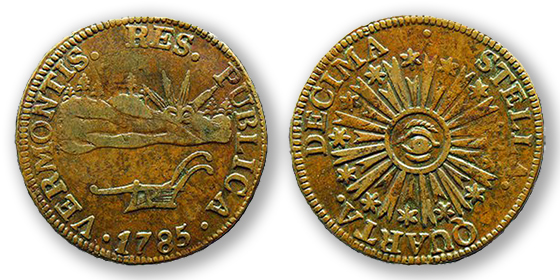
On January 15, 1777, New Connecticut declared independence from the crown of Great Britain and the colony of New York.
Delegates first named the independent state New Connecticut and, in June 1777, finally settled on the name Vermaont, an imperfect translation of the French for Green Mountain.
This new “Vermont Republic” minted copper coins (see above), first struck in 1785. The people of Vermont took part in the American Revolution although the Continental Congress did not recognize the jurisdiction, because of vehement objections from New York, which had conflicting property claims.
In 1791, Vermont was admitted to the United States as the 14th state, upon which its minting of coins ceased.
Charles de Secondat, Baron de Montesquieu, De l’esprit des lois (The Spirit of Laws,1748), Book XXIX: Of the Manner of Composing Laws, Ch. 16: Things to be Observed in the Composing of Laws.
A new poll shows that a narrow majority of Americans would support the President were he to pull troops out of Afghanistan. Less than a quarter of those polled said they would oppose it.
“The survey also indicates Americans remain unconvinced that the United States has a clear purpose in Afghanistan,” explains the January 10 press release of the Charles Koch Institute, which commissioned the poll. “Almost half of respondents, 45 percent, said the United States has no strategic objective, while only 21 percent said it does. About one-third (34 percent) said they did not know.”
However you slice the public opinion data, the wars in the Mid-East are not gaining in popularity. A plurality of Americans polled want out of Syria, too — no matter “whether the conflict was framed around the Syrian civil war or to counter-ISIS.”
Lucy Steigerwald, writing at Reason, highlights the incoherence in the White House and Pentagon: “no one seems to know what the hell is going on.” Which just shows how far we have come, after all these years. “The long life of the Afghan war makes it hard to remember how popular it was when it began.”
But back then it all seemed so clear: get Osama bin Laden, destroy his training camps, and punish the Taliban for harboring him.
All that was accomplished long ago. Now our leaders fear pulling out because . . . we haven’t established a western democracy there?
That was never going to happen.
It is foolish — even immoral — to keep a war going with impossible and incoherent goals.
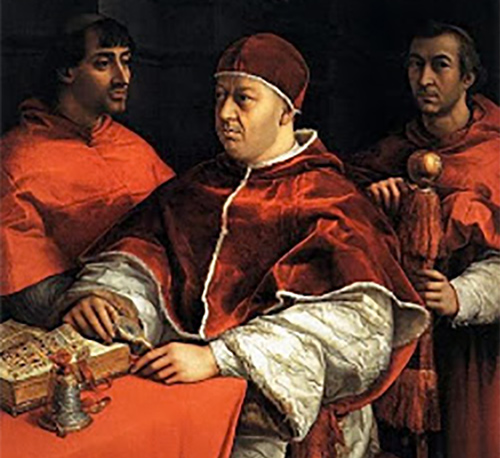
On January 14, 1514, Pope Leo X issued a papal bull against slavery. On the same date in 1639, the first written constitution to create a government, the “Fundamental Orders,” was adopted in Connecticut.
By far the most important of all the conditions, under which the production of material commodities goes broadly forward, is liberty of action on the part of the individual; because, wherever such liberty is conceded, association and invention and all other needful conditions follow right along by laws of natural sequence.
Arthur Latham Perry, Principles of Political Economy, 1891.