Categories
initiative, referendum, and recall international affairs social media

Somebody . . . to Squelch

I AM . . . somebody!

. . . with an officially “restricted” Facebook account.

I’d like to thank my family and friends for always believing in me — even many decades ago when it was unclear if I had what it takes to even get arrested. And now, after repeated validation per that previous metric, comes my crowning Internet-era achievement: running afoul of the information-squelching policy of massive Meta censorship. 

I’m deeply humbled by the recognition. 

“Your post didn’t follow our Community Standards” was all the information provided. It flagged a post of nearly a month earlier.

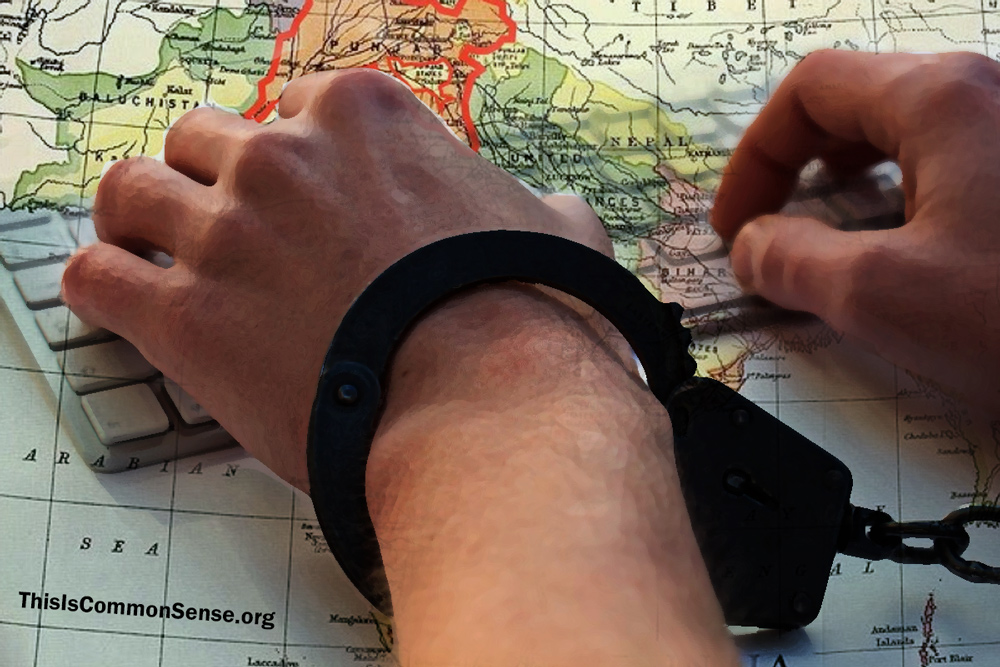
“Tomorrow is the big day for the first city — London — to take part in the Punjab Referendum organized by Sikhs for Justice,” my October 30th post read. “It will be a long day . . . but so glad to be part of the international commission advising on best practices, monitoring the actual voting and issuing a report.” Five photos of a meeting and a handout promoting the referendum adorned the post. 

An “Account Restricted” label appeared on my homepage with the note: “Only you can see this.” 

The ban stops me from personally “going live” or “advertising” for 30 days. Two things I don’t do. 

But let’s not allow the absurdity of it all to mask what’s happening: Voices that do not fit the official government-induced corporate narrative are harassed and silenced in a major avenue for communication. 

The too-often-violent situation in the Punjab region of India, what many Sikhs call “Khalistan,” is tense. The non-binding, non-governmental referendum I posted about has been outlawed by India’s government. 

Blocking and punishing posts that speak truthfully about a democratic approach to that ugly division hardly solves the problem.

It works in this case (and others) to prevent a peaceful resolution.

This is Common Sense. I’m Paul Jacob.


PDF for printing

See all recent commentary
(simplified and organized)
See recent popular posts

Categories
Thought

George Gissing

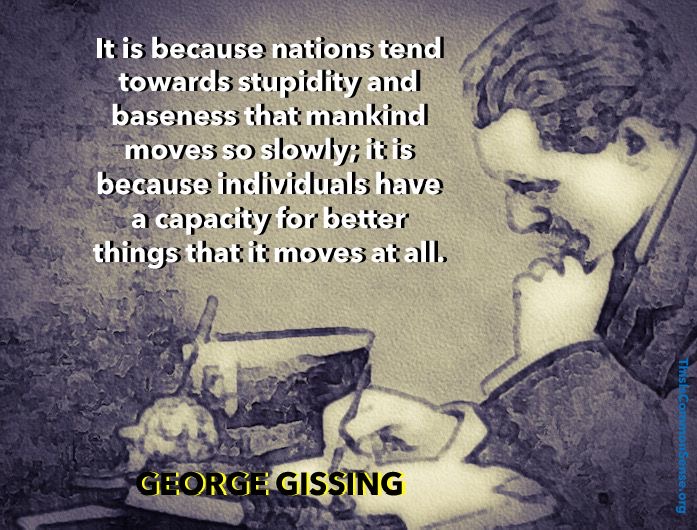
It is because nations tend towards stupidity and baseness that mankind moves so slowly; it is because individuals have a capacity for better things that it moves at all.

Categories
Today

A Grimké Birthday

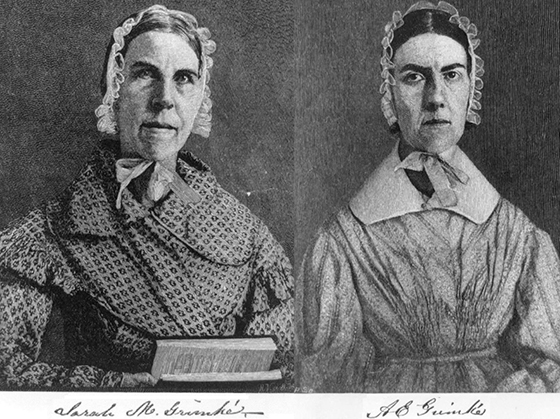
November 26, 1792, saw the birth of Sarah Moore Grimké, American abolitionist and feminist. She was the elder sister of the equally famed Angelina Emily Grimké Weld.

Categories
Common Sense general freedom

A Fitter Course

The times may not seem to indicate jubilations and thanksgivings, but any time is a good time to practice gratitude — to those who deserve it, and on a more basic level, too — so, regardless of the pandemic, the misguided responses, social unrest, racial mistrust, the threat of totalitarianism and war, remember: things could be worse.

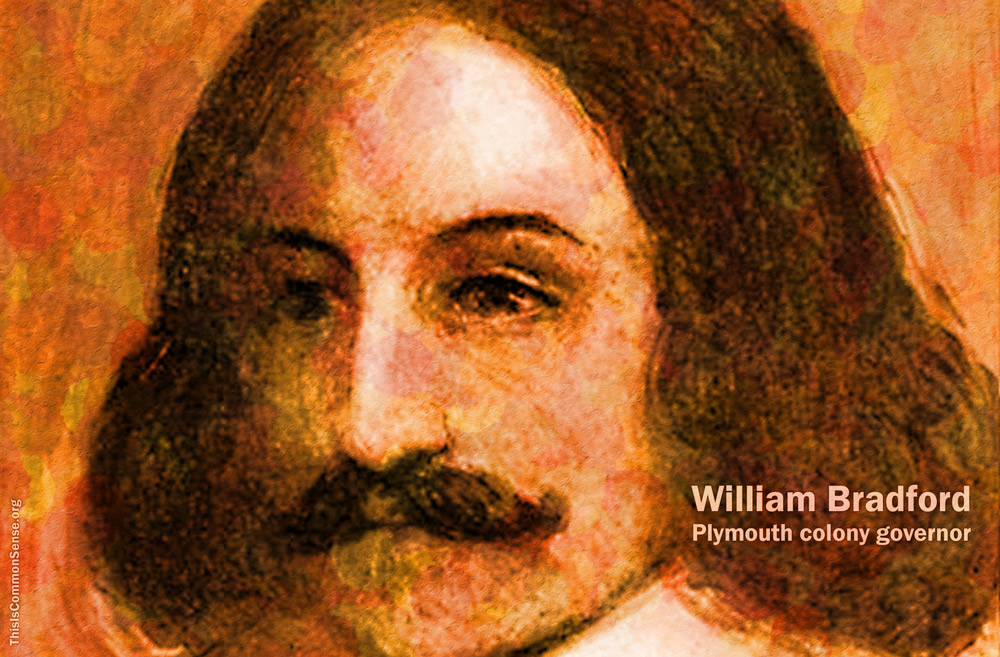
At Thanksgiving, especially, it might do us good to consult William Bradford’s account* of the History of “Plimoth Plantation,” a document that recounts how his fellow Pilgrim settlers established, endured, barely survived, recovered, and eventually thrived in Massachusetts.

By the spring of 1623 — a little over three years after first settlement in Plymouth — things were going badly. Bradford writes of the tragic situation:

[M]any sould away their cloathes and bed coverings; others (so base were they) became servants to [the] Indeans, and would cutt them woode & fetch them water, for a cap full of corne; others fell to plaine stealing, both night & day, from [the] Indeans, of which they greevosly complained. In [the] end, they came to that misery, that some starved & dyed with could & hunger.

The problem? The colony had been engaging in something very like communism.

The experience that was had in this comone course and condition, tried sundrie years, and that amongst godly and sober men, may well evince the vanitie of that conceite of Platos & other ancients, applauded by some of later times; — that [the] taking away of propertie, and bringing in comunitie into a comone wealth, would make them happy and florishing; as if they were wiser then God.

Bradford relates the consequences of common property:

For this comunitie (so farr as it was) was found to breed much confusion & discontent, and retard much imploymet that would have been to their benefite and comforte. For [the] yong-men that were most able and fitte for labour & service did repine that they should spend their time & streingth to worke for other mens wives and children, with out any recompence. The strong, or man of parts, had no more in devission of victails & cloaths, then he that was weake and not able to doe a quarter [the] other could; this was thought injuestice. The aged and graver men to be ranked and equalised in labours, and victails, cloaths, &c., with [the] meaner & yonger sorte, thought it some indignite & disrespect unto them. And for mens wives to be commanded to doe servise for other men, as dresing their meate, washing their cloaths, &c., they deemd it a kind of slaverie, neither could many husbands well brooke it.

Yes, the s-word: Slavery. Common property was mutual slavery.

The solution? The plan for society that Bradford attributed to God. He brooked no pleading that common property didn’t work because of corruption, sin. As he put it, “seeing all men have this corruption in them, God in his wisdome saw another course fiter for them.” The course? I’ll use a word of coined by Robert Poole, one of the founders of Reason magazine: Privatization.

Basically, what the Pilgrims privatized was land, and the fruits thereof, assigning to

every family a parcell of land, according to the proportion of their number for that end, only for present use (but made no devission for inheritance), and ranged all boys & youth under some familie. This had very good success; for it made all hands very industrious, so as much more corne was planted then other waise would have bene by any means [the] Govror any other could use, and saved him a great deall of trouble, and gave farr better contente. The women now wente willingly into [the] feild, and tooke their litle-ons with them to set corne, which before would aledg weaknes, and inabilitie; whom to have compelled would have bene thought great tiranie and oppression.

Thus began the years of bounty in Massachusetts. There’s much more in Bradford’s account worth reading, including the increasingly tragic relations with the native Americans. And, indeed, one learns from reading such first-hand accounts how imperfect a creature is man.

But it is obvious that some systems of property and governance work better than others, and, on the day that our government has set forth as a day of Thanksgiving, it is worth being thankful for living in a land that has upheld — to at least some degree — the system of private property that America’s Pilgrim’s learned to see as God’s “fitter course” for corruptible man.

This is Common Sense. I’m Paul Jacob.


* This episode of Common Sense is adapted from this site’s 2011 Thanksgiving message. 

PDF for printing

See all recent commentary
(simplified and organized)
See recent popular posts
Categories
Thought

John Milton

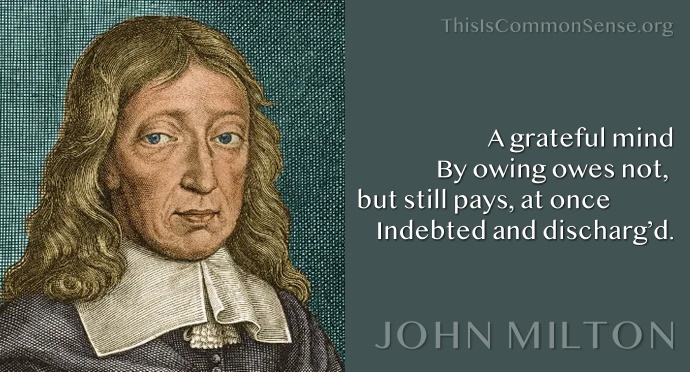
A grateful mind
By owing owes not, but still pays, at once
Indebted and discharg’d.

John Milton, Paradise Lost (1667; 1674), Book IV, line 55.
Categories
Today

Velvet

November 25, 1975, Suriname gained independence from the Netherlands.

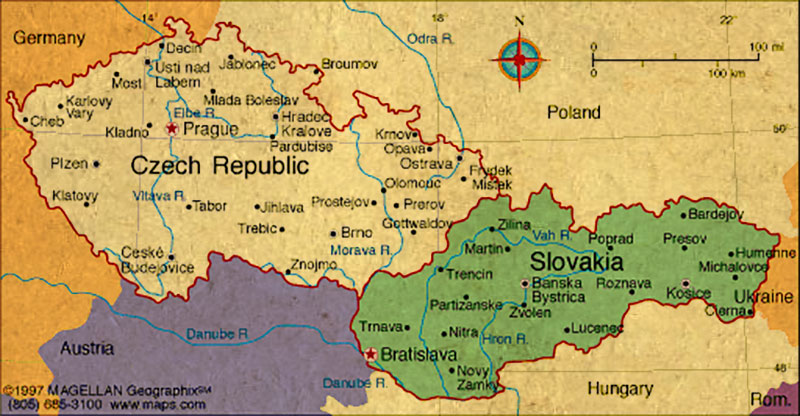
On the same month and date 17 years later, the Federal Assembly of Czechoslovakia voted to split the country into the Czech Republic and Slovakia (officially disjoined as of January 1, 1993). This split has been called “The Velvet Divorce” (following, in style and method, “The Velvet Revolution”).

Categories
general freedom

China Double-Faults

Whew! Chinese tennis star Peng Shuai has not been “disappeared.” 

Three weeks ago, Peng publicly accused China’s former vice premier, Zhang Gaoli, of sexual assault. “Her accusation on social media was removed within minutes” by “the Chinese government,” notes Fox News. 

“News of the controversy,” The Washington Post adds, “remains almost universally censored within China.”

No one heard from Peng for weeks after she made the charge, understandably concerning sports officials and fellow players. Adding to the ugly optics was a phony email scam — obviously perpetrated by Chinese state media — claiming that she was okay. Then, last Thursday, Women’s Tennis Association Chairman Steve Simon put Beijing on notice that over Peng’s safety his organization was “willing to pull out of China, potentially losing hundreds of millions of dollars.”

On Sunday, China responded, allowing Peng to join a video chat with International Olympic Committee President Thomas Bach, along with a Chinese sports official and the chair of the IOC Athlete’s Commission.

“Peng Shuai has officially reappeared in China,” explains The Washington Post, “but with silence surrounding her sexual assault allegations against a senior government official.”

“It was good to see Peng Shuai in recent videos,” a WTA spokesmen informed CNN, “but they don’t alleviate or address the WTA’s concern about her well-being and ability to communicate without censorship or coercion.”

Well, that applies to almost everyone in China. Censorship and coercion are what the Chinazis do. 

So what will the world’s athletes do . . . when, in ten weeks’ time, they are scheduled to appear in Beijing at the 2022 Winter Olympics?

This is Common Sense. I’m Paul Jacob.


PDF for printing

See all recent commentary
(simplified and organized)
See recent popular posts
Categories
Thought

Hannah Arendt

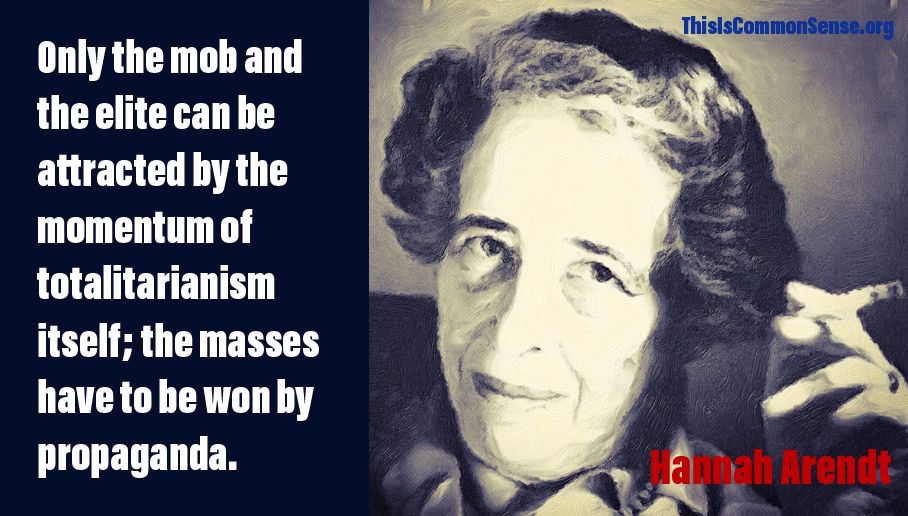
Only the mob and the elite can be attracted by the momentum of totalitarianism itself; the masses have to be won by propaganda.

Hannah Arendt, The Origins of Totalitarianism (1948), as quoted in “Totalitarianism and the Five Stages of Dehumanization,” by Christiaan W.J.M. Alting von Geusau, Brownstone Institute (November 17, 2021).

Categories
Today

Happy Birthday, Baruch!

November 24th marks the birthdays of philosopher Baruch Spinoza (1632) and three influential Americans: ragtime composer Scott Joplin (1868), self-help writer Dale Carnegie (1888), and conservative editor, writer, and television personality William F. Buckley Jr. (1925).

Categories
crime and punishment

Frisco Findings

Bravely risking damage and scorn, San Francisco engaged in a grand sociological experiment: testing whether or not we might all be better off “essentially ‘legalizing shoplifting.’”

Before announcing the conclusion of this daring research, let’s review.

“Shoplifting cases are all too common in San Francisco,” explained the UK’s Daily Mail, “where charges of property theft less than $950 in value was downgraded from a felony to a misdemeanor in 2014 — meaning that store staff and security do not pursue or stop thieves who have taken anything worth less than $1,000.”

After a Neiman Marcus department store was looted back in July, NBC News described it as “only the latest to give an impression of lawlessness running rampant. .  . .”

The ever-so-sensitive re-calibration of the justice system has not been helped by the abundance of examples of mass theft putting stores out of business — all going back at least a year or two.

“As the number of burglaries soar,” informed KPIX, the city’s CBS affiliate, “San Francisco residents say they feel unsafe.”

Finally, following last Friday’s episode of robbing and vandalizing stores in Union Square, city authorities decided to end the research. 

Mayor London Breed told her fellow ‘City by the Bay’ guinea pigs the study’s shocking conclusion: Brazen theft is “detrimental to our city.”

“What happens when people vandalize and commit those level of crimes in San Francisco,” her honor elaborated. “We not only lose those businesses, we lose those jobs.”

And then, she applied her hypersonic kicker: “We lose that tax revenue that helps to support our economy that helps to support many of the social service programs that we have in the city in the first place.”

So, there you have it. Theft is bad. Cuz taxes.

This is Common Sense. I’m Paul Jacob.


* Of course, Mayor Breed’s most talked-about approach to getting crime under control has been more deliberately screwing up the city’s already snarled traffic to make it more difficult for looters to flee. Courage.

PDF for printing

See all recent commentary
(simplified and organized)
See recent popular posts