Categories
Today

Rothbard and Houston

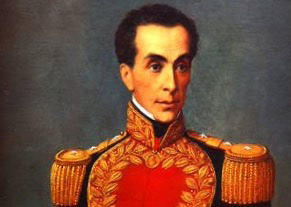
On March 2, 1793, Sam Houston (pictured above) was born.

On March 2, 1926, American economist and political theorist Murray N. Rothbard was born.

As President of the Republic of Texas, Houston (pictured above) cut the size of the Republic’s budget by a whopping amount, including selling the navy for scrap. Rothbard theorized about even more daring — and more permanent — cuts to (and limits upon) government.


On March 2, 1781, the Second Continental Congress convened as the new Congress of the Confederation, under the Articles of Confederation, ratified the day before. The congress elected no new president upon adoption of the Articles. This Confederation Congress oversaw the conclusion of the American Revolution.

Categories
general freedom local leaders Tenth Amendment federalism

Utah and the Tenth

The trouble with the Ninth and Tenth Amendments to the Constitution — the last two items in the Bill of Rights — has not been lack of clarity. The Tenth, at least, is extremely clear: “The powers not delegated to the United States by the Constitution, nor prohibited by it to the States, are reserved to the States respectively, or to the people.”

The problem has been one of enforcement. How do the States prevent the federal government from overreach? Especially when the federal government acts as if no objection to a federal law could be brooked? Especially when the Supreme Court is, ahem, wrong, or hasn’t yet been approached with a challenge.

Utah has rediscovered an old technique. And revived it. Governor Spencer Cox signed into law the “Utah Constitutional Sovereignty Act”: “The Legislature may, by concurrent resolution, prohibit a government officer from enforcing or assisting in the enforcement of a federal directive within the state if the Legislature determines the federal directive violates the principles of state sovereignty.”

Ultra clear. And by old precedent — the non-enforcement of The Fugitive Slave Act by some northern states — it provides teeth to the Tenth. If the federal government were to enact (just stretch your mind a bit!) something obviously unconstitutional, like, say, a gun confiscation, the state legislature would simply vote to prohibit any state employee, or subsidiary of the state (county, municipality) from working with federal agents. Federal government agencies don’t have enough manpower to enforce all the rules. The feds rely on the states.

CNN quotes a Democrat representative running against Governor Cox suggesting that the use of this technique would be overruled by the Supreme Court using “the Supremacy Clause.”

No. The Supremacy Clause only applies to the federal government regarding specified (“enumerated”) powers. 

Regarding matters not explicitly stated in the Constitution, it is the States that are supreme.

Or the People.

This is Common Sense. I’m Paul Jacob.


PDF for printing

Illustration created with PicFinder and Firefly

See all recent commentary
(simplified and organized)
See recent popular posts
Categories
Thought

Taylor Caldwell

A wise man distrusts his neighbor. A wiser man distrusts both his neighbor and himself. The wisest man of all distrusts his government.

Taylor Caldwell, The Devil’s Advocate (1952).
Categories
Today

March First Firsts

March 1st Firsts (and a 17th and a 37th):

| The first United States census was authorized, in 1790.

| Ohio was admitted as the 17th U.S. state, in 1803.

| President John Tyler [pictured above] signed a bill authorizing the United States to annex the Republic of Texas, in 1845.

| The state of Michigan formally abolished capital punishment, 1847.

| Nebraska became the 37th of the United States, in 1867.

On March 1, 1781, the Continental Congress of the United States adopted the Articles of Confederation. With this, the governing body became known, officially, as United States of America in Congress Assembled, more commonly as the Congress of the Confederation. The first session of this newly styled Confederation Congress took over without a break from the Second Continental Congress, adjourning on November 3. Samuel Huntington and Thomas McKean served as presidents during this first session.

Categories
Accountability election law Tenth Amendment federalism

States Still Have a Role

When asked what kind of government had been proposed at the Constitutional Convention in Philadelphia, Benjamin Franklin famously responded: “A republic, if you can keep it.”

But Old Ben did not clarify the nature of the republic. 

It was to be a federal republic. 

In the new Constitution — which was adopted by the states over the next few years — the States were sovereign, the general government given a concise and limited list of tasks to perform.

Since then, nationalism has won most of the big battles, but federalism remains vital as a principle, re-asserting itself in interesting ways.

Most recent? “Texas Attorney General Ken Paxton receives huge win with court ruling delivered on Tuesday deeming the $1.7 trillion omnibus spending package passed in 2022 unconstitutional,” as Leading Report explained on Tuesday. “This victory marks a pivotal moment in Paxton’s challenge against the legislation, highlighting concerns over the bill’s approval process.”

At issue is Consolidated Appropriations Act of 2023, which President Biden signed in December 2022, with the U.S. District Court for the Northern District of Texas, Lubbock Division, concluding that “by including members [of U.S. Congress] who were indisputably absent in the quorum count, the Act at issue passed in violation of the Constitution’s Quorum Clause.”

As Paxton gleefully summarized, “Former Speaker Nancy Pelosi abused proxy voting under the pretext of COVID-19 to pass this law, then Biden signed it, knowing they violated the Constitution.”

The story, as Leading Report argues, “showcases the role of state attorneys general in upholding constitutional principles and ensuring adherence to legal frameworks within the realm of federal governance.”

The States have some say. Still.

This is Common Sense. I’m Paul Jacob.


PDF for printing

Illustration created with PicFinder and Firefly

See all recent commentary
(simplified and organized)
See recent popular posts

Categories
Today

The Leap

On Leap Year Day 1796, the Jay Treaty between the United States and Great Britain came into force, facilitating ten years of peaceful trade between the two nations.
On January 29, 1968, Ukrainian-American lawyer and “Volokh Conspiracy” blogger, Eugene Volokh, was born. Other “leaplings” include Ann Lee (1736), founder of the Shakers; Gioachino Rossini (1792), Italian composer, best known for his many successful operas, including Il barbiere di Siviglia and Guillaume Tell; and American fantasy novelists Patricia A. McKillip (1948) and Tim Powers (1952).
Pictured: American ‘founding father’ John Jay.

Categories
Thought

John Mulaney

Leap year began in the year 45 B.C. under Julius Ceasar. This is true. He started the leap year in order to correct the calendar and we still do it to this day. Another thing that happened under Julius Ceasar was, uh, he was such a powerful maniac that all the senators grabbed knives and they stabbed him to death. That would be an interesting thing if we brought that back.

John Mulaney, Saturday Night Live monologue for February 29, 2020.
Categories
ballot access election law partisanship political challengers

Parties Demoted

Though “[s]everal left-leaning groups have sued to block the former president from the state’s ballot on 14th Amendment grounds,” Tom Ozimek of The Epoch Times reported in November, “Trump Listed on Michigan Primary Ballot,” as the headline states.

The primary was yesterday. Trump won. As expected.

But he appeared on the primary ballot only with legal wrangling. Michigan Secretary of State Jocelyn Benson, a Democrat, was under a lot of pressure to keep Trump off the ballot. Which she resisted, explicitly stating that she thought the maneuver to allow state officials to prohibit Trump from appearing on ballots because of the 14th Amendment’s “insurrection” clause was a bad idea.

Michigan’s voting system is now quite complicated. First, it’s an open primary state, so there will always be strategic voting, where partisans will cross lines to sabotage opponent parties. Though in the case of Trump, there is some irony here, since Trump benefitted in 2016 from such voting by Democrats, thinking he was the candidate easiest to beat in the general election.

Michigan sports a hybrid system for selecting partisan candidates to appear on the general election ballot. “More of Michigan’s 55 delegates to the Republican National Convention (RNC) will be awarded,” explains Nathan Worcester, also of The Epoch Times, “through the caucus process than through the primary vote — 39 as opposed to just 16.” But there are dueling conventions for caucusing, and it’s quite a mess.*

Michigan also now offers early voting at special voting sites. Is it a sign of a healthy democracy that there are so many ways to vote?

It sure doesn’t seem healthy that national partisan politics almost kept a Republican candidate off a primary ballot. Could the solution be to take parties’ candidate selection entirely out of state balloting?

Demote major parties from their current favored position to paying their own way.

This is Common Sense. I’m Paul Jacob.


* In the Democratic Primary, President Biden won big against Dean Phillips, a largely unknown congressman from Minnesota, and author Marianne Williamson. But, with roughly half the vote counted, a not insignificant 14 percent of Democrats snubbed the president (and the field) by voting “Uncommitted.” Many were no doubt protesting the president’s policies concerning the Israel-Hamas War; in the county containing the University of Michigan, 20 percent voted uncommitted. Yet, even in rural counties across Michigan, more than 10 percent of Democrats opted for uncommitted.

PDF for printing

Illustration created with PicFinder and Firefly

See all recent commentary
(simplified and organized)
See recent popular posts

Categories
Thought

Tom Clancy

What the government is good at is collecting taxes, taking away your freedoms and killing people. It’s not good at much else.

Thriller-writer Tom Clancy, Kudlow & Cramer interview (September 2, 2003).
Categories
Today

Common Sleeper Struck Back

On February 28, 1646, Roger Scott, of Lynn, Massachusetts, was tried for sleeping in church. Awakened in church by a tithingman’s long, knobbed staff hitting him on the head, he struck back at the man, and garnered a whipping as punishment, as well as the dark designation as “a common sleeper at the publick exercise.”