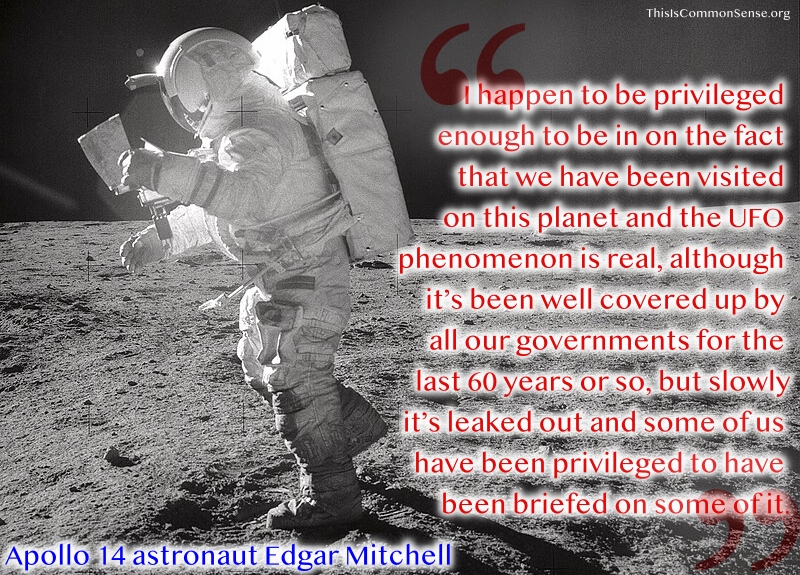
I happen to be privileged enough to be in on the fact that we have been visited on this planet and the UFO phenomenon is real, although it’s been well covered up by all our governments for the last 60 years or so, but slowly it’s leaked out and some of us have been privileged to have been briefed on some of it.
Edgar Mitchell, lunar module pilot on NASA’s Apollo 14 mission, as quoted in the July 23, 2008, edition of The Daily Mail UK.
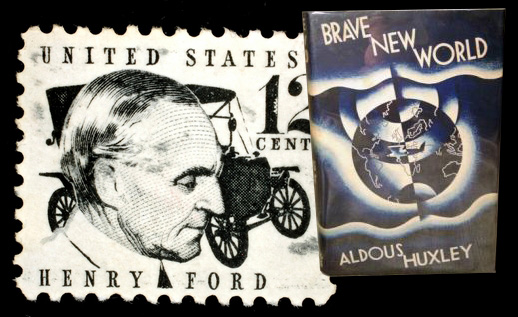
On this day in 1903, the Ford Motor Company sold its first car. Less than 30 years later, Aldous Huxley satirized Ford’s assembly line procedures in his novel Brave New World. Arguably, both the assembly line and the satire advanced freedom.
I’ve never liked Joe Biden. Not as a U.S. Senator, or Vice-President, or President. But I’ll be the first to acknowledge that his decision, announced yesterday, to relinquish his party’s presidential nomination, which he was set to formally receive at the Democratic National Convention next month, was the right thing to do.
Way to go, Joe!
First, however, Democratic Party bigshots decided — most importantly with money — that Mr. Biden was not cognitively up to the mighty arduous task of running for president. This fact became ever clearer to many Democrat representatives and senators the more they envisioned themselves becoming collateral political damage.
President Biden held out against their calls for his ouster for weeks after that fateful June debate. The subsequent campaign stops and high-profile interviews designed to showcase his abilities illustrated, instead, that our commander-in-chief was frail, feeble, feckless.
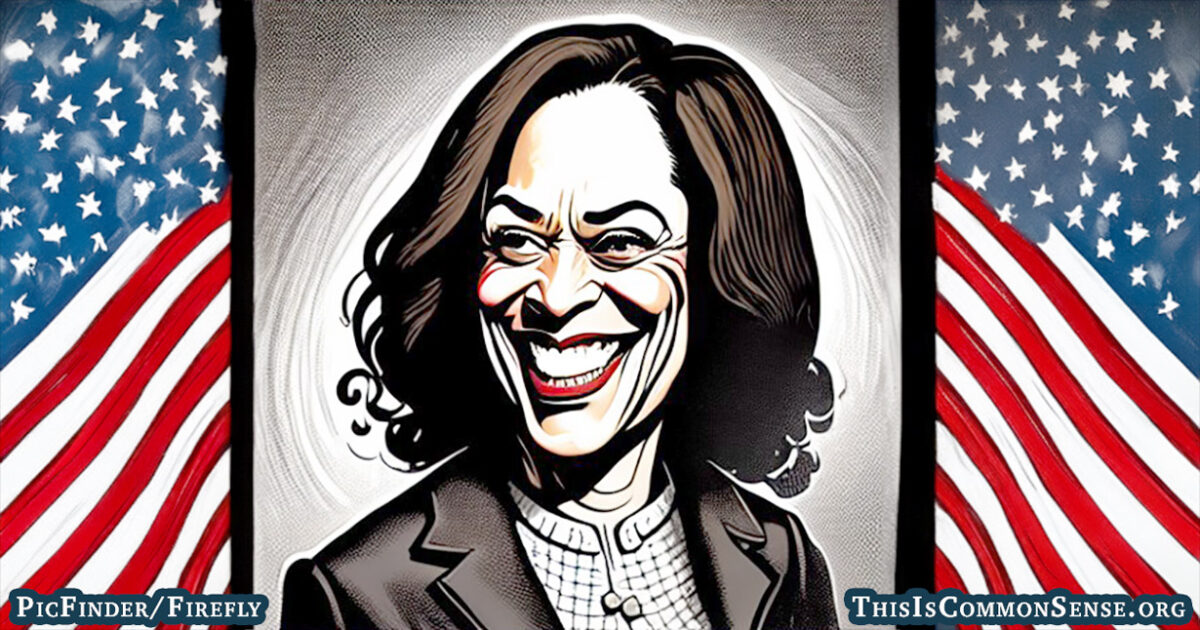
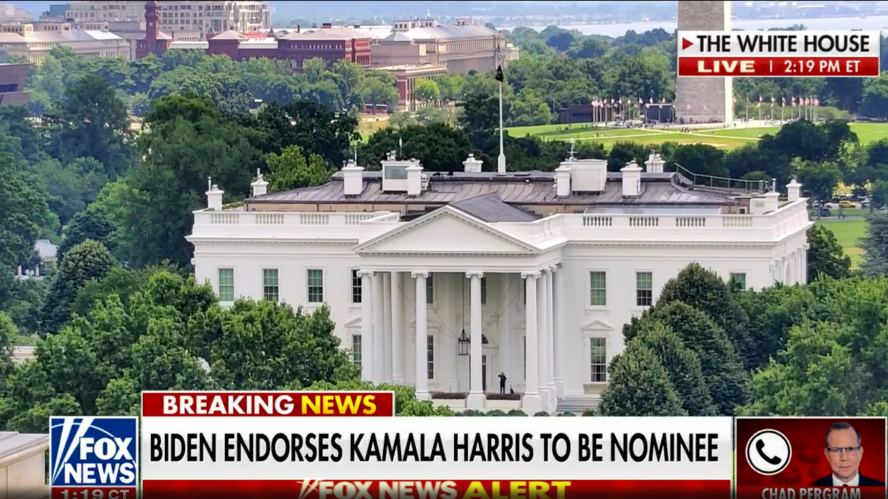
Now the president has endorsed his Vice President Kamala Harris to be the Democrat’s new standard bearer this fall. Still, stay tuned for an interesting DNC convention where Harris may face other challengers for the nomination.
And, as Detective Columbo used to say, “Just one more thing.”
There has been no word on whether in the coming days, not weeks, we will see the first female president of these United States, Kamala Harris.
If Democrats are too scared to have Biden as their leader this fall, should the American people really be okay with Biden sticking around for six months to be ours? Giving national and world leadership a continued go?
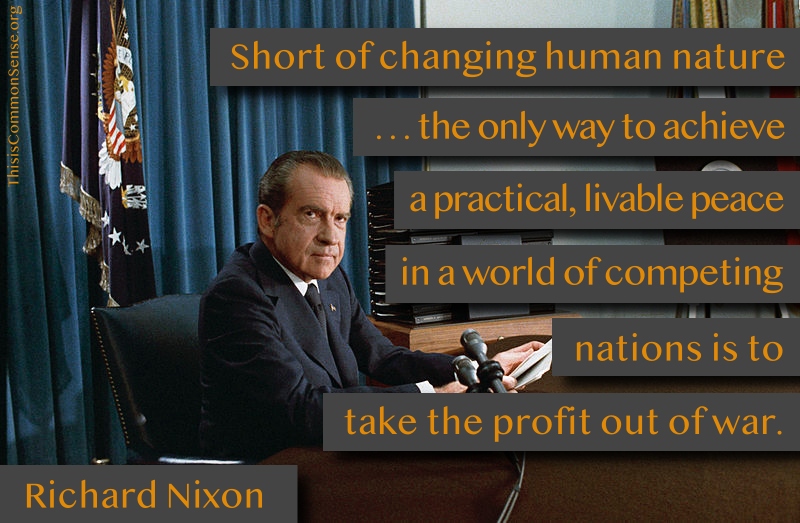
Short of changing human nature, therefore, the only way to achieve a practical, livable peace in a world of competing nations is to take the profit out of war.
Richard Milhous Nixon, 37th President of the United States, in his book Real Peace (1983).
Jessica Tarlov’s encomium for President Joe Biden is curious. “Joe Biden bows out of the 2024 race — we lost a good president and a good man,” ran the whole Fox News headline, but it’s second part, after the dash, that is curious. To the best of our knowledge, Sleepy Joe Biden did not resign the presidency.
Ms. Tarlov has been a contributor to Fox for many years. She is a well-known “liberal Democrat.” The article’s praise for the Biden Administration is clear in the blurb: “American Rescue Plan, infrastructure funding and gun safety are all things Joe Biden can be proud about.” Uh, OK.
“Biden just announced that he won’t be seeking re-election this November. And even though I knew it was coming, it feels profoundly sad to me,” wrote Ms. Tarlov below the headline.
Sad on a human level. Joe Biden is a fundamentally good man who did not want this outcome. He believes he can win, even if the data doesn’t say so. And sad on a political level. Biden was an incredible president with a record to be enormously proud of. Whoever is at the top of our ticket will no doubt celebrate his accomplishments – and him! – but there’s a joy to how he talks about what the Biden-Harris administration has gotten done that I’ll really miss.
“I know that I speak for regular Democrats in thanking Joe Biden for an incredible four years and saying that we’re really, really sad. Father Time came for a really good one,” concluded Tarlov.
Chad Pergram, reporting on Fox, claimed that White House insiders had called Biden’s debate performance in late June evidence that his campaign was “unsustainable.” Since that June 27th night, and usually with a pretense of shock at Biden’s decline, major Democratic Party bigwigs, from Nancy Pelosi and Barack Obama to a huge cadre of billionaire donors, had been calling on him to give up the campaign.
But, oddly, not to resign the presidency. Apparently running the country is no biggie; running a winnable campaign is.
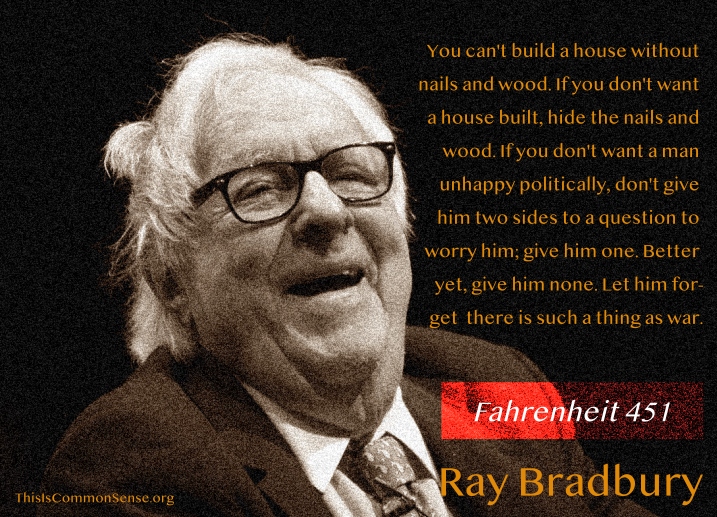
You can’t build a house without nails and wood. If you don’t want a house built, hide the nails and wood. If you don’t want a man unhappy politically, don’t give him two sides to a question to worry him; give him one. Better yet, give him none. Let him forget there is such a thing as war.
On July 21, 1925, in Dayton, Tennessee, high school biology teacher John T. Scopes was found guilty of teaching evolution in a public school classroom, and fined $100. The ambiguous legacy of the trial would continue — for decades, even to the present — to reveal the tensions inherent within a school system run by government and funded by taxpayers.
Interesting fact rarely noted: Scopes was teaching a heavily “eugenics” view, which would hardly be considered scientific by most modern standards.
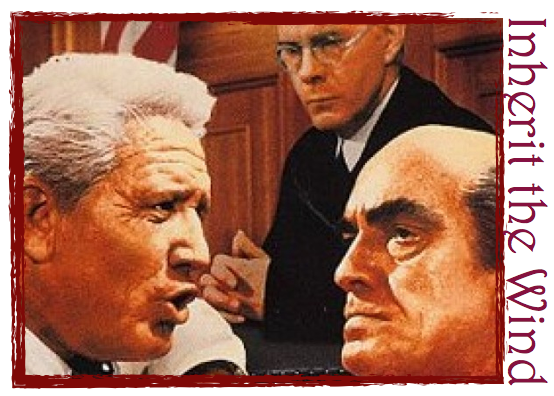
Pictured above, publicity for Inherit the Wind, a 1960 movie about the trial, but with the names changed, fictionalized. The movie starred Spencer Tracy in the Clarence Darrow (lawyer for the defense) role; Frederic March in the prosecutorial part, “Matthew Harrison Brady,” the pseudonymous name for politician William Jennings Bryan; Dick York as the defendant, Mr. Scopes; and Gene Kelly as the Baltimore journalist, a stand-in for H. L. Mencken, whose infamous coverage of the story shocked the nation almost as much as the trial itself. It was Mencken who dubbed the affair “The Scopes ‘Monkey’ Trial.”
At the end of the movie (spoiler alert!) the famous prosecutor dies in the courtroom. In the historical case, Bryan died five days after the verdict. The movie was based on the 1955 play of the same name, written by Jerome Lawrence and Robert Edwin Lee, directed by Stanley Kramer. The script was adapted by Nedrick Young (originally as Nathan E. Douglas) and Harold Jacob Smith.
Today is the 53rd anniversary of the Apollo 11 mission’s perambulation upon the Moon, on July 21, 1969. Neil Armstrong and Buzz Aldrin walked upon the surface of Mare Tranquillitatis for about two hours and 15 minutes. They spent over 21 hours on the surface, total, most of it inside the Lunar Module, at the site they called Tranquillity Base, before launching to rejoin astronaut Michael Collins in lunar orbit, and returning to Earth on July 24.
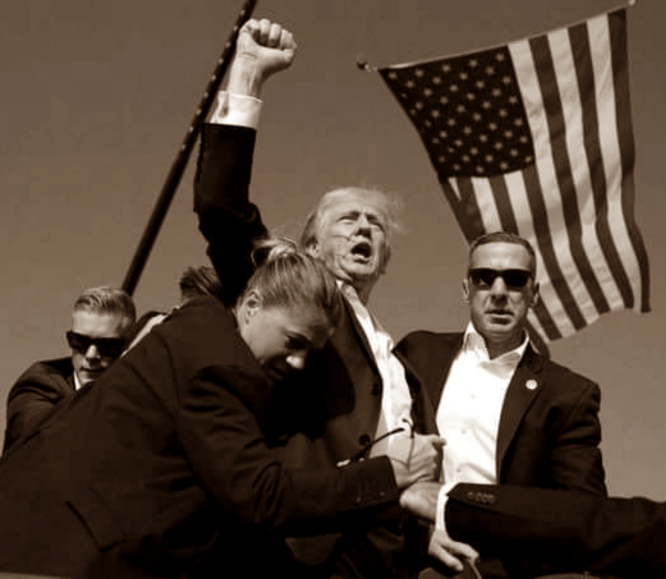
Does the lack of curiosity by the press seem natural? Has the stone-walling by government officials effectively squelched profitable discussion of last Saturday’s shooting of former president and current candidate Donald John Trump? Brett Weinstein notes the general lack of interest in facts by the “news media”:
Am I missing something, or has the usual series of post-shooting press conferences simply not materialized? It seems we don’t even know the basics. How many of these questions have a satisfactory/confirmed answer? Beyond ‘AR-15’ what weapon, exactly? How was it equipped? What type of ammunition, exactly? How many shots? How many unfired rounds left in the magazine? In the backpack? How many people were hit/grazed? Who are they and what are their injuries. What are President Trump’s injuries? How many fired rounds have been recovered? From where? Is the venue still an active crime scene, and if so, why was the roof being washed? What was the presumptive shooter doing over the several days prior? What was the transmitter for? What else was in the car? Was the shooter in contact with anyone by phone or other device while at the rally? Was the water tower covered? If so, how? If not, why not? Feel free to provide any answers you think we have official confirmation of. And please suggest other questions that should be readily answerable.
Speaking of the water tower, as Dr. Weinstein was, a mobile something/someone was caught on video on said tower:
Despite so many questions unasked and unanswered, revelations are bursting forth. According to Senator Josh Hawley (R-Mo.), we have learned something about the make-up of Trump’s security team in Butler: it wasn’t really filled to the brim with trained Secret Service agents!
“Whistleblowers who have direct knowledge of the event have approached my office. According to the allegations, the July 13 rally was considered to be a ‘loose’ security event. For example, detection canines were not used to monitor entry and detect threats in the usual manner. Individuals without proper designations were able to gain access to backstage areas. Department personnel did not appropriately police the security buffer around the podium and were also not stationed at regular intervals around the event’s security perimeter,” Hawley wrote in a letter sent Friday to DHS Secretary Alejandro Mayorkas.
“In addition, whistleblower allegations suggest the majority of DHS officials were not in fact USSS agents but instead drawn from the department’s Homeland Security Investigations (HSI). This is especially concerning given that HSI agents were unfamiliar with standard protocols typically used at these types of events, according to the allegations.”
Michael Flores, “Whistleblowers Bombshell! Untrained Security weren’t even Secret Service!” Substack, July 19, 2024.
On Monday, Paul Jacob concluded his column on the assassination attempt with these words:
Heads must roll at Secret Service. (Figuratively.) A new and beefed-up detail should be protecting Trump. And it is past time for RFK, Jr., to be granted Secret Service protection as well.
Well, Biden did finally grant RFK, Jr., a Secret Service detail, almost immediately after the Butler, Pennsylvania, event. But is there cooperation with the congressional investigation also immediately started?
Rep. James Comer, the Republican chairman of the House Oversight and Accountability Committee, has issued a subpoena to Secret Service Director Kimberly Cheatle compelling her to appear before the committee on Monday for what is scheduled to be the first congressional hearing into the attempted assassination of former President Donald Trump.
Comer said initially that the Secret Service committed to her attendance but that Homeland Security officials appear to have intervened and there has been no “meaningful updates or information” shared with the committee.
Comer said the “lack of transparency and failure to cooperate” with the committee called into question Cheatle’s ability to lead the Secret Service and necessitates the subpoena.
Rebecca Santana, Associated Press, “House committee subpoenas Secret Service director to testify on Trump assassination attempt,” PBS News, July 17, 2024.
Multiple investigations have been started, but how much investigating will actually go on, and what the purpose of these investigations really is, could be open to questioning:
The Department of Homeland Security’s inspector general also said Wednesday it has opened an investigation into the Secret Service’s handling of security for Trump on the day a gunman tried to assassinate him at his Pennsylvania rally.
In a brief notice posted to the inspector general’s website, the agency said the objective of the probe is to “Evaluate the United States Secret Service’s (Secret Service) process for securing former President Trump’s July 13, 2024 campaign event.”
There was no date given for when the investigation was launched. The notice was among a long list of ongoing cases that the inspector general’s office is pursuing.
Biden already had directed an independent review of the security at the rally.
The shooting has raised questions about how the gunman was able to climb onto a roof with a clear line of sight to the former president, who said he was shot in the ear.
Ibid.
Notice two things about that last paragraph.
The focus is on one gunman, not multiple gunmen. This is a repeat of the Warren Commission focus.
A mid-week report still treats President Trump’s injury not as a matter of fact but as a matter of testimony: Trump was not “shot in the ear,” but, instead, “said he was shot in the ear.”
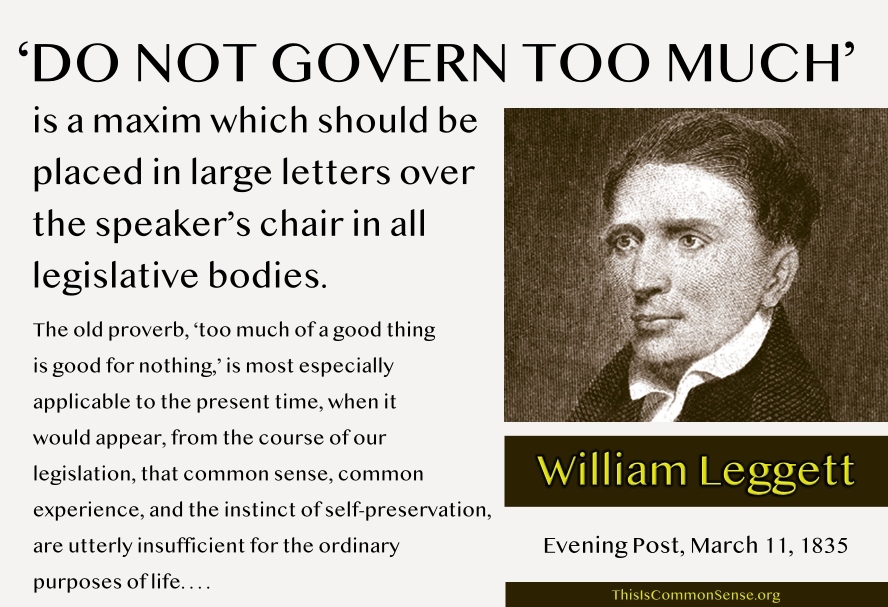
‘DO NOT GOVERN TOO MUCH,’ is a maxim which should be placed in large letters over the speaker’s chair in all legislative bodies. The old proverb, ‘too much of a good thing is good for nothing,’ is most especially applicable to the present time, when it would appear, from the course of our legislation, that common sense, common experience, and the instinct of self-preservation, are utterly insufficient for the ordinary purposes of life; that the people of the United States are not only incapable of self-government, but of taking cognizance of their individual affairs; that industry requires protection, enterprize bounties, and that no man can possibly find his way in broad day light without being tied to the apron-string of a legislative dry-nurse. The present system of our legislation seems founded on the total incapacity of mankind to take care of themselves or to exist without legislative enactment.
William Leggett, in an editorial in the Evening Post, March 11, 1835 — republished in A Collection of the Political Writings of William Leggett (1840) and titled “The Legislation of Congress”).