Categories
Today

Telegram & Principle

On February 24, 1917, United States ambassador to the United Kingdom, Walter Hines Page, was shown the intercepted Zimmermann Telegram, in which Germany offered to give the American Southwest back to Mexico were Mexico to declare war on the United States.

On February 24, 1803, the Supreme Court, in Marbury v. Madison, established the principle of judicial review.

Categories
education and schooling First Amendment rights

Hope for Campus Free Speech

The Understatement of the Month Award goes to David Lat, who says in a recent post that “when it comes to free speech and intellectual diversity, U.S. law schools continue to face challenges.”

One Big Challenge, more like: the contempt university policymakers routinely show for the speech of members of disfavored groups, if and when they say things that members of favored groups dislike.

Lat points to a decision, last month, by the Law School State Senate of Columbia Law School. The organization denied official recognition to a group formed to combat antisemitism, Law Students Against Antisemitism.

Reason: some pro-Palestinian students objected to LSAA’s definition of “antisemitism.”

The objection is cause for debate, sure, but not for preventing an organization from formally operating. Fortunately, after much attention was paid to the Senate’s decision by the Foundation for Individual Rights and Expression (FIRE) and others, the Senate reversed itself.

In addition to bad publicity, one thing that may help improve prospects for free speech on campus is a new rule issued by the American Bar Association, Standard 208.

Standard 208 requires law schools that want to be accredited by the ABA to “protect the rights of faculty, students, and staff to communicate ideas that may be controversial or unpopular.” This requirement is more encompassing than existing (if often ignored) protections of academic freedom for faculty members.

The ABA’s action is a big step, but not sufficient, Lat says. The cultures of our schools must change too.

This is Common Sense. I’m Paul Jacob.


PDF for printing

Illustration created with PicFinder and Firefly

See all recent commentary
(simplified and organized)
See recent popular posts

Categories
Thought

Eugen von Böhm-Bawerk

[T]here is one . . . thing that not even the most imposing dictate of power will accomplish: It can never effect anything in contradiction to the economic laws of value, price, and distribution; it must always be in conformity with these; it cannot invalidate them; it can merely confirm and fulfill them.

Eugen von Böhm-Bawerk, “Control or Economic Law,” Zeitschrift für Volkswirtshaft, Sozialpolitik und Verwaltung, Volume XXIII (1914): 205–71; John Richard Mez, Ph.D., translator.
Categories
Today

Zola and Menger

On February 23, 1898, Émile Zola was imprisoned in France after writing J’accuse, a letter accusing the French government of anti-Semitism and wrongfully imprisoning Captain Alfred Dreyfus. Zola was a leading force in extending realism to the novel.

Fifty-eight years earlier, Austrian economist Carl Menger was born.

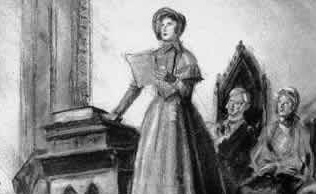
Menger [shown above] would go on to contribute to the development of the theory of marginal utility, which supplanted cost-of-production theories of value in economics, in his first book, translated into English as Principles of Economics. Though expert in mathematics (he served as tutor in economics and statistics to Archduke Rudolf von Habsburg, the Crown Prince of Austria, starting not long after the publication of the Principles), his approach to marginal theory was the least mathematical of his famous “co-discovers” of the principle, William Stanley Jevons and Leon Walras. Rooted in a subjective theory of value, it was the most realistic and least model-based of the marginalist revolutionaries, and he was most interested in price formation, not “price determination,” which focused almost exclusively on equilibrium conditions. He developed an evolutionary theory of money, as well. In his second book, he expanded upon invisible hand processes in society — made most famous in Adam Smith’s Wealth of Nations (1776) and contributed the opening salvo in what came to be known as the Methodenstreit, in which he attacked the misuse of historical method in economics by the technocratic “socialists of the chair” in the German-speaking world. Menger’s approach could be considered a kind of theoretical realism, as opposed the operationalism that was made famous a century later by Milton Friedman.

Zola died in 1902; Menger died in 1921.

Categories
defense & war general freedom international affairs

Panic at Sea

“The passengers later told local media they feared for their lives,” Newsweek reported.

Those 23 tourists, along with 11 crew members, were traveling from Taiwan’s Kinmen islands, located just six miles off the Chinese mainland, back to the big island of Taiwan, when a Chinese Coast Guard vessel stopped and boarded their boat . . . and for 30 minutes “reviewed their travel documents.”

The Chinese regime, “in response to the recent deaths of two Chinese fisherman, whose speedboat . . . capsized while being pursued by Taiwanese authorities for allegedly trespassing in restricted waters,” has threatened to “step up maritime law enforcement around Taiwan’s outlying Kinmen islands,” explains the magazine.

Kuan Bi-ling, head of Taiwan’s Ocean Affairs Council, said the incident “caused unnecessary ‘public panic.’”

A bit dramatic for just checking people’s IDs. 

But context is everything. 

After all, Chinese dictator Xi Jinping has repeatedly threatened a military invasion that would inevitably kill thousands upon thousands of Taiwanese. And China’s ever-growing military constantly stalks Taiwan, regularly encircling the island with its warships and planes.

The concern of Taiwanese officials is that China’s stepping up its harassment campaign. For 30 years there has been peace around Kinmen, which has become a tourist attraction memorializing Cold War times.

We don’t want to re-live that frosty period, just remember it.

“We urge the PRC [People’s Republic of China] to engage in meaningful dialogue with Taiwan to reduce the risk of miscalculation,” declared a U.S. State Department spokesperson.

But the problem isn’t miscalculation. The Chinese calculate that they can get their way by threatening, bullying, and intimidating Taiwan, their neighbors, the U.S., and the rest of the world. 

Panic? Try not to . . . when Chinazis are checking your papers.

This is Common Sense. I’m Paul Jacob.


PDF for printing

Illustration created with PicFinder and Firefly

See all recent commentary
(simplified and organized)
See recent popular posts

Categories
Thought

Christoph Probst

Every word that comes from Hitler’s mouth is a lie. When he says peace, he means war, and when he blasphemously uses the name of the Almighty, he means the power of evil, the fallen angel, Satan. His mouth is the foul-smelling maw of Hell, and his might is at bottom accursed. True, we must conduct a struggle against the National Socialist terrorist state with rational means; but whoever today still doubts the reality, the existence of demonic powers, has failed by a wide margin to understand the metaphysical background of this war.

From the fourth leaflet by “The White Rose,” composed by Christoph Probst (tried & executed by the German Reich on February 22, 1943).
Categories
Today

Heroes Executed

On Feb. 22, 1943, brother and sister Hans and Sophie Scholl, and their colleague in the White Rose resistance organization, Christoph Probst, stood trial before the Volksgericht — the People’s Court that tried political offenses against the Nazi German state. Found guilty of treason by Roland Freisler, head judge of the court, the three were executed that same day.

The method of capital punishment was guillotine.

Their six pamphlets had spread throughout German-held territory before the war ended.

Categories
crime and punishment partisanship

Caveat Preemptive

Were Donald J. Trump an exemplar of strict Kantian honesty; had he a reputation for exactitude about his achievements and acumen; if hyperbole had not become his own very public modus — then, and only then, would the near half a billion judgment against him make even a modicum of sense.

But the former U.S. president and infamous branding entrepreneur is and has always been known to be something of a b.s. artist. No one has excuse to take what he says literally. Business partners and all who make deals with Trump should do their own diligence. Their watchword should be: caveat emptor.

Yet, last week, New York State regulators and prosecutors bent over backwards to find Trump guilty. “On Friday, New York County Supreme Court Justice Arthur Engoron ordered Donald Trump to pay a staggering $355 million for repeatedly inflating asset values in statements of financial condition submitted to lenders and insurers,” explains Jacob Sullum of Reason. “When the interest that Engoron also approved is considered, the total penalty rises to $450 million. All told, Trump and his co-defendants, including three of his children and former Trump Organization CFO Allen Weisselberg, are on the hook for $364 million, or about $464 million with interest.”

That is a lot of money to protect other businesses from Trump’s characteristic exaggerations, which so appalled the court. But not any of the banks Trump did business with.

No one has been harmed, for Trump repaid all the loans.

There is no victim — making Trump the biggest-name victim of victimless crime prosecution of all time.

We, the people, know that “honesty is the best policy” is not standard business practice, and that Trump doesn’t always follow it. But we are also not demanding that our governments insert themselves into every successful transaction looking for fibs and fakery.

That would be a recipe for selective prosecution.

Which is just what this case is: selective prosecution of a political opponent.

This is Common Sense. I’m Paul Jacob.


PDF for printing

Illustration created with PicFinder and Firefly

See all recent commentary
(simplified and organized)
See recent popular posts

Categories
Thought

H.L. Mencken

I have maintained for years, sometimes perhaps with undue heat: that pedagogy in the United States is fast descending to the estate of a childish necromancy, and that the worst idiots, even among pedagogues, are the teachers of English. It is positively dreadful to think that the young of the American species are exposed day in and day out to the contamination of such dark minds. What can be expected of education that is carried on in the very sewers of the intellect? How can morons teach anything that is worth knowing?

H.L. Mencken, On ”Teachers of English” in “The Schoolmarm’s Goal” in The Lower Depths: A Play in Four Acts (1925).
Categories
crime and punishment sports subsidy

A Big Step Over the Vomit

“Two hours before the Washington Capitals play in Chinatown on a crisp November evening,” Candace Buckner wrote recently in The Washington Post, “a man stretches out on the pavement near Sixth and F streets NW, wrapped beneath a gray hoodie that he’s using as a blanket. Around the corner, a woman rolls a blunt outside the arena’s sportsbook entrance, and soon the waft of marijuana will perfume the area. There’s a spillage of vomit, green, near the tree on the sidewalk. Another man, this one cradling his arms behind his back and mumbling, doesn’t seem to notice the mess as he walks over it and bends over to pick up old cigarette butts.”

Might there be some connection between the state of downtown Washington, D.C., and the decision by the owner of both the Washington Capitals hockey team and the Washington Wizards NBA team to relocate them outside the city to Virginia?

“The District faced competition from Virginia,” explained a separate news story, “only because Leonsis had begun quietly exploring a new home for his teams in 2022, after years of complaining about crime and the noise of buskers outside his arena.”

There was not only less vomit but more room to be had in Virginia. For an even more expensive “public-private partnership” project. 

My fellow Virginia taxpayers and I are not crowing — Washington’s loss is our loss. We will no doubt pay for the privilege of experiencing even worse traffic and pricier tickets to hockey and basketball games . . . with higher taxes. 

Politicians can make names for themselves with these big sports franchise grabs. That’s what happened 30 years ago in the District of Columbia’s Chinatown. 

But the names have moved on, and now so have the games.

This is Common Sense. I’m Paul Jacob. 


PDF for printing

Illustration created with PicFinder and Firefly

See all recent commentary
(simplified and organized)
See recent popular posts