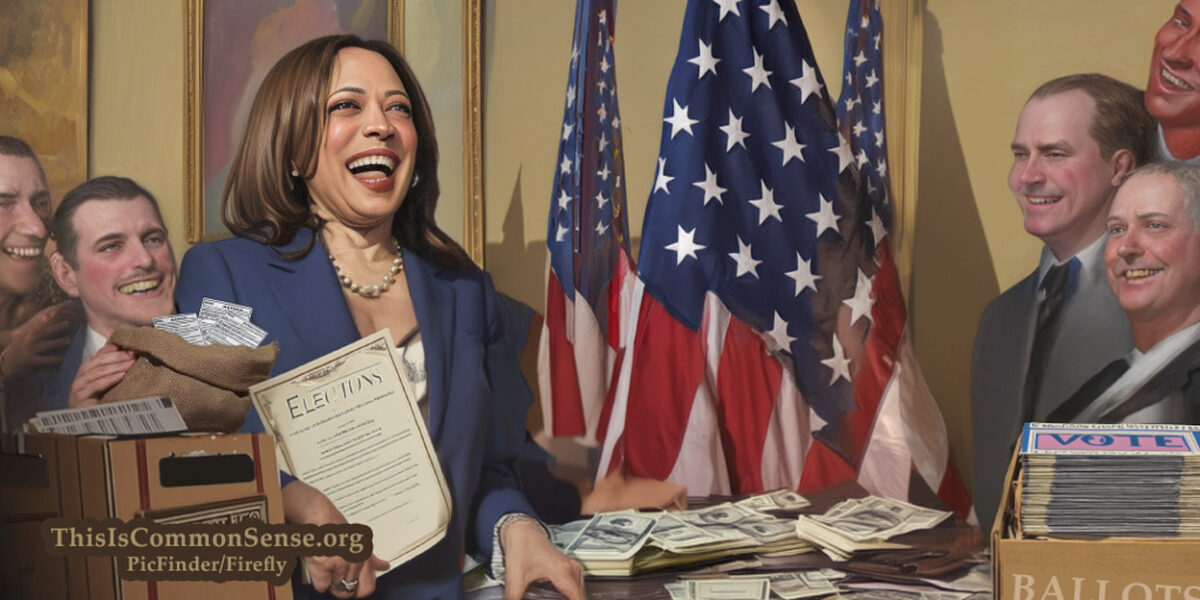
No one party can fool all of the people all of the time; that’s why we have two parties.
On April 3, 1968, Martin Luther King, Jr., delivered his “I’ve Been to the Mountaintop” speech.
The son of a presidential primary frontrunner in 1968, and nephew of the 35th President of the United States — both assassinated — has been an environmental litigator and vaccine skeptic for years, and, unlike Presidents Biden and Trump, has publicly and fundamentally criticized the handling of the
Though a Democrat for years, he was marginalized by the Democratic Party — an efficient machine for an astoundingly monolithic power center — and last October decided not to run as a Democrat.
So he’s gathering signatures, creating parties, all sorts of schemes to make good on his promise of being on the ballot in every state of the union.
As Ron Paul’s last-minute ballot access coordinator in 1988, I know how difficult that is. The two parties have only continued to tighten their grip on American election “rules.” If you were wondering why Bobby Kennedy made his Veep choice so early and picked wealthy Silicon Valley lawyer Nicole Shanahan, the reason is that many states require a Vice Presidential running mate to be on the petition before signatures
RFK, Jr., was forced to jump the gun. Plus, now a candidate, there are no campaign finance limitations on Shanahan putting her personal wealth into the effort.
Interestingly, RFK has formed a “national” political party, the “We the People Party,” which has established footholds in California, Delaware, Hawaii, Mississippi, and North Carolina. He has also formed The Texas Independent Party and is on the ballot as an Independent in Hawaii, Nevada, New Hampshire,
While in recent years there has been tremendous focus on how people vote, look at all the hurdles and walls still facing the who, if that candidate exists outside the major-party duopoly, a victim of all its silly, anti-democratic laws.
Maybe that’s one way Kennedy’s campaign can “do good,” by highlighting an issue neither party cares about: free and fair elections.
This is Common Sense. I’m Paul Jacob.
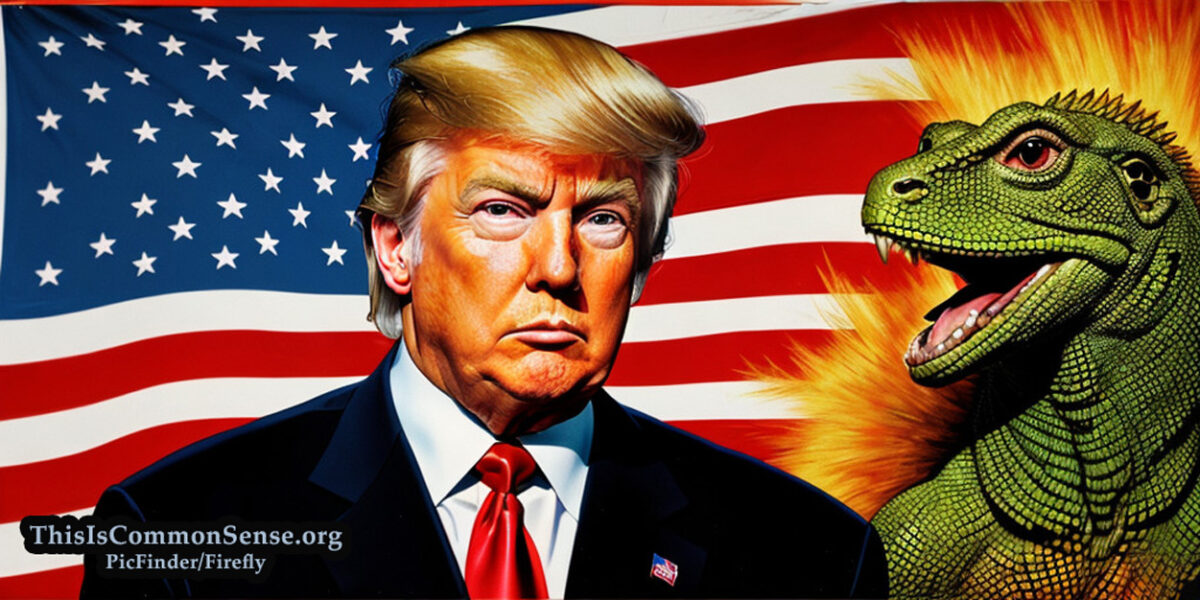
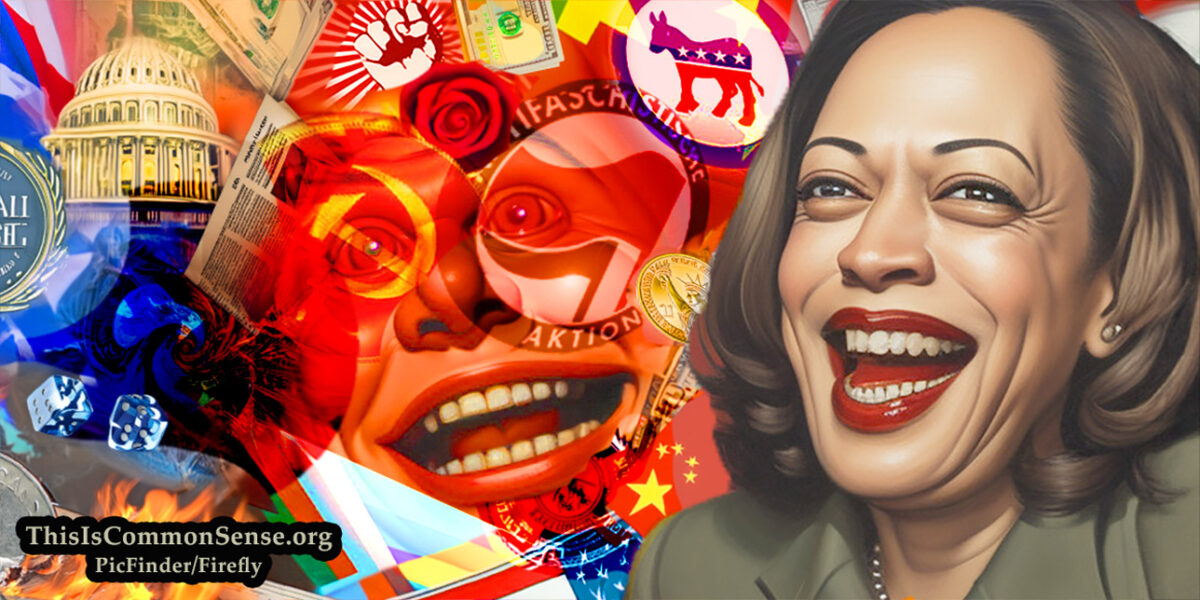
Illustration created with PicFinder and Firefly
See all recent commentary
(simplified and organized)
See recent popular posts
It is better to risk sparing a guilty person than to condemn an innocent one.
Voltaire, Zadig (1747).
With the Acte de déchéance de l’Empereur (“Emperor’s Demise Act”) of April 2, 1814, France’s Sénat conservateur officially recognized the downfall of Napoléon I of France. The original resolution to remove the Emperor was moved on the legislative body’s floor, by Thomas Jefferson’s friend Destutt de Tracy (according to Tracy himself — official records do not name the member), and was drawn up by Charles Lambrechts. The final paragraph summarized the new reality concisely:
The Senate declares and decrees as follows: 1. Napoleon Buonaparte is cast down from the throne, and the right of succession in his family is abolished. 2. The French people and army are absolved from their oath of fidelity to him. 3. The present decree shall be transmitted to the departments and armies, and proclaimed immediately in all the quarters of the capital.
Nine days later, after attempting to put his son on the throne, Napoléon abdicated unconditionally. The Allies exiled him to Elba, which was to be the whole extent of this reign as “Emperor.”
This arrangement proved unstable, with Napoléon staging a comeback, eventually leading to more war, his defeat at Waterloo, and his exile to an island in the South Atlantic.
American author, art critic, and commentator Camille Paglia was born April 2, 1947.
In late March, George F. Will argued that the truth about inequality in America, according to his op-ed title, is “awkward for the left and right.”
He points to the reality of transfer payments in the United States.
Ignoring that reality is what leads to awkwardness.
On the left, critics of capitalism portray low-income earners as a growing class of the impoverished . . . and high-income earners as a growing class of filthy rich.
But by “not counting about 88 percent of government transfer payments that enlarge the buying power of lower-income households, and not counting taxes that lower the wealth of higher-income households, government statistics purport to prove that the average income in the top quintile of earners is 16.7 times that of the average in the bottom quintile. Counting transfers and taxes, however, the actual ratio is 4 to 1.”
So leftists ignore the “successes” of the very system they set up, the better to complain and demand more of what has already been done.
But what do rightists ignore?
That’s where Mr. Wills’s Washington Post editors (a class of professionals who usually determine titles and blurbs) may have given us the wrong impression. Most of his column explodes leftist interpretations of contemporary reality. But he does talk about “the populist right,”: the “national conservatives” who mimic the progressive left in favoring “industrial policy” that, he notices (as I’ve noticed here at Common Sense) “regressively funnels money upward to corporations.
“The populist right advocates protectionism (tariffs to shield corporations from competition), and the populist left advocates hundreds of billions of dollars of subsidies (for semiconductors, electric vehicles, solar panels, etc.).” Both favor the rich when it comes to regulations, while complaining about the rich in other contexts.
A poor way to help the poor.
This is Common Sense. I’m Paul Jacob.
Illustration created with PicFinder and Firefly
See all recent commentary
(simplified and organized)
See recent popular posts
If freedom means that the will may be realized unhampered, then we seem to be freer the more we own, since we have accepted as the meaning of property that we ‘can do whatever we want’ with its content. We do not have ‘freedom’ to do so with other people’s property or with objects which cannot be possessed at all.
Georg Simmel, this passage translated by David Frisby, The Philosophy of Money (1978), § ““Freedom as the articulation of the self in the medium of things” from the chapter “Synthetic Part: Individual Freedom.”
On April Fools’ Day, 1957, the BBC offered for viewers of the current affairs program “Panorama” the infamous spaghetti harvest report hoax.
By sheer coincidence (?), one definition of “noodle” is “fool.”
In Argentina, they aren’t getting caught up on words. Real things are happening, substantive changes. Javier Milei is actually reducing the size of government:
Argentine President Javier Milei announced his plans to slash 70,000 government jobs in an effort to shrink government expenditure and reduce the national deficit to zero. The cuts are part of his broader strategy to achieve fiscal balance at any cost.
Katarina Hall, “Milei To Slash 70,000 Government Jobs To Reform Argentina’s Economy,” Reason (March 28, 2024).
But it is worth noting that he has tremendous opposition. People with cushy government jobs do not want to lose their cushy government jobs:
Milei assured that he would move forward with reforms ‘in spite of the politics.’ He said that the Senate’s recent rejectionof his bills was an opportunity to expose corrupt politicians, those ‘who do not want to give up their jobs and seek to maintain their privileges.’ Looking ahead, the Argentine president said he plans to introduce 3,000 more reforms after the 2025 congressional elections.
Katarina Hall, “Milei To Slash 70,000 Government Jobs To Reform Argentina’s Economy,” Reason (March 28, 2024).
American life is a powerful solvent. As it stamps the immigrant, almost before he can speak English, with an unmistakable muscular tension, cheery self-confidence and habitual challenge in the voice and eyes, so it seems to neutralize every intellectual element, however tough and alien it may be, and to fuse it in the native good-will, complacency, thoughtlessness, and optimism.
George Santayana, Character and Opinion in the United States (1920).