Fools have a habit of believing that everything written by a famous author is admirable. For my part I read only to please myself and like only what suits my taste.
Voltaire, Candide (1759).
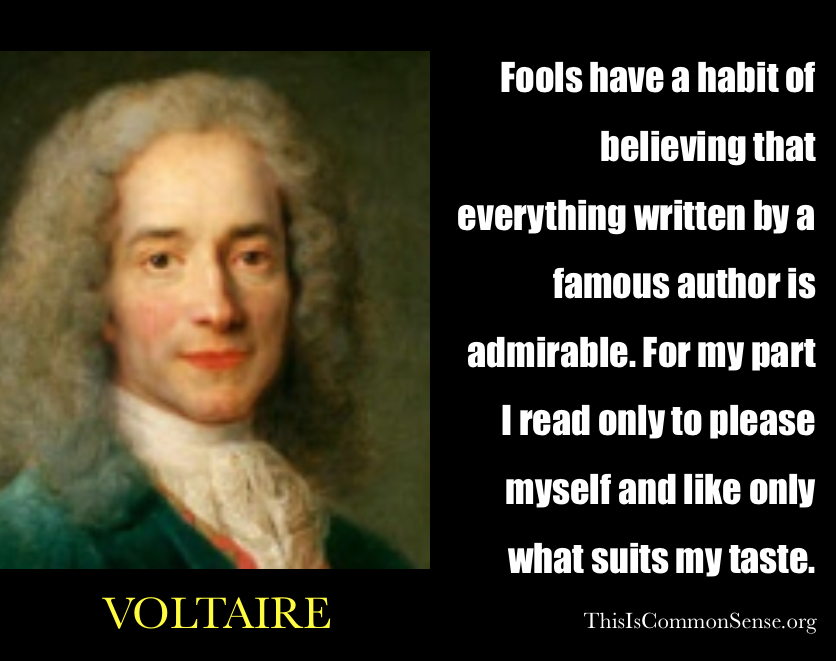
Fools have a habit of believing that everything written by a famous author is admirable. For my part I read only to please myself and like only what suits my taste.
Voltaire, Candide (1759).

On October 25, 1806, German philosopher Max Stirner was born. Stirner was known for his radical individualism, which under the name of “egoism” became culturally chic in the late 19th and early 20th centuries. In addition to Der Einzige und sein Eigentum, a major work that was famously attacked by Karl Marx, he translated into German Adam Smith’s Wealth of Nations (from its original English) and J.-B. Say’s A Treatise on Political Economy (from its original French).
Der Einzige und sein Eigentum has been translated into English as The Ego and Its Own and The Ego and His Own.
“Max Stirner” is a nom de plume, his birth name being Johann Kaspar Schmidt. He died in 1856, and his biography by John Henry Mackay, Max Stirner — sein Leben und sein Werk, was published in German in 1898 (enlarged 1910, 1914), and finally translated into English in 2005.
The only image we have of him was sketched by Karl Marx’s comrade, benefactor and abuse-buddy, Friedrich Engels. The portrait above has been adapted from that drawing.

Florida is suing the feds because the Sunshine State needs the cooperation of the federal government to check the status of certain persons on its voter rolls.
Florida is bound by law to maintain accurate registration rolls. The federal government is bound by law to cooperate with requests from state and local governments for the information required to fully assess whether a person on the rolls has the right to vote and to be registered to vote.
But when Florida asked Citizenship and Immigration Services for just this kind of information, the USCIS balked.
Meanwhile, the Justice Department is suing Virginia to prevent that state from cleaning up its own voter rolls.
Virginia Governor Youngkin castigates the federal action as “an unprecedented lawsuit against me and the Commonwealth of Virginia for appropriately enforcing a 2006 law signed by Democrat Tim Kaine to remove noncitizens from voter rolls — a process that starts with someone declaring themselves a noncitizen and then registering to vote.”
Power Line plausibly suggests that what’s happening here is that the politicized, misnamed Justice Department regards the votes of noncitizens as most likely to be votes for Democratic candidates. So why not discard established law and established procedures if this would help tilt elections in favor of Democrats?
This is Common Sense. I’m Paul Jacob.
Illustration created with Midjourney and Firefly
See all recent commentary
(simplified and organized)
See recent popular posts
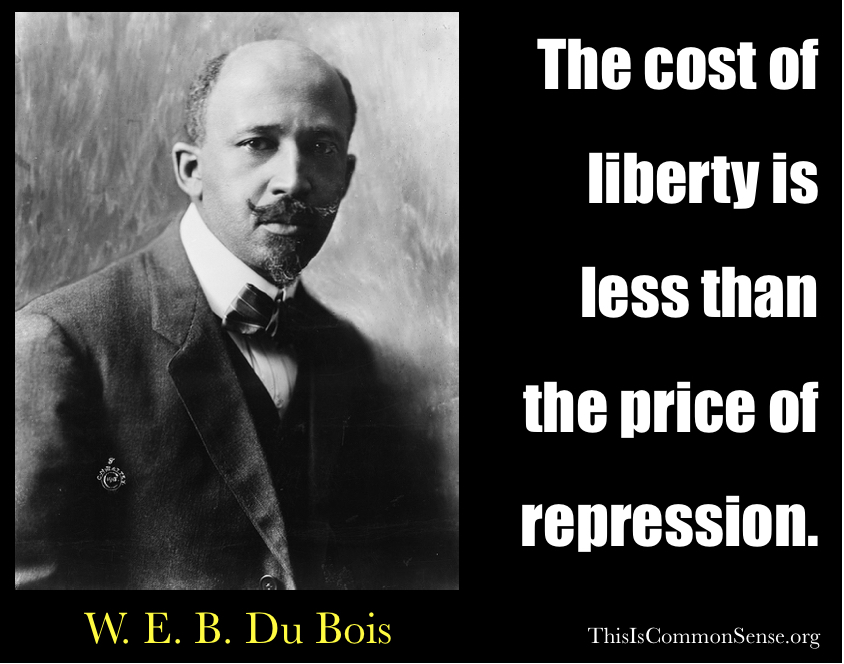
The cost of liberty is less than the price of repression.
W. E. B. Du Bois, John Brown: A Biography (1909): “The Legacy of John Brown.”

On October 24, 1648, the Peace of Westphalia was signed, marking the end of the Thirty Years’ War.

What else do you need to know?
Well, speaking just for myself, I prefer political ads that tell me at least something about an issue or a candidate prior to their exhortation to vote for or against him, her, or it.
Messaging ought to at least suggest why to vote a certain way.
And that’s what stuck out about an electronic billboard in North Carolina, which does absolutely nothing to persuade — zip, zilch, zero to answer the question why.
It simply states, “VOTE AGAINST THE CONSTITUTIONAL AMENDMENT.” Next to those words is a picture of a ballot with the “Against” oval filled in — and circled, too, for good measure.
The instruction is quite clear, but, well, why?
And what the heck is this even about?!
This billboard is paid for by NCAAT in Action — the AAT stands for Asian Americans Together. If one goes to the group’s website, one finds . . . nada. No information whatsoever about North Carolina’s Citizen Only Voting constitutional amendment, the only amendment on the ballot.*
I harken back to Georgia and the 2021 joint statement by Asian Americans Advancing Justice-Atlanta and the Asian American Advocacy Fund, which seemed to subscribe to the notion that only citizens should vote but still “collectively condemn[ed] the statements made by Georgia’s Secretary of State . . . emphasizing that ‘only American citizens should vote in our elections in Georgia.’”
Confused? These Democrat front groups don’t make any case at all against the idea of reserving suffrage to citizens. Why? They have no credible argument.
But they still want voters to defeat these measures.
The good news is that they don’t represent the vast majority of Asian Americans, who strongly favor only citizens voting.
This is Common Sense. I’m Paul Jacob.
* In full disclosure, I serve as chairman of Americans for Citizen Voting.
See all recent commentary
(simplified and organized)
See recent popular posts
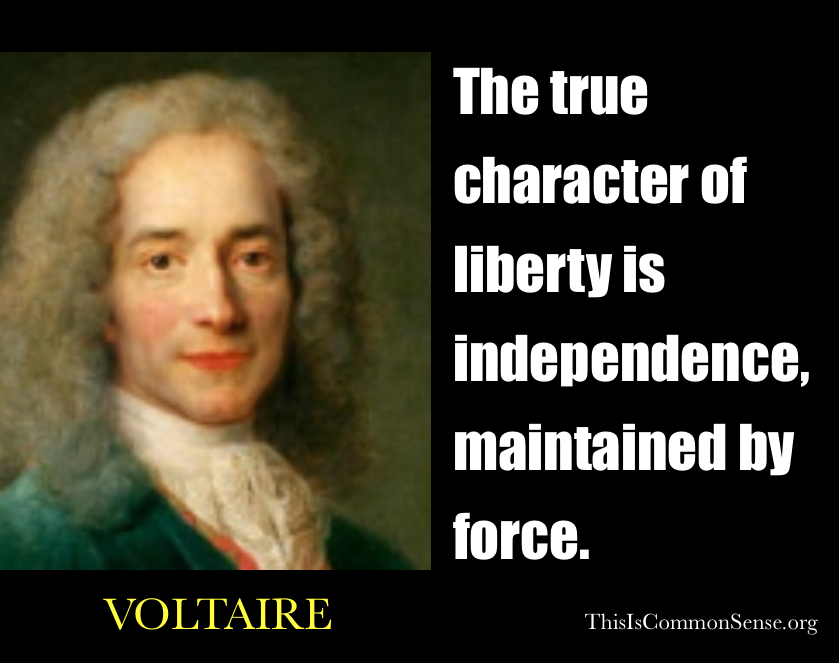
The true character of liberty is independence, maintained by force.

Budapest (10/23/1956) — The Hungarian Uprising begins when a delegation of students enter the building of Magyar Rádió to broadcast their demands for political and economic reforms to civil society, but are detained by security guards.

The report comprehensively describes the recent prolific activity of state-affiliated hackers all over the world, primarily those affiliated with China, Iran, North Korea, and Russia.
In the case of China, we have a series of “Typhoon”-named cyberattacks: Raspberry Typhoon, Flax Typhoon, and Granite Typhoon, to name a few, that “have intensively targeted entities associated with IT, military, and government interests around the South China Sea.”
The toll of cyberattacks in the U.S. — all kinds from all sources — has been extensive. In the recent year, “389 healthcare institutions were successfully hit by ransomware,” resulting in closures and medical delays.
The report is also about what we’ve been doing to defend ourselves: not enough. The authors say that although better cybersecurity is important, we also need “government action” that makes it costlier for states to launch these attacks.
We need something else, too. We need companies like Microsoft to abstain from helping adversary states to cyberattack us.
At Breitbart, Lucas Nolan reports that Microsoft has been maintaining close ties with the Chinese Academy of Sciences for over a decade. Among the details of a lengthy indictment, Nolan offers a list of publications coauthored by Microsoft and CAS researchers “in the fields of artificial intelligence, machine learning, data mining, computer vision, and even cybersecurity.”
Why help China gain knowledge that can be used to hurt us?
This is Common Sense. I’m Paul Jacob.
Illustration created with Midjourney and Firefly
See all recent commentary
(simplified and organized)
See recent popular posts
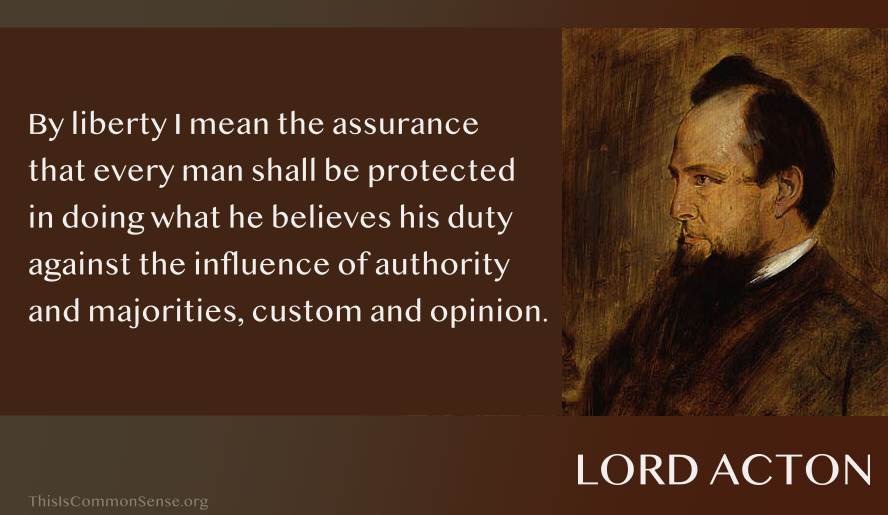
By liberty I mean the assurance that every man shall be protected in doing what he believes his duty against the influence of authority and majorities, custom and opinion.
Lord Acton, The History of Freedom in Antiquity (1877).