Categories
education and schooling ideological culture

The Bad Lesson

If you favor hiding evidence and quashing open inquiry with regard to public questions of the most urgent interest, what does that say about your philosophy of education?

Teachers’ union officials in Los Angeles have been in a tizzy because the Los Angeles Times, a liberal bastion, published a detailed series casting controversial light on the quality of public school education in the city. The articles include a database of scores assessing — gasp! — the effectiveness of teachers.

This is a disturbing development for union reps demanding ever greater pay and job security for even lackluster instructors. To be sure, it’s not the negative evaluations that most intensely disturb them, nor even any debatable aspect of the methodologies used to assess effectiveness. It’s that the data has been publicized and discussed at all. The Times should not have published the database, complained one union official, Randi Weingarten. Another union honcho, A.J. Duffy, even called for a boycott of the paper, as if it were morally turpitudinous to give parents even an inkling of teacher performance.

Slate.com contributor Jack Shafer concludes that the Times has “done its readers a great service” by exposing Duffy and his cronies as “enemies of open inquiry, vigorous debate, critical thinking, and holding authority accountable — essentially the cognitive arts that students are supposed to be taught in schools.”

Is there any way to bypass the dilapidated and authoritarian educational regime altogether? You homeschoolers out there: Any ideas?

This is Common Sense. I’m Paul Jacob.

Categories
free trade & free markets general freedom nannyism too much government

A Tour of Over-Regulation

Want a measure of the regulatory state run amok?

Recently in the Washington Post, Robert McNamara of the Institute for Justice informed us that “In the 1950s, only about one out of every 20 Americans needed a license to pursue the occupation of their choice. Today, that number is one out of every three.”

Wow. A lot more hoops to jump through to get a job or start a business.

Want to add insult to injury? The actual regulation McNamara was writing about makes it illegal — punishable by three months in the local jail in our nation’s capital — to “describe . . . any place or point of interest in the District to any person” as part of a tour without first getting a license.

And the license process is no picnic, either. Sure, this past summer the city did repeal the rule requiring a doctor’s certification that the aspiring guide is not a drunkard. But there remain plenty of stupid regulations, including new ones that require guides to be proficient in English. And yes, that applies even to guides who talk to those benighted folk who speak foreign languages.

Applicants must also pass a test on their knowledge of “various facets of Washington life, including architecture, history and regulations.”

Tour guides must be expert in “regulations.”

Even the Washington Post headlined its editorial, “Tour de farce,” suggesting that a system of “voluntary certification” would work better than big government rules.

Yes. That’s right.

This is Common Sense. I’m Paul Jacob.

Categories
First Amendment rights national politics & policies

The Ad Hominem Bias

Can you discredit an opponent’s opinion by demonizing the opponent or his or her supporters, rather than addressing the opinion itself?

The President recently spoke on the horrors of the Citizens United v. FEC decision, in which evil corporations retained (or regained) a right to support political speech. Obama hates the decision, but insists he’s no censor. What he really wants is to force supporters of political messages to disclose the financing used to promote said speech. Who it comes from.

The Disclose Act, currently working its way through Congress, aims to do just that.

The odd thing, as former FEC Chairman Bradley Smith relates, is that the legislation is, well, redundant. Corporations that spend money on political speech during final election blitz-time are now required to report their funding sources.

So why pile on?

Perhaps the President and his confrères see disclosure as less about information and more about blocking the message by taking up half of a 30-second television spot with the names of various corporate executives.

But the stated rationale bespeaks of an underlying belief that arguments for or against something stand or fall depending on who supports them. It’s the argument ad hominem all over again. Someone for policy X? If A or B supports it, that’s bad; if C or D supports it, that’s good.

And that’s a fallacy. And evidence of a certain simple-minded partisanship, giving voters less credit than they are due.

This is Common Sense. I’m Paul Jacob.

Categories
ballot access general freedom

Sore Winners?

In 2009, Washington state voters considered a ballot question, Referendum 71, on whether to uphold a new law expanding domestic partnership rights. The referendum was the work of opponents of the controversial law; supporters, obviously, would have been happy to see it enacted without challenge.

Some 138,000 Washingtonians signed the petition to post the question. But they failed to prevent the law from taking effect: It was approved last November 53 percent to 47 percent.

Now there’s controversy about whether publicly releasing the names of petition signers can be justified in the name of transparency.

Of course, this is transparency not of government — allowing civic monitoring of power and purse — but of citizens’ political acts. Those eager to see the names mostly claim they want to make sure the signatures are valid. But with 47 percent of the electorate having voted No, is there really any doubt that opposition was widespread enough to yield the required number of petition signatures?

In June, the U.S. Supreme Court ruled that petition signers enjoy no First-Amendment-implied right to anonymity. But the court suggested that disclosure of the petitioners’ names might be blocked on the grounds of a plausible threat that signers would be harassed, as some foes of the law have been already.

So a group called Protect Marriage Washington has secured a court order to keep the names sealed until it can argue in court that intimidation of petition signers is indeed likely.

Stay tuned.

This is Common Sense. I’m Paul Jacob.

Categories
general freedom ideological culture

Academically Free to Leave

One goal of academic freedom is to protect inquiry from the guardians of orthodoxy, the machinations of those who resent any articulation of an alternate view.

Administrators at UCLA don’t seem to be fans of this goal.

James Enstrom has been at UCLA for 36 years. He lacks tenure, and his contract is not being renewed because, according to the school, his “research is not aligned with the academic mission” of his department.

The professor was booted soon after coauthoring a piece at Forbes.com, disputing the relationship between diesel soot and deaths in California. According to Enstrom, in 1998 regulators “declared diesel exhaust a toxic substance based on studying truckers and railroaders from back in the ’50s, ’60s and ’70s, when emissions were much higher. They never factored in . . . that a very high percentage of truckers are also smokers . . . yet they were using this research to declare that all diesel exhaust is a toxic substance.”

Even colleagues who disagree with Enstrom worry about the implications for academic freedom. Michael Siegel at Boston University notes that the mission of Enstrom’s department is “to study the impacts of the environment on human health, and that’s exactly what Enstrom does. . . .”

The department apparently objects not to “the nature of his research but the nature of his findings.”

UCLA says chucking Enstrom has nothing to do with his conclusions, but won’t comment further. If there’s nothing to hide, why are they hiding it?

This is Common Sense. I’m Paul Jacob.

Categories
ideological culture incumbents political challengers

Establishment Out

Another one bites the dust: Nine-term Congressman Mike Castle was defeated in Delaware’s primary by Tea Party-backed candidate Christine O’Donnell.

Weeks ago, incumbent Alaska Senator Lisa Murkowski was bested in the Republican primary by Joe Miller, also Tea Party-supported. Before that Utah Senator Robert Bennett lost his re-nomination bid.

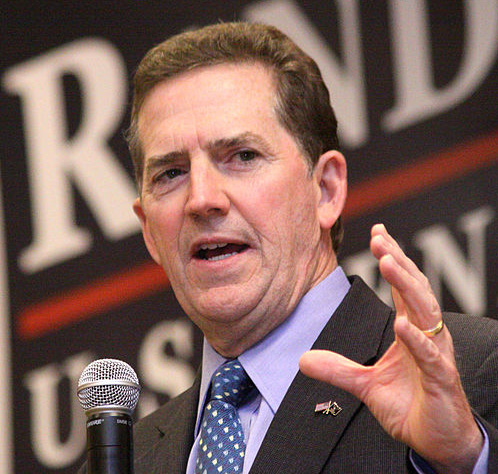
U.S. Senator Jim DeMint, who has actively assisted the insurgent Republicans, clarifies: “The GOP establishment is out.”

Media folks love talking about the angry mood throughout the land. The bad economic times have made people upset, they say — the supposition being that this rage is irrational, aimed indiscriminately at those in government, no matter how well they may have performed.

But the mainstream media hypothesis is wrong on both counts. First, the anger at career politicians isn’t new. Four years ago, long before the recession, Alaska GOP voters tossed out their incumbent governor, one Frank Murkowski, in favor of Sarah Palin. Voters have long disapproved of the way career politicians have wrecked our country. At some point, “enough” has morphed to “too much,” hence the current large-scale revolt.

Further, voters are clearly discriminating, not taking their ire out on all incumbents, just those they feel have not represented their interests.

That’s why we have elections: to hold elected officials accountable.

We ought not bemoan that citizens are boiling mad, but that it takes so much bad behavior by politicians to raise this righteous fury.

This is Common sense. I’m Paul Jacob.

Categories
free trade & free markets general freedom too much government

A Million Jobs, Gone

You’re fired! Now get a real job.

Does this sound mean?

It’s just what Cuba’s biggest employer plans to say between now and March — fire half a million workers and tell them to find other jobs, or (better yet) go to work for themselves.

After March, another half million will be given pink slips.

Or so say the Castro Bros., who are, in effect, the chief employers in Cuba.

Just like a despot, you might say. But hey: The country is broke, and the initial hiring of everybody by the government (which Fidel ran for scores of years, and his brother, Raul, now runs) was, itself, despotic. Thankfully, as more and more outlets of the “Cuban Communist Corp.” go under, the Cuban commissars say they will ease up on the regulations that now prohibit small, entrepreneurial businesses.

Of the many comments I’ve read about this, I was amused most by Tom Knapp’s. After drily noting that it is the Castros who will build down government, not Republicans in the U.S., he explained how the commies had kept their transportation going all these years: By maintaing old American cars from the ’40s and ’50s. Now that trade restrictions will likely be eased, those well-kept-up vintage cars could help “finance an explosion of economic prosperity just by tapping the U.S. classic car collectors’ market.”

Hope so.

And I hope the newly fired will transition to a slightly freer economy without too much trouble.

This is Common Sense. I’m Paul Jacob.

Categories
free trade & free markets too much government

Good FDA, Bad FDA

You’re sick and need medicine that has proved its benefits to you. Will the Food and Drug Administration let you use it?

The FDA recently extracted $600 million from Allergan, makers of Botox, for promoting uses for Botox different from those for which it was approved. It’s not illegal to use the drug for unapproved uses; it’s just illegal, sometimes, to tell you about those other uses. This, despite the fact that the First Amendment doesn’t exclude members of the pharmaceutical industry.

Now we’re hearing that the FDA has flip-flopped about letting people use midodrine, which quells dizziness. Back in 1996, midodrine was approved under “an abbreviated process,” one too brief to determine whether it really helps with dizziness. So, recently the agency outlawed sales of midodrine until its effectiveness could be shown. But — oops! — during the intervening 14 years, patients have come to depend on it. These patients swamped the FDA with complaints. So now the agency, in good-cop mode, says, okay okay, you can use it.

Thus, if you can persuade bureaucrats to let you medicate yourself as you and your doctor see fit, you get to do so. If not . . . sorry.

The New York Times talks about the “tough choices” facing the FDA, since banning a drug can mean “stranding desperate patients.” Congress should represent patients by stripping the agency of any power whatever to dictate when and how we may act to improve our own health.

This is Common Sense. I’m Paul Jacob.

Categories
ideological culture national politics & policies

King’s Dream, Tea Party-Style

In the Washington Post’s Book World segment, surprise was noted how quickly Dick Armey and Matt Kibbe’s Tea Party manifesto, Give Us Liberty, fell off in sales. Why? Perhaps “Tea Party folks . . . already knew who they were and what they believed?”

Good guess.

But what do they believe?

Alveda King is the niece of Martin Luther King, whom she refers to as “Uncle Martin.” Fielding questions from CNN’s Larry King after she had participated in Glenn Beck’s recent Washington rally, Ms. King insisted that “It’s not so much about the man as the message.” The “issues” she emphasized were the ones that Beck, to the surprise of many, had also emphasized: Faith, hope, charity, and honor.

“My uncle said we have to live together as brothers — and I add, as sisters — or ‘perish as fools.’” If Ms. King is not out of place in Beck’s wing of the Tea Party, then what of all the noise about racism? Could widespread opposition to Obama be mainly about policy?

When Rev. Sharpton talked about “going all the way in civil rights,” Ms. King clarified something that might be useful in helping left-leaning folks understand Tea Party folks’ attitude towards policy: “My uncle was not teaching that we needed the government to take care of us.”

His main message had something to do with liberty. And respect for all.

Tea Party people appear to be in the main stream of modern American culture in claiming such ideas as theirs, too.

This is Common Sense. I’m Paul Jacob.

Categories
First Amendment rights

Another Free Speech Advance

Whether in Washington State or in Washington, D.C., legislators regularly enact unconstitutional laws to suppress free speech.

Thankfully, courts often strike these restrictions down. It happened again on September 1, when a federal judge ruled that the Washington State’s limits on contributions made to Ballot Issue Committees during the last 21-day pre-election blitz is unconstitutional.

The plaintiff in the suit, FamilyPAC, said it had been limited in speaking out on Washington Referendum 71 (2009), a citizen-referred ballot measure to veto a state law regarding domestic partnerships. Specifically, FamilyPAC complained that state law had prevented its supporters from collecting funds to make their voices heard.

The judge ruled in their favor based on recent precedent as well as the clear wording of the First Amendment. Indeed, the case is so obvious, you have to ask: On what grounds was the initial regulation even proposed and voted in?

Well, Washington’s legislature, like the U.S. Congress, is filled with politicians who think they know best how to make politics work better. For them. This restriction barely bothers entrenched political interests. They are professionally organized enough to make their spending decisions early, and they like knowing that any last-minute effort by a less sophisticated individual or group will be blocked.

But when the politicians speak about such laws it sounds like they are taking a stand against “big corporations.”

Instead, they take a stand against citizens.

Thank goodness we have the courts!

This is Common Sense. I’m Paul Jacob.