Categories
Thought

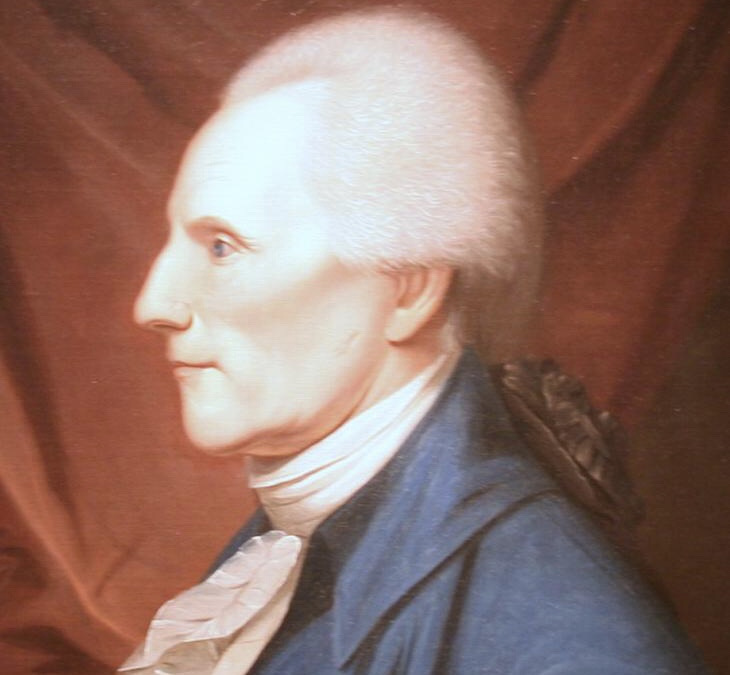
Richard Henry Lee

To preserve liberty, it is essential that the whole body of people always possess arms, and be taught alike, especially when young, how to use them. . . .

Richard Henry Lee [attributed], Additional Letters From The Federal Farmer, 53 (1788).
Categories
Second Amendment rights

A Terrible Accusation

In the wake of the Sandy Hook Elementary School massacre, much of the self-righteously impassioned rhetoric about gun control carries an accusation: those who oppose further gun curbs are “allowing” children to be murdered.

Ridiculous.

None of the newly proposed gun and ammunition bans — all of them old proposals, of course — would, if put in place long ago, have prevented the atrocity in Connecticut.

A more cogent indictment spotlights supporters of gun control. For politicians who have long believed they can halt all acts of violence and save lives by outlawing this weapon or that or limiting ammo clips, what does it say that they did nothing?

“The first two years of the last Obama administration,” New York Mayor Michael Bloomberg told NBC News, “Congress and the Senate and the White House were all in the hands of the Democrats and they did nothing.”

According to Minority Leader Nancy Pelosi, Bloomberg’s “point is well taken.”

Connecticut Congressman John Larson argued that, “To do nothing in the face of pending disaster is to be complicit.”

President Obama first suggested that elected officials, afraid of the gun lobby, put their own positions ahead of the safety of six and seven year old children, stating, “[W]e’re going to have to come together and take meaningful action to prevent more tragedies like this, regardless of the politics.”

In short, even when politicians believe their gun grabbing will save lives, they won’t act to protect those lives if it might risk their political position. They act or fail to, not on principle, but on their own political benefit.

Stay tuned tomorrow for a rational, constitutional step toward reducing the risk of a future massacre.

This is Common Sense. I’m Paul Jacob.
Categories
political challengers

The Unkindest Cut

Over three thousand years ago, in ancient Egypt, two wives of the Pharaoh Ramesses III, Tiye and Iset Ta-Hemdjert, fought over which of their sons would inherit the throne. Queen Tiye organized a harem conspiracy to favor hers. Dead, in the end, was Ramesses III, along with Tiye’s Penteweret, according to court documents.

There’s been considerable mystery surrounding Ramesses’ demise, but recent CT scans show that he almost certainly died of a slit throat. The wound had not previously been noticed because of the extensive wrappings around the pharaohnic mummy’s neck. A Horus eye amulet was found in the wound, undoubtedly placed there by the embalmers, probably for healing and protection in the afterlife.

Another mummy from that time has been determined, by genetic analysis, to be a son of Ramesses. There are strange marks around his neck. Since Penteweret had been found guilty at trial, and was said to have killed himself, and this particular mummy was dishonorably embalmed, the mummy is thought to be his. Perhaps he had hanged himself.

Such was ancient politics. Succession of rulers was often violent — and, even when not violent, there was no assurance that the claimant to the throne would be anything like a good ruler.

Which brings us to one of democracy’s great achievements, perhaps its greatest. Democratic elections do not express the popular will in any sure way. They do not conjure onto this plane of existence a Mandate of Heaven (Chinese), or any instantiation of Horus (ancient Egyptian). What they do is remove rulers from power, peacefully.

And that’s not nothing. Ask the grimace on the face of the remains of Ramesses III.

This is Common Sense. I’m Paul Jacob.

Categories
Thought

Alfred Marshall

Civilized countries generally adopt gold or silver or both as money.

Categories
ideological culture tax policy

An Actor’s Act

Think you can raise taxes without negative consequences? Consult Gerard Depardieu.

The great French actor (known for his prominent schnozz) moved across the border to Belgium, and is giving up his French passport. While other well-off folks who have moved out of their native land, such as billionaire Bernard Arnault, pretend that their moves are for non-tax reasons, Depardieu has no problem admitting that he’s leaving his country to avoid next year’s whopping new wealth tax.

For this, he has been criticized by France’s prime minister, Jean-Marc Ayrault, who publicly censured Depardieu for a lack of patriotism “at a time of cutbacks” and judged the actor’s decision “shabby.”

“Paying a tax is an act of solidarity,” Ayrault intoned on TV, “a patriotic act.”

Depardieu rightly objects, accusing the socialist government of President Francois Hollande of “driving France’s most talented figures out of the country”:

“I am leaving because you consider that success, creation, talent, anything different, must be punished,” he said.

Depardieu said that during his long career he had paid 145m euros (£118m) to the French taxman.

“At no time have I failed in my duties. The historic films in which I took part bear witness to my love of France and its history,” he said.

But it’s hard to maintain “solidarity” with a beloved country going socialist. Depardieu will find a lot of sympathy with his plight from even not-so-rich Americans. You know, we who put freedom and achievement and principle above kleptocracy.

This is Common Sense. I’m Paul Jacob.
Categories
links

Townhall: What We Can Do and What We Cannot Do

References to this weekend’s Townhall.com column:

Categories
Thought

Léon Walras

The market is like a lake agitated by the wind, where the water is incessantly seeking its level without ever reaching it.

Categories
Thought

Alfred Marshall

A government could print a good edition of Shakespeare’s works, but it could not get them written.

Categories
video

Video: Napolitano on the Progressives’ Anti-Constitutionalism

The hallmark of Progressivism was and remains a disrespect for constitutional limits on government power, starting and ending with Executive power.

Categories
Thought

William Lloyd Garrison

With reasonable men, I will reason; with humane men I will plead; but to tyrants I will give no quarter, nor waste arguments where they will certainly be lost.