Categories
Today

Slavery Abolished

On February 1, 1835, slavery was abolished in Mauritius. Six years later, in the American Civil War, Texas seceded from the United States. On this date in 1865, President Abraham Lincoln signed the Thirteenth Amendment to the United States Constitution, abolishing chattel slavery in the U. S.

Categories
links

Townhall: Facing Error

Can a politician acknowledge an error of judgment without giving up a claim to our attention? Must politicians pretend always to be right — even when we know no one can attain such perfection?

Click on over to Townhall and check out this weekend’s longer excursion into a subject broached on Friday. And come back here for a little more reading.

Categories
Thought

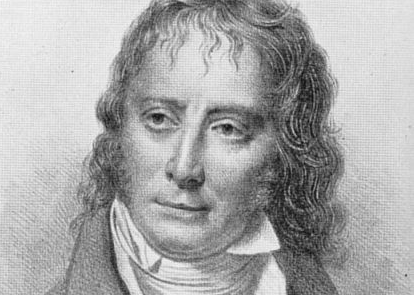
Benjamin Constant

“The danger of ancient liberty was that men, exclusively concerned with securing their share of social power, might attach too little value to individual rights and enjoyments.

“The danger of modern liberty is that, absorbed in the enjoyment of our private independence, and in the pursuit of our particular interests, we should surrender our right to share in political power too easily.”


Benjamin Comstant, The Liberty of the Ancients Compared with That of the Moderns (1819).

Categories
Today

Corn Law

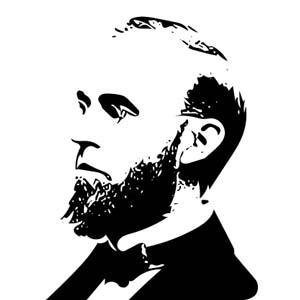
On January 31, 1849, the Corn Laws were abolished in the United Kingdom, one of the most impressive and far-reaching anti-protectionist moves of all time. “Corn” stood for all grains, including wheat, oats, barley, etc.; the free-trade agitation by John Bright and Richard Cobden (pictured) was one of the main impetuses for the reform.

On Jan. 31, 1865, the United States Congress proposed the Thirteenth Amendment to the U.S. Constitution, submitting it to the states for ratification. The Amendment’s main section reads: “Neither slavery nor involuntary servitude, except as a punishment for crime whereof the party shall have been duly convicted, shall exist within the United States, or any place subject to their jurisdiction.”

On Jan. 31, 1990, the first McDonald’s fast food restaurant opens in the Soviet Union. Having once traveled to Moscow, I’m exceedingly thankful for this.

Categories
video

Video: Calm Protestors in Camp

A reporter goes out to the Oregon outpost with the sit-in/protest asking pointed questions about history, religion, and (of course) “white privilege”:

The sit-in protestors do not seem like hysterical “militia terrorists” to me. Do they to you?

One of them, LaVoy Finicum, is the man later shot and killed by the federales . . . and he also seems collected, not crazed or over-angered. His message: all people, of whatever race, should defend their rights.

Categories
Today

Non-Violence … and Violent Reaction

On Jan. 30, 1948, Indian leader Mohandas K. Gandhi, known for his non-violent, non-cooperation struggle for freedom and national independence, was assassinated by a Hindu extremist.

On Jan. 30, 1956, Martin Luther King, Jr.’s home was bombed in retaliation for his work on the Montgomery Bus Boycott.

On Jan. 30, 1972, British soldiers killed fourteen unarmed civil rights marchers in Northern Ireland in what came to be known as “Bloody Sunday.” Soldiers shot 26 unarmed protesters and bystanders – 13 males, seven of whom were teenagers, died immediately, while another man died of his injuries nearly five months later. In the immediate aftermath, an investigation by the British Government largely cleared the soldiers and British authorities of blame. A second investigation begun in 1998, released a report in 2010 declaring that all of those shot were unarmed, and that the killings were both “unjustified and unjustifiable.”


Not quite fitting today’s “non-violence elicits violence” theme, on January 30, 1835, Richard Lawrence attempted to shoot former military leader and then-President Andrew Jackson, but failed. He was subdued by a crowd, including several congressmen. That marked the first attempt on the life of a sitting U.S. president.

Categories
Thought

Arthur Latham Perry

Common sense is outraged by a law which requires a man to part with his property at less than the actual value . . .

Arthur Latham Perry, Principles of Political Economy (1891).
Categories
meme

Maybe they don’t know what they believe…

In one breath, they mock anyone who thinks that Bernie is a “classic” socialist. In the next breath they celebrate the (dubious) successes* of the public take-over of industry.

It looks like somebody needs a dictionary.

Click image below for a high resolution version:

What's Up With That, socialism, Bernie Sanders, checklist, So you don't like Democratic Socialism, meme, illustration, response


*Examples of “successful” American Socialism. What’s not to love?

Social Security
Insolvent and teetering on the verge of bankruptcy. Essentially a massive Ponzi scheme.

Medicare / Medicaid
—Insolvent and teetering on the verge of bankruptcy. So overburdened with bureaucracy that doctors routinely limit these patients to minimize red tape and maintain profitability.

Prisons
—Over-populated racist hellholes . . . an inevitable result of the government’s ill-conceived failed “war on drugs.”

Police
—Notoriously out of control, over-militarized, brutal civil rights abusers.

Military
—A corrupt and expensive acquisitions process on one end, with the VA on the other — serving as a useful example of some of what can go wrong when government runs healthcare. In the middle, an infamous stonghold of insanity, if useful for politicians seeking to kill lots of people quickly. (SEE CATCH 22)

Public Education
—A widely acknowledged failure, excelling mainly in the production of ill-informed, unskilled, brainwashed dullards.

Click image below for a high resolution version:

What are you so afraid of, people love it, people love socialism, American socialism, success, Bernie Sanders, real socialism, socialism, meme, American Socialism, public ownership, definition, meme, illustration, Jim Gill, Paul Jacob, Common Sense


Unintentionally funny examples of clueless “Democratic Socialism”

5 Ways America Is Already Socialist

Socialism. Seems Like a Scary Word…


Categories
crime and punishment general freedom ideological culture national politics & policies political challengers U.S. Constitution

Faces Veiled, Fallacies Unveiled

A real-life politician has admitted to having been wrong, even going so far as to dismiss his own previous comment as “stupid.”

He wasn’t abject about it — didn’t “apologize.” He simply explained how and why he had erred.

This . . . from a presidential contender.

No, it wasn’t Hillary Clinton, she of many errors and untruths. It wasn’t Bernie Sanders, whose love of Big, Intrusive Government is an error in and of itself. And it wasn’t Trump, known hyperbolist.

The erring politician? Gary Johnson, a former two-term Republican governor of New Mexico.

Johnson, who is currently running for the Libertarian Party presidential nomination, told Reason last year that banning the burqa would be a reasonable step in protecting the rights of women. Here in America.

Sound sort of Trumpian?

Earlier this month, Johnson retracted his statement. Last week on Fox Business Network’s Kennedy, he explained why prohibiting the face-veil wouldn’t work.

“We need to differentiate between religious freedom, which is [sic] Islam, and Sharia law, which is politics,” he said — and I add a “sic” there because he is obviously driving at this point: religious freedom means we cannot prohibit the religion of Islam, but Sharia law amounts to a religious intrusion into the legal and political realm. And thus must be opposed as “contrary to the U. S. Constitution.”

The reason Johnson had earlier floated the banning of the Islamic face-veil was to save women from Islamofascist enforcement of Sharia’s mandate to go around in public only when completely covered.

“We cannot allow Sharia Law to, in any way, be a part of our lives.”

I’m with him. Let’s hold tight to both religious and political freedom. And how refreshing for a politician to admit an error.

This is Common Sense. I’m Paul Jacob.


Printable PDF

Gary Johnson, libertarian, burka, Common Sense, illustration


Categories
Today

Gallatin

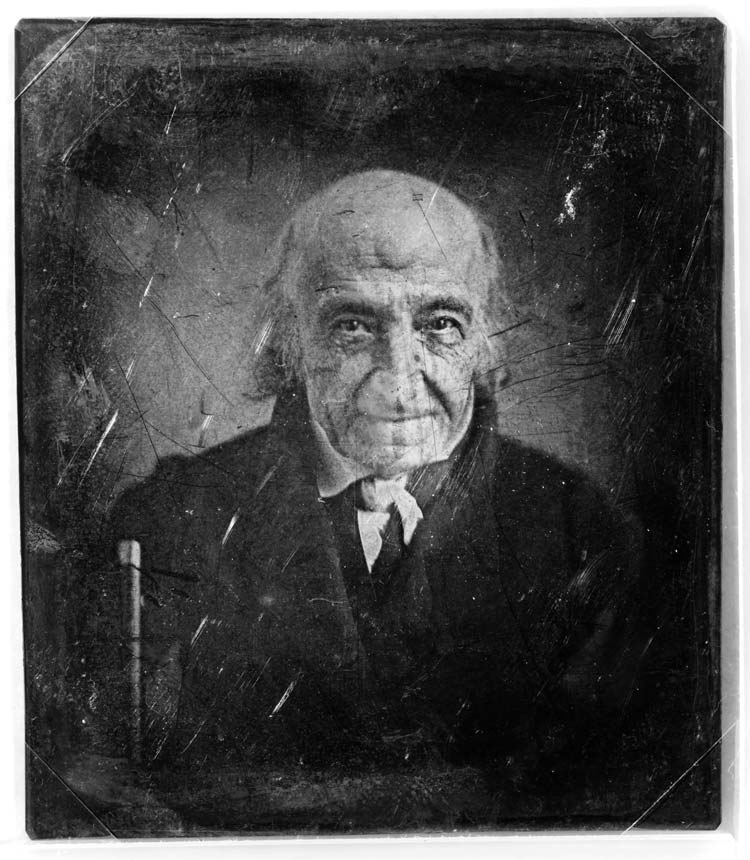
On January 29, 1761, Albert Gallatin was born. Gallatin served as the fourth United States Secretary of the Treasury — a post in which he served longer than any other in American history — advanced the anthropological and linguistic study of native Americans, and became the subject of a biography by Henry Adams. Called the “father of American ethnology,” he has been honored with a 1967 U.S. stamp as well as many placenames, including the Gallatin National Forest in Montana.