Categories
Thought

President Merkin Muffley

Gentlemen, you can’t fight in here! This is the War Room.


U.S. President Merkin Muffley, as performed by actor Peter Sellers in the (fictional) black comedy Dr. Strangelove, or: How I Stopped Worrying and Learned to Love the Bomb (1964), a film directed by Stanley Kubrick and written by Kubrick, Terry Southern, and Peter George, based on the book Red Alert by Peter George, first published in the UK in 1958 as Two Hours to Doom under the pseudonym Peter Bryant.

Categories
Accountability moral hazard nannyism national politics & policies political challengers too much government U.S. Constitution

Term Limits Trump

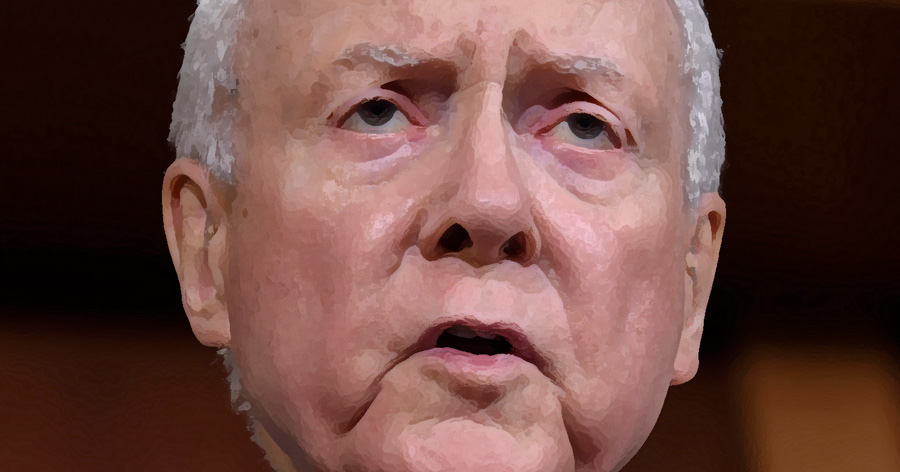
Entering his campaign’s homestretch, underdog Donald J. Trump gave an important speech at Gettysburg, Pennsylvania. He emphasized his support for term limits in what he called his “100-day action plan to Make America Great Again.”

“[R]estoring honesty, accountability and change to Washington” is the top item on Trump’s agenda, along with a pledge to begin the drive for “a Constitutional Amendment to impose term limits on all members of Congress” on his very first day in the Oval Office.

Public disgust with the corrupt status quo in Washington — and the hope that he will shake things up — drove Trump’s victory.

Yet, today, the Elections Committee of Michigan’s House of Representatives hears testimony on several bills to weaken or repeal term limits. Have the limits lost public support? Not on your life.

Politicians simply want to stay ensconced in power, reaping the many benefits they’ve bestowed upon themselves. They want to stay in power longer.

Just look to California. Back in 2012, a dishonest ballot explanation tricked voters into thinking they were tightening their term limits law. But what they were actually doing was voting to weaken it.

Now, Golden State legislators can stay in the same seat for a dozen years. And special interests have noticed. They’re “investing” more heavily than ever before.

The Los Angeles Times summarized the result in its headline: “Longer terms for California’s Legislature mean a flood of cash from interest groups . . .”

Here’s for enacting real term limits at every level of government. And if the politicians and special interests don’t like it — good!

This is Common Sense. I’m Paul Jacob.


Printable PDF

Donald Trump, term limits, president, first, illustration


Categories
Thought

Eugen von Böhm-Bawerk

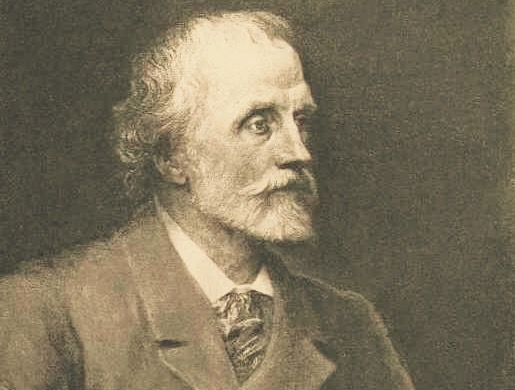
[T]here is one . . . thing that not even the most imposing dictate of power will accomplish: It can never effect anything in contradiction to the economic laws of value, price, and distribution; it must always be in conformity with these; it cannot invalidate them; it can merely confirm and fulfill them.


Eugen von Böhm-Bawerk, “Control or Economic Law,” Zeitschrift für Volkswirtshaft, Sozialpolitik und Verwaltung, Volume XXIII (1914): 205–71; John Richard Mez, Ph.D., translator.

Categories
Today

Cry of Independence

On November 10, 1821, the First Cry of Independence in the small, interior town of Villa de los Santos, occurred in Panama. The November 10 date has since become Panama’s “Cry of Independence Day” in the country. November is a month of independence celebrations in Panama, but the November 10 celebration marks the first signs of the struggle for separation from Spain.

Categories
Accountability media and media people moral hazard national politics & policies

Indecency Abounds

The most indecent aspect of this bizarre election year? The “grab them” comment . . . from a decade ago? The lies about lies about lies? The “debates”?

Maybe not. Maybe it’s the infamous “mainstream media.”

Last week I wrote about the most obvious case, that of Donna Brazile and her helping hand emails to the Clinton campaign, accomplishing what years of mere induction and analysis could not: justifying, totally, the epithet for CNN as the “Clinton News Network.”

But it was nearly the whole media that was in the tank, as we say nowadays, for Mrs. Clinton. This has been obvious for some time. Even mainstream media mavens have noticed it, as I wrote not too long ago.

Will more journalists and TV faux-journalists notice?

They certainly have now noticed that they did not see a Trump victory coming.

Delusional about Hillary Clinton’s likability, and about how normal folks react to her history of corruption and scandal, TV talking heads and powerful newspapers doubled down in her favor . . . which may have actually helped precipitate a result against their intention.

The mainstream media triggers much of America, you see, especially the parts of the country that revolted against the prospect of a Clinton Dynasty.

Not that I place myself above journalists as objective, either. I’m not a journalist. I’m an activist. I am for liberty. Responsibility. Accountability. Limited government. I’m no more a fan of major party messiahs than I am of their rah-rah boys in the journalist biz.

I’m not exactly shouting about Trump’s win. I’m just happy that Hillary — and her vast Democratic-partisan media conspiracy — lost.

If this be indecency, make the most of it.

This is Common Sense. I’m Paul Jacob.


Printable PDF

Donald, Trump wins, media, failure, illustration


Categories
Thought

President Merkin Muffley

Hello? . . . Uh . . . Hello, D- uh, hello, Dmitri? Listen, uh, uh, I can’t hear too well. Do you suppose you could turn the music down just a little? . . . Oh-ho, that’s much better . . . yeah . . . huh . . . yes . . . Fine, I can hear you now, Dmitri . . . Clear and plain and coming through fine . . . I’m coming through fine, too, eh? . . . Good, then . . . well, then, as you say, we’re both coming through fine . . . Good . . . Well, it’s good that you’re fine and . . . and I’m fine . . . I agree with you, it’s great to be fine . . . a-ha-ha-ha-ha . . . Now then, Dmitri, you know how we’ve always talked about the possibility of something going wrong with the Bomb . . . The Bomb, Dmitri . . . The hydrogen bomb! . . . Well now, what happened is . . . ahm . . . one of our base commanders, he had a sort of . . . well, he went a little funny in the head . . . you know . . . just a little . . . funny. And, ah . . . he went and did a silly thing . . . Well, I’ll tell you what he did. He ordered his planes . . . to attack your country . . . Ah . . . Well, let me finish, Dmitri . . . Let me finish, Dmitri . . . Well listen, how do you think I feel about it? . . . Can you imagine how I feel about it, Dmitri? . . . Why do you think I’m calling you? Just to say hello? . . . Of course I like to speak to you! . . . Of course I like to say hello! . . . Not now, but anytime, Dmitri. I’m just calling up to tell you something terrible has happened . . . It’s a friendly call. Of course it’s a friendly call . . . Listen, if it wasn’t friendly . . . you probably wouldn’t have even got it . . . They will not reach their targets for at least another hour . . . I am . . . I am positive, Dmitri . . . Listen, I’ve been all over this with your ambassador. It is not a trick . . . Well, I’ll tell you. We’d like to give your air staff a complete run-down on the targets, the flight plans, and the defensive systems of the planes . . . Yes! I mean i-i-i-if we’re unable to recall the planes, then . . . I’d say that, ah . . . well, ah . . . we’re just gonna have to help you destroy them, Dmitri . . . I know they’re our boys . . . All right, well listen now. Who should we call? . . . Who should we call, Dmitri? The . . . wha-whe, the People . . . you, sorry, you faded away there . . . The People’s Central Air Defense Headquarters . . . Where is that, Dmitri? . . . In Omsk . . . Right . . . Yes . . . Oh, you’ll call them first, will you? . . . Uh-huh . . . Listen, do you happen to have the phone number on you, Dmitri? . . . Whe-ah, what? I see, just ask for Omsk information . . . Ah-ah-eh-uhm-hm . . . I’m sorry, too, Dmitri . . . I’m very sorry . . . All right, you’re sorrier than I am, but I am as sorry as well . . . I am as sorry as you are, Dmitri! Don’t say that you’re more sorry than I am, because I’m capable of being just as sorry as you are . . . So we’re both sorry, all right? . . . All right.


U.S. President Merkin Muffley on the phone to Soviet Premiere Dmitri Kissoff, a monologue performed by actor Peter Sellers in the (fictional) black comedy Dr. Strangelove, or: How I Stopped Worrying and Learned to Love the Bomb (1964), a film directed by Stanley Kubrick and written by Kubrick, Terry Southern, and Peter George, based on the book Red Alert by Peter George, first published in the UK in 1958 as Two Hours to Doom under the pseudonym Peter Bryant.

Categories
Today

Close Call

On November 9, NORAD computers and the Alternate National Military Command Center in Fort Ritchie, Maryland, detected purported massive Soviet nuclear strike. After reviewing the raw data from satellites and checking the early-warning radars, the alert was cancelled

Categories
Accountability general freedom ideological culture moral hazard national politics & policies political challengers responsibility too much government U.S. Constitution

The Wisdom of the Founders

“At a certain point, you have to let go for the democracy to work,” President Barack Obama told HBO’s Bill Maher last week, praising “the wisdom of the founders.”

“There has to be fresh legs,” he continued. “There have to be new people. And you have to have the humility to recognize that you’re a citizen and you go back to being a citizen after this office is over.”

Maher failed to ask Mr. Obama how this “fresh” viewpoint squared with his support for Mrs. Clinton. Nevertheless, let’s applaud the president’s endorsement of term limits.

Speaking of the founders, and limits on power, and this being Election Day, I’m reminded of a commentary in Forbes, back on Election Day four years ago, written by Ed Crane, the man who built the Cato Institute into one of the nation’s preeminent think tanks. Bemoaning the “interminable presidential race,” Crane wished for “a nation in which it really didn’t matter who was elected President, senator or congressman.”

“Don’t get me wrong, because I’m not saying it doesn’t,” explained Crane, “only that it shouldn’t.” He added, “I believe the Founders had a similar view.”

His point is simple: Getting to vote for your next president and senator and congressman is swell, but it’s important to have a Constitution that restrains those elected, so they “don’t have a heck of a lot of power over you or your neighbors.”

“We are a republic of limited governmental ­powers,” or should be, argued Crane. “Such a nation allows for sleep on election night.”

Instead of gnashing of teeth.

This is Common Sense. I’m Paul Jacob.


Printable PDF

Constitution, voting, democracy, Ed Crane, fear


Categories
Thought

Eugen von Böhm-Bawerk

[T]hrift is never popular. . . . If parliaments have historically been the guardians of thrift, they now have turned much rather into its sworn enemies. Nowadays, the political and national parties — maybe not exclusively in our own country, but certainly also here — tend to develop a certain covetousness, almost considered to be dutiful, for all kinds of benefits for their own electorate at the expense of the general public.


Eugen von Böhm-Bawerk, as quoted by Ludwig von Mises, “The Economist Eugen von Böhm-Bawerk” (Neue Freie Presse, Vienna, August 27, 1924) — described by Mises as “the last words that Böhm-Bawerk addressed to Austria’s financial authorities.”

Categories
Today

JFK

Montana was admitted into the United States federal union as the 41st state on November 8, 1889. On the same date in 1960, John F. Kennedy defeated Richard Nixon in one of the closest presidential elections of the 20th century, becoming the 35th president of the United States