Categories
Accountability ballot access incumbents moral hazard national politics & policies political challengers responsibility

Vote Early & Often?

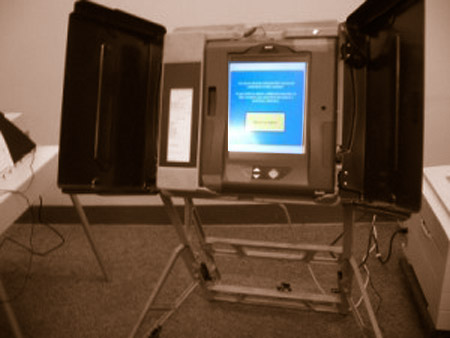
Voted yet? The Pew Research Center thinks about 50 million Americans have, representing 38.5 percent of the voter turnout forecast.

I’m for making it as easy as possible for people to cast a ballot. Who isn’t? Well, I mean who among normal people isn’t? I’m not counting politicians and their hacks.

But even I am opposed to extended “early voting.”

Here’s why:

First, the longer the voting period goes, the greater the cost — as more paid advertisements, phone calls and mailings are needed to keep reaching voters over many weeks. No problem here with more money in politics — money is essential, and my candidates and ballot issues could certainly always use more promotion. But let’s not artificially advantage big money by running the meter.

Several states now allow more than six weeks of voting prior to so-called Election Day. Even a three-week voting period is far more expensive than building toward a single day — or, say, a weekend through Tuesday voting period (four days).

Second, we ought to vote together, close to the same time, all of us privy to the latest public knowledge. This year’s drip of near daily “October”* surprises, thanks to WikiLeaks and the FBI, shows the potential problem should a major scandal or incident impact the race after so many folks have already voted.

Third, early voting tends to advantage incumbents. Challengers often don’t catch up to the better known and organized incumbent until the final days of the race.

As for voting often, as in more than once, that’s a crime. Plus, with these candidates, once is more than enough.

This is Common Sense. I’m Paul Jacob.


*Well into November, some of these surprises, eh? I mean, it is as if they saved the blood rituals for last.


Printable PDF

vote, early, often, democracy, early voting, illustration, joke, meme


Categories
Thought

Ernest Bramah

Although there exist many thousand subjects for elegant conversation, there are persons who cannot meet a cripple without talking about feet.


Ernest Bramah, The Wallet of Kai Lung, “The Transmutation of Ling” (1900)

Categories
Today

War Powers

The U.S. Congress overrode President Richard M. Nixon’s veto of the War Powers Resolution on November 7, 1973. This resolution ostensibly limits presidential power to wage war without congressional approval, hence Nixon’s veto. Nowadays, however, it is often referred to as the expansive terms for the “Imperial President’s” license to engage in military conduct, and a dereliction of congressional duty to direct the United States’ foreign policy, especially regarding war.

Categories
links

Townhall: On a Ballot Near You

Election Day is not just about the presidential race. Or your voice in the House of Representatives. Or even your local dogcatcher.

There are issues at stake!

Click on over to Townhall for FIVE of them. Then come back here for some additions, subtractions, and a few divisions:

Re: Marijuana Reforms

Four states and the District of Columbia (the nation’s capital) have already legalized marijuana for recreational use — in every case by ballot initiative. Another 24 states have legalized medical marijuana, which began as a ballot initiative phenomena, but has now been enacted through several state legislatures.

Re: Measure 71

In fact, sold as a way to reduce special interest influence, Measure 71 actually increases the cost and difficulty of qualifying a ballot measure. Dramatically. That burdensome impact will be far, far more problematic for grassroots efforts than for powerful interests.

Additionally, the measure allows a well-financed opposition  —  special interests, big business, big labor, oil and gas interests, or all of the above  —  to defeat reforms by running nasty, negative advertising campaigns designed to win even when they lose 54.9 percent of the voters.

One opponent dubbed it “the Rich Guy Protection Act.”

Re: Question 5 (ranked choice voting)

Here’s how it works: When a last-place candidate is eliminated, the second-choice votes from those who had picked that eliminated candidate as their first choice are reallocated to the remaining candidates. This process continues until one candidate has gained a majority of the votes.

The big advantage is that ranked-choice voting wipes out the wasted vote argument, that by voting for a candidate one believes in, but who is unlikely to win, one’s vote makes no difference and might even help elect the person one most dislikes. Under the ranked-choice system, that vote is tallied and counted for the candidate one most supports, but it can also, if no candidate garners a majority and your favorite candidate is eliminated, go on to count for another candidate you prefer over others.

In such a system, voters could vote their conscience, without fearing the worst evil would prevail. That alone is worth a YES vote on Question 5.

But ranked choice voting also affects the behavior of candidates, by making it more important to not offend the supporters of other candidates. Without abridging the First Amendment to outlaw mean, nasty speech, ranked choice voting, by giving all voters greater input, encourages our better angels.

Re: Massachusetts’s Charter School Amendment

On the pro-charter side is billionaire Michael Bloomberg, so the measure isn’t lacking for funding. Still, Question 2 was polling above 70 percent in favor back in April, now it is below 50 percent.

Re: Further Reading

Categories
links

Townhall: On a Ballot Near You

Election Day is not just about the presidential race. Or your voice in the House of Representatives. Or even your local dogcatcher.

There are issues at stake!

Click on over to Townhall for FIVE of them. Then come back here for some additions, subtractions, and a few divisions:

Re: Marijuana Reforms

Four states and the District of Columbia (the nation’s capital) have already legalized marijuana for recreational use — in every case by ballot initiative. Another 24 states have legalized medical marijuana, which began as a ballot initiative phenomena, but has now been enacted through several state legislatures.

Re: Measure 71

In fact, sold as a way to reduce special interest influence, Measure 71 actually increases the cost and difficulty of qualifying a ballot measure. Dramatically. That burdensome impact will be far, far more problematic for grassroots efforts than for powerful interests.

Additionally, the measure allows a well-financed opposition  —  special interests, big business, big labor, oil and gas interests, or all of the above  —  to defeat reforms by running nasty, negative advertising campaigns designed to win even when they lose 54.9 percent of the voters.

One opponent dubbed it “the Rich Guy Protection Act.”

Re: Question 5 (ranked choice voting)

Here’s how it works: When a last-place candidate is eliminated, the second-choice votes from those who had picked that eliminated candidate as their first choice are reallocated to the remaining candidates. This process continues until one candidate has gained a majority of the votes.

The big advantage is that ranked-choice voting wipes out the wasted vote argument, that by voting for a candidate one believes in, but who is unlikely to win, one’s vote makes no difference and might even help elect the person one most dislikes. Under the ranked-choice system, that vote is tallied and counted for the candidate one most supports, but it can also, if no candidate garners a majority and your favorite candidate is eliminated, go on to count for another candidate you prefer over others.

In such a system, voters could vote their conscience, without fearing the worst evil would prevail. That alone is worth a YES vote on Question 5.

But ranked choice voting also affects the behavior of candidates, by making it more important to not offend the supporters of other candidates. Without abridging the First Amendment to outlaw mean, nasty speech, ranked choice voting, by giving all voters greater input, encourages our better angels.

Re: Massachusetts’s Charter School Amendment

On the pro-charter side is billionaire Michael Bloomberg, so the measure isn’t lacking for funding. Still, Question 2 was polling above 70 percent in favor back in April, now it is below 50 percent.

Re: Further Reading

Categories
Today

Gandhi Arrested

On November 6, 1913, Mohandes K. Gandhi was arrested for participating in a march of Indian miners in South Africa.

Categories
Thought

J. S. Mill

Utility is often summarily stigmatized as an immoral doctrine by giving it the name of Expediency, and taking advantage of the popular use of that term to contrast it with Principle. But the Expedient, in the sense in which it is opposed to the Right, generally means that which is expedient for the particular interest of the agent himself: as when a minister sacrifices the interest of his country to keep himself in place. When it means anything better than this, it means that which is expedient for some immediate object, some temporary purpose, but which violates a rule whose observance is expedient in a much higher degree. The Expedient, in this sense, instead of being the same thing with the useful, is a branch of the hurtful.

John Stuart Mill, Utilitarianism (London: Longmans, Green, and Co., 1879), Chapter II, “What Utilitarianism Is.”

Categories
video

3 Presidential Recommendations to Blow Your Mind…

Afraid you’re going to blow it this election day? Here is a trifecta of voting recommendations to blow your mind instead . . .

1.

William Weld, the Libertarian Party’s VP candidate, says that, whatever you do, DON’T VOTE FOR TRUMP! Rachel Maddow speaks of a “gossamer ceiling,” colorfully indicating the too-fine-a-point put by the putative Libertarian:

2.

If you find that startling, then you might wish to consider the famous far-left (Hegelian Marxist) philosopher Slavoj Žižek, who makes the opposite case: WHATEVER YOU DO DON’T VOTE HILLARY:

https://youtu.be/b71CNNKdVRw

3.

Maybe Daniel Hannan will navigate these waters more closely to your taste: DON’T VOTE FOR AN UNFIT CANDIDATE:

Have you seen other recommendation “jaw droppers?” Let us know!


Categories
Thought

Frederick Douglass

“We were all ranked together at the valuation. Men and women, old and young, married and single, were ranked with horses, sheep, and swine. There were horses and men, cattle and women, pigs and children, all holding the same rank in the scale of being, and were all subjected to the same narrow examination. Silvery-headed age and sprightly youth, maids and matrons, had to undergo the same indelicate inspection. At this moment, I saw more clearly than ever the brutalizing effects of slavery upon both slave and slaveholder.”


Frederick Douglass, Narrative of the Life of Frederick Douglass, An American Slave, 1845

Categories
Today

An Illegal Vote

On November 5, 1872, Susan B. Anthony defied the law to vote, and was later fined $100.

Forty-one years earlier, to the day, Nat Turner, American slave and revolt leader, was tried, convicted, and sentenced to death in Virginia. His revolt has been celebrated in William Styron’s Pulitzer Prize-winning novel, The Confessions of Nat Turner (1967), and in a recent movie, The Birth of a Nation (2016).