While we are postponing, life speeds by. Nothing is ours except time.
Lucius Annaeus Seneca, Moral Epistles to Lucilius.
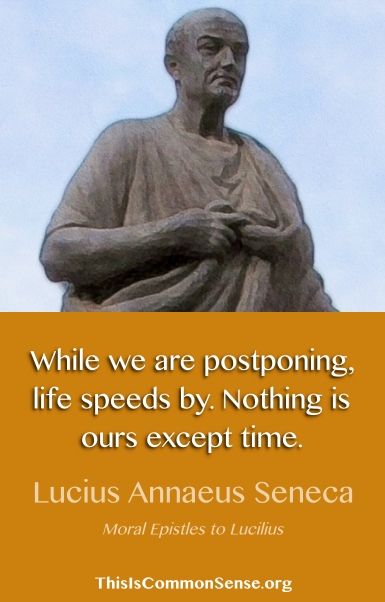
While we are postponing, life speeds by. Nothing is ours except time.
Lucius Annaeus Seneca, Moral Epistles to Lucilius.
Peace is not an absence of war, it is a virtue, a state of mind, a disposition for benevolence, confidence, justice.
Benedict de Spinoza, Tractatus Politicus (1667), Chapter Five, as liberally rendered in A Natural History of Peace (1996) by Thomas Gregor.
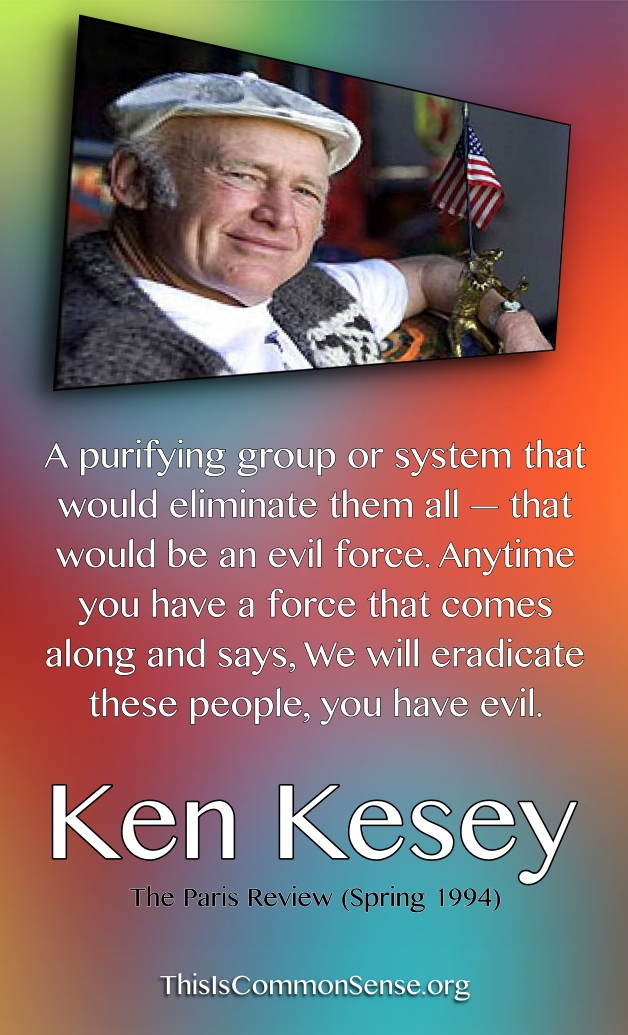
When I see bad-looking bikers with black leather studs on their wrists hanging out at the Oregon Country Fair, I take it as a sign of health. No, I don’t want them hanging around, but trying to eliminate them all, arrest them all, legislate against them all — that’s evil. I have asked feminists, If you could, would you eliminate all male chauvinist pigs? If you could come up with some kind of spray to spray in the air and do away with them, would you? Would you do away with all scorpions and rattlesnakes, mosquitoes? Mosquitoes are part of the ecosystem. So are male chauvinist pigs. You’ve got to fight them, but you don’t try to exterminate them. A purifying group or system that would eliminate them all — that would be an evil force. Anytime you have a force that comes along and says, We will eradicate these people, you have evil. Looking back in history, what has seemed the worst turns out not to be the worst.
Ken Kesey, as quoted in “Ken Kesey, The Art of Fiction No. 136” by Robert Faggen, in The Paris Review No. 130 (Spring 1994).
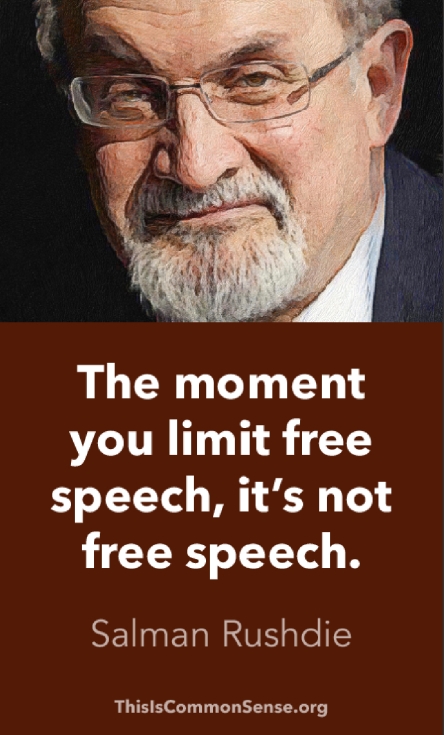
[T]he moment you limit free speech, it’s not free speech.
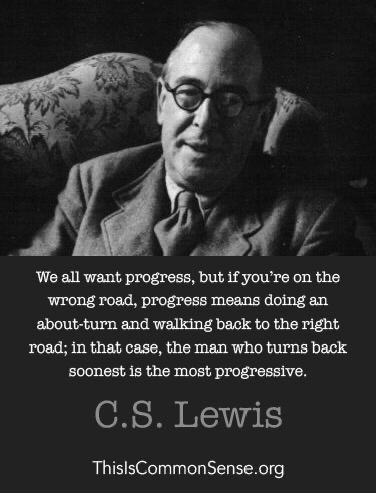
We all want progress, but if you’re on the wrong road, progress means doing an about-turn and walking back to the right road; in that case, the man who turns back soonest is the most progressive.
Clive Staples Lewis, The Case for Christianity (the first part of Mere Christianity, printed separately).
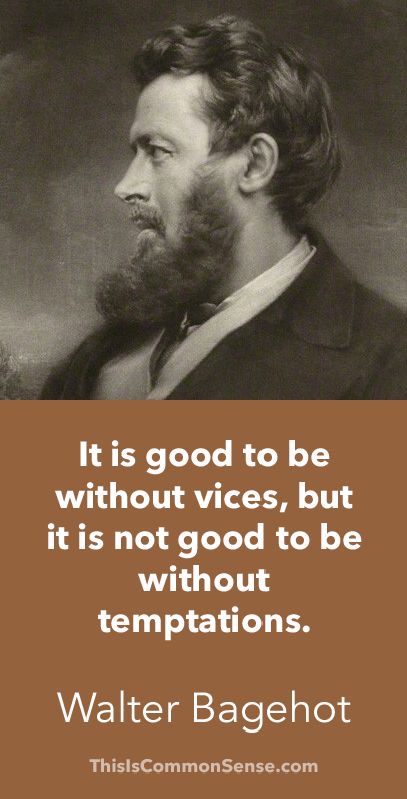
It is good to be without vices, but it is not good to be without temptations.
Walter Bagehot, Biographical Studies (1907).
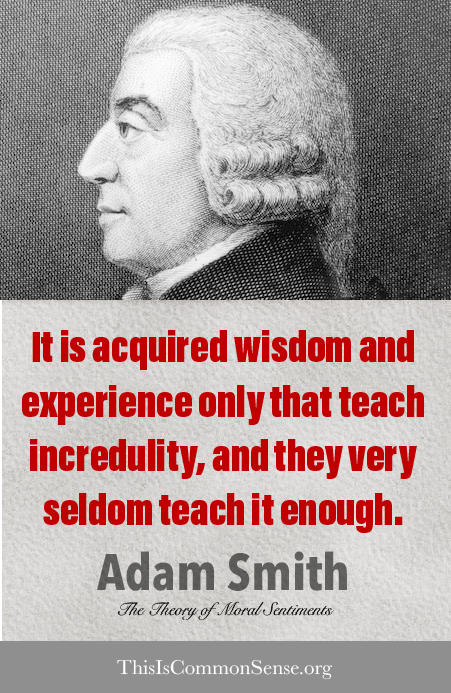
It is acquired wisdom and experience only that teach incredulity, and they very seldom teach it enough.
Adam Smith, The Theory of Moral Sentiments (1801, Ninth Edition).
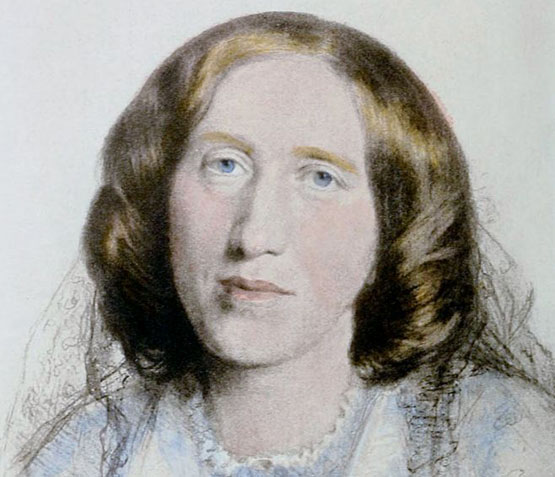
It is doubtful whether our soldiers would be maintained if there were not pacific people at home who like to fancy themselves soldiers. War, like other dramatic spectacles, might possibly cease for want of a “public.”
Mary Ann Evans (1819–1880), writing as George Eliot, The Mill on the Floss (1860)
The natural liberty of man is to be free from any superior power on Earth, and not to be under the will or legislative authority of man, but only to have the law of nature for his rule.
As I inched sluggishly along the treadmill of the Maycomb County school system, I could not help receiving the impression that I was being cheated out of something. Out of what I knew not, yet I did not believe that twelve years of unrelieved boredom was exactly what the state had in mind for me.
Harper Lee, To Kill a Mockingbird (1960), Part I, Chapter 4.