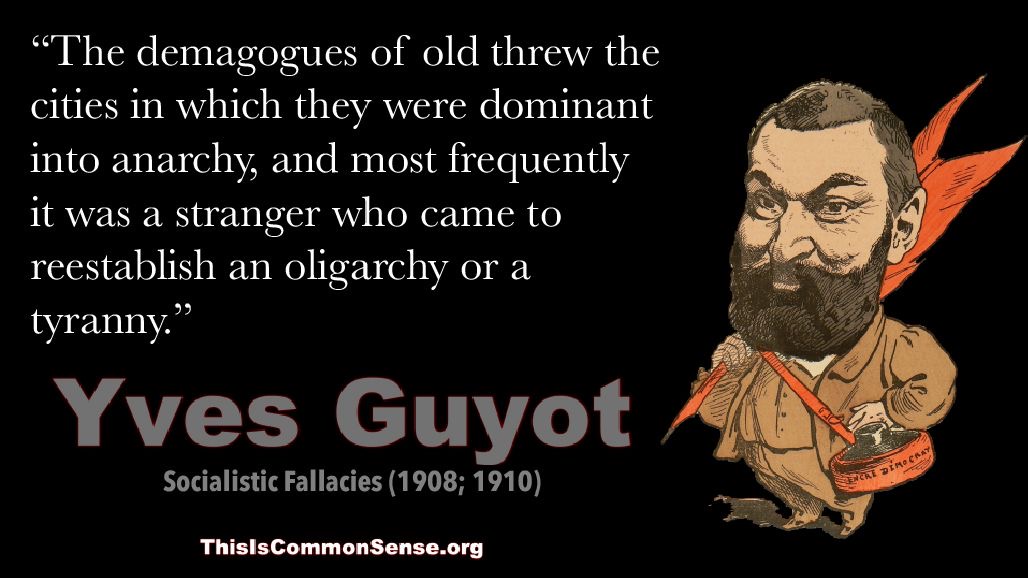
The demagogues of old threw the cities in which they were dominant into anarchy, and most frequently it was a stranger who came to reestablish an oligarchy or a tyranny.
Yves Guyot, Socialistic Fallacies (1908; 1910).
Yves Guyot
The demagogues of old threw the cities in which they were dominant into anarchy, and most frequently it was a stranger who came to reestablish an oligarchy or a tyranny.
Yves Guyot, Socialistic Fallacies (1908; 1910).
There is always a ‘but’ in this imperfect world.
Helen Graham, a character in The Tenant of Wildfell Hall (1848), Ch. XXII: ‘Traits of Friendship,’ by Anne Brontë (writing as Acton Bell)
Disputes with men, pertinaciously obstinate in their principles, are, of all others, the most irksome; except, perhaps, those with persons, entirely disingenuous, who really do not believe the opinions they defend, but engage in the controversy, from affectation, from a spirit of opposition, or from a desire of showing wit and ingenuity, superior to the rest of mankind. The same blind adherence to their own arguments is to be expected in both; the same contempt of their antagonists; and the same passionate vehemence, in inforcing sophistry and falsehood. And as reasoning is not the source, whence either disputant derives his tenets; it is in vain to expect, that any logic, which speaks not to the affections, will ever engage him to embrace sounder principles.
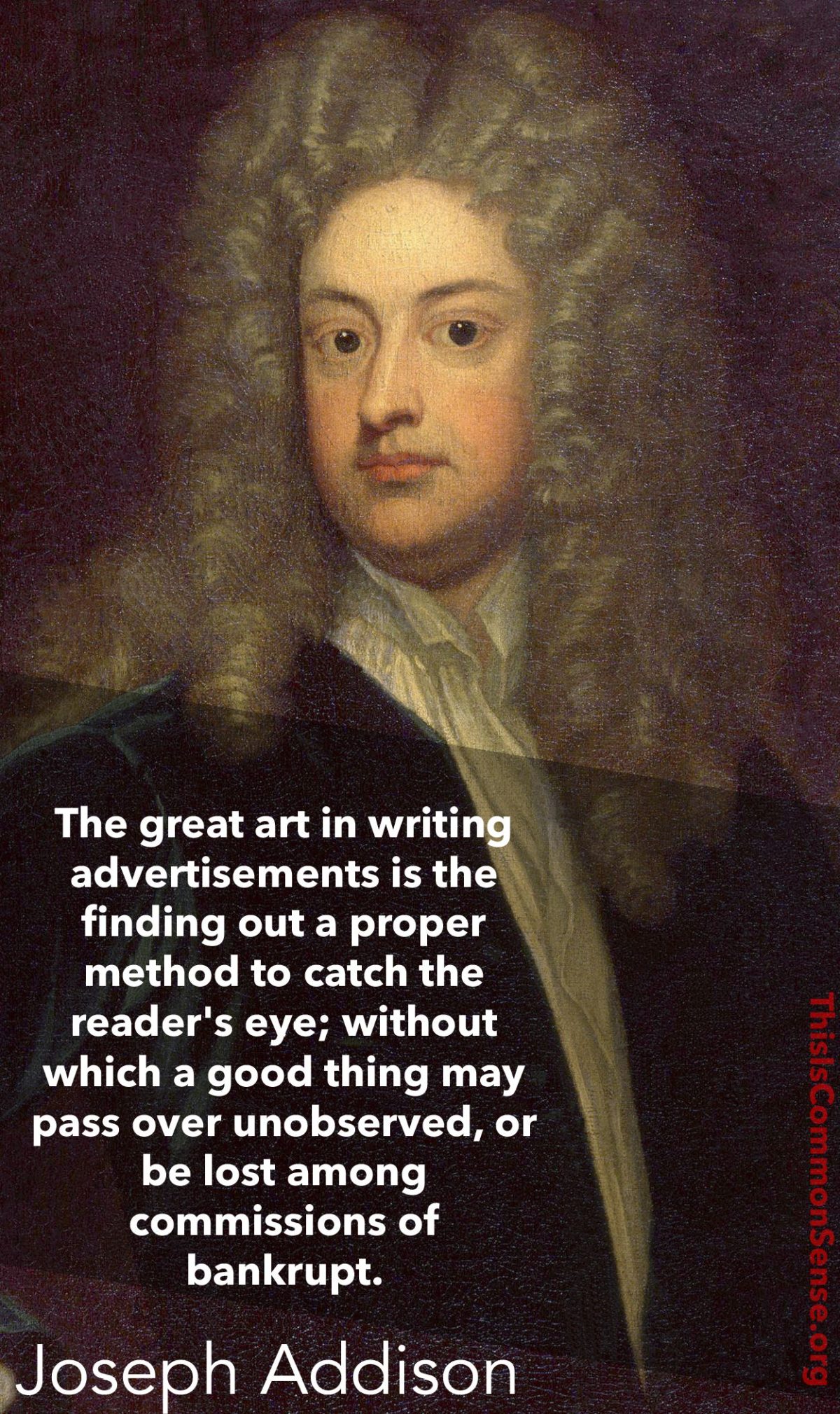
The great art in writing advertisements is the finding out a proper method to catch the reader’s eye; without which a good thing may pass over unobserved, or be lost among commissions of bankrupt.
Joseph Addison, The Tatler (1711-1714), No. 224.
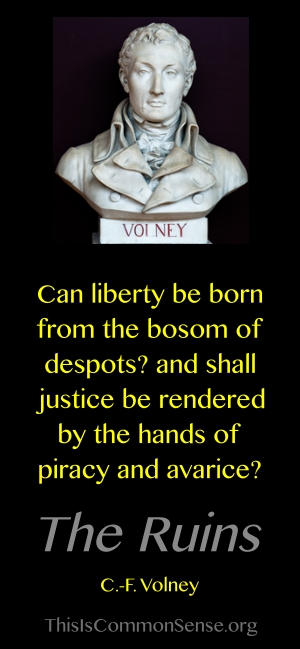
Can liberty be born from the bosom of despots? and shall justice be rendered by the hands of piracy and avarice?
Constantin-François de Chassebœuf (1757–1820), Comte de Volney, The Ruins; Or, Meditation on the Revolutions of Empires: And The Law of Nature, Chapter II (Thomas Jefferson, translator).
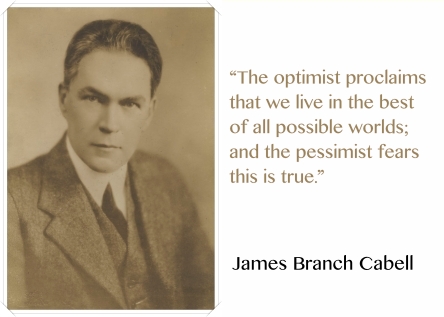
The optimist proclaims that we live in the best of all possible worlds; and the pessimist fears this is true.
The character “Coth of the Rocks,” in James Branch Cabell, The Silver Stallion: A Comedy of Redemption (1926).
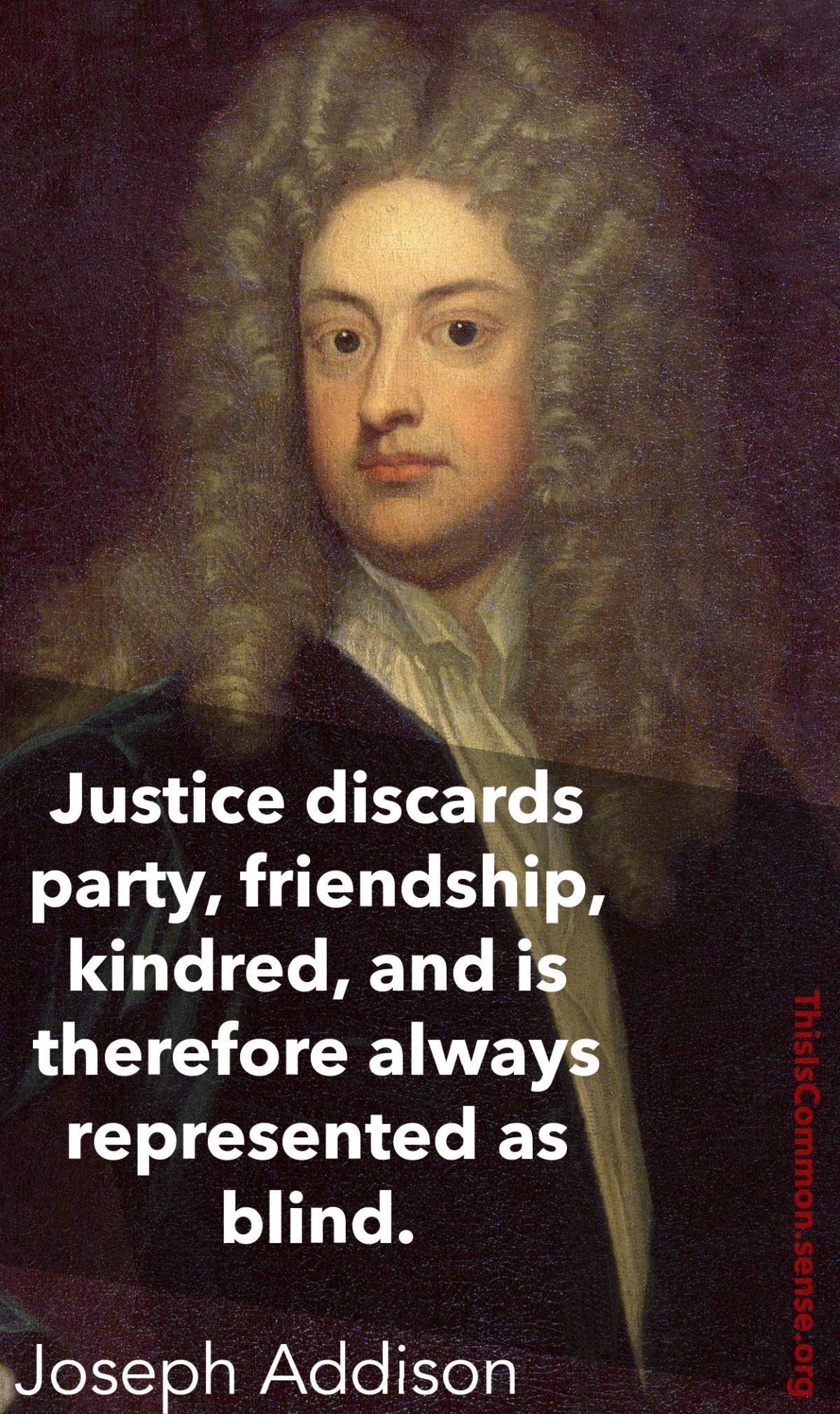
Justice discards party, friendship, kindred, and is therefore always represented as blind.
Joseph Addison, The Guardian (1713), no. 99.
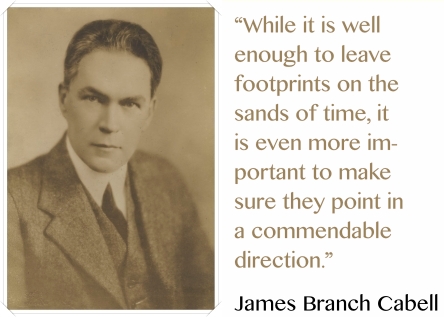
While it is well enough to leave footprints on the sands of time, it is even more important to make sure they point in a commendable direction.
James Branch Cabell, Beyond Life (1919).
Every cause produces more than one effect.
If one awakens in men the idea of freedom then the free men will incessantly go on to free themselves; if on the contrary, one only educates them, then they will at all times accommodate themselves to circumstance in the most highly educated and elegant manner and degenerate into subservient cringing souls.
Max Stirner, The False Principle of Our Education: or; Humanism and Realism (1842).