Categories
free trade & free markets international affairs tax policy U.S. Constitution

Legal Trade War

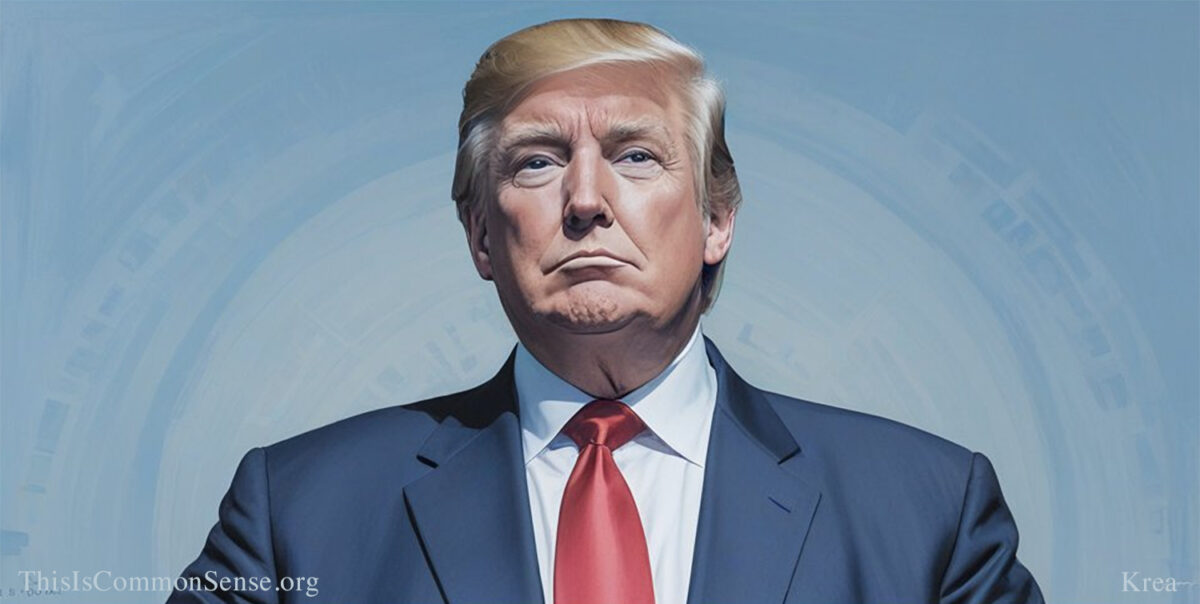
Donald Trump’s imposition and changing of tariffs, all by his lonesome — without Congress — vexes more than a few critics.

His authority to do this, however, derives directly from laws passed by Congress.

The U.S. Constitution gives Congress the power to “lay and collect Taxes, Duties, Imposts and Excises” under Article I, Section 8, which includes tariffs, since they are taxes on imported goods. But Congress has legislated hand-offs to presidents, allowing significant flexibility on tariffs.

The idea seems to be that, as Commander-in-Chief, the president should handle trade because . . . like war, it has to do with foreign countries.

Laws allowing presidential discretion include Section 232 of the Trade Expansion Act, Section 301 of the Trade Act of 1974, and the International Emergency Economic Powers Act of 1977. 

The first says that the president has broad discretion to define as threats to national security all sorts of things and then impose tariffs and other trade restrictions in response.

The 1974 legislation authorizes further along Trump’s favored line, the power to retaliate against “unfair” foreign trade practices.

The IEEPA grants sweeping powers in a declared national emergency.

So if free traders and others are alarmed at Trump’s seemingly dictatorial powers regarding tariffs, it isn’t new. It has been built into the Imperial Presidency. While Congress could take its constitutional authority back, there is certainly no groundswell to do so.

Also not new?

What setting up high tariffs have historically done: elicit similar tariffs in retaliation. 

Yikes: the kind of trade war that made the Great Depression “great.”

This is Common Sense. I’m Paul Jacob.


PDF for printing

Illustration created with Krea and Firefly

See all recent commentary
(simplified and organized)
See recent popular posts
Categories
free trade & free markets regulation tax policy

Destroying Dane Farming

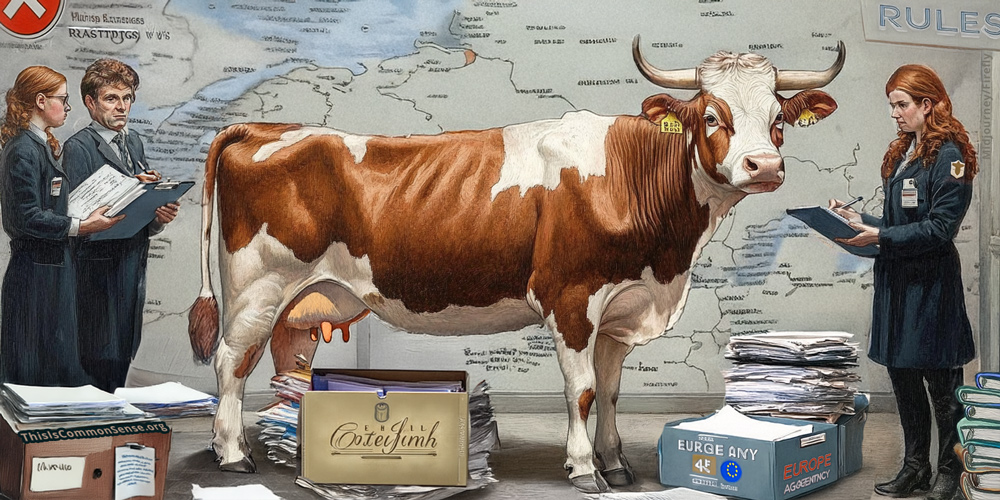
In February, Denmark’s farmers were worried “that plans to levy a carbon emission tax on farming” in the name of global weather control “would force them to reduce production and close farms.”

In the same month, farmers across Europe protested against assaults on their livelihood.

Meanwhile, a report by a government commission concluded that the carbon tax could cause Denmark’s agricultural production to decline by as much as a fifth. The central planners made clear that this was a price they were willing to pay in order to indulge their ideological-meteorological fantasy.

And also, not incidentally, in order to collect more tax dollars.

But the concern and the estimates of the severity of the blow on farmers — to be penalized for providing food, a requirement of survival — availed naught.

The carbon emissions tax is being enacted and will take effect in 2030. The levy will initially be something like $96 per cow, rising to $241 per cow in 2035.

Insane. But cows produce methane “through their burps and manure,” CNN reports. So what can tyrants do but tax farmers into oblivion?

The fantasists may claim success no matter what global climate turns out to be in years to come. Or they may claim that their measures haven’t yet fixed the global climate only because the rest of the world’s countries haven’t yet followed suit and appropriately penalized their farmers for farming.

Only when civilization is fully destroyed will we be able “save” it.

This is Common Sense. I’m Paul Jacob.


PDF for printing

Illustration created with Midjourney and Firefly

See all recent commentary
(simplified and organized)
See recent popular posts

Categories
free trade & free markets international affairs tax policy

Trump’s Tariff Question

If Donald Trump fails to re-take the White House in November (and then for real in early 2025), his legacy may quickly devolve into a matter for historians, not live politics. After people calm down and the culture war stuff recedes (once again, if allowed by events), what will be left to argue over are a half-dozen major issues, which include war, mass migration . . . and tariffs.

Tariffs have long been Mr. Trump’s major hobby horse; he gets excited about 100 percent levies. The whole business about the “bloodbath” quote was his insistence that American auto industry will be destroyed if Trump himself doesn’t get the chance to erect ultra-high tariffs against automobiles from Mexico.

Trump looks at tariffs on foreign goods as harming foreign nations and helping us, the Americans.

But it is worth noting that economists from Adam Smith and David Ricardo onward have regarded tariffs as chiefly harming consumers within the country that erects them. 

At Reason you can read Veronique de Rugy make the classic free-trade case, anew, in “No, Trump-Style Tariffs Do Not Grow the Economy.” If Frédéric Bastiat didn’t convince you, maybe de Rugy will.

But something’s missing. Surrounding Trump’s talk against free trade in general and China in particular there was always another element that neither Bastiat nor de Rugy emphasize: free-trading with China helps Chinese and Americans, sure; gotcha — but it also helps the Chinese state, and its ruling Communist Party. 

“Trump is an avowed restrictionist on both immigration and trade,” de Rugy writes. But both unchecked immigration and free trade present problems not economic so much as political. It’s about real bloodbaths, actual warfare, not metaphorical ones.

Even if Trump misdiagnosed the domestic economy, he saw problems with China perhaps more clearly than anyone else.

This is Common Sense. I’m Paul Jacob.


PDF for printing

Illustration created with PicFinder and Firefly

See all recent commentary
(simplified and organized)
See recent popular posts
Categories
national politics & policies subsidy tax policy

Kamala Hood

American politics is largely devoted to the grand task of taking from some and giving to others, a sort of Robin Hood mania that has nothing to do with giving back to taxpayers what was taken from taxpayers (as in the legend) — or doing much of anything for the poor — but, instead, to ostentatiously give to some and quietly take from as many people as possible.

Nevertheless, that giving is not always ostentatious. Sometimes it is surreptitious

Or at least not ballyhooed.

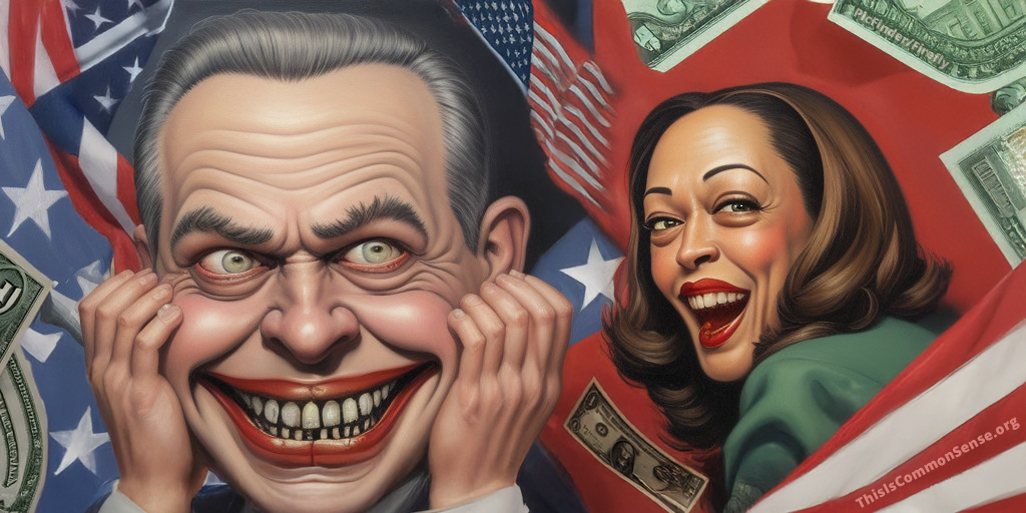
Kamala Harris has taken up an old Democratic Party stalking point: soak the rich! Though she tries not to mention just how much money she and her fellow Biden Administration insiders have been giving to a few big corporations.

“Despite Harris’ rhetoric of fighting for the middle class,” writes Jack Salmon at Reason, “her policies have disproportionately benefited the wealthy and large corporations while leaving middle- and lower-income Americans behind. Far from soaking the rich, Harris’ legacy has been one of feeding them.”

Corporate subsidies have “exploded,” explains Mr. Salmon, going from a ten-year budget allocation of $1.2 trillion in 2021 to now surpassing $2 trillion.

Nearly doubled!

“The beneficiaries of this largesse are extremely concentrated,” Salmon notes, most of it going to “just 15 large corporations, seven of which are foreign.” Of course, a lot of this is under cover of “saving the planet” and fighting “climate change”: “Wind turbine manufacturers like General Electric, Vestas, and Siemens/Gamesa — who collectively produce 79 percent of all turbines — are among the biggest winners.”

Robbing from the few and giving to the many makes neither for good mathematics or a winning political strategy. Robbing from the many and giving to the few is what usually works. But if your appeal is to “the left,” you have to pretend to grab most from the super-rich few.

Your pals.

This is Common Sense. I’m Paul Jacob.


PDF for printing

Illustration created with PicFinder and Firefly

See all recent commentary
(simplified and organized)
See recent popular posts
Categories
national politics & policies tax policy

Kill the Stock Market!

Taxing capital gains is a form of income taxation that Democrats love. 

And it’s not just a matter of increasing revenue. Remember that President Obama thought that increasing the capital gains rate was a good idea even if it decreased government revenue. Democrats are playing to a soak-the-rich sentiment among their base, even when the most important supporters are billionaires.

Take Mark Cuban. He’s a billionaire. And he supports Kamala Harris for president. 

Weeks ago, the Democrat standard-bearer came out with a wild proposal to tax unrealized capital gains. And Cuban, for all his faults, is not an idiot; he knows just how incredibly corrosive that tax on capital would be.

“It would kill the stock market,” he points out

In a chat with Fox Business, Cuban explained how he told Democratic insiders that taxing unrealized capital gains (as when stocks you hold gain value, but you haven’t sold them so you have no income from them), would become “the ultimate employment plan for private equity, because companies are not going to go public because you can get whipsawed, right?” 

By this he means that a stock owner might have to borrow money to cover taxes, only to have the stocks go down later and enjoy neither rebate from the government nor any income from the investment to cover the debt.

Cuban insists that Democratic insiders are pragmatic and will not push this tax.

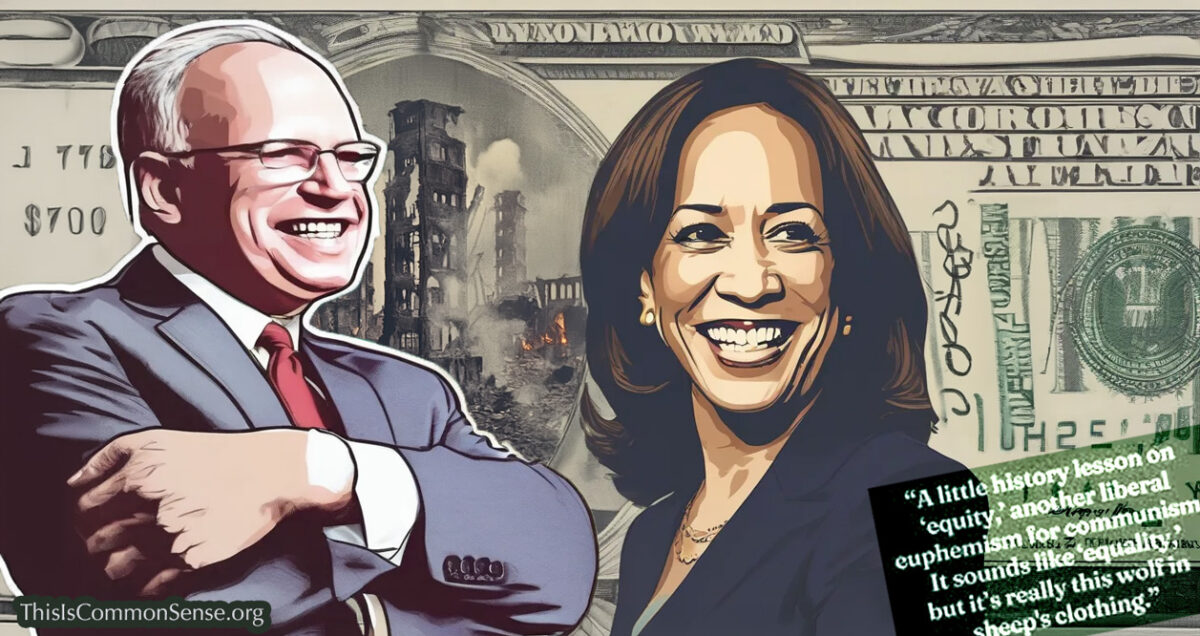
Yet, with both members (comrades?) of the presidential ticket spouting Marxist talking points, how do we know that they are stable (corrupt?) enough to save public capitalism from their malign agenda?

How can we be sure they’re just lying?

This is Common Sense. I’m Paul Jacob.


Note: Since unrealized capital gains aren’t income, I don’t know how taxing them could be constitutional. Perhaps someone can explain this to me.

PDF for printing

Illustration created with PicFinder and Firefly

See all recent commentary
(simplified and organized)
See recent popular posts
Categories
education and schooling national politics & policies tax policy

Trump to Ax Tip Tax

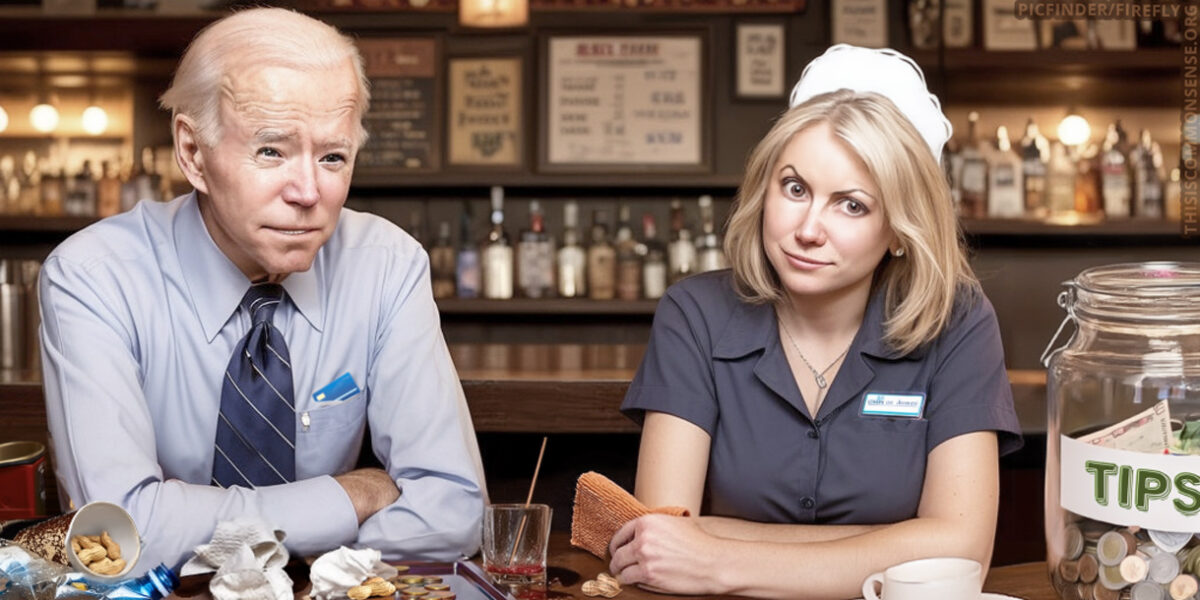
When Biden panders to his lower-income supporters, he targets zeroing out their student debt and regulating credit card companies with further restrictions on their ability to charge for overdrafts and the like.

When Trump panders to his lower-income supporters, he promises to exempt tips from income taxation, as he did recently in Las Vegas.

This may be the most obvious difference between left- and right-styles in politicking to the masses, good-ol’-fashioned vote-buying or its twin: leftists forgive debts and add regulations, rightists reduce taxes.

Like me, you may, at first blanch, prefer the latter form of pandering, but Eric Boehm, at Reason, offers some reasons not to look so kindly on Trump’s pandering. First, and most obviously: “Reducing revenue without identifying offsetting spending cuts means Trump is merely promising to borrow more heavily.”

A bigger challenge comes later: “On the surface, that sounds great. But there’s already one likely unintended consequence: A lot more income will suddenly be reported as tips. Any time a government gives preferential tax treatment to one type of economic activity, you tend to get a lot more of that type of economic activity. Does that mean we’ll have an entirely tip-based economy?” The answer is a likely No.

Oddly, Mr. Boehm doesn’t address one obvious element: Tips aren’t wages and they aren’t profits. Tips are gifts. They aren’t determined by employers and they aren’t specified by employees. And gifts aren’t taxed as income like other income is.

So letting people who accept tips in the course of their labors not pay taxes on them is really, really hard to object to.

In fact, I don’t object.

This is Common Sense. I’m Paul Jacob.


PDF for printing

Illustration created with PicFinder and Firefly

See all recent commentary
(simplified and organized)
See recent popular posts
Categories
crime and punishment free trade & free markets tax policy

What Pfizer Pfolks Got

Yesterday, a whole lot of people paid a whole lot of taxes. It was Tax Day — filing day — for most Americans.

Truth is, American workers pay income tax with every paycheck. And they pay other taxes too.

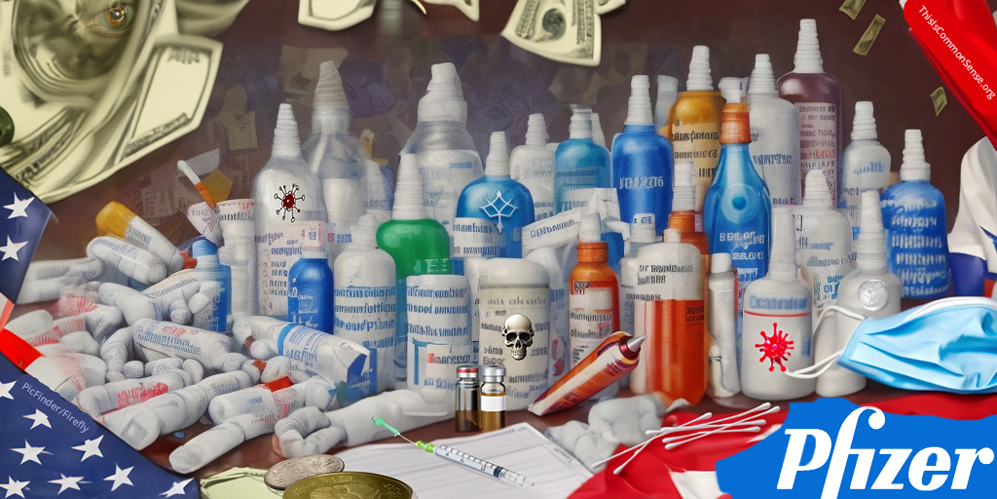
Somehow, though, Pfizer — one of the world’s most profitable companies — did much better than we did. “Drugmakers make big profits in the U.S.,” explains Sydney Lupkin at NPR. “But many pay taxes far below the 21% corporate tax rate. Pfizer’s effective tax rate is so low it’s getting a big refund despite booking $59 billion in revenue.”

Did you get a big refund on top of a huge wage hike? No?

Well, you should lobby Congress more.

Now, Pfizer’s long had a cushy/pushy relationship with the U.S. Government. The company’s had to pay loads of legal penalties for malfeasance, but it’s also received subsidies, immunities, and government-forced clientele — in the rollout of its most famous product. But through thick and thin it faces our byzantine tax code with ease, for it’s that tax complexity that really gives Big Pharma the advantage, compared to smaller companies.

I have never argued for more taxes. I wonder if corporations should even be taxed based on income, which gets complicated to figure since it’s based on profits and losses and investments etc., thus opening the door to corrupt insider politics. Plus, those taxes simply get passed on to us. 

But if corporations are taxed, how indecent that small companies tend not to get huge refunds on years in which they make stellar returns.

Though I suppose if Congress keeps on awarding more to the bigger, that’s a problem that sort of solves itself. 

With the smaller companies just dying out.

This is Common Sense. I’m Paul Jacob.


PDF for printing

Illustration created with Picfinder and Firefly

See all recent commentary
(simplified and organized)
See recent popular posts
Categories
initiative, referendum, and recall tax policy

Preparation HH Hornswoggle

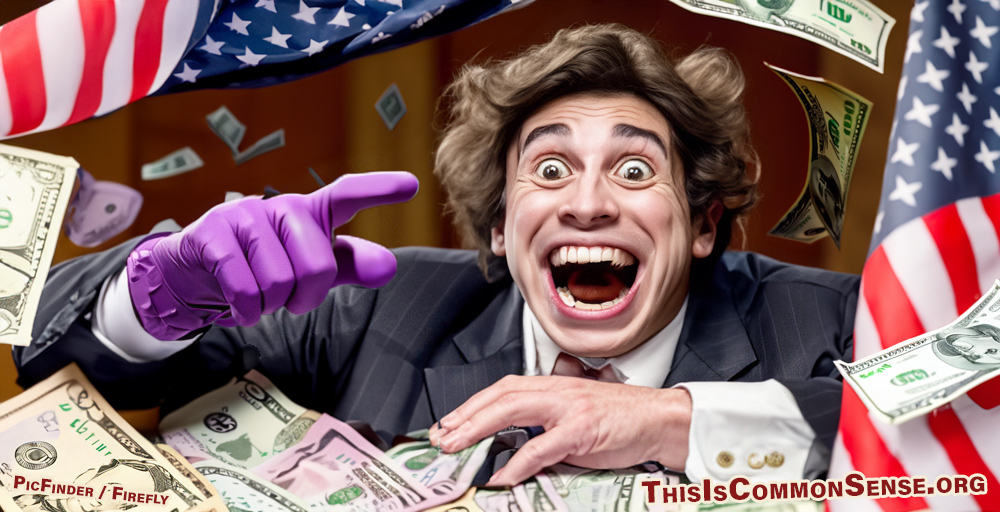
Tonight, I’ll be anxious for election returns from Colorado on Proposition HH, a measure Democrats in the legislature placed on the ballot to both lower taxes and raise revenue. 

Huh?

Americans for Tax Reform President Grover Norquist wrote recently in The Denver Gazette, that the proposition “would result in the largest tax hike in Colorado history.”

Yet, the ballot title begins: “SHALL THE STATE REDUCE PROPERTY TAXES FOR HOMES AND BUSINESSES, INCLUDING EXPANDING PROPERTY TAX RELIEF FOR SENIORS . . . ?”

“Democrats have advertised Prop. HH primarily as a property tax cut that will save homeowners hundreds of dollars per year,” explains Colorado Public Radio’s Andrew Kenney, “which is true.”

But Kenney goes on to plainly present the rest of the story, that HH would also “raise the state spending limits created by TABOR, allowing the government to eventually keep hundreds of millions, and then billions, of dollars more tax money each year instead of refunding it.”

TABOR stands for the Taxpayer Bill of Rights, which voters passed by citizen initiative back in 1992. Under TABOR, government spending growth is limited, with excess revenue returned to taxpayers. Prop HH is designed to offer immediately small property tax relief attached to letting the legislature grab much bigger money from not providing refunds in the future.

Norquist correctly dubs it “a bait-and-switch tax hike scheme.”

It’s the usual stock-in-trade of the political class. The difference in Colorado, however, under the Taxpayer Bill of Rights, is that politicians are required to ask voters for permission . . . to hornswoggle them in this way. 

Politicians have been asking for higher taxes again and again for years. (Not to mention going to court in a failed attempt to overturn TABOR.)

But voters have the final say. Today.

This is Common Sense. I’m Paul Jacob.


PDF for printing

Illustration created with PicFinder and Firefly

See all recent commentary
(simplified and organized)
See recent popular posts

Categories
Accountability national politics & policies tax policy

Kick the Can

At first blush, it seems like the most pointless political move ever.

When Rep. Matt Gaetz (R.-Fla.) moved to oust Rep. Kevin McCarthy (R.-Cal.) from his role as Speaker of the House, lots of eyebrows were raised, and at least one pair of lips was licked. But did it make any sense?

This has never happened before, a House Speaker ousted by his own party mid-session.

That’s not an argument against the move, though. It was Gaetz who had blocked McCarthy back in January, through more than a dozen votes, allowing the moderate Republican to serve only with explicit conditions. Gaetz now says that McCarthy has failed to meet those conditions. Arguably, that’s accountability in action. Good?

Or mere revenge? After all, McCarthy had just made a deal with a sizable number of minority Democrats to fund the government and prevent a federal shutdown — thus kicking the overspending/insolvency can down the road again. Gaetz and his closest colleagues in the House made the same deal with the opposition party, ousting McCarthy. 

It’s a game of kick the can, however you look at it.

Gaetz argues that McCarthy did not do what was required to bring fiscal responsibility, such as un-package spending bills. “We told you how to use the power of the purse: individual, single-subject spending bills that would allow us to have specific review, programmatic analysis and,” explained Gaetz, “that would allow us to zero out the salaries of the bureaucrats who have broken bad, targeted President Trump or cut sweetheart deals for Hunter Biden.”

But the deed is done. McCarthy’s out. Now, who to replace him?

Funny that no one mentions the wild plan to put Trump into the job — you know, the plan first floated after Election 2020?

It was such a snickered-at notion, just a goofy way of taking 1600 Pennsylvania Avenue from Joe Biden.

Still, it was a plan. Only in the next few days and weeks will we learn if Gaetz really has one.

This is Common Sense. I’m Paul Jacob.


PDF for printing

Illustration created with Midjourney

See all recent commentary
(simplified and organized)
See recent popular posts
Categories
deficits and debt election law tax policy

Slasher Needs Slashing

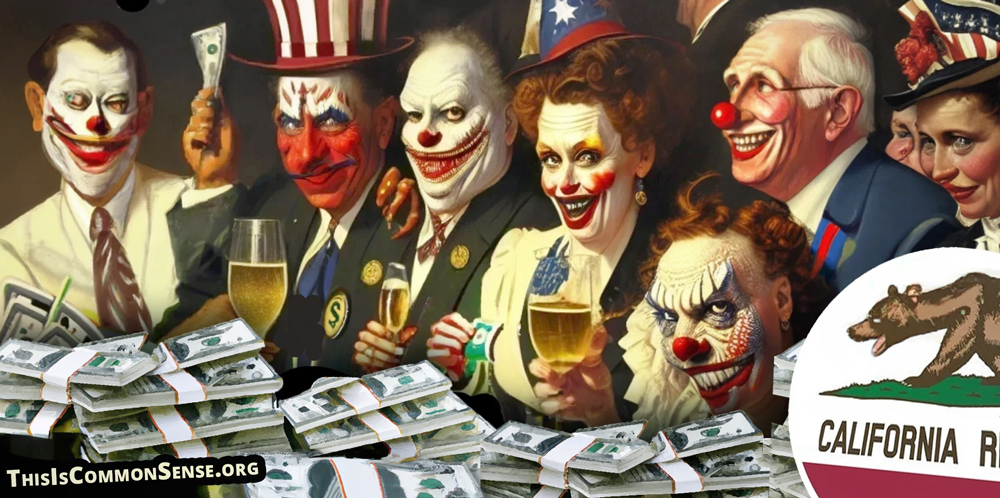
A perennial bill in the California Assembly, Constitutional Amendment 1, would make it harder for voters to block local tax increases in accordance with the provisions of Proposition 13, which voters passed in 1978.

ACA 1 would shrink the percentage of voters who must approve certain tax increases from two thirds to 55 percent in cases where the money would purportedly be used for infrastructure or public housing.

Passage would further erode the legacy of Prop 13, which in addition to cutting taxes, limiting tax increases, and requiring a two-thirds legislative majority to increase state taxes, also imposed a two-thirds threshold for voter approval for special local taxes.

In 2000, voters accepted a lower threshold for approval of school bonds — 55 percent instead of two thirds — enabling billions more in property taxes.

That’s bad enough, but things could easily get worse.

Jon Coupal of the Howard Jarvis Taxpayers Association observes that if enacted, ACA 1 would be used to raise taxes repeatedly in local elections by dint of dubbing all government spending “infrastructure.” 

The infrastructure exemption is an innovation of the 2023 version of the bill (the tricky tricksters never stop).

Moreover, if passed, the amendment would take effect immediately. “Billions of dollars in tax hikes will start that much faster.”

Coupal stresses that the new exactions would be added to property tax bills “above and beyond Prop 13’s one percent cap” on property taxes.

ACA 1 keeps getting reintroduced and, so far, keeps getting killed off, like the mad killer in a teen slasher movie. Only to be revived for the sequel.

Kill it again.

This is Common Sense. I’m Paul Jacob.


PDF for printing

Illustration created with PicFinder.ai and DALL-E2

See all recent commentary
(simplified and organized)
See recent popular posts