Categories
government transparency national politics & policies responsibility

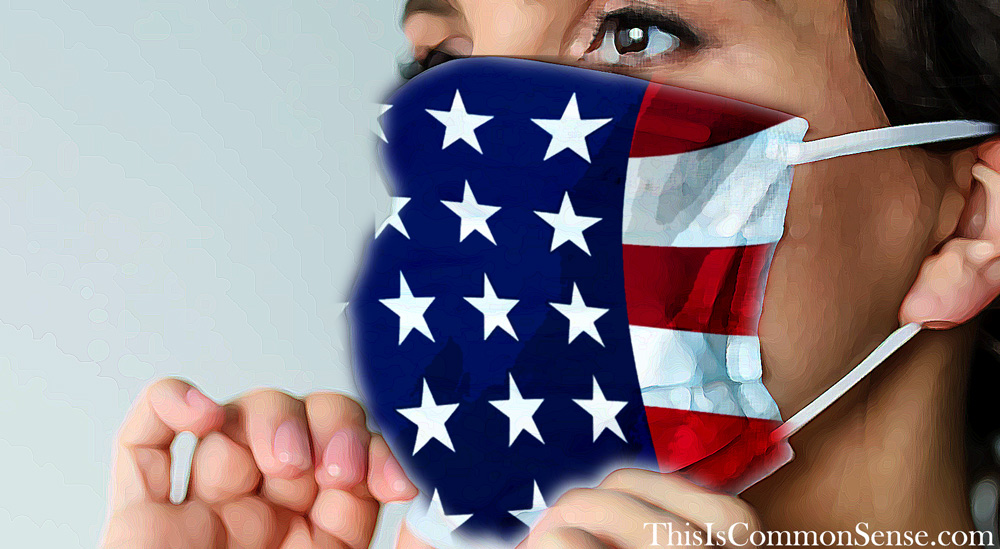
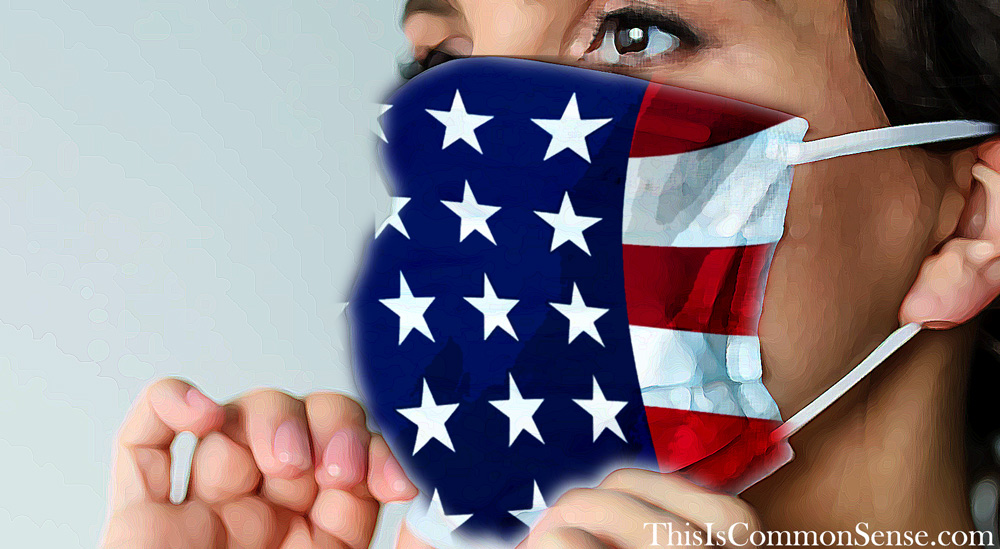
America Unmasked

For weeks, the Centers for Disease Control and Prevention and the Department of Health and Human Services told us not to wear face masks. The Surgeon General even warned that mass use of masks could “increase the spread of the coronavirus.” 

“My nose tells me,” I posted on Facebook weeks ago, “that all the info about how we don’t need face-masks is to cover up for the lack of face-masks.”

My family is very grateful to a Taiwanese friend, who mailed me masks — not the N95 masks, which the Taiwanese government is donating in large quantities, but masks of excellent non-medical quality. 

Last Wednesday, CBS News anchor Norah O’Donnell noted that a large percentage of people spreading the virus are asymptomatic, meaning they don’t know they have it. She asked Dr. Anthony Fauci with the White House Coronavirus Taskforce: “Should we be advising people to wear masks?”

“The primary people who need masks are healthcare workers,” the doctor replied, before admitting that if supplies weren’t so limited, wearing a mask was “a potentially good way . . . you could have an impact with preventing transmission.”

Days later, President Trump passed on a CDC advisory to the same effect.

Americans had figured out the initial lie, and were already making their own and posting how to do so on social media. Now that’ll ramp up. 

Initially, our leaders didn’t level with us. They could have. Americans seem amazingly cooperative, to say the least.

Government folks need to stop masking the truth from the public. That way they might earn more public trust.

Which sure can be useful during a crisis.

This is Common Sense. I’m Paul Jacob.

PDF for printing

virus, coronavirus, pandemic, mask,

See all recent commentary
(simplified and organized)
See recent popular posts


Categories
government transparency ideological culture responsibility

People Power in the Republic of China

Which country has handled this worldwide pandemic best?

The question was asked on Facebook, by one friend, and answered this way by another: 

“Government: South Korea; People: Japan.”

My response?

“Combo of people and government: Taiwan.”

There is a lot in the Taiwanese response to explore. 

“The first cause of Taiwan’s success,” write Javier Caramés Sanchez and William Hongsong Wang on Mises Wire, “is the transparency of information, which stopped the rapid growth of infection.” While on Mainland China the corrupt government was no more transparent than the very murky Yellow River, in the Republic of China (commonly called Taiwan, and once listed on the globe as “Formosa”) the Ministry of Health and Welfare began informing the public as early as December 31.

The second reason? “The type of quarantines established by the Taiwanese government are mostly self-quarantines. The Taiwanese government acknowledges that it is crucial to rely on people’s voluntary actions to resist the pandemic.” In Japan the people regularly don masks when sick. That kind of compliance is cultural there. In Taiwan, there has been a lot of spontaneous and “all you need to ask” compliance with social distancing and the like.

“The key is that the Taiwanese government and the Taiwanese people understand that the individual’s own responsibility and actions are essential to suppressing the coronavirus pandemic, not a mandatory massive shutdown,” the authors conclude. “This is what the world needs to learn.”

Responsibility is what a free people practice. And learn to master.

This is Common Sense. I’m Paul Jacob.


PDF for printing

responsibility, command, politicians, control, self reliance,

See all recent commentary
(simplified and organized)
See recent popular posts


Categories
responsibility

Fear Itself

“The only thing we have to fear is fear itself.”

Not often do I quote FDR. Strictly speaking, his statement was false then — at the beginning of the decade-plus-long Great Depression that led to WWII. 

And it is false now. 

There is plenty more to fear than merely fear itself. 

But it does point up the importance of not allowing fear to drive our decisions — as individuals, in families, as well as for governments and civil society.

We are facing a worldwide pandemic, something not seen in over 100 years, which we can only hope is not more global or deadly than the so-called Spanish Flu in 1918. This is largely uncharted territory. 

Therefore, even when public officials make what turn out to be poor decisions, I plan to be as understanding as possible. This is not aimed at any specific public official or specific accompanying criticism. Instead, let it be a broad policy — though, of course, we must hold corrupt or criminally negligent decisions accountable.

It’s a great time to give each other a break from politics and to foster a spirit of love and connectedness to our neighbors — even [gulp] politicians — replacing the natural fear that will otherwise occupy our thoughts and actions.

During this crisis, I hope that officials at all levels will summon ‘We, the People’ to do what we can as volunteers, whether working sequestered in our homes or in roles outside the home. We are an enormous strength.

And please, oh leaders, fill the information vacuum with daily accurate information — keep Anthony Fauci close to a microphone. And help them, journalists.

Let’s rise to the occasion by getting tough and staying united.

This is Common Sense. I’m Paul Jacob.


PDF for printing

Unity

See all recent commentary
(simplified and organized)
See recent popular posts

Categories
responsibility

Don’t Panic, Prepare

The other day, on Neil Cavuto’s Fox News show, Democrat Tulsi Gabbard — my favorite of the “blue” party’s blues-inducing candidates — suggested, inartfully, that the coronavirus is “something that requires all of us as Americans coming together, standing together . . . just as we would in wartime.”

The best way to fight contagion is to “come together”?

Maybe not so much.

What should we do? I mean, separately.

Although there’s a flood of information about the scary new coronavirus (COVID-19), that information is fragmentary.

Reliable tests for the virus are not easily available. It’s unclear how many people are really infected. But the fatality rate is apparently much higher than that of regular flu. The elderly and those with other medical problems are especially vulnerable.

The virus is spreading fast despite (and because of) efforts to contain it. Cases have now been reported in 45 countries.

COVID-19 may not yet be where you are or where I am. But what should we do now to be ready if and when things around us change drastically? 

One, stay informed. 

Two, follow advice about reducing the risk of infection, including such simple measures as carefully and frequently washing your hands.

Three, stock up — on food, water, medicines, other emergency supplies — in case you must hunker down at home for a long time. When panic strikes, grocery shelves can empty out fast. You may not want to go where many people are congregating anyway.

Some vendors specialize in providing bulk supplies of food at a discount: Wellness Meats, Bargain Wholesale, markets in your neighborhood. There’s also Walmart and Amazon, offering a wide variety of staples. You can trade advice and information at sites like emergency-preps.com.

Such preparation won’t be wasted. If we’re lucky and the coronavirus threat fades as flu season wanes, we’ll be ready for some other emergency that comes along.

This is Common Sense. I’m Paul Jacob.


PDF for printing

Corona, Covid, virus, safety, hazmat,

See all recent commentary
(simplified and organized)
See recent popular posts

Categories
media and media people meme Popular responsibility too much government

Overkill . . . for Your Health

News stories about death- and illness-by-vaping keep hitting us. But in most of these stories it is what is left out that is most alarming.

From Washington State’s King County we learn of another case of severe lung disease “associated with vaping.” But the reportage doesn’t mention how the maladies relate to vaping. “KING-TV reports there have been 15 cases of severe lung disease associated with vaping in Washington state since April 2019. . . .” Interesting as far as that goes, but. . . .

In addition to no discussion of causality, the most obvious thing not mentioned in this and similar reports? The numbers diagnosed with severe lung disease caused by smoking — which is the relevant vaping alternative.

The U.S. Government’s agency devoted to diagnosing potentially widespread pathogens and practices is, thankfully, a bit more useful. In a recently published study, scientists have narrowed down the real culprit: “Vitamin E acetate was detected in all 29 patient” samples taken from those under study. 

Most had been vaping THC.

There are organizations worse than sloppy news outlets, however. In Massachusetts, the House of Representatives has passed a bill not merely to ban flavored e-cigarettes, but also to levy 75 percent tax on all e-liquids and vaping devices. 

Typical government overkill.

But not overkill enough, for the bill doesn’t stop there. Whopping fines against those caught with unlicensed vaping products are also in the bill, as is — aaargh! — civil asset forfeiture.

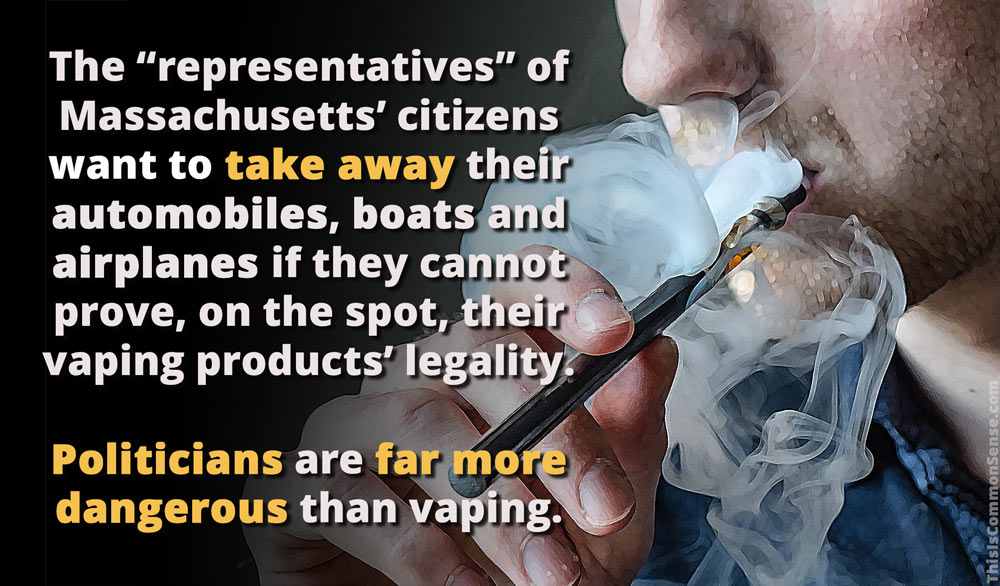
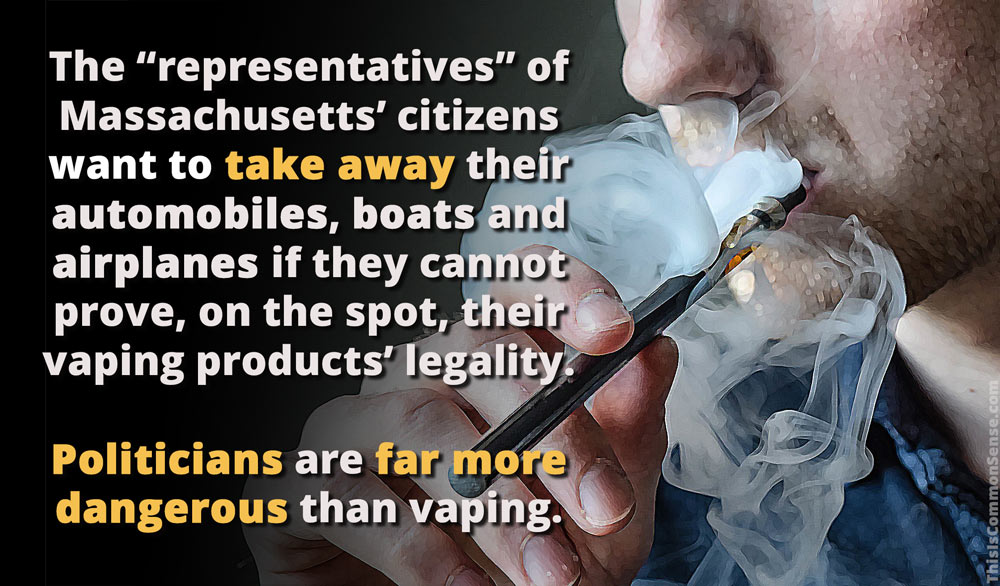
The “representatives” of Massachusetts’ citizens want to take away their automobiles, boats and airplanes if they cannot prove, on the spot, their vaping products’ legality.

Politicians are far more dangerous than vaping.

This is Common Sense. I’m Paul Jacob.


PDF for printing

vape, vaping, law, asset forfeiture, politicians,

Photo by Vaping360

See all recent commentary
(simplified and organized)
See recent popular posts

Categories
media and media people responsibility

Science Isn’t Morality

“Scientist” — what an abused term! When a journalist needs an authority to write about some nutty, wildly improbable affront to common sense, a “scientist” will do.

Case in point, turn to Newsweek:

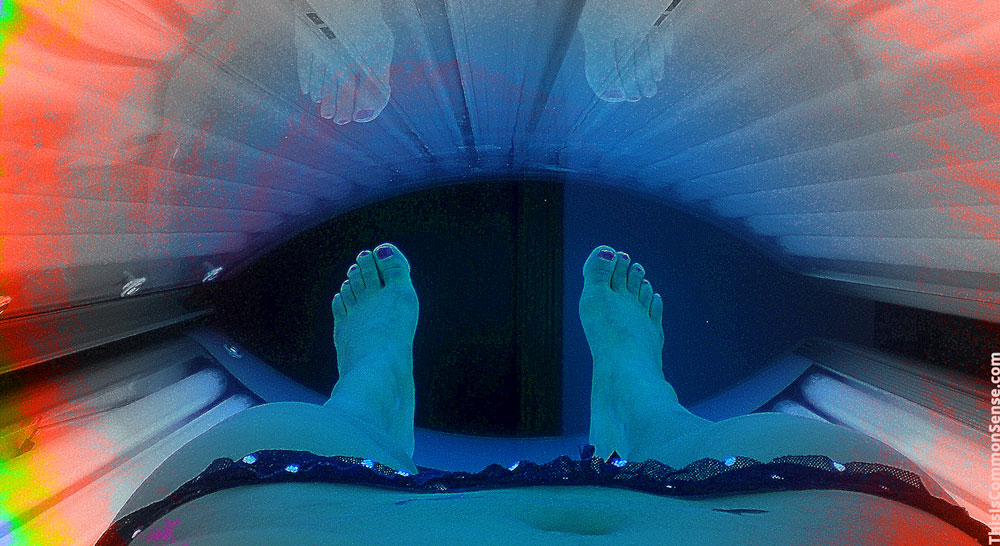
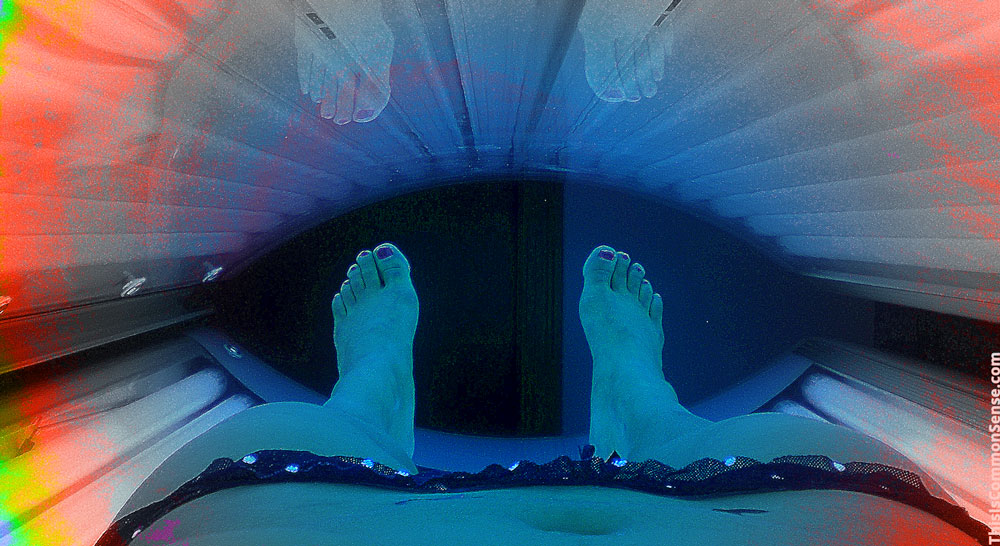
“Tanning salons are more likely to be located in U.S. neighborhoods with higher numbers of same-sex male couples,” writes Kashmira Gander, “according to scientists who fear the industry could be targeting the demographic.”

Well, since gay men — for a variety of reasons surely no one will dispute, and which we need not trouble ourselves with — are more likely to use such services than straight men, one might expect marketers to “target” a likely clientele.

But why the “fear”?

Well, don’t panic, but “[t]anning beds are dangerous. They double your risk of skin cancer. Over time, they also cause wrinkles, skin aging, uneven skin texture and dark spots, so even from a cosmetic standpoint, no one should be using them.”

Well, that latter is not a scientific finding. It is up to consumers to decide what acceptable levels of risk they will take to make themselves appealing for the opposite sex, or — in this case — the same sex.

If scientists made fewer moral and political pronouncements, sticking to statements that they can defend with facts and findings, not only would Newsweek and other magazines be easier to bear (I cannot guarantee more subscribers and newsstand sales, alas), but science itself might gain a bit more credibility.

As it is, it is teetering.

Or so somestudies have shown.”

As for me, I’m not gay, but I am married . . . and a former redhead. Tanning salons don’t profitably pitch their services to me.

Not because of science, but . . .

Common Sense. Which this is. I’m Paul Jacob.


tanning bed, science

Original image by Alexis O’Toole

See all recent commentary
(simplified and organized)
See recent popular posts

Categories
judiciary responsibility

Caveat Tempter

If, like me, you expect people to bear the bulk of the brunt of their own decisions, big ticket court rulings often strike you as bizarre.

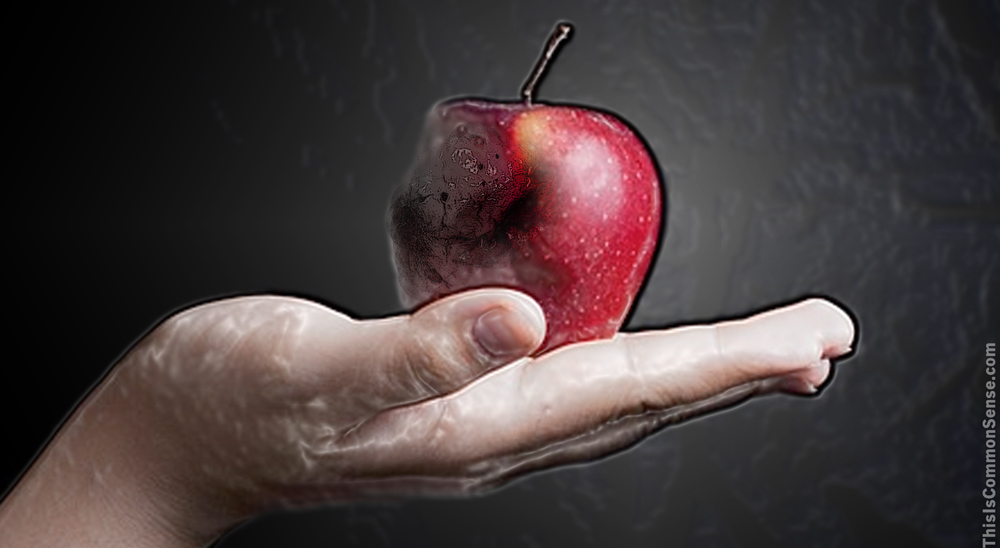
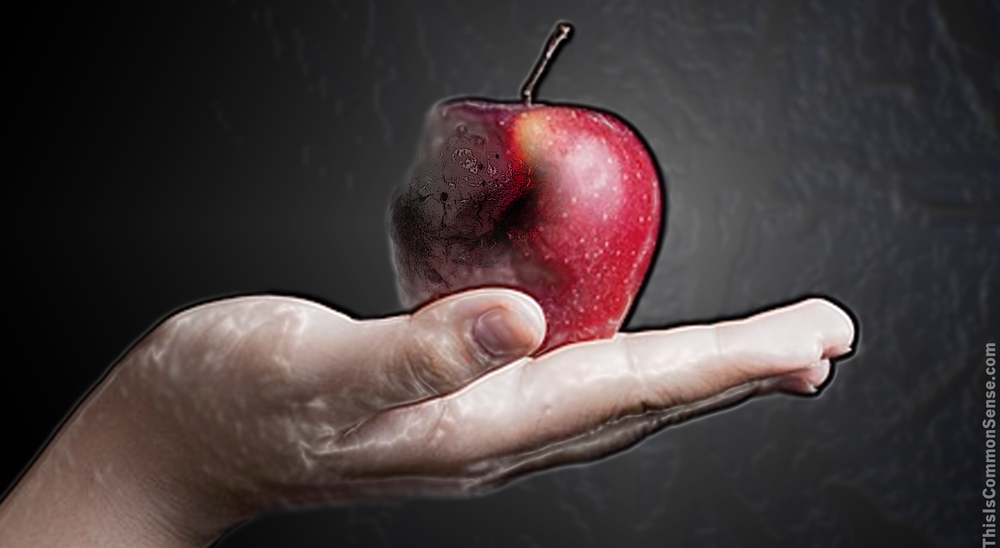
Case in point? “Drugmaker Johnson & Johnson must pay $572m (£468m) for its part in fuelling Oklahoma’s opioid addiction crisis, a judge in the US state has ruled,” reads a BBC report.

“During Oklahoma’s seven-week non-jury trial,” the BBC informs, “lawyers for the state argued that Johnson & Johnson carried out a years-long marketing campaign that minimised the addictive painkillers’ risks and promoted their benefits.”

A certain credulity boundary has been stretched, here:

  1. Don’t all ads stress selling points over . . . non-selling points?
  2. Doesn’t everyone know this, and, therefore,
  3. Shouldn’t they be expected to adjust — caveat emptor-wise — accordingly?
  4. And doesn’t everyone know painkillers are dangerous, and opiates notoriously so?

“The state’s lawyers had called Johnson & Johnson an opioid ‘kingpin,’” the report continues, “and argued that its marketing efforts created a public nuisance as doctors over-prescribed the drugs, leading to a surge in overdose deaths in Oklahoma.”

The public nuisance biz is idiotic, of course. If the company had been slipping its drugs to kids on a playground, something like this would have some plausibility. But the actual situation? Nope.*

Shifting responsibility from self to others, especially deeply pocketed others, has many bad consequences . . . not least of which is deflection of our attention away from why opioid use is up. Which is something we should be looking into for our friends’, families’, and neighbors’ sakes.

Lawyers are our tempters, in such cases. 

And monetary awards can sure be addicting. 

This is Common Sense. I’m Paul Jacob.


* Johnson & Johnson is appealing the decision, of course.

PDF for printing

apple, temptation, rotten,

Photo by Max Pixel

See all recent commentary
(simplified and organized)
See recent popular posts
Categories
national politics & policies Popular responsibility U.S. Constitution

Congress’s King

Politics today reveals a troubling dialectic.

Thesis: President Trump boasts that he is going to unilaterally “do something” as if he were Emperor, not President. 

Antithesis: Then comes pushback from political opponents and the media, castigating our current commander-in-chief for imagining himself a lawless dictator. 

Synthesis: This is soon followed, however, by the discovery that the president does have such awesome power. 

Legally.

In our constitutional system, can a president can just wake up one day and slap tariffs on imports? Well, numbskulls in Congress passed a law handing the president that specific power.

When President Trump declared an emergency to re-direct money, appropriated by Congress for different purposes, toward building the Wall, many argued that the president cannot usurp Congress’s undisputed power of the purse. True, but irrelevant. Congress had indeed delegated all these undefined and largely unchecked “emergency” powers to the prez.

Last week, as the trade war with China was coming to a boil, Mr. Trump tweeted, “Our great American companies are hereby ordered to immediately start looking for an alternative to China, including bringing . . . your companies HOME and making your products in the USA.”*

I thought, “Does Trump really think he has the legal authority to order all U.S. businesses to leave China?”

Yes . . . and apparently he does. It’s called The International Emergency Economic Powers Act.

“One of the enduring phenomena of the Trump era,” University of Texas law professor Stephen Vladeck told CNN, “is going to be the list of statutes that give far too much power to the President, but that many didn’t used to worry about — assuming there’d be political safeguards.”

Or that “the right person” would always be in office.

This is Common Sense. I’m Paul Jacob.


* Note that Mr. Trump did not order the companies to leave, but did assert his “absolute right” to do so.

PDF for printing

King of Diamonds, King Donald, Donald Trump, trade, tariff, power,

See all recent commentary
(simplified and organized)
See recent popular posts

Categories
crime and punishment moral hazard responsibility

Reforming Crime, Not Criminals?

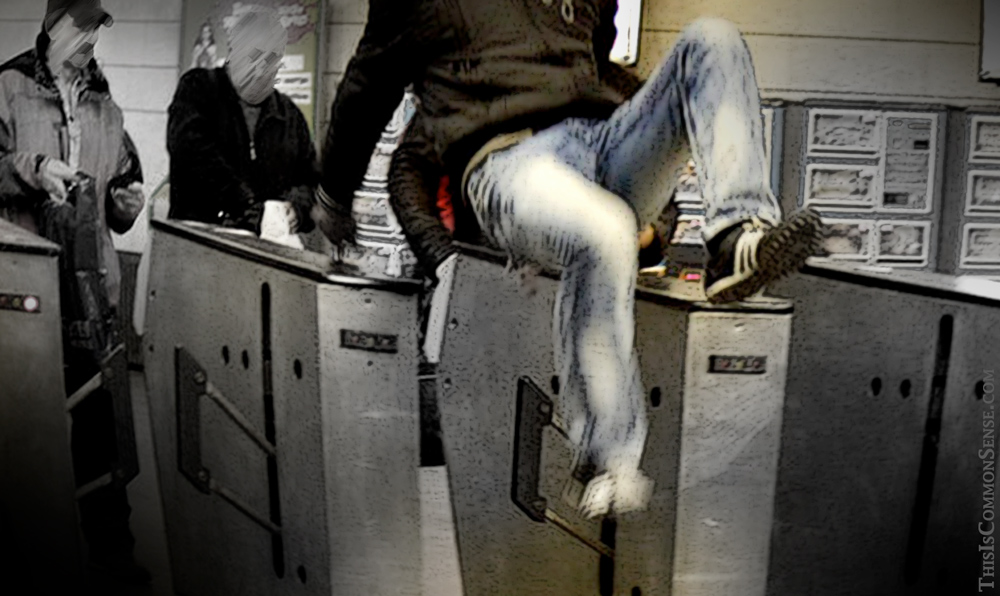
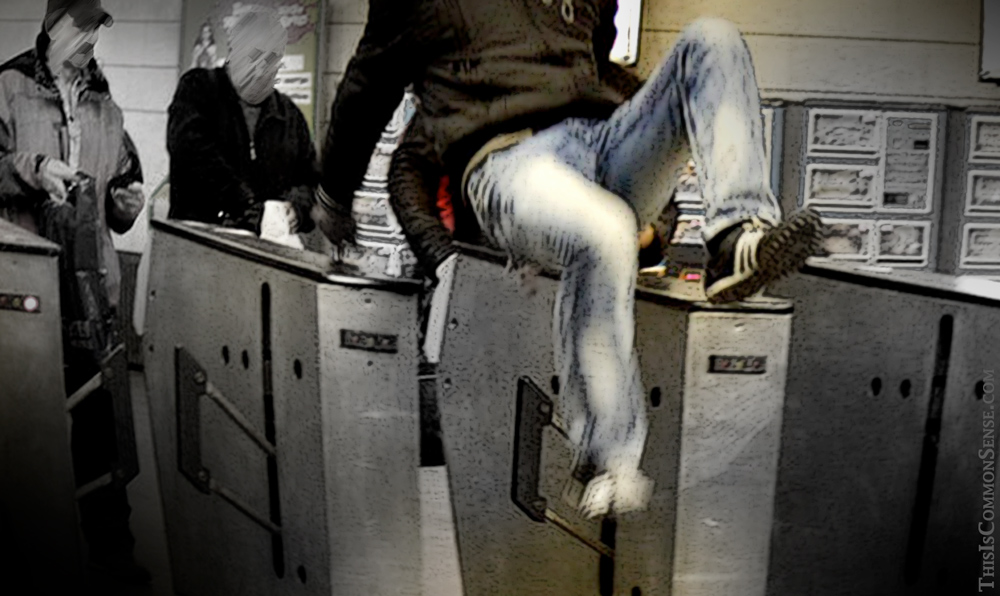
“The D.C. Council gave final approval this week to a measure decriminalizing Metro fare evasion,” The Washington Post reports, “paving the way for fare-jumping to become a civil offense punishable by a $50 fine in the District.”

Talk about stopping crime “in its tracks.” Jumping the turnstile won’t be classified a “crime.” Problem solved.

Nassim Moshiree, policy director for the local ACLU, declared it “a significant victory for criminal justice reform here in the District.”

Jack Evans argued, unsuccessfully, that scofflaws will quickly figure out the “civil citation . . . is largely unenforceable.” He added, “We have a big problem with fare evasion at Metro.”

Non-paying riders cost the bus and subway system in the nation’s capital $25 million annually. The worst bus route “has had 560,000 incidents of fare evasion since January, nearly 37 percent of its 1.5 million trips,” informs the Post.

Metro officials complained “that lessening the penalties would only exacerbate the problem and lead to more crime,” but supporters of the change posited that “decriminalization was an important step toward addressing disproportionate policing of African Americans who use the transit system.”

In recent years, according to a Washington Lawyers’ Committee for Civil Rights and Urban Affairs report, “91 percent of Metro Transit Police citations and summons for fare evasion were issued to African Americans.”

“I’m sad that’s Metro’s losing money,” offered Councilmember Robert White Jr., “but I’m more sad about what’s happening to black people.”*

Penalties can be too severe or too severely applied. And enforcement can be racially biased. But stealing transportation services is a crime. Pretending otherwise is not a victory.

This is Common Sense. I’m Paul Jacob.


* Is “that’s” a typo? Did the councilmember say, “that”? All I know is the quotation as I have it here is exactly as it appears online, in both text and headline, and also as it appeared in the dead-tree edition delivered to my home.

PDF for printing


» See popular posts from Common Sense with Paul Jacob HERE.


Categories
education and schooling ideological culture moral hazard responsibility too much government

An Expert Explains Failure

The failures of the public high schools in the District of Columbia go on an on. It is quite a scandal, as I explained this weekend at Townhall.

And yet some “charter schools that serve large populations of children from low-income families,” notes the Washington Post, after providing much detail about the massive failures, “recorded big increases in scores.”

What hint about improving education does that fact give?

Well, Kevin Welner, a professor who heads the National Education Policy Center at the University of Colorado, has an interesting thought: “People want to read into these test scores lessons about what the schools are doing. But these scores, even the growth scores, depend a great deal on students’ opportunities to learn outside of school. If we address the poverty and racism, then we will see these test scores increase.”

Hmmm. Let’s review: (a) the problem is at home and (b) it cannot be overcome by the schools. Moreover, the esteemed professor perceives the cause of these detrimental home environments to be “racism and poverty.” 

Once upon a time, public education was proclaimed to be the great equalizer, allowing the disadvantaged to climb the economic ladder, and, if not wipe out poverty completely, to certainly dramatically reduce it. 

Now, we discover from a certified education expert that we had it backwards.

So maybe it is time to chuck the whole experiment and just try to educate kids.

Not “save” them, or society.

This is Common Sense. I’m Paul Jacob.


PDF for printing