Categories
Accountability ballot access general freedom government transparency ideological culture initiative, referendum, and recall insider corruption local leaders national politics & policies property rights Regulating Protest responsibility too much government U.S. Constitution

The Great Faction

Politics isn’t a pretty business.

Frédéric Bastiat called the beast it serves “that great fiction” not because it doesn’t exist — intrusive state power sure persists — but rather because what it promises cannot really happen: “everyone living at the expense of everyone else.”

What can we do? How do we counteract a game that is rigged to increase the insanity, not reduce it?

Last week I indicated one thing a minor party with that goal in mind could do: use its power of spoiling elections to change major party behavior, and thus give citizens a fighting chance to restrain governmental metastasis.

Cancer.

I also suggested “blackmailing” the major parties into setting up a system of voting that . . . ends the power to blackmail! I believe that system — ranked choice voting — holds many positives, not the least of which is ending strategic voting, wherein voters are tempted to “falsify” their own preferences and support candidates they might dislike. This is as corrupting to the citizenry as the Great Fiction itself.

Let’s hope a savvy minor party leverages the major parties, gaining reforms to improve the system. Regardless, we can all — independently — push two other limits on political power:

  1. term limits at all levels, and
  2. initiative and referendum rights in all the states, not just the 26 that have it now.

Initiative and referendum rights would give ordinary citizens the leverage to possibly restrain the mad rush to live at each others’ expense. With the initiative, citizens can gain term limits, which produce more competitive legislative elections and lead to fewer legislators captured by the interests loitering in the capitol.

This is Common Sense. I’m Paul Jacob.

PDF for printing


Categories
Accountability free trade & free markets general freedom moral hazard nannyism responsibility too much government

Wabbit Season — or Duck Responsibility Season?

Venezuelans are starving. The country’s children are malnourished and — if something is not done soon — “it will be very difficult for these children ever to get back onto their nutritional growth curve.”

That is the testimony of the director of Caritas Venezuela.

Clearly, “Bolivarian” socialism has failed.

And yet, dictator Nicolas Maduro blames American “sanctions” for “exacerbating” the situation.

And offers up a “Rabbit Plan” to feed the people.

Yes, Maduro has called upon his countrymen to raise rabbits . . . and eat them.

But the source of the dark comedy isn’t just a dictator waxing eloquent on bunnies. “There is a cultural problem because we have been taught that rabbits are cute pets,” said the agriculture czar . . . whose first name is “Freddy.”

Holding a televised press conference with Maduro himself, last week, he insisted that “a rabbit is not a pet; it’s two-and-a-half kilos of meat that is high in protein, with no cholesterol.”

The funny part — the gallows humor, here — is this is what the grand planning of socialism has come to: not mass collaboration and an extended division of labor, but the people feeding themselves on small plots of land.

The Inca had developed a more effective mode of socialism.*

Just as humiliating for Bolivarians must be the trade embargo charge. Socialism is all about how superior government control is to the “anarchy in production” of market life. To blame their problems even a little on a capitalist country >not trading with them doesn’t merely admit defeat, it evades the last shred of responsibility.

I have a better “Rabbit Plan”: the tyrants should hop on down the bunny trail . . . freeing Venezuelans to recover.

This is Common Sense. I’m Paul Jacob.

 

* It depended upon radical inegalitarianism, subordination, drudgery, servility, and lack of any meaningful freedom.


PDF for printing


Categories
free trade & free markets general freedom moral hazard nannyism national politics & policies responsibility too much government

Free the Truck Drivers

Should our government liberate truck drivers from the country-wide prison in which they’re incarcerated?

You say I’m exaggerating. Being metaphorical.

Yes. Maybe metaphors and hyperbole are not to your taste, but suggesting an analogy, at least, is more than justified. The government does treat truck drivers like inmates . . . with no right to plan their own schedules.

In an article for The Federalist (“‘Overregulation’ Means Government Literally Deciding When I Work, Eat, Sleep”), Matthew Garnett attests to what the regulations mean in practice. He must obey five deadlines, only one — showing up on time — related to the objective requirements of the job. Also: He may work only so many hours before taking a break, only so many hours on the job and driving, only so many hours on the job and not driving, only so many hours per week.

“There’s no way I can decide for myself when I’m going to sleep or rest or drive,” Garnett “concedes.” “After all, I’m just a stupid truck driver. What would I know about such things?”

The mandatory pacing means that drivers often rush to meet a bureaucratic deadline even if they’d rather travel more slowly and safely. And rushing can be “a very, very bad thing to do when you’re operating an 80-foot, 80,000-pound vehicle that will go 70 miles an hour downhill,” Garnett observes.

What to do? Repeal it all.

Of course, hold the truck driver, like every other driver, responsible for conducting himself safely.

But don’t force him to obey continuous and arbitrary edicts about when to stop and go.

This is Common Sense. I’m Paul Jacob.


PDF for printing


Categories
Accountability crime and punishment government transparency moral hazard responsibility too much government

Half a Win Is Better than None

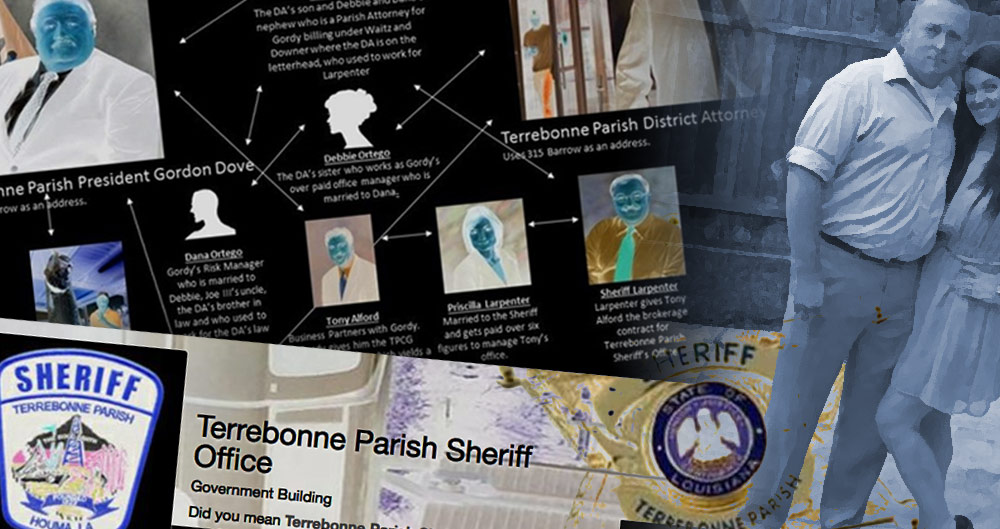
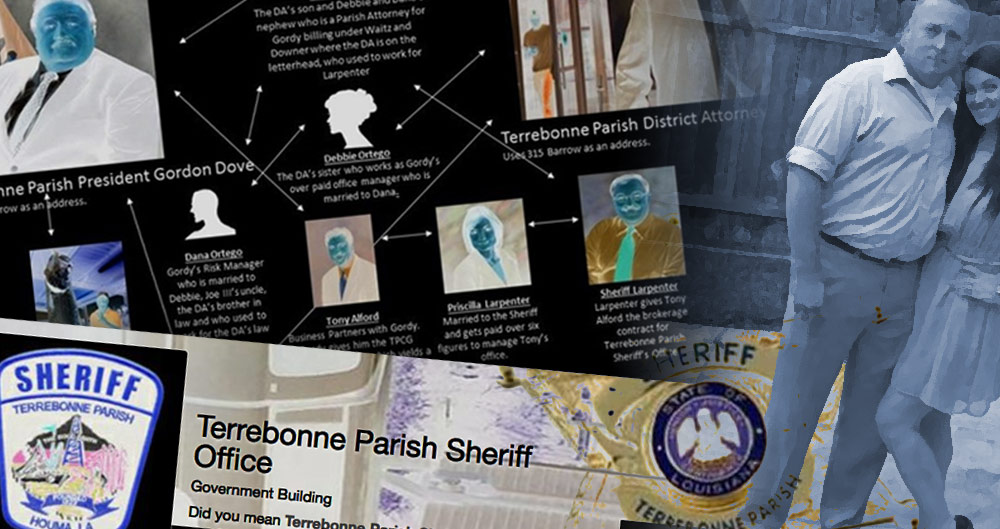
Jennifer Anderson criticized her local sheriff. Her family’s home was raided in 2016 by the sheriff as a result.

Terrebonne Parish Sheriff Jerry Larpenter’s reaction to criticism was ugly and unconscionable, but it hasn’t been allowed to stand. On the other hand, the sheriff hasn’t been adequately punished, either.

Jennifer Anderson’s pseudonymous blog ExposeDAT criticized various public figures in Terrebonne Parish, Louisiana, including with respect to the business relationships between Larpenter and others. Bridling at the criticism — which had to do with assessment of publicly available facts — the sheriff submitted warrants to Facebook and AT&T to track down the identity of the blogger. Then he sent men to raid the Andersons’ home and grab computers and cell phones.

The Andersons fought back, suing in federal court. They wanted the raid and seizure and search of their private stuff to be declared unconstitutional.

Finally, this September, the Andersons reached an undisclosed settlement with Larpenter out of court. According to its terms, the Andersons aren’t allowed to discuss it any detail. But their attorney says the settlement is “a victory for citizens’ right to be critical of their elected officials without fear of retribution.” U.S. District Court Judge Lance Africk has said that “Jennifer Anderson’s speech [in her blog] falls squarely within the four corners of the First Amendment.”

All that’s fine, but why hasn’t this sheriff also at least been kicked out of his job for his blatant abuse of power?

This is Common Sense. I’m Paul Jacob.


PDF for printing


Categories
Accountability ideological culture local leaders national politics & policies political challengers responsibility

Crazy Like a … Spoiler

Seven Republican members of Congress — three in the last two weeks — have announced their retirement.* The Democrats, needing 24 additional seats to gain a majority, see an opening.

Steve Kornacki, MSNBC’s national political correspondent, calls these seven “pure retirements.” That is, these politicians aren’t seeking another office, they suffer from no scandal, and are “pretty good at getting re-elected”; they’re “just deciding to leave.” Kornacki notes that the GOP had eight pure retirements in 2006 when they lost the House, and the Democrats had eleven when their majority was destroyed in 2010.

On his MSNBC program, The 11th Hour, an exasperated Brian Williams complained, “On top of all that, since down is up and up is down, Bannon [is] threatening to — to use the verb of the moment — primary incumbent Republicans! Which is crazy.”

Williams refers to Steve Bannon, late of the Trump administration and now back at the helm of Breitbart News. Bannon is now working, as CNN reported, with “conservative mega-donor Robert Mercer, who is prepared to pour millions of dollars into attacks on GOP incumbents.” Incumbent Republicans thwarting Trump, that is.

“I don’t think anyone should be surprised,” remarked Ned Ryun, American Majority’s CEO. “It’s a natural reaction by the base to what they’ve perceived as a perhaps intentional inability to pass any Trump agenda items.”**  

Ah, more spoilers! This week we’ve talked about Libertarian spoilers; now, pro-Trump spoilers. And, for years, non-profit groups such as the Club for Growth and U.S. Term Limits have helped a challenger against an incumbent, and been dubbed dangerous to Republican hegemony for their trouble.

Seems what connects all these anti-establishment folks is a commitment to principle over power.

This is Common Sense. I’m Paul Jacob.

 

*  The retiring Republicans are Rep. Sam Johnson (R, TX-3), Rep. Lynn Jenkins (R, KS-2), Rep. Ileana Ros-Lehtinen (R, FL-27), Rep. John Duncan Jr. (R, TN-2), Rep. Dave Reichert (R, WA-9), Rep. Charlie Dent (R, PA-15), and Rep. Dave Trott (R, MI-11).

** Steve Kornacki responded to Brian Williams: “Absolutely unheard of for a nominee in either party to have that complete lack of support from Capitol Hill and then go out there and win the nomination [for president]. . . . You have this element where all these members of Congress, even though it’s a president of their party on paper, don’t really feel they’re part of this presidency.”


PDF for printing


Categories
Accountability general freedom national politics & policies responsibility too much government

It Didn’t Last

“September 11 is one of our worst days but it brought out the best in us,” proclaimed Tennessee Senator Lamar Alexander.

Today is the 16th anniversary of that terrible day . . . arriving as Hurricane Irma smashes into Florida and with fresh memories of so many acts of kindness and heroism by first responders and minuteman citizen volunteers alike rescuing folks from the recent flooding in Houston caused by Hurricane Harvey.

“These acts of mass murder were intended to frighten our nation into chaos and retreat,” then-President George W. Bush told the American people that frightful evening. “But they have failed. Our country is strong. A great people has been moved to defend a great nation.”

He was correct about the people of this country. All kinds of folks stepped up in a myriad of ways to help.

But what about the government?

Well, the “public’s trust in government,” according to Pew Research, “which was mired in the 30% range through much of the past decade, doubled in the wake of the attacks.”

That uptick wasn’t to last. Public disgust with the federal government reverted to form. By 2015, reports Pew, “Only 19% of Americans today say they can trust the government in Washington to do what is right ‘just about always’ (3%) or ‘most of the time’ (16%).”

What happened?

Well, have you met the Washington politicians?

And can our country really be “strong,” as Mr. Bush declared, if government cannot earn the trust of even one of every five Americans?

This is Common Sense. I’m Paul Jacob.

PDF for printing


Categories
Accountability general freedom government transparency media and media people nannyism national politics & policies responsibility too much government

Ad Budget Slashed

Republican politicians, who had been running since 2010 on killing ObamaCare, did not. Not when they had a chance. Despite dominating Congress, they failed, because

  1. they opted for a goofy way to do it (the House’s AHCA plan being a terrible mess, probably worse than the monster it was trying to replace) and
  2. partly because the libertarians — along with a few “liberal” Republicans — blocked it in the Senate.

But that’s the olds; here’s the news: the Trump Administration has cut back ObamaCare’s advertising budget.

Progress?

I’m not sure. Maybe. Probably not.

The facts: ObamaCare outreach has been cut by 90 percent, and outsourcing grants to groups engaging in sign-up efforts have been cut by 40 percent:

The Trump administration downplayed the impact of boosted ad spending, noting that during 2017 open enrollment there was a decline of 5 percent in overall sign-ups. It also saw a 42 percent decline in first-time enrollment and enrollment of people who pay their premiums decline by 500,000 people.

So, it seems natural to respond to a perceived decline in “demand” with a reduction in “supply” — or any attempt to drum up more “customers” for subsidized policies.

Also natural is the partisan fall-out, with Democrats crying “foul” over the decided lack of support for their program. As Peter Suderman noted over at Reason, ObamaCare became partisan because it started out partisan.

But it was always — from conception in the Heritage Foundation braintrust* to its current choking gasps — an unworkable monstrosity.

And folks of all parties — and none — should be able to understand that.

This is Common Sense. I’m Paul Jacob.
 

* Note: the Heritage folks not unreasonably distance themselves from their past association with some of ObamaCare’s core notions, and others are skeptical of the distancing.


PDF for printing


Categories
Accountability crime and punishment folly general freedom ideological culture local leaders media and media people moral hazard national politics & policies political challengers property rights Regulating Protest responsibility

Alt-Comparisons

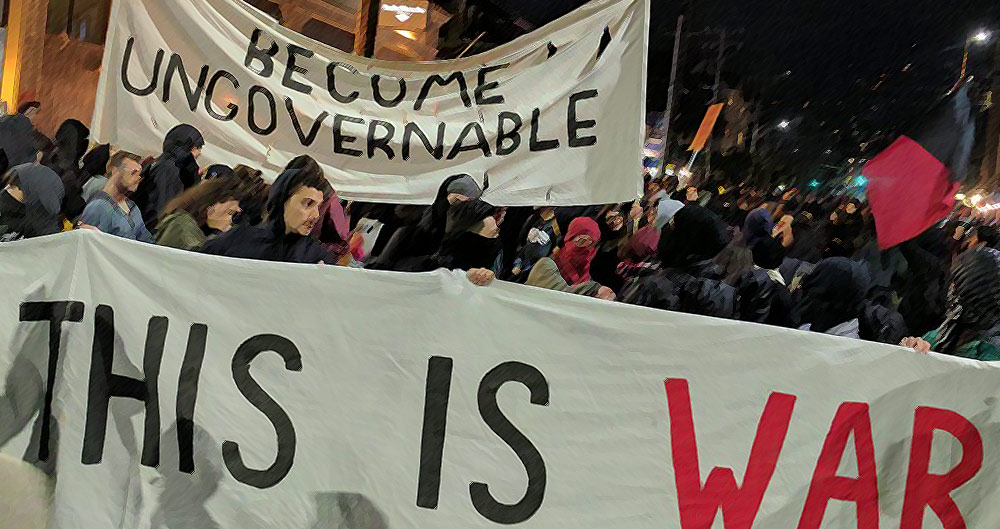
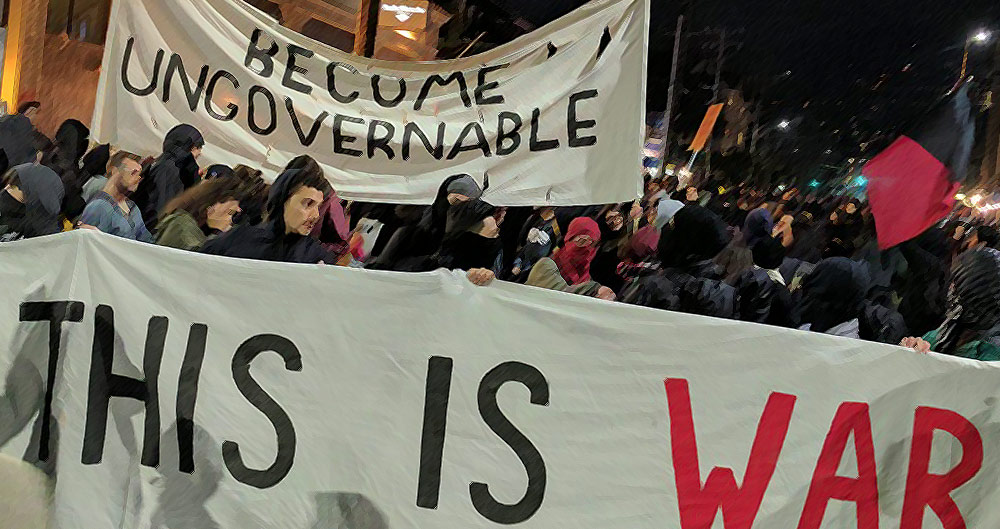
“There is no comparison,” concluded Washington Post columnist Margaret Sullivan, after spending her entire column doing just that, i.e. comparing Antifa, the so-called “alt-left,” with Nazis and white supremacists, the so-called “alt-right.” 

When Trump spoke about Charlottesville violence on both sides, Sullivan argued, “He was comparing things that aren’t the least bit equal, neither in scale nor in intent.”

Sullivan trumpeted statistics compiled by the Anti-Defamation League. The U.S. had 372 politically motivated murders between 2007 and 2016, with 74 percent committed by right-wing extremists and only 2 percent by left-wing extremists.*

Yet, those perpetrating 2 percent of such slayings can legitimately be compared to those perpetrating 74 percent — and also likened to thugs who beat down opponents in the street (thankfully without murdering them).  

All of the above use violence to achieve political goals.** Some are more deadly than others, but the violent actions of all should be condemned. 

Sullivan acknowledged that “it’s safe to say that most news consumers, if they know anything about antifa, know what the president has told them, and what they’ve gleaned from the club-wielding protesters shown endlessly on TV . . .”

Are citizens not supposed to take note of the violence in living color right before their eyes?

And why are folks uninformed? Could the mainstream media’s failure adequately to cover, say, previous Antifa rioting at Berkeley and elsewhere have something to do with it?

Lastly, Sullivan called on the media “to resist conflating [Antifa] with liberal groups.” Agreed. And let’s have the same fairness in not conflating Nazis and the KKK with conservatives.   

This is Common Sense. I’m Paul Jacob. 

 

*  By the process of elimination, “moderate extremists” are apparently committing close to a quarter of all political killings.

** I’ve not drilled down into these stats, or figured out what, precisely, qualifies as “political.”


PDF for printing


Categories
Accountability ideological culture media and media people national politics & policies political challengers Popular responsibility

The Law of Unintended Trump Support

Last week, when President Donald Trump abandoned his previous policy position on getting U.S. troops out of Afghanistan in favor of continuing the establishment-supported policy of keeping those troops there, he was very well-received in our nation’s capital.

NeverTrumper/neo-con Sen. Lindsay Graham (R-S.C.) spoke of Mr. Trump’s “smarts” and “moral courage.”

The #NeverPraiseTrump Washington Post applauded the president’s valiant “self-correction.”

Yet when Trump holds a view contrary to the Washington consensus his wisdom and moral bravery elicit less celebration.

Instead, we hear that The Donald is unfit to command.

“I really question his ability to be — his fitness to be — in this office,” says James Clapper, the former Director of National Intelligence.

“The president has not yet been able to demonstrate the stability,” Sen. Bob Corker (R-Tenn.) concurred, “that he needs to demonstrate in order to be successful.”

And from the usual suspect list of television talking heads we get clinical diagnoses, talk of “erratic behavior and mental instability that place the country in grave danger.”

Mr. Trump combines every bad personality trait imaginable, the litany runs.

But all this is for nought.

Donald Trump has been able to withstand media negativity as well as the lack of support from his own party’s insiders for one simple reason: it validates him.

Every insider attack, every media-fueled outrage campaign, just proves him as the ultimate outsider to a system that the long-frustrated, increasingly angered electorate wants turned upside down.*

This is Common Sense. I’m Paul Jacob.

*This episode of Common Sense condenses my regular weekend remarks at Townhall.


PDF for printing


Categories
Accountability crime and punishment First Amendment rights general freedom media and media people moral hazard nannyism national politics & policies property rights responsibility too much government

Google: Disagreement

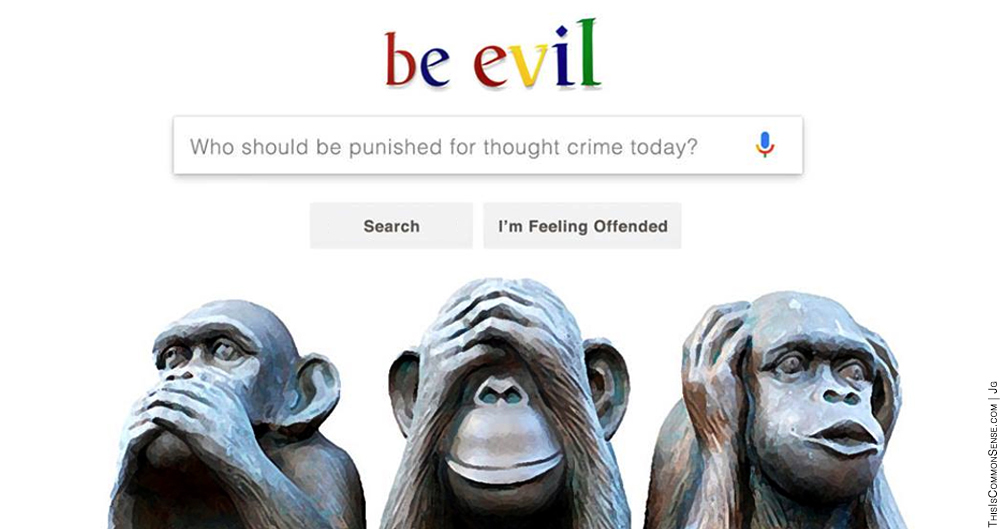
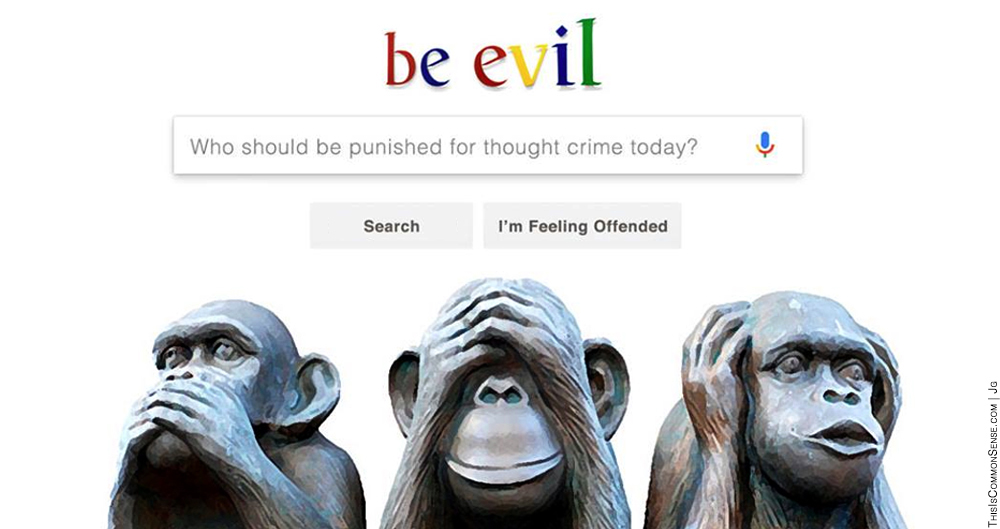
Once upon a time, Google penned a stern note to self: “Don’t be evil.”

What you regard as avoiding evil, though, depends on what you regard as doing good.

Does Google think it’s “good” to fire someone for offering reasoned objections to vapid pieties about why there are more men than women working as programmers, and about how to fix the problem? Assuming it is a problem.

If the answer is yes, then it’s up to more reasonable people to say, “No, Google, stomping on candid internal discussion of your (bad) politics and policies is not ‘doing good.’”

Alas, some Google critics push for a “remedy” worse than the problem: government force. They want government to impose new prohibitions and mandates on large private firms that help people to spread their opinions.

I don’t necessarily agree when a firm — Google, Twitter, PayPal or anybody else — stops providing services to persons expressing views that managers and HR departments disdain. Yet I may agree. No one is morally obligated — and no one should be legally compelled — to help spread the views of others.

I certainly refuse to distribute any installment of “Common Sense” guest-authored by The Anti-Paul-Jacob Club.

When market actors make bad decisions without violating anyone’s rights, others have many powerful and peaceful means of opposing those decisions. Criticism. Boycott. Competition.

But we shouldn’t seek to outlaw the decision-making.

The right to freedom includes no guarantee that one will always do the right thing as others see it.

This is Common Sense. I’m Paul Jacob.


PDF for printing