Categories
Accountability general freedom ideological culture media and media people national politics & policies responsibility too much government

The Times Must Change

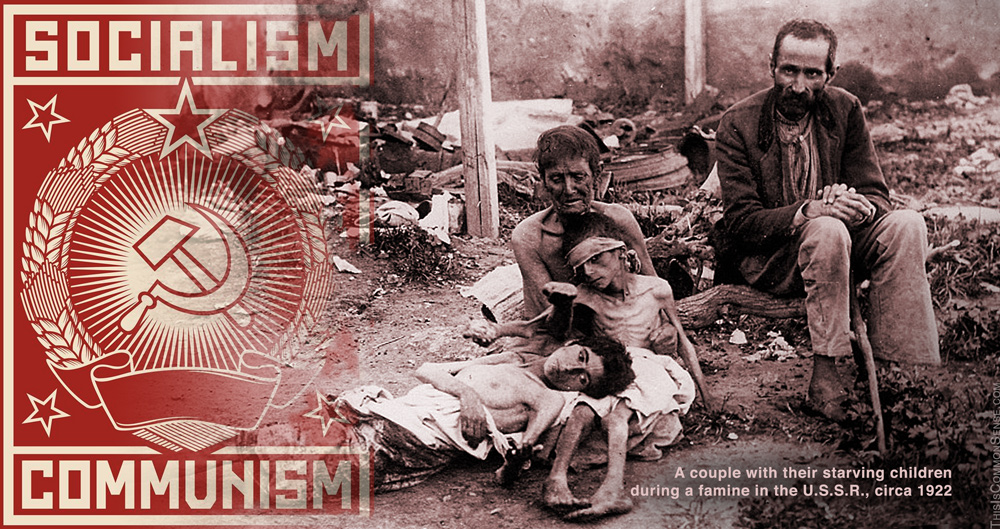
“Political leaders prefer to project a noble history, sometimes by turning complicity in atrocities into claims of victimhood,” the New York Times informed us last Sunday. “In Russia, Mr. Putin and many of his lieutenants came from the K.G.B. and resisted fully confronting its repressive history. And they, like many of their countrymen, prefer to portray Stalin not only as the architect of the Gulag but also as the leader who built Russia’s industrial might and led it to victory in the Great Patriotic War.”

The Gray Lady here marks the passing of Arseny Roginsky, an organizer and activist who kept alive the memory of state mass murder in his homeland. The Times quotes the late hero as insisting that common talk of “victims of repression” is nowhere near enough. The repression did not merely descend upon the people as “a plague.”

The victims were targets of “state terror.”

But there was something missing in this too-brief notice. Though the Nazis were mentioned, the Union of Soviet Socialist Republics wasn’t.

Communism was not.*

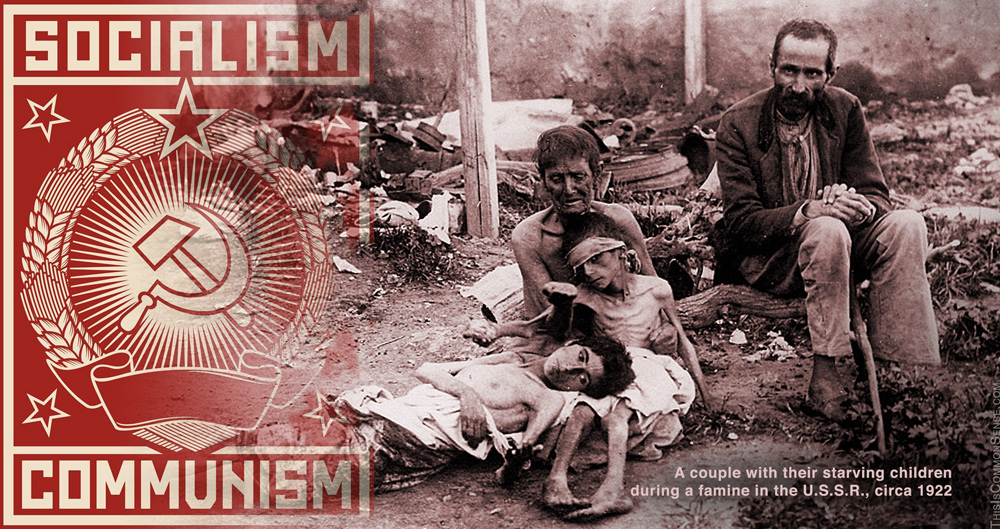
State terror did not infect its perpetrators biologically, like the world’s worst case of x-oplasmosis. It neither descended from the heavens nor ascended from the swamps. The infection was ideologicalthe result of Marxian socialism, of unworkable communism.

By not mentioning socialism or communism or even the USSR, the New York Times carries on its sad history of leftist apologetics. The case of the lying propagandist Walter Duranty — the Times’ award-winning foreign correspondent and author of Mission to Moscow — should have been the last of that.

It isn’t, apparently. The Times still protects its safe-space socialist readers.

This is Common Sense. I’m Paul Jacob.


* The omissions were also present in the Timesinitial obituary.


PDF for printing


Categories
Accountability incumbents insider corruption local leaders moral hazard national politics & policies responsibility

Queen Sheila: Terror of the Skies

What’s all the fuss?

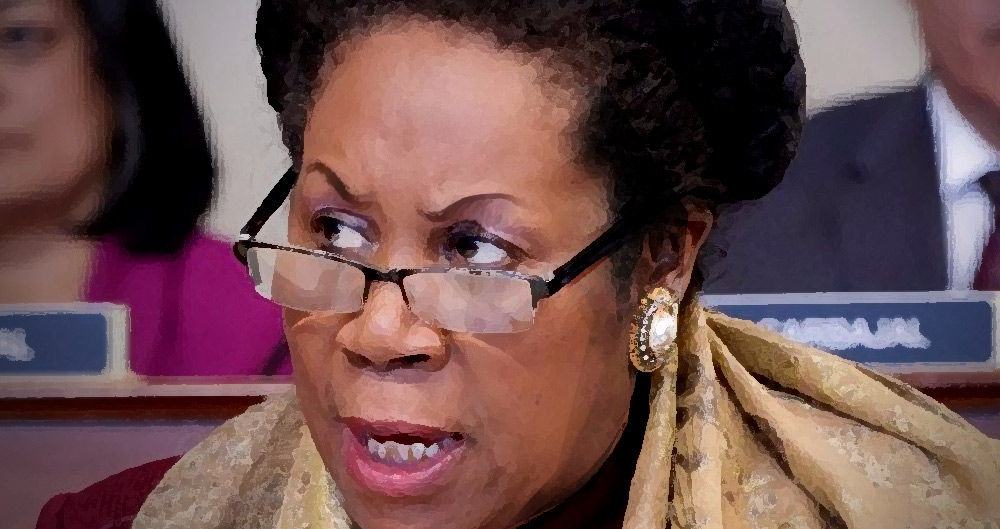
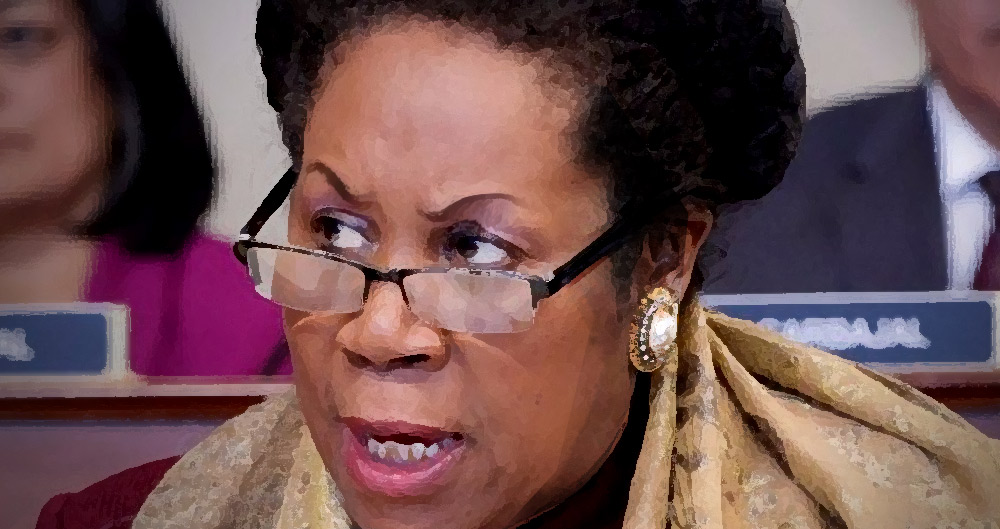
Congresswoman Sheila Jackson Lee (D-Tex.) was escorted ahead of all the other passengers onto a United Airlines flight from Houston to Washington, D.C., taking seat 1A in first class.

The congresswoman described it as “nothing exceptional or out of the ordinary.”

Meanwhile, Jean-Marie Simon possessed a boarding pass for seat 1A; she attached a photo to her Facebook post. Yet, Simon was stopped when boarding the plane and told her ticket had been cancelled.

Who cancelled it? United claimed Simon did.

Simon said that’s bunk — and it does seem strange to cancel your flight and then moments later attempt to board.*

“Since this was not any fault of mine,” Rep. Jackson Lee offered, “the way the individual continued to act appeared to be, upon reflection, because I was an African American woman . . . an easy target. . . .”

’Tis the season to cry “racism.”

And yet the congresswoman characterized herself as “kind enough” to apologize “out of the sincerity of my heart” —  and “in the spirit of this season.”

Doubt her kindness? You have reason:

  • In 2014, Rep. Jackson Lee won Washingtonian magazine’s contest for “meanest” member of Congress — garnering, incredibly, seven times as many votes as the second-place finisher.
  • Years ago, after several incidents, Continental Airlines told Jackson Lee that she had to behave or find another airline.
  • “You don’t understand,” the congresswoman once reportedly shouted at a staffer. “I am a queen, and I demand to be treated like a queen.”

Not “Queen for a Day,” mind you: Sheila Jackson Lee has been a congressional queen for the last 23 years! And today she is the ranking Democrat on the subcommittee on transportation security.

Feel more secure?

This is Common Sense. I’m Paul Jacob.


* And, if it was truly her own fault, United appears to be overcompensating in compensating Simon, giving her a seat in Economy Plus, a $500 voucher and numerous apologies (though not yet in writing).


Additional Background Information
Daily Caller: Congressional bosses from Hell: Sheila Jackson Lee (2011)
Weekly Standard: Sheila Jackson Lee, Limousine Liberal (2002)


PDF for printing


Categories
Accountability general freedom media and media people moral hazard nannyism national politics & policies porkbarrel politics responsibility too much government U.S. Constitution

A Good Tragedy Not Wasted

No matter how “not as bad as we feared” President Donald Trump may be appearing, as we close out the year let’s remember why some of us did not trust him in the first place: his knee-jerk reactions are too often witlessly statist.

The speeding Amtrak train that derailed over I-5 in Washington State on Monday was a horror show, sure. And we have come to expect the President — any President, either party, all administrations — to provide words of comfort after such events. Trump conformed to expectations.

And, admittedly, his initial Tweet was all very proper. But his verbal response was . . . very . . . Old School. After mentioning the federal government’s role in handling the tragedy — “monitoring” and “coordinating with local authorities” — he used the event as an excuse to expound upon the idea that the event provides “all the more reason why we must start immediately fixing the infrastructure of the United States.”

This is bad, old-fashioned policy opportunism. The worst time to cook up “solutions” is right after a tragedy. That’s when emotions are highest and reason is lowest.

More importantly, the train was going through its initial run over newly upgraded infrastructure!

One could more reasonably surmise that the recent infrastructure upgrade was the cause of the derailment — though, let us be honest, it looks like the train was way above the stretch’s speed limit.

Note to Donald Trump: just because there’s a microphone in front of you doesn’t mean you are required to “make a point.” That’s not the President’s job.

Mister, we could use a man like . . . Calvin Coolidge again.

This is Common Sense. I’m Paul Jacob.


PDF for printing


Categories
Accountability ballot access general freedom government transparency initiative, referendum, and recall local leaders national politics & policies political challengers responsibility tax policy term limits too much government

What Unlimited Government Costs Us

“Olympia can’t restrain itself,” Tim Eyman wrote the other day, a judgment on legislative irresponsibility hardly unique to the Evergreen State. Citizens around the country have cause to lament the difficulty of obtaining anything close to a good legislature.

Too often the merely “bad” would constitute a significant improvement.

Which is why legislators need to be put on a short leash. Limits on government must be written into law, where possible into either the U.S. Constitution or state constitutions, so the limits cannot be tampered with by legislators, good or bad.

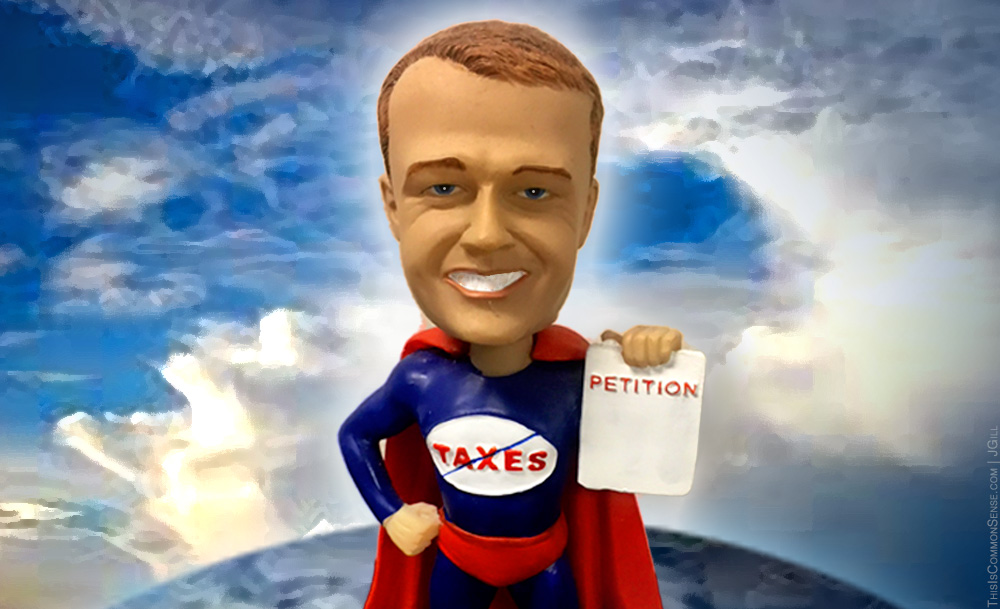
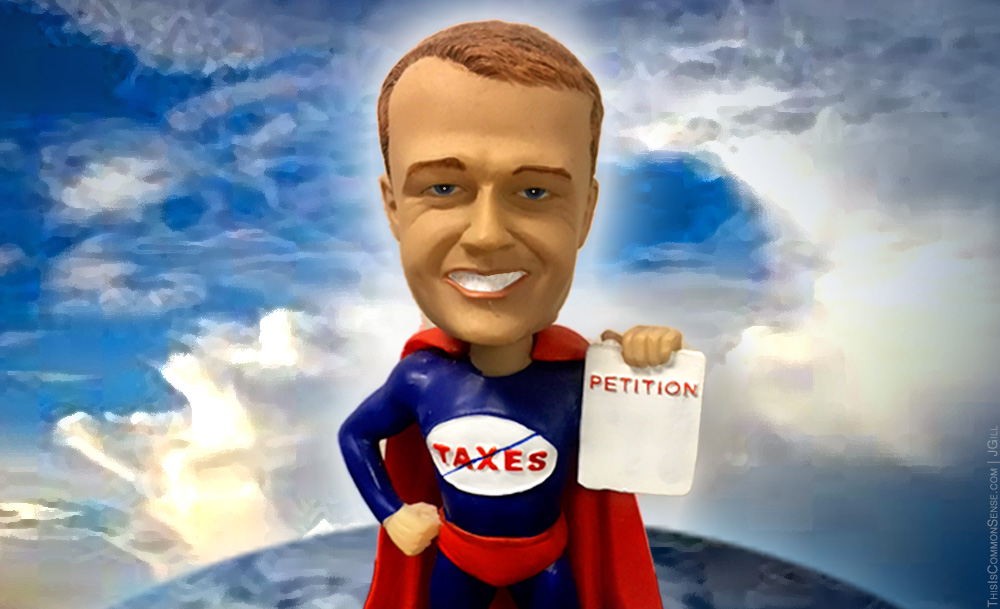
Washington State initiative guru Tim Eyman, cited above, has made a career of working for just those kinds of limits. In 2007, Eyman and the citizen group Voters Want More Choices petitioned onto the statewide ballot a requirement that any tax increase must receive a two-thirds vote from both legislative chambers.

Voters passed the measure* in 2007, 2011 and 2012.

In an email to supporters this month, Eyman presents data — an “amazing real-world comparison” — to help us understand how effective the limits were . . . while they lasted.

He notes that “with the 2/3 rule in effect from 2008-2012, those 5 legislative sessions cost the taxpayers $6.894 billion” in increased taxes.

And he compares that to the five years (2013-2017) since the state’s highest court struck down the voters’ two-thirds mandate: “WITHOUT the 2/3 rule, those 5 legislative sessions cost the taxpayers $23.679 billion.”

“Without the fiscal discipline imposed by citizen initiatives,” Eyman concludes, “politicians cannot hold back.”

Now we have hard evidence for what unlimited government costs us: more than three times more!

This is Common Sense. I’m Paul Jacob.


* Washington State’s ballot initiative process allows voters to pass simple statutes but not constitutional amendments. For two years after passage, legislators must garner a two-thirds vote to override a ballot initiative. After those two years, only a simple majority is required.


PDF for printing


Categories
Accountability general freedom moral hazard national politics & policies responsibility

The Online Manipulation of Democracy

There exist many sneaky ways to get other people to do what you want, voluntarily — effectively blurring the line between legitimate persuasion and fraud.

When large, almost unavoidable private companies apply those techniques to targeted groups of voters, that blur might look something very much like election fraud.

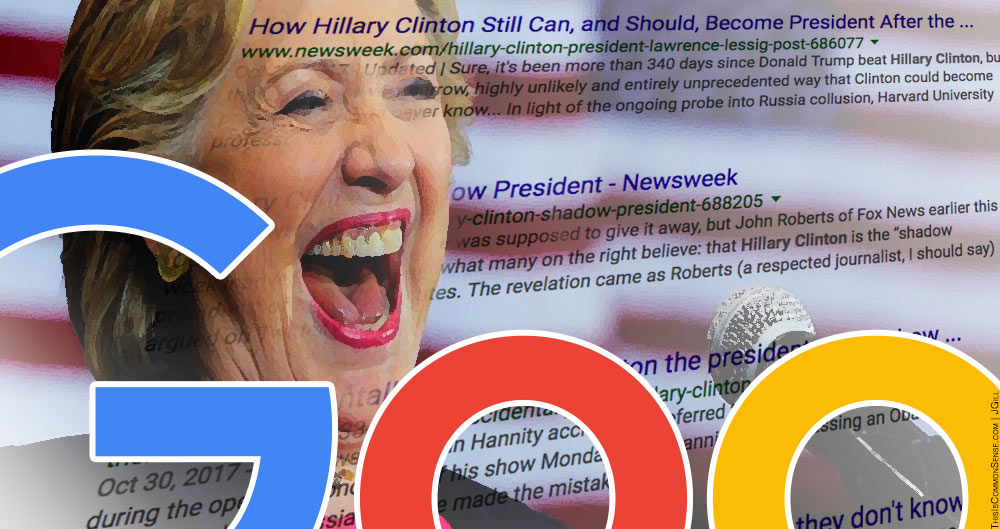
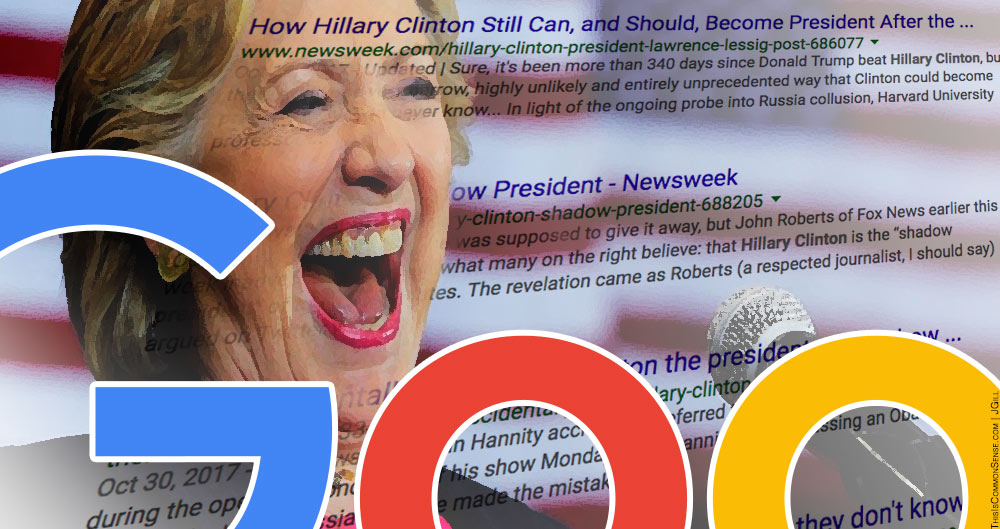
Harvard psychologist Dr. Robert Epstein has been studying hidden online persuasion techniques. Interviewed by Tom Woods last Friday, the doctor explained several sub rosa persuasion techniques, especially the fascinating Search Engine Manipulation Effect (SEME), which he says has been replicated in studies by other researchers. 

SEME, he argues, is a “genuinely new” way to manipulate masses of people — without them realizing it.

And it sports “one of the largest effects ever to be discovered in the behavioral sciences.” Google, it turns out, can influence voter and consumer behavior merely by ordering search results in specific ways. Going into his first study, he suspected he might discover a 2 percent influence on voter behavior. He got 48 percent, instead.

There is more: not only can Google do this, the behemoth does do this — Epstein has documented that Google did it in the last election. 

Supporting, or to the benefit of, Hillary Clinton.

Understandably, Epstein scoffs at the “fake news” panic as something insubstantial in comparison. The potential impact of this online manipulation dwarfs the allegations of Russian influence.

I wonder: Did Mrs. Clinton know that her very special high-tech friends were pressing their very big thumbs onto the scale of democracy?

It seems a very old tech — the Electoral College — effectively counteracted the manipulation.

This time.

This is Common Sense. I’m Paul Jacob.


PDF for printing

Categories
education and schooling folly general freedom ideological culture moral hazard nannyism responsibility

The Common School Agenda

The rise of campus radicalism, write Heather Heying and Bret Weinstein in the “Washington Examiner, appears to “validate every fantasy the Right ever had about the Left.”*

Heying and Weinstein, who have resigned their positions at Washington State’s public liberal arts college, Evergreen, detail what went wrong at the college they “loved.”

A sociologist was hired as college president, and he systematically bred an activist movement reminiscent of the Cultural Revolution. That’s how our two extremely popular professors found themselves defending free speech and non-compliance against angry crowds of students spurred on by college administrators and “equity” officers.

Heying and Weinstein plausibly assert that these protests arise directly from the “‘equity and inclusion’ movement, cloaked in words that sound benevolent and honorable” but serve as little more than “a bludgeon.” And definitely “not like protests many readers will remember from their own college days.”

But are they really that surprising?

Government-run and -funded education hit these United States in a big way with the 19th century’s Common School movement. And not primarily to ensure “proper education.” The rationale was political . . . to more-than-nudge immigrant children to assimilate to our republican way of life.

The political element from our schools never left — and became more Left with each and every “revolution” in educational methods, and each increase in government involvement.

So, does training students to become violent mob activists bent on suppressing ideas they don’t approve of seem out of place?

It certainly is expensive. In more than one way.

This is Common Sense. I’m Paul Jacob.


* And note that this piece did not appear in the left-of-center Washington Post — echoing the hesitance the mainstream and leftstream press have shown towards Bret Weinstein’s story in the first place.


PDF for printing


Categories
Accountability folly general freedom local leaders media and media people moral hazard national politics & policies responsibility

Another Election “Against”

As I write, Democratic candidate Doug Jones has just taken the stage to declare himself the winner of the Alabama Senate race, the one in which Roy Moore became more infamous than famous, and better known for the worst kind of reasons.

The final counts are not in, and I suppose there could be a turnaround at the last moment, but it doesn’t look like it. It looks like Republicans lost the seat. Hillary Clinton is already crowing that this is a sign of more Democratic victories to come.

Maybe.

Too soon to tell.

Meanwhile, what to make of it all? Jones has declared that “This entire race has been about dignity and respect. This campaign has been about the rule of law.” And I am not certain that is a good description. It seemed to me what the campaign turned into was a referendum on whether voting for a man accused of sexual assault and statutory rape was a good idea.

There were also Republicans thankful that Moore lost. “Decency wins” is what Senator Jeff Flake tweeted; “Suck it, Bannon,” is Meghan McCain’s eloquent taunt. (Steve Bannon had backed Moore.) Reason’s Scott Shackford probably put it best, writing that “Polls have closed in Alabama as voters there decide between controversial former judge Roy Moore and … um … not Roy Moore.”

The modern American political process is now firmly a matter of reiterating this pattern: voting against more than for.

A horrible development? Well, there sure is a lot more to be against in American politics, than for.

This is Common Sense. I’m Paul Jacob.


PDF for printing


Categories
general freedom incumbents local leaders moral hazard national politics & policies responsibility too much government

Democracy — or Too Much Government?

The Democratic Party’s Unity Reform Commission met last week to concoct measures to pull the party from the brink of madness and oblivion.

The commission’s main recommendation? Limit the role of “superdelegates” in the nomination process.

Great — a first step I’ve long advocated. But the whole system needs more serious reform.

Jay Cost covered some of the problems associated with the parties’ candidate selection processes, yesterday, in the online pages of the National Review. Unfortunately, he went off the rails about an alleged “trend toward an unadulterated democratic nomination process,” which he regarded as a “major mistake.”

He misdiagnosed both the problem and the Democrats’ proposed cure. Neither is “too much democracy.”

America’s partisan voters keep selecting bad candidates because the major party duopoly is a rigged game — designed and regulated by incumbents for incumbents to solidify a protected class of insiders.

Which voters understandably seek to overthrow on a regular basis.

The problem is the whole primary process, which is faux-democratic, a clever ruse to prevent real challengers from emerging, forcing effective politicians through the two-party mill.

To make things more democratic — to add effective citizen checks on power and privilege — the parties need to be completely divorced from official elections. That is, junk the whole primary system, making the parties bear fully the costs of their own selection processes. Further, the general elections should be thrown open to a wider variety of parties and candidates, with the voting system itself reformed to avoid the sub-optimal results of our first-past-the-post system.

The problem with our politics isn’t “too much democracy” so much as “too much partisan government.”

This is Common Sense. I’m Paul Jacob.


PDF for printing


Categories
Accountability education and schooling folly local leaders responsibility

Learning to Cheat

Months ago, Ballou High was widely lauded for posting impressive gains in graduation rates — from a abysmal 51 percent two years ago to a much less terrible 64 percent this year — and for the even more remarkable feat of getting every single graduate accepted by a community college or university.

“Pay-dirt!” I sarcastically proclaimed at Townhall.com.

But the real dirt was dug up by WAMU, a National Public Radio affiliate in the nation’s capital. What did Ballou students learn? How to cheat.

Well, that appears to have been the lesson plan, anyway.

In numerous interviews — many given on conditions of anonymity for fear of retribution — teachers charged they were pressured by the administration to give grades that students did not earn, so those students could nonetheless graduate.

“Last year, DCPS put school administrators entirely in control of teacher evaluations. . . .” And those evaluations, which grade teachers and administrators on student performance, can mean as much as $30,000 in bonus pay.

The incentive to cheat is both obvious and sizable.

The mayor and the chancellor of the D.C. Public Schools quickly announced an investigation, but regular observers suspect the usual “white-wash.”

“This is [the] biggest way to keep a community down,” protested one black teacher. “To graduate students who aren’t qualified, send them off to college unprepared, so they return to the community to continue the cycle.”

That tragic cycle is captured in public education’s corrupt cycle: promised reforms followed by false claims of progress . . . followed by the discovery of cheating.

This is Common Sense. I’m Paul Jacob.


PDF for printing


Categories
folly free trade & free markets general freedom moral hazard nannyism national politics & policies property rights responsibility too much government

What’s the Big Deal?

Big news: in a $69 billion deal, CVS Health Corp. plans to buy Aetna Inc. The AP story by James F. Peltz says the move “would shake up healthcare industry.”

Should we worry?

Because corporations aren’t cancerous, growth and consolidation are not to be feared as such.

But speaking of cancerous growths . . . the federal government will not likely take the news of the merger with the tranquility of a Taoist sage.

Over at Forbes, last month, Bruce Japsen predicted that the deal wouldn’t go through, arguing that “a full-blown merger of the healthcare giants would be complicated and unlikely given recent antitrust scrutiny in the sector and given that the drugstore chain is already going into business with an Aetna rival, Anthem.”

Government antitrust to the rescue?

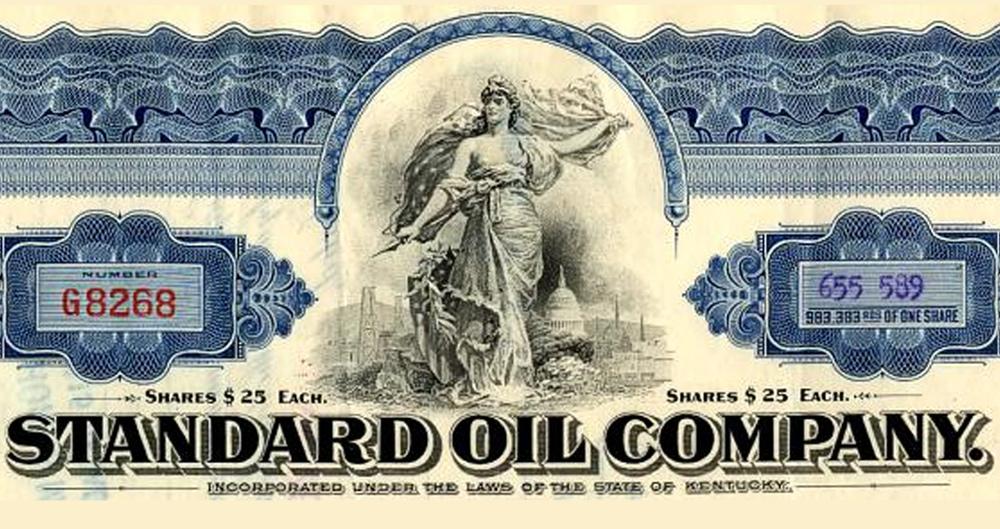
No. We may have been schooled to believe that antitrust “protects competition,” but it has always limited competition, instead. Antitrust was always about fear — of bigness. It was definitely not designed to help consumers. The classic case is the infamous break-up of Standard Oil, which produced more fuel while lowering prices — even as it grew humongous.* Standard Oil grew because it satisfied consumer demand. Which is what businesses are for.

And yet government broke it to pieces, using antitrust rationales, for the benefit of some producers, some businesses.

Think of it as crony capitalism in action.

So, my remaining question runs like this: is the CVS/Aetna merger a response to pure market demand, or as a way to wiggle around insane state and federal regulations?

Health care in America is sick. The merger is not likely the cure. But it would not kill the patient.

We have government for that.

This is Common Sense. I’m Paul Jacob.


* For background, consult the studies of economist Dominick T. Armentano.


PDF for printing