Categories
crime and punishment election law privacy

Donors Don’t Donate Their Privacy

Alabama recently passed a law to prohibit public agencies from disclosing information “that identifies a person as a member, supporter, or donor of a 501(c) nonprofit organization . . . except as required by law.”

SB59 is comprehensive, stating that “notwithstanding any provision of law to the contrary,” no public agency may compel disclosure of such information or itself publicly release such information. 

The initial delimitation “except as required by law” seems ambiguous. But SB59 goes on to specify that exceptions would pertain to things like the requirements of a “lawful warrant” or a “lawful request for discovery of personal information in litigation.”

Passage is a big deal because, until now, agencies in the state had been permitted to collect and disclose such information.

Many nonprofits are political or ideological in character, promoting causes that are controversial. When this is so, who especially appreciates unfettered access to donors’ names and addresses? Obviously, opponents of the cause who would like to target donors with propaganda or even actively harass them.

On the national level, recognition of the problem is represented by the U.S. Supreme Court’s 2021 ruling in Americans for Prosperity Foundation v. Bonta. The court threw out a California requirement that nonprofits in the state had to divulge the names and addresses of their biggest donors to the attorney general. The Foundation plausibly argued that the requirement would deter people from contributing.

Several other states have also enacted SB59-style legislation. The number we need is 50.

This is Common Sense. I’m Paul Jacob.


PDF for printing

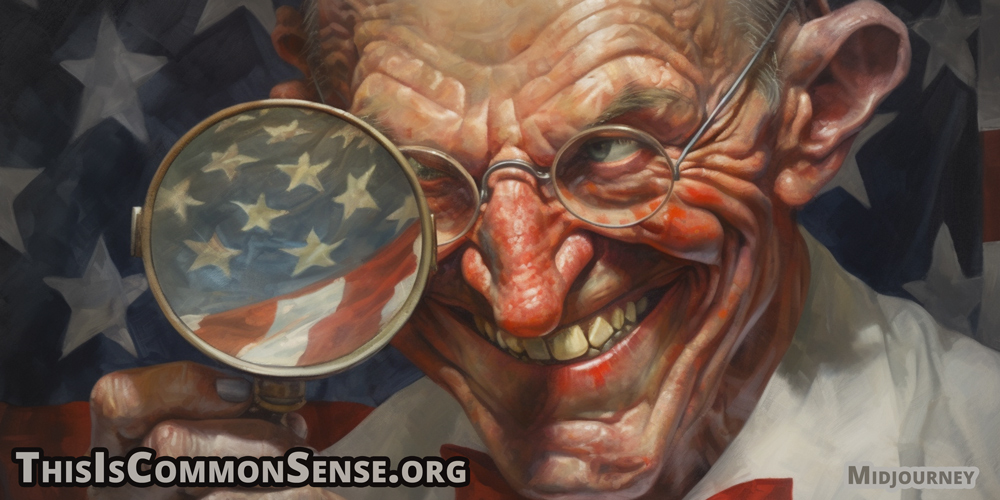
Illustration created with Midjourney

See all recent commentary
(simplified and organized)
See recent popular posts
Categories
international affairs privacy

The Cuban Missive Crisis

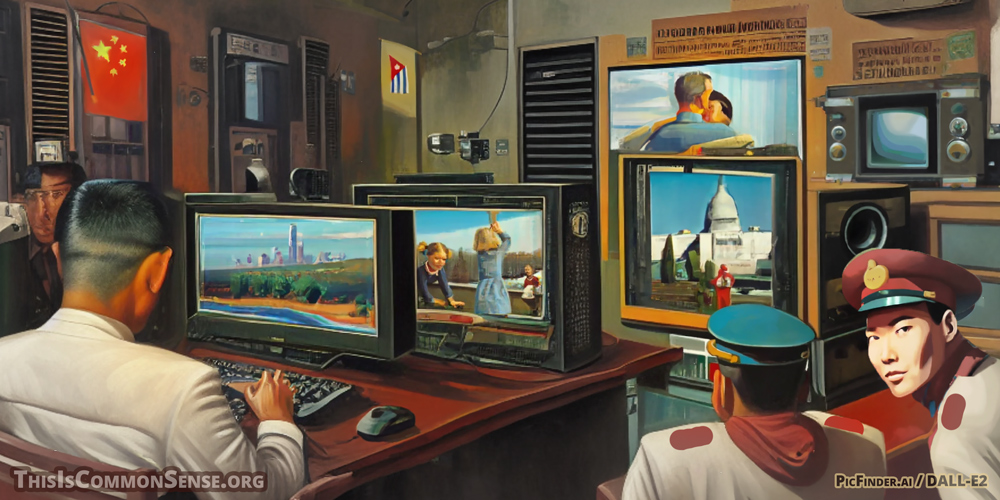
Very soon, maybe, the Chinese government will be able to peruse secret military and other electronic missives being transmitted “throughout the southeastern U.S., where many military bases are located, and monitor U.S. ship traffic,” according to a Wall Street Journal story.

Under an until-now secret agreement between China and Cuba, Cuba will charge China a mere several billion dollars for Cuba’s permission to build the eavesdropping station on Cuban territory.

If cited intelligence is accurate, the planned station would enable China to spy on emails, phone calls, satellite transmissions, and other communications. The data thus scooped up would probably facilitate China-sponsored cyberwarfare and other sabotage, as well as its pursuit of overseas Chinese nationals that the Chinese government wants to keep trapped in China.

Craig Singleton, an analyst for the think tank Foundation for Defense of Democracies, says that moving to establish the spy facility “signals a new, escalatory phase in China’s broader defense strategy. The selection of Cuba is also intentionally provocative.”

Perhaps the publicity about the spy station will help to stop it from happening.

John Kirby, a National Security Council spokesman, told the Journal that its story is “inaccurate” without spelling out the inaccuracies. He also said that the U.S. is taking steps to counter Chinese development of such spy infrastructure. “We remain confident that we are able to meet all our security commitments at home and in the region.”

I guess we’ll see. Before it’s too late, I hope.

This is Common Sense. I’m Paul Jacob.


PDF for printing

Illustration created with PicFinder.ai and DALL-E2

See all recent commentary
(simplified and organized)
See recent popular posts
Categories
international affairs privacy

Delivering to Evil

Will Americans who demand the outing of anonymous donors to political causes listen to Jianli Yang?

One reason that people donate to organizations anonymously — just as they want their votes and other personal information to remain confidential — is to avoid being harassed by political opponents.

But being bullied in a restaurant is hardly the worst that can befall donors stripped of anonymity.

Jianli Yang is a Chinese dissident. In 2008, after spending years in a Chinese prison for his activism, he founded Citizen Power Initiatives for China, a US-based organization working to advance rights and democracy in China.

Yang notes that Chinese supporters of his organization, even if residing outside of China, “can face extreme consequences when they are identified by the Chinese government.” Without the right to protect donor privacy, affirmed in a July 2021 U.S. Supreme Court decision on the associational rights of donors, donors can end up being punished by the Chinese government.

The risk isn’t just theoretical. In April 2021, one Mr. Lee, a businessman, was forced to appear on Chinese television to “confess” to supporting Citizen Power Initiatives for China. The government also sentenced Lee to eleven years in prison.

We must fight both the CCP and their wannabe branch in DC. Things are nowhere near as bad in this country as in China. But we don’t know what threats we will face the day after tomorrow even from our own government.

We need every First Amendment protection we can get.

This is Common Sense. I’m Paul Jacob.


PDF for printing

See all recent commentary
(simplified and organized)
See recent popular posts
Categories
general freedom media and media people privacy

CDC’s Covert Data Crime

The Centers for Disease Control has been criticized so often over the past couple of years — justly, only about 90 percent of the time — that one almost hesitates to add to the pile.

But hey. If the CDC stops saying and doing awful things, we can stop slamming it for saying and doing them.

The latest is the agency’s apparent use of Big Data to surveil cellphone users in ways the users never suspected or authorized.

Vice reports that the CDC paid for location data “harvested from tens of millions of phones” in the U.S. to track patterns of compliance with curfews, visits to churches and schools, and “monitor the effectiveness of policy in the Navajo Nation.”

CDC documents obtained by Vice suggest that although the pandemic was the rationale for getting the data, the CDC has planned to use it for other purposes too.

U.S. Senator Ron Johnson, a Republican, is calling for an investigation. “Just because data exists, doesn’t mean that the government should be using it to track Americans.”

He adds that “the government is becoming way too big, and way too powerful.”

Sounds like a new development. But, depending on how you’re measuring it, the metastasizing of the federal government goes back to the Civil War era — or at least the New Deal. So may I suggest a revision, Senator, starting with verb tense?

“Has become.” 

Has become way too big and powerful

And is getting even more so.

This is Common Sense. I’m Paul Jacob.


PDF for printing

See all recent commentary
(simplified and organized)
See recent popular posts
Categories
Accountability privacy tax policy

Stay On Call 

Backlash can be good. Against lousy ideas, for example. Sometimes, the response to the backlash is to relinquish the lousy idea, at least temporarily.

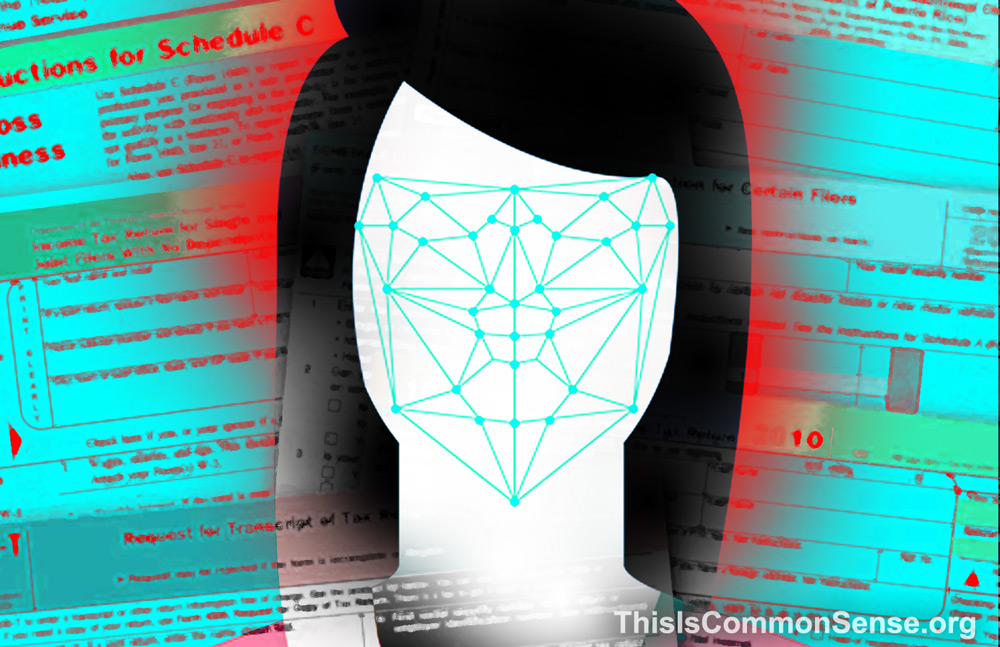
We must hope for more than a moment of reprieve from the Internal Revenue Service’s plan to require facial ID recognition of persons who use certain functions of its website.

Both Republican and Democratic congressmen, among many others, were outraged.

It’s good that many congressmen regard some forms of surveillance as beyond the pale. (Meanwhile, legislation to promote scanning of everybody’s online messages at will, Lindsey Graham’s EARN IT Act, is back in Congress. Bipartisan Backlash, can you take a look at this?)

The IRS said that it wanted to use facial recognition technology to help prevent scammers from posing as taxpayers.

But a database of such facial info would itself pose a huge security risk. For decades now, we have been inundated with stories about major databases being hacked.

Nor would legal access have been restricted to the less-than-trustworthy IRS. A third-party vendor would have been involved.

So the IRS has retreated, saying they grasp “the concerns that have been raised” and pledging to pursue “short-term options that do not involve facial recognition.”

The Biden administration has also proposed expanding IRS staff by 80,000+ personnel and permitting minute governmental monitoring of the bank accounts of millions of Americans — notions now in abeyance but undead. And who knows what other innovations in overseeing us are coming up?

Stay on call, Bipartisan Backlash.

This is Common Sense. I’m Paul Jacob.


PDF for printing

See all recent commentary
(simplified and organized)
See recent popular posts
Categories
Fourth Amendment rights privacy tax policy too much government

A Closer IRS

Congressman Jared Golden, a Democrat in a Trump district, may be feeling heat.

“First, Nancy Pelosi said she’d raise taxes. Now, she’s coming for what’s left,” warns an American Action Network television advertisement airing in Golden’s Maine district. 

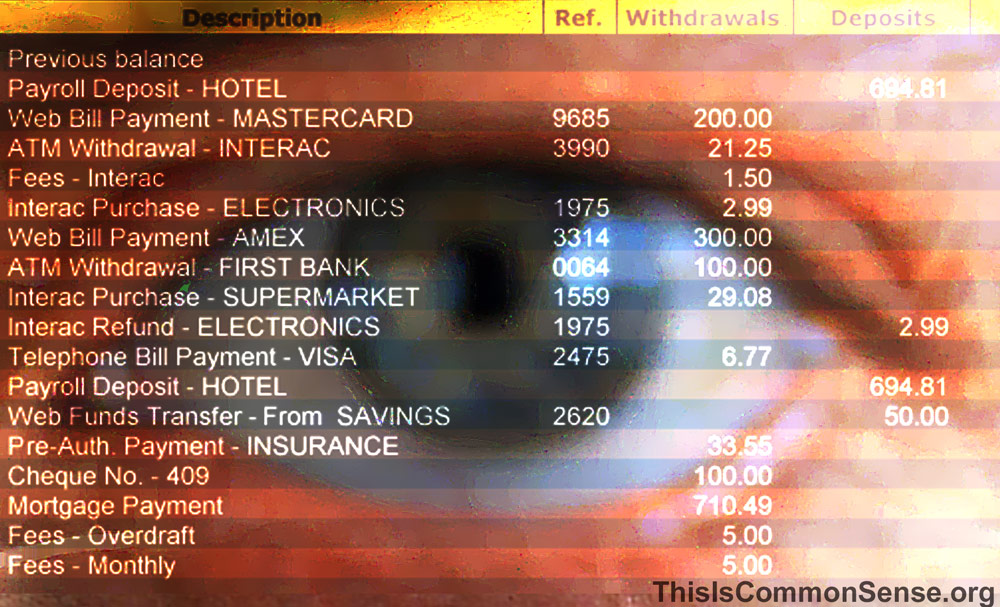
“To help pay for trillions in new spending, Pelosi wants the government to spy on nearly every American bank account, looking for new money to spend,” the spot continues. “Your deposits, payments, bank balance . . . under Pelosi’s plan, the government monitors them. 

“Call Jared Golden and tell him to . . . keep the government out of your bank account.”

Fact-checking the spot, News Center Maine determined that, “yes, as part of that plan, banks would be required to give two additional pieces of information to the IRS: how much money went into certain bank accounts over the course of the year and how much came out.”

Those “certain” accounts started out being those with $600 going in or out. After the public uproar, the plan hiked the amount to $10,000. 

Same principle, though.

“The only way to ensure that upper-income taxpayers pay what they owe,” explained a U.S. Treasury press release, “is by giving the IRS the resources and information required to close the tax gap.”

But does our system work that way? Not according to the Fourth Amendment.

We do not keep “a closer eye” on people making a certain amount; it is un-American to require all such “suspects” be put through the wringer the better to find a few guilty of something.

This is Common Sense. I’m Paul Jacob.


PDF for printing

See all recent commentary
(simplified and organized)
See recent popular posts
Categories
international affairs privacy too much government

Privacy with Chinese Characteristics

Governments must appear, at least some of the time, to be riding a silver stallion to rescue The People. All government rests on a kind of consent: not legal; not democratic; instead, the accommodation of the many to the few — to accept being ruled. This has been known since David Hume.

So when governments pretend to be more democratic, more contractual, than they actually are, it’s to maintain and increase power.

Take China.

In a fascinating report by Liz Wolfe, we learn that the Chinese Communist Party (CCP) is establishing new rules regulating corporations’ use of their customers’ data: “the Personal Information Protection Law (PIPL), necessarily weakens big tech companies, forcing onerous regulations that they will now have to comply with.”

This may sound all very consumer- and citizen-oriented. But Ms. Wolfe not only notes that the regulations are burdensome, she observes that while China’s corporations will soon be prevented from doing things big tech companies routinely do in the West, the Chinese will pointedly not be protected from data collection by the government

Which is vast. 

Intrusive.

Often malign.

“Protection of consumer data, while fine and good, means nothing,” she writes, “if there’s no true rule of law binding governments to privacy-protecting standards as well.”

Almost certainly China is trying to prevent in China what happened in America: the creation of powerful countervailing organizations competing with the government in one of the oldest activities of government: suppression of opinion to leverage power and revolutionize the State, changing policy from outside formal power centers.

Our social media — and other major tech corporations — have plied their incredible access to information to mold popular opinion for political and ideological purposes.

The CCP will not put up with that. 

This is Common Sense. I’m Paul Jacob.


image credit

See all recent commentary
(simplified and organized)
See recent popular posts
Categories
First Amendment rights general freedom ideological culture media and media people moral hazard privacy

Google Goes Bad

Good Google’s evil twin, Bad Google, is at it again.

In addition to doing bad things to advance its political agenda, Google is willing to work with bad governments do bad things. 

For example, the authoritarian Chinese government.

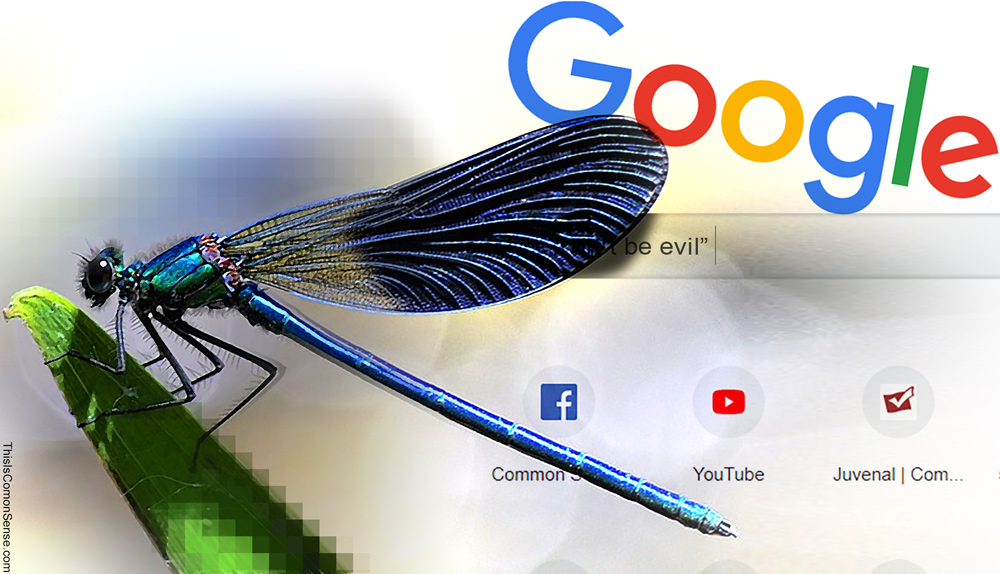
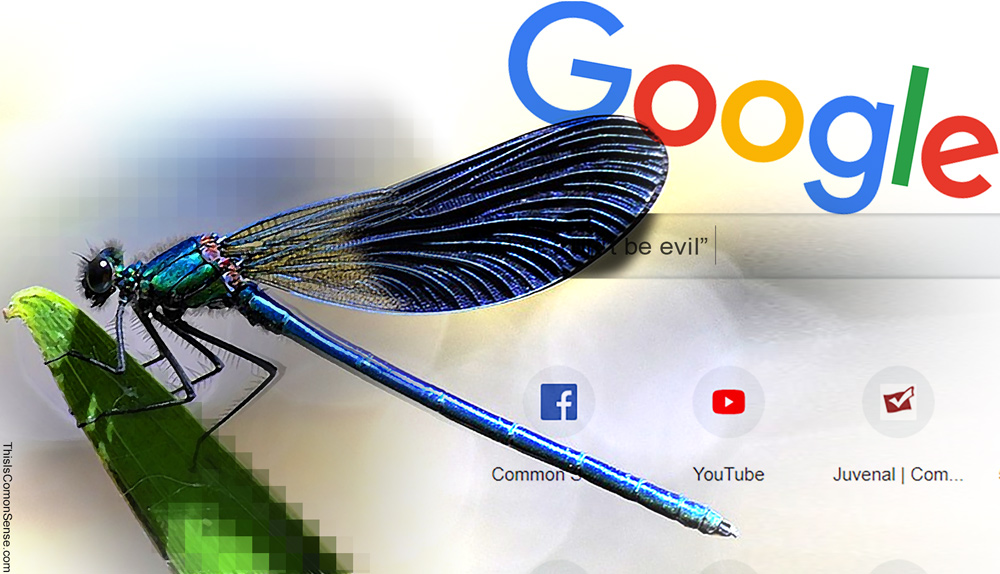
Google is working on a mobile version of its search engine, code-named Dragonfly, which would censor search results the way the Chinese government wants. The company is doing so even though it shut down its Chinese-mainland search engine back in 2010 because it “could no longer continue censoring our results” in China. At the time, I praised Google for moving in the right direction.

Now it’s regressing.

And more than regressing. The Intercept reports that Dragonfly goes beyond censorship. How? By linking a user’s search results to his phone number. Critics note that this would abet human rights violations, since users could easily be detained and even jailed for searching for the “wrong” terms.

At least five Google employees have resigned in protest. One, Jack Poulson, a research scientist, says that he regards “our intent to capitulate to censorship and surveillance demands in exchange for access to the Chinese market as a forfeiture of our values and governmental negotiating position across the globe.”

Google no longer promotes what used to be its motto and guide: “Don’t be evil.” 

To be sure, that motto did not put a very positive spin on the company’s moral stance. “Always be good” might be better. But I agree with both. 

Be good, not evil.

This is Common Sense. I’m Paul Jacob.


PDF for printing


Categories
crime and punishment general freedom ideological culture moral hazard nannyism political challengers privacy Regulating Protest too much government

Don’t Enable Tyrants

If I deliberately help somebody to do evil things — and nobody is holding a gun to my head — I am thereby doing evil myself.

A person should not let himself be in that position. Not even if he’s “just doing my job” and looking for a non-evil job would be demonstrably inconvenient. To have a motive for doing a bad thing is not by itself exculpatory.

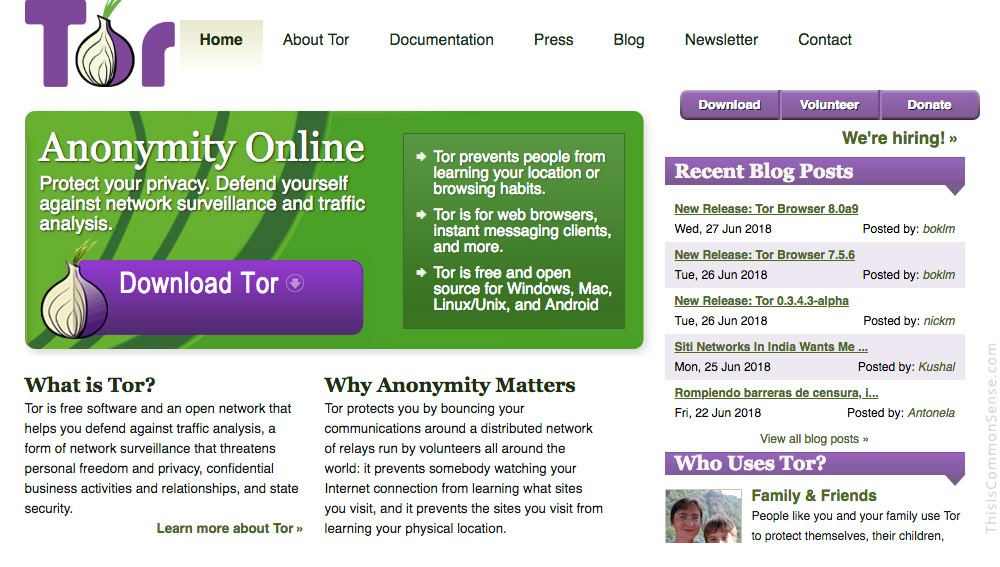
What provokes this observation is a newly amplified assault by the Venezuelan government on the rights of its citizens. The government is seeking to violate the right to peacefully read stuff on the Web by blocking Tor software, which allows users to elude government surveillance and reach banned websites.

Venezuelan dictators Chavez, now dead, and Maduro, still there, have never hesitated to stomp freedom in the name of a spurious greater good. Somebody like Maduro is certainly unscrupulous enough to go after Tor for thwarting censorship. So he fulfills that requirement. I doubt that he possesses very extensive programming ability.

Tor may not be perfect, but it’s pretty robust. You need substantial resources, such as those at the disposal of a government, to stop it. You also need to know what you’re doing. The coders on Venezuela’s stop-Tor team are probably smart enough to grasp the purpose of their work.

They and all other such collaborators should defect to the other side: that of programmers working to protect innocent people from government-sponsored cyber-assault.

This is Common Sense. I’m Paul Jacob.


PDF for printing


Categories
Accountability crime and punishment general freedom moral hazard nannyism privacy too much government U.S. Constitution

Social Workers: Stop Kidnapping Kids

Michael Chambers is living a nightmare.

His young daughter, Belle, has been taken away by social workers — without any reasonable cause or due process.

When Belle was two, her mother relinquished care to Belle’s grandmother. Then Michael accepted the responsibility. Periodically, his vindictive ex-wife would sic Child Protective Services on him. At first, the annoyance was as benign as such an intrusion could be. The social workers where he lived understood that there was a troublemaking ex-spouse in the picture.

But when Michael and Belle moved to a different Mississippi county, a new social worker, Kyra Reed, got involved. Reed seemed determined to intrude, make demands, and eventually remove Belle by force from Michael’s custody.

For example, Social Worker Reed early on demanded that Michael let her search his home. He was uncomfortable permitting it unless she obtained a warrant. Reed never did get one, or search the house — not even when accompanied by sheriffs. But somehow she didn’t need any legal authorization to steal Belle from Michael. Belle ended up in a foster home, where she was treated badly, before ultimately being forced to live with her mother, whom she hadn’t seen in four years.

The many ugly details of this case cannot be recounted briefly. Michael’s fight to get his daughter back is an expensive one. You can find out more about what happened and, if you like, contribute to Michael’s gofundme campaign to raise money for his legal expenses.

This is Common Sense. I’m Paul Jacob.


PDF for printing