Categories
moral hazard nannyism national politics & policies responsibility too much government

Sit, UBI, Sit: Play Dead

This weekend, the Swiss people rejected the idea of a Universal Basic Income (UBI) with a whopping 77 percent against.

That’s the kind of overwhelming result that one finds in America for, say, term limits. And 23 percent, you might notice, is about the percentage of the population in America of hard-core “liberal” progressives, the kind of people usually in support of such measures.

In Switzerland’s case, it was a measure put on the ballot by one group, Bien-CH. But if you are thinking “socialism,” the group insists that that’s the wrong way to think about the plan. UBI is needed, the group’s website says, “to grease the wheels of the capitalist economies” facing a declining need for workers as a result of technological advance.

Yes, UBI is a policy designed to accommodate the coming horde of robots! How? By “increasing demand” by spreading out wealth from the connected-to-tech few to the witless-about-tech many. (How vulgar Keynesian.)

The Swiss government urged a No vote, fearing a need to raise taxes by fifty percent. Quite a hike.

Meanwhile, the notion garners worldwide interest, and even libertarian social scientist Charles Murray promotes this guaranteed income idea (under a different initialism), mostly to streamline the costly bulk of the welfare state.

I’m dubious.

After all, about our latest industrial revolution, in artificial intelligence and in robotics: I say open up labor and entrepreneurial markets from excessive regulation, and allow networking advances to transform capitalism on its own terms, with person-to-person (P2P) cooperation (think AirBnB and Uber and Lyft) and much more.

The best is coming, I bet. If clunky proposals like UBI don’t get in the way.

This is Common Sense. I’m Paul Jacob.


Printable PDF

Swiss, Switzerland, UBI, Universal Basic Income, socialism, robots, illustration


Categories
Accountability ideological culture moral hazard national politics & policies political challengers too much government

Bernie’s Problem?

Sen. Bernie Sanders has a problem. With Hillary Clinton.

Asked about the Clinton Foundation, yesterday, by CNN’s Jake Tapper, host of State of the Union, Bernie re-questioned himself:

Do I have a problem when a sitting secretary of state and a foundation run by her husband collects many millions of dollars from foreign governments, governments which are dictatorships?

And Bernie answered, “Yeah, I do.”

How many roads must mainstream media reporters walk down before they investigate and report on the myriad of ethical cracks in the Clinton Foundation?

To the most obvious conflict of interest in the history of the human race, add the fact that even after promising President Obama that the Clinton Foundation would at least be totally transparent with an annual report of all donations . . . well, Hillary welched on the deal, not revealing the donors.

While Bernie’s condemnation of Hillary’s ethical shortcomings was big news, less reported were the senator’s comments regarding whether Mrs. Clinton is “too quick on the draw, too eager to use military force.”

Bernie again was clear: “I worry about that. Yeah, I do. Her support for the War in Iraq was not just an aberration.” Sanders went on to cite Secretary of State Clinton’s role in pushing President Obama to overthrow Gaddafi in Libya and to intervene in Syria.

Hillary’s judgment on issues of war and peace is questionable . . . especially when we don’t know whether or not a foreign leader or his cronies have written big checks to the Clinton Foundation.

This is Common Sense. I’m Paul Jacob.


Printable PDF

Hillary Clinton, Bernie Sanders, war, foreign policy, blood stained, death, military, illustration


Categories
Accountability free trade & free markets ideological culture moral hazard national politics & policies

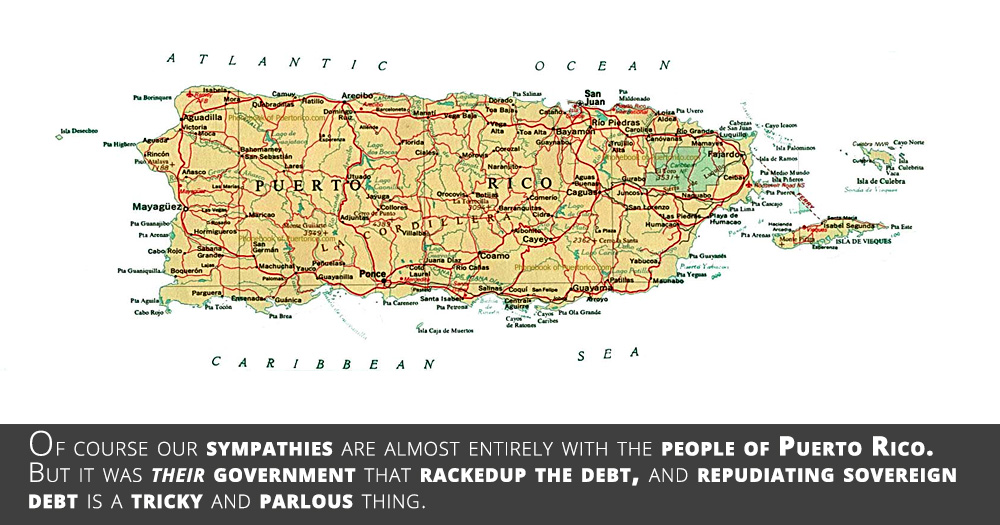
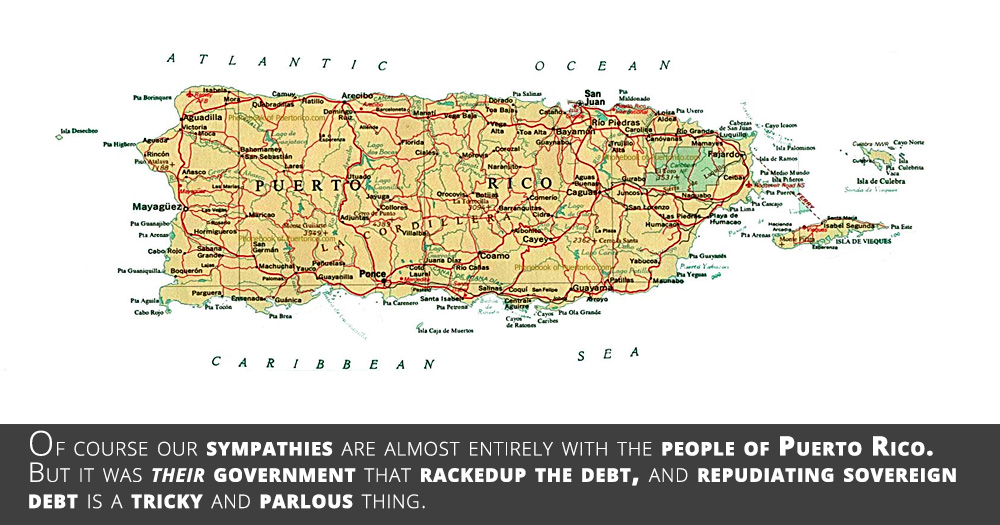
Puerto Rico’s Debt, Our Problem

“We have an important choice to make,” presidential candidate and Senator Bernie Sanders recently wrote to Congress. “[D]o we stand with the working people of Puerto Rico or do we stand with Wall Street and the Tea Party?”

The bill in question has been dubbed Paul Ryan’s “first big victory as Speaker,” but was written in tandem with the White House. The plan attempts to rescue Puerto Rico, a United States territory, from financial collapse with both bailouts and austerity — the latter including a lowered minimum wage.

I hadn’t heard any Tea Party squawk about this, so that reference must be just signaling on Bernie’s part.

Puerto Rico is $72 billion in the hole. Basically, Sanders wants to partially repudiate that debt: “The billionaire hedge fund managers on Wall Street cannot get a 100 percent return on their bonds while workers, senior citizens and children are punished.”

Of course our sympathies are almost entirely with the people of Puerto Rico. But it was their government that racked up the debt, and repudiating sovereign debt is a tricky and parlous thing.

What happens when the United States itself faces similar (or worse) straits? Would Bernie then, again, plan to stick it to the government’s creditors — even after he, himself, had voted to increase spending above revenues and periodically raise the debt ceiling — and think that this wouldn’t have consequences?

Meanwhile, the possible minimum wage reduction is one of the stickiest of the issues. Bernie sees it as “sticking it” to the poor.

In truth, it would help increase employment, thus help the poor get out of poverty.

This is Common Sense. I’m Paul Jacob.


Printable PDF

Puerto Rico, debt, loan, Bernie Sanders


Categories
Accountability folly free trade & free markets general freedom ideological culture moral hazard nannyism national politics & policies property rights responsibility too much government

Fatherland, Socialism and Death!

The fall of Venezuela is an atrocity.

The comic elements are clear enough — the further you remove yourself from the poverty, chaos, and collapse. We can wallow in a bit of Schadenfreude, taking glee as some American leftists squirm to explain why the socialist paradise they ballyhooed a mere three years ago now tail-spins to the grave.

The collapse of this socialist experiment offers an enormous level of tragedy. It’s not pretty.

The country’s leader, President Nicolas Maduro, makes his predictable desperation play. Rather than confront his own errors, and the futility of making socialism work in anything like a rigorous form, he boasts. “Venezuela Leader Says US ‘Dreams’ Of Dividing Loyal Military,” reads yesterday’s Reuters report. While no doubt true, this is one of those cases where whatever we dream to the north, our dreams are better than their current reality.

Of course the Venezuelan military should turn on Maduro, Hugo Chavez’s inheritor, protecting the right of recall, which Maduro is denying. By painting the U. S. as the bad guy, Maduro hopes to unite his people — especially his armed forces — around him. That’s what a desperate demagogic dynast does. Citizens and subjects traditionally abandon skepticism about their leaders when they feel threatened from the outside.

Which is one reason it would be a mistake for the U. S. to intervene.

Reuters poetically reports that the military is still united behind the socialist government, and resists the recall referendum, singing “Fatherland, Socialism, or Death!”

Wrong conjunction. Not “or” but “and” . . . if you insist on socialism.

The government, military pressure or no, should allow the recall vote, and soon.

This is Common Sense. I’m Paul Jacob.

Printable PDF

Venezuela, store, socialism, column


Categories
Accountability folly general freedom moral hazard U.S. Constitution

Not Drafting Our Daughters?

Sometimes politicians have trouble making up their minds. During election years — with the looming prospect of voters having a say — their decision-making process becomes even more perilous.

Take the idea of forcing young women to register for the draft. Young men must, under threat of five years in prison, a $250,000 fine and the loss of government benefits — all the way down to denying a driver’s license to non-registrants in many states. So why not force women to sign up for forced military service?

For equality!

Just days ago, it seemed nearly everyone was for conscripting our daughters — or, at least, registering them for future conscription. Obama’s Secretary of Defense Ash Carter and military leaders enthusiastically endorsed the idea. So did Republican Senate Majority Leader Mitch McConnell.

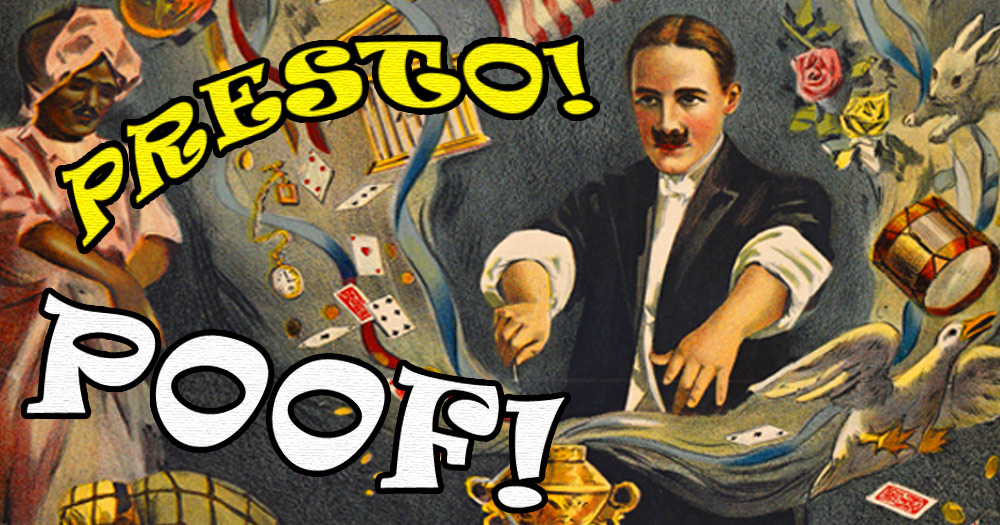
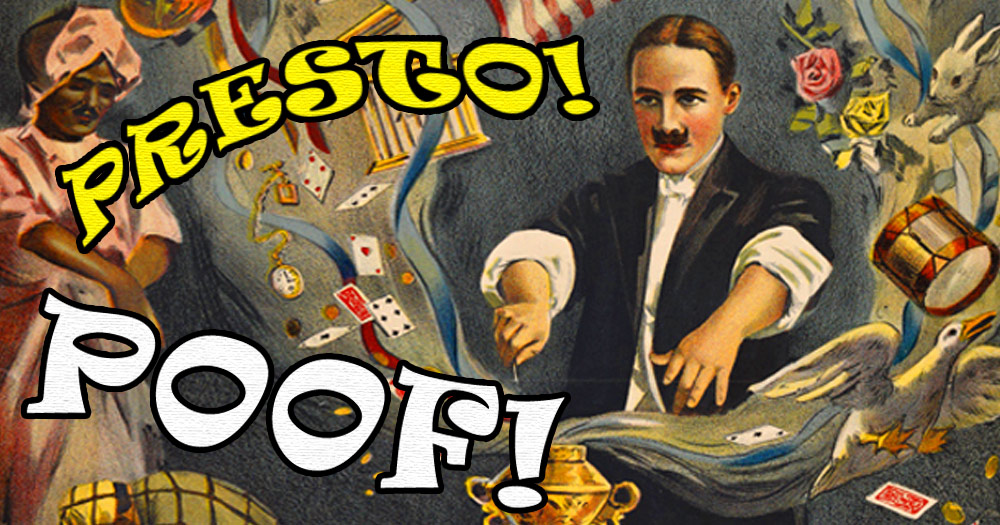
In recent weeks, legislation beginning mandatory draft registration of women, ages 18-26, passed both the House Armed Services Committee and the Senate Armed Services Committee. Then, all the sudden — poof! — that provision was ripped out of the House bill.

“This is a dead-of-night attempt to take an important issue off the table,” complained the ranking Democrat on House Armed Services, Rep. Adam Smith of Washington.

Timing is everything, in comedy and politics. Congressional leaders don’t want to take any pro-draft action now, not with an election just six short months away.

“We have a choice to make,” Rep. Mike Coffman (R-Colo.) argues, “either we continue with Selective Service and have women be a part of it, or we abolish it altogether.” Coffman advocates the latter, having introduced a bipartisan bill with Rep. Jared Polis (D-Colo.), H.R. 4523, to end draft registration and close the superfluous agency.

That’s Common Sense, especially in an election year. I’m Paul Jacob.


Printable PDF

draft, selective service, woman, women, magic trick


Categories
Accountability crime and punishment folly free trade & free markets ideological culture moral hazard nannyism national politics & policies

A Vapor’s Chance in Hell

There is a big difference between government designed to protect our rights and a government tasked with protecting us from ourselves.

You couldn’t find a better example of this than the current Federal Drug Administration and its regulation of vaping.

Vaping is the imbibing of water vapor laced with nicotine and other ingredients. It is designed to replace the smoking of tobacco cigarettes. It is much, much less harmful than smoking. The genius of this innovation is that while it looks a lot like smoking, it involves no smoke. But it does involve inhaling, and blowing out wisps of . . . well, vapor.

It’s safer than smoking because smoking tobacco involves burning organic (and inorganic) matter, which puts tars and other chemical substances into one’s lungs.

But the competing companies that make the product are not allowed to tell us about its advantages.

New regulations of the e-cigarette industry from the FDA prohibit a lot of truth-telling in advertising. “Even if a few companies survive the shakeout caused by the FDA’s onerous regulations,” Jacob Sullum writes in Reason, “they will not be allowed to tell consumers the truth about their products.” It appears that “any intimation that noncombustible, tobacco-free e-cigarettes are safer than the conventional, tobacco-burning kind” places them under a category that simply must “be marketed only with prior approval.”

The legal judgments Sullum quotes will make you sicker . . . than your first cigarette puff.

Paternalistic government designed to save us from our vices ends up blocking us from actually lessening the bad effect of those vices.

Some help.

This is Common Sense. I’m Paul Jacob.

Printable PDF

vape, vaping, smoking, law, regulation, unintended consequence, illustration, photo


Photo credit: micadew on Flickr


Categories
Accountability folly general freedom media and media people moral hazard nannyism national politics & policies

The Senator Intrudes

We know that the media in general, and Silicon Valley, too, have strong anti-conservative biases — even if, in another sense, the Fourth Estate serves as almost the embodiment of one understanding of the conservative impulse: relentlessly upholding established institutions, against all attacks. The American media strongly defends the modern state; every program, it seems, is sacrosanct: the only thing wrong with Big, Intrusive Government is that it is not as Big and Intrusive as it should be.

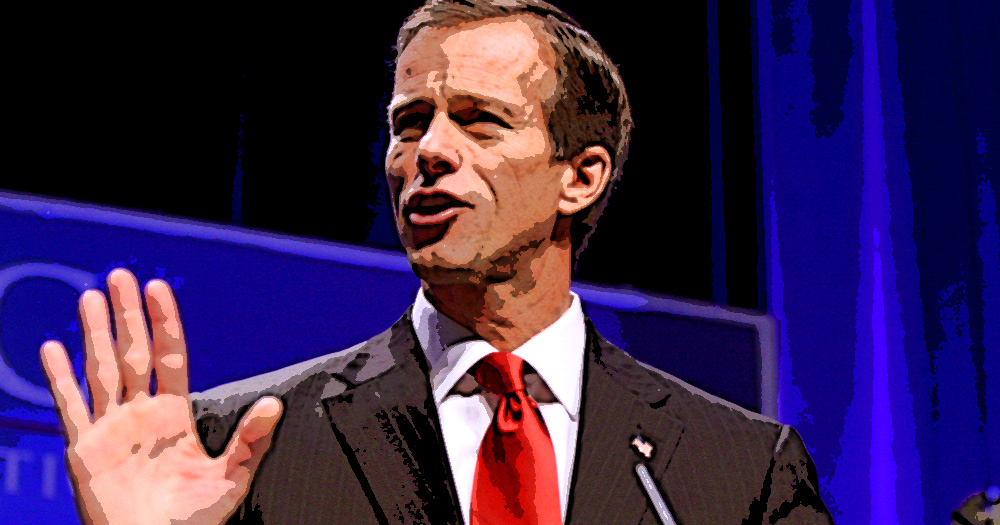
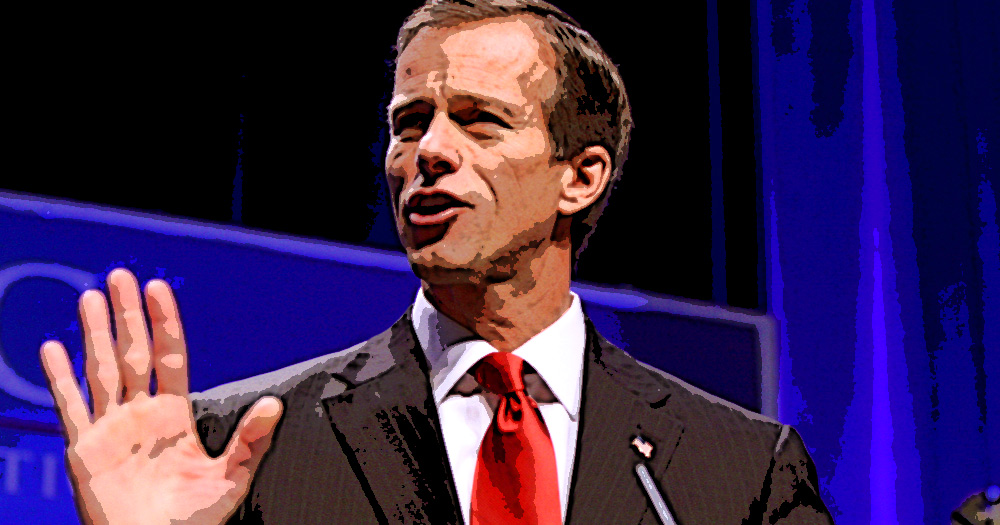
This week, several ex-Facebook news curators alleged systemic “political bias” in how stories receive the top spot in Facebook’s Trending news section. So Sen. John Thune (R-S.D.) intrudes. He wrote to Facebook CEO Mark Zuckerberg, in his official capacity on the U.S. Senate Committee on Commerce, Science and Communication. Thune says that if Facebook is, in effect, promoting stories by means of a hidden political agenda, this amounts to something like a public fraud, which lies within this committee’s purview.

I don’t see how. And I really would like such biases and pseudo-frauds to be dealt with by consumer pressure rather than government whip. And that should be without regard to the partisan stripe of the bias — or the whip.

Anthony L. Fisher, over at Reason, notes that the senator has a logic problem: he rests his case for government oversight of Facebook rules and consumer relations on the infamous “fairness doctrine,” which is not operative at this time, and which Thune has previously and repeatedly opposed.

And for good reason: the doctrine produced government-enforced muting of speech, not fairness.

But this all may mean almost nothing. I’d never even noticed Facebook’s Trending section.

Have you?

This is Common Sense. I’m Paul Jacob.


Printable PDF

Sen. John Thune, Mark Zuckerberg, Facebook, fairness doctrine, censorship


Photo of Sen. John Thune credit: Gage Skidmore on Flickr


Categories
Accountability general freedom moral hazard responsibility

Kim Jong Un-civilized

The Democratic People’s Republic of North Korea isn’t.

That is, it isn’t democratic and it is not “the people’s” in any republican sense.

But it does exist . . . as the world’s most totalitarian dictatorship. A tyranny that would make the Pharaohs, Caesars, and Grand Poobahs of the ancient world wince in distaste.

Once dubbed The Land of the Morning Calm, North Korea is today the darkest place on Earth. Agitated, terrified — not calm.

In Pyongyang, the Seventh Worker’s Party Congress is going on, and Kim Jong Un, the nation’s tyrant, has laid out a blustery, challenging barrage of threats to the outside world, particularly South Korea and the United States, with 30,000 soldiers stationed on the peninsula.

Kim Jong Un has a new “five-year plan,” and his foreign policy, though backed by nukes, doesn’t seem so much Stalinesque as Husseinish.

He threatens offensive action, raining down destruction against his enemies.

But he also says he’d only use nukes in defense. Plus, his capabilities are much doubted.

No wonder many analysts dismiss his talk as a cover to keep his people in line. And to worship him. The subject North Koreans are weak in the face of such monstrous tyranny, and the more Un “challenges” the world, the bigger and more impregnable he seems.

And yet, when one individual rides herd so cruelly on so many, there’s a certain . . . frangibility about the whole system.

I hope.

Like the late Saddam Hussein, Un’s braggadocio is a sign of weakness, likely designed to discourage more powerful nations — China, South Korea, and our country — from intervention.

And we shouldn’t intervene.

But neither should we make any more stupid deals to provide him oil.

This is Common Sense. I’m Paul Jacob.


Printable PDF

North Korea, Kim Jong Un, Saddam Hussein, Stalin, China


Common Sense Needs Your Help!

Please consider showing your appreciation by dropping something in our tip jar  (this link will take you to the Citizens in Charge donation page… and your contribution will go to the support of the Common Sense website). Maintaining this site takes time and money.

Your help in spreading the message of common sense and liberty is very much appreciated!


Categories
Accountability folly moral hazard too much government

When in Rome

Americans concerned with government corruption really should study Italy.

Why?

“You know Italians,” septuagenarian Elio Ciampanella was quoted in the New York Times last week. “If there is a law, they will try to find ways to go around it!”

But it is not just ordinary citizens — the people — who are evading bad laws. It is government workers who won’t do their jobs, and who engage in a wide range of corrupt deals and shady incompetence.

I know, this seems awfully unfair to the Italians. What I’ve said is the case with governments around the world. But not equally. (Scandinavian countries have a long history of government worker probity, if not ultra-competence.) And Italians do have a well-earned reputation for government corruption.

Arguably, it’s the form freedom takes in Italy.

Be that true or not, Mr. Ciampanella’s story, as related in the Times, is a fascinating one. He asked for a government-subsidized apartment, and had to wait ten years to get one . . . only to discover the problem wasn’t a lack of apartments, but a surfeit.

Yes, the government owned too many apartments to keep track of!

And so they didn’t.

And gave special deals to “special people.”

In other words: incompetence and corruption as a way of life.

Market institutions that behave so chaotically and with so little attention to efficiency go out of business. But government? That’s “necessary,” so: too big to fail. And so, commonly excused.

No wonder, then, that the common-sense approach to government is to limit it.

This is Common Sense. I’m Paul Jacob.

Printable PDF

Italy, housing, corruption, government, bureaucracy


Common Sense Needs Your Help!

Also, please consider showing your appreciation by dropping something in our tip jar  (this link will take you to the Citizens in Charge donation page… and your contribution will go to the support of the Common Sense website). Maintaining this site takes time and money.

Your help in spreading the message of common sense and liberty is very much appreciated!


Categories
folly free trade & free markets meme moral hazard national politics & policies

Trump’s Dangerous Idea

A lot of people were impressed by the reasonableness of Donald Trump’s foreign policy speech yesterday . . . despite the usual hyperbolic promises of “best” and “great” and “beautifully.”

Its general tenor? Refreshing. Rejecting post-Cold War foreign policy for a return to “national interest” and “America first”? Long overdue. Like Trump, I think we should eschew nation building.

But still there is that one big problem: Trump is a mercantilist. He believes in protectionism. He thinks that trade has to be “fair” in order to benefit both participants. He thinks NAFTA and similar trade agreements (which generally promoted trade while still reserving a lot of room for government futzing about) are what hurt American industry. Trump is always blaming the “bad deals” made with Mexico and China, rather than placing the blame where it squarely belongs, on

  • America’s world-high corporate income tax, and
  • chaos of regulatory excess, and
  • impenetrable tax code.

But protectionism makes sense to a lot of people. They are incredulous when they hear the (well-established) idea that free trade — even unilateral free trade — is a benefit to the people who live under it.

Surely, they snort, when you target aid or protection to some industries, you are doing good, right?

Wrong. Oh, yeah, of course protectionism protects the chosen few, the advantaged. That’s what it obviously does. But it doesn’t protect the general interest – consumers pay more and producers allocate resources to less valued uses.

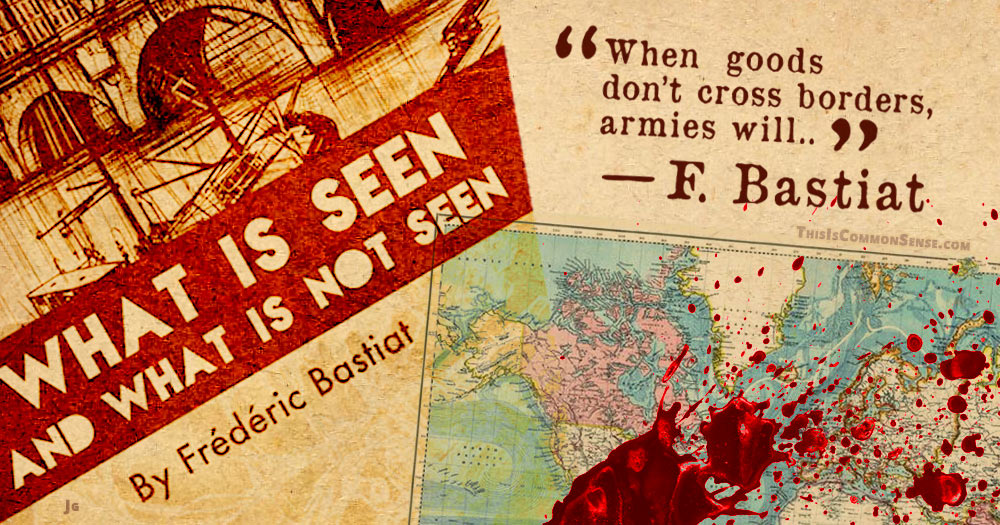
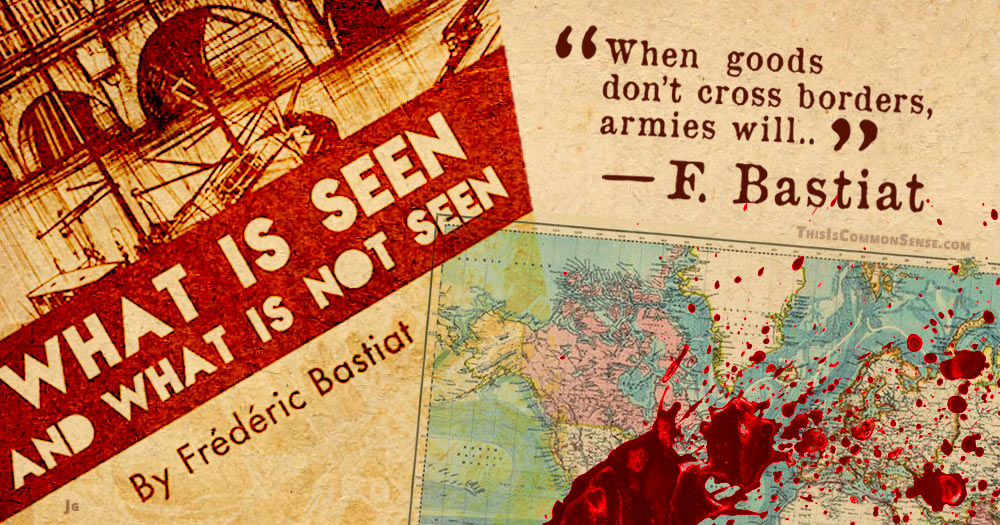
You have to look beyond the obvious (“the seen”) to get the full picture (“the unseen”).

Trump’s at his most dangerous right here — forget his loose talk — by continuing to pretend that protectionism helps America.

We cannot afford another Smoot-Hawley.

This is Common Sense. I’m Paul Jacob.

Printable PDF

Donald Trump, trade, protectionism, Donald Trump, war, borders, Bastiat


Common Sense Needs Your Help!

Also, please consider showing your appreciation by dropping something in our tip jar  (this link will take you to the Citizens in Charge donation page… and your contribution will go to the support of the Common Sense website). Maintaining this site takes time and money.

Your help in spreading the message of common sense and liberty is very much appreciated!