Categories
Accountability government transparency moral hazard responsibility

Opaque Pension System

Requiring government transparency is as necessary in those areas where governments can grant special favors as in those where governments can inflict direct harm.

That is, it’s as important regarding government worker pensions as it is of the abuse of police power.

In Nevada, the legal requirement for the state’s Public Employee Retirement System (PERS), to disclose who gets what in pension payments was recently thwarted by PERS itself.

“By replacing names with ‘non-disclosable’ social security numbers in its actuarial record-keeping documents, PERS has attempted to circumvent the 2013 ruling of the Nevada Supreme Court requiring disclosure,” explained Joseph Becker of the Nevada Policy Research Institute.

I’m quoting from NPRI’s July 6 press release. Most such publicity isn’t all that interesting, but this one catching government agencies deliberately working against their duties sparks a certain . . . interest. Wouldn’t you say?

Simply by altering how it keeps records, PERS officials hoped to stifle public . . . “spying.” It’s reasonable to prevent government from giving out public servants’ Social Security numbers, so PERS switched to listing information under those numbers, in so doing “violating both the letter and spirit of the Nevada Public Records Act,” explains Becker.

And thus undermining democracy — republican governance —  itself.

This public disclosure wouldn’t be an issue if the pension system were run privately, based on defined contribution funding. But that’s not how governments do things.

We must hold government’s proverbial feet to the fire — of public information — to make sure government employees and taxpayers are both treated fairly.

This is Common Sense. I’m Paul Jacob.


Printable PDF

government, pension, transparency, Nevada, illustration


Categories
Accountability crime and punishment general freedom moral hazard national politics & policies Regulating Protest responsibility too much government

Too Much – Part 2

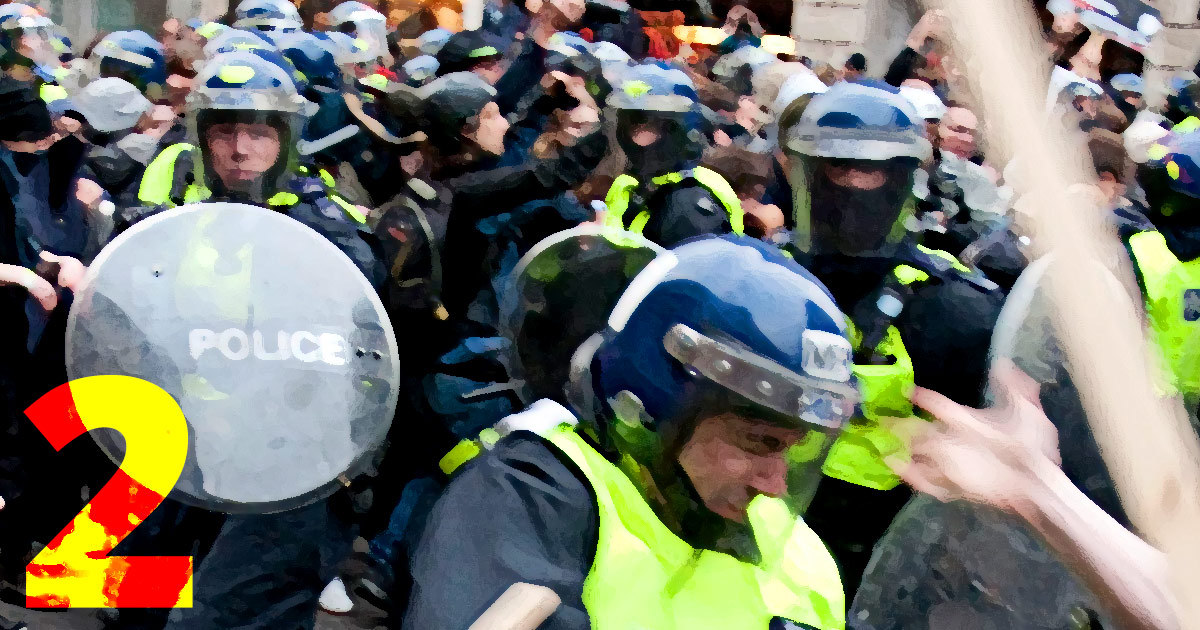
Yesterday, we discovered that modern America asks police to do “too much.” Which prompts the next question: What should police stop doing?

Here are two immediate reforms where police can do less, while protecting the public more:

     (1) End the War on Drugs. Preventing violence and fraud is the rightful role of police. Not preventing people from engaging in activities that are peaceful, however misguided or self-harming. The criminalization of marijuana means more than 150 million Americans are criminals, warranting police involvement.

Now, Mr. Obama has released some convicts serving long drug-related sentences, but we need a president who will go much farther in changing law enforcement priorities.

     (2) Stop Using Civil Asset Forfeiture, whereby police steal people’s stuff without charging and convicting those people of any crime. Not only do federal agencies from Justice to the IRS take our property in violation of our rights, but the Feds encourage state and local police to join them in this bad behavior through their “equitable sharing” program.

While Obama has spoken against seizing assets without a criminal conviction, he hasn’t stopped it. And he could at the federal level, with a stroke of his pen — as I have advocated at Townhall. Ending civil asset forfeiture is an executive order actually within his constitutional power.

Would these two steps end all racism or violence or crime? No, no, no.

They would be, however, two steps forward toward a more principled, lawful and respectful style of policing that would better serve to unite rather than divide citizens and police.

It’s a different two-step than reformers have been witnessing.

This is Common Sense. I’m Paul Jacob.

Printable PDF

crime, police, Police Chief David BrownX poverty, President Barack Obama


Photo Credit: Tomasz Iwaniec


Categories
Accountability crime and punishment moral hazard national politics & policies responsibility too much government

Too Much

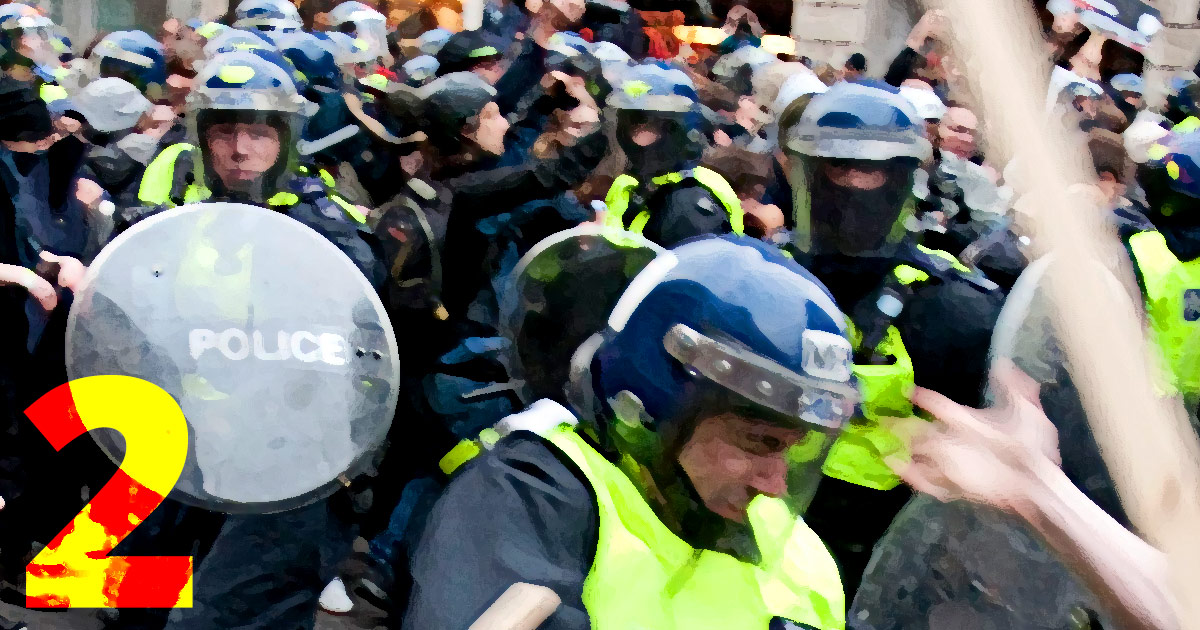
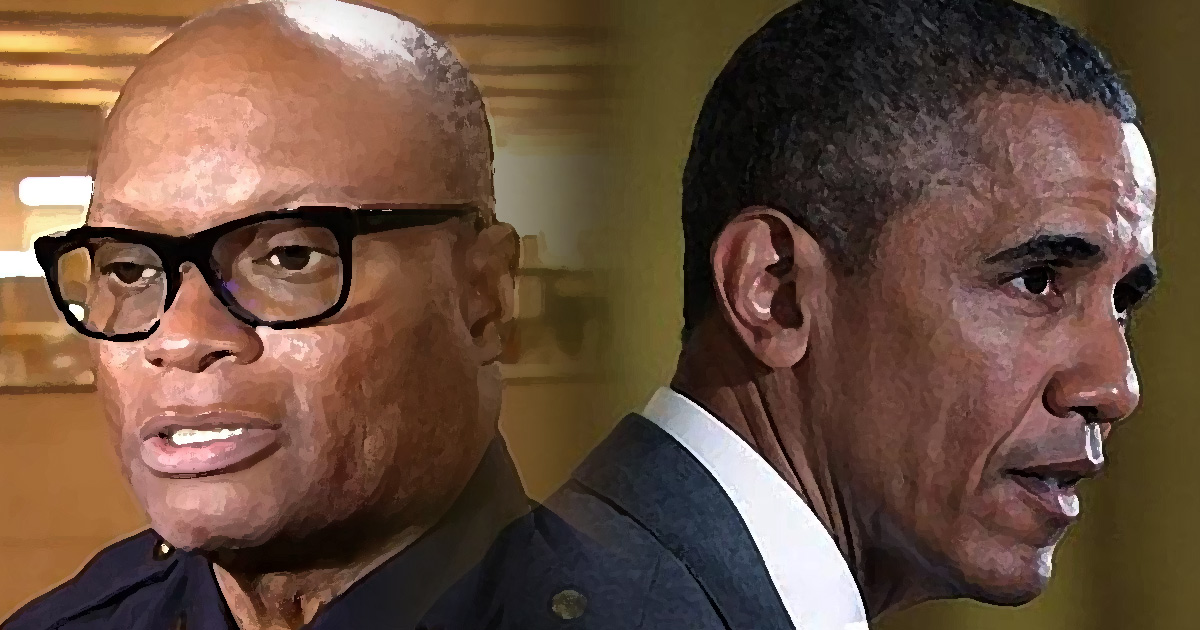
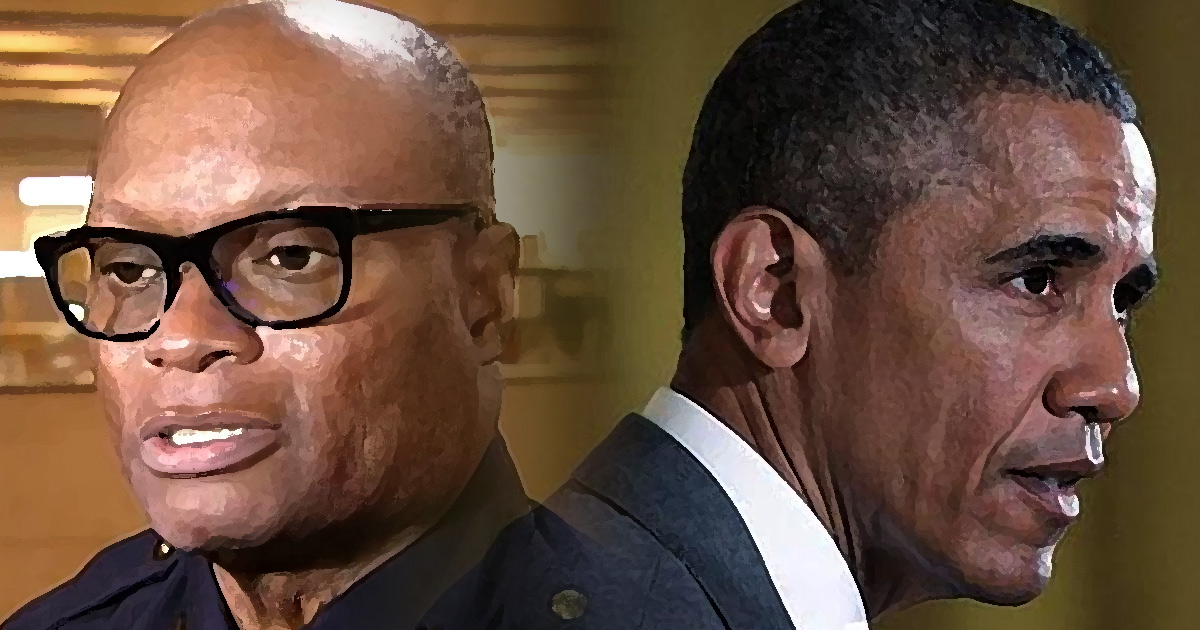
When President Obama said, “[W]e ask the police to do too much,” at the memorial service for the five slain Dallas policemen, he was echoing an idea previously expressed.

“We’re asking cops to do too much in this country,” Dallas Police Chief David Brown told reporters a day earlier. “Every societal failure, we put it off on the cops to solve,” he added, noting such problems as a lack of mental healthcare, rampant drug abuse, substandard schools and even roaming dogs.

So, what should police stop doing?

Plenty. But I’ll save that answer for tomorrow. Today, let’s pose another: Why so much crime, poverty, and violence in these communities?

Mr. Obama fingered not taxing-and-spending enough on benefits for the poor, including for “decent schools,” “gainful employment,” and “mental health programs.” Yet, after decades of expensive wars on poverty, illiteracy, drug abuse, etc., things have only gotten worse.

“We flood communities with so many guns,” the president intoned, “that it is easier for a teenager to buy a Glock, than get his hands on a computer or even a book.”

He’s playing fast and furious with the truth. Books are free at the library. Glocks cost money.

And who is this “we” he keeps bringing up?

Chief Brown mentioned a critical problem Obama did not: “Seventy percent of the African American community is being raised by single women.”

Police cannot solve all our problems, sure, but they especially cannot fix problems exacerbated by the welfare state and the educational system. Big government is no substitute for Mom and Dad.

Even freedom merely offers the opportunity to fix our own problems.

This is Common Sense. I’m Paul Jacob.

Printable PDF

Obama, Police Chief David Brown , police, abuse, poverty,


Categories
Accountability folly moral hazard national politics & policies

The Longest War

Is there a light at the end of the proverbial tunnel?

President Obama announced, Wednesday, that he would leave more troops in Afghanistan when he exits office than previously planned. Instead of cutting the current troop deployment of 10,000 down to 5,500 soldiers, Obama will now keep 8,400 “in country,” continuing our longest war.

Entering the 15th year of armed conflict and military occupation, thousands of lives lost along with hundreds of billions in treasure spent to equip and train Afghan forces and build infrastructure — and buy off warlords — recent U.N. estimates find the tyrannical Taliban controlling more actual territory in Afghanistan today than before the 2001 U.S. invasion.

Don’t blame the military. Our all-volunteer army is the greatest fighting force on the planet. But militaries break things; building new institutions and especially new modes of thinking among a foreign population is more difficult.

No political magic exists capable of turning Afghanistan into Arizona. Not this year, not the next, a decade from now, or two decades . . . not even a century down the road.

We must never forget that “war is the continuation of politics by other means.”

And the politics don’t add up. There’s no credible plan to “win” in Afghanistan. All our leaders can muster is the witless maintenance of a deadly charade: nation-building a nation that balks at being built, hoping the roof falls in on someone else later . . . in the other party.

Sometimes courage means recognizing reality.

Our men and women in uniform have better things to do than fight and die for decades in a no-win war.

This is Common Sense. I’m Paul Jacob.

Printable PDF

Afghanistan, Obama, war, quagmire, illustration, photo


Photo credit: Joseph Swafford on Flickr, courtesty of DVIDSHUB


Categories
Accountability folly free trade & free markets general freedom government transparency initiative, referendum, and recall moral hazard nannyism national politics & policies property rights

The Return of the Philosopher King

On Sunday, at Townhall, I addressed the whining attacks on referendums and “democracy” that followed the Brexit referendum.

The most outrageous? A broadside from Jason Brennan.

“To have even a rudimentary sense of the pros and cons of Brexit,” argues this Robert J. and Elizabeth Flanagan Family Associate Professor of Strategy, Economics, Ethics, and Public Policy at the McDonough School of Business at Georgetown University, “a person would need to possess tremendous social scientific knowledge. One would need to know about the economics and sociology of trade and immigration, the politics of centralized regulation, and the history of nationalist movements.”

In other words, most Brits needn’t worry their pretty little heads about deciding their future; experts have everything under control.

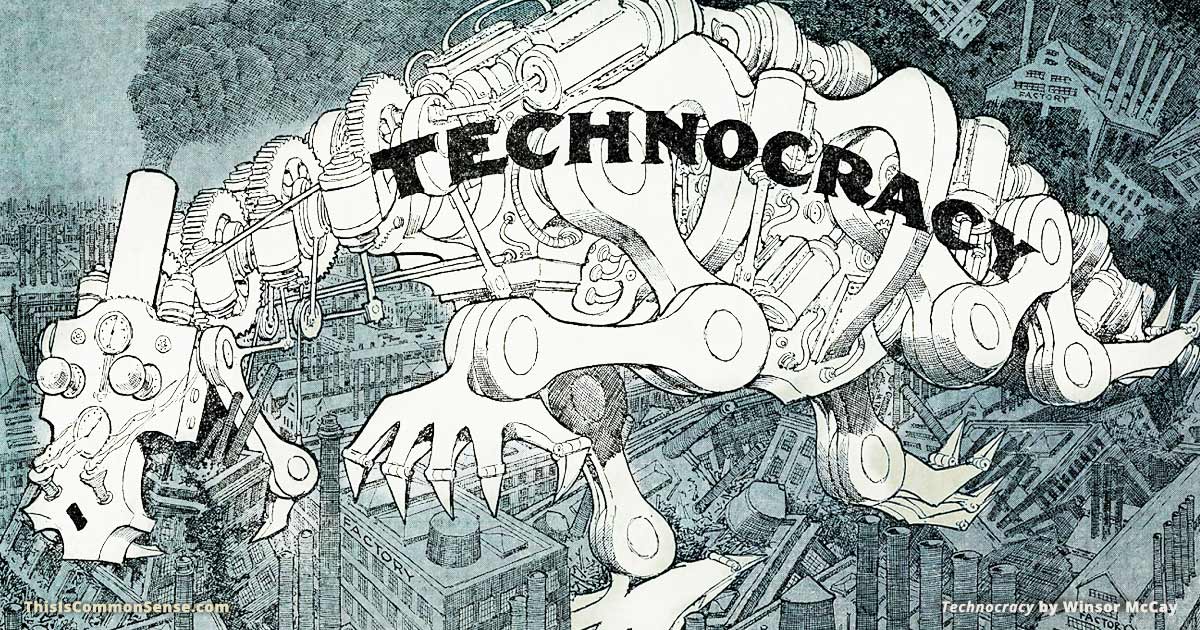
Brennan has a new book coming out, Against Democracy, wherein he posits that we need “a new system of government — epistocracy, the rule of the knowledgeable.”

Sound familiar? ’Tis the old Platonic whine in new wineskins.

This Philosopher King is necessary, you see, because citizens don’t posses the advanced degrees to judge whether Brennan is right or wrong. We can’t even find a Holiday Inn Express in the phonebook. Or a phonebook.

Nonetheless, why not consult other known knowers?

The late William F. Buckley, Jr., well-educated and well-spoken on political matters, once declared that he would “rather entrust the government of the United States to the first 400 people listed in the Boston telephone directory, than to the faculty of Harvard University.”

“Incestuous, homogeneous fiefdoms of self-proclaimed expertise are always rank-closing and mutually self-defending, above all else,” warned journalist Glenn Greenwald, an expert on such hooey.

“I know no safe depositary of the ultimate powers of the society but the people themselves,” wrote Thomas Jefferson, “and if we think them not enlightened enough to exercise their control with a wholesome discretion, the remedy is not to take it from them, but to inform their discretion by education.”

Most decisions in a free society are thankfully made by individuals (not voters, bureaucrats, or academics) about their own lives.

But when legitimate decisions of governance must be made, I’ll take democracy over rule by experts.

This is Common Sense. I’m Paul Jacob.

Printable PDF

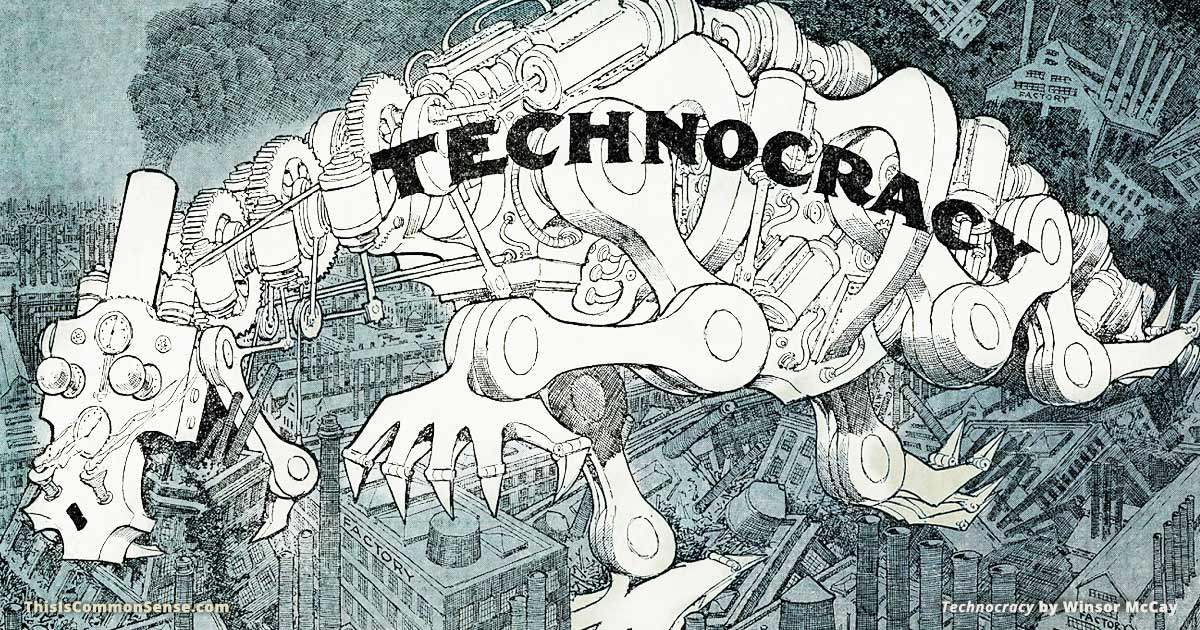
technocracy, expert, epistocracy Brexit, illustration
Categories
Accountability ideological culture media and media people moral hazard nannyism national politics & policies

Gray Lady Casts Shadow

Earlier in the week, I noted how media manipulation of presidential poll results by not considering the Johnson and Stein campaigns distorting the race. I speculated why journalists would do such a thing, but didn’t have space for an exhaustive list.

But it’s clear that one of the things journalists aim to do is retain their once-vaunted position as gatekeepers, as the idea-people and fact-dispersers who define the terms of allowable debate.

By ignoring the competition, they narrow the terms of this year’s presidential campaign, allowing their inexplicable favorite, Hillary Clinton, an advantage going to the polls.

But poll taking and reporting is not the half of it. Tim Graham, writing at Newsbusters, notes how the Gray Lady rigs the intellectual field. “The New York Times appears to be playing games again with conservative authors, trying to keep them off its vaunted (and secretively manipulated) Best Sellers list. This has happened to Ted Cruz, to Dinesh D’Souza, and to David Limbaugh.

And now, Graham tells us, it’s happening to Wall Street Journal columnist Kimberley Strassel, whose new book, The Intimidation Game: How the Left Is Silencing Free Speech, has been doing gangbusters on BookScan’s bestseller list.

The new exposé is sixth on BookScan’s hardcover list. But it’s not even made an appearance on the Times’ “list of the top 20 hardcover bestsellers, despite outselling books that did make the list.”

Would the Gray Lady dare manipulate the figures . . . just to suppress an idea it doesn’t like?

That is, the idea that the Left suppresses speech.

It’s almost too rich to be true.

This is Common Sense. I’m Paul Jacob.


Printable PDF

Gray Lady, New York Times, NYT, political correctness, free speech, illustration


Categories
general freedom ideological culture moral hazard national politics & policies The Draft U.S. Constitution

Equal or Free?

On Tuesday, the Senate voted to force American women, in their early years, to register for the draft.

Just like men have been required to do since 1980.

The White House threatens to veto the bill, though perhaps on other grounds, since the bill also, in the words of Richard Lardner (AP), “authorizes $602 billion in military spending, bars shuttering the prison at Guantanamo Bay, Cuba, and denies the Pentagon’s bid to start a new round of military base closings.”

The Senate’s social conservative ranks made the whole process leading up to the vote difficult for the mainliners, like Sen. John “Maverick” McCain, who is enthusiastic about registering women. Sen. Ted Cruz expressed alarm at the direction “sexual equality” is taking, and didn’t want to see “girls drafted onto the front lines.”

Decades ago, the Supreme Court had nixed a challenge to draft registration on discrimination lines, reasoning that since women weren’t allowed onto the front lines, there was no cause to force them to register for military conscription.

But now there are women in combat positions. So the old ruling no longer applies. If draft registration isn’t expanded to women, it’s likely to be struck down for men.

We have no draft, we are reminded, mere registration — which our government keeps in place mainly to remind men that they may be drafted.

In the House version of the bill, there’s no draft registration amendment. So there will be negotiations. Maybe a compromise can be reached where neither young men nor women face a military draft* or, likewise, signing up for one.

This is Common Sense. I’m Paul Jacob.

 

* For more on why to oppose the draft, see my essay “The Draft Is Slavery” in J. Neil Schulman, The Rainbow Cadenza, pulpless.com edition (1999).


Printable PDF

draft, conscription, women, servitude, military, illustration


Categories
Accountability government transparency moral hazard national politics & policies

Secrecy, Conspiracy, and the Sauds

The U. S. cleaves to some bizarre security standards. That is, about secrecy. Critics have been complaining for years about how “liberal” the federal government is in classifying information as secret. Or, put another way, how stingy the government is in providing us with information.

Not liberal at all.

This problem inhabits every nook and cranny of official Washington. But it’s most obvious in the case of 2002’s 9/11 report, from which 28 pages were removed. For reasons of state secrets. And that, as the BBC related this weekend, is the likely cause of much suspicion against Saudi Arabia.

Saudi Arabia? Yes. The country whose sands were walked upon by Mohammad, the Prophet, is also the country that gave birth to 15 of the 18 terrorist skyjackers, as well as spreading the Wahabist spin on jihad throughout the Islamic world.

So, by withholding portions of the report from the public, the government fed the flame of conjecture. And with it, the belief in a Saud conspiracy and a Bush and Obama cover-up.

The withholding of information does not give us a univocal perspective. We don’t know what is being kept from our eyes and ears. So when I read the BBC report, which stated that the “probable publication” of the previously classified parts “will clear Saudi Arabia of any responsibility, CIA chief John Brennan has said,” I get suspicious.

Good, if true. But the timing of this Brennan opinion, on the weekend of the Orlando massacre?

Stinks of spin and deflection by the government, against us . . . who wonder, not without reason, about “conspiracies.”

Should we trust the newly de-classified segments?

This is Common Sense. I’m Paul Jacob.

Printable PDF

secrets, government, Saudi, 911, conspiracy, illustration


Categories
folly general freedom ideological culture meme moral hazard national politics & policies

Nobody Could Make This Stuff Up

Today’s headline:

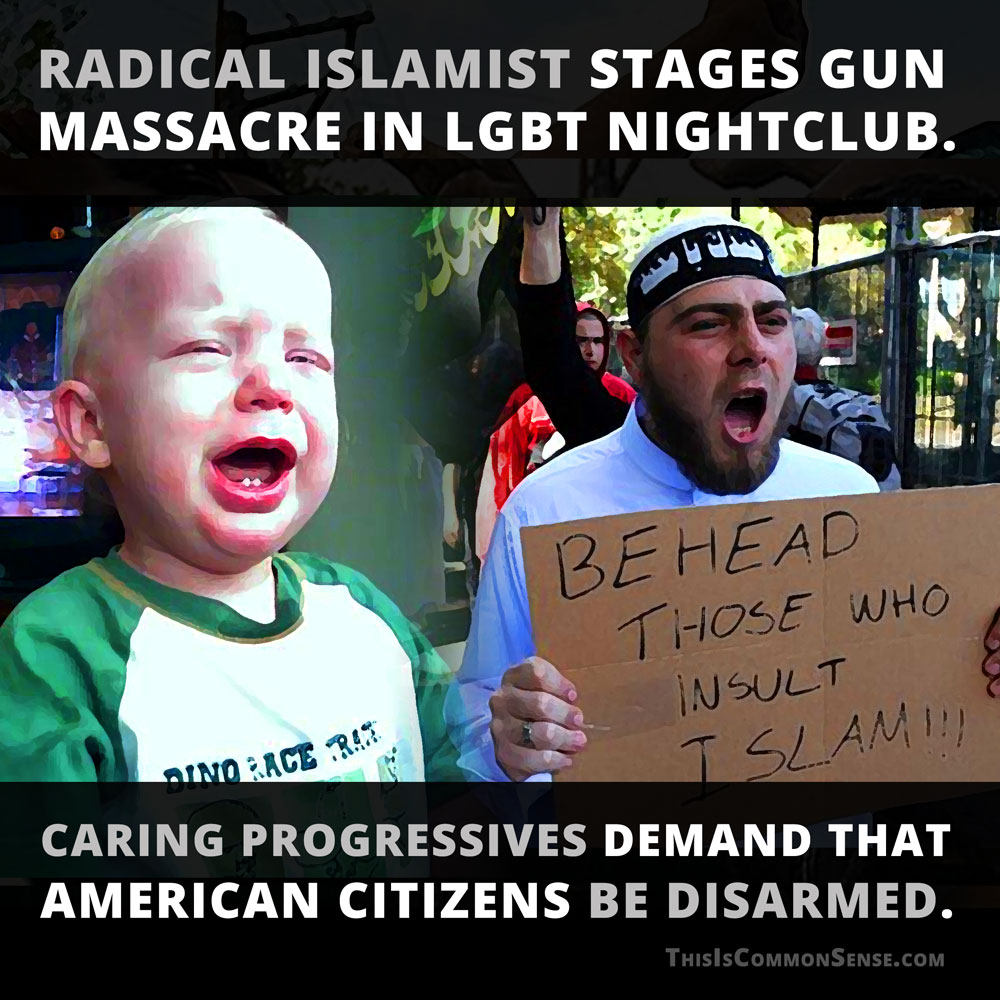
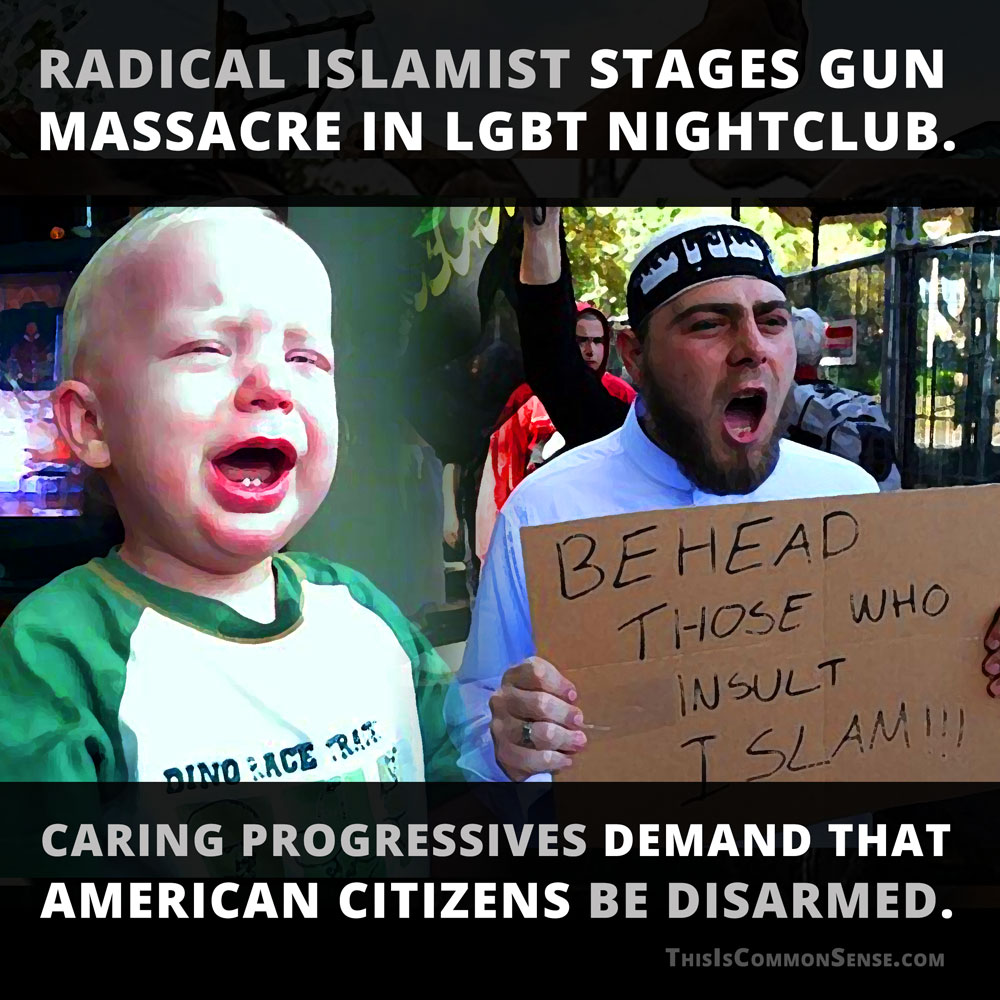
Radical Islamist Stages Gun Massacre in LGBT Nightclub!

Caring Progressives Demand that American Citizens be Disarmed!


Orlando shooting, gun violence, gun control, meme, illustration


Categories
Accountability crime and punishment general freedom moral hazard nannyism national politics & policies privacy property rights

A New Way to Steal

The fight against government theft of private property, through “civil forfeiture,” just got a little harder.

There’s a new technology available: ERAD card scanners.

And the Oklahoma City Police Department’s joint interdiction team has them, and can use the scanners to take money from you without your consent.

What money, in particular? The money you have stored in pre-paid debit cards.

ERAD stands for Electronic Recovery and Access to Data, and the ERAD Group, Inc., stands to make a lot of cash from the technology. Police around the country want to be able to take the funds secured in debit cards. It’s the latest thing in the war against the war against the War on Drugs.

Drug traffickers, we’re told, hide dozens of such cards in vehicles transporting drugs.

It’s not enough that police can, in the course of investigating a crime — without conviction, mind you; indeed, without charges being filed — confiscate the cards themselves.

The police also want to be able to siphon the money out of those cards.

Which leads to corruption. Which is already rife in civil forfeiture usage, as a recent Oklahoma state audit found — missing money, misused funds, that sort of thing.

The cavalier way in which government officials defend expropriation by ERAD scanners is chilling. In an Oklahoma Watch article, reporter Clifford Adcock relates the official explanation: “These cards are cash, not bank accounts. . . . Individuals do not have privacy rights with magnetic stripe cards.” Why not? Because the information on the strip “literally has no purpose other than to be provided to others to read.”

That’s so open to logical criticism you could drive a confiscated truck fleet through it.

This is Common Sense. I’m Paul Jacob.

Printable PDF

ERAD, gift card, civil asset, forfeiture, stealing, theft, drug war