Categories
Accountability media and media people

Fair Share Unpaid

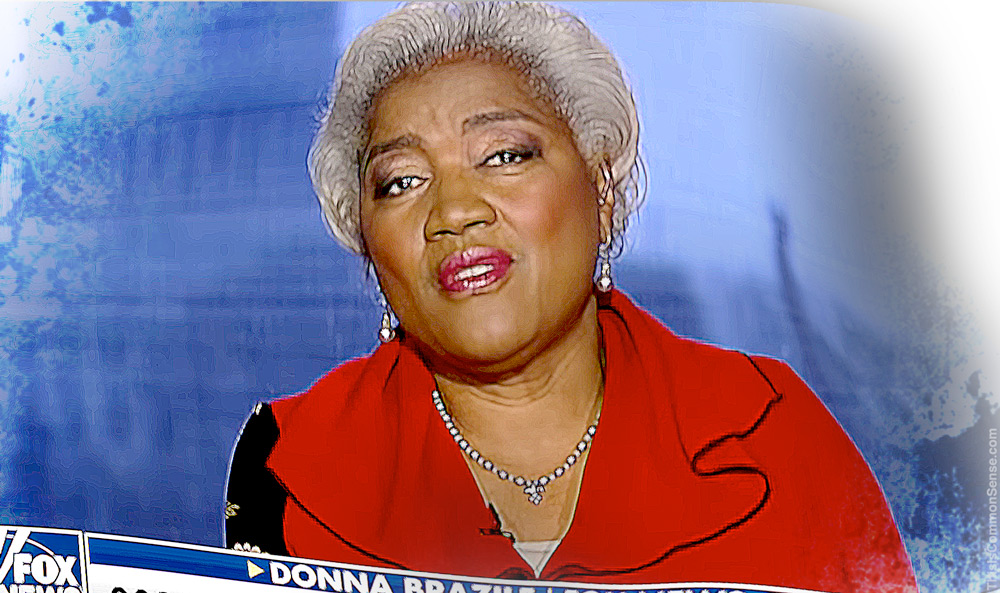
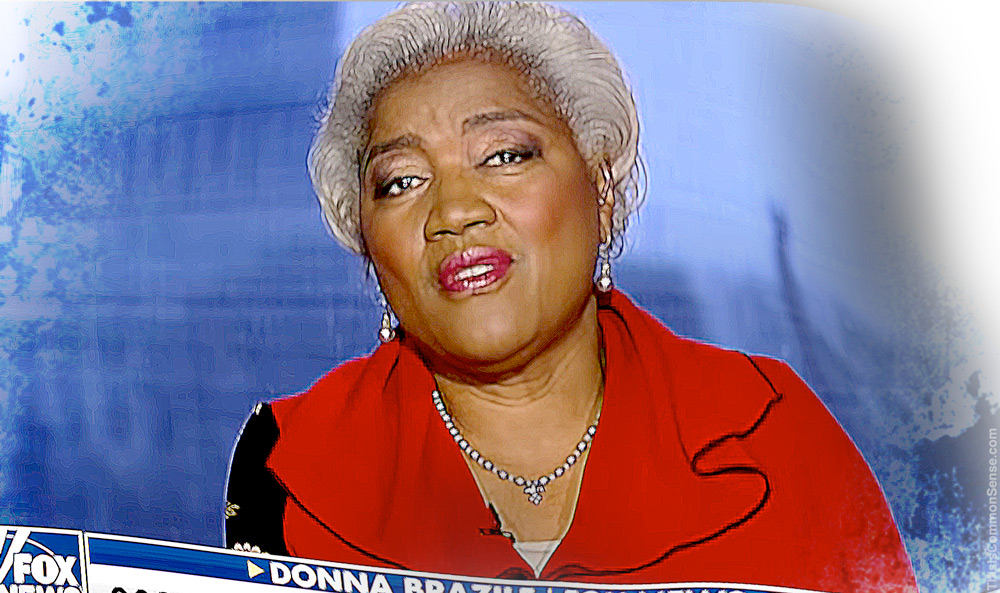
The CNN onscreen contributor who snuck debate questions to the Hillary Clinton campaign in advance of the 2016 presidential debates is now a talking head on Fox News.

“I am excited by the opportunity to share my perspective and views with the Fox News audience and to help shape the dialogue at this important juncture in our history,” wrote Donna Brazile last month. “More importantly, I’m eager to learn from the experience.”

Not a big Fox News fan, me; I don’t keep up with personnel changes. Her head just appeared — as a surprise! — onscreen in a Fox News video in my YouTube feed, covering a Bernie Sanders event. She was apparently hired for her campaign expertise — not for her journalism or ethics.

“Everything we believe in as Americans will be examined and, in essence, ratified by our votes,” she explained. “But it concerns me, as it does the majority of good Americans, that our national debate has become hostile and disrespectful. We no longer simply agree to disagree. Too often we demonize the intentions of others. Our lines of communication are frayed, if not broken.”

Well, one reason for these frayed lines of communication has been all the political and media corruption.

As Brazile demonstrated at CNN in 2016. 

She cops, obliquely, to her “fair share of mistakes” in her past career as an activist. “Some would argue I’ve made more than my fair share,” she confessed.

Interesting how insiders in Washington never pay for their mistakes.

Their unfair share.

This is Common Sense. I’m Paul Jacob.

PDF for printing

Donna Brazile, Fox, corruption

See all recent commentary
(simplified and organized)
See recent popular posts
Categories
media and media people

Morning Mind-Probe

There’s news reporting, done well or not, and opinion, with which one can agree or disagree. But on MSNBC’s Morning Joe you get something even more illuminating: mind-reading.

Yesterday, the show addressed U.S. Attorney General William Barr’s testimony the previous day before a Senate subcommittee. Viewers were shown The Washington Post’s succinct front-page headline: “Barr thinks U.S. spied on Trump.”

 And heard the Attorney General tell Senators that he wanted to “explore” and “make sure there was no unauthorized surveillance” of the Donald Trump for President campaign. “I think spying on a political campaign is a big deal,” he added.

“You’re not suggesting that spying occurred?” asked Sen. Jeanne Shaheen (D-N.H.)

“I think spying did occur,” Barr replied, “yes.” Barr defined “spying” as “unauthorized surveillance.”

“Someone’s been Trumped!” co-host Mika Brzezinski exasperatedly declared as the footage ended. Co-host and husband Joe Scarborough then took over, likewise uninterested in any such inquiry.

“[Barr] knows that what he’s saying is unbelievably reckless,” the clairvoyant former congressman informed. “And you can almost see in his mind, Barr going, ‘How do I answer this question so that Trump doesn’t tweet at me, so that I keep my job, but still not make a jackass of myself for lying?’”

As on-set bobbleheads nodded, Mike Barnacle vouched for Joe’s telepathic veracity, sharing a tale that “two people who have known Bill Barr for 30 years” were “stunned.” These unnamed sources are known only to Mr. Barnacle, the disgraced former Boston Globe columnist, a plagiarist and fabricator of stories, once described accurately as “cynically churning out fiction clothed as journalism.”

“I want to satisfy myself that there were no abuse of law enforcement and intelligence powers,” Barr told the committee. “I think that is one of the principal roles of the attorney general.”

I agree . . . but you read my mind.

This is Common Sense. I’m Paul Jacob.


PDF for printing

Joe Scarborough, Morning Joe, Donald Trump, Russia,

See all recent commentary
(simplified and organized)
See recent popular posts
Categories
folly ideological culture media and media people moral hazard Popular

Systemic Refocusing

Everyone comes into this world with advantages and disadvantages. 

In the last century, public morality focused on the disadvantaged. Government policy changed dramatically, aiming to help those lacking many obvious advantages. But that focus got fuzzier and fuzzier as the ranks of disadvantaged people remained, even grew larger. Progress was made on several fronts, sure, but not on all — especially not on the ones most targeted.

We even “lost ground.”

Maybe because of this, the political focus shifted to “privilege” — which often merely means “advantaged” and sometimes means a special license granted by custom or law, which is said to be “systemic.” 

White males, we are told, have the most of it. 

So they must be attacked.

But does “white [heterosexual male] privilege” really exist?

Sure, in some contexts. But so do other “privileges.” Here is a better question: Are there privileges so built in that people try to horn in on them?

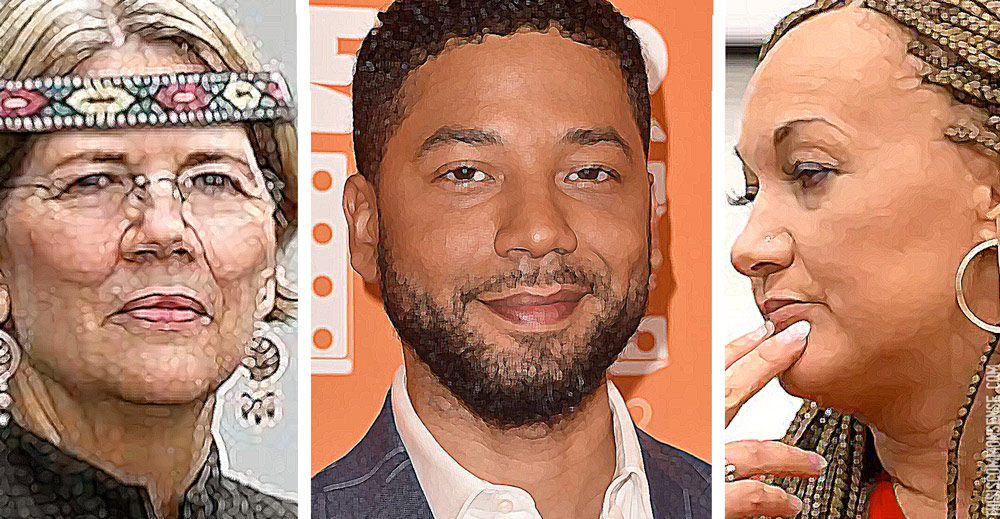
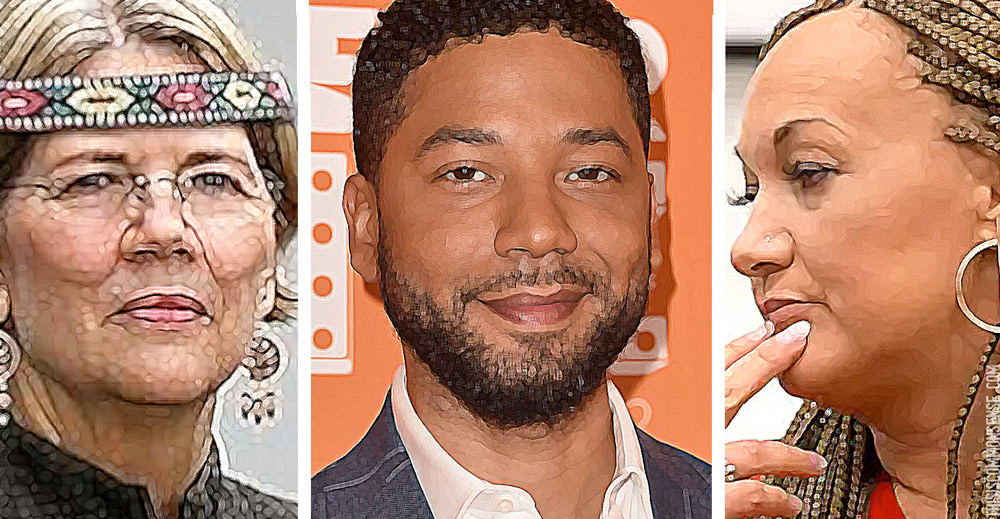
When there really was white privilege, “passing for white” was a thing. Now, we see other directions of racial “passing.” Sen. Elizabeth Warren, 99 and 44/100ths pure white, for example. If white privilege were really systemic, would she have pretended to be a native American? 

If white privilege were significantly at play in the academic world, the issue of Asian students qualifying for (and being accepted into) the country’s most prestigious universities wouldn’t even come up.

And if white people actually enforced their privilege, would the charges against Jussie Smollett for perpetrating a fake racial/ideological hate crime have been dropped? 

Seems unlikely.

If the results of focusing on advantage and privilege have been so dismal and dismaying, maybe it’s time for a refocus: on simple justice.

This is Common Sense. I’m Paul Jacob.


PDF for printing

white priviledge, Jussie Smollett, Elizabeth Warren, Rachel Dolezal

See all recent commentary
(simplified and organized)
See recent popular posts

Categories
ideological culture media and media people meme national politics & policies Popular

The Anti-Orange Man Cult

How do you know you are in an end-time cult?

When you won’t accept the complete and utter failure of your prophecies when they come a cropper.

So, am I talking about the classic Leon Festinger, Henry W. Riecken, and Stanley Schachter study in social psychology, When Prophecy Fails: A Social and Psychological Study of a Modern Group that Predicted the Destruction of the World? In that work, social scientists infiltrated an eschatological cult to see how they would react when their prophecy of end times failed.

What did the cultists do?

Many doubled down, tweaked their original prophecy, and continued in their previous beliefs but with greater fervor.

But no. I am not talking about that, not directly. 

I refer to the Mueller Report.

“For years, every pundit and Democratic pol in Washington hyped every new Russia headline like the Watergate break-in,” writes Matt Taibbi in “It’s official: Russiagate is this generation’s WMD?” Noting that while the story as it was hyped from the beginning was about espionage, a “secret relationship between the Trump campaign and Russian spooks who’d helped him win the election,” the biggest thing to come of it has been “Donald Trump paying off a porn star.”

Now that the Mueller Report has come to a fizzle, proving nothing very interesting or relevant, our reaction to the news that the President is not Putin’s puppet should be jubilation.

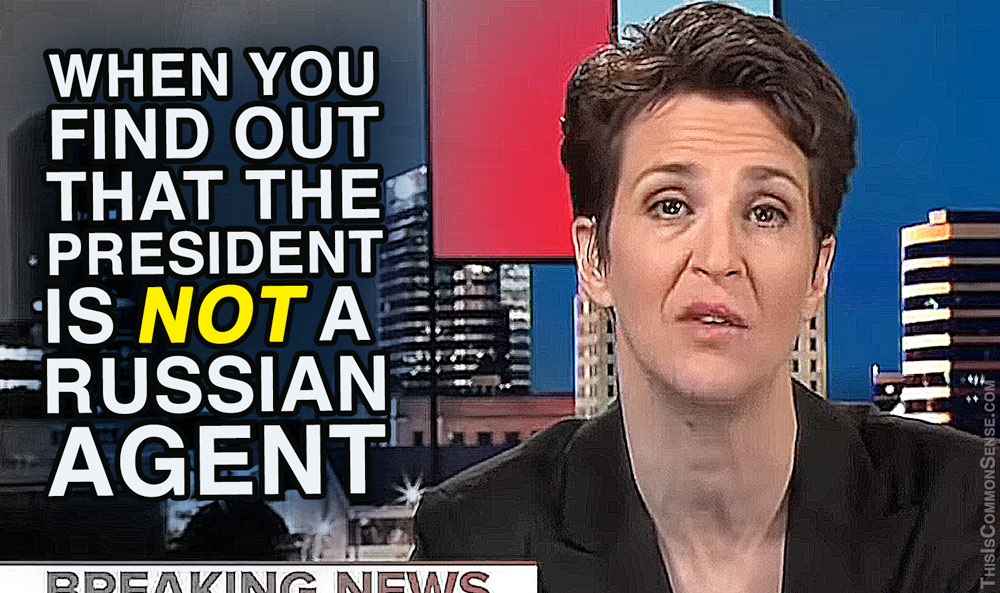
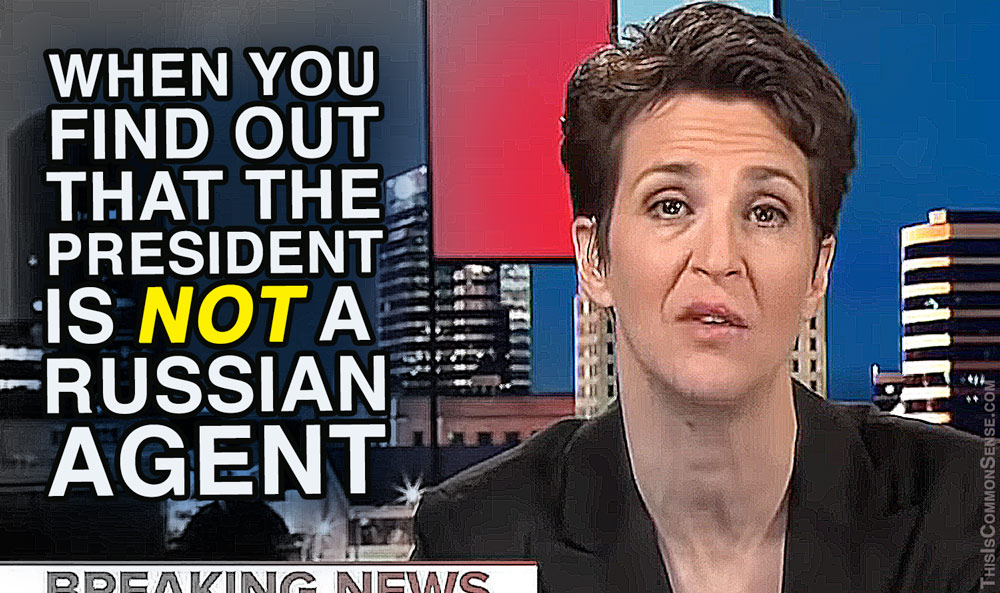
To shed a tear and get all choked up, like Rachel Maddow? That should signal the end time for the cult.

This is Common Sense. I’m Paul Jacob.


PDF for printing

Rachel Maddow, Russia, investigation, Mueller Report,

See all recent commentary
(simplified and organized)
See recent popular posts

Categories
crime and punishment general freedom media and media people moral hazard

Porn, Video Games and British Crime

British freedom is eroding. The attack comes from two directions.

First, there is the over-bearing police-state style, surveillance-everywhere government.

Second, there is the increasing violence.

Thing is, the justification for Britain’s mass surveillance, as well as for strict gun controls, was to prevent crime.

Oops.

So of course the Labour Party “shadow home secretary” Diane Abbott points an accusatory finger at porn and video games. These two influences may be “desensitising young people to vicious behaviour.”

Well, porn and video games are changing our cultures, on both sides of the pond. But in America, at least, the crime rate for the past two decades plumetted while video games and Internet porn have become ubiquitous, explicit and . . . admittedly, appalling.

Look elsewhere for the crime uptick.

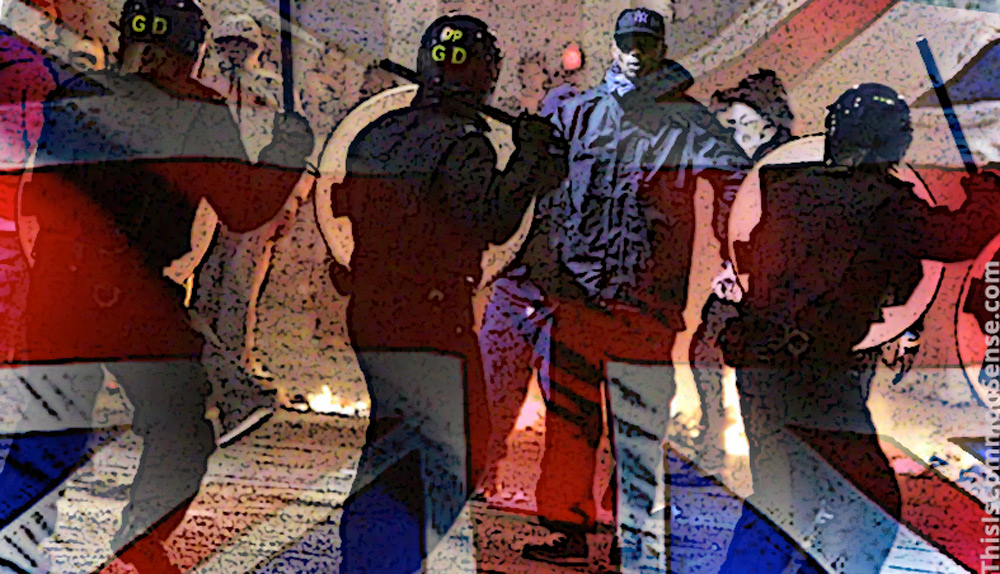
The Brexit fiasco, with the Tory government messing up implementation of the 2016 referendum results, has surely increased, not decreased, tensions all around, as has immigration policy, the collapsing National Health system, and much more. But worst of all? The nanny state, treating citizens as childish subjects. The police arrest people for nothing more than saying mean or just edgy things online. 

If people cannot be free legally, they will take license — illegally. 

Previously, we heard about a rash of acid attacks: acid thrown in the faces of pedestrians. More recently, the headlines are about stabbings — after years of knife control, of government crackdowns on even kitchen knives.

Ms. Abbott places the primary blame for rising crime not on the above, however, but on poverty and malfunctioning education. Not mentioned? The possibility that taking away British citizens’ rights of self-defense may have the perverse (unintended?) consequence of increasing offensive violence.

This is Common Sense. I’m Paul Jacob.


PDF for printing

Great Britain, British, England, knives, violence, freedom, surveillance,

See all recent commentary
(simplified and organized)
See recent popular posts
Categories
folly ideological culture media and media people Popular

Inclusivity Not Included

The 3rd annual Woman’s March strolled by over the weekend — a tiny fraction of its former self. 

Two years ago, close to a million protesters converged on Washington, D.C., while this year’s event “appeared to attract only thousands,” The Washington Post reported, “mirroring lower turnout at marches . . . across the country.”

“[A] movement that once bragged about its inclusivity,” explained a separate news analysis, “has been roiled by reports of battles over diversity, hate speech and branding.”

In addition to squabbles over corporate ownership of the very name of the “Women’s March,” the leaders of the main organization have been accused of anti-Semitism. “Board members Linda Sarsour, Carmen Perez and Women’s March, Inc., co-president Tamika Mallory, have publicly affiliated with and praised anti-Semitic Nation of Islam leader Louis Farrakhan,” notes the Capital Research Center’s Influence Watch website.

March founder Teresa Shook called on them to resign, charging “they have allowed anti-Semitism, anti-LBGTQIA sentiment and hateful, racist rhetoric to become a part of the platform . . .” The Democratic National Committee and a number of progressive groups have withdrawn their support.  

But the “inclusivity” was always fake. As a “women’s” march, it started out excluding half the population. Nothing wrong with women having events or organizations that focus on issues of particular interest to females; it’s just not inclusive.

And let’s not ignore that pro-life women were specifically booted from participating in the original 2017 event.  

“Is the Women’s March more inclusive this year?” a USA Today article asked before last year’s pink-hatted festivities. 

Apparently not. This year, everyone was excluded fromthe Eureka Women’s March — cancelled because those hoping to participate were “overwhelmingly white.”

With all this inclusion, no wonder we are so divided.

This is Common Sense. I’m Paul Jacob.


PDF for printing

women, woman, march, inclusion, in group, out group

See all recent commentary
(simplified and organized)
See recent popular posts

Categories
free trade & free markets media and media people too much government

A Former Economist

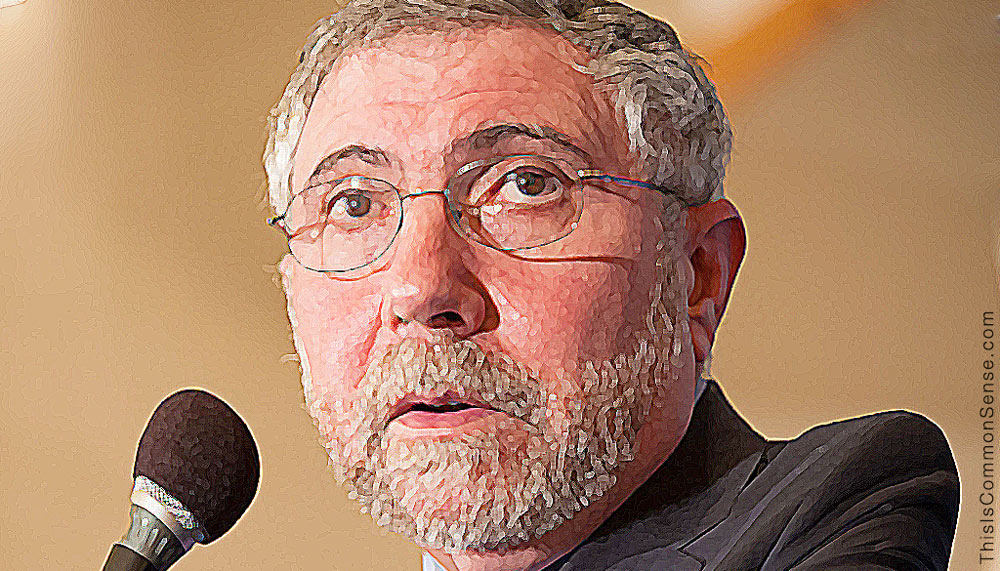
Paul Krugman, New York Times columnist and former economist, tested our patience last week with “Trump’s Big Libertarian Experiment.” How many non sequiturs will squeak past the Gray Lady’s editorial department? 

Loads — and all about how the federal government shutdown gives limited government folks what they want: less government.

Subsidy checks to farmers aren’t going out, as “libertarian organizations like Cato” have long advocated. Sure. But it’s no policy change.

As soon as there’s a budget deal, those checks will be made up.

Further, “businesspeople are furious that the Small Business Administration isn’t making loans.” 

Well, it’s high time businesses were weaned off the SBA teat — and a few whiners do not a case for subsidy make.

And then there’s the Food and Drug Administration, which can no longer inspect foods. Since “there’s a long conservative tradition, going back to Milton Friedman, that condemns the F.D.A.’s existence as an unwarranted interference in the free market” libertarians must be pleased, eh?

There is also a long tradition among economists that says businesses don’t get rich poisoning their customers, and that there are many mechanisms in place — and, barring the FDA, more would be in place — to ensure customers that they won’t be infected by eating . . . Romaine lettuce.

Which then Krugman admits . . . as if he had belatedly recalled Friedman’s lesson in Capitalism and Freedom. He concedes that the shutdown is not the way Friedman would go about limiting government. Besides, “libertarian ideology isn’t a real force within the G.O.P.”

So what’s the point?

Krugman ends with talk of a smell test: does lack of food inspections smell like freedom?

Something stinks here. But it isn’t spoiled food. Or freedom.

This is Common Sense. I’m Paul Jacob.


PDF for printing

Paul Krugman, libertarianism, libertarian, freedom, shutdown

See all recent commentary
(simplified and organized)
See recent popular posts
Categories
media and media people national politics & policies video

Suppressed Data Trends

One thing you notice when engaging in public policy discussions is the misuse of statistics in a particular way: truncating a timeline of data, to focus almost exclusively on short-term trends rather than a more meaningful long-term (“secular”) accounting of trends.

For example, you will often see proponents of state aid discuss the decrease in poverty after the War on Poverty began. And there definitely has been. But when we look at long-term trends, we see a long history of diminishing poverty levels in America, and improvements were more dramatic before, not after, the increase in welfare state spending in the 1960s.

Another trend line you might notice regards crime. Some folks focus on very recent upticks in some violent crimes, and demand that we “do something.” But the longer-term trend has been for a reduction in almost all forms of crime since the early 1990s.

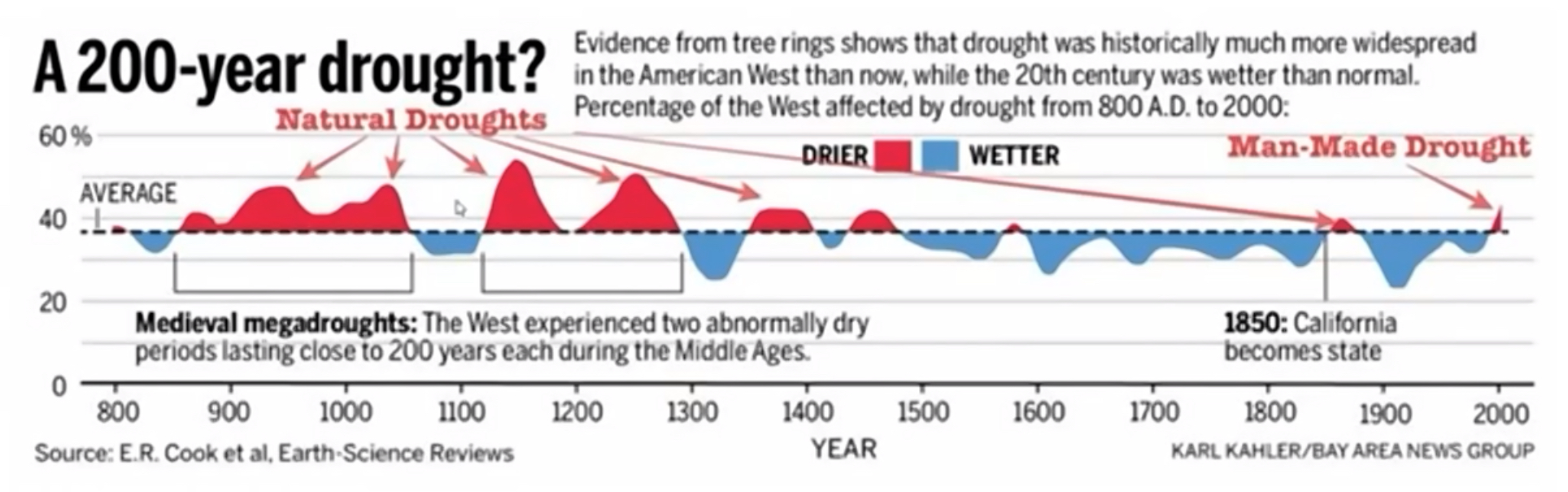
What if something similar has been going on in “climate change”/“global warming” politics and reportage?

Along with even more disturbing near-term mis-reporting.

Tony Heller from RealClimateScience.com.

Categories
crime and punishment media and media people Popular

What’s Up With Hate?

Reported hate crimes are up.

Last year, you may remember, major media outlets noted an alarming pattern, quoting the work of a “nonpartisan researcher” who seemed more intent on linking Donald Trump to the perceived trend than anything else.

This year’s increase?

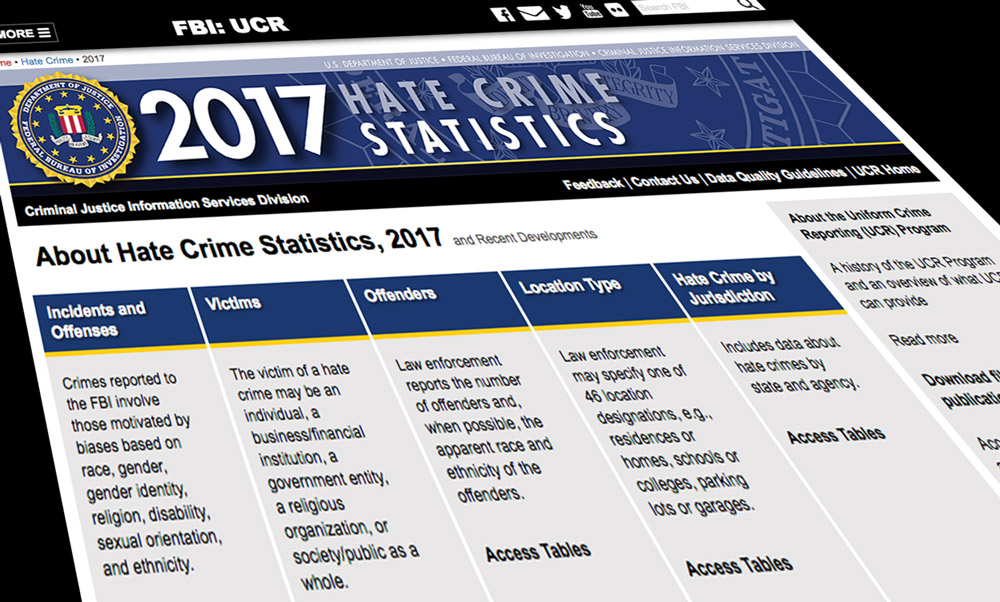
Well, the most recent FBI report shows hate crimes for 2017 up a whopping 17 percent!

Sounds alarming.

But is it? I mean, really?

Maybe. CNN offers a fascinating investigation of several rather big-story hate crimes that did not make it into the statistics. Yes, disturbing.

But what did CNN not report?

YouTuber Matt Christiansen drilled down, focusing on several aspects of the FBI report that are missing from accounts brought to us by major news outlets.

The uptick in sheer numbers of hate crimes may be mostly the result of the increased number of law enforcement agencies that have been brought into the data-collecting project. How many new agencies? One thousand.*

And consider the demographics changes year-to-year as well. Religious-based crimes saw a small increase in the number of anti-Jewish events and a similar decrease in anti-Muslim ones. All in all, notes Christiansen, there has been little change in the proportions of the statistical categories — which would not be what one would expect if Trump were the Malign Influence.

Also bad for that narrative? The biggest detectable change in the distribution of race-based crimes — more than twice the increase in numbers of crimes against Hispanics — was against (get ready for it) whites.

This is Common Sense. I’m Paul Jacob.


* That is from the FBI press release; oddly, I did not find that statement when looking directly at the report.

PDF for printing


» See popular posts from Common Sense with Paul Jacob HERE.


Categories
ideological culture media and media people national politics & policies

When Experts Are Wrong

Standard theory has it that “mid-term elections” serve as a “referendum on the President.”

In a typical article this weekend, a political scientist trotted out that common wisdom and then went on to say that “control of the referendum has shifted. It is now a referendum on leadership, on character . . . and that’s not good news for Donald Trump.”

My crystal ball is in the repair shop, but I have my doubts. The “experts” got the 2016 election so wrong in no small part because they were leveraging their expertise to influence the outcome more than understand the contest.

Academics, journalists and other Democrats want today’s votes to serve as a “referendum on leadership” because they yearn for their leaders and not Trump. 

In a Wall Street Journal op-ed and a Slate follow-up interview, Yale computer scientist David Gelernter explored the lack of “rapport between the left and what I consider the average American.” He also dismissed as absurd the idea that Donald Trump is racist — a mainstay of the Democratic critique of the president. What Trump is, instead, is “the average American in exaggerated form — blunt, simple, willing to fight, mistrustful of intellectuals” but completely without “constraints to cramp his style except the ones he himself invents.”

The Democrats, meanwhile, “have no issues” — except their hatred of Trump, argues Gelernter.

Thankfully, the mid-terms often serve as a check on the power of sitting presidents. But if “average Americans” hear the reasons to vote for the opposition party as all about how racist and xenophobic Trump is, it may work no better than in the last election.

Prophecy’s a tricky business.

This is Common Sense. I’m Paul Jacob.


PDF for printing