Categories
defense & war general freedom international affairs

Panic at Sea

“The passengers later told local media they feared for their lives,” Newsweek reported.

Those 23 tourists, along with 11 crew members, were traveling from Taiwan’s Kinmen islands, located just six miles off the Chinese mainland, back to the big island of Taiwan, when a Chinese Coast Guard vessel stopped and boarded their boat . . . and for 30 minutes “reviewed their travel documents.”

The Chinese regime, “in response to the recent deaths of two Chinese fisherman, whose speedboat . . . capsized while being pursued by Taiwanese authorities for allegedly trespassing in restricted waters,” has threatened to “step up maritime law enforcement around Taiwan’s outlying Kinmen islands,” explains the magazine.

Kuan Bi-ling, head of Taiwan’s Ocean Affairs Council, said the incident “caused unnecessary ‘public panic.’”

A bit dramatic for just checking people’s IDs. 

But context is everything. 

After all, Chinese dictator Xi Jinping has repeatedly threatened a military invasion that would inevitably kill thousands upon thousands of Taiwanese. And China’s ever-growing military constantly stalks Taiwan, regularly encircling the island with its warships and planes.

The concern of Taiwanese officials is that China’s stepping up its harassment campaign. For 30 years there has been peace around Kinmen, which has become a tourist attraction memorializing Cold War times.

We don’t want to re-live that frosty period, just remember it.

“We urge the PRC [People’s Republic of China] to engage in meaningful dialogue with Taiwan to reduce the risk of miscalculation,” declared a U.S. State Department spokesperson.

But the problem isn’t miscalculation. The Chinese calculate that they can get their way by threatening, bullying, and intimidating Taiwan, their neighbors, the U.S., and the rest of the world. 

Panic? Try not to . . . when Chinazis are checking your papers.

This is Common Sense. I’m Paul Jacob.


PDF for printing

Illustration created with PicFinder and Firefly

See all recent commentary
(simplified and organized)
See recent popular posts
Categories
defense & war international affairs subsidy

Paid Invaders

“The United States is bankrolling its own ‘invasion,’” declares an Epoch Times article, “by funding the United Nations and its partners, which, in turn, give hundreds of millions of dollars in cash and aid to migrants who eventually cross the U.S. southern border illegally.”

Though it’s called “cash in envelopes” in the biz, actual payments to these immigrants on the road north from Ecuador usually take the form of debit cards, to the tune of $800 per month. This is funded partially from U.S. taxpayers through the International Organization for Migration (IOM), the United Nation’s mass migration arm. Last year, courtesy of Biden Administration enthusiasm, the U.S. threw $1.3 billion at the IOM.

It doesn’t stop there. “The U.N.-orchestrated Regional Refugee and Migrant Response Plan update for 2024 calls for distributing $1.6 billion in 17 Latin American and Caribbean countries with the help of 248 partner agencies, which are also receiving U.S. grants.”

And it is not just the generous payments to individual trekkers northward. NGOs and foreign governments, in addition to the U.S. taxpayers, have organized help through every step of the long march. There is a break in the road, in Panama, where one must navigate  a jungle, or else go by sea. Quite a few organizations are making this leg of the journey doable for many.

And some wonder if the Chinese government isn’t supporting the massive surge — more than 50 times as many Chinese illegally crossing into the U.S. last year than just two years earlier.

Which is where the whole issue becomes scary.

Anthropologist Brett Weinstein — discussed here before for his ordeal at Evergreen University a few years ago — recently went down to Panama to see for himself what was going on. He calls the migrant hordes an invasion. He observed that the Chinese émigrés have separate housing, and exhibit radically different attitudes — and more wealth — than your standard economic migrant worker.

If the obvious danger doesn’t bother Americans . . . perhaps the fact that they are paying for it might?

This is Common Sense. I’m Paul Jacob.


PDF for printing

Illustration created with PicFinder and Firefly

See all recent commentary
(simplified and organized)
See recent popular posts

Categories
free trade & free markets general freedom international affairs

Market Rents Work in Argentina

Markets work and markets for housing work.

This is what the new president of Argentina, Javier Milei, has sought to confirm by means of radically free-market economic policies. He is going as far as he can as fast as he can to make Argentina a freer and more prosperous country.

Can he succeed in the long run?

Many exploiters of the socialist status quo ante are bitterly opposed to his reforms and hope to undo them. We’ve seen before how quickly a relatively anticapitalist administration can kill the freedom-expanding reforms of a relatively procapitalist one.

But at least for now, Milei is proving his point, as witness the market for apartments in Buenos Aires.

The Buenos Aires newspaper El Cronista reports (with the help of Google Translate) that with the end of rent controls, the supply of rental units in Buenos Aires has doubled and prices for units have fallen by around 20%. The paper cites data by the Argentine Real Estate Chamber and the reports of brokers.

Under rent control, by 2023 the supply of rentals had shrunk to just 400 units. “Today we have a stock of more than 800 apartments, and it is growing day by day,” says Alejandro Bennazar, a director at the Chamber.

Eight hundred units is still low given the size of the capital city, but there’s light at the end of the tunnel. Getting rid of the controls caused supply to double instantly. An excellent start.

This is Common Sense. I’m Paul Jacob.


PDF for printing

Illustration created with Midjourney

See all recent commentary
(simplified and organized)
See recent popular posts

Categories
general freedom international affairs

Dangerous Neighbor

“Are you a journalist?” asked the woman in an overflow crowd of thousands, who, like me, couldn’t fit into the packed stadium for a Democratic Progressive Party rally on the eve of Taiwan’s election.

“Or do you just love Taiwan?” 

With a broad smile, I told her: “I love Taiwan.”

This, my second trip to the beautiful island nation, was as inspiring as my first, in 2019. 

Two other women in the crowd explained they flew in from Italy to cast their ballots — believing the future of Taiwan depended on their vote. Which, of course, it did.

Most poignant was my conversation with a couple who had escaped the Chinazi clampdown in Hong Kong. After discussing how those 2019 protests helped “wake up the world,” I snapped a selfie with them. 

Then, five minutes later, they came back to ask me not to post their picture on social media without blacking out their faces. You see, they have relatives still in Hong Kong who might face harassment or worse from the Chinazis, if they were outed. 

“Enjoy the freedom of Taiwan today,” a Taiwanese man had offered earlier in the day at the Kaohsiung Museum of History. “It may be gone tomorrow [Election Day].” He feared a KMT victory would usher in a government far too willing to cozy up to the Chinese regime. 

On Saturday, however, DDP presidential candidate Lai Ching-te won a clear victory. His triumph was declared by the gaslighting Butchers of Beijing to be an “extreme danger.” 

But it is obvious to all that the nation of Taiwan is a danger to no one . . . and Communist Party-ruled China is a danger to everyone. 

This is Common Sense. I’m Paul Jacob. 


* One doesn’t need to look to Asia to see the threat from China. Chinese dissidents in the U.S. and Canada are routinely harassed and threatened, which our governments seem unable to do much about. And the website we’ve launched — StopTheChinazis.org — has numerous writers but only two have chosen to use their real names. Why? Fear of reprisals from the CCP against Americans here in America. 

PDF for printing

See all recent commentary
(simplified and organized)
See recent popular posts

Categories
international affairs Internet controversy

Sit Back, America?

“America just needs to sit back,” insists Joseph Solis-Mullen, author of The Fake China Threat and Its Very Real Dangers. This, he says, is the best reaction to an admittedly aggressive China.

On his podcast, Tom Woods asserted that a Chinese invasion of Taiwan would be “a net-negative for the overall cause of human liberty” before asking Solis-Mullen: “So is your position that that’s a very unfortunate thing but there is absolutely no way the United States is going to defeat China over Taiwan, so what’s the point in trying?”

Solis-Mullen answered in the affirmative: “the U.S. would lose an attempt to block China from absorbing Taiwan.” 

To illustrate, he noted that “it’s 80 miles off the coast of China,” and said “imagine someone trying to invade Cuba, for example, and the United States was determined not to let them. Of course, they couldn’t.”

An unfortunate formulation, since the U.S. is not threatening to invade Taiwan; China is!

Better to have said, imagine an eastern hemisphere power trying to protect Cuba from an invasion by the U.S. Since to this day you can find American politicians advocating a conquest of Cuba, the analogy is more nearly exact.

And perhaps for similar reasons as to why Cuba remains unconquered, Taiwan is actually defensible — especially with U.S. naval and air support. 

While a recent CSIS war game showed massive death and destruction should China surprise Solis-Mullen by launching an amphibious assault, it in turn found China’s navy devastated and the attack repelled. Ian Easton’s look at The Chinese Invasion Threat also concluded that Taiwan can defeat a PLA invasion force.

Today, treaty obligations require the U.S. to come to the military defense of Japan and the Philippines, both under threat from China. The Taiwan Relations Act mandates that we provide Taiwan (which lies between them) with the wherewithal to defend itself and President Biden has repeatedly pledged direct U.S. military assistance should China launch the unprovoked attack the CCP regularly threatens.

Solis-Mullen advocates we abandon these obligations. He seems to recognize it means a complete U.S. withdrawal from Asia and Chinese Communist Party “domination,” but his notion that it “will not impact our prosperity at all” is naïve.

Sitting back to watch another evil empire gobble up free peoples would be, as Tom Woods put it, a huge blow “for the overall cause of human liberty.”

Seems like the wrong armchair position.

This is Common Sense. I’m Paul Jacob.


PDF for printing

Illustration created with PicFinder and Firefly

See all recent commentary
(simplified and organized)
See recent popular posts
Categories
international affairs

Can’t Eat Chips?

“The hawks will generally talk in terms of ‘the technology will fall into China’s hands,’” says political scientist Joseph Silos-Mullen, referring to a threatened Chinese invasion of Taiwan, where 90 percent of the world’s high-end computer chips are fabricated.

“That would never happen,” the author of The Fake China Threat assures, “because the United States has already said publicly that they would destroy — that they would literally bomb out of existence — those very factories.“

Wow. Sure seems those semiconductor chips are awfully important.

It’s a “pretext,” he argues — and I’m quoting from his November Tom Woods Show appearance. “Even if China had [the high-end chip fabs], why wouldn’t China want to sell [chips] to the rest of the world? Right? What good is it just to hold all of the semiconductors? It doesn’t make any sense.”

After Solis-Mullen complained about a lack of follow-up questions in mainstream media discourse, historian and podcaster Woods inexplicably failed to ask him one. Instead, Woods doubled down by dismissing previous fears that some authoritarian dictator might monopolize “all the oil.”

Woods inquired incredulously, “What would you do with it? Unless you have a fetish for it. What would you do with it?”

“Drink it?” Solis-Mullen jokingly asked.

Hahaha. But, seriously, Mr. Woods, no concerns at all about “so-and-so” having a monopoly on oil? Not even Putin? Or China’s Xi Jinping?

¡No problemo! Xi can’t drink the oil, after all. He would just have to sell it to us . . . and surely at very reasonable rates.

Right? Whew! That was close.

Maybe the CCP could “never” get its hands on those fabs producing all the high-end computer chips, but if somehow it did, are we really supposed to believe it wouldn’t be YUGELY advantageous to China? 

Say, militarily?

You know, should this “fake” threat keep becoming more and more real.

This is Common Sense. I’m Paul Jacob.


PDF for printing

Illustration created with PicFinder and Firefly

See all recent commentary
(simplified and organized)
See recent popular posts
Categories
general freedom international affairs

Mostly Peaceful Indo-Pacific

“Gentlemen may cry peace, peace, but there is no peace.”

— Patrick Henry

The 2023 Chicago Council Survey shows 58 percent of us view China as “a critical threat” and a “plurality of Americans (46%) say that US leaders are not paying enough attention to the issue of US competition with China.”

On the other hand, libertarian political scientist Joseph Solis-Mullen pooh-poohs these fears, which he sees as manufactured by the powers that be, the military-industrial complex, the Deep State. Since our un-beloved Deep State has been known to wander to and fro about the Earth manufacturing crises and conflicts, the case possesses a surface plausibility. 

Still, “The Fake China Threat,” an episode of The Tom Woods Show* from last month, failed to convince. See if you can detect the reason.

“This is something maybe we should mention,” Solis-Mullen told Woods, before disclosing that China “fought a border war” with India in 2020 with “hundreds” dead.

“The Philippines is a big one,” he added, “because there’s also a lot of conflict over the South and East China Seas.”

“Conflict”? You don’t say. 

“So, it’s not just Taiwan,” explained this researcher and journalist. “There’s danger everywhere over there — because Washington really wants to be involved in these disputes.”

Wait a second . . . how many disputes? 

“There’s disputes with Japan, disputes with Korea, disputes with Vietnam, disputes with Philippines, India,” Solis-Mullen recalled. “I think one or two more. I can’t remember off the top of my head.”

It does appear to be a lot to keep up with! 

Nor is the problem that “Washington really wants to be involved,” certainly not for Japan, South Korea, Taiwan, the Philippines, etc. . . . even Vietnam. Instead, every dispute, conflict, danger, and threat that Solis-Mullen cites has a singular cause: China. 

Heck, someone might dedicate an entire website to “Tracking Chinese Communist Party Aggression Worldwide.”

This is Common Sense. I’m Paul Jacob. 


* The discussion centered on Solis-Mullen’s new book, The Fake China Threat and Its Very Real Dangers, published by the Libertarian Institute

PDF for printing

Illustration created with PicFinder and Firefly

See all recent commentary
(simplified and organized)
See recent popular posts
Categories
education and schooling First Amendment rights general freedom international affairs

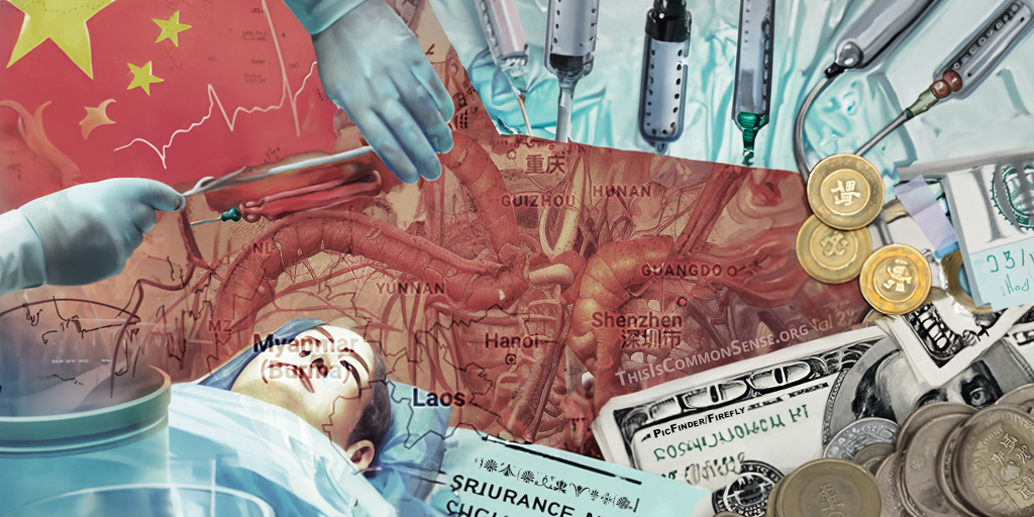
Cold Climate in Hong Kong

“There is no ‘red line,’” says an anonymous thirty-something Hong Kong humanities professor. “If they want to come after you, everything can be used as an excuse.”

Grace Tsoi, writing for the BBC, shows what happens when political correctness returns to its roots in totalitarianism. As it has in Hong Kong, in the “People’s [sic] Republic [sic] of China [sick].” The young academic Ms. Tsoi is quoting elaborated the situation: “He says his nightmare is being named and attacked by Beijing-backed media, which could cost him his job, or worse, his freedom.”

Political correctness can cause academics in America their jobs, of course. But as relentless as our woke media and online mobs may be to “de-platform” people they disagree with, it’s harder to go all the way.

Under a totalitarian state, it’s easier to be more thorough.

That’s why totalitarianism is the modish form of tyranny that tyrants aspire towards.

More power.

“In the academic year 2021/22, more than 360 scholars left Hong Kong’s eight public universities,” Ms. Tsoi explains. “The turnover rate — 7.4% — is the highest since 1997, when Hong Kong returned to Chinese rule, according to official data. Foreign student enrolments have dropped by 13% since 2019.”

The chilling effect is arctic. Self-censorship has become the rule, in advance of expected censure, censorship, or worse. Hong Kong academics blame all this on 2020’s National Security Law, which “targets any behaviour deemed secessionist or subversive, allowing authorities to target activists and ordinary citizens alike.”

It’s worth remembering that while “secession” is a dirty word for the powerful, and subversion the enemy of all, it does depend on context: secession from a tyrannical state is liberation; subversion of an unjust system is justice.

This is Common Sense. I’m Paul Jacob.


PDF for printing

Illustration created with PicFinder and Firefly

See all recent commentary
(simplified and organized)
See recent popular posts
Categories
general freedom international affairs national politics & policies too much government

To End the Great Declension

“Today begins a new era in Argentina,” said Javier Milei in his inaugural address as the new president of Argentina. “Today we end a long and sad history of decadence and decline and begin the road to the reconstruction of our country.”

President Milei has focused on a problem — the decadence of mass poverty — and identified it with a basic view of government: interventionism in markets, central control and bureaucratic proliferation. These, once established, start a cycle that must end in decay, decline. “The outgoing government has left us with hyperinflation, and it is our top priority to make every effort to avoid a catastrophe that would push poverty above 90 percent and indigence above 50 percent,” he explained.

Milei is not hesitant; gradualism’s not his bag, for the country does not “have margin for sterile discussions. Our country demands action and immediate action.”

At some point, the argument runs, you have to boldly cut government. Not just cut the rate of government growth, which is about all American Republicans have achieved — often allowing others to take the credit, as with Bill “The Era of Big Government Is Over” Clinton.

Milei’s first act as president was an executive order reducing the number of government ministries from 21 to nine. If this move actually succeeds in paring down the size of Argentina’s state apparatus and workforce, it will be something of a miracle.

In a country that needs miracles. 

Here in these United States, we may not have hyperinflation, as such, but we do face a crisis. The deficits are persistent, and majorities in both parties seem utterly unconcerned about the $34 trillion debt, rushing at us fast. Costing more to service than we spend on defense.

Only Vivek Ramaswamy has pushed specific ways to cut government.

But, unlike Milei in South America, here in North America Vivek’s just not that popular.

This is Common Sense. I’m Paul Jacob.


PDF for printing

Illustration created with PicFinder and Fireflly

See all recent commentary
(simplified and organized)
See recent popular posts
Categories
crime and punishment initiative, referendum, and recall international affairs

Sikh Freedom First

If I get gunned down in a hail of bullets . . . well . . . who done it?

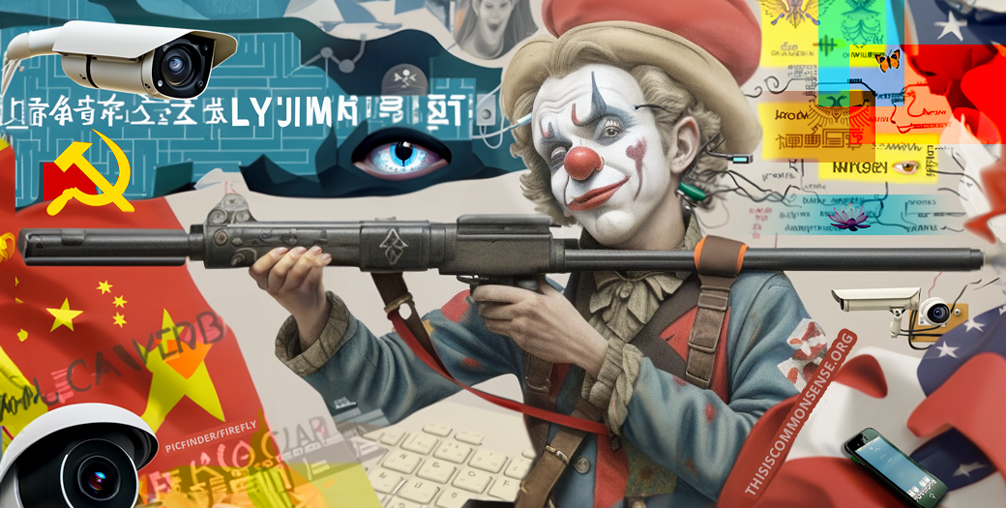
The genocidal Chinese Communist Party, furious at my new website, StoptheChinazis.org

Perhaps. But what about the regime of Prime Minister Narendra Modi in India? 

I’m a member of the Punjab Referendum Commission, an international group advising and monitoring the non-governmental referendums being organized among the worldwide Sikh diaspora by U.S.-based Sikhs for Justice. Recently, I stood at the entrance of a Sikh temple in Surrey, British Columbia, outside Vancouver, where Canadian intelligence agencies say agents of Modi’s government assassinated Sikh leader and Canadian citizen Hardeep Singh Nijjar, back in June, spraying him with 30 bullets. 

Then, last week, U.S. prosecutors indicted an Indian national for, according to The Wall Street Journal, “working with an Indian government officer to pay a purported hitman $100,000 . . . to murder a prominent advocate” on U.S. soil.

“The court filing did not name the victim,” The Washington Post reported, “but senior Biden administration officials say the target was Gurpatwant Singh Pannun, general counsel for the New York-based Sikhs for Justice. . . .”

My mouth’s suddenly a bit dry; I’ve been on the same stage as Mr. Pannun several times. 

There’s a long history of political unrest and violence between Sikhs in the Punjab region and the central Indian government . . . leading today to roughly one-fourth of Sikhs living outside of India. 

What can we do? Well, though I take no position on whether — YES or NO — the Punjab region should secede from India, I very much like that Sikhs for Justice is resorting to the opposite of violence — democracy — by asking Sikhs around the world to cast their vote.

If they dare.

This is Common Sense. I’m Paul Jacob.


PDF for printing

Illustration created with Midjourney and Firefly

See all recent commentary
(simplified and organized)
See recent popular posts