Categories
Accountability folly ideological culture insider corruption media and media people moral hazard national politics & policies responsibility too much government

Choice Corruption

What is corruption? said no jesting Pilate ever.

But please, stay for an answer.

A week ago, Jimmie Moore pleaded guilty to filing a false campaign finance report in order to conceal a $90,000 payment to drop out of a congressional race. Moore is a former Philadelphia judge (heavens). The nearly one-hundred-grand came from the incumbent he was challenging: Congressman Bob Brady (D-Pa.).

Moore, who implicated Rep. Brady in the scheme, now faces as many as five years in prison. Brady, for his part, has yet to be charged.

A pro-life politician’s 15-year tenure in Congress has ended. Tim Murphy (R-Pa.) has resigned following revelations that he had urged the woman with whom he was having an extramarital affair to have an abortion. Additional bad behavior — “a culture of abuse and a culture of corruption” in his congressional office — was detailed in an in-depth Politico exposé.

But for the biggest scandal story, go Hollywood. Movie mogul Harvey Weinstein has been ousted from The Weinstein Company upon allegations that he had committed criminal sexual assaults for decades. As a huge donor to the Democratic Party, questions abound. Which Democrats had knowledge of Weinstein’s behavior and yet remained silent?

That ‘look the other way’ rot has already spread to a media/entertainment institution: Saturday Night Live. Last Saturday night, observers were surprised that SNL did not feature even one joke at liberal Weinstein’s expense.

“It’s a New York thing,” quipped Producer Lorne Michaels when questioned about the omission.*

I’m not big on launching boycotts at every turn. But how could anyone who values evenhandedness turn on SNL next Saturday — or the following — as if nothing had happened?

Who needs these jesters covering for corruption?

This is Common Sense. I’m Paul Jacob. 


* Audience members at a rehearsal said there had been a Weinstein joke, which garnered a big laugh, but it was apparently pulled from the live broadcast.


PDF for printing


Categories
Accountability crime and punishment government transparency insider corruption local leaders moral hazard porkbarrel politics

Interfering With a Sweet Racket?

One way for governments and enterprises to save money is to contract out some or all of their services. Towns, cities, counties, states — even the federal government — engage in such practices all the time.

It is really just outsourcing, as business lingo dubs it.* But, like any system for shifting responsibility away from direct management, it can be corrupted.

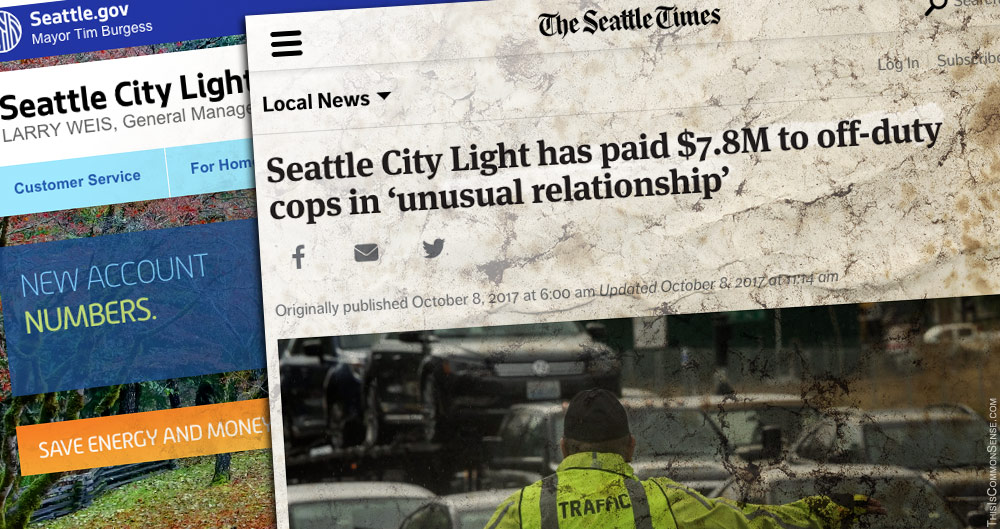
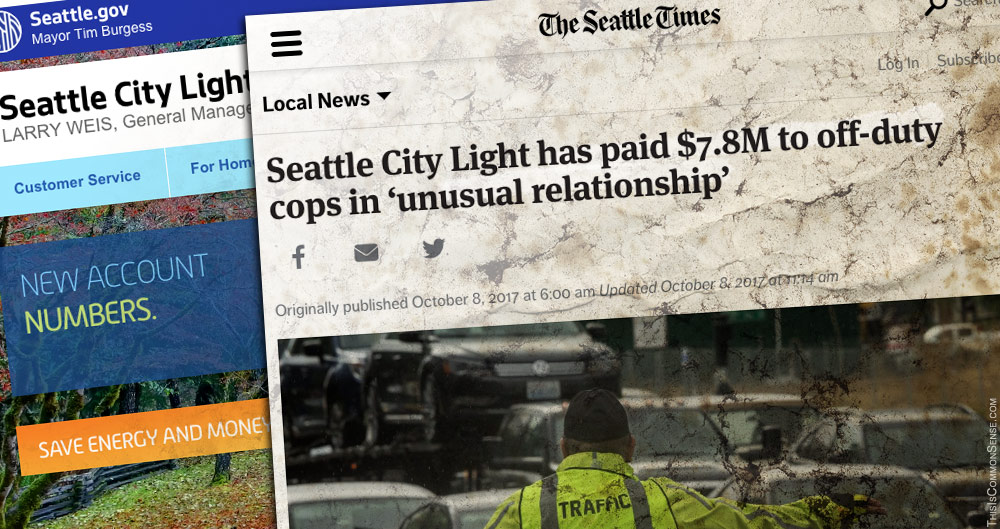
As Seattle citizens now learn, courtesy of Seattle Times reporters Mike Carter and Steve Miletich.

It appears that Seattle City Light, the public utility providing electricity to the city, has been contracting exclusively with Seattle’s Finest Security & Traffic Control. For a half a decade. Despite there being direct competition from another firm.

The utility paid “more than $7.8 million over the past five years to provide off-duty police officers for traffic control or security work,” the Times tells us.

The whole story came to light (no pun intended) when a new outfit offering similar services, but based on “gig economy” principles, sought to enter the market. Seattle’s Finest challenged the firm’s licensing, and, allegedly, directed abuse at the firm’s chief executive officer.

A Seattle detective off-handedly described the dominance of Seattle’s Finest “in organized-crime terms — using the word ‘mafia’ — and said nobody would be allowed to interfere with it.”

The FBI has now been called in.

Usually, local government may seem rather humdrum. But a lot of money can go through powerful, privileged hands. Things can get exciting. Terms like “murky” and “intimidation” abound.

Is this a surprise?

Remember: power corrupts; local power corrupts locally.

Right there where we live.

This is Common Sense. I’m Paul Jacob.
 

* An economist, R. H. Coase, got a Nobel Prize in no small part for explaining why this sort of contract can work better than establishing a complete firm-employee wage system.


PDF for printing


Categories
Accountability ballot access general freedom government transparency ideological culture initiative, referendum, and recall insider corruption local leaders national politics & policies property rights Regulating Protest responsibility too much government U.S. Constitution

The Great Faction

Politics isn’t a pretty business.

Frédéric Bastiat called the beast it serves “that great fiction” not because it doesn’t exist — intrusive state power sure persists — but rather because what it promises cannot really happen: “everyone living at the expense of everyone else.”

What can we do? How do we counteract a game that is rigged to increase the insanity, not reduce it?

Last week I indicated one thing a minor party with that goal in mind could do: use its power of spoiling elections to change major party behavior, and thus give citizens a fighting chance to restrain governmental metastasis.

Cancer.

I also suggested “blackmailing” the major parties into setting up a system of voting that . . . ends the power to blackmail! I believe that system — ranked choice voting — holds many positives, not the least of which is ending strategic voting, wherein voters are tempted to “falsify” their own preferences and support candidates they might dislike. This is as corrupting to the citizenry as the Great Fiction itself.

Let’s hope a savvy minor party leverages the major parties, gaining reforms to improve the system. Regardless, we can all — independently — push two other limits on political power:

  1. term limits at all levels, and
  2. initiative and referendum rights in all the states, not just the 26 that have it now.

Initiative and referendum rights would give ordinary citizens the leverage to possibly restrain the mad rush to live at each others’ expense. With the initiative, citizens can gain term limits, which produce more competitive legislative elections and lead to fewer legislators captured by the interests loitering in the capitol.

This is Common Sense. I’m Paul Jacob.

PDF for printing


Categories
Accountability incumbents insider corruption moral hazard national politics & policies term limits too much government

Most Hated

I was once “the most hated man in Washington.”* Why? For my work on term limits.

I wore the appellation as a badge of honor.

Last year I noted that Ted Cruz had taken up the mantle, but now, certainly, it’s President Donald Trump’s.

Has ever a president been as hated?

Thomas Jefferson was characterized as the Antichrist. Andrew Jackson made many enemies in overthrowing the Second National Bank. But John Tyler is the most interesting case.

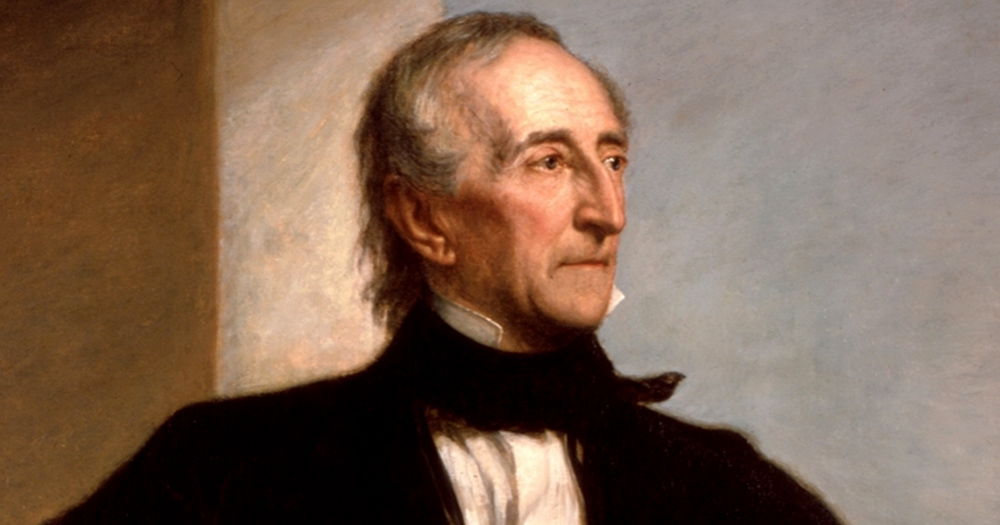
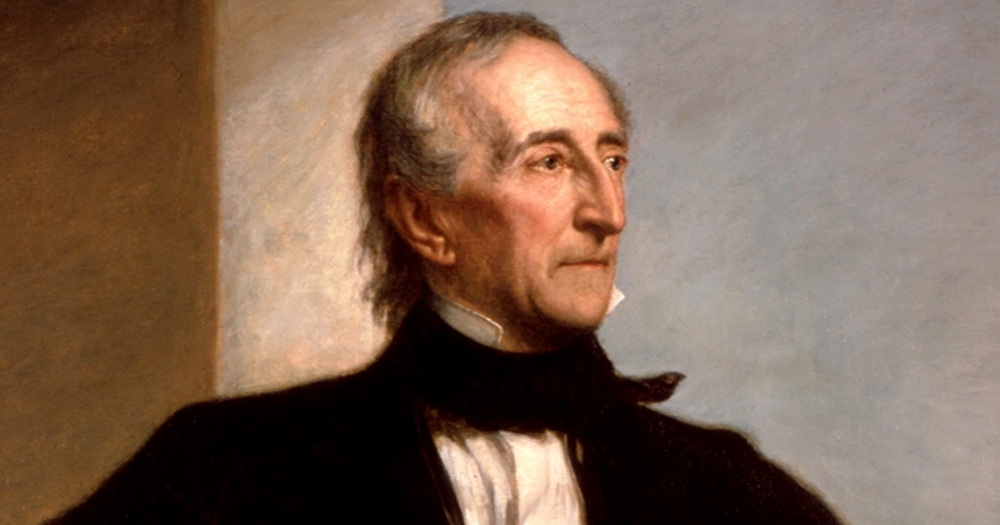
President Tyler was a Jeffersonian democrat who took up the office from William Henry Harrison, who died several weeks after being sworn in. Tyler was never accepted as legitimate by — get this — the Whig Party that nominated him. He was dubbed “His Accidency.” After opposing a revival of the national bank notion, there were riots, and his party expelled him. He received hundreds of death threats in the mail. Later he was almost impeached.

Admittedly, Republicans haven’t abandoned Trump — yet. But the Democrats have opposed him from the beginning. And the Entertainment Industrial Complex never ceases to wage a culture war against him. What should the most hated man do?

Make the most of it.

One of his promises was to put congressional term limits into the Constitution. Congress is reluctant. But Trump can do what I couldn’t: use all the powers of the presidency — from the bully pulpit to the veto pen — to leverage those in Congress into proposing a constitutional amendment.

It won’t make President Trump any less hated in Washington, but will win support everywhere else.

This is Common Sense. I’m Paul Jacob.
 

* That was in days of yore, the 1990s, and it was Bob Novak who gave me the appellation. Politicians, lobbyists and other government insiders hate term limits.


Printable PDF


Categories
Accountability insider corruption moral hazard national politics & policies porkbarrel politics too much government

Cronyism Pays

Daniel Mitchell, a senior fellow in fiscal policy at the Cato Institute, is a nice guy. But he’s sort of depressing, too.

Weeks ago, writing for the Foundation for Economic Education (FEE), Mitchell offered that “The Washington, DC Gilded Class Is Thriving.” He even provided a “depressing chart” graphing “median inflation-adjusted household income for the entire nation and for the District of Columbia.”

There is a graphic divide: while “the nation’s capital used to be somewhat similar to the rest of the nation . . . over the past 10 years, DC residents have become an economic elite, with a representative household ‘earning’ almost $14,000 more than the national average.”

Dan Mitchell highlights that “the entire region is prospering at the expense of the rest of the nation.” Among the nation’s counties, the top four wealthiest are in suburban Washington, D.C. The nation’s capital region boasts nine of the country’s top 20 richest counties.

Now Mitchell’s back with another FEE column exclaiming more bad news: “The ROI for Cronyism is Huge.” (ROI is “return on investment.”)

Mitchell cites a study entitled, “All the President’s Friends: Political Access and Firm Value,” conducted by University of Illinois professors Jeffrey R. Brown and Jiekun Huang. “Using novel data on White House visitors from 2009 through 2015,” they explain, “we find that corporate executives’ meetings with key policymakers are associated with positive abnormal stock returns. . . .”

The authors find a lot evidence showing that “political access is of significant value to corporations.”

None of this should surprise. Cronyism pays, and it sticks close to power, even geographically.

This is Common Sense. I’m Paul Jacob.

Printable PDF


Categories
Accountability general freedom insider corruption local leaders moral hazard national politics & policies too much government U.S. Constitution

Separation of Senators

The separation of powers doctrine has been a bedrock principle of small-r republican government. Each branch — legislative, executive, judicial — should be independent, and check the power of the other branches.

This requires that no person hold positions simultaneously in more than one branch of government.

Which brings us to Nevada State Senator Heidi Gansert. In addition to being a legislator, she’s currently employed by the University of Nevada-Reno as executive director for external relations . . . an executive branch position.

One can certainly understand why she wants to keep her prestigious legislative perch, while maintaining her annual $203,000 from the university. But those pesky folks at the Nevada Policy Research Institute’s Center for Justice and Constitutional Litigation insist Gansert adhere to the constitution.

They’ve filed a lawsuit.

As if to dramatize why “separation of powers” matters, consider Senate Bill 358, which sought to reform civil asset forfeiture in Nevada. The legislation couldn’t get out of the Senate Judiciary Committee, where State Senator Nicole Cannizzaro is vice-chair. She also holds a $99,000 position as a Clark County deputy district attorney.

Senator Cannizzaro’s presence on the Senate Judiciary Committee, as it pertains to forfeiture legislation, begs for a lesson on separation of powers,” the Nevada Policy Research Institute’s Daniel Honchariw wrote in the Las Vegas Review-Journal.

“Reform would’ve meant less money for district attorneys,” Honchariw explained, “which, in addition to police departments, directly profit from forfeitures.”

Nevada’s legal precedent on separation of powers is less clear-cut regarding Cannizzaro’s conflicting role in local government, than for Gansert’s state position. But the potential for mischief is the same — and obvious.

This is Common Sense. I’m Paul Jacob.
 

Printable PDF


Categories
Accountability free trade & free markets initiative, referendum, and recall insider corruption moral hazard national politics & policies porkbarrel politics too much government

A Wall of Separation

Whatever you think of Thomas Jefferson’s letter to the Danbury Baptists, wherein he celebrated the First Amendment for “building a wall of separation between Church & State,” let’s agree that it would have been nice had he penned another letter — to the Waterbury Methodists or someone — urging a wall of separation between Sports and State.

Last week, actor Tom Hanks became another brick in my hoped-for wall. “It’s a billion-dollar industry,” Hanks said of the National Football League.

[T]hey have billion-dollar TV contracts. All the owners are billionaires. And yet when they want to build a stadium they’re going to use for 10 weeks out of the year, they expect the city taxpayers to buy the building.

Hanks is livid. The recent “deal” that lured his beloved Oakland Raiders to Las Vegas included $750 million in public funds to build a $1.9 billion stadium. The Raiders are planning to stay in Oakland for the 2017 and 2018 seasons, while that new stadium is built. “When the Raiders leave,” the beloved star declared, “I am going on an NFL moratorium for two years.”

Unfortunately, Hanks appears more angry that his team is leaving (eventually), than with the principle that taxpayers ought not be ripped off.

Subsidizing businesses is cronyism, not capitalism. It’s even more outrageous when the poor must pay for the rich.

But how to stop it? In every city where citizens can propose ballot initiatives, let’s petition and pass measures requiring a public vote before any such subsidy.

It may not be the great wall I’d prefer, but it’s a high hurdle providing taxpayers some important protection.

This is Common Sense. I’m Paul Jacob.
 

Printable PDF


Categories
Accountability crime and punishment government transparency insider corruption local leaders moral hazard porkbarrel politics term limits

Another Political Crook

Last week, the other shoe dropped.

When last we touched upon Arkansas state legislator Micah Neal, he had pled guilty to steering hundreds of thousands of state tax dollars to a small private college in exchange for big, fat bribes.

He also implicated the state’s No. 1 term limits opponent, former State Senator Jon Woods, as chief hoodlum in the criminal scheme. Woods is best known for his dishonestly worded 2014 amendment responsible for hoodwinking voters into weakening term limits.*

And it is upon Woods that the shoe fell.

The fingered wheeling-and-dealing Woods, pursued by both the FBI and an angry electorate, chose not to run for re-election in 2016. Now he’s finally been indicted on 13 felony counts of fraud and bribery. Woods helped secure $600,000 in state funds to Ecclesia College, allegedly for tens of thousands in kickbacks.

“I do know this confirms what I’ve always suspected about Jon Woods,” wrote Max Brantley in the Arkansas Times. “He never had a job. He bragged about the good life he lived off state pay, per diem, travel and the hog slopping legislators enjoy. I should mention, too, that he was the architect of the so-called ethics amendment that provided a path to 1) longer terms in office; 2) higher pay; 3) an end-around an end to wining and dining restrictions despite the appearance that’s what voters had done.”

Former Sen. Woods does deserve a longer term . . . in jail.

This is Common Sense. I’m Paul Jacob.
* State term limits activists are currently gathering the more than 100,000 signatures they need on petitions to place their original, stricter term limits on the 2018 ballot and allow Arkansans an honest vote.


Printable PDF


Categories
Accountability government transparency insider corruption local leaders responsibility

Of Protests & Politicians

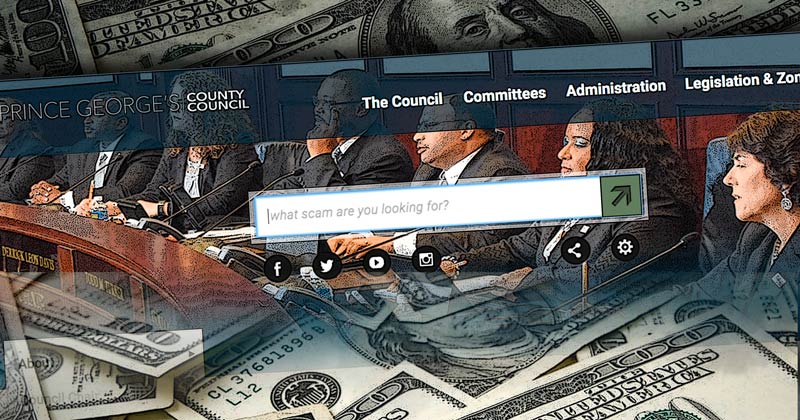
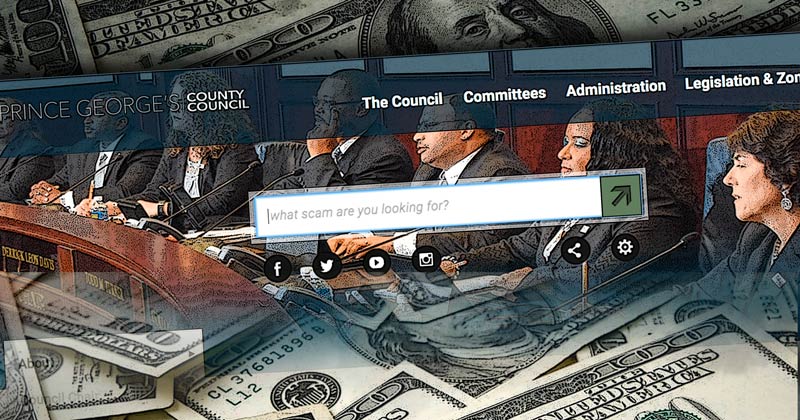
Last Friday, I applauded massive protests that erupted in Romania — over a since-rescinded governmental decree to decriminalize graft up to $47,000. On Sunday at Townhall, I wondered why there weren’t similar demonstrations against the corruption afflicting Prince George’s County, Maryland.

The county, bordering the nation’s capital, lavishes its nine council members with a take-home car or a $10,315 annual vehicle subsidy. The car allowance comes with free gas.*

These emoluments might have gone unnoticed had the politicians proven able to drive better than they govern. In the last five years, they racked-up 16 car accidents and 107 traffic violations.

Councilman Mel Franklin accounts for four crashes — three resulting in injuries to innocent motorists. The cost of totaled county vehicles, and fixing other people’s cars and bodies? Nearly $100,000.

Two months ago, Franklin slammed into a stopped vehicle at a red light. He claimed he was tired. True enough, if being tired of driving drunk counts. The police breathalyzer found him legally intoxicated.

Councilwoman Karen Toles racked up 47 tickets, including one for driving 105 mph on the Capital Beltway. Her excuse? She had been too busy applying make-up and sending emails on her cellphone to notice swerving across the multi-lane freeway at that speed — “executing,” she explained, her “duties as a public servant.”

An ongoing FBI probe has led to the indictment of two other county officials, a guilty plea by a state legislator and another legislator resigned awaiting indictment.**

Obviously, political corruption is not confined to other countries.

Just as obvious, providing top pay and benefits to politicians hardly guarantees the best and brightest.

This is Common Sense. I’m Paul Jacob.
 

* And these perks are on top of the councilors’ $114,000 part-time salary, healthcare, pension benefits, etc., etc., etc.
** Five ears ago, infamy found the county executive on a wiretap telling his wife to stuff $80,000 in bribe money into her bra.


Printable PDF


Categories
Accountability government transparency ideological culture insider corruption meme moral hazard national politics & policies

Corporate influence. . .

Corporations can buy unfair favors from government…because government has unfair favors to sell.

Big Government is the problem.


Click below for a high resolution version of this image:

corporations, influence, corporation, democracy, power, government, big government, meme, Common Sense, illustration