Categories
Accountability initiative, referendum, and recall moral hazard nannyism responsibility

Whose Constitution Is It, Anyway?

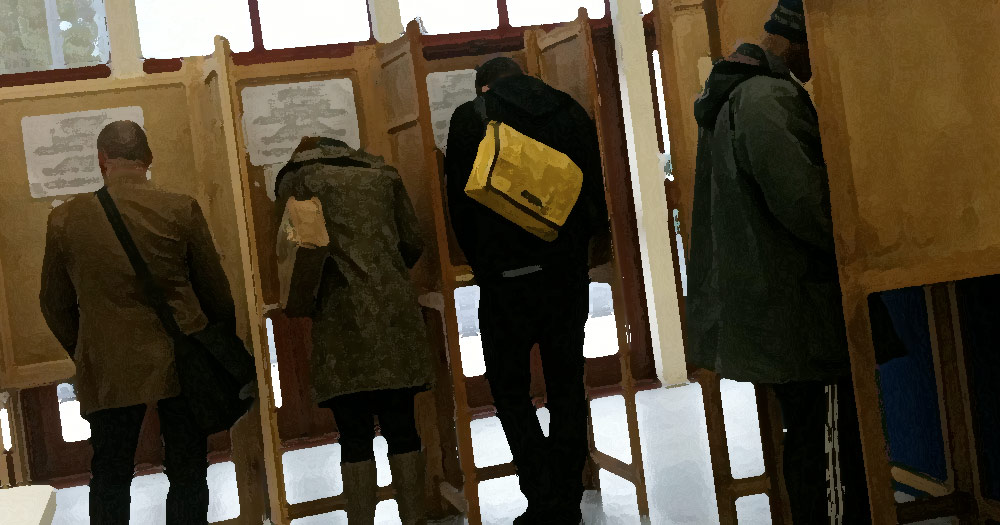
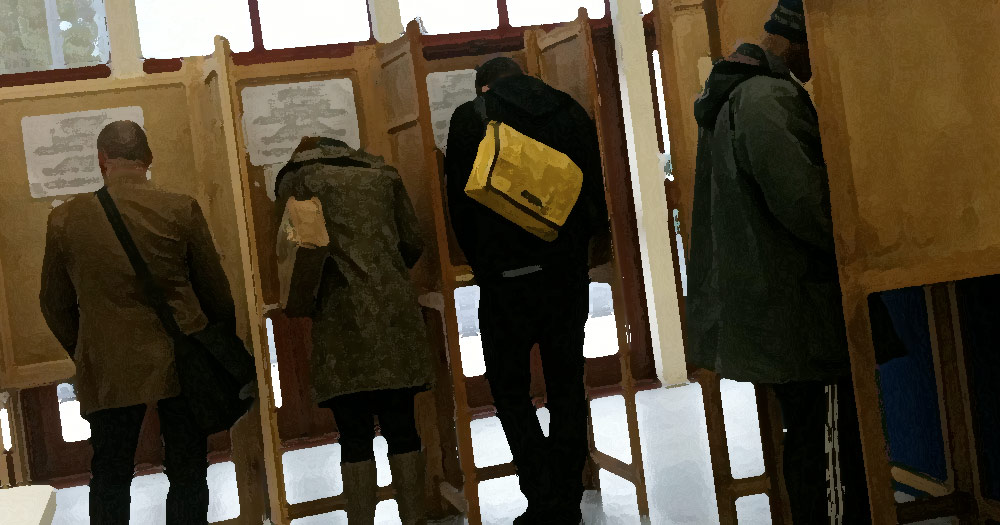
Last November’s biggest mistake? Colorado voters passing Amendment 71. It makes the Rocky Mountain State’s constitution exceedingly more difficult for voters to amend through the initiative petition process.

And more like it may be in the offing. Legislation is moving in Florida to require a 66.7 percent vote to amend the state constitution. Already, a 60 percent vote is required, but legislators remain fearful voters can muster that.

The Ohio Modernization Commission, a legislatively created mix of legislators and insiders, is recommending a new constitutional amendment to — you guessed it — make it tougher for voters to pass amendments. Future voter-initiated amendments must pass twice, by a 55 percent supermajority.

There are also efforts to weaken citizen initiatives in Arizona and Maine.*

The big money behind Colorado’s Amendment 71 told whopper after whopper to win. They pretended to love and revere the constitution. Finally, they put former Denver Broncos Super Bowl champion quarterback John Elway on television — spot after spot — telling voters the amendment “protects our constitution.”

But . . . from whom?

You see, politicians and special interests don’t have to amend the state constitution to spend money on themselves or their cronies. From their perch in the state capitol, they can do that with a simple statute.

But you and I need the ability to pass constitutional amendments. Why? Only through the constitution can we limit the power of those same politicians — the power of government. Legislators can overrule a mere statutory ballot initiative (and often do).

That’s what this battle is all about. Politicians mean to limit our power to limit theirs.

This is Common Sense. I’m Paul Jacob.


* Thankfully, South Dakota legislators defeated several bills aimed at making it tougher to place initiatives on the ballot.


Printable PDF


Categories
general freedom ideological culture initiative, referendum, and recall national politics & policies responsibility too much government

Adios, California?

Californians account for more than one of every ten Americans.

For now.

Three years ago, an initiative sought to split the mega-state up. Had that measure succeeded, the U.S. Congress would have decided whether to permit the Golden State to become six separate states — with ten more U.S. Senators.

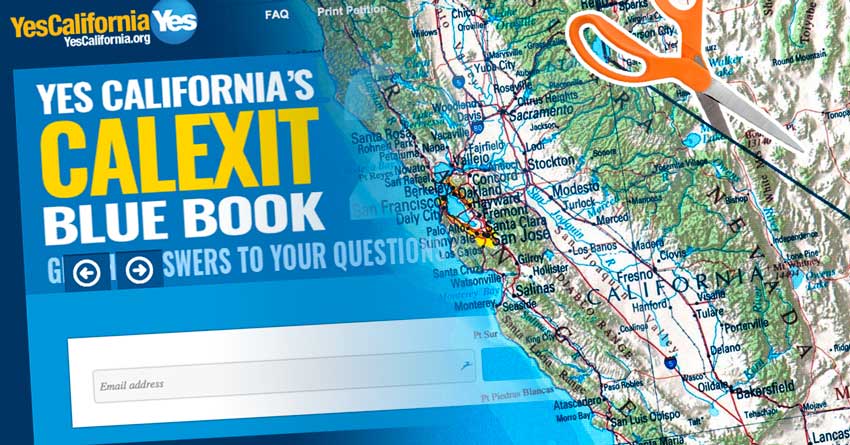
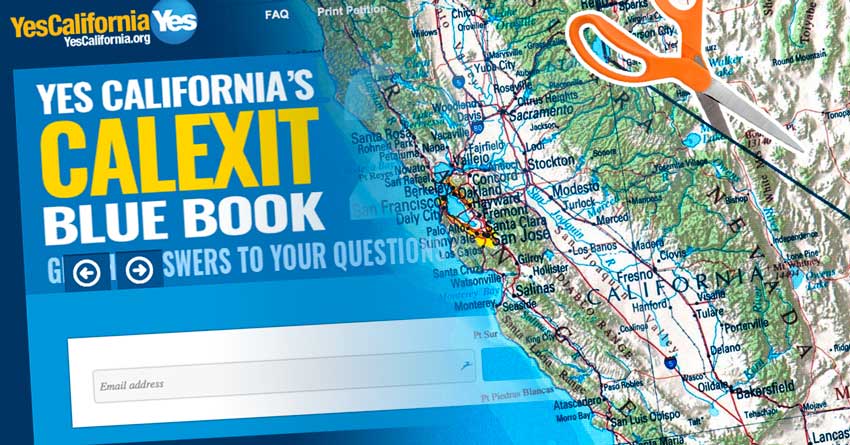
Now, a group called “Yes California” is petitioning for a 2018 ballot measure on leaving these United States altogether: Secession. “California could do more good as an independent country than it is able to do as just a U.S. state,” says its website.

Supporters argued in a recent Washington Post feature that California “subsidizes other states at a loss.” Indeed, it’s one of 14 states that get less money back from the federal government than paid in taxes.

And there’s Trump. Opposition to the president is palpable. California provided Hillary Clinton with a 4.3 million popular vote margin over Republican Donald Trump, 1.5 million more than her national margin.

“It’s understandable why the election of an evil white supremacist swindler as president,” wrote Zócalo Public Square’s Joe Mathews in the Fresno Bee, “has given the idea of California independence such currency.” Nonetheless, he opposes #CalExit as divisive and “not very Californian.”

Nationally, for partisan reasons, Republicans may cheer it, while Democrats shudder.

Me? I’m for self-determination.

But, remember: Northern Californians have been agitating to secede from the state since 1941. Those desires are picking up steam — especially with trepidation over whether the Oroville dam will hold. Folks feel unrepresented in the state capitol.*

And they are. Already 21 of the 23 northernmost counties have made declarations to form the State of Jefferson.

Let Californians decide . . . county by county.

This is Common Sense. I’m Paul Jacob.


* Note that Trump won by a landslide in the counties that would comprise Jefferson, our would-be 51st state.


Printable PDF


Categories
Accountability initiative, referendum, and recall local leaders

The Unfairness of Losing

Maine’s citizen initiative process is unfair, claims State Rep. Paula Sutton.

“[R]ural Mainers are left out of the equation,” Sutton tells readers of Knox County’s Village Soup, “and Portland dictates public policy for the rest of the state.”

Hmmm? Every Mainer eligible to vote currently has the equal right to decide ballot measures.

Her grievance appears to be that there are more urban voters than rural.

Last November, voters passed four of five issues, all opposed by Rep. Sutton. Still, losing at the ballot box is hardly prima facie evidence of “unfairness.”

“Unless we do something to fix the citizens’ referendum process here in Maine,” she nonetheless contends, “the state will continue to be an easy target.”

For what, exactly? Voting on issues people favor?

Mainers are “ripe to be taken advantage of by wealthy out-of-state special interests,” she complains, explaining that billionaire Michael Bloomberg “spent millions of dollars in his failed attempt to squash Mainers’ Second Amendment rights with Question 3.”

Yes, you read that right. Question 3 failed. Voters weren’t exploited.

Sutton has introduced legislation “to ensure rural Mainers are no longer being run over by wealthy liberal special interest groups.” Her bill requires petitions to qualify in each of the state’s two congressional districts instead of qualifying statewide. That makes it more difficult, but hardly changes the need to circulate petitions in urban areas.

Not forests and empty fields.

Rep. Sutton seems to understand her proposal won’t effectively thwart citizen initiatives, pledging to support further restrictions. That’s easier for politicians than permitting democracy and persuading people.

This is Common Sense. I’m Paul Jacob.


Printable PDF


Categories
Accountability government transparency initiative, referendum, and recall local leaders moral hazard

Rules for Rulers?

Politicians in Tampa, Florida, have forced citizens there to vote for term limits, and then vote to keep those term limits again and again — against attempts to repeal or weaken the limits. So I keep my eye out for news from the city.

Earlier this month, Mike Deeson, an investigative reporter with WTSP 10 News, Tampa Bay’s CBS affiliate, exposed Mayor Bob Buckhorn’s open violation of the city charter’s requirement that all department heads must be city residents. Buckhorn hired Sonja Little, now the city’s highest paid employee, to serve as his Chief Financial officer, and admits on camera that he promised her she would not have to move into the city.

“The question is,” the mayor explained, “do you want talent or do you really make the residency — she’s only about a mile away from the city border — the issue?” Buckhorn answers his own question, “I would rather have talent” . . . than follow the law.

In even slipperier fashion, Mayor Buckhorn has attempted to get around the clear, unequivocal wording in the charter by claiming Ms. Little has served as the “interim” Chief Financial officer for the last five years!

Reporter Deeson asks the operative question: “[I]f you’re going to ignore the residency requirement, what other parts of the charter should you just ignore?”

Deeson worries about provisions requiring competitive bidding, guarding against conflicts of interest and mandating term limits, which is “particularly problematic for a mayor who is in his second term and has to leave office when it’s over.”

On social media, Tampa residents are unloading on the mayor with numerous variants of: “This is truly what’s wrong with government.”

This is Common Sense. I’m Paul Jacob.


Printable PDF

Tampa, initiative, corruption, Mayor, Mike Deeson, Mayor Bob Buckhorn


Categories
Accountability crime and punishment initiative, referendum, and recall moral hazard national politics & policies

Stealing Now Unpopular

Civil asset forfeiture is stealing. So, why is it still happening?

Police seize boats, cars, houses and cash that they allege were used in the commission of a crime or were proceeds from the crime. Sometimes they simply take cash found on a motorist in a normal traffic stop, claiming it’s “drug money.”

Tragically, only 13 percent of forfeiture is criminal, i.e. involving a conviction. The rest is civil, wherein the person hasn’t been convicted of anything. Often not even charged.

When officials confiscate property without due process of law, it’s theft. The legal rationale government uses to snatch our stuff via civil forfeiture is a sick joke. Our property can be deemed “guilty” without enjoying our presumption of innocence. Instead, we have to go to court to prove our stuff is innocent.

Often officials negotiate a large cut, because hiring an attorney to get one’s money back might well cost more than the money itself.

The good news? People are becoming aware of civil asset forfeiture and overwhelmingly oppose it. A Cato Institute/YouGov poll found 84 percent of Americans against taking property without a criminal conviction.

While New Mexico and Nebraska have outlawed civil forfeiture, and some other states have sought to at least minimize its abuse, there is still significant pushback from police and prosecutors, who like getting all that dough. And who often have the ears of decision-makers.

The time has come to short-circuit the watered-down half-measure. Twenty-four states and a majority of cities enjoy the initiative process.

Let’s do it ourselves.

This is Common Sense. I’m Paul Jacob.


Printable PDF

Civil Asset Forfeiture, crime, drugs, marijuana, stealing, theft, police abuse


Categories
Accountability ballot access initiative, referendum, and recall

More Forced Registration

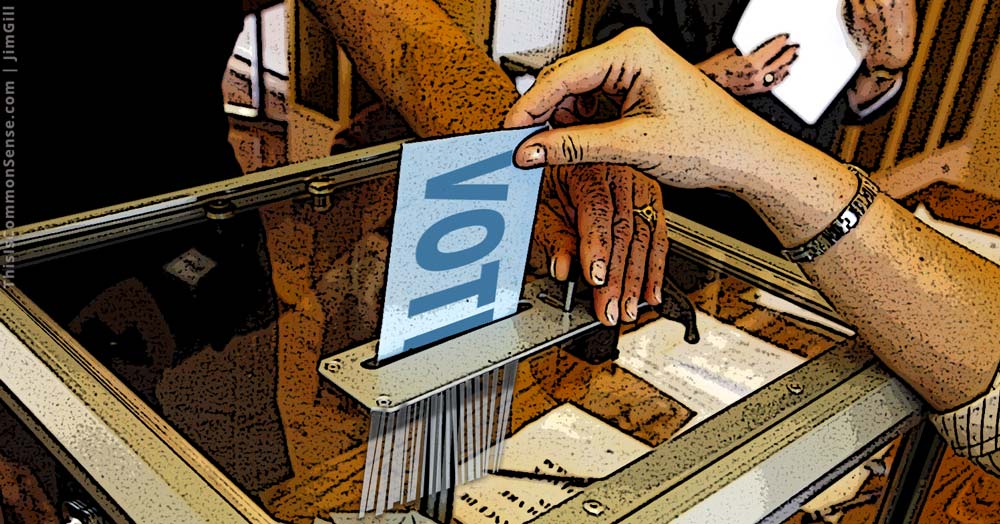
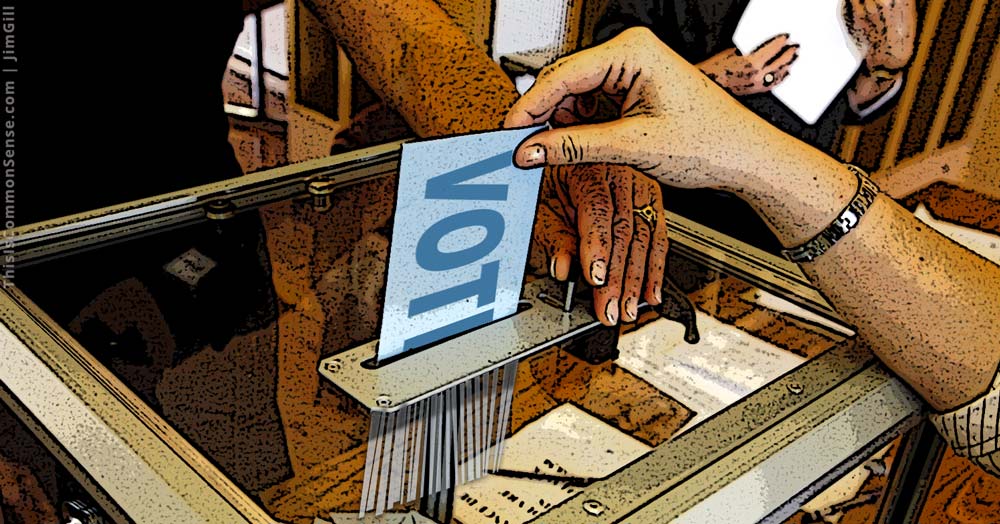
Voting’s a right, not a duty.

So voter registration and actual voting should be made easy. But I’m not for mandating that people vote, or for registering them involuntarily.

Which is why I oppose the Automatic Voter Registration Initiative (AVRI), an indirect Nevada initiative that state officials just announced has turned in enough petition signatures.

Now, you may not be familiar with this “indirect initiative” process. These are initiatives that first go to the legislature and then, should the legislature not pass them, appear on a later ballot (in this case, 2018’s) for voters to either enact or reject.

Currently, when Nevadans conduct business at the Department of Motor Vehicles, they’re asked if they’d like to register to vote. If they opt in, i.e., say “yes,” then the DMV transmits their information to the Secretary of State to be added to the voter rolls.

However, the new initiative would automate the process, so every person’s information gets whisked over to the Secretary of State, whether said person wants to be registered or not. It reads: “Unless the person affirmatively declines in writing,” he or she “shall be deemed to be an applicant to register to vote.”

Declining registration must be “in writing”?

A simple, “No, thank you,” won’t suffice?

Now, I understand: should the AVRI become law, the seriousness of the injury Nevada’s government would inflict on those seeking to remain unregistered admittedly pales in comparison to the Japanese internment camps during World War II, the Trail of Tears, civil asset forfeiture abuse, etc., etc.

But still. Assert a simple truth: people have a right to register and vote, which entails a right not to register and not to vote.

This is Common Sense. I’m Paul Jacob.


Printable PDF

vote, election, registration, automatic, illustration


Categories
initiative, referendum, and recall nannyism political challengers Regulating Protest

Irony in Spain

When I arrived at the Donostia-San Sebastián City Hall, in the beautiful Basque Country of Spain, I wondered what all the ruckus was about. There were hundreds of noisy protesters waving long, colorful banners.

My goodness, how interesting to witness acts of political agitation on the public square in another country, I thought. Then, atop the crowd some 20 feet opposite the protest, I spied Daniel Schily, a key activist, funder and cheerleading motivator of the direct democracy movement in Germany.

After greeting, he drily brought me up to date: “They’re protesting us.”

“No, really,” I asked, “what are they protesting?”

“Really,” he said, seemingly sincere. “They’re protesting the Global Forum.”

I stood there dumbstruck, for a moment, before I noticed one sign written in English: “Global Forum on Modern Direct Democracy,” with a very large, black, bold question mark beside it.

Schily wasn’t kidding.

In almost no time, I met up with friends from Bulgaria, South Korea, Uruguay, Chile — fellow activists, all. We had gathered in this “cultural capital of Europe” precisely because of our belief that all people have a right to not only speak out, but effect change, through ballot initiatives and referendums.

It turned out that the protestors hailed from the Satorralaia neighborhood movement. Their beef? Even after gathering nearly 9,000 signatures on petitions requesting a public referendum on a proposed through-station for the mass-transit metro system project, the city government shrugs.

The same city council that helped organize our forum, ignoring citizens while claiming the city is “The World Capital of Democracy.”

Government. What more proof do we need that it could use more checks and balances from the people themselves?

This is Common Sense. I’m Paul Jacob.


N.B. This is a Common Sense digest version of Paul’s weekend column. For more information, see Saturday’s and Sunday’s posts. Paul was in transit home when this entry was being prepared for the Web; he may offer further reports from his trip in the near future.


Printable PDF

Spain, Paul Jacob, Common Sense, initiative, democracy


Categories
Accountability general freedom initiative, referendum, and recall moral hazard national politics & policies political challengers term limits too much government U.S. Constitution

Fear and Freedom

“If Libertarian Gary Johnson doesn’t win the presidency,” I posted to Facebook last Monday, “I’m leaving the country.”

Well, Johnson didn’t win. And I wasn’t kidding. I’m writing this from a Parisian café.

Of course, I was also tongue-in-cheek, since — spoiler alert! — I am coming home next week.

This week, I’m speaking at the Global Forum on Modern Direct Democracy in San Sebastián, Spain — a gathering of pro-initiative folks from all over the world. We want people’s votes to count, even if we disagree with their candidate or issue.

Which brings us back to Donald J. Trump’s surprise victory. Protests have broken out in several cities — some violent. And some folks say they’re scared of what Trump may do as president. Sure, one can snicker at these fearful responses as liberal whining. And to the extent they’re talking about university professors canceling tests and coddling “traumatized” students . . . well, no argument here.

Still, I don’t just sympathize when I hear people fear a politician with power, I empathize.

For a long time, I’ve been worried by out-of-control presidential power — from unconstitutionally making laws through executive orders to making war without any real check on that power. Scary. Whether that president is George W or Obama or Hillary or Trump.

Government is a monopoly on force. Therefore, by definition, government is frightening.

Democracy is often an antidote to tyranny, a check on power, but not always. That’s why folks who truly appreciate democracy believe in individual rights that transcend any vote-getting public decision mechanism.

Scared by President-Elect Donald Trump? Protect yourself: enact greater limits on government.

This is Common Sense. I’m Paul Jacob.


Ask the next question.

Questions Answered:

Is fear a natural byproduct of government?

Which presidential powers lack sufficient checks and balances?

What is more important: individual freedom or democratic decision-making?

Is democracy a check on power or an enhancement?

The Next Question:

How do we go about creating greater limits on political power?


Printable PDF

Protect Yourself, limited government, meme


Categories
Accountability ballot access general freedom incumbents initiative, referendum, and recall national politics & policies political challengers responsibility too much government U.S. Constitution

Votes Without Poison

Strange election. So . . . round up the usual suspects!

Immediately after Hillary dried her tears and conceded, out came the Tweets, then the analyses: the “third parties” are to blame!

Over the weekend, I focused* on one such election post-mortem. The basic idea is not altogether wrong: minor party efforts together may have cost the Democrat her Electoral College advantage this time around, just as Nader’s Green Party run spoiled Al Gore’s bid in 2000 and several past congressional races have been spoiled for the GOP by Libertarians.

Is there a problem here? Yes. But do not blame the minor party voters. It’s the way we count their votes that is “problematic.” The current ballot-and-count system turn voters most loyal to particular policy ideas into enemies of those very same ideas.

When we minor party voters turn away from a major party — usually because said party tends to corrupt or betray our ideas, or make only small steps toward our goals — our votes aren’t so much wasted as made poisonous.

Because the candidate least preferred may prevail.

But there’s a way out: On election day, voters in Maine showed how to cut through the Gordian Knot. Voting in approval for Question 5, Maine now establishes “ranked choice voting.”

Under this system, you don’t “waste” your vote when expressing a preference for a minor party candidate. You rank your choices and, if your first choice proves unpopular, your second choice (or maybe your third) gets counted. So you don’t “poison” your cause.

Republicans and Democrats have more than enough reason, now, to adopt ranked choice voting across the country.

This is Common Sense. I’m Paul Jacob.


* See yesterday’s links page to my weekend Townhall column for the basic references. But there were many, many articles on the Minor Party Effect, including a skeptical one by Sasha Volokh’s.


Ask the next question.

Questions Answered:

What is the effect of minor parties on major party outcomes?

What causes those effects, voter intent or something else?

Is there a way to prevent this, short of further sewing up the ballot access system to minor parties?

The Next Question:

What might our elections look like if people spent more time discussing issues and ideas … and less about class, culture wars, and sex crimes?


Printable PDF

ranked choice, vote, voting, democracy, clown, illustration


Categories
Accountability general freedom initiative, referendum, and recall local leaders media and media people nannyism national politics & policies

Are We Special?

“Cringe-worthy,” said Kyle Clark, co-anchor of 9NEWS in Denver. He was mocking the 10-foot tall, carved, wooden Trojan Horse replica that Amendment 71 opponents are wheeling around the Rocky Mountain State.

Clark admits that Amendment 71 “would make it harder to change Colorado’s constitution,” but doesn’t seem to have any clue just how much harder.*

“Those opponents with their Trojan Horse want to paint 71 as a sneaky power grab by big money interests from out of state,” Clark continued. “Funny, though, when you find out who paid for their horse.”

Wait . . . this is BIG: Who paid for the horse?

“It’s an in-kind contribution from Citizens in Charge Foundation. They’re a group that protects the initiative process around the country. . . . based out of Woodbridge, Virginia,” replied an Amendment 71 opponent.

Hey, that’s my group!

“Amendment 71 might be a Trojan Horse funded by outside interests,” Clark concluded, but it’s “illustrated by the Trojan Horse funded by outside interests.”

Cute . . . but . . . ?

Does Mr. Clark seriously think that (a) an organization dedicated to making the ballot initiative process accessible to all, with no other interest or business before state government, providing a vehicle and a trailer to carry a wooden horse across the state is equivalent to (b) a multi-million-dollar paid media barrage funded largely by oil and gas interests with lucrative interests before state government?

Citizens in Charge Foundation is honored to work with Coloradans to save their initiative rights by defeating 71.

Speaking of interests and who’s paying . . . 9NEWS has received the better part of a million dollars in ad revenue from the interests supporting Amendment 71.

Compared to a peek at a wooden horse from opponents.

Kyle Clark didn’t mention that.

This is Common Sense. I’m Paul Jacob.


P.S. Please help save Colorado by making a contribution right now.


*Coloradans who have actually qualified ballot initiatives say Amendment 71 would kill the process for all but the wealthiest special interests.


Trojan Horse Trails in Colorado


Printable PDF

Trojan Horse, Colorado, Amendment 71, initiative, referendum, Citizens in Charge, Paul Jacob,