Categories
ideological culture national politics & policies

An Ebola Education

Sen. Mark Pryor (D-Ark.) faces a tough re-election contest. Following his campaign, MSNBC’s Kasie Hunt inquired: “Do you think the Obama Administration has done an appropriate job handling the Ebola crisis?”

The senator responded with the universal politician distress call: “Uuuhhhhmmmmmm.”

Then Pryor stumbled ahead: “I would say that . . . it’s hard to know, ah, because, um . . . I haven’t heard the latest briefing on that to know all . . . [inaudible] can somehow read the paper and all. My impression is that we have people over there both from CDC and other medical-type people and even some engineers to try to build . . . um, you know, medical facilities. That’s what they need over there; they need the medical infrastructure.”

When Hunt asked whether the Administration had been “aggressive enough,” the senator returned to: “Uuhhhmmmmm. Again, I’d have to see the latest numbers.”

“Oh my god,” uber-liberal host Mika Brzezinski reacted to Pryor’s stumbling. “She asked a gentle question . . . and the guy just collapsed.”

“What was that, Kasie?” laughed Joe Scarborough. “Why were those questions so hard for the senator to answer?”

“I was a little surprised . . .” Kasie chuckled, noting that Sen. Pryor had earlier run a ludicrous TV spot accusing his Republican opponent, U.S. Rep. Tom Cotton, of voting “against preparing America for pandemics like Ebola.”

One might think the incumbent senator actually followed and cared about the effort to combat a horrible disease that could kill untold people. Instead, it appears he knows Ebola only as a brickbat with which to slug a political opponent in hopes of staying in power.

This is Common Sense. I’m Paul Jacob.

Categories
general freedom ideological culture U.S. Constitution

Principled, and Un-

Can one “rise above principle”?

Aren’t most (all?) who think they “rise above principle” actually sinking below it?

Economist David Henderson called our attention to this notion in reference to legal theorist Richard Epstein’s call for a war against ISIS. On AntiWar.com, he challenged Epstein’s support for the president’s war on ISIS on constitutional grounds, and wondered why constitutional scholar Epstein hadn’t addressed this concern.

Then Epstein addressed it — using that curious phrase “rise above principle.”

Henderson’s response? Characteristically astute:

In which times of crisis do you need to “rise above principle?” What are the criteria for doing so? If you don’t specify criteria, then I think you’re saying that anything goes. If you do specify criteria, don’t those criteria amount to a principle? In that latter case, are you really rising above principle?

It’s not just a matter of constitutionality, though. Just war requires coherent goals. And a debate and vote in Congress over going to war against ISIS could help establish those goals.

Clearly, the continuing interventions in the Islamic East have suffered from massive confusion. A year ago, President Obama called for regime change in Syria and wanted to bomb government forces; today, we are bombing ISIS, the main opposition to that same government.

Sinking below principle on matters of warfare is the least excusable abandonment of law. It’s the suppression of hasty warfare — individual, group, or national — upon which the rule of law rests. Upon which civilization rests.

There’s no “rising above.” There’s no acceptable abandonment. There is only sticking to principle upon the issues that matter most.

This is Common Sense. I’m Paul Jacob.

Categories
general freedom ideological culture

How to Occupy Hong Kong

The fight for freedom doesn’t stop at the border.

Hong Kongers, we are with you.

Your protest against continued tyranny by mainland China is a just cause. The Communist Party of China may no longer be in Marx’s pocket, but its members remain greedy and dictatorial and oppressive.

Leung, the governor of Hong Kong, refuses to step down. Tyrants do cling to power. (No term limits for them!) But the people have every right to demand his ouster under a principle established in our own revolution: Government must rest upon the consent of the governed.

I have no idea how this will all turn out. Ever since the Tiananmen protests, a generation ago, I’ve harbored hope: a freer future for the Chinese. But I know they are up against a juggernaut, an extremely entrenched exploiter class. The Tiananmen protests were violently put down, suppressed. Will Hong Kong’s be?

I think the people of Hong Kong know what they’re up against. All Chinese people know how corrupt and dangerous their government is. But the details, the exact history of the crimes? Not so much. Kept under wraps. Still, the people of Hong Kong developed a taste for freedom under the Brits. If not a taste for democratic elections. Now they are demanding both electoral democracy and democratic freedoms.

The protesters “occupying” Hong Kong have American analogues. But are they “Occupier” or “Tea Party”?

They aren’t demanding socialistic levels of more government. And they aren’t trespassing, or committing crimes. And they pick up after themselves.

That’s the way to “occupy” a city: For freedom, responsibly.

This is Common Sense. I’m Paul Jacob.

Categories
free trade & free markets general freedom ideological culture

The Uber Rebellion

Customers in Germany and elsewhere have flouted irrational attacks on the popular ride-sharing service Uber.

As I have explained before, Uber’s software lets passengers and drivers connect in a way that bypasses regularly regulated taxicabs. Cabbies don’t necessarily oppose the innovation. Many see Uber’s app as a nifty way to get customers. And, of course, many riders see it as a nifty way to get rides.

But taxi dispatchers? Well, that’s another story.

At least it is in Germany, where an organization for dispatchers called Taxi Deutschland has kvetched that the San Francisco company lacks the Necessary Permits to do electronic dispatching in Deutschland. Thanks to TD’s loud complaints, a German court issued a temporary injunction against Uber, prohibiting it from conjoining ride-seekers and ride-givers in happy synchrony.

Uber decided to keep operating in the country anyway, despite the threat of huge fines.

They’ve gotten lots of moral support. In response to the injunction, customers quietly but firmly told regulators “Laissez nous faire!” — a.k.a. “You’re not the boss of me!” — by doubling, tripling and even quintupling demand for Uber’s app. Matthew Feeney of Cato Institute points to jumps in signups in the days following the court’s order: in Frankfurt a 228 percent jump, Munich 329 percent, Hamburg 590 percent.

Last July, in the U.K., Brits surged their signups eight times over after protests against the company.

Keep up the good work, rebels.

This is Common Sense. I’m Paul Jacob.

Categories
ideological culture media and media people

Goodbye, Kittens and Puppies

The global warming won’t kill us; we’ll be done in by the suffocating silliness of overheated alarmist “science.”

I’m provoked to this proposition by the advent of Harvard Prof Naomi Oreskes’s new book The Collapse of Western Civilization, in which she and Erik Conway “report,” from the vantage point of 400 years hence, that all Australians have gone gurgling into the climate-change whirlpool.

Also all kittens and puppies. Their extinction “occurred” in 2023:

The loss of pet cats and dogs garnered particular attention among wealthy Westerners, but what was anomalous in 2023 soon became the new normal. A shadow of ignorance and denial had fallen over people who considered themselves children of the Enlightenment.

I know what you’re saying. You’re saying, “Oh Paul! Science fiction writers project all kinds of wild dystopian scenarios. You can’t treat these as serious attempts at evidence-based, logic-based, purely plausible extrapolation! We don’t think time travel is plausible. Does that mean we shouldn’t read H.G. Wells? Come on!”

Yes but . . . it’s not me claiming that Oreskes’s claims are “all based on solid science.” She’s claiming this. She’s the one averring that the universal demise of cuddly pets is grounded in “scientific projections from the Intergovernmental Panel on Climate Change.”

Hmm. Hold on. Perhaps Oreskes is indeed conceding that her tale is mere groundless fantasy, if the politicized mulch that is the IPCC’s annual report is what she considers unassailable support for her ludicrous scenario-spinning.

I stand corrected, Dear Reader.

This is Common Sense. I’m Paul Jacob.

Categories
ideological culture

The Latest Sizzling Controversy

Friends and foes of bacon usually get along fine in this world. But a poster at Front Post Forum couldn’t abide a sidewalk sign posted by one Sneakers Bistro and Cafe that said “Yield for Sneakers Bacon.”

Did somebody say “bacon”?

“Given the large number of Muslim families in Winooski,” complained the complainer, “as well as many others who do not eat pork … it seems unnecessary for this insensitive business sign to be at the city’s main crosswalk.” Oy, the unnecessary insensitivity!Keep Calm and Carry On

Winooski, Vermont, cafe owner Marc Dysinger replied with mollifying courtesy and forthwith removed the sign. The unnecessary and insensitive cave-in failed to extricate him from controversy, though, provoking as it did a spattering backlash by those of pro-bacon, pro-toleration-of-bacon-promotion sensibility.

HotAir blogger Mary Ham suggests that such capitulation can only embolden unreasonable complainers eager to impose their tetchy sensibilities. “If the word bacon can be deemed offensive by one person — a single member of one’s community — and thus eliminated from the public discourse, there will be plenty of other formerly innocuous words deemed the same, and then exactly how free is your speech?”

As slippery slopes go, this one isn’t quite a toboggan slide. Not yet. But silly, trivial precedents can lead to slightly less innocuous precedents, and so on. Therefore, just to be on the safe side, all those in favor of bacon say: “Bacon!” Maybe even on a yard sign.

And don’t let anybody cow you into silence about it.

This is Common Sense. I’m Paul Jacob.
Categories
free trade & free markets ideological culture

Unsustainable Pseudo-thinking

One of the fashionable thought-killing words offered by the cliché-recycling movement is “sustainable.”

In the common tongue, as spoken by many, many environmentalists, this term implies that we will run out of all our stuff pretty soon unless everybody on the planet (except maybe Al Gore) is put on a strict low-consumption regimen.

The environmental movement has adopted the color “green,” but “drab-gray” is what comes to mind when I’m told that we must treat economic goods as existing in a fixed quantity, only to be skimpily apportioned (by regulators), never massively expanded (by profit-seeking producers, as they’ve done whenever free to do so).

In fact, as economist and Cafe Hayek blogger Don Boudreaux argues in his article “Unsustainable Platitudes,” market actors tend to swiftly counteract shortages that occur in a market context. When supply of a good slumps for whatever reasons, prices for it rise. Rising prices yield predictable effects. That is, they

  • nudge customers to economize; and
  • entice profit-seeking producers and vendors to create more of the good, or
  • provide good-enough (or better) substitutes for it,
  • or both.

This is Economics 101, teachable in one lesson.

The Wall Street Journal saw fit to quote Boudreaux, provoking the ire of enviro-cliché aficionado Joshua Holman. He contacted Boudreaux to accuse him of “[emitting] word pollution . . . to block the work of the many activists struggling to save our planet from overuse, exploitation and destruction.” In reply, Boudreaux suggests that reality “cannot be grasped, and it certainly cannot be improved, with slogans.”

Slogans do have their place. They’re just not a sustainable substitute for reasoning.

This is Common Sense. I’m Paul Jacob.

Categories
First Amendment rights general freedom ideological culture

Registering Dissent in Russia

Russian politics — does it consist in anything but the progressive unraveling of what modest liberalization of civic life the Russians benefited after the crackup of the Soviet Union?

The latest assault on liberty? The government targeting of Russian bloggers. The most popular ones — those with 3,000 or more daily readers — must now register with the government or risk being shut down. As Bloomberg’s Ilya Khrennikov puts it, “Russian President Vladimir Putin is taking names. Potentially thousands.”

The registrants must supply real names, real addresses.

Mother Russia says it’s doing this to combat inaccurate or defamatory information — i.e., opinions it dislikes; i.e., any too critical of the government. Putin already has authority to shut down “extremist” web pages sans judicial oversight. The new law tightens the noose.

It seems there’s little we can do about this in the West except express our sympathy for Russians fighting the commissars.

Well, one other thing, at least; and not so little. Western tech firms can refrain from abetting such repression the way Yahoo did when, several years ago, it turned over user info on Chinese dissidents Wang Xiaoning and Shi Tao to the Chinese government and thus enabled their imprisonment. Facebook, Google+ and other hosts of Russian-language blogs can flatly reject demands to censor or delete these blogs — or to supply the Russian government with identifying info on the authors.

Obviously, predictions of the end of history have indeed proven premature. We’re not all liberal democrats now.

This is Common Sense. I’m Paul Jacob.

Categories
general freedom ideological culture

You Own You, I Own Me

There’s been a lot of talk about Robert Draper’s New York Times article on a possible “libertarian moment.” On Townhall, “last weekend,” I focused on the partisan political aspect of the movement. There was a lot of curious stuff in the article, and I haven’t seen anyone comment on one of its stranger passages.

Call it a moment of culture shock.

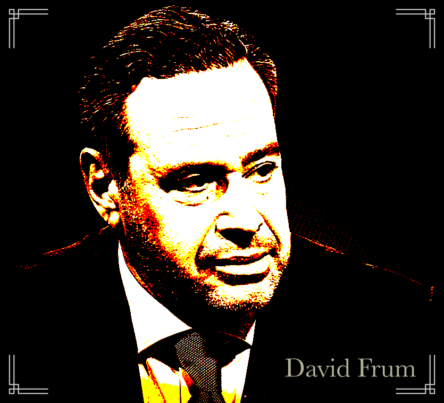
“What does that mean, ‘I own myself?’ ” David Frum, a former speechwriter for George W. Bush and Republican commentator, sputtered in exasperation when we spoke later. “Can I sell myself? If I can’t, I don’t own myself.”

Taken at face value, one could simply answer Frum by mentioning that in olden times people could sell themselves — into slavery.

Or one could make an extended political point. “Haven’t we all sold ourselves long ago?” That might be unnerving.

But the informed answer is this: “We can’t sell ourselves because our ‘self-propriety’ (as Richard Overton put it long ago) differs from other kinds of ownership. Our self-ownership is inalienable. That’s why it’s so important.”

It’s like this: You own you, I own me — we are free.

It turns out, Mr. Frum, that this “inalienability” idea was central to much discussion of rights at the founding of our country. Funny you don’t seem to know anything about that.

This is Common Sense. I’m Paul Jacob.
Categories
ideological culture

The Inequality Problem

Ah, the Paul Krugman Problem! How does Nobel Laureate economist-cum-New York Times progressive-blogger come to his conclusions?

The other day, the eminent Scott Sumner noted — in “The power of wishful thinking?” — that in the space of one year Krugman seemed to gain a great deal of certainty about how vital it is to reduce inequality.

Sumner quotes Krugman from a year ago, when he frankly admitted that he’d like to agree with Joe Stiglitz’s thesis about inequality, but just wasn’t able to persuade himself.

Unfortunately, Krugman hasn’t given us a lot of reason to follow his “lead,” his new-found faith in Stiglitzian equality. Sumner cites a possible “inspiration” for Krugman’s new tune: Krugman’s employer, the New York Times, has, as editorial policy, shifted leftward on such issues. And then Sumner waxes philosophical:

Sometimes an economist will change his view on a single issue because of some new empirical study (although that actually doesn’t happen as much as you’d think, or as much as you might like). But what about when an economist suddenly swings sharply to the left or right on a whole range of unrelated issues?

Many people do go through radical conversions; you can find interesting conversion testimonies of a religious nature, if not so many in political economy.

As for me, the subject of inequality continues to fascinate, like picking at a scab.

I suspect that rising inequality is caused by the very institutions that Paul Krugman regards as bedrock: institutions that redistribute money from one group to another; institutions that regulate behavior for the benefit (we’re told) of the worse off; institutions altogether “progressive.”

Surely there would be more downward mobility for the rich and upward mobility for the poor in a freer society than in a more Krugman-approved society.

This is Common Sense. I’m Paul Jacob.