Categories
ideological culture national politics & policies

A New Speaker Conjures

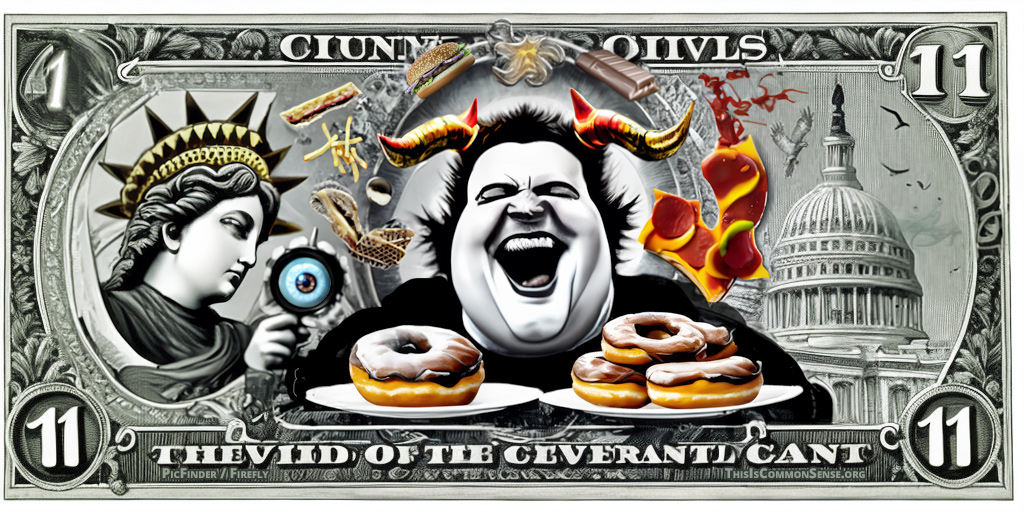
The new House Speaker was a dark horse in the mad rush to fill the position vacated after Kevin McCarthy’s ouster in a historic political play. But Mike Johnson (R.-La.) appears to be a thoughtful man, known more for his prayers than backstabbing, and sporting an interesting set of principles. They are listed on his congressional web page; he calls them the seven “core principles” of conservatism:

  1. Individual Freedom
  2. Limited Government
  3. The Rule of Law
  4. Peace Through Strength
  5. Fiscal Responsibility
  6. Free Markets
  7. Human Dignity

Inspiring, but the devil can bog us in details — under each rubric his elaborations sound more like fantasied ideals than anything like current practice. And for a man who got ahead by having “no enemies,” any real advancement would hardly conjure up consensus and comity.

Johnson acknowledges current government failure — at least in his fifth principle, which he explains entirely in terms of political fault: “Because government has refused to live within its means, America is facing an unprecedented debt and spending crisis. Federal debt now exceeds $33.5 trillion, and our current fiscal path is unsustainable and dangerous, jeopardizing our nation’s economic growth, stability and the security of future generations.” He goes on to express a congressional “duty to resolve the crisis.”

Yet, only standard Republican talking points are offered as back-up, with zero acknowledgment of the bipartisan difficulty of reducing spending even a smidgen.

Truth is, each of his principles is honored by the federal government only in the breach. While we may hope and pray that the new Speaker takes all of these serious enough to work to change course, we have to wonder: Does he have a prayer? 

This is Common Sense. I’m Paul Jacob.


PDF for printing

Illustration created with Firefly and PicFinder

See all recent commentary
(simplified and organized)
See recent popular posts

Categories
education and schooling ideological culture sports

Un-Sportsmanlike Conduct

Tonight, the undefeated Dukes of James Madison University will travel to play the Thundering Herd of Marshall University in a Sun Belt Conference college football game. My youngest graduated from JMU, so I feel heavily invested in the team. 

Duuuuukes!

One might think this sport and spectacle a welcome relief from politics — and surely it is — but not entirely. Because, of course, these great college football programs are attached to public universities financed by us, by our tax dollars. 

The problem? As The Athletic put it recently: “For the second consecutive year, James Madison looks like one of the best teams in the Group of 5. And for the second consecutive year, the Dukes are ineligible for the postseason.”

The Group of 5 are the five best football-playing conferences after the best five conferences known as the Power-5. That’s pretty impressive — especially considering this is only the second year since James Madison made the jump from the second division into the first division of football-playing schools of higher yearning and earning. 

JMU is in the big leagues; it can now play for the national championship. Well, not now. Again, this year, like last year, JMU’s football team is banned from playing in a bowl game or being declared the champion of the conference . . . even though last year they did win the conference . . . except for the rule that says they cannot win the conference.

This year, the Dukes are 6-0 and could perhaps go undefeated. What if College Football’s Magic Computers pick them as among the best? They would still be denied a chance to compete.

Why? Well, those are the rules the colleges and conferences have agreed on. The rationales don’t hold much water. It seems like a hazing ritual holdover to me. 

But, of course, the universities can do whatever they want.  

And suffering the harsh two-year punishment is not so terrible for the coach who will possibly have a decade-long career, or the university that will play on in perpetuity. 

All the unfairness is placed on the shoulders of the student athletes. Denied the conference honors and the post-season play they deserve, these unpaid players who’ve earned millions for their schools have at least learned a lesson. When it comes to sports and money, the kids come last. 

This is Common Sense. I’m Paul Jacob.


PDF for printing

Illustration created with PicFinder.ai

See all recent commentary
(simplified and organized)
See recent popular posts

Categories
folly ideological culture

Bill Gates Wants to Bury Trees

The latest plan from one of the world’s most annoying billionaires is to cut down trees and bury them.

It’s part of the “thinning” controversy.

The subject? Forest management. 

In the old days, human beings cleared forests or kept forests and harvested from them (for firewood, fungi, and fauna) on an ongoing basis. And, periodically, nature would swing around and forests would burn — a story as old as the hills, forest fires being part of the natural cycle. 

But when humans use forests for all sorts of things, but most especially harvesting building material (lumber), we have to take some control of the natural cycles. Forest thinning — cutting and removing some trees and leaving the rest — is a key silvicultural practice.

Some environmentalists have objected to this practice on the grounds that Nature Is Good and Sacred, with silviculturalists generally arguing that without thinning, forests become tinder-boxes, ripe for runaway fires in which forests are destroyed, value is lost, and people die.

A recent article in The Epoch Times covers some of this. I am not qualified to adjudicate the ecological disagreements. But Bill Gates pushing the thinning of forests not as a means of harvesting lumber or as a means of reducing forest fires, but as a way of sequestering carbon, seems loopy: “Through his foundation Breakthrough Energy Ventures, Mr. Gates is a part of the $6.6 million seed investor pool backing Kodama Systems in its proposal to remove trees in California’s fire-challenged woodlands and bury them in Nevada to sequester carbon dioxide (CO2).”

I would prefer sequestering that carbon in housing, which we need more of, not less.

But Gates has his eyes on atmospheric CO2 levels, not helping the poor in America.

This is Common Sense. I’m Paul Jacob.


PDF for printing

Illustration created with Firefly and PicFinder

See all recent commentary
(simplified and organized)
See recent popular posts
Categories
ideological culture

Amber Ebony Insanity

Paul McCartney and Stevie Wonder had a dream that ebony and ivory would live together in perfect harmony, like the keys on a piano keyboard. If the keyboard can do it, “oh Lord, why don’t we?”

Agreed, let’s do that. But not everybody wants to. And out in California, it is once again being confirmed that history is not a steady march into the light. Sometimes we retreat, and in the silliest ways.

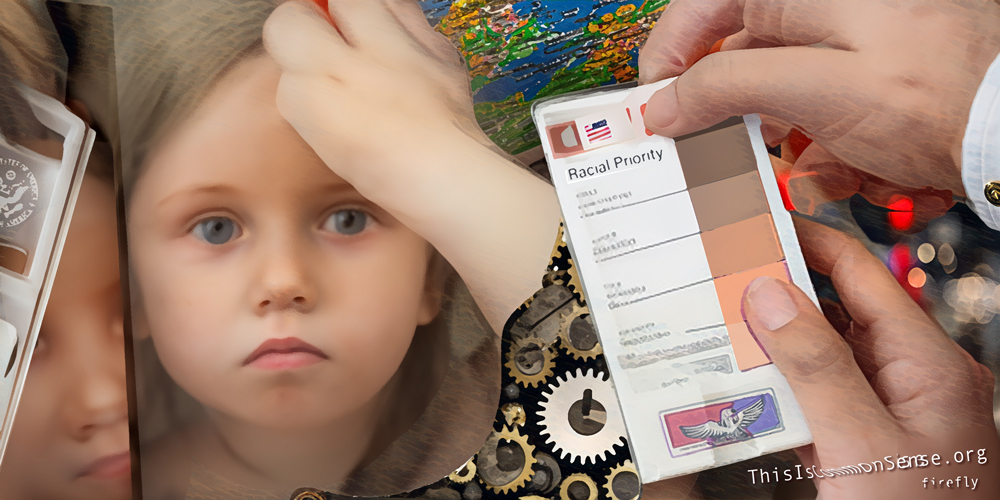
The state has just instituted an amber alert system exclusively for missing black kids called ebony alert. The reason, according to the state senator behind the legislation, Steven Bradford, is that “Our black children and young women are disproportionately represented on the lists of missing persons. This is heartbreaking. . . .”

How will an ebony alert address this in ways an amber alert does not? Will black kids no longer be kidnapped or be more easily found if only there’s a racially divided alert system?

There’s no rhyme or reason. The reporting details how many black kids went missing in 2022, the percentage of missing persons who are black, etc. But it’s all a non sequitur. There’s no explanation of how having an ebony alert will, by itself, provide even one additional benefit. 

If the amber alert currently functions imperfectly and might be improved, this can obviously be done without resorting to racial segregation.

Sen. Bradford says: “Something is better than nothing.”

Senator, that’s true only when the “something” makes sense.

This is Common Sense. I’m Paul Jacob.


PDF for printing

Illustration created with Firefly

See all recent commentary
(simplified and organized)
See recent popular posts
Categories
crime and punishment ideological culture media and media people

Why Criminals Commit Crimes

Is it a mystery?

“I really think if we can identify the ‘why,’ especially amongst the juveniles, we might be able to change our approach on how to slow this down,” says Carlos Heraud, an assistant chief at the DC police department.

Along with other crime in Washington. D.C., carjackings are up. Why?

Some people choose to be criminals. And some policymakers choose to aid and abet them.

It’s a matter of incentives and disincentives, but also choices and character. 

Since different people react differently to being born into poverty — or being disrespected, being peer-pressured, being bored, being fired — we cannot simply say that criminals are created by difficult circumstances.

Most do not become thugs and hoodlums.

Some who make criminal choices pull back and determine to do better. Others commit offenses forever. Chief Heraud and D.C. mayors and lawmakers should heed the insights of Stanton Samenow’s Inside the Criminal Mind. Although criminals make excuses for themselves and latch onto the excuses made for them by others, they know they’re responsible for their actions.

But while circumstances don’t create the criminal mind, circumstances can abet crime. For example, if you make it easier for criminals to get away with assault and theft, they’ll likely commit more assaults and thefts.

The government of our imperial capital makes it hard for potential victims to arm themselves, easy for criminals who are “caught” to walk away. If you’re a criminal operating in a town like that, it’d have to be encouraging to receive by this kind of encouragement?

After all, it’s not a question of bad incentives incentivizing all to be wicked. The effects can be seen on the margin, among those most likely to be induced by corrupt incentives, or to not be dissuaded from criminal action by reduced disincentives.

No great mystery.

This is Common Sense. I’m Paul Jacob.


PDF for printing

Illustration created with PicFinder.ai

See all recent commentary
(simplified and organized)
See recent popular posts
Categories
general freedom ideological culture international affairs

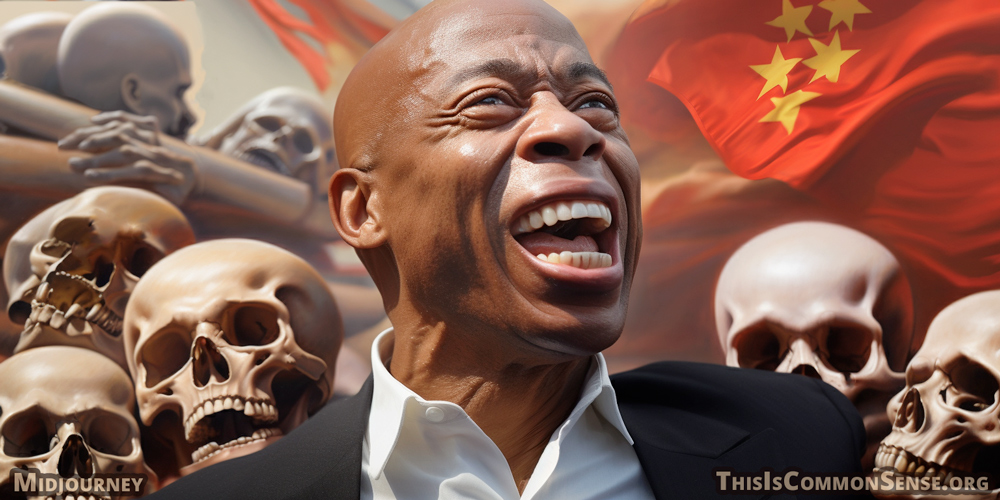
America’s Mayor Celebrates Communism

The American political tradition is not communist. It is anti-totalitarian. So we don’t expect our political leaders to cozy up to the Chinese Communist Party (CCP).

One would never want the mayor of Podunk, let alone New York City, to attend a flag-raising ceremony to celebrate the 74th anniversary of the founding of the People’s Republic of China, a brutal totalitarian dictatorship.

But that’s just what New York City Mayor Eric Adams did on October 1.

Now, Adams didn’t tell the Chinese Communist Party officials and others attending what a fan he is of the Chinese government’s wide-scale and unrelenting repression and murder, but his very presence implied acceptance of the Chinazi regime: Hey, you made it. Seventy-four years! Good for you guys.

A CCP-PRC ceremony conducted to commemorate the CCP founding of the PRC is not about being nice to Chinese people or celebrating a vague diversity. If you go there in an official capacity to glad hand Chinazi officials and wave the U.S. flag along with the Chinese flag, you are sanctioning the Chinazi regime. You’re telling everybody — everybody too busy to read news or history or investigative reports — that these rulers aren’t so bad.

“That flag is a flag of repression,” says Chinese dissident Zhou Fengsuo. “It’s the CCP flag of China. The day when they killed many of my compatriots on Tiananmen Square . . . that’s the flag they raised there to show their victory over peaceful people.”

Adams has provided another propaganda coup for the CCP, which enjoys racking them up.

This is Common Sense. I’m Paul Jacob.


PDF for printing

Illustration created with PicFinder.ai

See all recent commentary
(simplified and organized)
See recent popular posts
Categories
crime and punishment ideological culture insider corruption

Traditional Terrorism

It’s a mild form of terrorism . . . perpetrated by a sitting member of the U.S. House of Representatives.

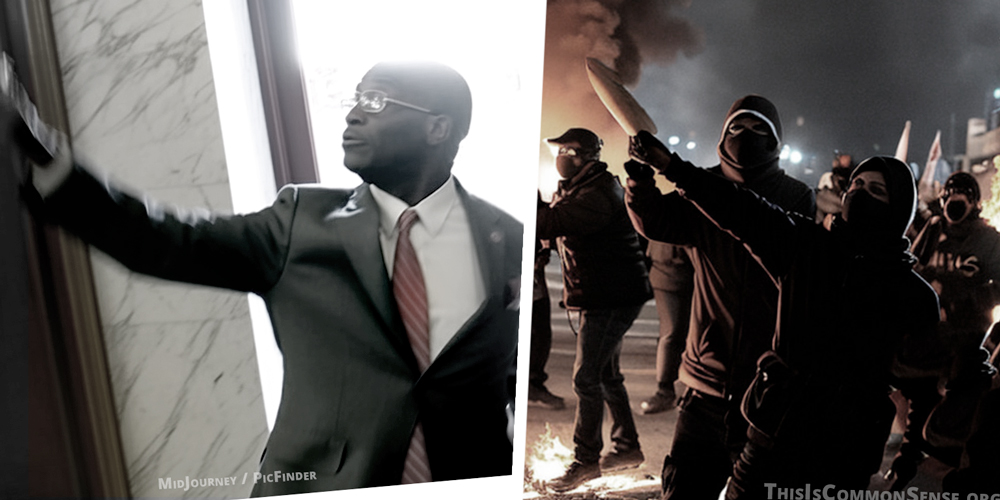
Jamaal Bowman (D-NY) pulled a fire alarm in the Capitol, apparently to postpone a vote on a measure that would have kept the federal government operational, as it lurches into another of its periodic debt ceiling crises.

He denies the accusation . . . even as Breitbart News reports that he “ripped down two signs warning a second floor door in the Cannon House Office Building was for emergency use only before pulling the fire alarm and running out through a different door on a different floor.” It’s all “on tape,” requiring no advanced dialectic to determine the truth. 

I hazard that no one believes Bowman’s denial, not even his many defenders — for no one is really that stupid, not even in the Imperial City.

The go-to interpretive of the non-left commentariat is to compare it to the January 6 protests and riots. 

When those 2020 entrants into the Capitol disrupted the Senate’s ratification of the Electoral College results, they were accused of affronts to democracy, the peaceful handoff of power, and of obstructing the normal operations of government. Rep. Bowman, by misusing a fire alarm, was doing pretty much the same thing. But he is on the side of Big Government and the Democratic insider elite, so he’s probably not in as much jeopardy as those “losers” who found themselves stuck in prison.

But I notice another parallel: the juvenile stunt of pulling the fire alarm is a classic tactic of leftist protesters. Leftwing saboteurs of free speech have pulled many a similar alarm, if usually only to scuttle campus speaking events by the likes of Ben Shapiro, Cathy Young, et al. The saboteurs almost always get away with it. 

Bowman probably thought he would, too.

It’s tradition!

This is Common Sense. I’m Paul Jacob.


PDF for printing

Illustration created with Midjourney and PicFinder.ai

See all recent commentary
(simplified and organized)
See recent popular posts
Categories
education and schooling general freedom ideological culture

Bad Math Baltimore

You may have thought it couldn’t get this bad. 

“Not one student at 13 high schools in Baltimore City, Maryland, achieved proficiency in math,” informs the city’s Fox 45 News, “as indicated by state math exams.”

That’s 40 percent of the city’s high schools and we’re talking not a single soul managed to come in at “proficiency.” Not mastery, mind you. 

“Among those 13 high schools,” the report continued, “a total of 1,736 students participated in the test with 74.5% of them achieving the lowest possible score of one out of four.”

Okay, okay, but what about the city’s best schools?

Well, a Fox 45 News follow-up found that only “11.4% of students” even at “Baltimore’s five top-performing high schools” are “proficient in math.” 

Adding, “In fact, not one high school student in the entire city, last school year, achieved a top level of math proficiency.”

Jason Rodriguez, with People Empowered by the Struggle, an edgily named Baltimore nonprofit, calls it “educational homicide.”

“It’s not a funding issue,” says Rodriguez. “We’re getting plenty of funding.” He thinks “accountability is the issue” and has “been calling for the resignation of the school CEO.”

Young people in Baltimore can learn mathematics just as well as young people anywhere. That we know. But they also need functional families as well as functional schools. The government, plausibly the chief cause of the dysfunction of both, has only official responsibility for the latter.

Sure, it sounds like time to lop off the top brass. But also past time to give every parent of a school-age child in Baltimore (and everywhere) a choice about where to go to school — purchased with the tax dollars that taxpayers are already providing.

Currently, to no avail. 

This is Common Sense. I’m Paul Jacob. 


PDF for printing

Illustration created with PicFinder.ai

See all recent commentary
(simplified and organized)
See recent popular posts

Categories
general freedom ideological culture political challengers

Two Libertarians, North and South

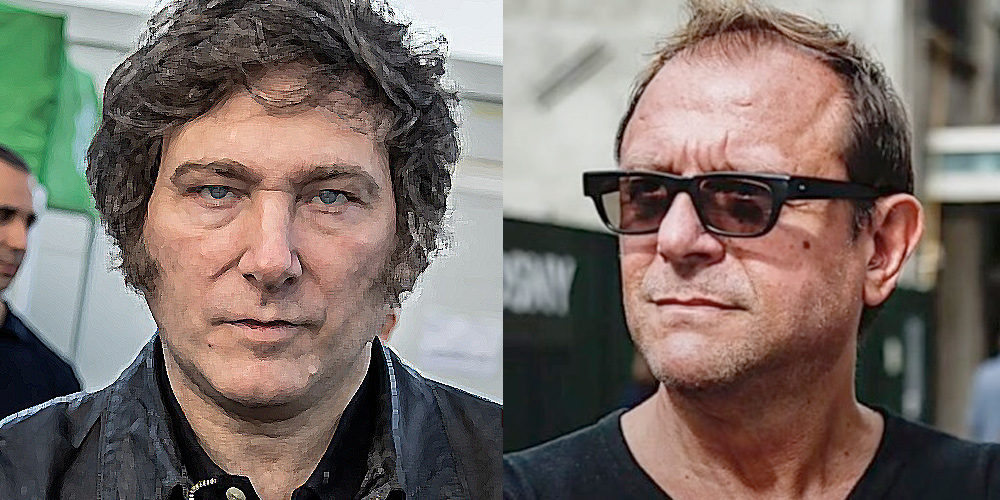
Two scholars have entered politics: Javier Milei in Argentina and Michael Rectenwald in the U.S. The latter’s work has been discussed before in these pages, but the former’s has not. 

Michael Rectenwald, an erstwhile Marxist who began criticizing woke leftism and found his way to libertarianism, spurred by his cruel rejection by the leftist academy and also by reading the work of Ludwig von Mises, is now running for the U.S. presidential nomination of the Libertarian Party.

Javier Milei was a footballer and rock-n-roll musician before becoming an economist and a politician. The Argentine with the wild hair spoke clearly and rationally to Tucker Carlson days ago in Buenos Aires, defending what he called “liberalism” (and opposing socialism in all its forms). Mr. Carlson identified Milei as a libertarian, claiming that the popular economist may become, next month, the next president of his country. At the ten-minute mark Milei explains that “liberalism” means something different in Argentina than in the U.S. He makes it clear he means freedom under a rule of law.

Michael Rectenwald formally introduced his campaign on comedian Dave Smith’s podcast Part of the Problem on Saturday. Rectenwald explains that his main goal is to speak the Truth. “The conclusion I’ve come to is effectively that the means that these elites use are actually the ends that they seek.” In short, those in power didn’t cook up lockdowns and mask mandates and jabs to fight a pandemic, but to extend their power.

Milei, in one popular video, takes a similarly dark view: “You can’t negotiate with leftards. You don’t negotiate with trash because they will end you!”

This politics stuff isn’t so easy.

This is Common Sense. I’m Paul Jacob.


PDF for printing

See all recent commentary
(simplified and organized)
See recent popular posts
Categories
education and schooling folly ideological culture

Expulsion of the Sick

Due to the nature of a respiratory disease like COVID, mass quarantine efforts were doomed to failure. 

We’ve got to breathe; we are social creatures — so locking everyone down, as started in the Spring of 2020, didn’t appear to “slow the spread” (the original aim) and it certainly did not decrease the overall infected or death counts (something the policy did not originally pretend to do). Yet that policy, enacted as an emergency protocol in many states by many governors and mayors extended lockdowns far beyond Trump’s original call for “fifteen days.” 

The extensions were never squared with the initial rationale. 

Never. 

Quarantining the sick, or those who “test positive” for the virus, makes more sense. But only in context of options and human behavior.

“Students who test positive for COVID-19 at the University of Michigan this fall will be forced in many cases to leave campus,” explains Robby Soave at Reason, “an extreme measure that may well encourage sick people to avoid seeking medical attention at all.” Dr. Jay Bhattacharya dubs it a “cruel policy” seemingly “designed to spread covid from the university into the wild.” 

That is, this quarantine effort “won’t stop [COVID] from spreading,” the doctor summarizes.

“Instead of creating a police state to punish students for contracting COVID-19 — something that is, let’s face it, wholly unavoidable,” Mr. Soave speculates, “perhaps university health officials could work harder to provide accommodations for students who get sick and voluntarily agree to quarantine.”

But administrators rule that out: they don’t have the accommodations.

So the policy will inevitably cause hardship while not promoting public health, much less the health of individual students.

Doesn’t make sense. 

I’m Paul Jacob.


PDF for printing

Illustration created with PicFinder.ai

See all recent commentary
(simplified and organized)
See recent popular posts