Categories
folly general freedom government transparency national politics & policies too much government

Safety, Savings and Symbolism

How can the U. S. save $2.5 billion a year, reduce the federal workforce by 4,000 hires, and engage in a symbolic act of undoubted patriotism, all at the same time?

Get rid of the Department of Homeland Security.

Matt A. Mayer, a former DHS employee who claims to have “written more on DHS than just about anyone,” writes in Reason that dismantling DHS would increase co-ordination and decrease inefficiencies.

Since DHS was put in place, in 2003, to increase governmental co-ordination in the face of terrorist threats, Mayer’s charge that it serves the opposite cause should . . . give us pause.

Establishing the DHS didn’t get rid of turf wars. Why would it? It increased the turf rather than merely reroute chains of communication and command. All other agencies still exist. Extra turf exacerbates co-ordination difficulty.

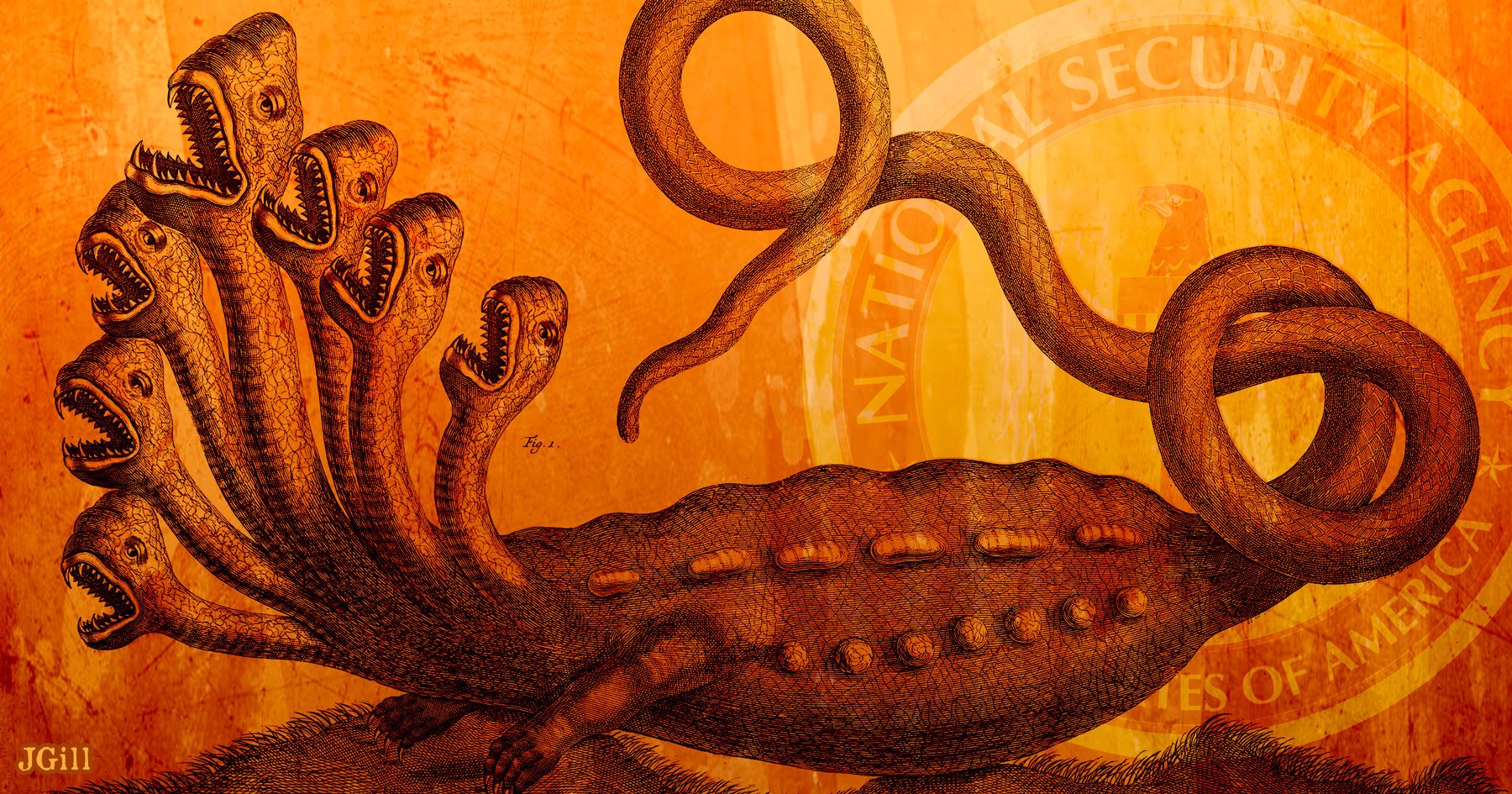
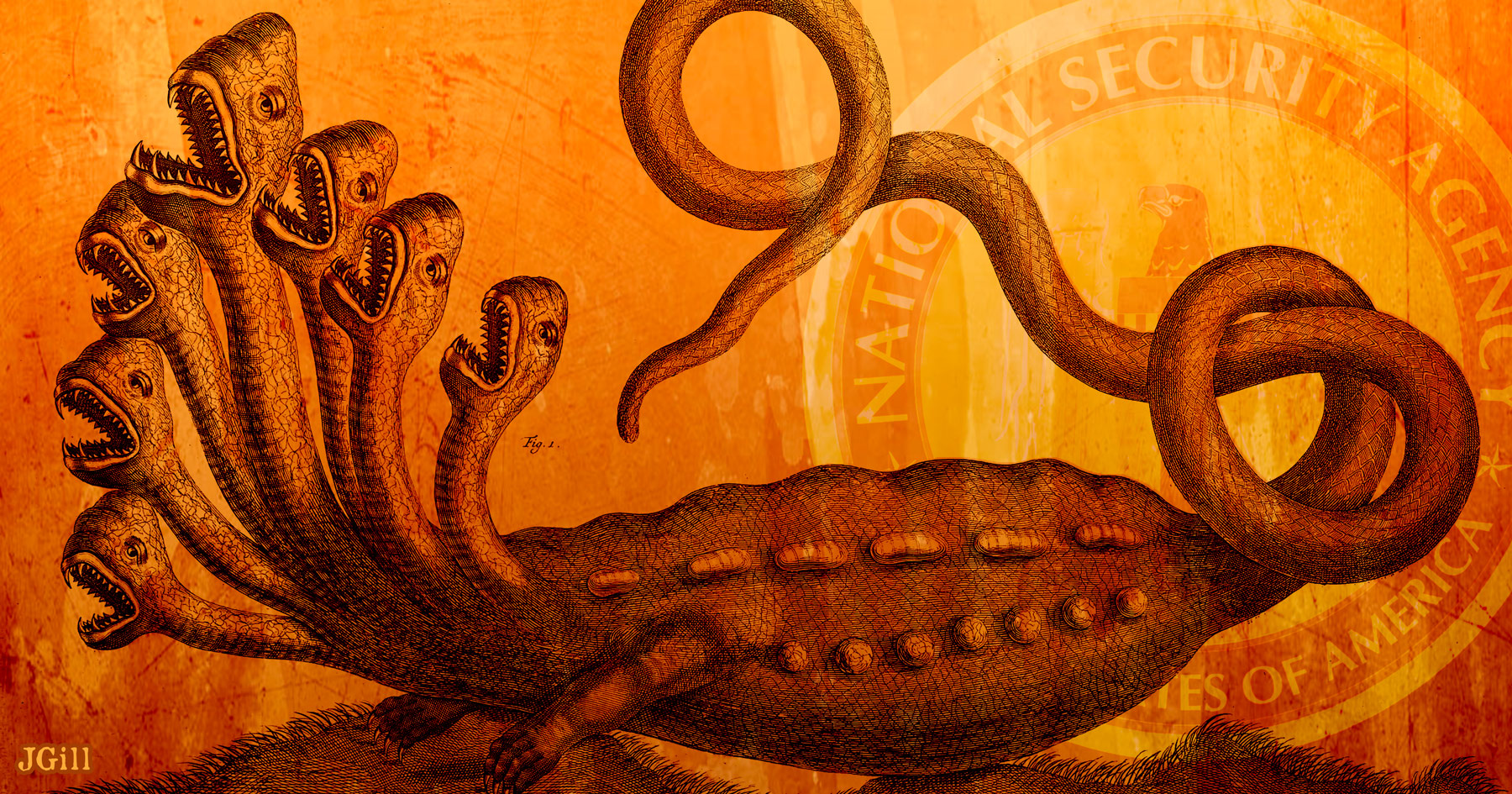
And then there’s what state and local law enforcement faces: “the multi-headed hydra.” The federal operation remains fragmented, which “only ensures that key items will fall through the cracks between these departments, whose personnel spend far too much time fighting each other for primacy than they should. Our enemies couldnt ask for a more fertile environment within which to attack us.

I added the italics, for emphasis.

Ever since Jimmy Carter ran for the presidency on consolidating bureaucratic departments in the nation’s capital, but delivered, instead, new departments, the “logic” of adding new bureaucracies onto old has proven to be the “easy answer” for insiders. But a transparent failure, for everyone else.

So, start over. Get rid of the inefficient monster.

And take heart: republics don’t have “homelands”; empires do. Let’s stop playing the wrong game.

This is Common Sense. I’m Paul Jacob.


Printable PDF

NSA Hydra


Categories
First Amendment rights general freedom

Reason Requires Freedom

For two weeks, Reason magazine was stopped by court order from talking about two government actions.

It started with online comments.

Everyone who samples the Internet knows that although some un-moderated remarks are judicious and thoughtful, others are intemperate and un-thoughtful. Freedom of speech subsumes the latter just as much as the former — unless and until a published comment can be honestly construed as a genuine threat of violence, as opposed to mere venting.

Reason was first hit with a subpoena that “demanded the records of six people who left hyperbolic comments at the website about the federal judge who oversaw the controversial conviction of Silk Road founder Ross Ulbricht.”

The subpoena is itself debatable, the Supreme Court having recently noted that context is relevant to determining whether an online “threat” is a genuine one.

Not debatable? The gag order that soon followed, prohibiting discussion of both the subpoena and the gag order after Reason notified the affected commenters so that they would have a chance to defend their right to anonymity.

Reporting at the magazine’s “Hit and Run” blog, Reason editors Nick Gillespie and Matt Welch explain why the prior restraint represented by the order is unconstitutional and a bad idea.

For Reason, the situation was unprecedented; but similarly wrongful gag orders have become commonplace.

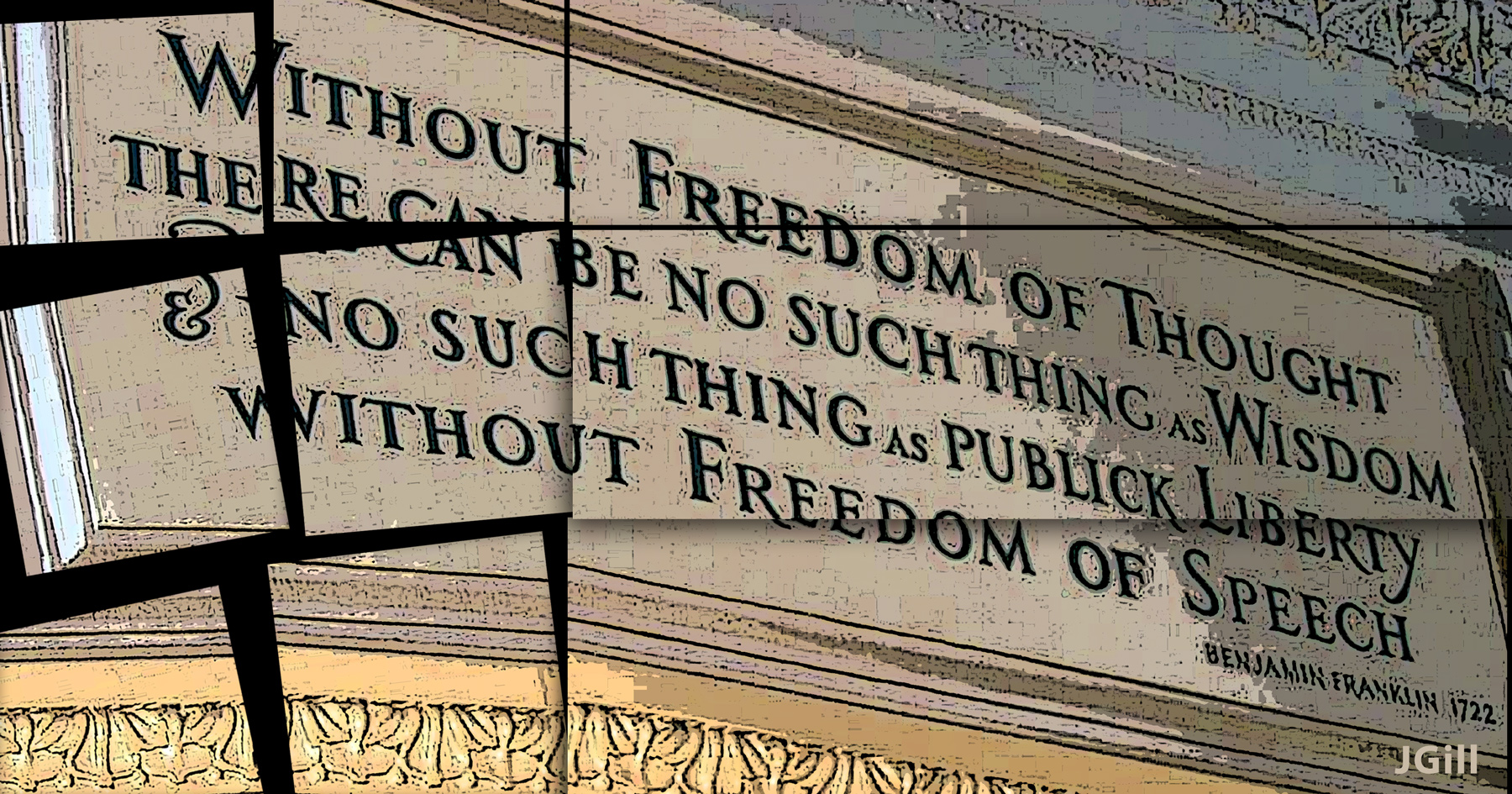
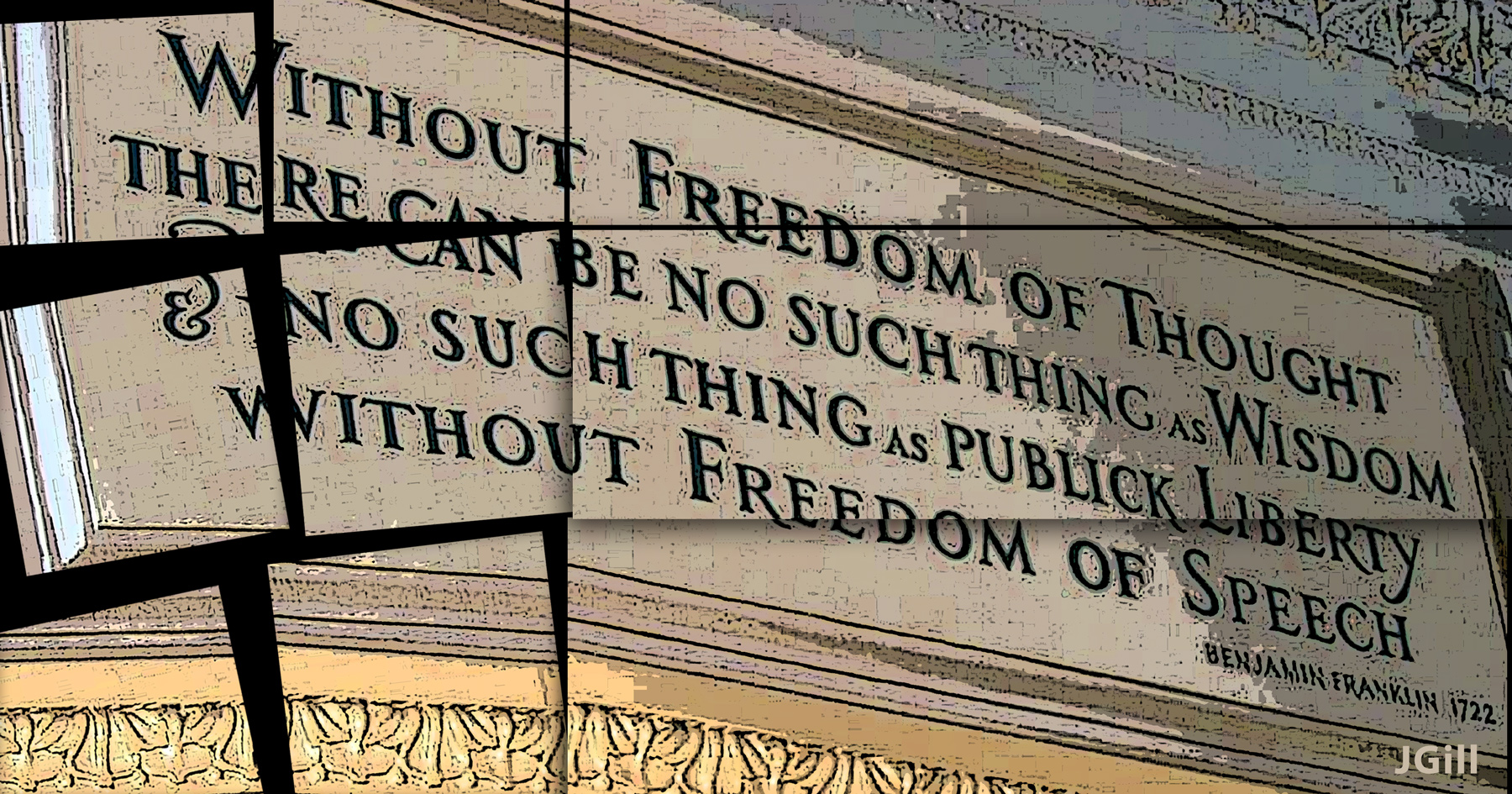
If we lose freedom of speech in this country, it won’t be all at once but bit by ugly bit.

This episode? One of the ugly bits.

This is Common Sense. I’m Paul Jacob.


Printable PDF

Reason and Freedom


Categories
folly general freedom too much government

Under the Law, Not Beneath It

Celebrating the 800th anniversary of the Magna Carta Libertatum this week, I noted how a document intended to serve the very upper classes, by limiting each others’ powers, led to liberty for all.

The Nation, on the other hand, used it to excoriate the Citizens United ruling.

“Magna Carta reminds us that no man is above the law,” wrote John Nichols on Monday. “But it should not be imagined that Magna Carta established democracy, or anything akin to it.”

Of course the Magna Carta did not establish democracy. No one said it did. And neither Britain nor America has pure democracy, if you define it . . . in Nichols fashion. What is he driving at?

If we respect the notion that the rule of law must apply to all . . . then surely it must apply to corporations.

And, surely, the best celebration of those premises in the United States must be the extension of the movement to amend the US Constitution to declare that corporations are not people, money is not speech, and citizens and their elected representatives have the authority to organize elections — and systems of governance — where our votes matter more than their dollars.

Sure, Mr. Nichols, corporations shouldn’t be above the law. But they shouldn’t be below it, either. And in America we have rights to free speech and press. Those rights “surely . . . must apply to corporations.”

Let’s increase the liberating powers of democracy: open up ballot access, de-privilege incumbents, count votes in a non-mere-plurality-wins fashion.

But let’s not throw out equal rights under the law, even in the name of democracy.

This is Common Sense. I’m Paul Jacob.


Printable PDF

Magna Carta Nation


Categories
general freedom U.S. Constitution

An 800th “Birthday”

Something happened 800 years ago yesterday, something of note.

The much-loathed and legendary — but real-life — King John signed a document with his barons that limited his power. It was later called the “Magna Carta,” the great charter.

Strange history. It was signed, made a big deal of, and then quickly repudiated. But it was never completely dead, possessing a zombie afterlife, and eventually helping give birth to the Enlightenment idea of limited government, as well as to the United States Constitution.

Most of the document is concerned with the king’s relationship with his subordinate (and insubordinate) barons. There’s a lot of power-wrangling in it, it’s all about divvying up prerogatives and responsibilities and taxes and fees. But it does contain a few passages of note (I’ve listed them on my “Today in Freedom” feature, in the past, and revive one for today’s).

My friend Sheldon Richman quotes scholar John Millar (1735-1801), one of Adam Smith’s most illustrious students, to put the document in its best perspective: “A great tyrant on the one side, and a set of petty tyrants on the other, seem to have divided the kingdom . . . who, by limiting the authority of each other over their dependents, produced a reciprocal diminution of their power.”

They were selfish men, Millar notes, not much concerned with ordinary folk, “But though the freedom of the common people was not intended in those charters, it was eventually secured to them. . . .”

Britain and then America stumbled onto liberty — a general and shared freedom — by the jealousy of competing powers.

We, the people, win when our “rulers” are divided, not united.

This is Common Sense. I’m Paul Jacob.


Printable PDF

Magna Carta


Categories
folly general freedom nannyism

A Spring in Their Step?

The “Free State” — Maryland — just got a little freer.

Deborah Ramelmeier, Social Services Administration head honcho, has laid forth from her mighty public perch in Maryland’s Department of Human Resources an official directive to the state’s Child Protective Services (CPS).

She finally addressed the issues in the Meitiv case.

You’ll recall that Danielle and Alexander Meitiv allowed their 10-year old son and 6-year old daughter to walk home together, without a parent or guardian or attorney present, from a public park a mile away. Silver Spring police snatched the two children off the street last December and so began a Maryland CPS investigation for neglect.

In April, the Meitiv kids were again caught flagrantly walking home from a park. This time they were held for more than five hours by police, then CPS, before their frantic parents were informed and the family reunited.

In the midst of threats, accusations, and fears, the CPS neglected to do the one sensible thing you’d expect: articulate a policy position defining just when or how or even if ever children are allowed out in public without constant and direct adult supervision.

That smidgen of sanity came last week, in Ms. Ramelmeier’s otherwise boring, bureaucratic 23-page directive. “Children playing outside or walking unsupervised does not meet the criteria for a CPS response absent specific information supporting the conclusion that the child has been harmed or is at substantial risk of harm if they continue to be unsupervised.”

Shazam! Just like that, “playing outside” and “walking unsupervised” are once again legal.

The children won’t be arrested! And their parents won’t be investigated or threatened with losing their little ones!

This is Common Sense. I’m Paul Jacob.


Printable PDF

Free State


Categories
general freedom

Free Brazil

Kim Kataguiri — a founder and the most prominent public face of the Free Brazil Movement, which recently led millions in protest against high inflation, high taxes, and economy-crippling cronyism — is an unusual man.

First, there’s his age: 19.

Second, there’s his background — atypical but hardly unique, given the country’s substantial Japanese-Brazilian minority.

Third and most important, there’s the fact that he’s influenced by the ideas of free-market thinkers like Ludwig von Mises and Milton Friedman, ideas communicated online by Brazilian and American think tanks. In consequence, Kataguiri’s popular, social-media-conveyed critique of Dilma Rousseff’s tax-happy socialist government is openly liberal in perspective.

“Liberal,” of course, as in “having something to do with freedom and responsibility.” Classical liberal. Libertarian. Not warmed-over socialist-leaning liberal, as in America’s Elizabeth Warren and Bernie Sanders.

Do his free-market ideas and those of other young Free Brazil leaders mean that most Brazilians inspired by the Free Brazil Movement are just as principled? No; they may just be angry at the destruction wrought by an openly socialist government. Consistency may be the furthest thing from their minds.

But they do seem open to a new, positive alternative.

Kataguiri is perhaps overly optimistic, predicting that “in the next decade or two, most of our society will not only understand classical liberalism, but defend it too.”

But I like optimism. Especially since, whether you call it “classical liberalism,” libertarianism, or “small-government conservatism,” freedom isn’t exactly winning here on our fertile soil.

Still, I invite Kataguiri to drop by the United States when he has a chance . . . and do what he can to convert us to classical liberalism as well.

This is Common Sense. I’m Paul Jacob.


Printable PDF

Kim Kataguiri


Categories
ballot access general freedom national politics & policies

The Duopoly Rules

As Americans brace themselves for another presidential campaign, USA Today’s editors hazard that the “configuration” of the Commission on Presidential Debates (CPD) “certainly creates an appearance of a political duopoly designed to limit independent voices.”

In 1987, after the League of Women Voters displeased the two major parties, the duopoly’s respective chairmen cooked up the CPD. Both men indicated that including non-R-or-D candidates was not part of the plan.

Thirteen years later, to keep the CPD’s tax-exempt status, the CPD established a “non-partisan” rule to “fix” an opportunity for minor parties: candidates must garner 15 percent support in the polls for inclusion in the debates.

Fast forward to today, and we witness a new group pushing the CPD to drop that requirement. Change the Rule wants one third-party nominee to be included, provided that candidate is on enough state ballots to mathematically have a chance to win the presidency.

“A third person in the general-election debates would make it harder for the major-party candidates to stick to talking points and platitudes,” agrees USA Today. But the newspaper worries about “unintended consequences,” that rather than the “centrist” they want in the debates, a new system might produce someone “on the far left or far right.”

Dear Editors, the election process ought not be designed to produce a certain pre-arranged ideological outcome.

Establishing a fair system entails not limiting voter choice ahead of time. Voters should get to hear from every candidate on enough ballots to be elected president.

This is Common Sense. I’m Paul Jacob.


Printable PDF

Duopoly


Categories
folly general freedom national politics & policies too much government

Political Theatrics

Our suspicions have been proved: the Transportation Security Administration (TSA) doesn’t secure much of anything; it is mere “security theater.”

After revelations that TSA screeners failed to find weapons and other deadly contraband in 96 percent of tests, David A. Graham, writing for The Atlantic, asked “what kind of theater this is. . . . A period drama, satirizing the 2000s? Vaudeville farce?”

Easy answer: the genre is “statism.”

Statism is the worship of government, or the reliance upon government to do many more than a few tasks. It is very old.

The ancient states arose from conquest, developing as a way to milk the masses for the benefit of the few. That’s what states traditionally do: use force to move wealth from one group to another.

Along the way, the states did do some good. Amidst all their horrors.

But mostly rulers just leveraged myth and bluster to cover crimes.

In more recent times, in this great country, the idea arose that the state should be limited to a few necessary jobs, tightly controlled by the people so that government might actually defend rights, not abridge them.

But this revolutionary democratic-republican ideology did not alter the basic nature of reality, turning the sow’s purse of the conquerors’ art into the gold of the Public Interest.

Without our vigilance, government always reverts back to its roots.

The TSA is simply the latest myth-and-bluster-backed scam aiding the ludicrous notion that government is all-powerful . . . while providing only faux security. Get rid of it; let its people go. Then watch airlines come up with more effective, less intrusive, more passenger-friendly security systems.

Want theater? Try “vigilance theater.”

This is Common Sense. I’m Paul Jacob.


Printable PDF

TSA


Categories
general freedom government transparency national politics & policies privacy too much government

Rand to the Rescue

Nothing gets done in Washington?

Tell that to Kentucky Senator and presidential hopeful Rand Paul. Last night, he single-handily “repealed” Section 215 of the Patriot Act, ending the federal government’s mass collection of our phone records.

At least, for the next few days.

On the floor of the Senate, Paul blocked the USA Freedom Act, a “compromise” bill passed by the House. It would’ve required private telecoms to keep the data, allowing the government to query that data with a warrant.

“I’m supportive of the part that ends the bulk collection by the government,” said Paul. “My concern is that we might be exchanging bulk collection by the government [with] bulk collection by the phone companies.”

In a Time magazine op-ed, he argued, “We should not be debating modifying an illegal program. We should simply end this illegal program.”

Also last week, the Tea Party Patriots joined the ACLU in agreeing with Paul’s position: the USA Freedom Act doesn’t go far enough . . . to protect our civil rights.

Others warn we aren’t safe without maximum snooping and info-scooping by government:

  • CIA Director John Brennan called the metadata program “integral to making sure that we’re able to stop terrorists in their tracks.”
  • Attorney General Loretta Lynch said the expiration amounted to “a serious lapse.”
  • James Clapper, director of National Intelligence — most famous now for lying to Congress about the existence of the metadata program — declared we “would lose entirely an important capability that helps us identify potential U.S.-based associates of foreign terrorists.”

Yet, there’s not a single case where this bulk phone data helped capture a terrorist or stop an attack.

Sen. Paul believes “we can still catch terrorists using the Constitution.”


Printable PDF

Rand Paul vs. the Surveillance State


Categories
folly free trade & free markets general freedom national politics & policies

Raise Your Hand, Dry and Secure

Presidential candidate Bernie Sanders made a splash last week with an off-the-cuff comment. “You don’t necessarily need a choice of 23 underarm spray deodorants or of 18 different pairs of sneakers when children are hungry in this country.”

The candidate whose initials are “B. S.” doesn’t call himself a Socialist for nothing.

The Democratic-caucusing “Independent” Senator from Vermont was expressing a tired old sentiment. See his error? (Raise your hand if you know.)

To make any connection between “feeding the hungry” and cutting back on competitive products one would have to believe there is a fixed stock of wealth, and that we waste it on different brands and whole varieties of antiperspirants and sports shoes.

But there is no such fixed supply.

Supplies are concocted to meet consumer values, wants, and getting rid of competitive products means that some values are not being met . . . and that some folks are not being employed at the rates they could be with more diversity of commodities.

The best way to “feed the hungry” is for the hungry to feed themselves, by being productive — if children, then being fed by productive parents. And to do that, folks need to find their market niche. Which might very well entail another deodorant or shoe.

There is a realm where one person gains at the expense of someone else: redistributive government. If Sen. Sanders wants government to give more money to feed hungry people, he should consider cutting back on some other government expenditure.

Why didn’t B. S. suggest that? Perhaps more than feeding the hungry, he’s interested in feeding government, and his own pride in his own b.s. ideology.

This is Common Sense. I’m Paul Jacob.


Printable PDF

B.S.