Categories
crime and punishment general freedom national politics & policies too much government

Loose Cannon as Prez

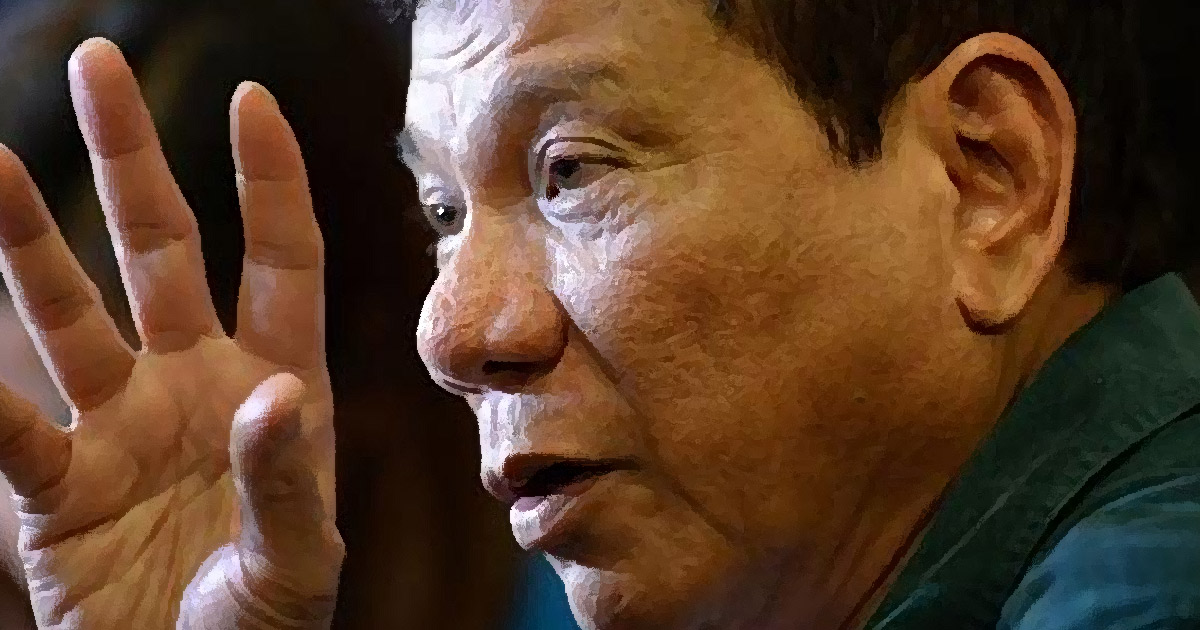
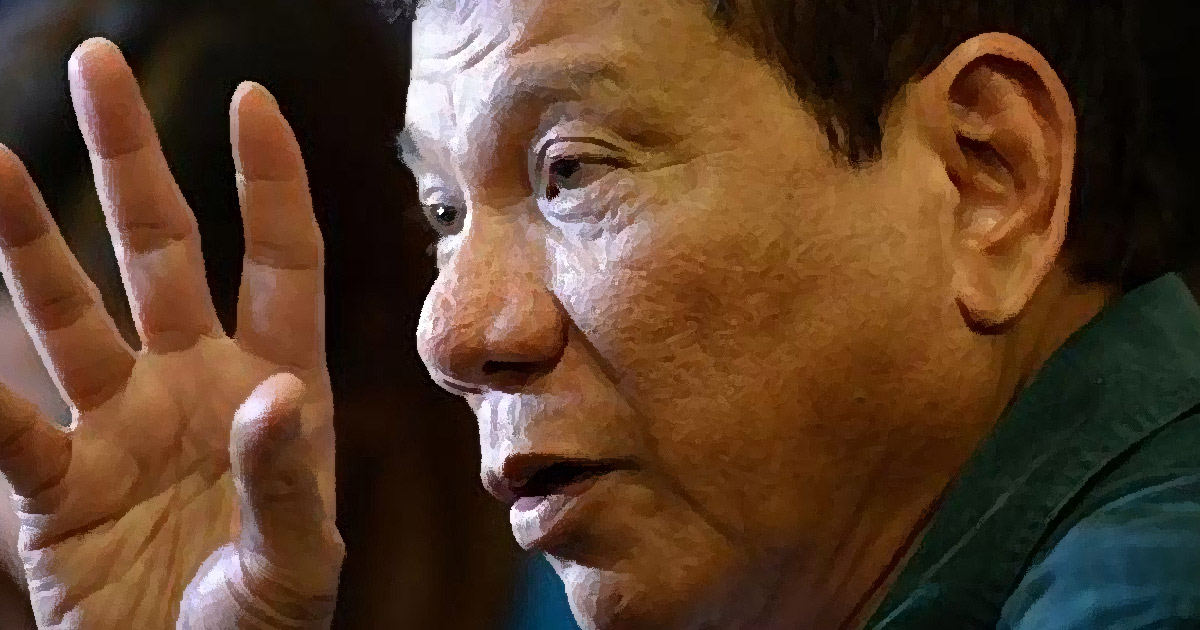
“If I order the killing of someone,” Philippines President Rodrigo Duterte said last Friday, “you cannot arrest me: I have immunity.”

Yikes. Nearly everything negative imputed, perhaps dubiously, to Donald Trump applies double to Duterte, without a hint of dubiety.

Ordering killings with impunity? Only the U.S. president can do that.

The former mayor of Davao City was in the news during his presidential bid, for his ultra-Trumpian outbursts, saying daring, ugly, even wicked things.

Most scandalous was his remark about a young woman who was gang raped in his home town. It was “only a tragedy,” as Breitbart.com phrases it, “because he himself did not get to have sex with her first.”

Vile, yes; downright evil.

And terrifying coming from a politician entrust with protecting his countrywomen’s rights.

But then, Duterte is clear: he doesn’t care about human rights.

In his ruthless war on drugs, he’s instructed drug-warrior police to shoot first, ask questions later. The nation’s “narco-mayors” (politicians who cooperate with drug dealers) are begging for protection, leniency, anything. If those mayors have armed defenders, Duterte threatens to have the Air Force bomb them.

The American ambassador to the Philippines has publicly censured Duterte, but not (that I’m aware of, anyway) for humans rights violations, but for Candidate Duterte’s earlier rape comment. Duterte struck back calling the ambassador names and claiming his public condemnation was out of line, undiplomatic.

True enough.

I guess that’s why Secretary of State John Kerry just “inked a deal,” says Breitbart, sending $32 million to support Duterte’s war on drugs.

Duterte’s response? “[L]et’s insult them again so these fools try to make amends again.”

Fools, indeed.

This is Common Sense. I’m Paul Jacob.  

Printable PDF

Rodrigo Duterte, Philippines, President


Categories
general freedom moral hazard national politics & policies responsibility

The Russians Are Coming

There’s no accounting for taste, especially regarding humor.

For instance, the 1966 film “The Russians Are Coming, the Russians Are Coming” is, to me, a classic. And I think Donald Trump’s recent sarcasm — “Russia, if you’re listening, I hope you’re able to find the 30,000 emails that are missing.” — was funny.

And surprisingly appropriate to the situation.

Did the Russians give WikiLeaks the hacked DNC emails? We don’t know.

Was Trump malevolently, traitorously standing in the middle of Fifth Avenue inviting a foreign adversary to criminally cyber-attack his political opponent, as hyped? No.

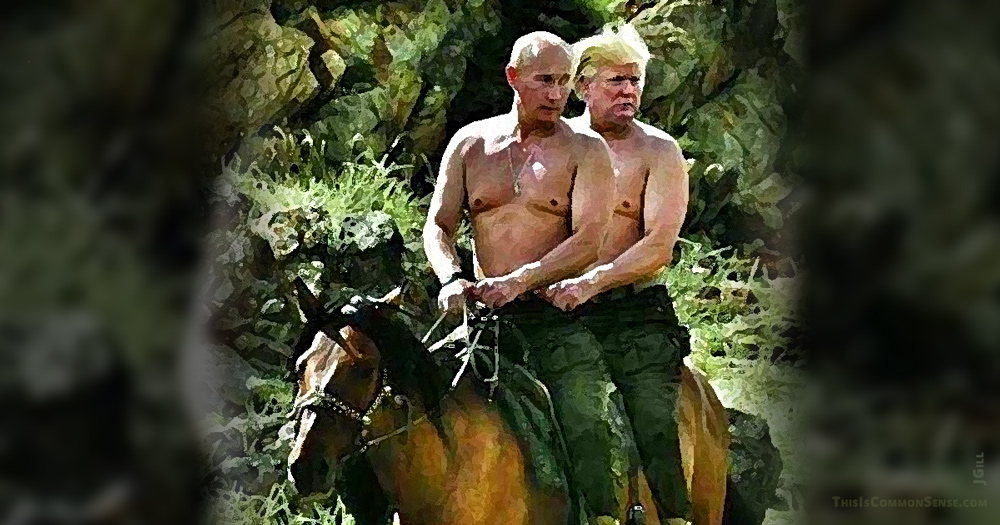
Still, I’m not copasetic with Trump’s apparent buddy-fest with Russian President — and thug — Vladimir Putin. Yet, Trump is hardly the first American politician to act the fool before Putin.

Republican President George W. Bush bizarrely claimed to have looked into Putin’s soul. It was cloudy that day.

Secretary of State Hillary Clinton jetted over to the Kremlin with a silly “Reset” button. Still, friendly Russian interests have been financially generous to the Clintons.

Russia bailed out President Obama (and Assad) after Syria crossed Obama’s apparently evanescent red line. Recall that open microphone that caught Obama telling outgoing Russian President Dmitry Medvedev to let Putin know, “After my election, I have more flexibility.”

Vladimir Putin must wonder how his Soviet forebears could have possibly lost the Cold War to a country led by such ninnies.

In 2012, Republican Mitt Romney called Russia our number one geopolitical foe . . . only to be ridiculed by Obama and mocked in the media. “The 1980s are now calling to ask for their foreign policy back,” scoffed a contemptuous Obama. Current Secretary of State John Kerry called it a “preposterous notion.”

Since then, Russia has annexed Crimea, made war in eastern Ukraine and occasionally bombed U.S. forces in Syria.

The Baltic nations, some of which have significant Russian minorities, understandably feel threatened. America has pledged to militarily defend these tiny countries bordering Russia.

But no discussion of that on the campaign trail.

This is Common Sense. I’m Paul Jacob.

Printable PDF

Russia, Putin, Trump, horseback, illustration


Categories
education and schooling folly free trade & free markets general freedom ideological culture national politics & policies responsibility too much government

Miseducated and Unemployed

The persistence of the issue of raising the minimum wage is an indictment of public education, for at least two reasons:

  1. It shows that “our” schools are not teaching basic economics. Generally, those who think minimum wages help the poor do not understand what wages are (price of labor), why they are paid (worker productivity bolstering the bottom line) and what a minimum wage law is (a prohibition on contracting for work below the arbitrary government-prescribed rate).
  2. It shows that schools aren’t preparing the young for real-world activity. Wages track productivity. If disturbingly large numbers of people are affected by the minimum, that means they haven’t been adequately trained in the skills they need.

Bernie Sanders wanted a 15-buck minimum. Hillary went on record supporting a 12-buck rate. Donald Trump would prefer that the minimum wage regulations be enacted by the states, though he says a hike to ten dollars per hour would really help the less fortunate.

It wouldn’t.

That is the tacit theme in a Wall Street Journal piece on the recent minimum wage rate hikes in 14 American cities, including the nation’s capital. A classic, succinct article on BET makes the point even more stark: a duo of economists from Trinity University “report that when a state, or the federal government, increases the minimum wage, Black teens are more likely to be laid off. The duo analyzed 600,000 data points, which the Employment Policies Institute says included ‘a robust sample of minority young adults unprecedented in previous studies on the minimum wage.’”

Just as theory predicts.

Could it be that politicians promise a raise because they believe government-schooled Americans too miseducated to know better?

This is Common Sense. I’m Paul Jacob.

Printable PDF

minimum wage, illustration, money, economics


Categories
general freedom national politics & policies political challengers too much government U.S. Constitution

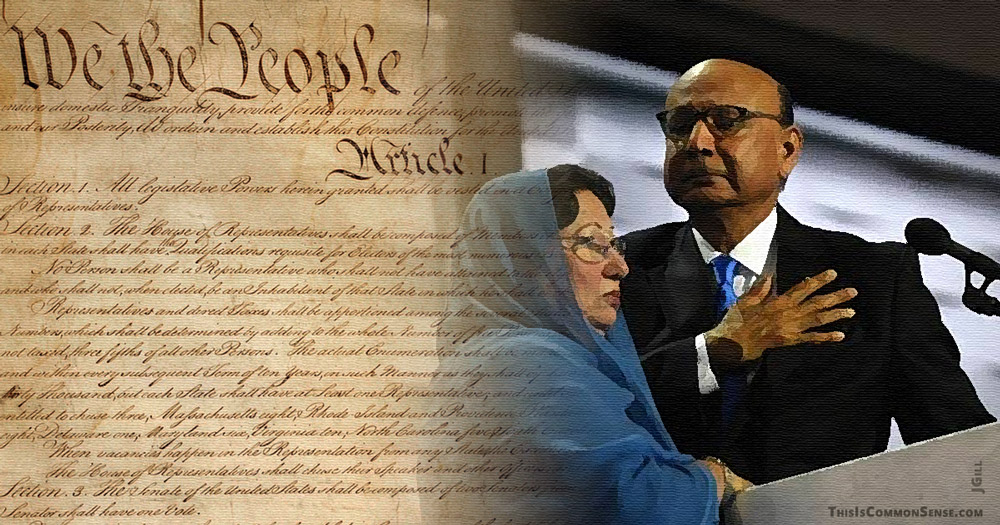
Is That a Constitution in Your Pocket?

“We were blessed to raise our three sons in a nation where they were free to be themselves and follow their dreams.”

Those eloquent words came from the lips of Khizr Khan, the Pakistani immigrant who spoke at the Democratic National Convention last week about losing his son, Capt. Humayun Khan, to a suicide bomber in Iraq.

Describing his family “as patriotic American Muslims with undivided loyalty to our country,” and charging that, “Trump consistently smears the character of Muslims.” Khan asked Donald J. Trump a great question: “Have you even read the U.S. Constitution?”

Then, reaching into his suit pocket, Khan pulled out a copy, adding, “I will gladly lend you my copy.”

Yesterday at Townhall, I declared Khan my Person of the Week. Not just because Mr. Khan is fond of handing out pocket-sized copies of the U.S. Constitution and told the New York Times that his “real hero” is Thomas Jefferson, but because he asked a great question.

Let’s ask all the candidates. That question, for sure, and three additional ones:

  1. Do you favor repealing parts of the First Amendment to allow incumbent congressmen to regulate their own campaigns and their opponents’ in regard to raising and spending money?
  2. In the Heller case, the Supreme Court ruled that the Second Amendment provides individuals a “right to bear arms” — will you appoint justices who agree or disagree with Heller?
  3. As president, will you issue an executive order instructing all federal agencies and police agents to cease any use of civil asset forfeiture?

I’ve got more questions. I bet you do, too.

This is Common Sense. I’m Paul Jacob.

Printable PDF

Khizr Khan, Pakistan, Democrat, convention, Democratic, Donald Trump, illustration


Categories
Accountability general freedom moral hazard nannyism national politics & policies Second Amendment rights too much government U.S. Constitution

The Freak-out Factor

Most folks are so unused to seeing normal people carrying guns around, out in the open, that when they it, they freak out.

Among those who are at least, well, unsettled by the spectacle? The police.

Funny, the gun freaker-outers don’t usually freak when they see police with guns. But that may be changing as more and more video footage comes out regarding police shootings of suspects under suspicious circumstances.

It is not exactly by accident that there are protests in numerous cities.

So, police being human, we cannot be surprised when, after the Dallas and Baton Rouge killings of police, “[t]he head of the Cleveland police union called on the governor of Ohio to declare a state of emergency and to suspend open-carry gun rights during the Republican national convention. . . .”

The governor’s office responded that Gov. John Kasich had no authority to do such a thing. Open carry was a law in the state. Only inside buildings could carry rights be suspended (as they have been, selectively).

Steve Loomis, the Cleveland Police Patrolmen’s Association head, said that he did not “care what the legal precedent” may be, and “couldn’t care less if it’s legal or not.”

If Loomis, a leader in “law enforcement,” boasts this attitude, no wonder police have had so many trigger finger incidents, sparking so much anguish, protest, and debate.

It’s time for police to rethink their approach to people who have rights to carry weapons.

Perhaps more importantly, we should all try not to freak out so easily.

This is Common Sense. I’m Paul Jacob.

Printable PDF

gun, control, 2nd Amendment, Republican, police


Categories
Accountability Common Sense folly general freedom ideological culture media and media people meme national politics & policies too much government

More Common Sense from Tom Paine

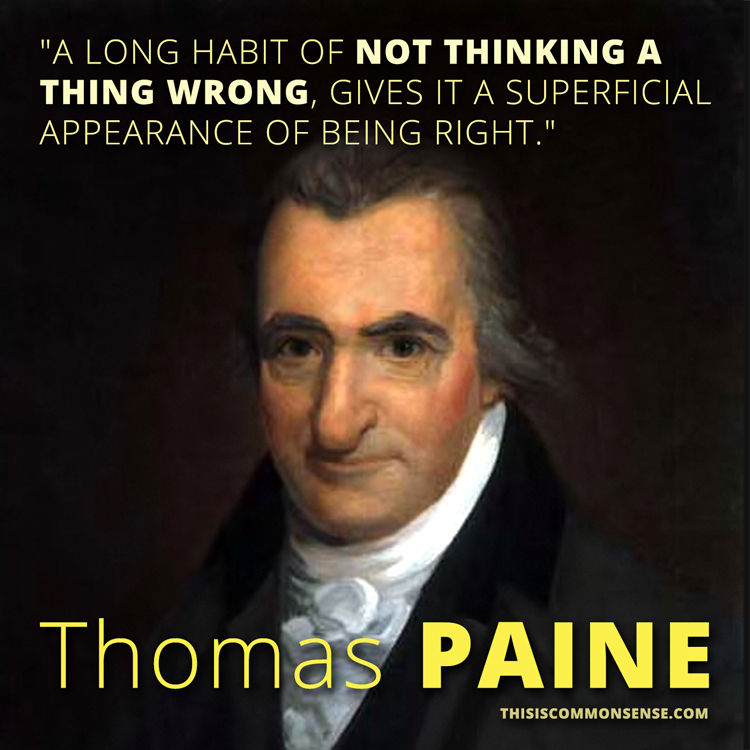
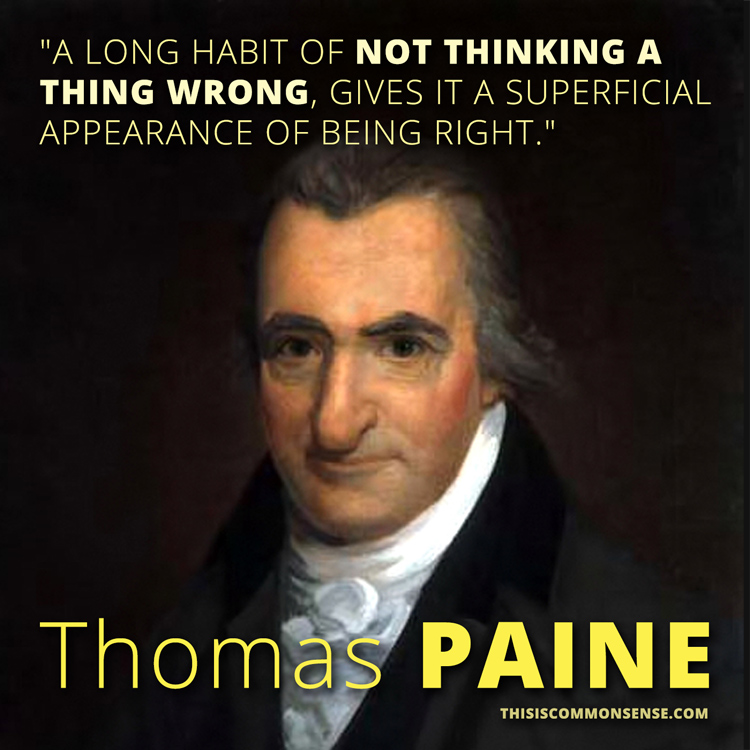
“A long habit of not thinking a thing wrong, gives it a superficial appearance of being right.”

Quote (from Paine’s “Common Sense”) verified here.


Tom Paine, Thomas Paine, quote, quotation, wrong, right, meme, illustration


Categories
Accountability crime and punishment general freedom moral hazard national politics & policies Regulating Protest responsibility too much government

Too Much – Part 2

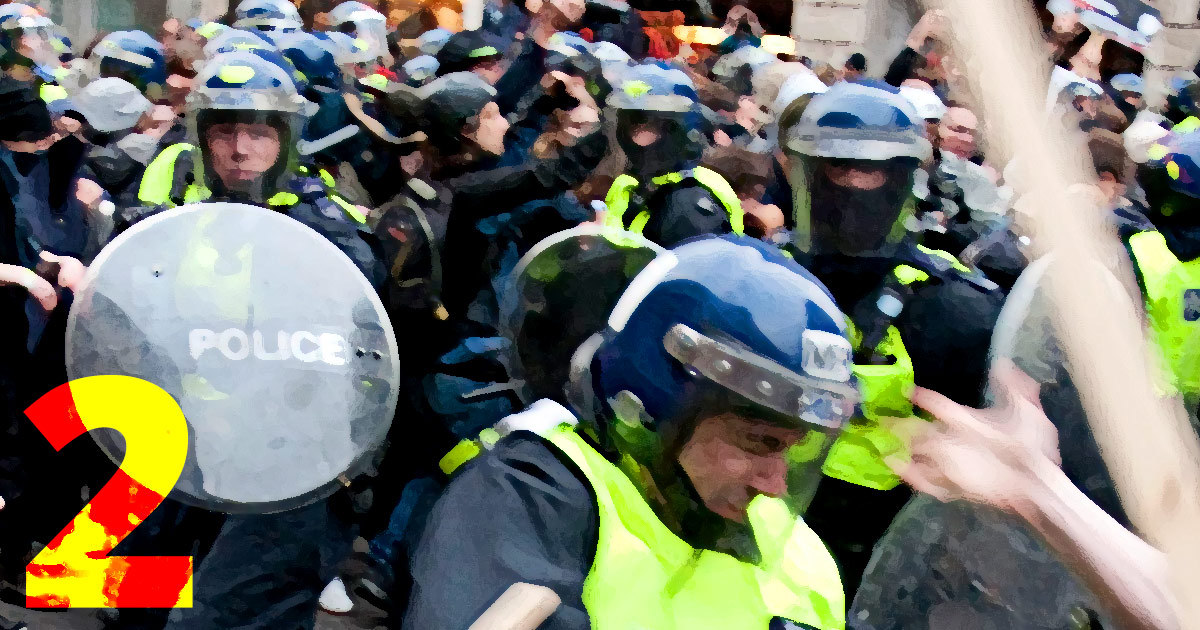
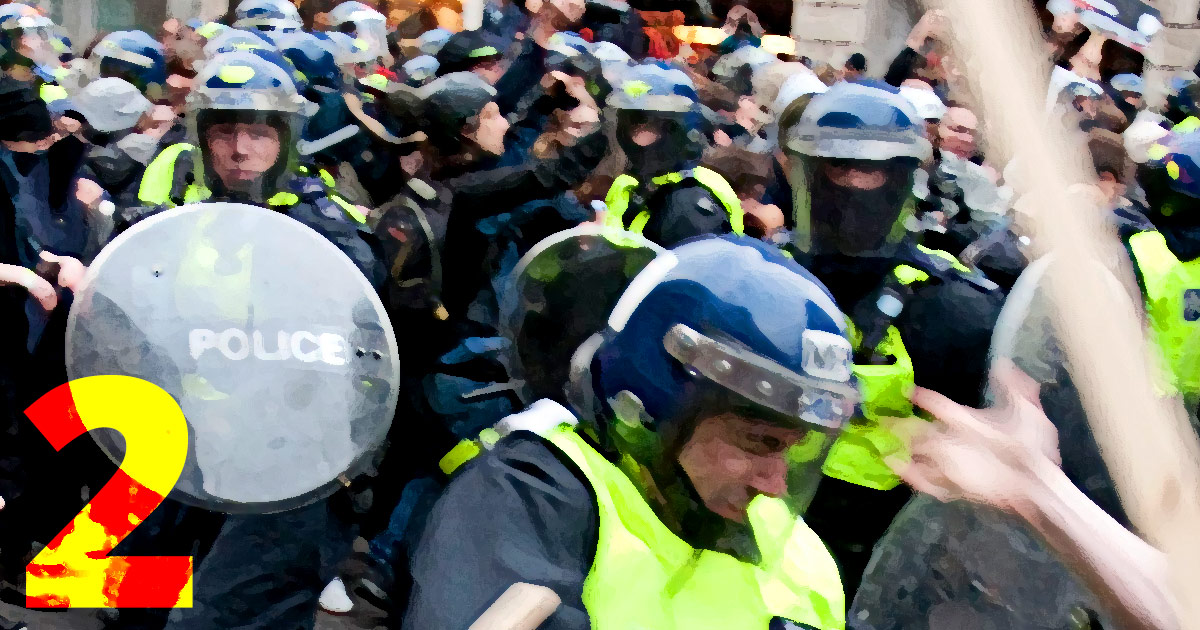
Yesterday, we discovered that modern America asks police to do “too much.” Which prompts the next question: What should police stop doing?

Here are two immediate reforms where police can do less, while protecting the public more:

     (1) End the War on Drugs. Preventing violence and fraud is the rightful role of police. Not preventing people from engaging in activities that are peaceful, however misguided or self-harming. The criminalization of marijuana means more than 150 million Americans are criminals, warranting police involvement.

Now, Mr. Obama has released some convicts serving long drug-related sentences, but we need a president who will go much farther in changing law enforcement priorities.

     (2) Stop Using Civil Asset Forfeiture, whereby police steal people’s stuff without charging and convicting those people of any crime. Not only do federal agencies from Justice to the IRS take our property in violation of our rights, but the Feds encourage state and local police to join them in this bad behavior through their “equitable sharing” program.

While Obama has spoken against seizing assets without a criminal conviction, he hasn’t stopped it. And he could at the federal level, with a stroke of his pen — as I have advocated at Townhall. Ending civil asset forfeiture is an executive order actually within his constitutional power.

Would these two steps end all racism or violence or crime? No, no, no.

They would be, however, two steps forward toward a more principled, lawful and respectful style of policing that would better serve to unite rather than divide citizens and police.

It’s a different two-step than reformers have been witnessing.

This is Common Sense. I’m Paul Jacob.

Printable PDF

crime, police, Police Chief David BrownX poverty, President Barack Obama


Photo Credit: Tomasz Iwaniec


Categories
crime and punishment First Amendment rights general freedom initiative, referendum, and recall nannyism national politics & policies political challengers responsibility too much government

A Private Party

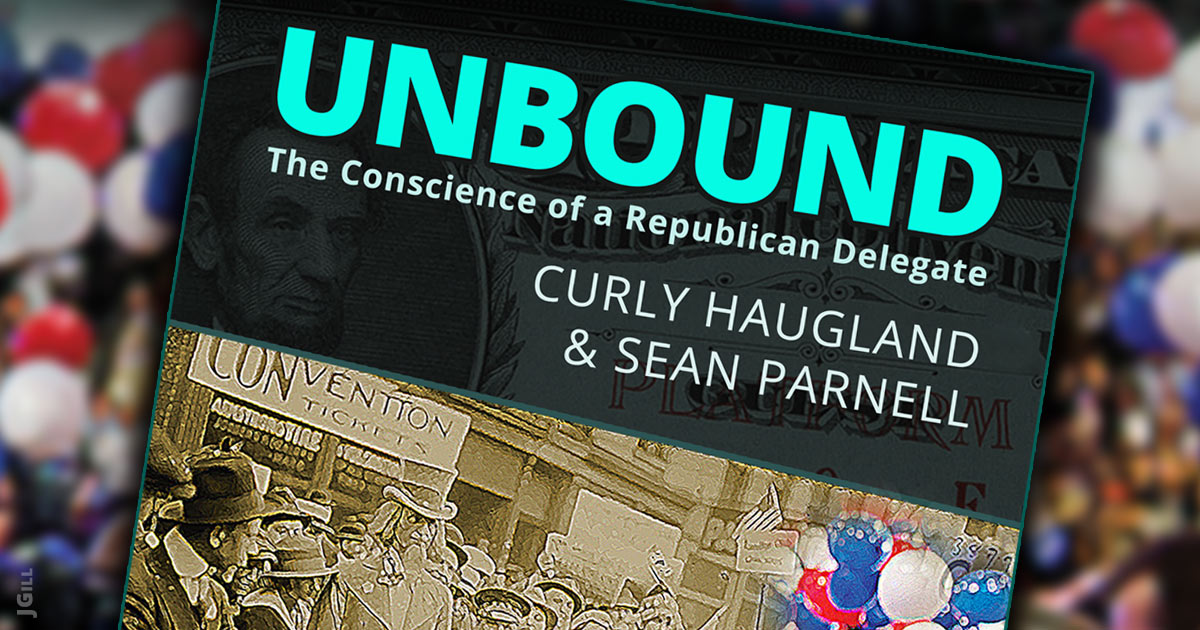
Virginia delegate Beau Correll won’t cast his first ballot vote at the Republican National Convention for Donald Trump, and won’t go to jail, either.

As discussed last Thursday, at issue is a state statute requiring* delegates to vote for the plurality winner of the party’s primary. On the Republican side, that’s Mr. Trump. Yesterday, Federal Judge Robert Payne ruled the law unconstitutional, no law at all, because it violates Correll’s First Amendment rights to speak and associate politically.

“In sum, where the State attempts to interfere with a political party’s internal governance and operation,” the federal judge wrote, “the party is entirely free to ‘cancel out [the State’s] effort’ (Def. Resp. 28) even though the state has expended financial and administrative resources in a primary.”

Love ’em or hate ’em, political parties are private associations, properly protected by the First Amendment.

But is it fair to hold primary elections, at taxpayers’ expense, and then ignore the votes of so many people?

Easy answer: NO.

Sure, Judge Payne correctly struck this statute, but it doesn’t follow that states must foot the bill for party primaries and national conventions or provide legal preference. Up to now, incumbent politicians have quietly legislated a relationship of too-friendly collusion between government and the major parties.

It’s time for citizens to look at initiatives to mandate separation of political party and state.

More immediately, the implications for the coming GOP convention in Cleveland are obvious and far-reaching. “The Court’s decision,” as Correll’s attorney David Rivkin summarized, “follows more than 40 years of precedent in firmly rejecting Donald Trump’s legal opinion that delegates are obligated by law to vote for him.”

The delegates are free.

This is Common Sense. I’m Paul Jacob.


* Penalty for non-compliance? One year in prison.


Printable PDF

Donald Trump, delegates, unbound, convention, crime, vote


Original photo credit: Gage Skidmore on Flickr


Categories
Accountability crime and punishment general freedom national politics & policies political challengers responsibility

Delegates Imprisoned

Can you go to jail for voting for the wrong person?

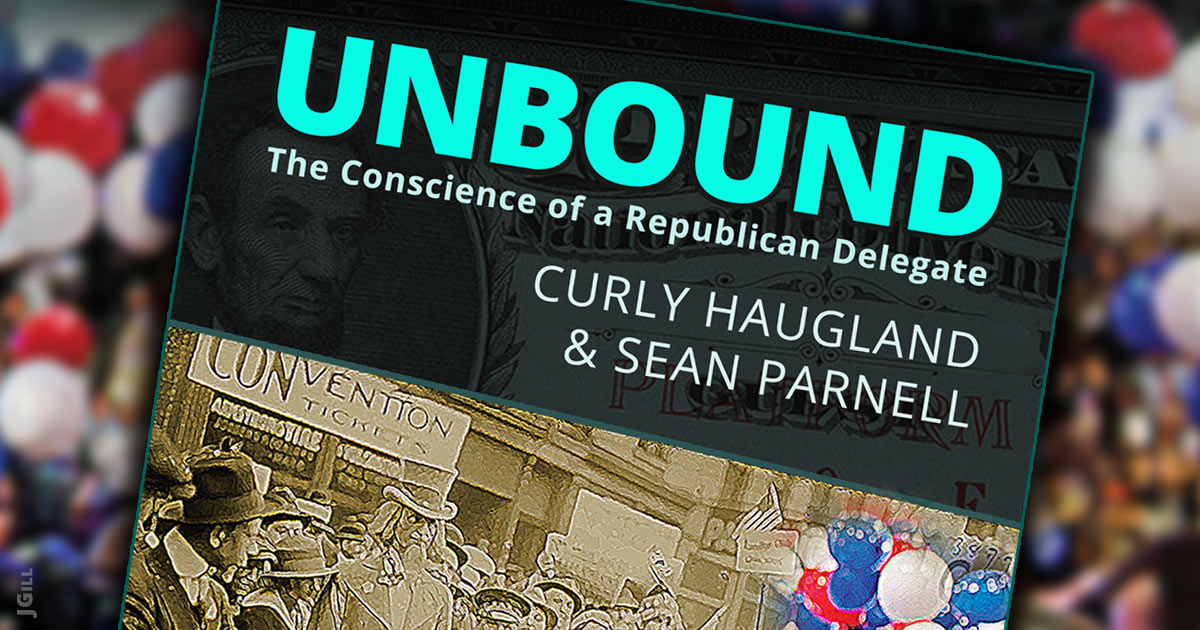
We may find out today, in a federal court in Richmond, Virginia. Judge Robert Payne will hear motions in the case of Correll v. Herring. Attorney General Mark Herring is being sued in his official capacity by Beau Correll, a Republican delegate who refuses to vote for Donald Trump.

Correll is the named plaintiff in this class action challenge to a Virginia statute that binds delegates attending presidential nominating conventions to vote for the plurality winner of their state party primary, which was Mr. Trump.

The penalty for not tallying for Trump? As much as a year behind bars. And a fine.

Correll’s attorney, David Rivkin with Baker & Hostetler, has asked the judge to issue an injunction blocking enforcement of the statute against Correll and all other Virginia delegates. The ruling wouldn’t affect delegates beyond Virginia, yet the implication would be obvious: state laws binding party delegates to vote according to the primary results are unconstitutional.

Trump supporters aren’t taking this lawsuit lightly; several have moved to intervene — on the side of the AG. They’re right to be concerned: a delegate revolt to dump Trump has been brewing for weeks. And the legal precedents are all on the side of political parties controlling their own nominating process, leaving state governments no legitimate role.

It’s long past time to break the crony connections between government and the two major political parties.

Let’s stop all taxpayer subsidies for party primaries and conventions. But let’s also recognize that the delegates meeting in convention should be free to do . . . well, whatever they choose. After all, it’s their party.

This is Common Sense. I’m Paul Jacob.

BIG PICTURE: Why the case really matters!

With the results of Correll vs. Herring, we may also find out if the Republican and Democratic (and Libertarian and Green) Parties are private organizations, with First Amendment protection for their freedom to associate without government interference. Nothing could be more heavy-handed than threatening delegates with incarceration if they vote their conscience — or even follow the state party’s rules, which call for delegates to be awarded proportionately rather than winner-take-all as Virginia’s statute requires.

Printable PDF

Republican, convention, delegates, unbound,


Categories
Accountability folly free trade & free markets general freedom government transparency initiative, referendum, and recall moral hazard nannyism national politics & policies property rights

The Return of the Philosopher King

On Sunday, at Townhall, I addressed the whining attacks on referendums and “democracy” that followed the Brexit referendum.

The most outrageous? A broadside from Jason Brennan.

“To have even a rudimentary sense of the pros and cons of Brexit,” argues this Robert J. and Elizabeth Flanagan Family Associate Professor of Strategy, Economics, Ethics, and Public Policy at the McDonough School of Business at Georgetown University, “a person would need to possess tremendous social scientific knowledge. One would need to know about the economics and sociology of trade and immigration, the politics of centralized regulation, and the history of nationalist movements.”

In other words, most Brits needn’t worry their pretty little heads about deciding their future; experts have everything under control.

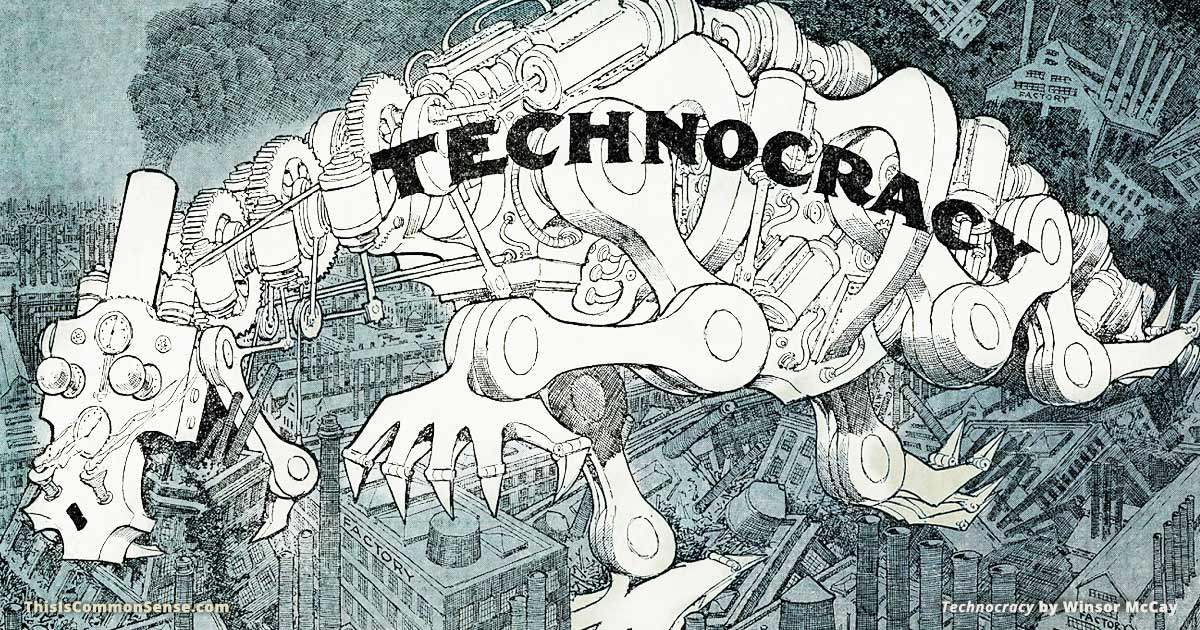
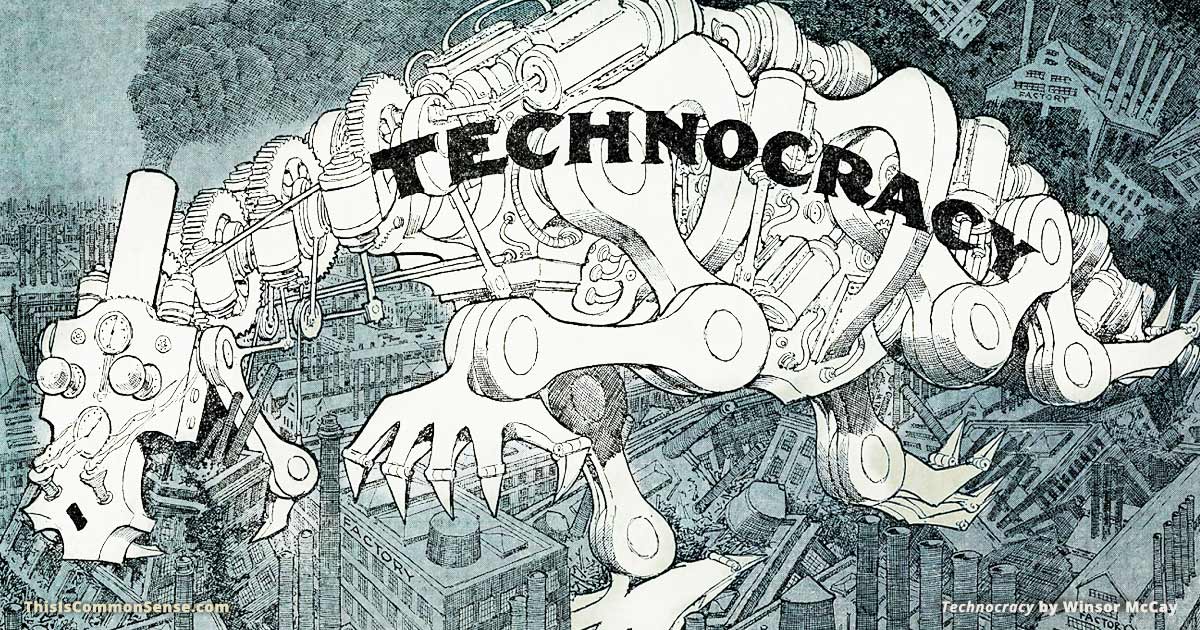
Brennan has a new book coming out, Against Democracy, wherein he posits that we need “a new system of government — epistocracy, the rule of the knowledgeable.”

Sound familiar? ’Tis the old Platonic whine in new wineskins.

This Philosopher King is necessary, you see, because citizens don’t posses the advanced degrees to judge whether Brennan is right or wrong. We can’t even find a Holiday Inn Express in the phonebook. Or a phonebook.

Nonetheless, why not consult other known knowers?

The late William F. Buckley, Jr., well-educated and well-spoken on political matters, once declared that he would “rather entrust the government of the United States to the first 400 people listed in the Boston telephone directory, than to the faculty of Harvard University.”

“Incestuous, homogeneous fiefdoms of self-proclaimed expertise are always rank-closing and mutually self-defending, above all else,” warned journalist Glenn Greenwald, an expert on such hooey.

“I know no safe depositary of the ultimate powers of the society but the people themselves,” wrote Thomas Jefferson, “and if we think them not enlightened enough to exercise their control with a wholesome discretion, the remedy is not to take it from them, but to inform their discretion by education.”

Most decisions in a free society are thankfully made by individuals (not voters, bureaucrats, or academics) about their own lives.

But when legitimate decisions of governance must be made, I’ll take democracy over rule by experts.

This is Common Sense. I’m Paul Jacob.


Printable PDF

technocracy, expert, epistocracy Brexit, illustration