Categories
Accountability ballot access general freedom incumbents initiative, referendum, and recall national politics & policies political challengers responsibility too much government U.S. Constitution

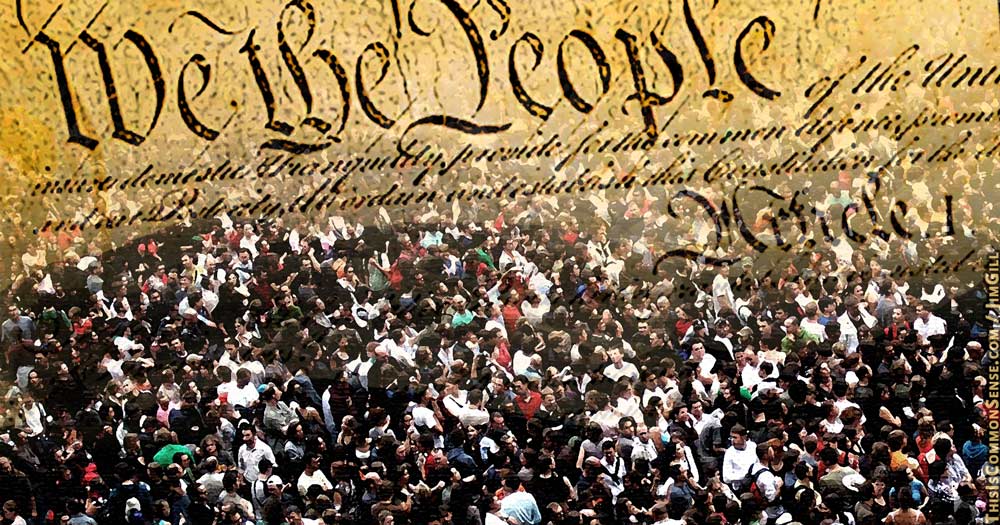
Votes Without Poison

Strange election. So . . . round up the usual suspects!

Immediately after Hillary dried her tears and conceded, out came the Tweets, then the analyses: the “third parties” are to blame!

Over the weekend, I focused* on one such election post-mortem. The basic idea is not altogether wrong: minor party efforts together may have cost the Democrat her Electoral College advantage this time around, just as Nader’s Green Party run spoiled Al Gore’s bid in 2000 and several past congressional races have been spoiled for the GOP by Libertarians.

Is there a problem here? Yes. But do not blame the minor party voters. It’s the way we count their votes that is “problematic.” The current ballot-and-count system turn voters most loyal to particular policy ideas into enemies of those very same ideas.

When we minor party voters turn away from a major party — usually because said party tends to corrupt or betray our ideas, or make only small steps toward our goals — our votes aren’t so much wasted as made poisonous.

Because the candidate least preferred may prevail.

But there’s a way out: On election day, voters in Maine showed how to cut through the Gordian Knot. Voting in approval for Question 5, Maine now establishes “ranked choice voting.”

Under this system, you don’t “waste” your vote when expressing a preference for a minor party candidate. You rank your choices and, if your first choice proves unpopular, your second choice (or maybe your third) gets counted. So you don’t “poison” your cause.

Republicans and Democrats have more than enough reason, now, to adopt ranked choice voting across the country.

This is Common Sense. I’m Paul Jacob.


* See yesterday’s links page to my weekend Townhall column for the basic references. But there were many, many articles on the Minor Party Effect, including a skeptical one by Sasha Volokh’s.


Ask the next question.

Questions Answered:

What is the effect of minor parties on major party outcomes?

What causes those effects, voter intent or something else?

Is there a way to prevent this, short of further sewing up the ballot access system to minor parties?

The Next Question:

What might our elections look like if people spent more time discussing issues and ideas … and less about class, culture wars, and sex crimes?


Printable PDF

ranked choice, vote, voting, democracy, clown, illustration


Categories
Accountability general freedom ideological culture moral hazard national politics & policies political challengers responsibility too much government U.S. Constitution

The Wisdom of the Founders

“At a certain point, you have to let go for the democracy to work,” President Barack Obama told HBO’s Bill Maher last week, praising “the wisdom of the founders.”

“There has to be fresh legs,” he continued. “There have to be new people. And you have to have the humility to recognize that you’re a citizen and you go back to being a citizen after this office is over.”

Maher failed to ask Mr. Obama how this “fresh” viewpoint squared with his support for Mrs. Clinton. Nevertheless, let’s applaud the president’s endorsement of term limits.

Speaking of the founders, and limits on power, and this being Election Day, I’m reminded of a commentary in Forbes, back on Election Day four years ago, written by Ed Crane, the man who built the Cato Institute into one of the nation’s preeminent think tanks. Bemoaning the “interminable presidential race,” Crane wished for “a nation in which it really didn’t matter who was elected President, senator or congressman.”

“Don’t get me wrong, because I’m not saying it doesn’t,” explained Crane, “only that it shouldn’t.” He added, “I believe the Founders had a similar view.”

His point is simple: Getting to vote for your next president and senator and congressman is swell, but it’s important to have a Constitution that restrains those elected, so they “don’t have a heck of a lot of power over you or your neighbors.”

“We are a republic of limited governmental ­powers,” or should be, argued Crane. “Such a nation allows for sleep on election night.”

Instead of gnashing of teeth.

This is Common Sense. I’m Paul Jacob.


Printable PDF

Constitution, voting, democracy, Ed Crane, fear


Categories
ballot access general freedom government transparency media and media people national politics & policies political challengers

A Brexit Effect?

Before the Brexit vote, the likelihood of British secession from the European Union garnered a mere 25 percent chance. That was according to European betting markets, which are usually more accurate. In June, the Brits voted Brexit.

Donald Trump has made much hay of this, understandably.

On Tuesday, the odds of a Trump victory hit the same mark: 25 percent.

Gwynn Guilford’s report on this was drolly titled “Donald Trump has the same odds of winning as Jon Snow ruling Westeros, according to betting markets.”

On June 11, Business Insider had reported that Hillary was increasing her lead; on October 18, it exulted that the Irish betting markets had “already declared a winner” — not Trump. On November 1, the news aggregator merely noted that Moody’s is calling the election a landslide for Clinton.

But BI is also covering the scandal that has disturbed the Clinton camp. There’s no love lost between the Federal Bureau of Investigation and the Department of Justice, explains Natasha Bertrand in “‘The Antichrist personified’: ‘Open warfare’ and antipathy toward Clinton is reportedly fueling the FBI leaks.” The meat of her representation is that “much of the agents’ frustration . . . may boil down to partisanship”; the FBI is “Trumpland.”

Yet the article ends quoting another FBI official insisting that both Trump and Clinton are awful candidates.

A plausible judgment.

Whether late-in-the-game revelations of Clinton corruption and FBI probing can defy current odds and produce a Clinton defeat remains to be seen. As of Thursday evening, polls-only forecasts placed the odds of winning at 67/33 in favor of Mrs. Clinton, while electionbettingodds.com placed them at 70.2/29.2.

This is Common Sense. I’m Paul Jacob.


N.B. Late-breaking Brexit news: The United Kingdom’s high court ruled yesterday that Parliament must vote to approve Brexit before the secession can proceed.


Printable PDF

gamble, betting, HIllary Clinton, Donald Trump, president, presidency, election, voting, illustration, creative commons


Categories
Accountability general freedom initiative, referendum, and recall local leaders media and media people nannyism national politics & policies

Are We Special?

“Cringe-worthy,” said Kyle Clark, co-anchor of 9NEWS in Denver. He was mocking the 10-foot tall, carved, wooden Trojan Horse replica that Amendment 71 opponents are wheeling around the Rocky Mountain State.

Clark admits that Amendment 71 “would make it harder to change Colorado’s constitution,” but doesn’t seem to have any clue just how much harder.*

“Those opponents with their Trojan Horse want to paint 71 as a sneaky power grab by big money interests from out of state,” Clark continued. “Funny, though, when you find out who paid for their horse.”

Wait . . . this is BIG: Who paid for the horse?

“It’s an in-kind contribution from Citizens in Charge Foundation. They’re a group that protects the initiative process around the country. . . . based out of Woodbridge, Virginia,” replied an Amendment 71 opponent.

Hey, that’s my group!

“Amendment 71 might be a Trojan Horse funded by outside interests,” Clark concluded, but it’s “illustrated by the Trojan Horse funded by outside interests.”

Cute . . . but . . . ?

Does Mr. Clark seriously think that (a) an organization dedicated to making the ballot initiative process accessible to all, with no other interest or business before state government, providing a vehicle and a trailer to carry a wooden horse across the state is equivalent to (b) a multi-million-dollar paid media barrage funded largely by oil and gas interests with lucrative interests before state government?

Citizens in Charge Foundation is honored to work with Coloradans to save their initiative rights by defeating 71.

Speaking of interests and who’s paying . . . 9NEWS has received the better part of a million dollars in ad revenue from the interests supporting Amendment 71.

Compared to a peek at a wooden horse from opponents.

Kyle Clark didn’t mention that.

This is Common Sense. I’m Paul Jacob.


P.S. Please help save Colorado by making a contribution right now.


*Coloradans who have actually qualified ballot initiatives say Amendment 71 would kill the process for all but the wealthiest special interests.


Trojan Horse Trails in Colorado


Printable PDF

Trojan Horse, Colorado, Amendment 71, initiative, referendum, Citizens in Charge, Paul Jacob,


Categories
Common Sense free trade & free markets general freedom initiative, referendum, and recall local leaders nannyism national politics & policies political challengers Regulating Protest too much government U.S. Constitution

Don’t Kill Colorado!

America has lots of problems. Colorado isn’t one of them.

Search the Internet and confirm that the Rocky Mountain State is the fourth best state “to make a living”; sixth best for homeowners; third on CNBC’s “Top States for Business”; and even holds a coveted first place in “arts engagement.”

What’s not to like?

I know Colorado, fondly, as the only state with a Taxpayer Bill of Rights (TABOR), a constitutional amendment requiring state legislators who want to hike spending or taxes to first ask citizens for approval. It was passed by voters in 1992, by citizens’ initiative.

Imagine that! Citizens in charge. In real life.

In Colorado.

Unsurprisingly, TABOR has long been No. 1 on Big Government’s hit list; for politicians, lobbyists, university presidents and political insiders, it’s the bane of their existence.

Along with the citizen initiative process, from which it came.

That’s why Colorado’s political establishment spent a million dollars to put Amendment 71 on next Tuesday’s ballot. They aim to kill both TABOR and the citizen initiative.

The amendment allows any partial or total repeal of TABOR — or other current parts of the state constitution — with a simple majority vote of 50-percent-plus-one. But it demands that any new enactment of taxpayer protection (or other reform) leap over a 55 percent supermajority hurdle.

Fair?

It means that a court decision, which “reinterprets” any provision of the Taxpayer Bill of Rights, could only be corrected by citizens with a supermajority vote. And citizens would face an avalanche of big spending from big labor and big business. That’s not a bug, but a feature for the powerful forces behind 71.

Still, Amendment 71’s murderous intent goes deeper. The measure also destroys the ability of regular people and grassroots groups to petition constitutional amendments onto the ballot. Instead of one statewide petition drive, Amendment 71 adds 35 additional onerous petition requirements — in every single senate district in the state.

The next question is obvious: Did the political big-shots behind Amendment 71, who blew a cool million dollars to gather their signatures, manage to meet their own mandate for future initiatives by qualifying in all 35 senate districts? Not even close.

While the lobbyists and politicians behind 71 have spent many additional millions claiming Colorado is the easiest state to amend the constitution, a real expert — Dane Waters, chairman of the Initiative & Referendum Institute — concludes just the opposite. His analysis indicates that Colorado’s process is actually “one of the most difficult in the country.” And should 71 pass, Colorado would have “the most strict distribution requirement anywhere in the world,” he said.

Waters fears that by blocking initiative constitutional amendments “on top of the fact that the legislature [in Colorado] has the authority to overturn any statutory initiative, [Amendment 71] will basically shut down the initiative process in Colorado.”

And that is how voters would be silenced and the investments powerful interests have made in the Centennial State’s legislature would be protected.

So there is no reason to be shocked when a bevy of special interests — most notably oil and gas interests, but also gambling interests and other major lobbies — raise and spend over $20 million dollars carpet-bombing the state’s electorate with TV and radio ads, slick mailings, and robo calls to support Amendment 71. They’re trying to convince voters to restrict their own power and increase the legislature’s leverage, since those special interests feel much more “comfortable” with politicians making all the decisions.

And voters making exactly none.

The politicians and lobbyists behind 71 have pulled out all the stops. Big money dominates the airwaves; all four living former state governors are on board; and their TV spots even feature the beloved Hall of Fame Denver Broncos QB John Elway.

But in the end, the beautiful thing about a ballot initiative is that voters have the final say.

And that’s why grassroots groups from throughout the state and all across the leftright spectrum, from the state’s free-market Independence Institute to progressive Common Cause, from pro-TABOR taxpayer groups to more liberal anti-fracking activists, from Colorado NARAL to Colorado Right to Life — those who care about citizens having a say in government — are standing up to the big money establishment barrage, joining the coalition to Stop71.org.

Weeks ago, to kick off the campaign, Citizens in Charge Foundation provided the Vote No on 71 Committee a 10-foot tall, carved, wooden Trojan Horse. The float has been wheeled across the state on a trailer, dramatizing that Amendment 71 is a Trojan Horse from big money interests, who pretend they’re protecting the constitution when they’re actually seeking to restrict citizen power. Providing this focal point has allowed dozens of Colorado citizens to speak out to fellow voters, garnering tons of media attention in the process.

The Trojan Horse continues to reach voters, but like stone soup, the Vote No on 71 campaign has grown in many diverse ways:

  • The head of Common Cause, Elena Nunez, and the head of the Independence Institute, Jon Caldara, have bridged ideological divide to reach out to editorial boards across the state, resulting in the Denver Post and most other major papers editorializing against 71.
  • The Colorado League of Responsible Voters raised several hundred thousand dollars and is running a TV spot countering the millions spent by proponents.
  • The Greenpeace blimp floats over the state, sending the Vote No on 71 message airborne.
  • The coalition has grown to more than 76 groups, each contacting its membership and urging folks to spread the word against 71.
  • A number of groups are advertising against 71 on Facebook.
  • A volunteer phone bank has been set up making thousands of calls to likely voters.

As this election winds down, we know we’re underdogs against the big-shots and their big money. But we also know we cannot let them kill the initiative without a fight. And we know that if we can reach enough Colorado voters with our message against Amendment 71, we can defeat it.

Help us reach more Colorado voters. The best way you can help is to make a financial gift right now. Today. The hour is very late, some voters have already cast their ballots, more are voting every day up until Nov. 8.

Please don’t let them kill Colorado. Help now:

  • Your $50 giftcovers gas for the Trojan Horse to reach another town
  • Your $100 giftpays to put 1,000 flyers on voters’ doorknobs.
  • Your $500 gift – launches Facebook ads reaching 5,000 voters or more.
  • Your $1,000 giftpays for robo phone calls to 10,000 folks who haven’t voted yet, reminding them to vote NO on Amendment 71.

Please give what you can. And take action now.

Can’t afford to give? How about giving your time?

Join our volunteer phone bank and dedicate a few hours one night this week or over the weekend to call likely Colorado voters between 4 pm and 8 pm Mountain Time. You can sign up here for two or four hour shifts and we’ll walk you through how it works.

You do NOT have to live in Colorado to pick up the phone and educate Rocky Mountain State voters about Amendment 71.
Those pushing Amendment 71 claim they want to protect the state constitution from “too many” amendments. But where’s the problem? They won’t say what amendments they believe don’t belong in the constitution.

No, they aren’t seeking to protect Colorado’s constitution, but rather Colorado’s political establishment.

The good guys, Colorado citizens, have taken aim to shoot down Amendment 71. They’ll save the initiative and good government . . . if you’ll pass the ammunition.

This is Common Sense. Thanks for your serious consideration. I’m Paul Jacob.


Printable PDF

TABOR, Amendment 71, Colorado, Raise the Bar, initiative, voter rights, Taxpayer Bill of Rights,


Categories
Accountability crime and punishment general freedom ideological culture judiciary national politics & policies U.S. Constitution

The Best Case for Trump Isn’t

I support neither Hillary Clinton nor Donald Trump for the presidency. Still, I do understand several reasons to vote for Trump, including, most obviously, “he’s not a Clinton.”

The most persuasive strategic reason given for voting for the man, however, and the one that has most purchase with me, is that he would appoint better Supreme Court justices than would Mrs. Clinton.

Note: if the Democrats gain hold of the U.S. Senate, an elected Donald Trump would “negotiate.” And the next set of Supremes might be quite bad.

But is all this irrelevant? It does not look like Trump will be elected, so any vote thrown at him will be just as “wasted” as a vote for Johnson, Stein, or Mickey Mouse.

More importantly, if Hillary wins, no biggie on the Supreme Court front IF (a big “if”?) the Republicans maintain congressional dominance.

Why?

Our Senators are not required to vote for any of a president’s appointees. But, alas, that is not what Democrats are saying now! Forget such self-serving nonsense. The Constitution does not specify the number of justices on the Supreme Court. It is nine now, sure, but the Highest court in the land was first manned by five justices, then seven.

So, after the election, unpack the court.* Back down to seven, at least.

And then let’s talk terms for the currently “serving for life” justices, and term limits.

In any case, the best case for Trump isn’t so much a case for him, as a plan of action no matter who is elected.

This is Common Sense. I’m Paul Jacob.


*This notion is more doable, I think, than Franklin Delano Roosevelt’s infamous court packing scheme, in which he threatened to put more justices in to over-rule those justices who thought his “New Deal” program unconstitutional. Congress, not required to vote in any proposed Supreme Court candidate, could balk at all and then, by law, reduce the number, even removing one justice from office if need be.


Printable PDF

Supreme Court, Congress, Hillary Clinton, Donald Trump, election, illustration


Questions Answered:
Does the best reason to vote for Donald Trump really hold water?
Does the Constitution specify the number of justices that should be on the Court?
Is Congress really at the mercy of any bully who occupies the Oval Office?

Ask the next question. --Theodore SturgeonThe Next Question:
Will voting for someone other than Trump be more of a “wasted vote” than voting for Trump himself, if, as polls indicate, he loses?


Categories
Accountability general freedom nannyism national politics & policies responsibility too much government

Report from the Lab

The State of Idaho does something the federal government should emulate. The only state I can think of that has a popular candy bar named after it has a legislature that regularly nixes regulations made by the state’s executive branch.

Think of it as a line-item veto for the legislature.

Now, at this point, if you know the Constitution but not today’s “living Constitution,” you might wonder: Don’t legislatures write the regulations? Alas, at the federal level, as in most states, the legislative branch has granted to bureaucrats in the Executive Branch a great deal of leeway to cook up what sure feel like “laws.”

“Last year the Federal Register,” Wayne Hoffman explains in theWall Street Journal, “which publishes agency rules, proposals and notices, exceeded 80,260 pages — the third-highest in its history, according to a report from the Competitive Enterprise Institute.”

Idaho provides a good model for taking back such ceded legislative power.

Let’s remember the idea of “the several states” experimenting with new and old ideas separately, heralded in a famous phrase, “laboratories of democracy.”

This allows good practices to spread slowly throughout all the states . . . based on results.

Meanwhile, Mr. Hoffman informs us, Idaho’s practice is traditional, not hallowed in the state’s constitution. A 2014 referendum narrowly failed to get Idahoans to change the constitution to incorporate this “best practice” into explicit law — the legislature had not adequately explained the situation to the public first time around — Idaho solons are trying again.

Make representatives responsible for regulations, and therefore more accountable.

This is Common Sense. I’m Paul Jacob.


Printable PDF

bureaucrats, regulation, laws, Idaho, illustration


Illustration: Golconda by René Magritte


Categories
Accountability general freedom initiative, referendum, and recall national politics & policies

What Me Vote?

The people, without permission, The New York Times recently explained, in

  • Colombia, rejected a peace deal deemed too soft on the communist FARC guerrillas; in
  • Britain, decided to leave the European Union; in
  • Thailand, ratified a new constitution; and in
  • Hungary, rejected the European Union refugee resettlement plan.

I’ve not perused the Colombian accord. I’m actually not permitted to vote there — though I once stayed at a Holiday Inn Express in Bogotá. In lieu of moi, who better to decide than the Colombian people?

Brexit, too, was a decision for the inhabitants of the United Kingdom, not me.

Thailand is under military rule. Passage of the referendum was promoted as a pre-condition for moving toward democracy; campaigning against the constitution was outlawed. When a gun is held to your head, there is no democracy.

An unbelievable 92 percent of Hungarians rejected the EU plan to set migration policies for Hungary. But turnout below 50 percent invalidated the result.

“Though such votes are portrayed as popular governance in its purest form, studies have found that they often subvert democracy rather than serve it,” claims the Times report, “Why Referendums Aren’t as Democratic as They Seem.”

Without offering any studies.

The problems with these four ballot questions, to the degree there were any, weren’t caused by democracy, but a lack thereof.

Nonetheless, asensible academics pontificated that people are too stupid to be permitted to vote. A London School of Economics professor said referendums are “risky.” They “range from pointless to dangerous” claimed an Irish political scientist. A hyperbolic Harvard professor posited that referendums are “Russian roulette for republics.”

But which is worse: clueless academics, tyrannical pols, or . . . democracy?

This is Common Sense. I’m Paul Jacob.


Printable PDF

initiative, referendum, democracy, voting, legislature, illustration


Categories
Common Sense general freedom ideological culture initiative, referendum, and recall political challengers responsibility term limits too much government U.S. Constitution

Duck/Rabbit, Maiden/Crone, and Taxes

Revolution! Must we?

Can’t we reform at a reasonable pace?

Well, whether we change slowly or quickly, change must occur. Today’s in-place policies are not stable.

But a better future itself must be stable. Or else it will not be better.

And a key to successful change is change in the hearts and minds of the people. The vast majority, East and West, need to shift mental gears and shift their ideological paradigms. (That is the term most famously used by Thomas Kuhn.)

Take yesterday’s story. I first heard about it from proponents of Oregon’s big business excise tax hike. They were saying that Oregon had the lowest business taxes in the union, and took that as a cue to raise taxes. I looked at it as a great political success, and one that had contributed mightily to Oregon’s remarkable economic resilience in these trying economic times.

The difference between the Higher Taxes reaction (which views low taxes as an opportunity only to raise them, and the consequences mainly as who gets the tax funds) and my reaction (which concentrates on the consequences of the expropriation, and looks to a longer period of time to gauge results) is a paradigm shift. To go from one to the other (preferably from the pro-tax to the low tax position) requires a shift in vision.

It is like what happens when you refocus on the Duck/Rabbit image, or the Maiden/Crone. Give a person some time. Be patient. And hint that a shift in perspective is warranted to see both.

And that we might gain something from a paradigm shift.

This is Common Sense. I’m Paul Jacob.


Printable PDF

maiden/crone, illusion, paradigm shift


Categories
Accountability Common Sense general freedom ideological culture initiative, referendum, and recall insider corruption media and media people moral hazard nannyism national politics & policies political challengers responsibility too much government U.S. Constitution

America After November

Yesterday, I bemoaned the disaster that is this year’s presidential race. But big whup. As the LifeLock commercial rightly asks, “Why monitor a problem if you don’t fix it?”

Hillary Clinton or Donald Trump will be the next president. That means we have our work cut out for us. And we can’t wait for the 2020 presidential race to fix the problem. We must immediately assert citizen power to create an effective check on government-gone-wild.

So, what to do?

First, let’s admit that fixing Washington isn’t easy. We must fight the Feds through national organizations, of course, but we actually gain greater leverage by working closer to home — at local and state levels.

We need to elect mayors, governors, legislators and councilmembers in 2017 and 2018, men and women who will fight for free markets and against cronyism. And stand up to the federal government.

And where we have the power of ballot initiatives and recall, let’s use it.

By Inauguration Day, we can be changing the conversation in most of the top 25 media markets. How? By petitioning the right issues onto the ballot. By April and May, voters in those cities and counties can directly enact those reforms. Next November, Ohio and Washington state voters can weigh in with ballot initiatives.

Sadly, tragically, it’s too late to stop campaign 2016’s tornado from doing damage. The next disaster of an administration is on its way. But we can create a competing agenda to the Hillary Clinton or the Donald Trump agenda.

A pro-liberty agenda. Starting now.

This is Common Sense. I’m Paul Jacob.


Printable PDF

activism, politics, elections, initiatives, president, Trump, Clinton, meme, illustration


Original (cc) photo by Niklas Hellerstedt on Flickr