
Categories
free trade & free markets regulation too much government

The Crime of Mowing the Lawn

As war rages in the Middle East, Ukraine, and elsewhere, some U.S. politicians struggle to devastate the American landscape. One of their targets is American landscaping equipment.

In Washington state, lawmakers hope to put an end to gas-powered landscaping. If they succeed, the ordinary activities of humble homeowners and businessmen — humble but determined to keep using Yardmax lawn mowers and Echo leaf blowers — would be criminalized.

Regulations instead of bombs will be the way. If you don’t follow the regulations, then you’ll be “bombed” with fines. Or jail time.

State Representative Amy Walen is pushing legislation, HB 1868, that would “prohibit engine exhaust and evaporative emissions from new outdoor power equipment,” a prohibition to take effect as early as January 1, 2026.

Persons using gas-powered equipment bought before the ban takes effect would presumably not be subject to fines or jail time. They might still be subject to investigation, though, if one of their grandfathered gas-powered tools looks too shiny.

And they might be at risk if they ignore the prohibition and buy post-January-2026-produced gas-powered mowers from out of state.

Exactly how the legislation would play out is hard to predict. But it does not look good for the average guy who just wants to keep his plot in shape.

Government agencies dealing with “natural or human-caused emergency events” would be exempt, at least initially. They wouldn’t have to worry about spending a year in jail for efficiently cutting the lawn. 

Just everybody else.

This is Common Sense. I’m Paul Jacob.


PDF for printing

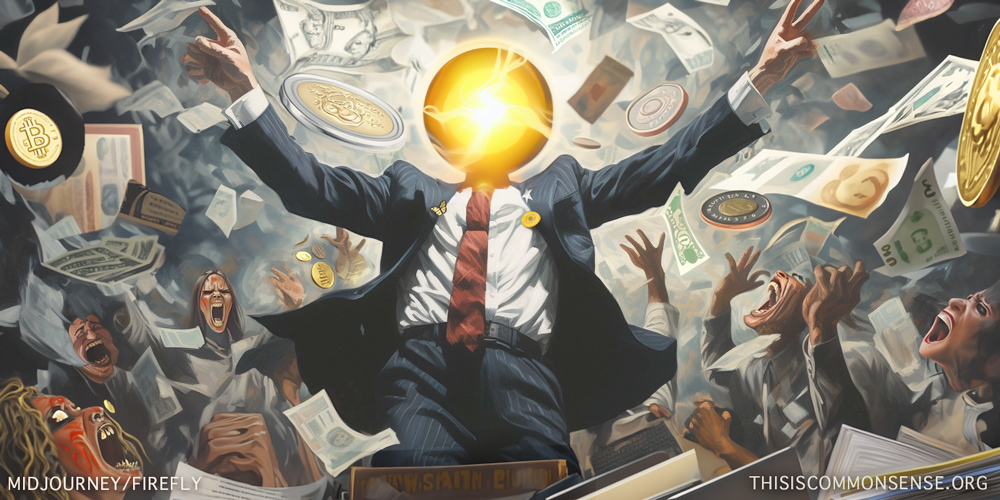
Illustration created with PicFinder and Firefly

See all recent commentary
(simplified and organized)
See recent popular posts
Categories
free trade & free markets political economy too much government

The Not-Unintended Consequences

When bad outcomes are obvious, we can no longer call them “unintended consequences,” can we?

Take the case of California’s double-barreled attack upon “fast food”: last year’s push through the legislature of Assembly Bill 102 and Assembly Bill 1228. These regulatory schemes would have introduced collective bargaining into fast food franchises and enforced much higher minimum wage rates.

The two laws sparked an industry backlash, in the form of ballot referendums to halt the regulatory onslaught, which Steven Greenhut writes about at Reason. “In September, Gov. Gavin Newsom announced a ‘truce,’” Greenhut explains. “The industry pulled its ballot measure and agreed to a $20 minimum wage. In return, Newsom and unions limited the power of the Fast Food Council and removed joint-liability provisions.”

The concession on hiking the legal wage minimum was agreed to, notice, by the fast food lobbyists. Not the workers. 

As those familiar with elementary economics understand, when the costs of an input (like labor) are increased, alternatives to those inputs will be sought. So we can expect more replacements of workers with automation — as we’ve seen all around the country in fast food, especially at McDonald’s — as well as higher prices.

Which, in a state sporting huge homelessness and unemployment problems, will only hobble the one industry that helps the poorest members of society both in terms of consumer products (inexpensive food) and entry-level jobs (at fast food joints).

Perhaps California’s Democrats know full well what they are doing. They push crazy policies not because the negative outcomes are “unintended” or unforeseeable.

You see, it’s not disastrous for them.

This is Common Sense. I’m Paul Jacob.


PDF for printing

Illustration created with PicFinder and Firefly

See all recent commentary
(simplified and organized)
See recent popular posts

Categories
free trade & free markets too much government

Why the Banks Are Failing Us

We depend on big businesses, especially upon banks. We pay for our food, clothing, medicines, and much else with little plastic cards from our banks. So when those cards stop working, all of a sudden — without warning — our hearts are going to do a bit more than beat just a little faster.

Why would there be big hiccups at all? 

As Brian Doherty remarks at Reason, it’s not just “frustrating when those businesses make seemingly arbitrary decisions that cripple your ability to function in a modern economy,” it’s hard to understand. After all, “the incentives of businesses are to, well, do business with customers.”

Why would banks, then, increasingly treat customers badly?

I’m not talking about the allegedly transient snag in the direct deposit system last week — apparently due to human error — but something more persistent, if scattershot.

Doherty found an answer in The New York Times, in an article “giving infuriating details of innocent Americans being cut off by their banks.” 

It should not shock the reader, Mr. Doherty explains, revealing: “the real cause of the banks’ seemingly arbitrary behavior is government rules designed to make sure it knows everything it can about citizens’ banking business, to discourage big cash transactions, and to ensure businesses the government disapproves of have as difficult a time as possible without being explicitly banned.”

Nearly ten years ago I wrote about it in a discussion of Operation Choke Point. Since then, in the words of the New York Times, “a vast security apparatus has kicked into gear, starting with regulators in Washington and trickling down to bank security managers and branch staff eyeballing customers.”

Who’ll be next?

This is Common Sense. I’m Paul Jacob.


PDF for printing

Illustration created with PicFinder and Firefly

See all recent commentary
(simplified and organized)
See recent popular posts

Categories
free trade & free markets general freedom too much government

Mass (Private) Transit

“Metro is dangling from a fiscal cliff,” hollers last Saturday’s Washington Post editorial headline. The “transit system faces a ‘death spiral’ starting next summer,” according to “the usually stolid pages of Metro’s financial projections.”

The Post informs that Metro’s “systemic budget problems have been compounded by pandemic-driven revenue shortfalls, inflation and the upcoming expiration of a federal bailout for transit systems.” 

Oh, what a cruel turn of events, Washington’s ill-mannered and unsafe transit system needs a bailout from local politicians . . . because the current financial bailout it receives from federal taxpayers is about to fizzle out. 

Life is tough. 

Metro has only about 70 percent of the funding it needs, so get ready for blood-curdling cries of “drastic service cuts”— until or “unless the region’s elected officials, along with Congress, devise a fix,” The Post tells us.

Hell of a way to run a railroad — not earning a profit. Constantly failing customers and just as regularly begging for more money from politicians who get that moolah from folks like me . . . who rarely if ever use the mass transit we are told is so essential to us. 

There’s a better way.

“Rail company Brightline began operating trains Friday from Miami to Orlando,” reports The Post, “using the fastest American trains outside the Northeast Corridor to become the first privately owned passenger operator to connect two major U.S. metropolitan areas in decades.

“The debut of the 235-mile, 3.5-hour ride completes a $6 billion private investment in Florida.”

With speeds “quicker than Amtrak’s” and fares “comparable to Amtrak’s and competitive with airfare,” Brightline chief executive Michael Reininger talks of “the beginning of a new industry and a blueprint for expanding rail in America.”

Two approaches. One uses my tax dollars and fails. The other uses private investment. 

And seems to be expanding.

Rather than complaining. And begging.

This is Common Sense. I’m Paul Jacob.


PDF for printing

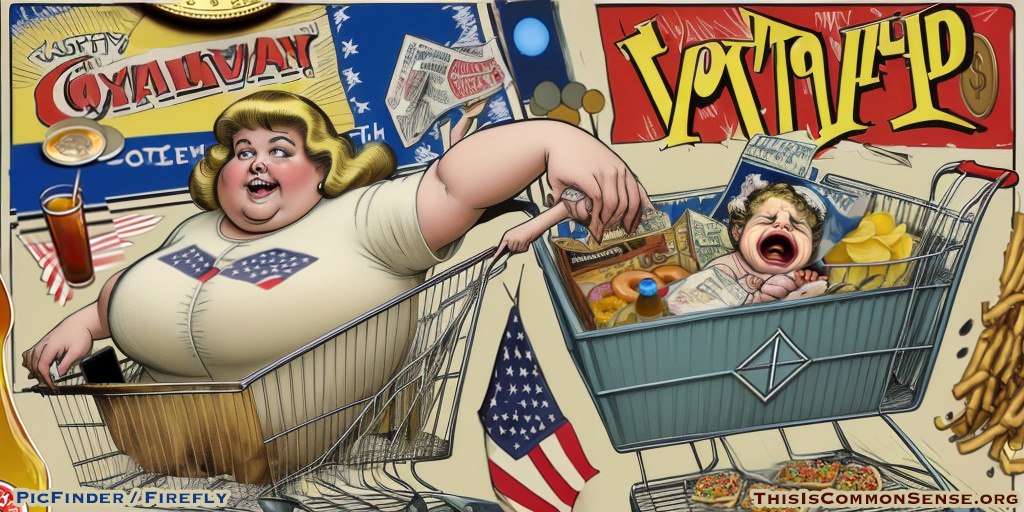
Illustration created with PicFinder.ai

See all recent commentary
(simplified and organized)
See recent popular posts
Categories
free trade & free markets national politics & policies too much government

Slow Murder Is Still Murder

Electricity providers must not beg the government to destroy them more slowly. 

“I’m not saying now’s the time to double down” on fossil fuels, pleads Lanny Nickel, chief operating officer of Southwest Power Pool, which helps provide electricity to 14 states. “I’m just saying now’s the time to slow down on the removal of [those] assets from our footprint.”

The assets Nickel means are oil, gas, coal.

Like others in the business of keeping the lights on, Nickel knows that if and when the percentage of fossil fuels in the utility industry “footprint” is coercively reduced to point oh one percent or whatever, wind and sunshine will not be taking up the slack. 

We’ll suffer, instead, from lots more brownouts and blackouts.

Nickel understands this. 

But begging regulators and politicians to go slower won’t discourage them. They’ll just gloat about how they’re making the utility executives sweat.

We should in fact be doubling down on fossil fuels, because these are the only always-reliable sources of electricity. 

Should solar and other sources of electricity become cheaper and more reliable, people won’t have to be compelled to increasingly turn to them. The transition would happen naturally, in the normal course of progress. 

And the notion that government will be able to fine-tune global weather if only we are forcibly deprived of our means of coping with the ups and downs of the weather is a willful delusion.

Electricity providers must not beg the government to destroy them more slowly, sure. But more importantly, the government should not be destroying them — and us — in the name of the religion of Climate Change at all.

This is Common Sense. I’m Paul Jacob.


PDF for printing

Illustration created with PicFinder.ai

See all recent commentary
(simplified and organized)
See recent popular posts

Categories
free trade & free markets media and media people political economy too much government

Incredulity Doesn’t Cut It

One of the objections people often make to the idea of private enterprise as a solution to government inefficiency is The Argument from Incredulity.

It’s not an argument at all, actually, just a harrumph and a guffaw: we cannot have free-market police, or fire suppression, or . . . garbage collection!

But of course all those things are successfully managed in the private sector.

No media outfit has a longer history of pointing this out than Reason magazine. So when the editors of Reason brought us Joe Lancaster’s “Government Waste Monopoly Pits Private Dumpster Business Against Garbage Bureaucrats,” yesterday, I hope they took a moment to revel in a little nostalgia. For this is the kind of story that made Reason what it is today, one of the best sources for retail political economy.

The tale tells of Steven Hedrick, an Arkansas man who put together a business renting out dumpsters — like you often see on construction sites, but smaller — which he would haul away after customers filled them. He built the business without ever going into debt, and then . . . came the government. 

“[I]n April 2022, the City Council in Holiday Island passed Ordinance 2022-004, which required all residents and businesses within the city to contract with the county sanitation authority, Carroll County Solid Waste (CCSW), for trash pickup and disposal services,” Reason informs us. “Anyone using private companies would have to switch, and anyone who did not have contracted trash service would have to sign up.”

And Hedrick’s little business must be . . . dumped.

What this is, at base? Sheer bigotry: preferring monopoly government to competitive private services.

For those of us who’ve been reading Reason for decades, it sports a familiar smell.

Just not a good odor, for the drive to monopolize everything stinks.

This is Common Sense. I’m Paul Jacob.


PDF for printing

Illustration created with PicFinder.ai

See all recent commentary
(simplified and organized)
See recent popular posts

Categories
folly free trade & free markets too much government

Make Them Pay

Thanks to renewable-energy mandates and other regulations, California muddles along with crippled power markets in which rolling blackouts are routine when demand for electricity is high and sun and wind are unavailable.

Apparently, this and other burdens on energy usage in the Brownout State are insufficient to fully immobilize everybody who relies on things that need to function. So the state’s utilities are preparing to also impose socialist billing on its customers.

Pacific Gas & Electric, San Diego Gas & Electric, and Southern California Edison are proposing that the flat-rate component of power bills be based on income. Once regulators sign off, there is to be an ongoing transfer of wealth from richer to poorer.

The utilities aren’t acting independently. 

They’re obeying a legislative mandate.

In addition to a flat-rate component of utility bills that would be $15 for the poorest customers and $85 for the wealthiest customers, there would still be a component based on power consumption. So the impending looting of nonpoor customers could be worse.

The socialism isn’t full bore yet.

But I doubt that initial limits on this redistribution agenda would remain intact were the scheme implemented and to persist.

In addition to other objections, there is also the matter of how utilities will know their customers’ incomes. Will customers be required to report and prove these incomes? The central planners presumably regard this invasion of privacy as not worth fretting about. 

They’re too busy creating perfect equality . . . of brownouts.

This is Common Sense. I’m Paul Jacob.


PDF for printing

Illustration created with PicFinder.ai

See all recent commentary
(simplified and organized)
See recent popular posts
Categories
free trade & free markets ideological culture national politics & policies

Old Woke, Not New

Last week’s collapse of the Silicon Valley Bank gets more interesting with each revelation. But one of them is probably not that it was “woke.”

Contrary to rumor, I see no real evidence that SVB gave millions to Black Lives Matter. The bank did pledge $50 million towards an internal program dubbed “Access to Innovation.” This, we are told, “sought to connect women, Black people, and Latinos with startup funding, networking, and leadership development in the venture capitalist ecosystem.” 

Sounds great in a press release, though what it has to do with making profits is a bit hard to determine. 

Very feel-good, not very bottom-line.

And that’s where the bank failed, on the bottom line. 

Its clientele was concentrated in one industry, which has been hit by rising interest rates. Thus stressed, it was exceptionally prone to “bank run” pressures. Its core asset class was long-term Treasury Bonds, whose value decreased with rising interest rates — and these were not hedged. 

As Forbes put it, “Whether it was fully or semi-deliberate, Silicon Valley Bank was betting heavily on interest rates not rising.”

An extremely bad bet.

But you can see why the bankers would make it, right? Why wouldn’t they expect the giveaway mentality of Zero Interest Rates Forever?

Their hopes dashed, they nevertheless turned to their friends . . . in power. The Biden Administration that failed to keep interest rates down then pledged to cover SVB’s clients — the super-rich corporations that true progressive Democrats pretend to hate for all their “profits” and “under-taxed” income — well above the FDIC-insured levels.* 

We may learn real data about the banks’ wokeness levels, rather than mere rumor, but the bedrock truth reveals itself as all-too-familiar: it’s all about monetary policy. 

That is, the “woke” ideas of a century ago, when the Progressives’ beloved Federal Reserve was created.

This is Common Sense. I’m Paul Jacob.


* Like Signature Bank, which was closed on Sunday, the overwhelming bulk of SVB’s deposits were uninsured by FDIC

PDF for printing

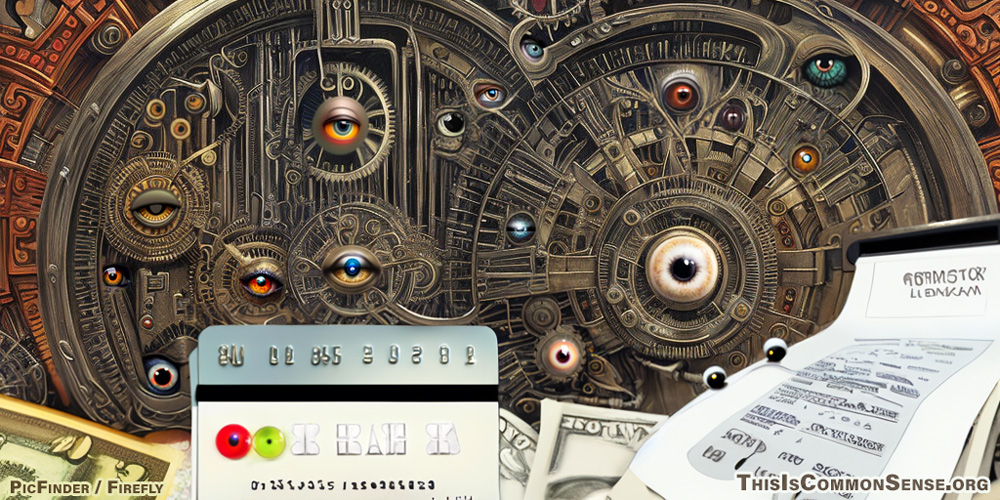
Illustration created with PicFinder.ai

See all recent commentary
(simplified and organized)
See recent popular posts

Categories
free trade & free markets moral hazard

Is It Still Capitalism?

Is it still capitalism if the capital is guaranteed?

“The U.S. government will guarantee all customer funds in Silicon Valley Bank (SVB) after a series of bad decisions and a run on deposits led to the bank’s collapse,” explains Elizabeth Nolan Brown in Reason

Technically, the bank isn’t being bailed out. Its customers are. And that’s a lot more popular than bailing out banks directly. There are more bank customers who vote than bankers who vote — though there is probably more political donations from banks directly seeking banking policy “correctives” than bank customers doing the same. That’s almost apodictically true.

The most bizarre element? While the FDIC, the federal agency that insures depositors of this and similar banks, is designed to guarantee depositors’ capital up to a certain limited amount ($250,000, more or less), the regulatory triumvirate of Treasury Secretary Janet Yellen, Federal Reserve Board Chair Jerome Powell, and FDIC Chair Martin Gruenberg declare that “all depositors of this institution will be made whole.” 

All.

Even the super-rich.

The key concept, here, is moral hazard — “The decision creates bad incentives for financial institutions and their customers” is how Ms. Brown puts it. We’ve been through all of this before. Is there really any question? The answers are in.

So, to the opening, Is it still capitalism if the capital is guaranteed? — if even Prince Harry’s fortune will be guaranteed — the answer is No.

Sorta. 

It’s a special kind of capitalism. State-dominated capitalism; Neo-mercantilism; f***-ism. Use whichever term.

As we contemplate a profit-and-loss system without loss, and how the losses will be made up within the financial system, just remember that the federal government playing the role of Savior is not itself costless, and . . . its debt keeps growing. And the Ultimate Result of all this still looms.

Immoral hazard.

This is Common Sense. I’m Paul Jacob.


PDF for printing

Illustration created with PicFinder.ai

See all recent commentary
(simplified and organized)
See recent popular posts

Categories
free trade & free markets ideological culture national politics & policies

Can You Bank On It?

With major financial institutions going belly up lately, now may not seem the best time to start a new bank.

But economic conditions are always dicey. 

In any case, much depends on whether the partners in such a venture follow sensible policies or treat depositors’ funds as gambling chips to be flung about in accordance with wishes, prayers, and prejudices.

Singer John Rich, doctor and politician Ben Carson, and pundit Larry Elder are teaming up to run Old Glory Bank. They’ve got at least one thing right. They see a market for “digital-first banking solutions” that is expressly anti-cancel-culture.

The three purchased an existing bank, First State Bank of Elmore City, Oklahoma, and are giving it a new name and modified mission.

According to Elder, Old Glory Bank, currently accepting account reservations, will be guided by principles of “liberty, privacy, security, community, family, and faith.” It’ll eschew what Rich calls “the political weaponization of the financial system.”

This sentiment contrasts with the animus animating outfits like PayPal, which cancels customers for having PayPal-disapproved views or political goals. (A pro-democracy group in Hong Kong is one victim of this policy.)

Some standard banks, too, have begun spurning customers involved in certain legal but politically controversial industries, like the firearms industry.

According to a press release issued late last year, Old Glory Bank “will never cancel law-abiding customers for their beliefs or for exercising their lawful rights of free speech.”

We will hold you to that.

This is Common Sense. I’m Paul Jacob.


PDF for printing

Illustration created with PicFinder.ai

See all recent commentary
(simplified and organized)
See recent popular posts