Categories
free trade & free markets moral hazard

Is It Still Capitalism?

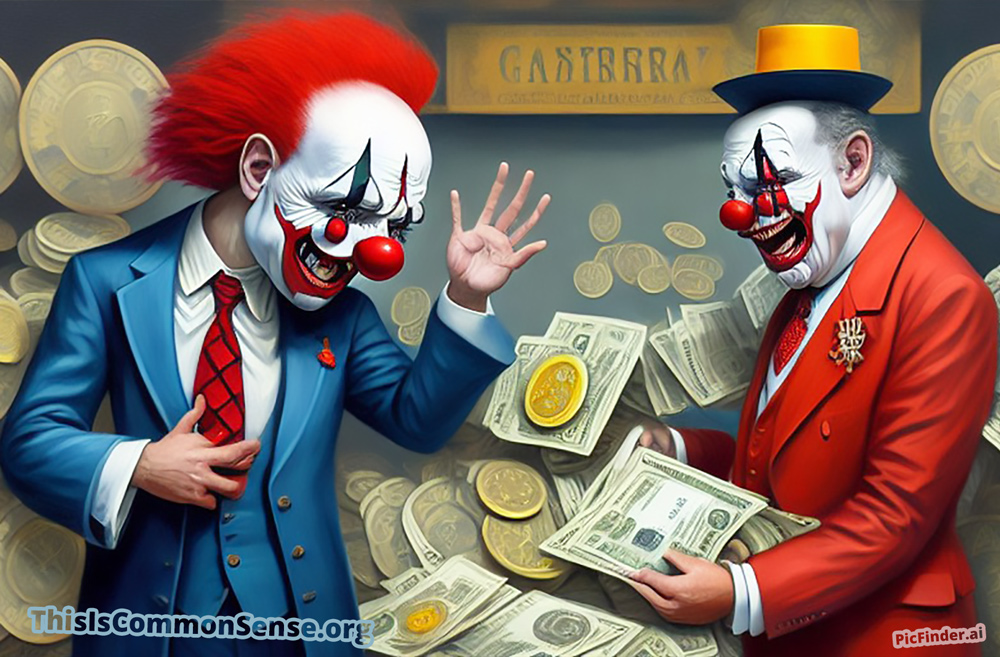
Is it still capitalism if the capital is guaranteed?

“The U.S. government will guarantee all customer funds in Silicon Valley Bank (SVB) after a series of bad decisions and a run on deposits led to the bank’s collapse,” explains Elizabeth Nolan Brown in Reason

Technically, the bank isn’t being bailed out. Its customers are. And that’s a lot more popular than bailing out banks directly. There are more bank customers who vote than bankers who vote — though there is probably more political donations from banks directly seeking banking policy “correctives” than bank customers doing the same. That’s almost apodictically true.

The most bizarre element? While the FDIC, the federal agency that insures depositors of this and similar banks, is designed to guarantee depositors’ capital up to a certain limited amount ($250,000, more or less), the regulatory triumvirate of Treasury Secretary Janet Yellen, Federal Reserve Board Chair Jerome Powell, and FDIC Chair Martin Gruenberg declare that “all depositors of this institution will be made whole.” 

All.

Even the super-rich.

The key concept, here, is moral hazard — “The decision creates bad incentives for financial institutions and their customers” is how Ms. Brown puts it. We’ve been through all of this before. Is there really any question? The answers are in.

So, to the opening, Is it still capitalism if the capital is guaranteed? — if even Prince Harry’s fortune will be guaranteed — the answer is No.

Sorta. 

It’s a special kind of capitalism. State-dominated capitalism; Neo-mercantilism; f***-ism. Use whichever term.

As we contemplate a profit-and-loss system without loss, and how the losses will be made up within the financial system, just remember that the federal government playing the role of Savior is not itself costless, and . . . its debt keeps growing. And the Ultimate Result of all this still looms.

Immoral hazard.

This is Common Sense. I’m Paul Jacob.


PDF for printing

Illustration created with PicFinder.ai

See all recent commentary
(simplified and organized)
See recent popular posts
Categories
free trade & free markets ideological culture national politics & policies

Can You Bank On It?

With major financial institutions going belly up lately, now may not seem the best time to start a new bank.

But economic conditions are always dicey. 

In any case, much depends on whether the partners in such a venture follow sensible policies or treat depositors’ funds as gambling chips to be flung about in accordance with wishes, prayers, and prejudices.

Singer John Rich, doctor and politician Ben Carson, and pundit Larry Elder are teaming up to run Old Glory Bank. They’ve got at least one thing right. They see a market for “digital-first banking solutions” that is expressly anti-cancel-culture.

The three purchased an existing bank, First State Bank of Elmore City, Oklahoma, and are giving it a new name and modified mission.

According to Elder, Old Glory Bank, currently accepting account reservations, will be guided by principles of “liberty, privacy, security, community, family, and faith.” It’ll eschew what Rich calls “the political weaponization of the financial system.”

This sentiment contrasts with the animus animating outfits like PayPal, which cancels customers for having PayPal-disapproved views or political goals. (A pro-democracy group in Hong Kong is one victim of this policy.)

Some standard banks, too, have begun spurning customers involved in certain legal but politically controversial industries, like the firearms industry.

According to a press release issued late last year, Old Glory Bank “will never cancel law-abiding customers for their beliefs or for exercising their lawful rights of free speech.”

We will hold you to that.

This is Common Sense. I’m Paul Jacob.


PDF for printing

Illustration created with PicFinder.ai

See all recent commentary
(simplified and organized)
See recent popular posts

Categories
First Amendment rights free trade & free markets general freedom

Sneaky Censorship

If our government tried to march all dissenters to jail — or hang them all — it probably couldn’t get away with it. Too many Americans still have enough sense of fair play and concern for individual rights to make such ugly expedients untenable.

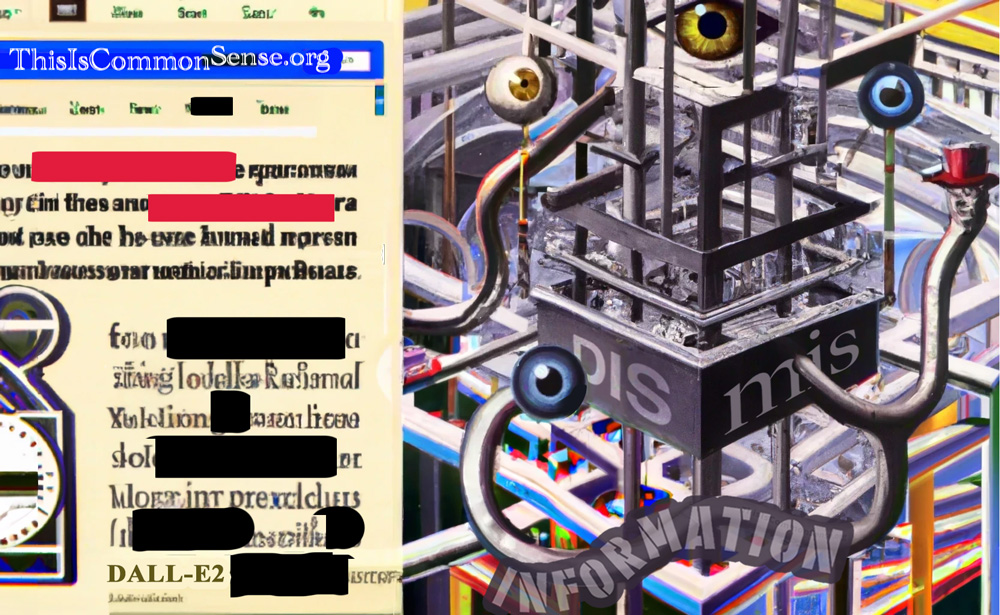
Also, the First Amendment hasn’t been repealed yet. Oh, no! So the non-crime of uttering “misinformation,” “disinformation,” “hate speech” — that is, uttering disagreement — can only be thwarted indirectly.

One way is for government officials to get chummy with compliant social media companies and point them to utterances (posted comments, videos) to censor.

Another is to fund organizations with missions of defunding wrongthinkers.

The Washington Examiner’s Gabe Kaminsky reports on the taxpayer-bankrolled conspiracy.

Congress funds the State Department and “two State Department-backed entities,” including National Endowment for Democracy; which has in turn been funding a British organization called the Global Disinformation; which has a group called the AN Foundation that is also called Disinformation Index Foundation; which is sending blacklists of websites that supposedly purvey disinformation to American ad companies like Microsoft-owned Xandr.

The State Department, not constitutionally authorized to censor our speech, gave over $300 million (three tenths of a billion) to the Endowment in 2021.

Websites to be deprived — and that probably have already been deprived — of advertising dollars as ad distributors seek to avoid “risks that arise from funding disinformation” include the New York Post, Reason, Newsmax, The Federalist, American Spectator

No commie egalitarians; no woke websites.

All very roundabout and mostly under the radar. As intended.

This is Common Sense. I’m Paul Jacob.


PDF for printing

Illustration created with PicFinder.ai

See all recent commentary
(simplified and organized)
See recent popular posts

Categories
First Amendment rights free trade & free markets general freedom international affairs

Censorship Rerun

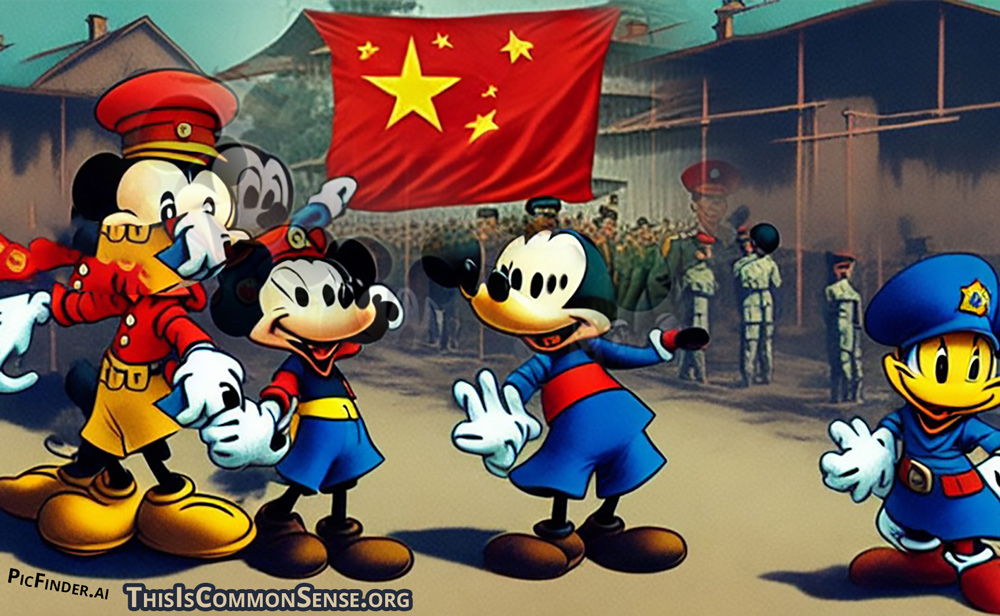
The Disney company, old chum of Chinese tyranny, is at it again.

In November 2021, Disney hid from Hong Kong viewers an episode of The Simpsons that mentions the Tiananmen Square massacre in a way not laudatory of the Chinese government. Disney had recently acquired 20th Century Fox, now called 20th Century Studios, which produces The Simpsons.

And now Disney has removed an episode from its Hong Kong platform because it refers to “forced labor camps” in China.

Let us not say that The Simpsons is just a cartoon.

Everything you could want to know about the evils perpetrated by the Chinese government, as established by eyewitness accounts and other documentation, is available in many videos and articles and books. But not everybody reads Steven Mosher or BBC backgrounders on the detention and murder of the Uyghurs.

When a cartoon character says “Behold the wonders of China. Bitcoin mines, forced labor camps where children make smartphones, and romance,” a viewer not yet acquainted with China’s policies has two options. He can let the words slide by unheeded, or he can make a mental note to find out what the cartoon is talking about.

I don’t want a world where such opportunities for enlightenment in our most popular cultural products are routinely squelched — in Hong Kong or anywhere else — by the likes of Disney, an entity whose controlling officers are much more concerned to rationalize, hide, and accommodate tyranny than to expose and counter it.

With the Chinese Communist Party pushing Disney to censor, why don’t we pummel Disney in the pocketbook from the freedom side?

This is Common Sense. I’m Paul Jacob.

See also:

PDF for printing

Illustration created with PicFinder.ai

See all recent commentary
(simplified and organized)
See recent popular posts

Categories
free trade & free markets general freedom too much government

Detonators in Place

You must place explosives a certain way when demolishing a building to avoid damaging surrounding structures. But if you just want to destroy, you can forget about such precautions.

Could this be the perspective of those demanding national rent control?

They forget — or ignore — the destruction of living space inflicted by incentive-incinerating rent controls in places like New York City and Santa Monica.

Rick Moran perceives that President Biden is making a “first move toward a radical national rent control law,” telling agencies to find ways to stop rent increases. Biden is doing so at the behest of 50 congressional communists who have implored him to take executive action to save tenants from rising rents.

According to their letter, “rent is too high and millions of people across this country are struggling to stay stably housed as a result.” Meanwhile, landlords are “increasing the rent for their own profit . . .”

Profit? In a market economy? 

Rising rents! Caused by . . . ?

But if you just want to “solve the problem” and have been trained to be heedless of the destruction regulation can cause, you needn’t think about cause and effect — who did what and how and why. In the interventionist mentality, when oil or food or housing prices zoom upwards, only one cause is possible, and it has nothing to do with politics and policies already in place.

Even if the government’s central banks have been zanily pumping up the supply of money and credit while city and state bureaus have been going all-out to hamper and halt production.

That single cause, they contend, can only be the grasping, grabbing, profit-seeking capitalists. You know. The bums who make their riches (when they do) by supplying us with what we need.

This is Common Sense. I’m Paul Jacob.


PDF for printing

Illustration created with Midjourney

See all recent commentary
(simplified and organized)
See recent popular posts

Categories
First Amendment rights free trade & free markets judiciary

The Wrong Kind of Speech

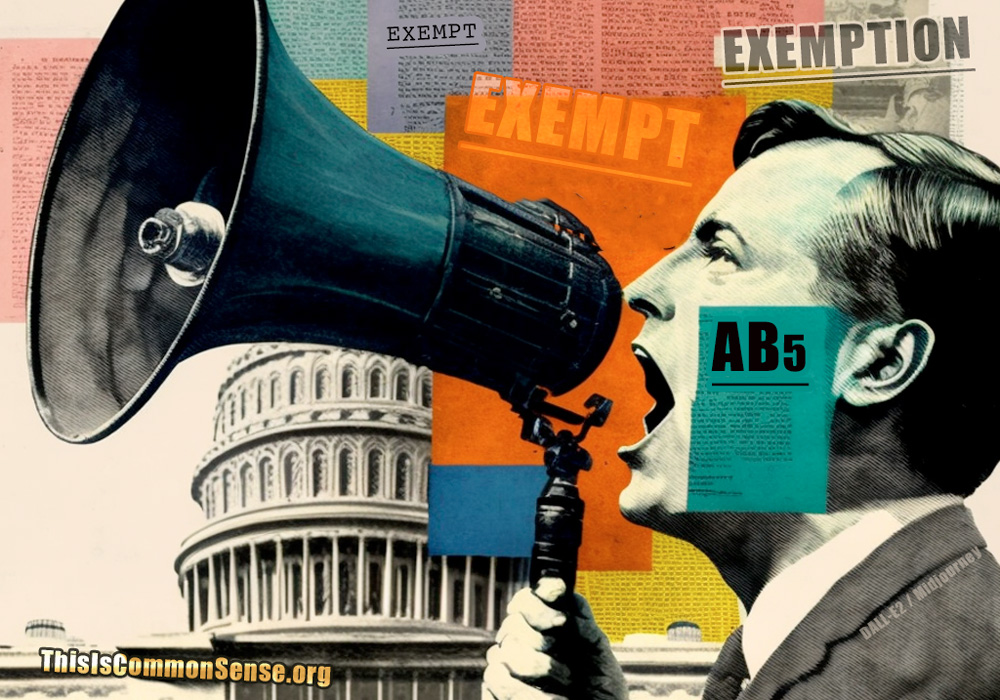
In 2019, California imposed a law to force many independent contractors to become standard employees if they wanted to keep working for erstwhile clients.

AB5 threw many gig workers out of work. Many lost all of their clients, who typically could not afford to simply convert contractors from whom they had been buying stuff once in a while into regular employees.

Even in the original legislation, exemptions from AB5 were granted for certain contractors. In response to angry controversy, many more categories of contractors were added to the exemption list. Then passage of Proposition 22 allowed Uber and Lyft drivers to continue as contractors.

But guess who still may not hire independent contractors in California? People running political campaigns and petition drives, who often can’t afford to hire many or any employees. The Wall Street Journal notes that today in California, “people who sell ‘consumer products’ count as ‘direct salespersons,’ while those who work on political campaigns or ballot petitions must be counted as employees.”

Thus, under the state’s current anti-contractor law, political speech is impaired in a way that sundry commercial speech is not.

A group called Moving Oxnard Forward has taken their First Amendment-based complaint about this injustice to court, with the help of the Institute for Free Speech. A three-judge panel of the Ninth Circuit Court of Appeals ruled 2-1 against the group. But the case can proceed now to the full Ninth Circuit or on to the U.S. Supreme Court.

At the High Court, I think we petitioners and speakers of political speech would probably win.

This is Common Sense. I’m Paul Jacob.


PDF for printing

Illustration created with DALL-E2 and Midjourney

See all recent commentary
(simplified and organized)
See recent popular posts
Categories
First Amendment rights free trade & free markets too much government

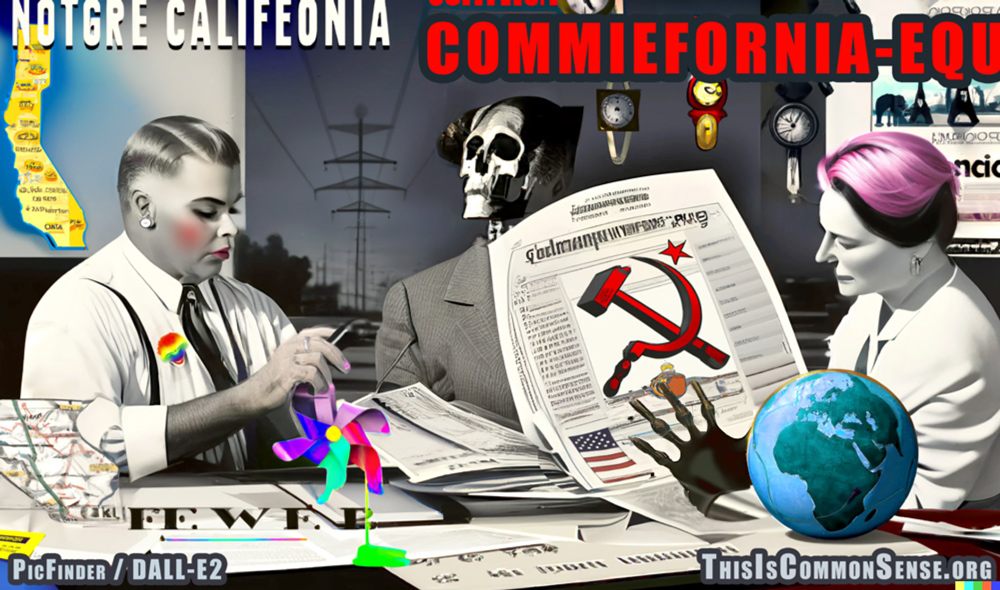
The California-Canada Connection

What do California and Canada have in common, aside from bone-chilling temperatures?

Well, the fact that they’re trying to chill the discourse of doctors.

In California, a new law empowers medical boards to punish doctors who spread “misinformation” about COVID-19. The misinformative nature of a stated view about the pandemic is allegedly proved by the mere fact that it contradicts a putative scientific “consensus.”

Such laws rely on misinformation for their very existence. 

When coping with complex, incomplete, sometimes murky evidence, do scientists and others ever simply disagree, even fundamentally, on the road to scientific “consensus”? Can a consensus ever be wrong? Does anybody ever hew to an asserted consensus out of fearful desire to conform rather than honest intellectual agreement?

To ask these questions is to answer them. But let’s move on.

To Canada — and the case of Dr. Jordan Peterson, whose professional status in the country is being jeopardized because of medical and/or political views, like opinions criticizing “climate change models,” “surgery on gender dysphoric minors,” and Canadian officials who threatened “to apprehend the children of the Trucker Convoy protesters.”

Stated on social media, these opinions are apparently incendiary enough — i.e., candid enough — to vex Canada’s powerful medical censors.

According to Peterson, the Ontario College of Psychologists demands that he submit to “mandatory social-media communication retraining” because of his views. If he doesn’t comply, he may lose his license.

Such repressive impulses, he says, are “way more widespread than you might think.”

It’s cold outside.

This is Common Sense. I’m Paul Jacob.


PDF for printing

Illustration created with DALL-E2

See all recent commentary
(simplified and organized)
See recent popular posts

Categories
First Amendment rights free trade & free markets too much government

X Information

For well over a century, politicians have pushed Big Government/Big Business partnerships. The policy, indeed, is as old as politics. While we who like free markets often like [some of] the products of today’s biggest businesses, we must recognize that much of what these corporations sell us comes with strings attached — as we’ve found out to our dismay in the corruption of major social media outfits; as proven by the attacks on our speech and to the undermining of free elections.

Before the #TwitterFiles revelations, Michael Rectenwald, author of The Google Archipelago and other books, wrote a commentary that appeared in the pre-Christmas edition of The Epoch Times: “Who Really Owns Digital Tech?” In less than a thousand words, Rectenwald makes clear how deep governments have been involved in the tech space — particularly the Internet Space.

“Given the evidence of government start-up funding,” Rectenwald reasons, “we may have to concede the argument that the internet might have developed differently, more slowly, or not at all if the Defense Department hadn’t been involved at the outset. Likely, what we know as the internet would have become a system of private networks” — and in this dispersed-power system, free speech would not become a major issue, because not as easy a target.

As it is, however, “Twitter has operated as an instrument of the uniparty-run state, squelching whatever the regime deems ‘misinformation’ and ‘disinformation,’” Rectenwald writes, giving us an ominous list of the topics of xinformation:

  • warfare
  • economics
  • pandemics
  • elections
  • climate change catastrophism
  • the Great Reset

There are big gains for . . . some. Big Biz/Big Gov partnerships imply gains for both partners: business people gain access to governmental power and favors, and politicians and functionaries gain leverage to mold the citizenry. 

And that is where we have seen the partnership’s worst.

So far.

This is Common Sense. I’m Paul Jacob.


PDF for printing

Illustration created with DALL-E2

See all recent commentary
(simplified and organized)
See recent popular posts

Categories
First Amendment rights free trade & free markets too much government

X Information (alternate illustration)

For well over a century, politicians have pushed Big Government/Big Business partnerships. The policy, indeed, is as old as politics. While we who like free markets often like [some of] the products of today’s biggest businesses, we must recognize that much of what these corporations sell us comes with strings attached — as we’ve found out to our dismay in the corruption of major social media outfits; as proven by the attacks on our speech and to the undermining of free elections.

Before the #TwitterFiles revelations, Michael Rectenwald, author of The Google Archipelago and other books, wrote a commentary that appeared in the pre-Christmas edition of The Epoch Times: “Who Really Owns Digital Tech?” In less than a thousand words, Rectenwald makes clear how deep governments have been involved in the tech space — particularly the Internet Space.

“Given the evidence of government start-up funding,” Rectenwald reasons, “we may have to concede the argument that the internet might have developed differently, more slowly, or not at all if the Defense Department hadn’t been involved at the outset. Likely, what we know as the internet would have become a system of private networks” — and in this dispersed-power system, free speech would not become a major issue, because not as easy a target.

As it is, however, “Twitter has operated as an instrument of the uniparty-run state, squelching whatever the regime deems ‘misinformation’ and ‘disinformation,’” Rectenwald writes, giving us an ominous list of the topics of xinformation:

  • warfare
  • economics
  • pandemics
  • elections
  • climate change catastrophism
  • the Great Reset

There are big gains for . . . some. Big Biz/Big Gov partnerships imply gains for both partners: business people gain access to governmental power and favors, and politicians and functionaries gain leverage to mold the citizenry. 

And that is where we have seen the partnership’s worst.

So far.

This is Common Sense. I’m Paul Jacob.


PDF for printing

Illustration created with DALL-E2

See all recent commentary
(simplified and organized)
See recent popular posts
Categories
free trade & free markets property rights too much government

First, Stop Doing That

If a government’s taxes and regulations are making shelter ever more expensive, what should that government do instead?

Stop pushing the disastrous policies, perhaps?

Unlike some other governors who shall remain nameless (one of them rhymes with “DeSantis”), Virginia Governor Glenn Youngkin understands that you don’t make things better by making them worse.

In August, Youngkin bluntly told a state senate committee that Virginia homes are too expensive and that a major cause is government interference with the market: “unnecessary regulations, over-burdensome and inefficient local governments, restrictive zoning policies, and an ideology of fighting tooth and nail against any new development.”

The many bottlenecks include low-density zoning rules that permit only a single house per property. Arlington County, Virginia, is one local government working to reform zoning so that more houses can be built on a property.

In November, Youngkin proposed a Make Virginia Home plan to unravel many regulations. City Journal notes that although the plan is “short on details,” it’s a good start.

Under the governor’s plan, the state would streamline environmental reviews, investigate how to liberalize the state’s building codes and land-use and zoning laws, impose deadlines on local governments to speed up approvals of development, and give local governments incentives to adopt their own market-liberating reforms.

This agenda is indeed only a beginning. But it does recognize a major cause of sky-rocketing housing costs and what must be done to begin to reduce those costs.

That’s just Common Sense. I’m Paul Jacob.


PDF for printing

Illustration created with DALL-E2

See all recent commentary
(simplified and organized)
See recent popular posts