Categories
folly free trade & free markets general freedom individual achievement national politics & policies

Work Longer?

Set aside all the snake oil that sleazy, slippery-tonged solons have sought to sell us, now comes the Bush behind Door #3 to tell the teeming masses of tailing media what we need to do . . . if Americans want to grow economically as a country, and succeed individually.

We need to work more.

Former Florida Gov. Jeb Bush was just casually tossing about that four-letter word in a recent meeting with the editorial board of the Union Leader in Manchester, N.H.:

My aspiration for the country and I believe we can achieve it, is four percent growth as far as the eye can see. Which means we have to be a lot more productive, workforce participation has to rise from its all-time modern lows. It means that people need to work longer hours and, through their productivity, gain more income for their families. That’s the only way we’re going to get out of this rut that we’re in.

Work more? Harder? Longer?

How dare Jeb suggest that our future success, together or individually, should be dependent on us . . . of all people?

Democrats immediately pounced. A statement from the Democratic National Committee called Bush’s remark “easily one of the most out-of-touch comments we’ve heard so far this cycle.”

“Americans are working pretty hard already & don’t need to work longer hours,” tweeted John Podesta, chairman of the 2016 Hillary Clinton presidential campaign, “they need to get paid more.”

We all “need” a lot of things. The point is we are all better off when we go out and earn what we need.

Well, that’s my point, anyway.

And, perhaps, Jeb Bush’s.

This is Common Sense. I’m Paul Jacob.

Printable PDF

Work more


Categories
folly free trade & free markets general freedom national politics & policies too much government

A British Puzzle

Most folks think minimum wage laws are there to help the poor in particular and everybody in general. But economist Scott Sumner, exploring “Britain’s new minimum wage: Is there a hidden agenda?” finds Britain’s new Tory double whammy of decreasing welfare payments while hiking mandatory minimum wage something of a mystery:

Why would a Conservative government sharply increase the minimum wage, in a budget that in many other respects favored small government? The minimum wage is currently 6.50 pounds/hour, and 9 pounds/hour is almost $14/hour in US terms. Also recall that average incomes in the UK are lower than in the US.

He finds a possible reason: to dissuade immigration. Migrants usually have low skills, in part because of language difficulties, so they cannot command high wages — market wages, of course, being defined by worker productivity.

Could the new minimum wage be there to influence migration without doing so directly?

Sumner goes on to discuss the racist origins of the minimum wage in America, Australia, and South Africa. The purpose was pretty clearly to hurt poor workers. Minimum wage laws were established to protect white workers from cheap competition by darker skinned folk.

Sumner’s postscript is interesting: “The [American] Democratic surge of interest in the minimum wage occurred soon after the GOP surge of interest in immigration restriction. Let’s see if the GOP jumps on the minimum wage bandwagon.”

Of course, for every advocate of a class-based, favoritist policy who argues deceptively, there are dozens who are merely mistaken.

This is Common Sense. I’m Paul Jacob.


Printable PDF

White labor and minimum wages


Categories
education and schooling free trade & free markets general freedom too much government

The Pushers

When I was a teenager, my mom attended nursing school and became very interested in nutrition. This had consequences.

She stopped buying sugary cereals, for instance. Well! We could not supinely accept this. My younger brother hid Cap’n Crunch and other stuff like that under his bed; and when we wanted a bedtime snack, we’d find him and barter on the black market.

I cite those halcyon days of determined resistance as a relatively benign example of adults regulating kids. Parents have that job. Mom was certainly within her rights. Yet children, although they should gladly obey all reasonable parental injunctions, can only be expected to resist when parental prerogatives stray into sugary-cereal-banning territory.

How much more enthusiastically, then, must we cheer kids who valiantly evade not the proper authority of parents but the improper, pushy, Puritanical programs of joy-stomping institutional busybodies?

Now, I know what you’re thinking. “Are you by any chance referring to the efforts of Michelle Obama and snivelingly acquiescent educrats to expel anything tasty from school lunchrooms across the land, as if innocuous condiments were the equivalent of strychnine?” Correct!

I’m also talking about kids “caught bringing — and even selling[!!] — salt, pepper, and sugar” to rescue their taste buds from the arbitrarily bland fare.

Good going, guys! And if moms and dads want to take this Declaration of Independence even further, let them yank their kids out of these places and find another way to teach them the ABCs.

This is Common Sense. I’m Paul Jacob.


Printable PDF

Lunchroom Black Market


Categories
Accountability free trade & free markets

The Fed Feeds a Scam

Real and effective “anti-establishment” ideas come from unexpected places. That is, they are unexpected if you read only the dominant media and its insider sources, or follow politics only during the quadrennial presidential farce.

Quite a few news junkies would be surprised at David Stockman’s critique of current Federal Reserve behavior and policy, for example. In “Why Ronald Reagan Is Rolling In His Grave: The Keynesian Putsch At The Fed,” he charges the central bank with having managed “an economic coup d’etat” by engaging in an ongoing wealth redistribution scam — shoveling wealth to the rich.

Stockman sees the confidence of Fed Chair Yellen’s macro-policy micromanagement agenda as a scary case of hubris, of self-appointed effrontery. “Yellen & Co believe they are in charge of virtually everything on the main street economy . . . based on nothing more than their own subjective and unexplained wisdom.”

Stockman is in high form, here. Yellen’s latest pronouncement, he says, is “unaltered Keynesian claptrap. It is the arrogant over-reach of a model-obsessed academic zealot who has no respect whatsoever for the real main street economy and for the historically proven truth that free markets are the best route to prosperity and higher living standards for the people. . . .”

Her policies, he claims, amount to “‘trickle down’ economics with malice of forethought.”

Does that sound Bernie Sanderish to you? It shouldn’t.

The case for limited government and against the Fed (and federal government management in general) are that it is modern unlimited government that serves the few at the expense of the many. Stockman is just restating very old wisdom.

Remind your Occupier friends of this. They are on the wrong team.

This is Common Sense. I’m Paul Jacob.


Printable PDF

D. Stockman


Categories
folly free trade & free markets

Prophecy Failed

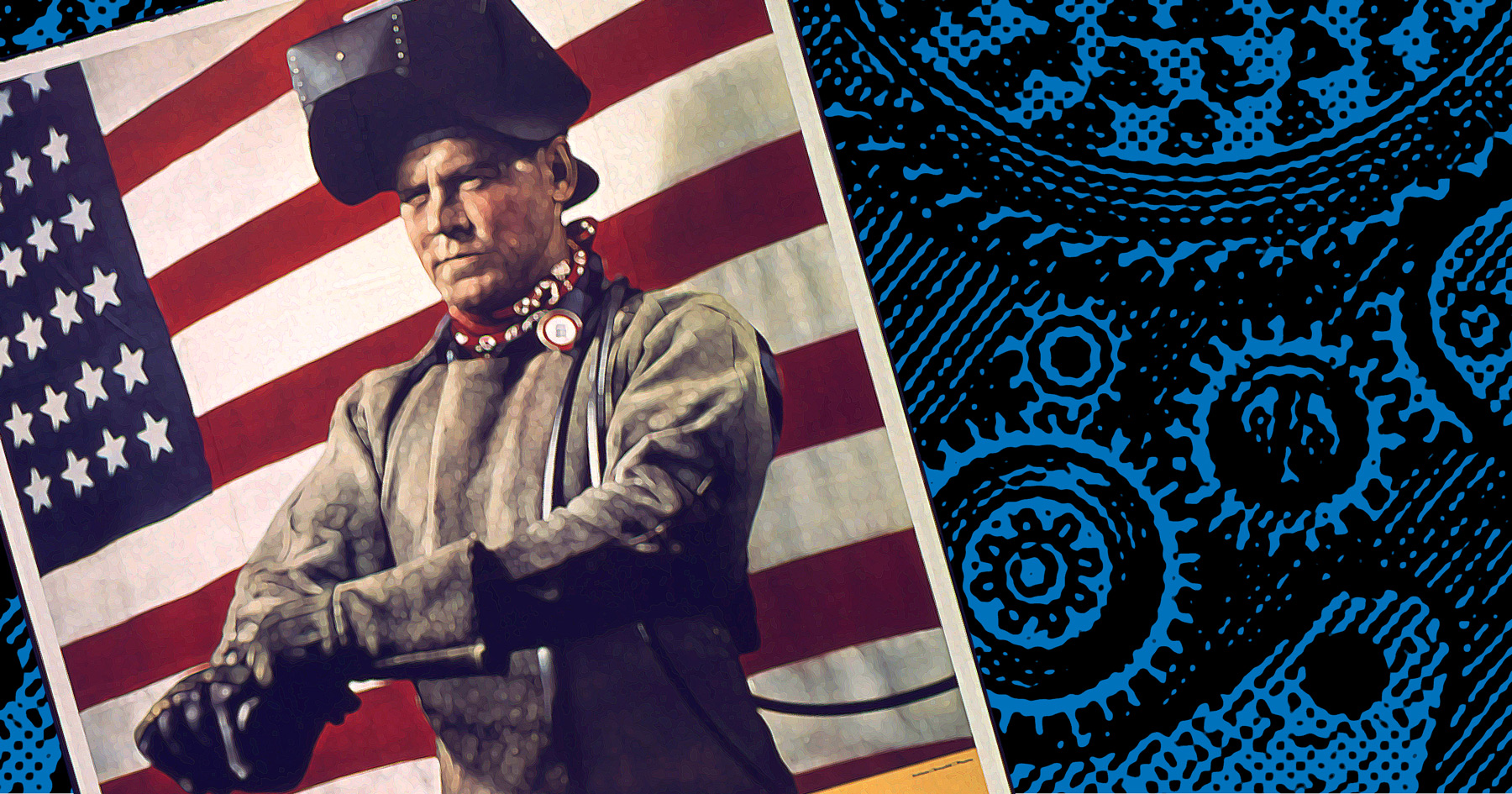
In the first week of June we were told to expect egg shortages. The avian flu had infected millions of hens: egg production would plummet.

This was news, reported as “Egg Rationing in America Has Officially Begun.” The Washington Post cited a few signs in Texan retail groceries warning customers that the stores were not in the wholesale biz, supplying eggs for restaurants and the like.

And then the follow-up: On Tuesday the New York Times reported, “Bird Flu Sends Egg Prices Up, but Slowing Demand Prevents Shortages.”

Author Stephanie Strom is probably not responsible for the title. Her copy was not horrible.

It’s hard to get over the title, though. Economist Mike Munger offered his reaction headline: “NY Times Causes Head of Mungowitz to Explode.”

Why?

One word: “but.”

The title should have read, “Bird Flu Sends Egg Prices Up, So Naturally Slowing Demand Prevents Shortages.”

Why that “slowing demand”?

I’ll let Munger explain it:

There can never, NEVER be a shortage if prices are free to adjust. Because a shortage is insufficient supply at current prices. Lagniappe: This was in the “Science” section. Yes, it was.

People buy less when prices rise. So those who value eggs less cede those humpy dumpties to folks who want them more. Fitting. Harmonious!

So the title was witless, Munger insists, “on the order of ‘Water:  Still Wet!’ or ‘That Crazy Sun:  Rising in the East Again This Morning.’”

I like “good news” stories. Too bad the Times wasn’t quite up to delivering the good news that was clearly fit to print.

This is Common Sense. I’m Paul Jacob.


Printable PDF

Eggs


Categories
folly free trade & free markets general freedom national politics & policies

Raise Your Hand, Dry and Secure

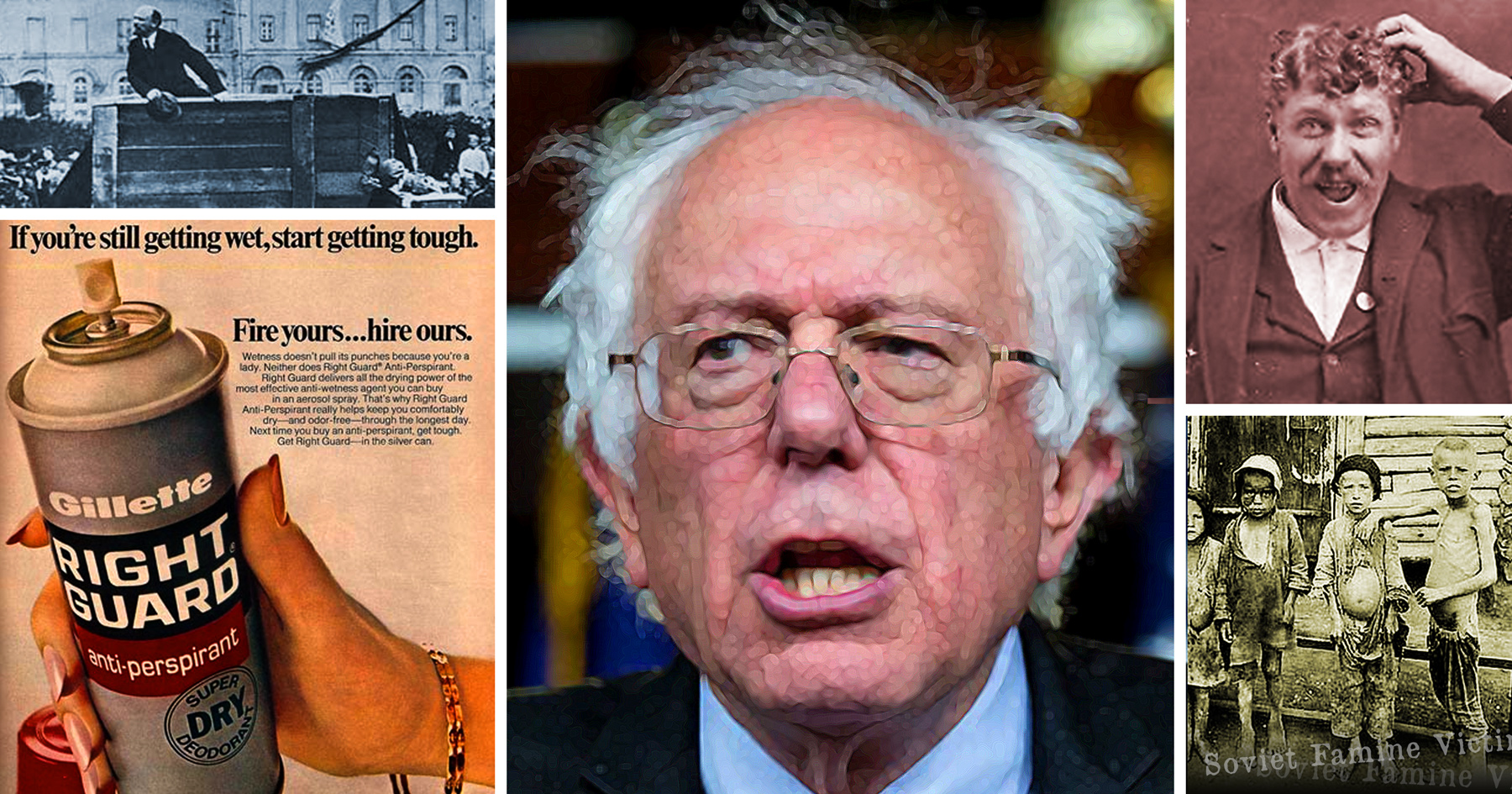
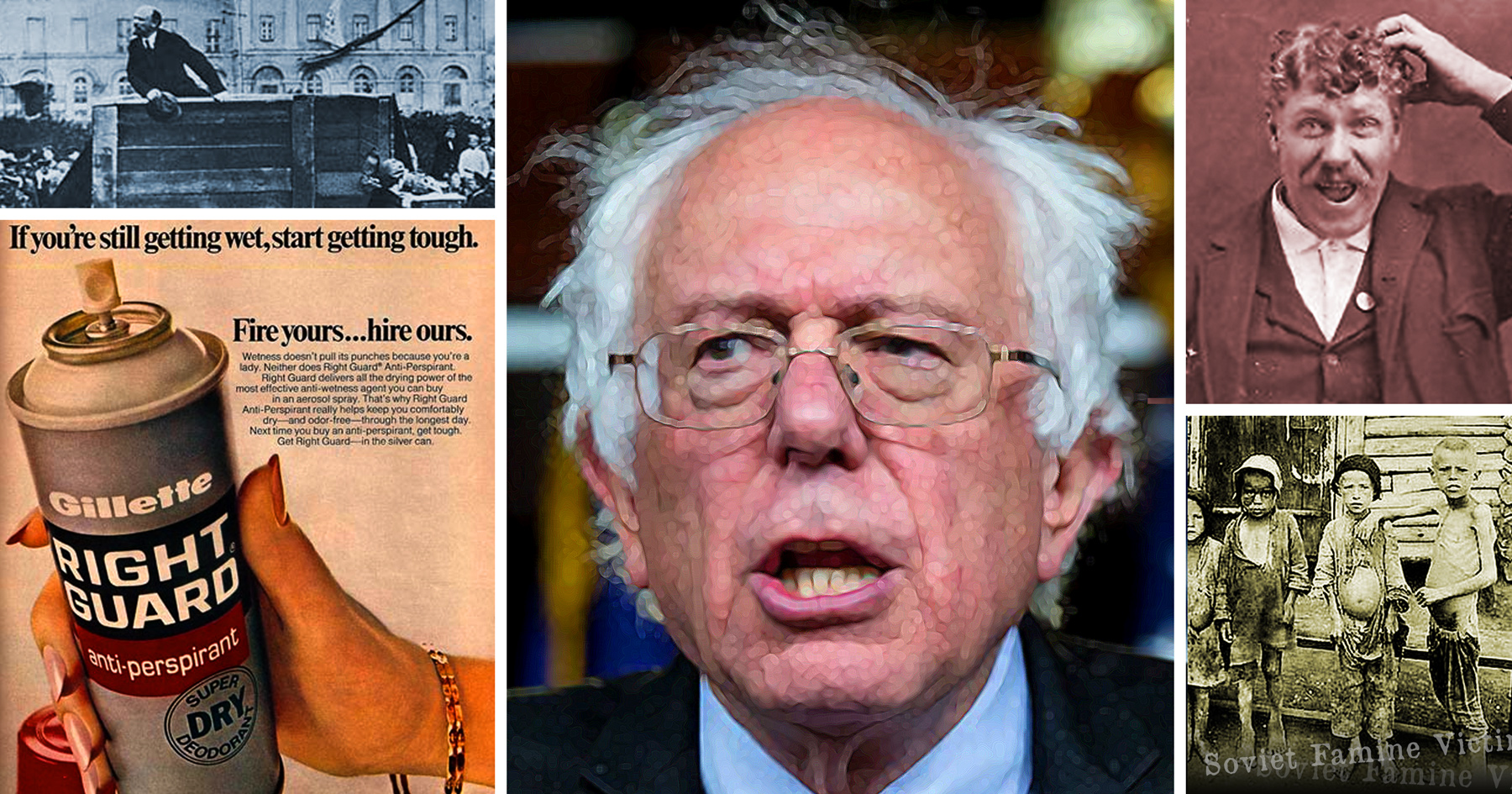
Presidential candidate Bernie Sanders made a splash last week with an off-the-cuff comment. “You don’t necessarily need a choice of 23 underarm spray deodorants or of 18 different pairs of sneakers when children are hungry in this country.”

The candidate whose initials are “B. S.” doesn’t call himself a Socialist for nothing.

The Democratic-caucusing “Independent” Senator from Vermont was expressing a tired old sentiment. See his error? (Raise your hand if you know.)

To make any connection between “feeding the hungry” and cutting back on competitive products one would have to believe there is a fixed stock of wealth, and that we waste it on different brands and whole varieties of antiperspirants and sports shoes.

But there is no such fixed supply.

Supplies are concocted to meet consumer values, wants, and getting rid of competitive products means that some values are not being met . . . and that some folks are not being employed at the rates they could be with more diversity of commodities.

The best way to “feed the hungry” is for the hungry to feed themselves, by being productive — if children, then being fed by productive parents. And to do that, folks need to find their market niche. Which might very well entail another deodorant or shoe.

There is a realm where one person gains at the expense of someone else: redistributive government. If Sen. Sanders wants government to give more money to feed hungry people, he should consider cutting back on some other government expenditure.

Why didn’t B. S. suggest that? Perhaps more than feeding the hungry, he’s interested in feeding government, and his own pride in his own b.s. ideology.

This is Common Sense. I’m Paul Jacob.


Printable PDF

B.S.


Categories
folly free trade & free markets nannyism

A New, Freer Sector

Current trends in public policy and law seem to be pointing not to consistent principles, but contradictory ones.

Wyoming just made it legal for farmers to sell directly to local customers, in such venues as farmers’ markets — without government inspection and conformity to the usual, clunky set of regulations that apply when selling to other businesses for resale.

The bill, recently signed into law by the governor, also allows neighbors to sell homemade foods to one another informally and at special community events like bake sales.

An obvious win for freedom. Who can argue against a free market in foodstuffs at the community level, where normal transactions tend to be customary and casual, and also obviously subject to regulation by reputation?

But government regulations still apply maximally to farmers and supermarkets and grocery chains. And yet, many of the arguments for local free markets apply equally to these currently controlled ones. Free competition would likely lead to the re-introduction of reputation economies into big agribiz markets. Could very well be transformative.

For our health.

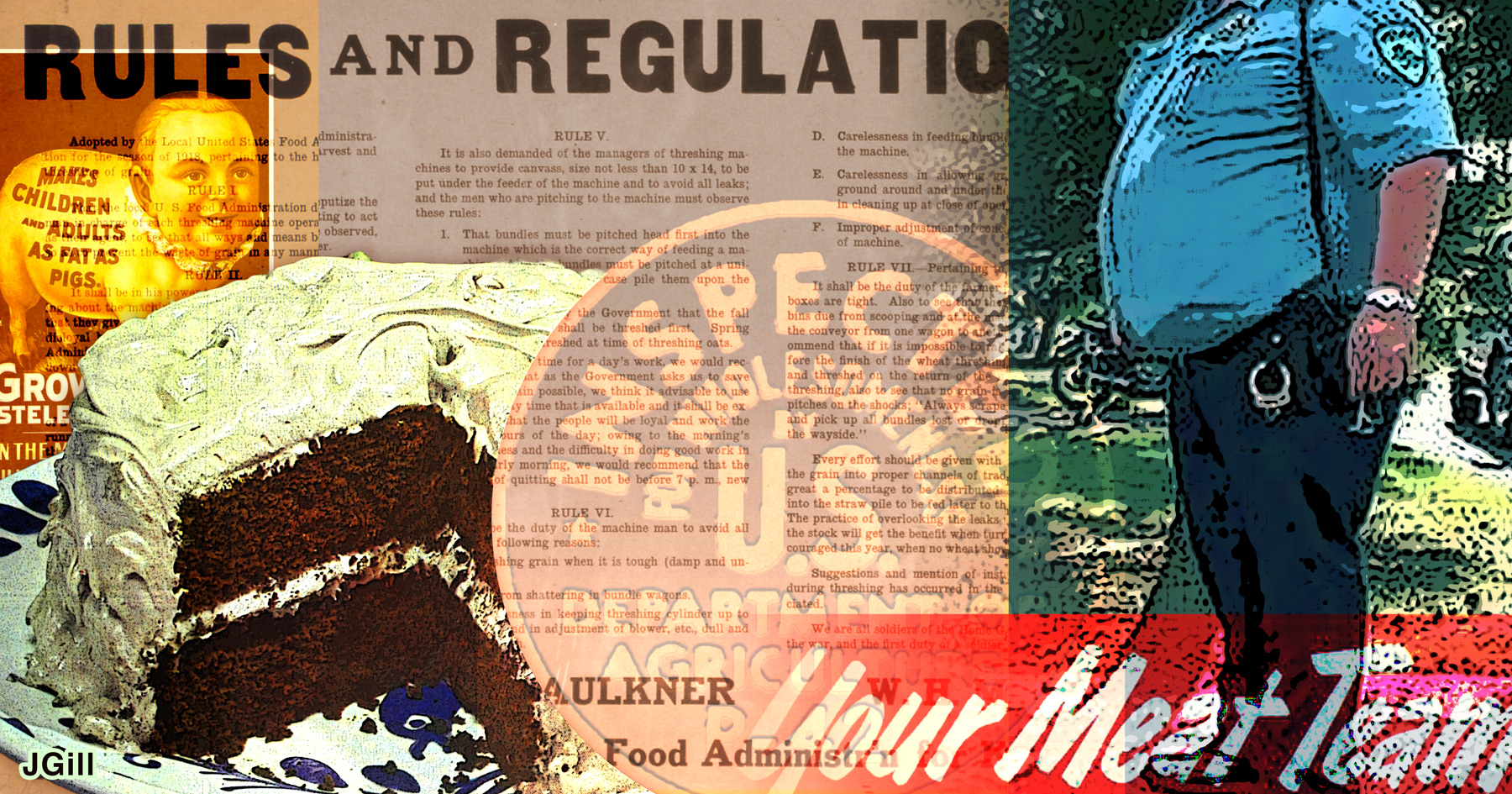
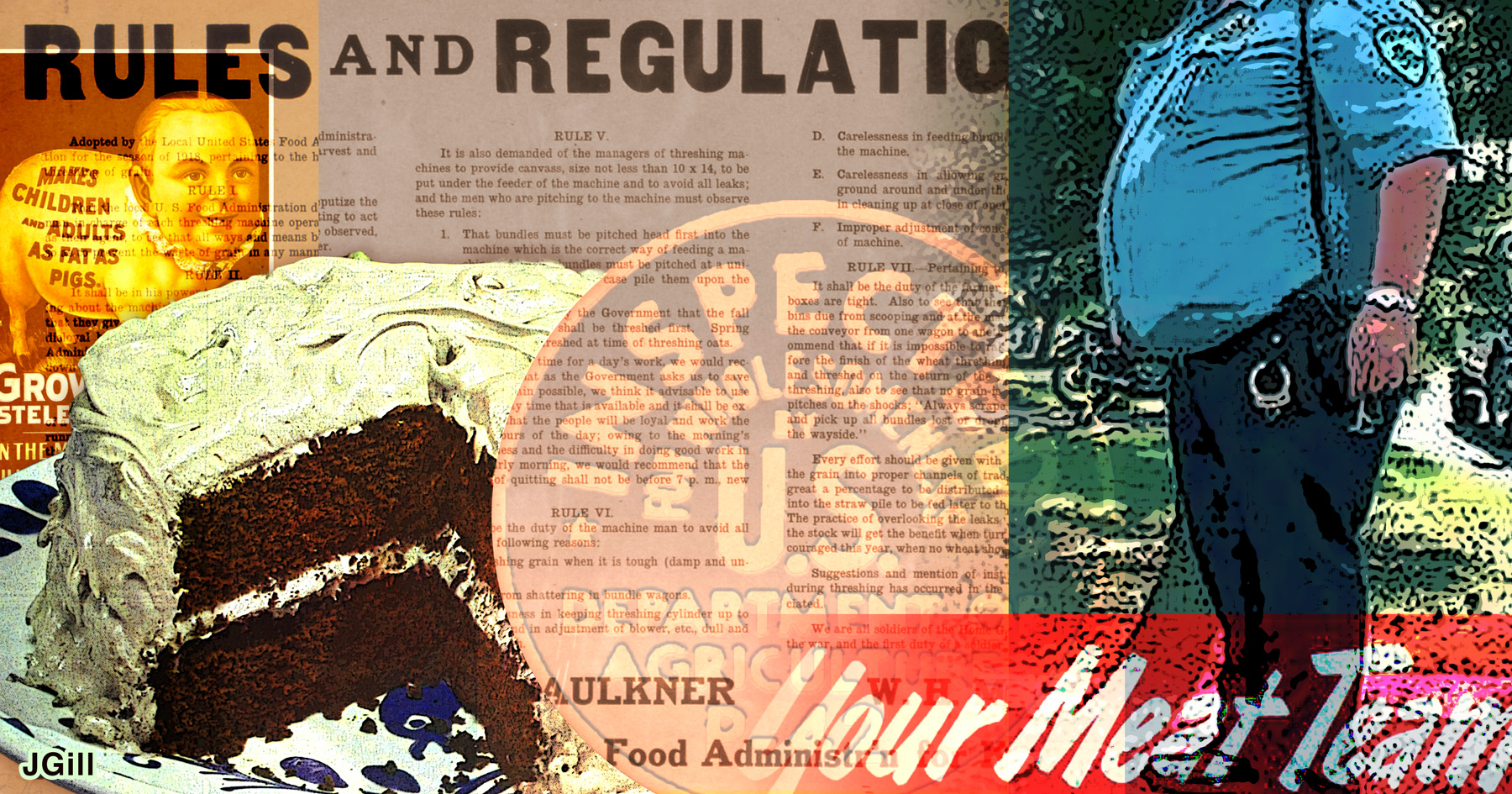
After all, it’s not as if government has really helped us in this realm. We are right now working our way out of a government-sponsored health and diet paradigm that we are learning was exactly wrong.

The official “anti-fat” hysteria made us fat.

A more competitive approach, allowing for different philosophies to operate — as they can at the community level, with old recipes co-existing with the new-agey ones, as well as with non-pasteurized milk and organic farms and local cheese and everything else — would encourage new ways of meeting old food fears as well as accommodating new food fads.

Extend freedom. (Not waistlines.)

This is Common Sense. I’m Paul Jacob.


Printable PDF

Food Folly


Categories
free trade & free markets general freedom Ninth Amendment rights tax policy

Taxation Rules

It turns out the United States is a tax haven.

Haven? Heavens! I live here. I don’t feel that low-tax feeling when April 15 rolls around.

But the Cato Institute’s Dan Mitchell, an expert on all things tax-policy — a dirty job, but somebody’s gotta do it — says “The U.S. Is a Tax Haven . . . and That’s a Very Good Thing.”

He is a huge fan of international tax competition. He likes it when governments at least marginally decrease the tax burden on prospective producers and investors, so as to lure production and investment from other tax jurisdictions. In his opinion, “we need some way to restrain the greed of the political class.”

Fans of big government disagree. Tax competition hinders their master plans to control and plunder the rest of us.

Mitchell knows that we mere U.S. citizens tend to lug a big tax load. But the United States is in fact “a tax haven. Not for Americans, of course, but . . . we have some good rules for foreigners.” In addition to their ability to exploit the especially robust corporate privacy rules of a state like Delaware, foreign investors can avoid taxes on interest and capital gains on their stateside investments.

Now, Mitchell says, let’s apply those “same good policies to Americans.”

Hear hear! Havens I can access are even more appealing than those I can’t.

This is Common Sense. I’m Paul Jacob.

Printable PDF

Overburdened Pack Mule


Categories
free trade & free markets

A Ride on the Private Side

If you’d like to catch a flight without the usual delays and post-911 regulation-inflicted hassles, used to be you had to own your own plane, charter one, or buy a time share in one.

Now you can use a smartphone app to book a seat on a private jet — just as you use an app to book an Uber driver outside the confines of the hyper-regulated taxi industry. Sure, private-jet seats are still pricey. But the New York Times reports that lower-end bookings are comparable in price to that of first-class seats on Delta or American.

Private JetNew services find spots for you on planes en route to pick somebody up that would otherwise be empty, or let you subscribe to blocks of time for use on a variety of jets. Result? More and more passengers are able to ride private jets thanks to startups like JetSmarter and Magellan Jets.

Those of us who lack the means to exploit this option-expanding development should still welcome it as a step in the right direction, away from burdensome regulatory regimes that slow us all down. I doubt we’ll get rid of the regulatory bog at the airport any time soon. After all, we’re still stuck with the government-subsidized USPS postal monopoly despite the competition in package delivery provided by UPS and FedEx.

But without the pressure and example of such relatively unencumbered alternatives, our situation would be worse; our prospects, dimmer.

This is Common Sense. I’m Paul Jacob.
Categories
free trade & free markets national politics & policies

Job Growth in 2014

President Barack Obama takes full credit for the job growth in 2014. Democrats on the Internet relentlessly push these growth rates with typically goofy superlatives like “highest ever” or “highest growth rate in decades.”

So, what did Obama and the Democrats do in 2013 and 2014 that led to the growth we saw last year?

Well, Obama refused to renegotiate with Republicans on any unemployment or budget reforms.

As 2013 ended, we heard Democrats complaining that stingy Republicans were letting federal government extensions of unemployment compensation (which had been re-extended many times) lapse altogether. Obama predicted disaster. The Keynesian economists who circle the Democratic Party like moths to a candle held to a simple prophecy:  because of a hit to “aggregate demand,” unemployment would increase.

Instead, in 2014 employment bounced back.

In a droll quasi-opinion piece, “President Costanza’s Jobs Boom,” the Wall Street Journal reports that “job growth in 2014 was roughly 25 percent higher than any post-2009 year. Joblessness plunged to 5.6 percent from 6.7 percent. Net job creation averaged 246,000 a month.”

Citing a National Bureau of Economic Research study by economists Marcus Hagedorn, Iourii Manovskii and Kurt Mitman, which treated the abrupt policy change as a “natural experiment,” the Journal reveled in the knowledge that the increase in incentives from lapsed benefits led unemployed workers to (gasp!) seek jobs.

And they found them. Granted, many of the new jobs are not as good as their pre-bust jobs. But they are jobs, which is better than nothing.

So when your big-government promoting friends attribute 2014’s job growth to Democratic policies, ask which policies, precisely. And ask why Obama’s predictions of 2013 for disaster in 2014 didn’t pan out.

This is Common Sense. I’m Paul Jacob.