Categories
free trade & free markets general freedom government transparency national politics & policies responsibility too much government

Post Dated

What does a business do whose market share is decreasing, is billions of dollars in debt, and which incurred one-third of that debt just last year?

Realistically, it cannot be sustained. Not as a normal business.

Of course, the business in question has been struggling to reform, has been cutting costs. But can’t cut enough.

I’m referring to the United States Postal Service. Not a “normal business,” either: no “normal business” is authorized in the U.S. Constitution — or must suffer with the 535 members of Congress as its board of directors.

Kevin Kosar, writing at the Foundation for Economic Education, says the “existential crisis is already happening.”

And by this he doesn’t mean that the organization is going through a bout of anxiety leading to Nausea, or is so estranged from humanity that on a beach the company will kill an Arab — though that may be indeed true, “going postal” and all. He means, simply, what his title says: “USPS Is Going Down, and It’s Taking Billions with It.”

Many on the left say the problem is Congress’s insistence that the enterprise fund its employee retirement program. Kosar quotes an economist who figures that, even without current (and still inadequate) levels of pension contributions, the post office would have “lost $10 billion over the past seven years.”

Besides, those pensions must be paid for at some time — postponing them just delays the inevitable, making a future bust that much bigger, less manageable. (Current level of unfunded liability? $54 billion — which is not accounted for in its official debt.)

The Internet is more important than the post, now. Could it be time to junk mail?

This is Common Sense. I’m Paul Jacob.


Printable PDF

USPS, Postal Service, Post Office, Mail, bankrupt, government, inefficiency, Common Sense, Illustration


Categories
crime and punishment folly free trade & free markets general freedom

Drive Free or Die

Ever told your kids to share? That’s aiding and abetting, you know.

Sharing is illegal.

At least, it is in Portsmouth, New Hampshire . . . regarding Uber.

The popular ride-sharing company may be widely heralded as the flagship of the new sharing economy, but a Portsmouth city ordinance effectively blocks the service, requiring that the company provide background checks on all drivers, which Uber calls “draconian.”

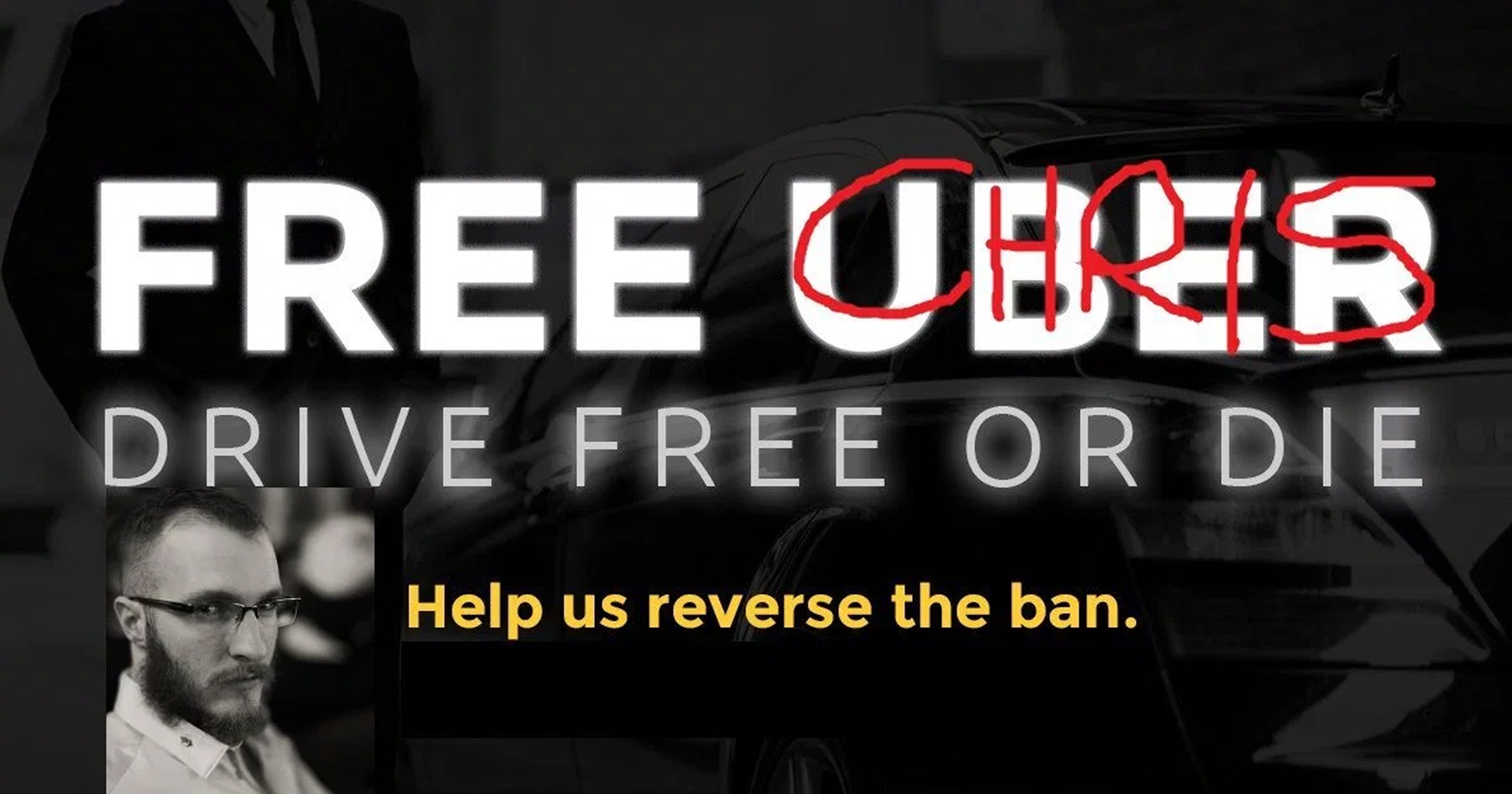
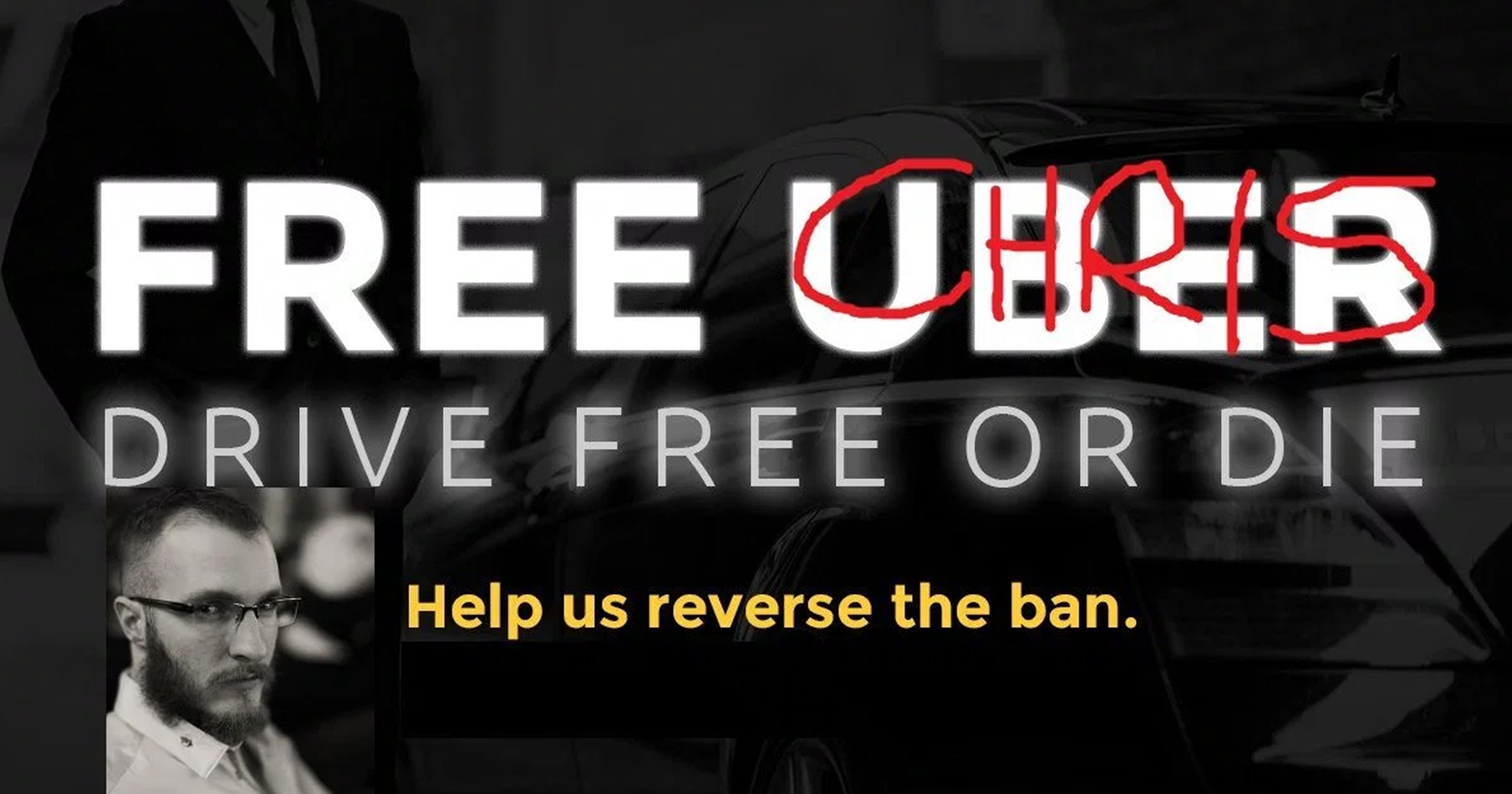
While the company is trying to get the city to alter that mandate, several Uber drivers have ignored the ban, continuing to pick up passengers. In October, police stopped Stephanie Franz, who now faces a $500 fine.

Chris David has also continued to drive for Uber. After he recorded a verbal altercation with a cabbie on a city street and posted it to YouTube, David was charged with wiretapping — a felony.

Taxi companies are upset, too, claiming the ordinance creates “a free-for-all.” A Portsmouth Taxi executive bemoaned, “Anybody can come in.”

Before the ordinance took effect in September, only 28 cabs were allowed to operate. “That’s like limiting the number of restaurants and bars in Portsmouth to 28 to keep them full day and night,” argued Assistant Mayor Jim Spilane.

In the “Live Free or Die” state, barriers to earning a living and heavy-handed criminal charges have led to the pro-Uber slogan, “Drive Free or Die.”

Tonight at 6:30 pm, there’s a #FreeUber rally at the Portsmouth City Hall. If you’re nearby, please go help explain that government regulations ought to accommodate economic advances, not frustrate them.

That is, if you can find a legal ride.

This is Common Sense. I’m Paul Jacob.


Printable PDF

Uber, taxi, sharing, free uber, Common Sense


Categories
folly free trade & free markets general freedom nannyism responsibility

The Uber-Huge Mistake

Uber’s challenge to old-fashioned ride service — to the taxi industry — is at least twofold.

One, it shows government regulation to be counterproductive and kind of witless.

Two, it shows that innovation — particularly by decreasing transaction costs — can rapidly transform a market for the good of consumers.

Recently, politicians who play to special interests — in this case, to taxicab companies and taxi drivers — have made some spectacular blunders. Perhaps the best-known is Bernie Sanders, who claims to see severe “problems” with Uber’s online ride-sharing service, but whose campaign staff uses Uber for ride-sharing . . . and nothing else. Hah!

But the London transit regulators have made the biggest splash.

Their latest proposal? To require Uber drivers to wait five minutes before picking somebody up.

Evens the playing field, you see.

Uber is so much quicker to respond to the paying riders’ needs that taxicabs apparently cannot compete in Old London Town.

The folks at Uber publicized the expected company reaction: the regulation would be a “huge mistake.”

But really, it’s a HUGE ADMISSION.

It shows that Uber’s service is superior, and that government regulators are more interested in protecting providers (taxicabs) than customers (pedestrians seeking rides).

It also shows these regulations for what they really are: protectionism for special interests, not protection for the safety of consumers.

Remember what Frédéric Bastiat said about protectionism: it’s always about placing obstacles in front of some producers (and the market in general) to aid a select (literally privileged) group of producers, regardless of consumer wants and needs.

Hobbling Uber to save taxicabs! What’ll they think of next?

This is Common Sense. I’m Paul Jacob.


Printable PDF

Uber, car, ride, London, taxi, regulation, waiting, Paul Jacob, Common Sense


Categories
free trade & free markets general freedom nannyism national politics & policies tax policy

Pass/Fail/Pass

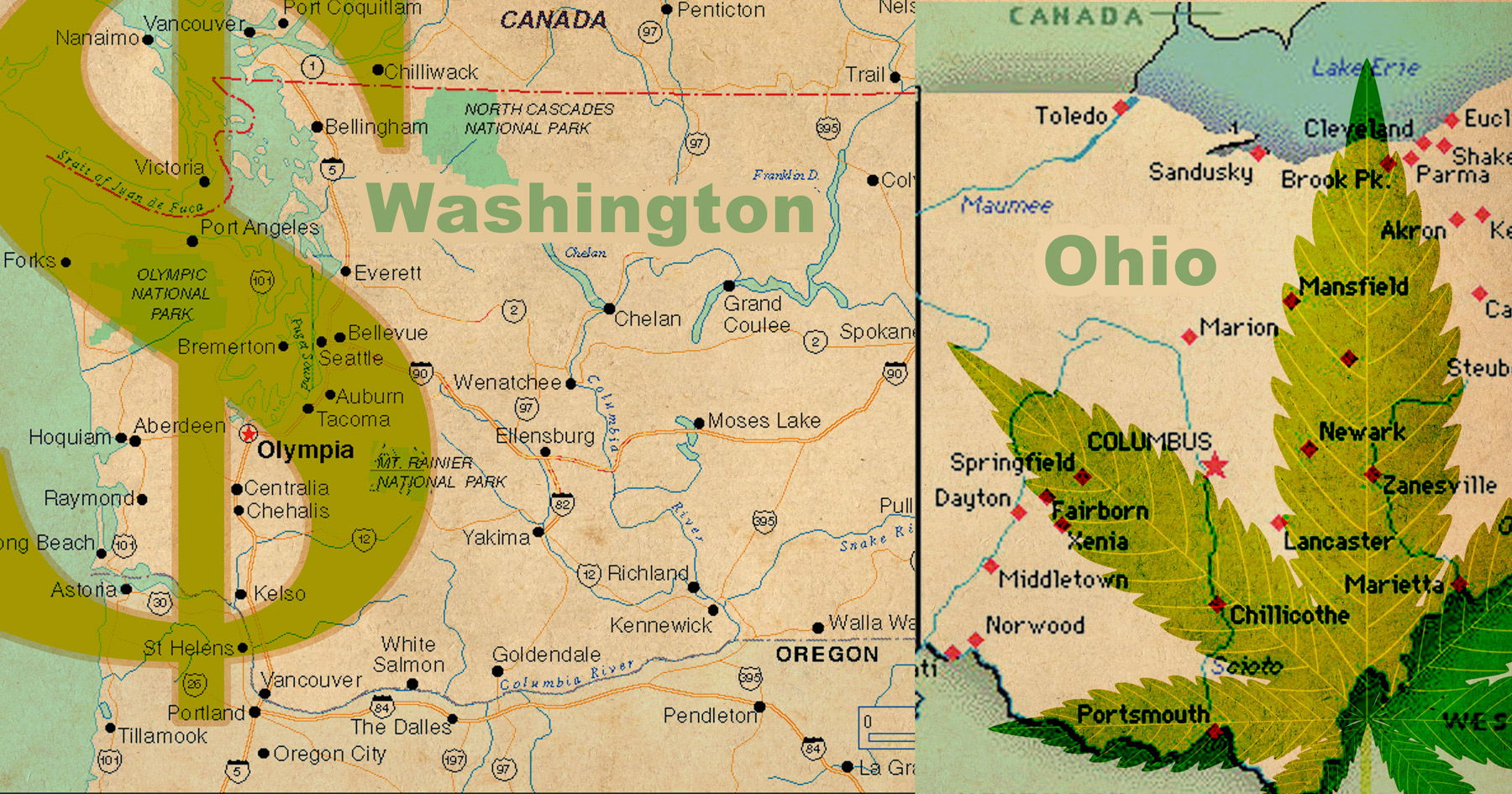
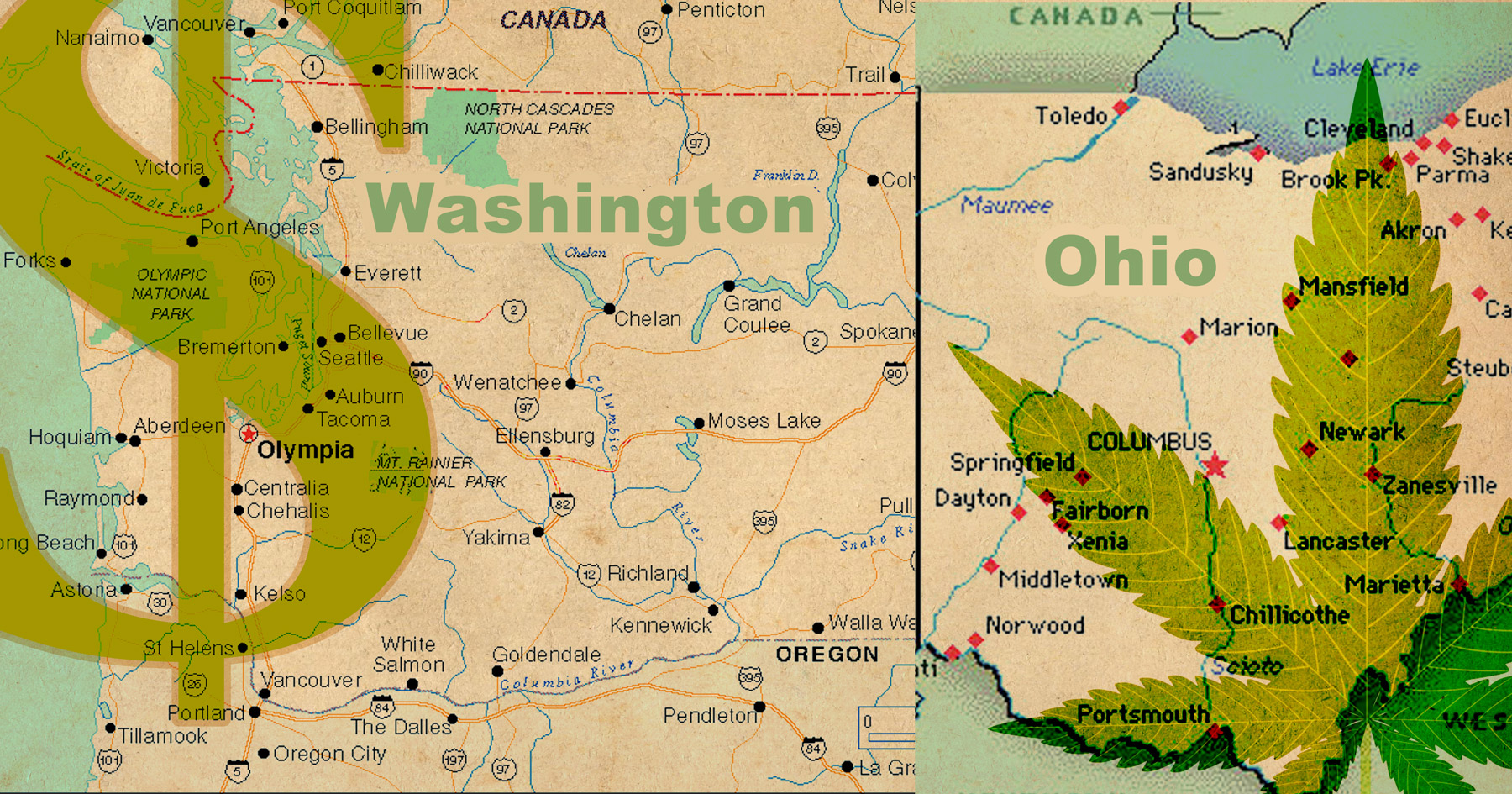
While the Ohio measure to legalize marijuana did not pass, this week, the Washington State measure to wrest tax limitations out of a recalcitrant legislature did indeed succeed, with a 54 percent win.

Win some, lose some.

But in both these cases, there is some evidence for a general smartening up of the voting public.

With Ohio’s Measure 103, the support for cannabis legalization, a few weeks before Election Day, seemed strong. But the more voters looked at the measure, the more they caught a whiff of stink — and it wasn’t skunk weed. It was crony capitalism and insider favoritism. So, while a solid majority reasonably favors legalization — even in Ohio — it strikes most reasonable people that the measure’s secondary provision of setting up a monopolistic/oligopolistic production cartel is as anti-freedom as the legalizations is pro.

Smart folks saw through the proposal. Cannabis legalization is proceeding, state by state. Better results for legalization next time?

Perhaps, provided a better measure is offered.

Washington’s I-1366, on the other hand, had several levels to it, too, but they worked together. Voters seeking a constitutional tax limit, got it — or, if the legislature balks at delivering it as a future referendum (as the measure instructs) then the initiative’s main feature would kick in and the sales tax would be lowered. Low-tax voters get low taxes either way, legislature cooperating or resisting.

As I’ve explained some time back, repeated legislative betrayal had forced Evergreen State super-activist Tim Eyman to concoct this rather clever ploy.

In both Ohio and Washington, what voters voted against was against politics-as-usual — and that is good, no?

This is Common Sense. I’m Paul Jacob.


Printable PDF

November 2015 vote, Washington, Ohio, marijuana, legalization, illustration


Categories
Accountability Common Sense folly free trade & free markets general freedom meme

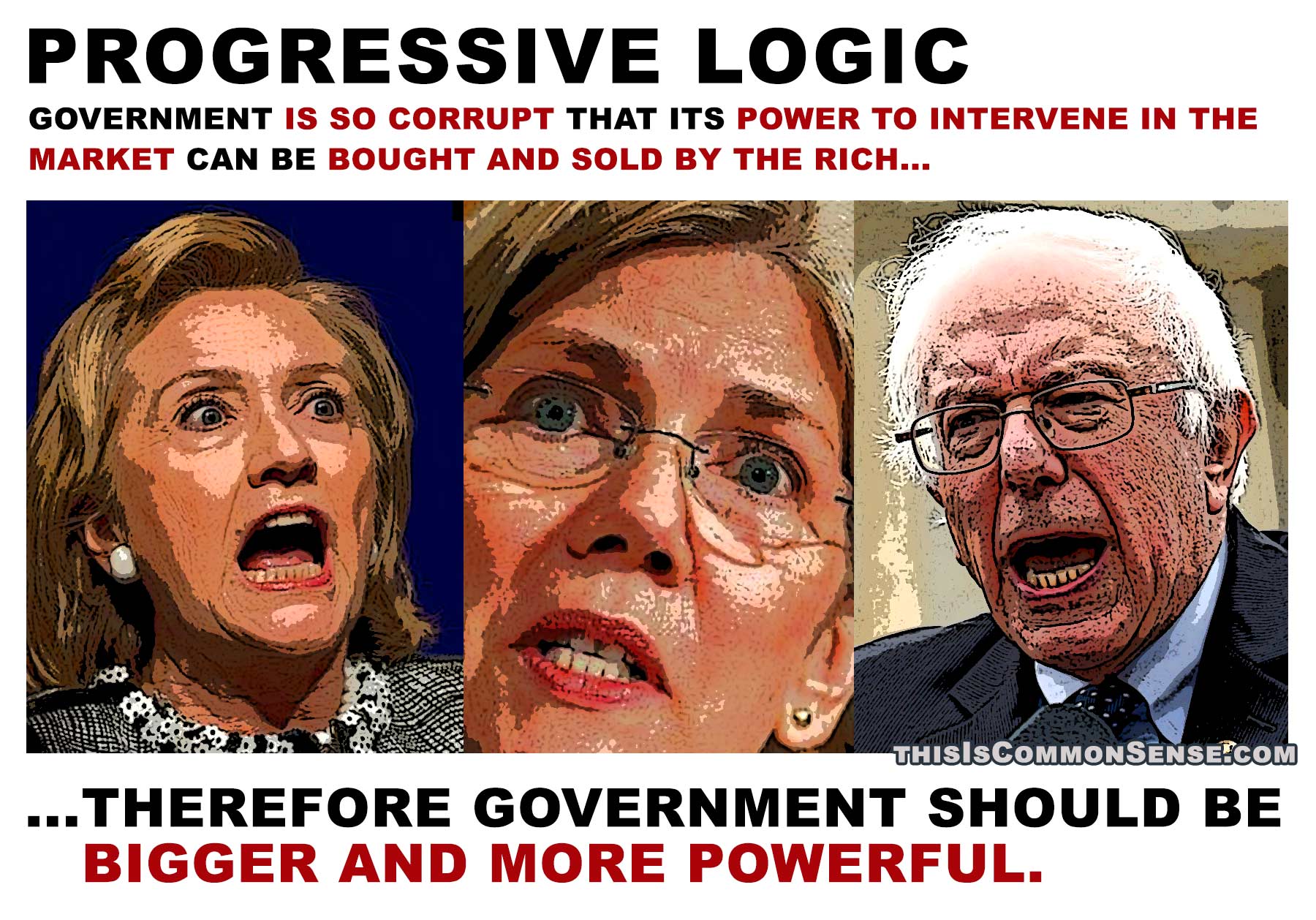
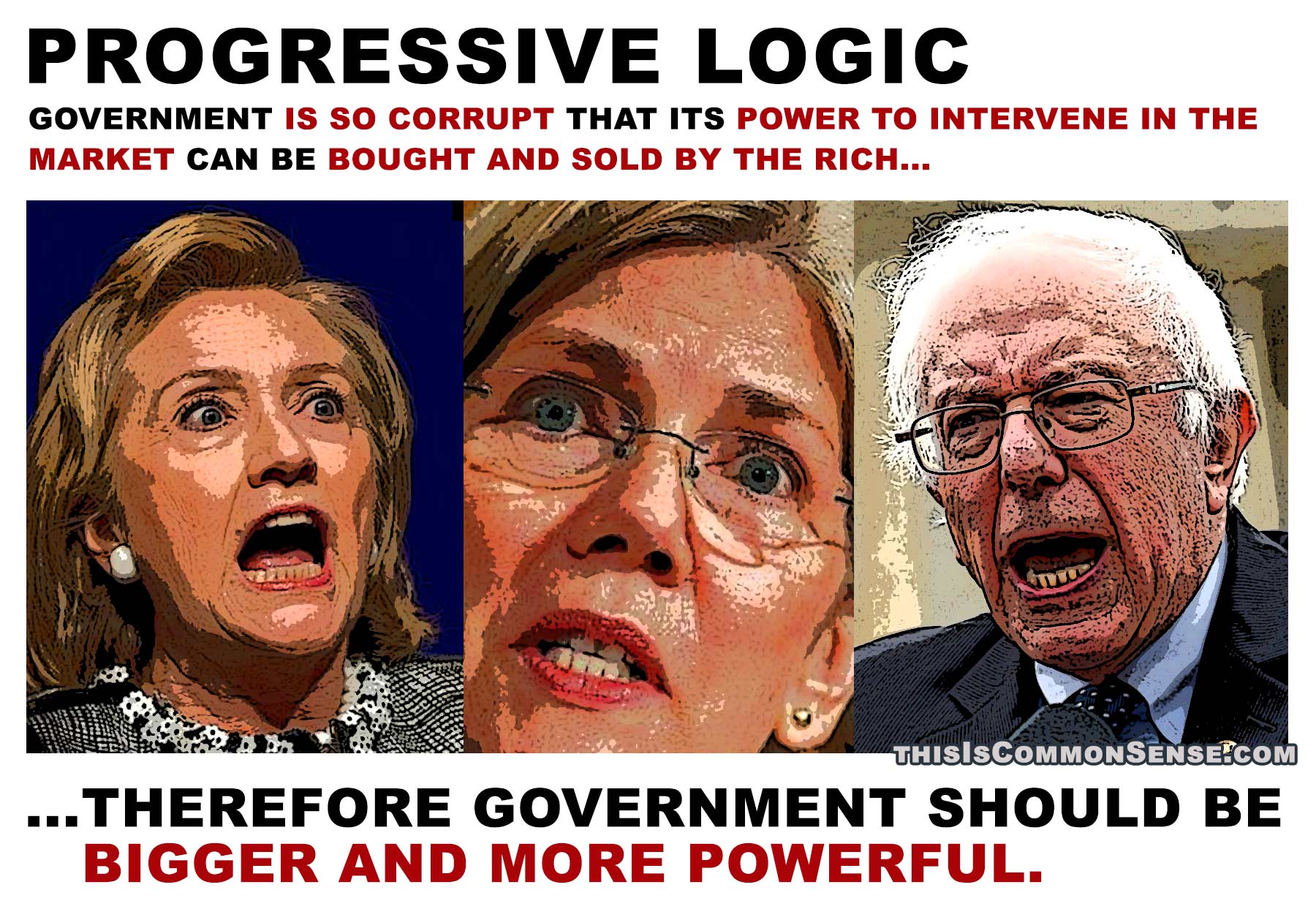
Progressive Logic

Government is so corrupt that its power to intervene in the market can be bought and sold by the rich…

…Therefore government should be bigger and more powerful.


Click here for a large resolution version of this image:

progressive logic, crony capitalism, corruption, big government, government power, meme, illustration, photomontage, Jim Gill, Paul Jacob, Common Sense


Categories
free trade & free markets general freedom national politics & policies

Why Protectionism

Why do so many people (especially politicians) favor high tariffs, “managed trade,” embargoes and domestic subsidies, all of which — first as “mercantilism” and then as “protectionism” — have been debunked, repeatedly (demonstrated as ineffective economic policy), since Adam Smith’s famous 1776 attack?

Economist Donald Boudreaux, in an excellent defense of economic principles, explains why the Bernie Sanderses and Donald Trumps of this world support anti-free trade nostrums — out of sheer ignorance:

The typical politician opposes free trade because he . . . doesn’t understand that the purpose of trade — any trade — is to enrich people as consumers and not to enrich people as producers. He doesn’t understand that exports are a cost and that imports are a benefit; he thinks that it’s the other way ’round. He doesn’t understand that the specific jobs lost to imports are not the only employment consequences of trade; he doesn’t understand that trade also “creates” jobs in the domestic economy. . . . He, in short, doesn’t understand the first damn thing about the economics of trade.

But what protectionists do understand are direct appeals to “good results” (like more and better high-paying jobs). The fact that their proposals throw a monkey wrench into the diverse mechanisms of trade, yielding worse results?

They just don’t see them.

Why? Because real economies are complex, and protectionists lack the science that would help them trace the consequences of their policies.

The fact that they’ve focused their whole attention on the business of “governing,” and making simplistic, direct appeals to people who are also uneducated in economic principles, doesn’t help.

This is Common Sense. I’m Paul Jacob.


Printable PDF

Donald Trump, Bernie Sanders, economics, free trade, collage, photomontage, Jim Gill, Paul Jacob, Common Sense


Categories
crime and punishment folly free trade & free markets general freedom tax policy

Gold Leaf

The experiment in legalized marijuana begun by citizens in the states of Washington and Colorado has, from the beginning, faced a huge obstacle: marijuana is still illegal, federally. State nullification of federal law is not merely “problematic,” it’s hard to “get away with.”

Take Colorado’s experience. The Centennial State, which has made the swiftest and most extensive progress regarding marijuana retail sales, has come up to an inevitable problem with the federal government.

Over banking.

Interesting Reason reporting tells us that “Marijuana-related businesses in Colorado are so profitable that the government doesn’t know what to do with all of the tax revenue they’re generating. But business owners face a more immediate problem: Where to stash their own profits when banks won’t take it.”

Congress has been very active making banking less and less private and less and less free for decades now, in part because of the War on Drugs. Existing banks refused to take new cannabis clients.

So a new credit union was formed, to handle the cash.

And now, NBC News tells us, our central bank, the Federal Reserve (dubbed by NBC “the guardian of the U.S. banking system”), said “that it doesn’t intend to accept a penny connected to the sale of pot because the drug remains illegal under federal law.” Which makes modern banking difficult, even for a credit union, apparently.

What are “weed” businesses to do . . . other than what they are doing, hiring security guards for all the cash?

Maybe Bitcoin will step in. Or old gold-warehouse banking, as was not unheard of even in the 19th century.

Or, maybe, the federal government will cease its over-reach?

This is Common Sense. I’m Paul Jacob.


Printable PDF

cannabis, marijuana, legalization, tax, taxes, federal, Colorado, illustration, Jim Gill, Paul Jacob, Common sense


Categories
Common Sense crime and punishment free trade & free markets general freedom judiciary nannyism national politics & policies too much government

Legalize, But Prohibit?

Last week, I warned of marijuana legalization.

Not that I’m against it. But how much will actual freedom be increased?

Note: I’m not bemoaning, as one activist friend argued, that “if you can’t toke up and celebrate in public when it passes, it’s not legalization.”

One cannot now legally smoke tobacco in most public buildings (meaning those open for business as well as government-owned structures) or drink a beer in most public parks or while navigating sidewalks. But you can smoke and drink at home or on certain types of private property.

Ending the drug war and treating newly legalized marijuana pretty much as we treat alcohol and tobacco seems like a long overdo common sense approach.

There’s also the freedom of home cultivation. I have friends who make wine at home, for private consumption. It’s legal; it’s proper. It should also be legal to grow cannabis at home. Yet, many a politician thinks otherwise.

And they are inspired, in a sense, by the popular legalization mantra, “legalize, tax and regulate.” That sends an ominous signal: in order to maximize revenues, politicians see the revenue advantage in forbidding hard-to-tax home cultivation — cultivation that is, let’s face it, a traditional freedom, a right “retained by the people.”

The excuse for this continued prohibition could be “think of the children.” But it’s probably just greed for revenue . . . and the even more hidden enticements of “crony capitalism,” which plagues almost all industry.

You should be able to grow a plant. And self-medicate. These are basic human rights, and the state should work around those.

This is Common Sense. I’m Paul Jacob.


Printable PDF

Pot Pot, legalization, collage, photo-montage, Paul Jacob, Jim Gill


Categories
Common Sense folly free trade & free markets general freedom too much government

Despotic Denver?

In what sort of place does the government get to determine whether you can open a restaurant at an airport, according to whether your political beliefs line up with the politicians in power?

Iran? North Korea? Egypt? China? Cuba? The old Soviet Union? Russia today?

Actually, over far too much of our beautiful globe the marketplace is not anywhere close to free. Instead, it’s maniacally manipulated of, by and for those wielding political power.

Including in Denver, Colorado.

“Chick-fil-A’s reputation as an opponent of same-sex marriage has imperiled the fast-food chain’s potential return to Denver International Airport,” reports The Denver Post, “with several City Council members this week passionately questioning a proposed concession agreement.”

The article notes that the “normally routine process of approving an airport concession deal has taken a rare political turn. The Business Development Committee . . . stalled the seven-year deal with a new franchisee of the popular chain for two weeks.”

Popular?

Yes, extremely popular . . . with customers. A senior airport concessions executive said the restaurant was “the second-most sought-after quick service brand at the airport” in a 2013 survey.

Not popular among politicians, however, who claim concern about DIA’s “reputation.”

That’s about it, really. The company itself isn’t accused of any form of illegal or politically incorrect discrimination. It is merely that the company’s ownership and management have expressed disreputable (to some) opinions. And might donate a portion of its profits to political causes that politicians on the Denver City Council don’t approve of.

In a foreign country, with an unfamiliar cause, almost no one would hesitate to call this what it is: despotic.

This is Common Sense. I’m Paul Jacob.


Printable PDF

Chicken Politburo, politics, photomontage, Paul Jacob, James Gill, collage


Categories
Common Sense crime and punishment free trade & free markets general freedom nannyism responsibility too much government

Must the War Go On and On?

I was still a kid, but I remember: as the Vietnam War dragged on, and on, we Americans continued to receive hopeful missives about how the next assault, or regroup, or dedication of manpower and weaponry, would lead to better results.

That’s what came to mind as I read the latest dispatch from the War on Drugs, in the Los Angeles Times. “White House announces push to combat growing heroin epidemic,” ran the headline.

So, it’s growing again? Haven’t I read this about a thousand times?

Talk about a familiar story:

The path to heroin addiction and overdoses can begin when patients are legally prescribed drugs containing opium, said Dr. Walter Ling, professor of psychiatry and founding director of the Integrated Substance Abuse Program at UCLA. . . .

“Once they get hooked they find out it’s very expensive to get these medicines and it’s much cheaper on the street. . . . That leads to street heroin abuse, which leads to the increase in opium overdoses,” Ling said.

But the rest of the story? Not reported.

Oh, sure: we were regaled with how dangerous the cheap street drugs are, because of how they are diluted. What we are not told, though, is that this is not a characteristic of heroin, as such, but of illegal heroin.

Decriminalize it. Let the legitimate market do what black markets cannot: provide responsible information that would discourage accidental overdoses.

Instead, we have a new and futile $1.3 million plan.

We’re overdosing on government. The cure is to cut down government to the proper dose.

This is Common Sense. I’m Paul Jacob.


Printable PDF

Addiction