When you systematically reward failure, incompetence and irresponsibility…what results should you expect?
QE – Toxic Asset Government Purchases
Click below to get a high resolution version of this image:
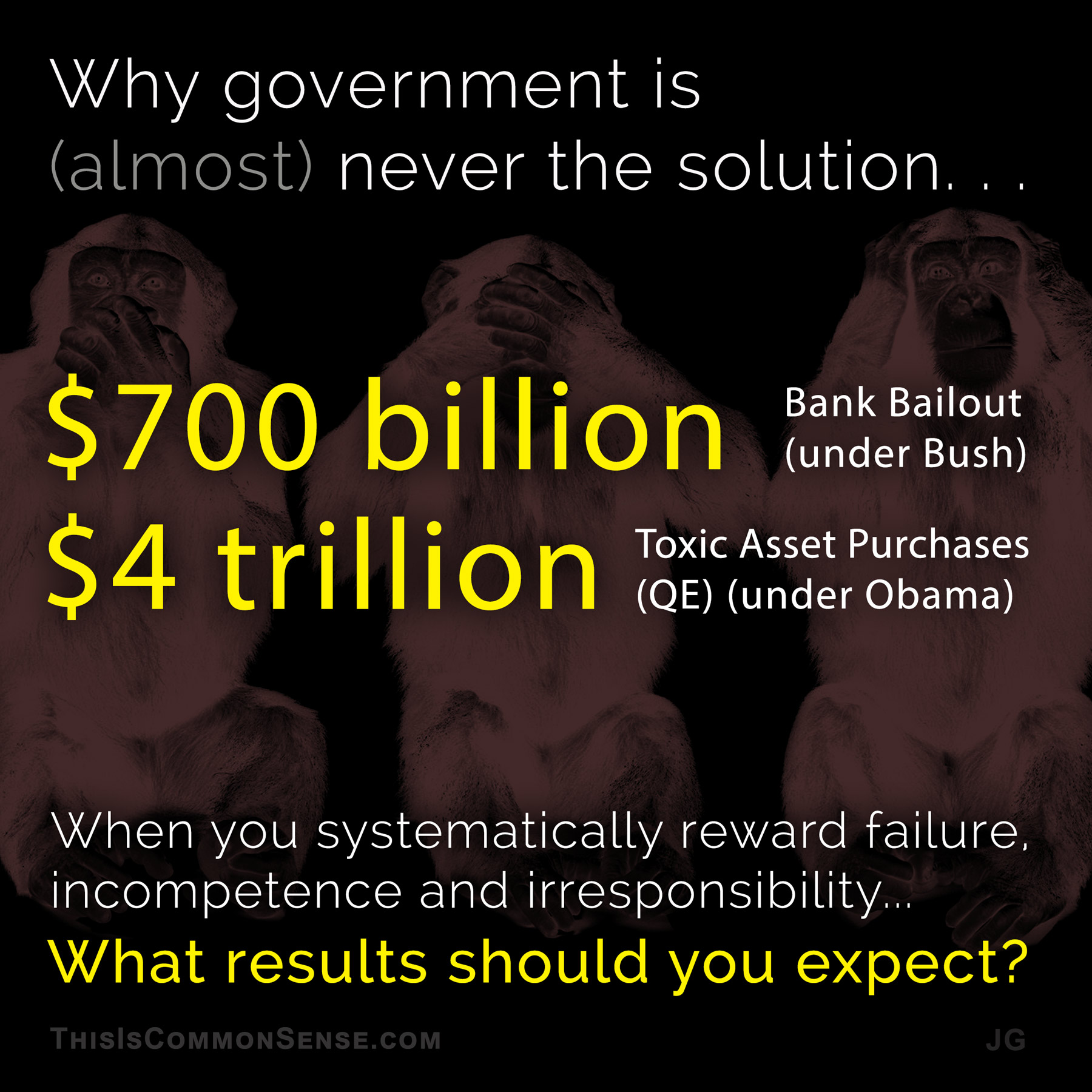
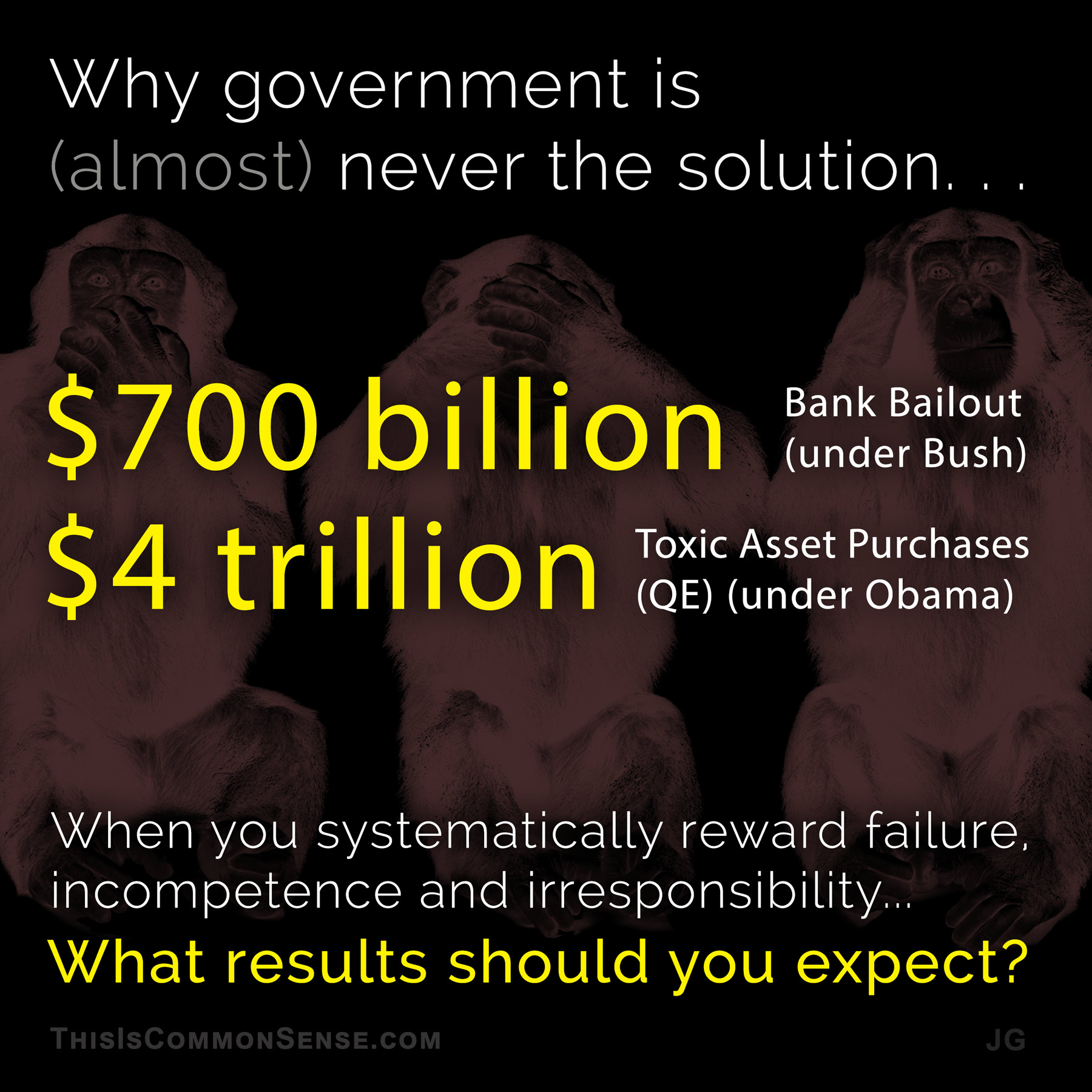
When you systematically reward failure, incompetence and irresponsibility…what results should you expect?
QE – Toxic Asset Government Purchases
Click below to get a high resolution version of this image:
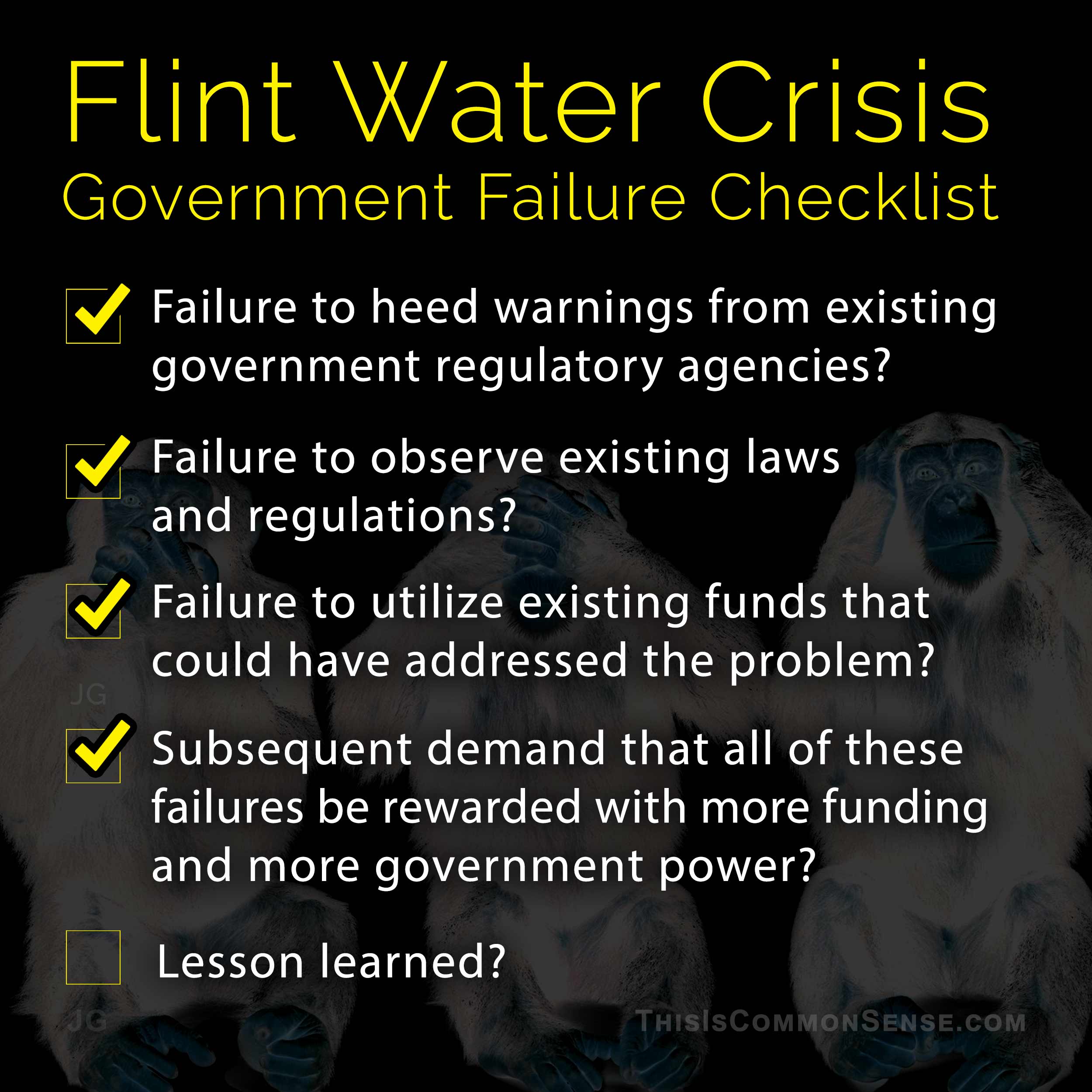
Government failure checklist. . .
Reference:
The Government Poisoned Flint’s Water—
So Stop Blaming Everyone Else
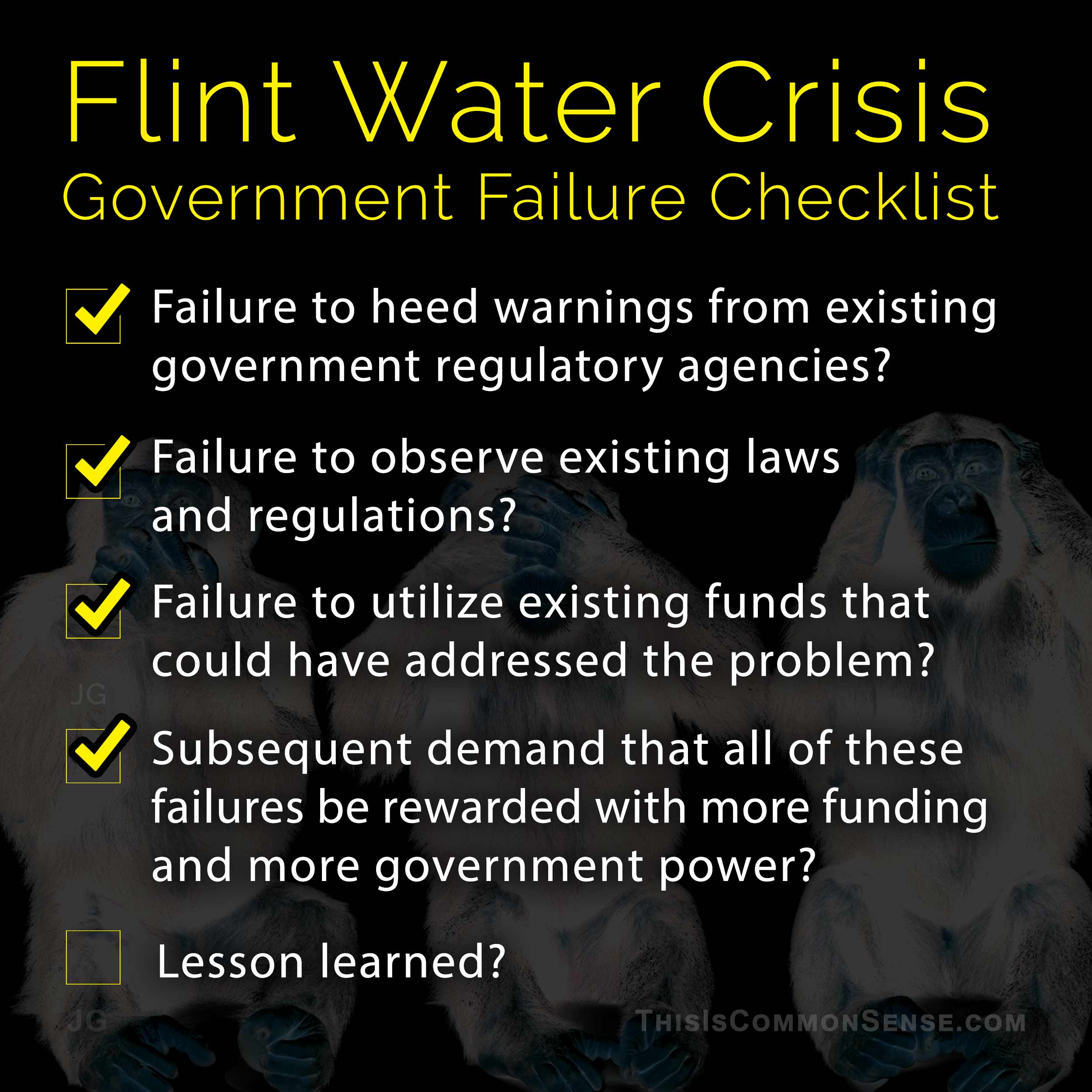
Flint’s water crisis isn’t a failure of austerity. It’s a failure of government.
Click below for high resolution version of this image.
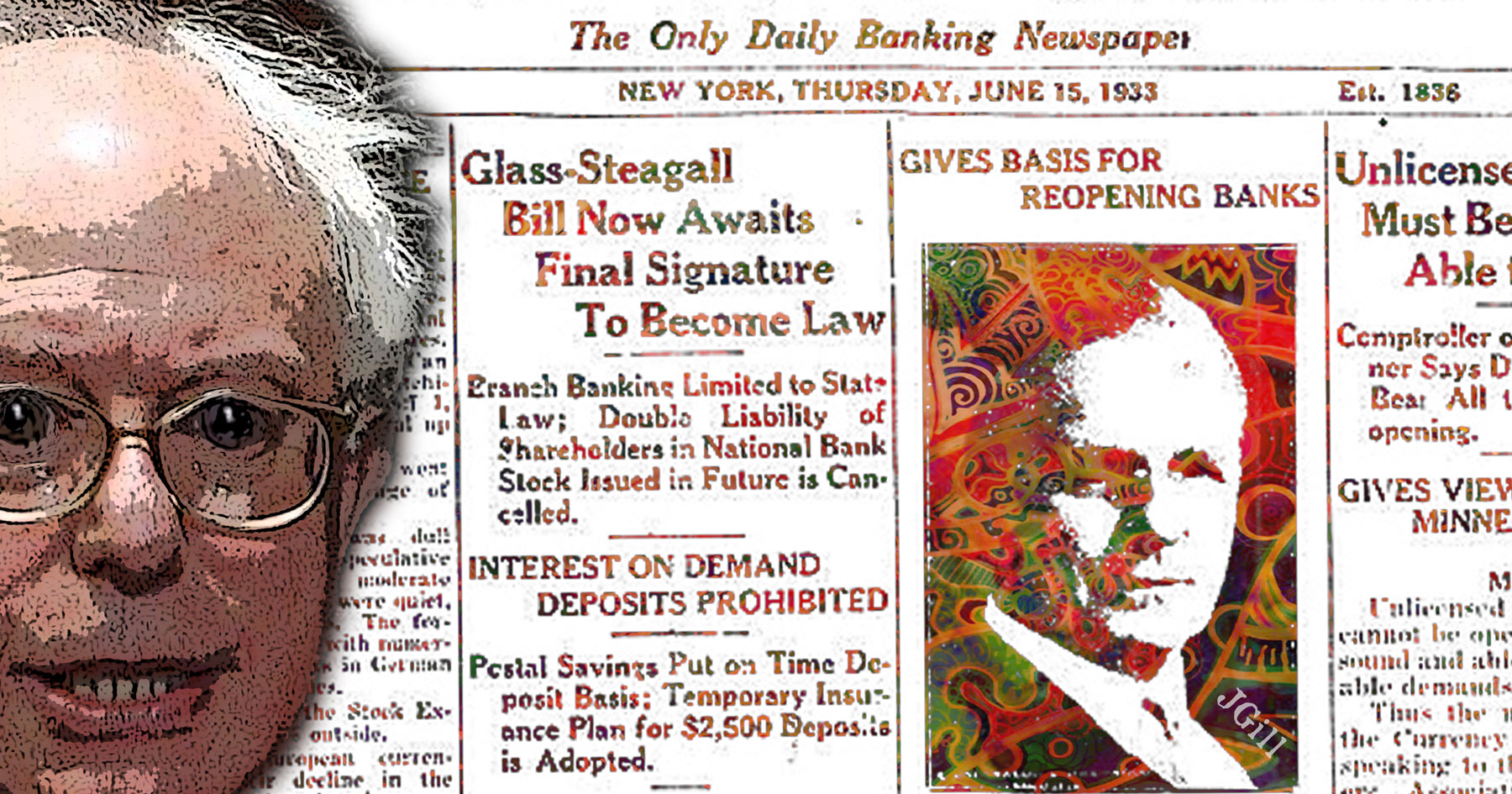
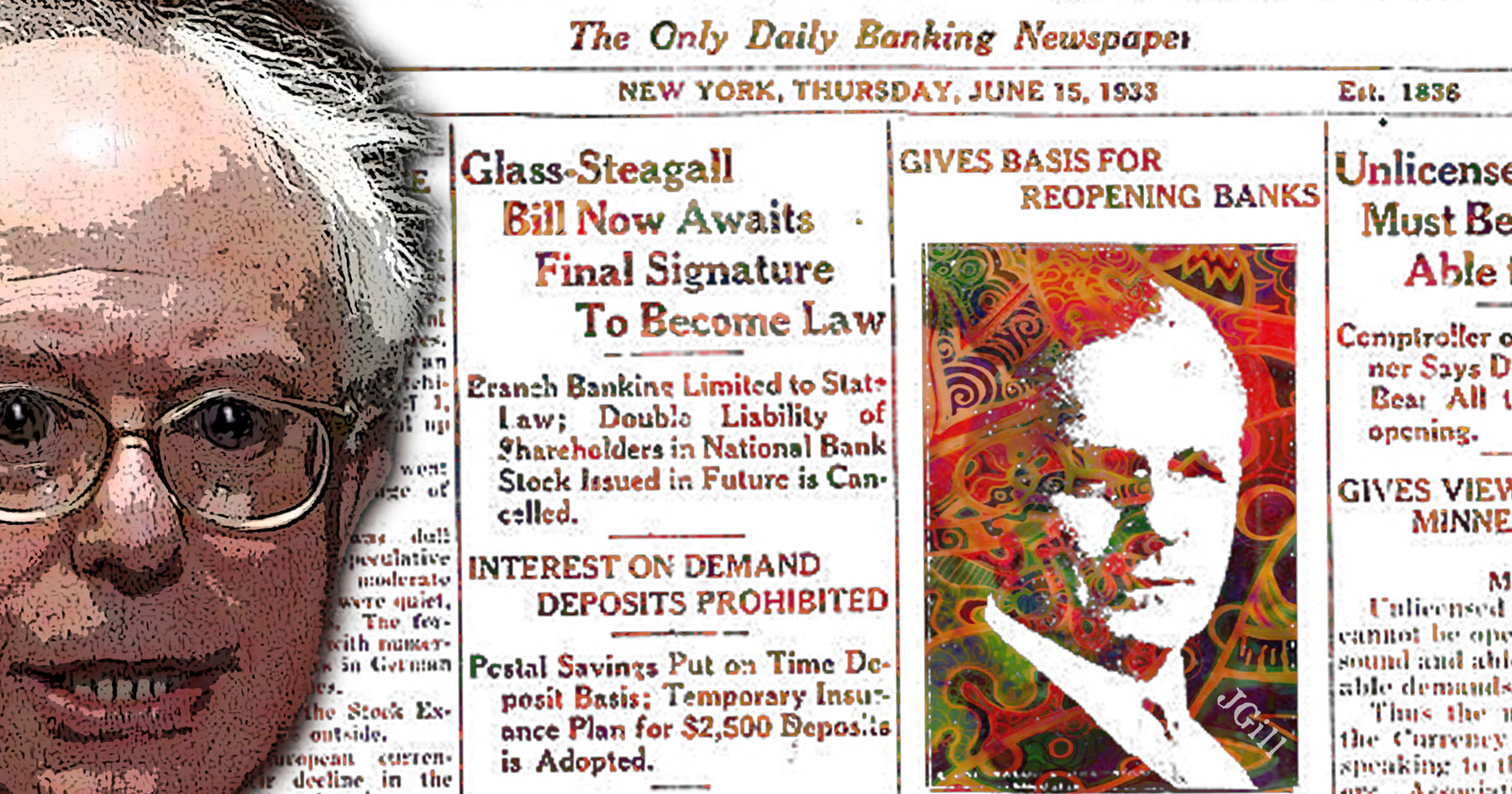
Bernie Sanders has risen in the polls. He may even beat Hillary Clinton in the first caucus and primary contests for the Democratic presidential nomination.
A cause for celebration! Witnessing a huge hunk of Americans accept Mrs. Clinton, the consummate and corrupt insider, is too disheartening.
Bernie Sanders, for all his faults, is at least not an insider like Hillary.
And even when he’s obviously wrong, he’s a breath of fresh atmosphere. Take his recent call for turning the credit ratings institutions into non-profits, or into government-run bureaus. It’s good to hear someone on the left blame something other than the partial repeal of Glass-Steagall as the cause of the Crash of 2008, and (thus?) of the current “Great Recession.” Glass-Steagall was utterly irrelevant to the institutions that were hit hardest in 2008’s collapse; it has, nevertheless, served as leftists’ idée fixe for years now. Embarrassing.
The ratings agencies, on the other hand, did play a part in the crash.
Still, remember: their prominence and importance (and very existence) in financial sectors rests entirely upon one provision of FDR’s New Deal.
More importantly, Bernie’s favored solution — government bureaus — is no solution at all. Europe’s ratings system failed in 2008, too, as Mark A. Calabria has noted, and “it was the international financial regulators, not the rating agencies, who decided that Greek debt was ‘risk-free.’”
Earth to Bernie: government regulatory failure is normal.
Calabria agrees that we need to have a political conversation about the ratings agencies, but insists it be “based on facts,” not ideology.
I’m all for the facts, but ideologies are inevitable. And ideologies promoting Big Government inevitably fail.
This is Common Sense. I’m Paul Jacob.

Why did Dr. Ben Burris give up his orthodontic license? Where did he go wrong?
Dr. Burris broke the law. He flagrantly violated the hallowed precepts of the Arkansas Dental Practices Act. Let me rinse and spit out the truth: This dentist illegally cleaned people’s teeth.
Not just once — he did it again and again. Often twice a year per patient — or victim, depending on your viewpoint.
Plus, brace yourself, he didn’t merely scrub their choppers, he did so — get this — at very low cost.
We need strong laws to stop such scoundrels.
That bastion of wisdom, the State of Arkansas, has no qualms about Dr. Burris’s qualifications to remove plaque from our incisors, canines and molars, having licensed him to practice dentistry. The problem is actually that Dr. Burris is over-qualified.
Especially to charge low prices!
Burris got licensed in a specialty: Orthodontia. You see, according to state law, a dentist so licensed “must limit his or her practice to the specialty in which he or she is licensed except in an emergency situation.”
Only after terrorist attacks or earthquakes can society risk allowing Orthodontists to daringly and brazenly polish people’s teeth. For less.
This particular statutory tyranny aims to close healthcare markets, minimize patient choice and keep dental costs artificially high. Luckily, beyond being maliciously wrongheaded, Arkansas’s dental law is absurdly foolish.
Dr. Burris dropped the federal court challenge being litigated by the Institute for Justice. Why? He discovered that by simply relinquishing his orthodontic license, he could legally practice orthodontics and clean people’s teeth at low cost.
He just can’t call himself an Orthodontist — but can call the law an ass.
This is Common Sense. I’m Paul Jacob.

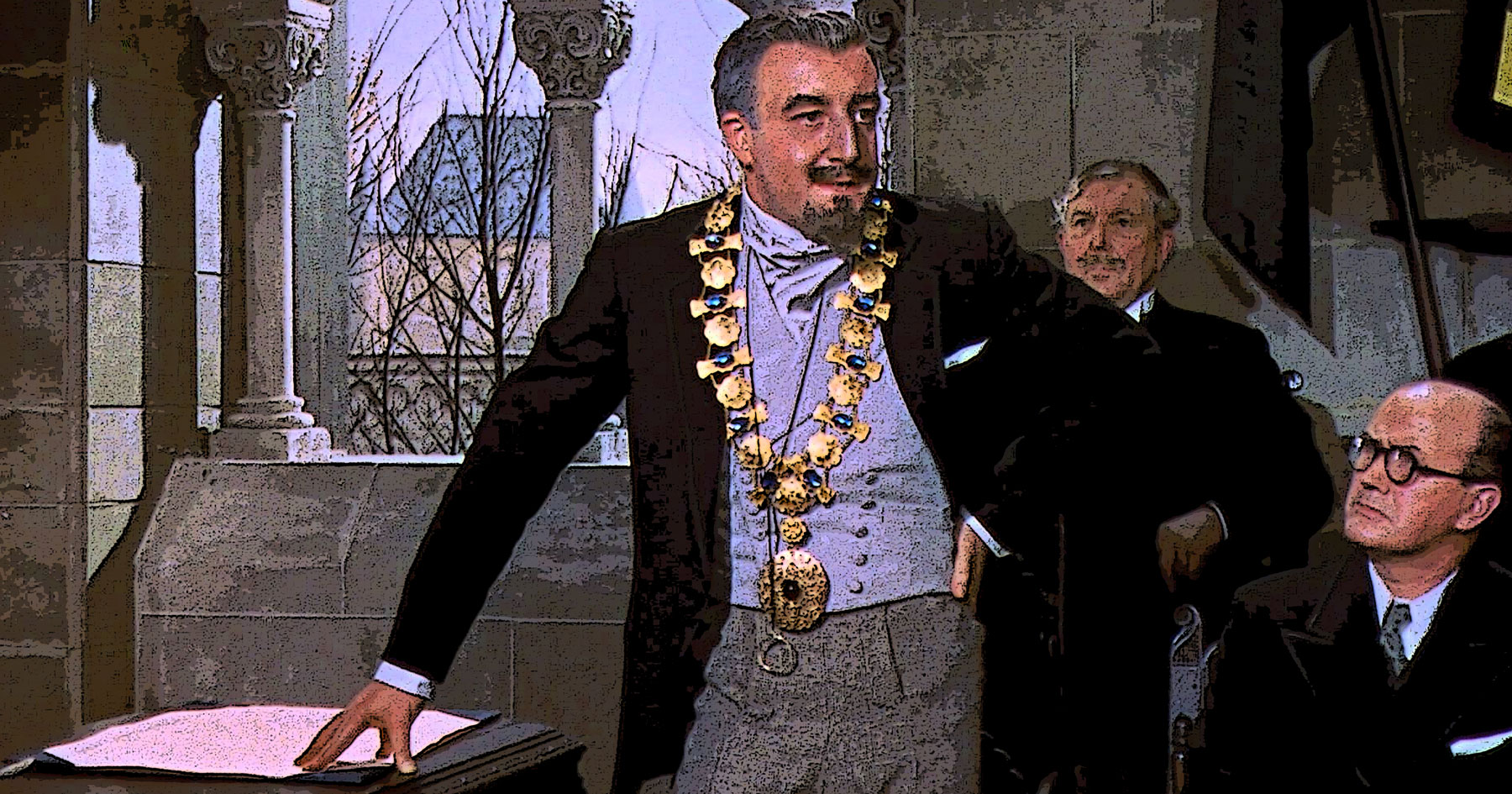
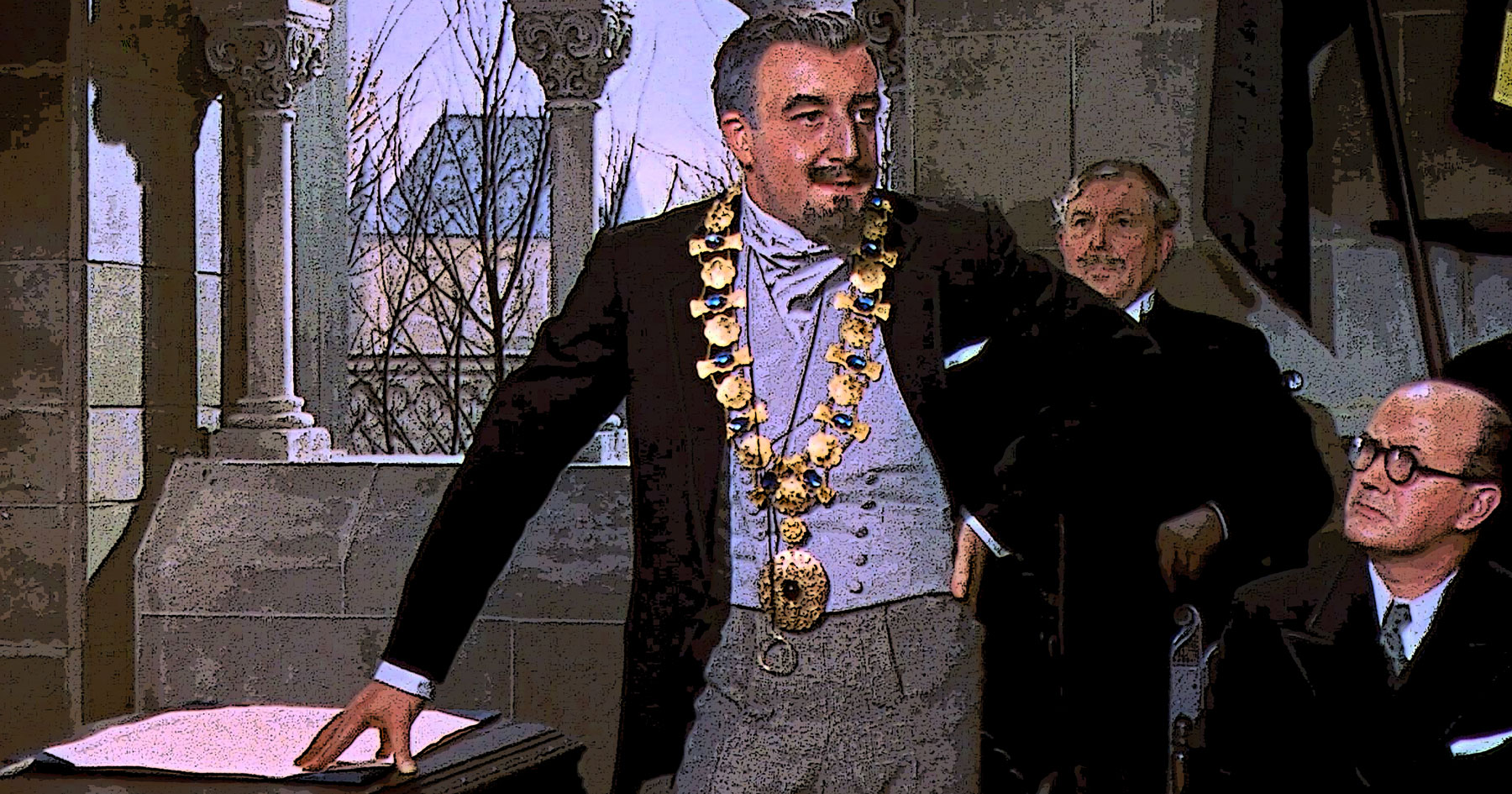
In The Mouse That Roared, a 1955 comic novel by Leonard Wibberley, a tiny English-speaking country in Europe loses market share for its only export, a wine label, to a cheap American knock-off. Seeking compensation for the loss, the duchy decides to do the only rational thing: declare war on America, and then, after the inevitable defeat, reap the rewards of reconstruction financing.
I was reminded of the book when reading about another of the Obama Administration’s subsidy programs, uncovered by Sen. Rand Paul. The program gives money to illegal aliens deported to their country of origin, El Salvador, to start small businesses.
Sort of a Small Business Administration program for deportees.
But Congress’s involvement is nil, and the SBA has nothing to do with it, either. The program, according to the Rand Paul press release, “is administered by the non-profit Instituto Salvadorno Del Migrante (INSMI — translated to Institute of Salvadorian Migrants) and funded through a $50,000 grant from the taxpayer-backed Inter-American Foundation.”
It is not big money, certainly not by profligate Washington standards. Nor is the premise of the program likely to win it praise from anyone looking for a solution to illegal immigration. Indeed, the best way to describe the program is how Rand Paul’s team did describe it: “absurd.”
In The Mouse That Roared, the Duchy of Grand Fenwick makes a crucial mistake in its plan to profit from American largesse: it wins the war.
But some things haven’t changed since then. The American government throws around money absurdly.
And little countries make fools of Big America.
This is Common Sense. I’m Paul Jacob.

Today’s the traditional day for New Year’s “Resolutions,” but instead of resolutions, how about some solutions?
Sure, Thomas Sowell has sagely reminded: there are no solutions in social life, only trade-offs.
But, utopian perfection aside, let’s agree that some changes would be better than others, and, let us resolve to solve some nagging problems — or at least trade up. And since the really nagging problems are political . . .
For Republicans: this could be the year to give up on government as society’s chief moral agent, empowered to regulate everybody’s medicine cabinets and bloodstreams. End the failed War on Drugs, with legalizing marijuana the simplest first step. Vice will continue, as it always has. But it’s another kind of vice to think that force, policing and imprisoning folks, will “solve” the problem. Much less even reduce the availability of drugs.
For Democrats: this could be the year to give up on government as micromanager of markets — and people’s marketplace choices. Face it: folks will make decisions that liberals don’t like. They’ll eat at McDonalds and buy large sodas — and the wrong stocks. And guns! But adding to the mass of regulations doesn’t make consumers choose better, it makes stuff more expensive and business less open to competition. Indeed, almost all the regulations designed to help “the little guy” backfire, helping big business by hobbling their upstart competitors.
Our leaders, at present, cannot even balance budgets. They are addicted to debt. To pretend we must have more and more government to prevent our addictions or save us from personal debt is ludicrous.
Can we resolve to stop pretending that bigger government is always the solution?
This is Common Sense. I’m Paul Jacob.

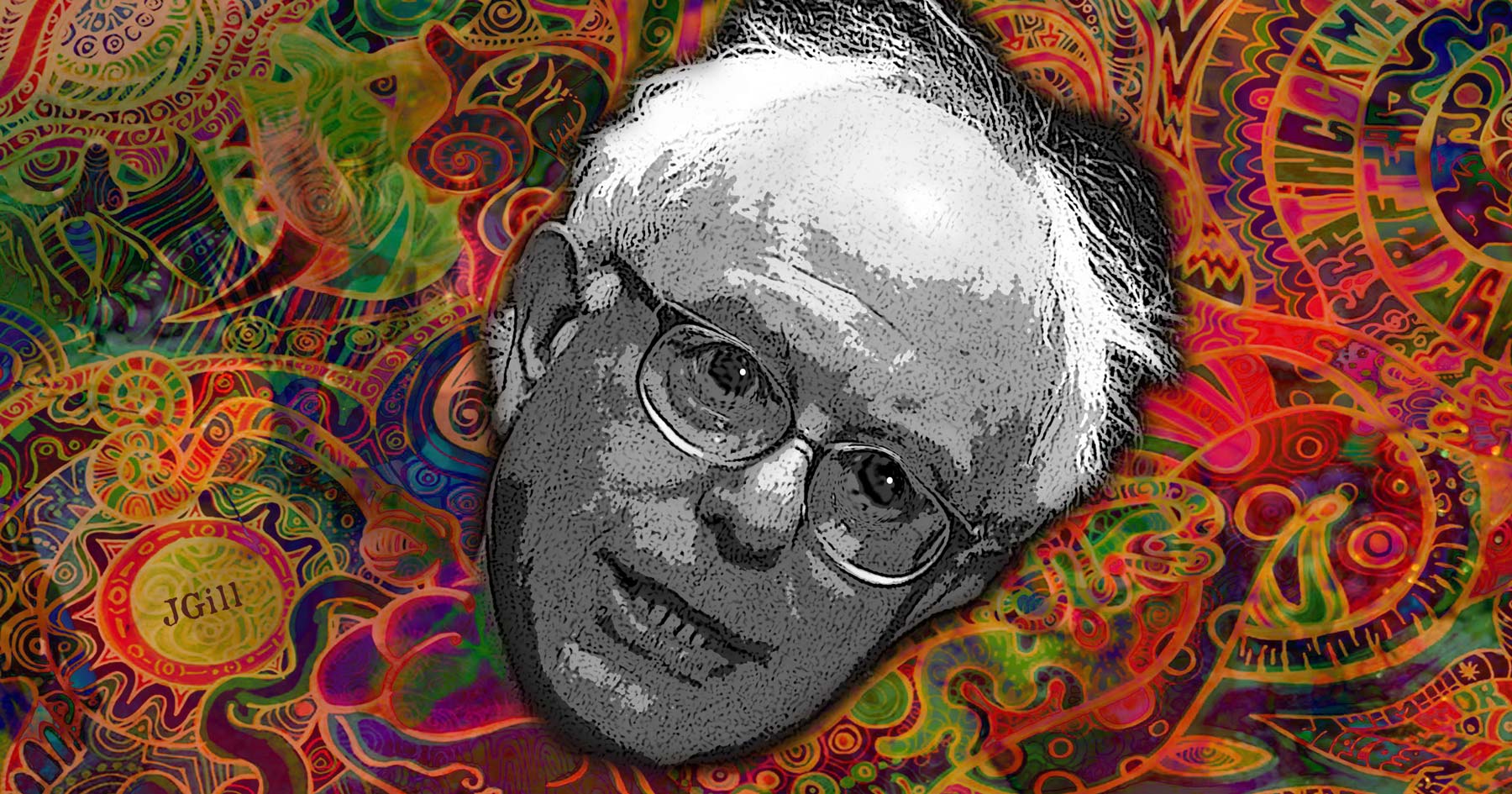
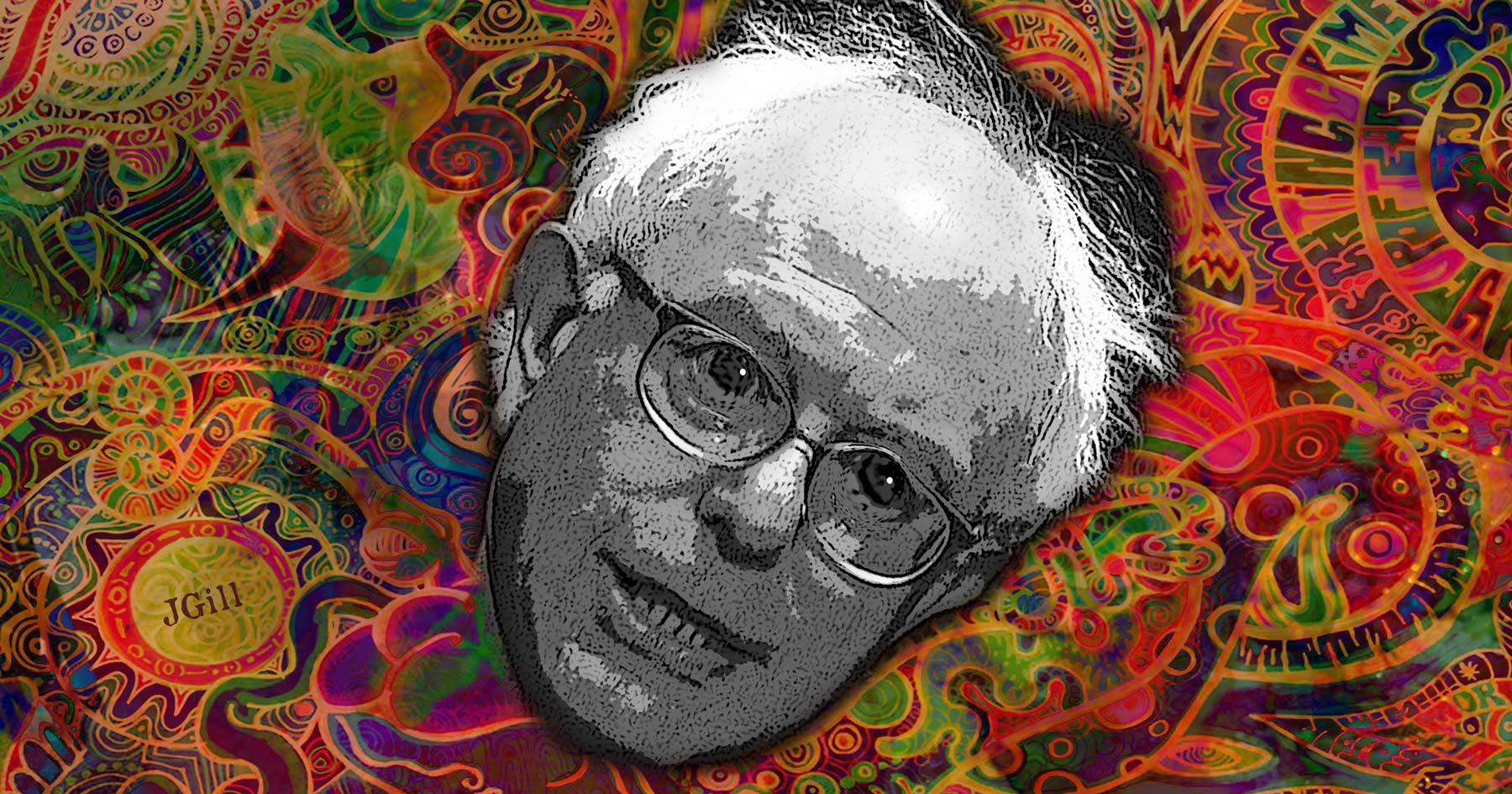
Senator Bernie Sanders gave us a big present last week. In one simple “tweet” he warbled out the essence of his socialism: “You have families out there paying 6, 8, 10 percent on student debt but you can refinance your homes at 3 percent. What sense is that?”
That’s what he broadcast. That’s what this self-proclaimed socialist wrote — or allowed his staff to write — on his official Twitter account, @SenSanders.
And it is not as if he had the excuse of haste. He was repeating a thought from his presidential campaign account in September: “It makes no sense that students and their parents pay higher interest rates for college than they pay for car loans or housing mortgages.”
To the earlier post, Twitter erupted in criticism. The gist? Have you never heard of collateral, sir?
Lenders can charge less on secured loans because, in case of default, the recourse is to take the collateral, the car or house, thereby recouping the loss.
But an unsecured loan? Well, by law one cannot easily slough off student loans — but one can simply not pay, or pay late. Hence the higher rates.
From its beginnings, socialism — and progressivism and Fabianism and fascism and social democracy, following — has been fueled by complaints about markets.
Without showing any understanding of the logic of markets.
Which is why, when put into practice, socialistic and interventionist programs produce such great amounts of negative collateral effects. Socialism is the philosophy of good intentions that yields collateral damage worse than the problems meant to be solved.
Oh, Bernie Sanders! Your initials say so much.
This is Common Sense. I’m Paul Jacob.

Earlier this week, SpaceX made history. Again.
Back in 2008, the company had launched the Falcon 1 into orbit —a big deal in the Space Age, previously dominated by governments.
Blue Origin, which is the baby of Amazon’s Jeff Bezos, has been providing Elon Musk’s SpaceX some stiff competition. A few weeks ago, Blue Origin sent up the New Shepard rocket — and returned it to earth vertically.
This week, SpaceX pulled ahead, sending its Falcon 9 up beyond New Shepard’s suborbital heights, putting eleven (count ’em: 11) satellites into orbit . . . and returning to touch down safely onto dry land — on the launch pad — vertically.
Just like we imagined when we (well, some of us oldsters) were young, before we witnessed Mercury and Apollo splashdowns.
Back in 2012, when I wrote about SpaceX — and NASA’s outsourcing of launches — I called it progress. One reader worried about the whole thing, though: “A spy satellite is still a spy satellite even if some telecom conglomerate puts it in space.” He was afraid of privatizing tyranny. That would be bad, but it doesn’t seem to apply to this week’s new satellites . . . unless M2M (machine-to-machine) Internet devices mean something different than what I understand them to be.
In any case, costs have been contained: while NASA’s Space Shuttle was also reusable, it cost about half a billion bucks per launch, which, we’re told, is “about eight times the current cost of a Falcon 9.”
Free enterprise: delivering the goods at a fraction of the cost.
This is Common Sense. I’m Paul Jacob.

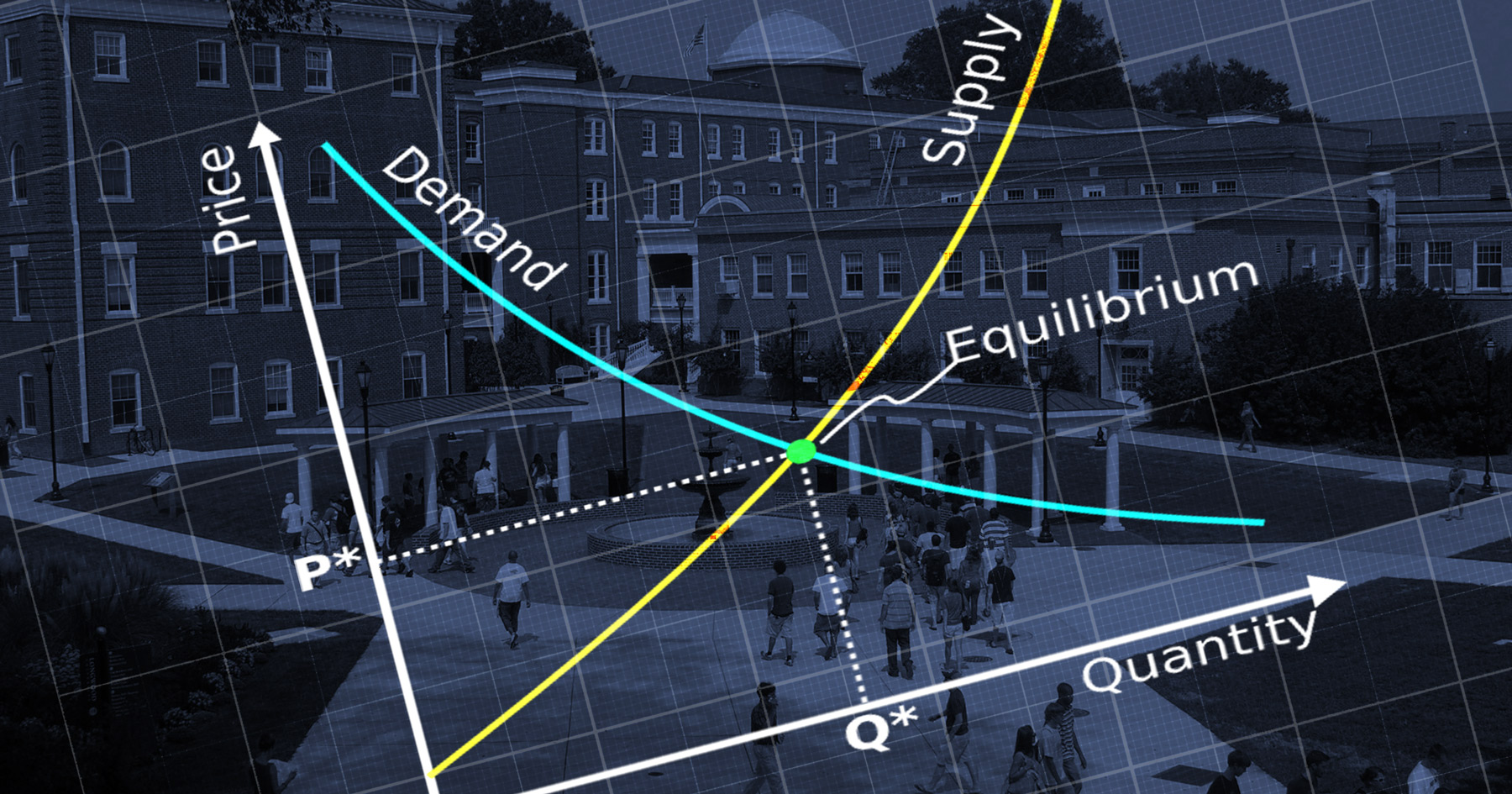
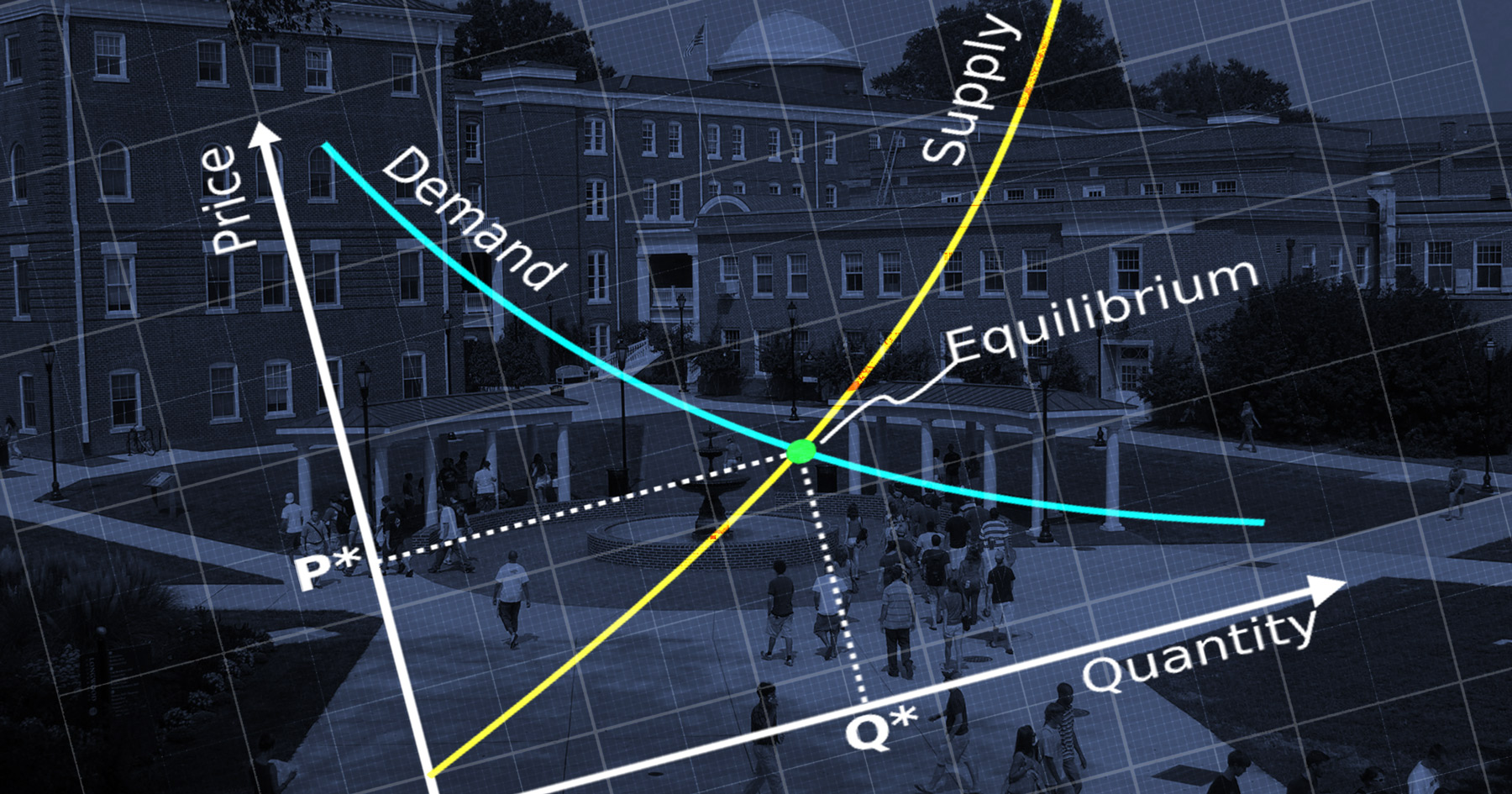
Subsidize something, and you tend to get more of it.
But wait, what if you subsidize demand for something, but don’t really allow (or continue to disallow) increased supply?
Then prices for that something go way up.
This is elementary economics — nothing controversial about it.
Except that politicians and bureaucrats who make public policy tend not to acknowledge this aspect of reality when they propose subsidies. Instead, they expect praise for their “heroic” and “caring” program of destruction.
They need to be educated. But, alas, all this applies best to college education. How does one educate the educators?
A new study, which reliable economists tell me is “sophisticated,” finds that the bulk of recent college tuition price inflation can, indeed, be directly linked to the federal government’s loan subsidies.
This study makes for some opaque reading, alas: “Essentially, demand shocks lead to higher college costs and more debt, and in the absence of higher labor market returns, more loan default inevitably occurs.” Yikes.
The college education bubble has been much talked-about for years, at least amongst skeptics of government policy. But in hushed tones — the big fear, here, is that a bursting of the bubble will lead to — who knows what? I mean, who-knows-what policy reaction.
Probably just more government subsidy and control. And even higher tuition still. Double yikes.
Thankfully, while the brick-and-mortar higher education institutions suck up more and more government-backed money, the Internet is enabling some great alternatives. The future, I think, does not belong to the university system as we have known it.
This is Common Sense. I’m Paul Jacob.

The climate change pact just completed at the United Nations conference in Paris is, the Washington Post informs us, “historic.”
The New York Times, LA Times, Chicago Tribune, and just about every other paper uses that very word in their headlines, too.
“The 12th of December, 2015, will remain a great date for the planet,” declared French President Francois Hollande, dubbing it “the most beautiful and the most peaceful revolution that has just been accomplished.”
“History will remember this day,” U.N. Secretary-General Ban Ki-moon predicted. President Obama called it a “turning point for the world.”
Chris Mooney, in a deeper analysis for the Washington Post, agreed that all the hoopla was “more than warranted.”
But Mooney also acknowledged that, “this document, by its very nature, depends on . . . Countries, companies and individuals all across the planet [doing] the right things — and very hard things, at that.”
How hard?
Essentially ending any emission of greenhouse gases in the next half-century.
“Achieving such a reduction in emissions would involve a complete transformation of how people get energy,” the New York Times reported, “and many activists worry that despite the pledges, countries are not ready to make such profound, costly changes.”
As the negotiator for the Federated States of Micronesia put it: “We’ve agreed to what we ought to be doing, but no one yet has agreed to go do it. It’s a whole lot of pomp, given the circumstances.”
“What’s more,” adds Mooney, “even if everyone plays by the rules, the standards and goals set out by the Paris agreement may not be enough to prevent the catastrophic effects of climate change.”
Historic? History will determine that.
This is Common Sense. I’m Paul Jacob.