Categories
education and schooling folly free trade & free markets general freedom ideological culture national politics & policies responsibility too much government

Miseducated and Unemployed

The persistence of the issue of raising the minimum wage is an indictment of public education, for at least two reasons:

  1. It shows that “our” schools are not teaching basic economics. Generally, those who think minimum wages help the poor do not understand what wages are (price of labor), why they are paid (worker productivity bolstering the bottom line) and what a minimum wage law is (a prohibition on contracting for work below the arbitrary government-prescribed rate).
  2. It shows that schools aren’t preparing the young for real-world activity. Wages track productivity. If disturbingly large numbers of people are affected by the minimum, that means they haven’t been adequately trained in the skills they need.

Bernie Sanders wanted a 15-buck minimum. Hillary went on record supporting a 12-buck rate. Donald Trump would prefer that the minimum wage regulations be enacted by the states, though he says a hike to ten dollars per hour would really help the less fortunate.

It wouldn’t.

That is the tacit theme in a Wall Street Journal piece on the recent minimum wage rate hikes in 14 American cities, including the nation’s capital. A classic, succinct article on BET makes the point even more stark: a duo of economists from Trinity University “report that when a state, or the federal government, increases the minimum wage, Black teens are more likely to be laid off. The duo analyzed 600,000 data points, which the Employment Policies Institute says included ‘a robust sample of minority young adults unprecedented in previous studies on the minimum wage.’”

Just as theory predicts.

Could it be that politicians promise a raise because they believe government-schooled Americans too miseducated to know better?

This is Common Sense. I’m Paul Jacob.


Printable PDF

minimum wage, illustration, money, economics


Categories
Accountability free trade & free markets moral hazard national politics & policies responsibility

It’s the Stupid Economy

When Bill Clinton ran for president, the slogan inside his campaign’s war room was a blunt reminder to focus on “the Economy, Stupid.” This was Clinton’s first enduring contribution to the American stock of catch-phrases.

Now, Bill’s wife, Hillary, seeks the top banana position. But she has a harder job than Bill: he could fight against a lackluster incumbent caught in a big lie (“No New Taxes,” another slogan). Hillary is almost required to defend the outgoing president, in no small part because she served in his Cabinet.

If she were candid, she’d address the weak recovery and long-term stagnation.

Her slogan could be, “It’s the Stupid Economy.”

No matter what politicians say, however, secular (long-term) stagnation is a thing. Lots of people have given up, are off the roles of job-searchers and so don’t appear in official unemployment statistics, and too many people have taken early retirements on trumped-up disability claims.

At least, economist Lawrence Summers is decrying it, jet-setting around the world to meet with financial leaders and political functionaries.

I doubt his diagnosis, however. Summers talks Keynesian, pointing to inadequate aggregate demand. While there may be something to the general shift in the desire to hold monetary assets, leading to deflation and even negative interest rates, I bet the underlying problem is regime uncertainty — when widespread fears of the future and doubts about governmental consistency and follow-through lead the owners of capital to withhold investing in production.

There are also the effects of general regulatory and redistributionist kludge.

When the problems stem from your favored policies, you can’t revive FDR’s slogan “nothing to fear but fear itself” and let it go at that.

Hillary will surely explain — Thursday night.

This is Common Sense. I’m Paul Jacob.   


Printable PDF

HIllary Clinton, Obama, Bill Clinton, economy, election, illustration


Categories
Accountability folly free trade & free markets general freedom government transparency initiative, referendum, and recall moral hazard nannyism national politics & policies property rights

The Return of the Philosopher King

On Sunday, at Townhall, I addressed the whining attacks on referendums and “democracy” that followed the Brexit referendum.

The most outrageous? A broadside from Jason Brennan.

“To have even a rudimentary sense of the pros and cons of Brexit,” argues this Robert J. and Elizabeth Flanagan Family Associate Professor of Strategy, Economics, Ethics, and Public Policy at the McDonough School of Business at Georgetown University, “a person would need to possess tremendous social scientific knowledge. One would need to know about the economics and sociology of trade and immigration, the politics of centralized regulation, and the history of nationalist movements.”

In other words, most Brits needn’t worry their pretty little heads about deciding their future; experts have everything under control.

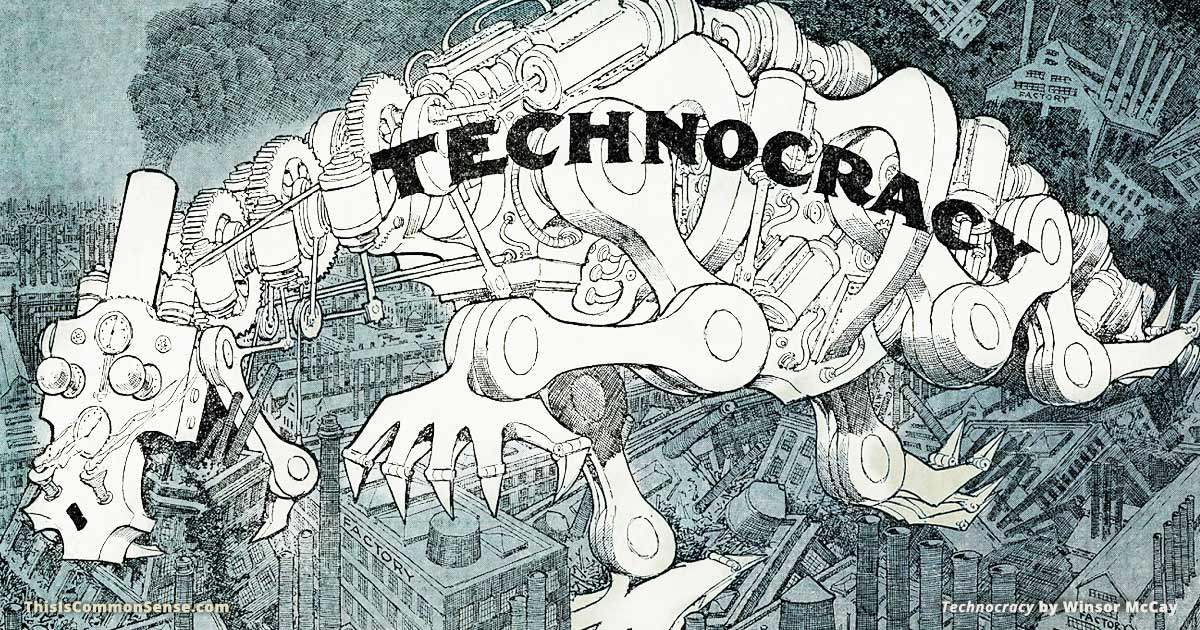
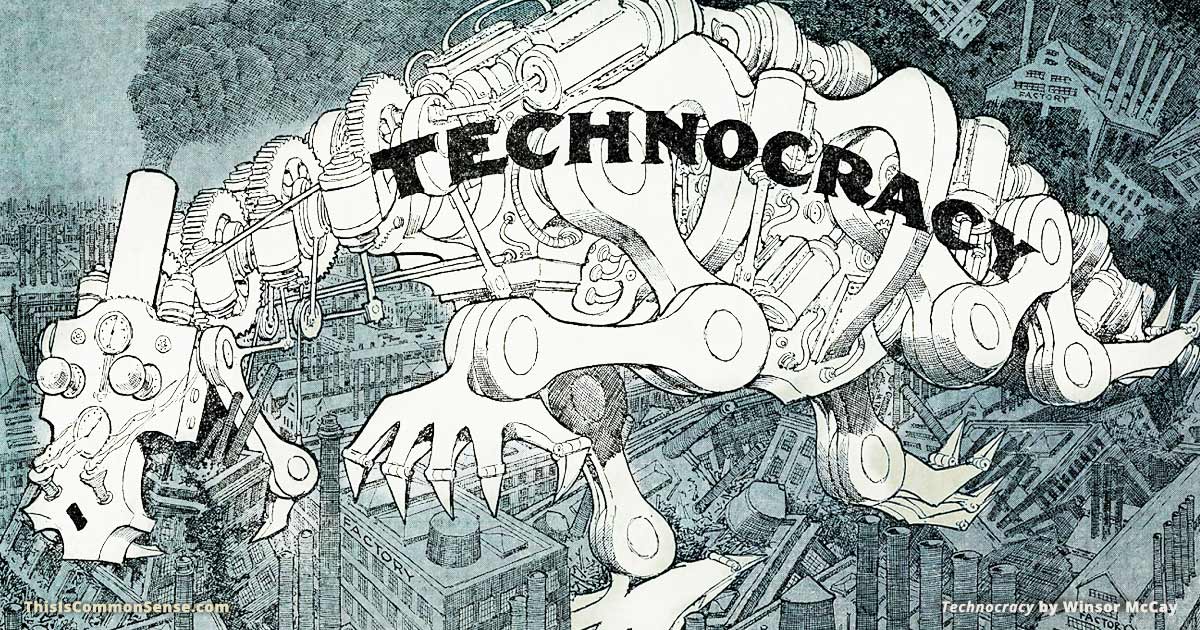
Brennan has a new book coming out, Against Democracy, wherein he posits that we need “a new system of government — epistocracy, the rule of the knowledgeable.”

Sound familiar? ’Tis the old Platonic whine in new wineskins.

This Philosopher King is necessary, you see, because citizens don’t posses the advanced degrees to judge whether Brennan is right or wrong. We can’t even find a Holiday Inn Express in the phonebook. Or a phonebook.

Nonetheless, why not consult other known knowers?

The late William F. Buckley, Jr., well-educated and well-spoken on political matters, once declared that he would “rather entrust the government of the United States to the first 400 people listed in the Boston telephone directory, than to the faculty of Harvard University.”

“Incestuous, homogeneous fiefdoms of self-proclaimed expertise are always rank-closing and mutually self-defending, above all else,” warned journalist Glenn Greenwald, an expert on such hooey.

“I know no safe depositary of the ultimate powers of the society but the people themselves,” wrote Thomas Jefferson, “and if we think them not enlightened enough to exercise their control with a wholesome discretion, the remedy is not to take it from them, but to inform their discretion by education.”

Most decisions in a free society are thankfully made by individuals (not voters, bureaucrats, or academics) about their own lives.

But when legitimate decisions of governance must be made, I’ll take democracy over rule by experts.

This is Common Sense. I’m Paul Jacob.


Printable PDF

technocracy, expert, epistocracy Brexit, illustration
Categories
Common Sense free trade & free markets general freedom ideological culture initiative, referendum, and recall responsibility tax policy term limits U.S. Constitution

Trying Our Souls

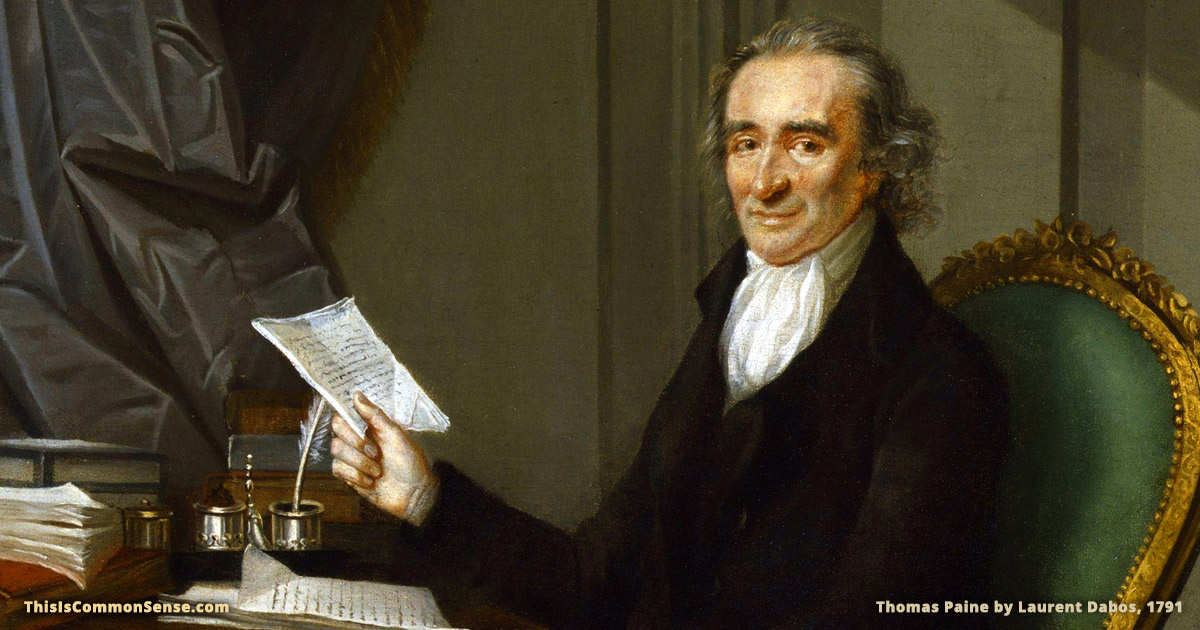
In Common Sense, his incredible hit pamphlet of 1776, Tom Paine appealed to “the inhabitants of America”:

O ye that love mankind! . . . Every spot of the old world is overrun with oppression. Freedom hath been hunted round the globe. Asia, and Africa, have long expelled her. Europe regards her like a stranger,and England hath given her warning to depart. O! receive the fugitive, and prepare in time an asylum for mankind.

Today . . . well, our country might be mistaken for an asylum. Just not the type envisioned by Mr. Paine

Worse still, freedom in America is under consistent attack.

Following the Orlando terrorist massacre (and don’t forget, “hate crime”), who could be surprised at yet another rush to infringe on Second Amendment rights by legislation? But I must admit I was still naïve enough to be shocked that not a thought was given to making our Fifth Amendment rights to due process so much collateral damage.

Secretly writing names on a classified list, whether you call it a “no-fly list” or the “terrorist watch list,” and using merely that to bureaucratically deny citizens fundamental rights (“top ten” rights, as in No. 2 and No. 5 in the Bill of) is no process of law at all.

Who could so cavalierly toss away the very bedrock of our freedom? It’s as if our so-called representatives don’t give a hoot about our rights.

Common Sense readers are well aware that two years ago every Democrat in the U.S. Senate voted to repeal the key freedom of speech provision of the First Amendment. The goal was to completely reverse the current wording of “Congress shall make no law” with new wording that incumbent legislators in “Congress and the States may regulate . . . the raising and spending of money by candidates and others to influence elections.”

The amendment didn’t pass. Thankfully. But, frighteningly, it continues to be promoted. Presidential candidate Hillary Clinton has endorsed it. Most folks are ignorant about the extremism of the approach, because the media reports mainly that the amendment reverses Citizens United, something the amendment actually doesn’t do.

The amendment simply awards Congress so much power that the highly-disapproved body could do almost anything.

Most people also don’t realize that the Citizens United case was about the Federal Election Commission (FEC) censoring advertising for a movie about Hillary Clinton, produced by a non-profit corporation.

Speaking of government censorship of the press, the FEC had been threatening Fox News with major fines for making corporate contributions to 17 GOP presidential candidates. What happened? The cable news channel decided to expand from a single debate featuring 10 candidates to two debates with the earlier “undercard” debate featuring an additional 7 candidates. A candidate not chosen to be one of the 17 candidates filed a complaint against Fox, alleging it amounted to an illegal contribution to all 17 candidates.

The FEC recently closed the case without beating up the disfavored news channel only because three Republican commissioners blocked three Democrats. The case should not only be closed, it should never have been brought in the first place. We don’t want our government dictating to the media about political debate coverage.

Or anything else.

And how can major federal agencies provide equal protection to all citizens, when they are staffed according to political party to provide protection for Republicans and Democrats? More of us are independents than either Rs or Ds.

The war against political participation isn’t confined to Washington. I know from my ordeal in Oklahoma nearly a decade ago, when for assisting initiative petition campaigns for a spending cap and eminent domain reform, I was charged with conspiracy to defraud the state and threatened with ten years in prison . . . until a year and a half later when, without ever completing even a preliminary court hearing, the charge was dismissed.

I’ve seen Eric O’Keefe and other brave citizens in Wisconsin endure dawn SWAT-style police raids for the awful crime of campaigning in favor of government policies they support.

And, of course, how can we forget that no one has been held in any way accountable for the years that the IRS blocked the formation of Tea Party and conservative and libertarian groups?

This country is in trouble.

In addition to the assaults on our rights, especially the right to participate politically, there is the dysfunction at all levels of government. Among the big national problems of massive debt and constant war, we find smaller local issues that signal a deeper, bigger problem.

Common Sense has long covered the school kid suspended for drawing a gun or eating one’s PB&J sandwich into a pistol or the school that photo-shopped out the musket from their Minuteman mascot. This last year we followed many of the twists and turns to the story of the Meitivs, the Maryland family that dared allow their two children, ten and six years of age, to walk home from a public park. The children were obviously well cared for, but nonetheless they were picked up and held by police several times and the parents were long threatened with losing their kids.

It took over a year for the authoritarians with Child Protective Services to agree that kids walking home from a park in broad daylight did not constitute prima facie evidence of child abuse or neglect. And to agree to leave the poor Meitiv family alone.

Common Sense has also highlighted the racketeering being done by police forces federal, state and local through what’s known as civil asset forfeiture — again, a complete denial of basic rights. Under current law — or more correctly, lawlessness — police can take people’s property and money when detaining them and then keep it, even if the person is never convicted of a crime, or even charged.

This suspension of the fundamental concept of “innocent until proven guilty” must not stand.

But who is going to stop it? Not just this one outrageous rip-off, but the whole societal slide to a system where individuals have no rights, especially if they lost the last election, and government makes more and more of our decisions for us.

Hillary Clinton?

Donald Trump?

Your state’s legislators? Your city council? Your congressman?

You and I must stop the erosion of our liberties. We have the tools — especially with state and local ballot initiatives available to most of us, allowing us to seize the agenda at the time and on the issue(s) of our choosing.

Liberty Initiative Fund works with Liberty Initiators across the country to hold government accountable, fight crony capitalism and protect our liberties through state and local ballot initiatives. Contributions are not tax deductible, but pack a powerful punch for liberty.

Citizens in Charge and Citizens in Charge Foundation protect the critical initiative and referendum process, so citizen activists can reform government and limit power. Donations to Citizens in Charge Foundation are fully tax-deductible.

The Foundation also supports Common Sense, which I offer the modern inhabitants of America to help keep us focused on the most important problems we face, with intermittent seriousness and humor, as well as uniting active allies from across the country, each pursuing their own issues in their own communities.

Today, I’ll enjoy being with the people I love and I’ll take some time to celebrate the birthright of freedom forged for you and me 240 years ago.

But I won’t pretend that freedom will be there for me or for mine unless together we forge our future freedom anew.

This is Common Sense. I’m Paul Jacob.


Printable PDF

Tom Paine, Thomas Paine, Laurent Dabos


Categories
crime and punishment free trade & free markets general freedom nannyism national politics & policies Second Amendment rights too much government U.S. Constitution

What Doesn’t Fly

After the Orlando massacre, isn’t it time to get guns out of the hands of . . . licensed security guards?

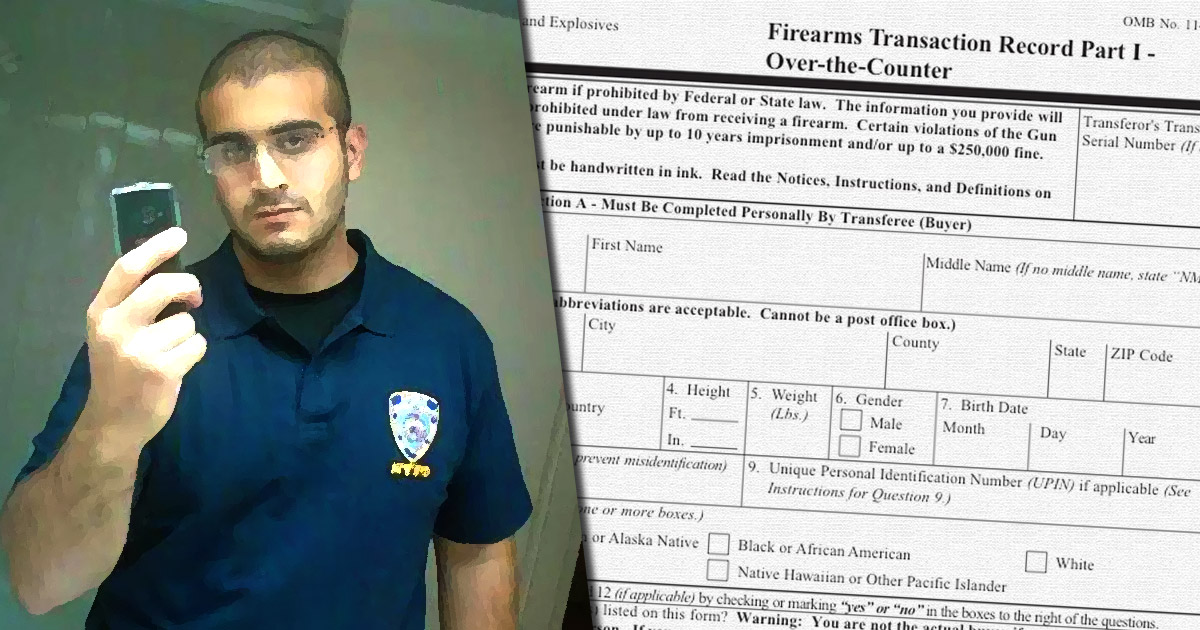
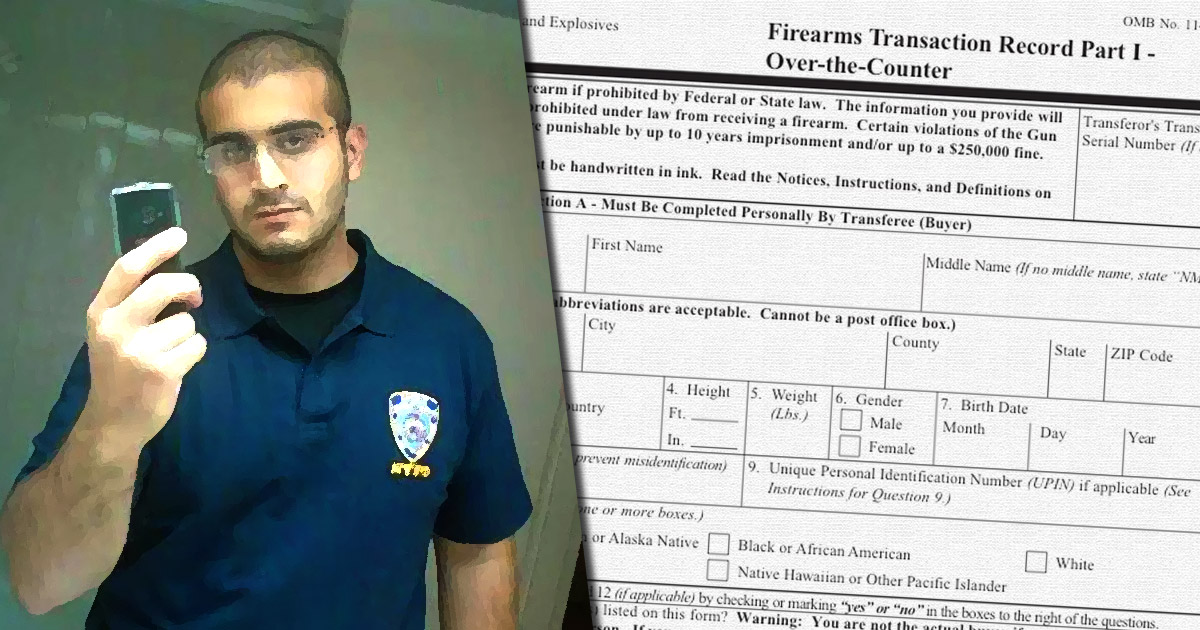
Omar Mir Seddique Mateen, who murdered 49 people and wounded 53 others in The Pulse nightclub, worked for the globe’s largest security firm, Britain’s G4S. He passed two background checks conducted by the company.

Mateen’s government credentials included “a Florida state-issued security guard license and a security guard firearms license.” Twice, he was investigated by the FBI, in 2013 and again in 2014, and cleared — investigations closed.

Should we talk about security failures?

Instead, a filibuster by Connecticut Sen. Chris Murphy and a sit-in protest by House Democrats changed the channel to gun control. The Senate voted on four bills that threatened more than the Second Amendment. Our Fifth Amendment rights to due process were also in the sights of crusading Democrats and appeasing Republicans and still are.

Not to mention the Ninth Amendment, freedom to do all manner of things, including travel.

Hillary Clinton says that “if you’re too dangerous to get on a plane, you’re too dangerous to buy a gun.” Yet, the problem comes in government simply declaring someone too dangerous to fly or to buy a gun, without ever publicly bringing a charge — you know, with evidence — much less convicting that person of a crime.

Having a government agent place a name on a secret list doesn’t even approximate due process of law. And, accordingly, doesn’t justify stripping a person of fundamental liberties.

Terrorism is terrifying . . . but not any more so than politicians who, in pursuit of their political agendas, don’t think twice about our freedoms or their constitutional limitations.

It’s not all right.

This is Common Sense. I’m Paul Jacob.


Printable PDF

Pulse, Orlando, shooter, background, registration


Categories
Accountability crime and punishment folly free trade & free markets general freedom ideological culture nannyism national politics & policies

Digs at the Gig Economy

In Texas’s progressive enclave of Austin, the government has regulated Uber and Lyft out of the city.

Massachusset’s uber*-progressive Sen. Elizabeth Warren cautions that the “much-touted virtues”of the “gig economy” that these services represent are actually dark signs of the times, providing workers a false “step in a losing effort to build some economic security in a world where all the benefits are floating to the top 10 percent.”

Vermont’s Sen. Bernie Sanders, the independent candidate for the Democratic Party’s presidential nomination, is also no fan. Why? These services are not regulated.

Sanders’s charge that these person-to-person (P2P) ride-sharing services are “unregulated” is of course the opposite of the truth. They are self-regulated for safety and efficiency in ways that taxi services never were. How much extra value did governments add, with their regulations of the taxicab industry? They just reduced competition and made cabs more expensive.

P2P online cooperation is revolutionary. And “progressives” are stuck in the past, itching to suppress that revolution. “Initially,” writes Jared Meyer in the July issue of Reason, “hostility mostly came from state and municipal governments, at the behest of local special interests.” But as the services became more popular, opposition shifted. To the national Democrats like Sanders, Warren and . . . Hillary Clinton. She promises to “crack down on bosses who exploit employees by misclassifying them as contractors or even steal their wages.”

Par for the course: the Internet provides more opportunity than ever, and all some progressives see are the old socialist fears of “exploitation” and “greed” . . . while they greedily suck up to unions and special interests.

The bright side, Meyer argues, is that they are on the losing side.

This is Common Sense. I’m Paul Jacob.


*I guess the pun here is intended. Or not. You choose, P2P style.


Printable PDF

Uber, Lyft, sharing, economy, HIllary, Bernie, illustration


Categories
free trade & free markets general freedom too much government

Hysteria, Assassination, and Big Government

The biggest political story of the month? Brexit.

The people of Great Britain will vote, this week, whether to remain in, or exit, the European Union. (Britain+exit=“Brexit,” you see.)

Establishment forces in Britain have engaged in hysterical, hyperbolic overkill, warning of grave disaster were Britain to leave the union. America’s President Barack Obama contributed to this, recently, when he warned that an independent Britain might find itself placed “at the back of the queue” in trade talks.

Tragically, things got more troubling last week when anti-Brexit, pro-union campaigner Jo Cox, a Member of Parliament and prominent Labour Party activist, was brutally slain last week in front of her local library. The man had just left a mental health facility, after requesting help.

At first, major media reported that the killer had shouted “Britain First,” an old patriotic motto as well as the name of a pro-Brexit political party, while shooting and stabbing her. Of the several eyewitnesses to have allegedly testified to this murderous shout, only one is sticking to the story . . . a member of the British Nationalist Party, which is antagonistic to Britain First. Other eyewitnesses deny the story.

Next, both sides promised to cease campaigning, out of good taste. Still, polls fluctuated, while remaining close.

Much of the furor has risen over immigration policy, especially fears about EU laxity towards Muslim refugees.

But the bedrock issue is Big Government. The EU is not effectively controlled by citizens; indeed, membership representation is mostly show, a mockery of republican government.

That is why, if I were British, I’d vote to Brexit.

This is Common Sense. I’m Paul Jacob.


Printable PDF

Brexit, EU, European Union, independence, democracy, illustration


Categories
Accountability free trade & free markets ideological culture moral hazard national politics & policies

Puerto Rico’s Debt, Our Problem

“We have an important choice to make,” presidential candidate and Senator Bernie Sanders recently wrote to Congress. “[D]o we stand with the working people of Puerto Rico or do we stand with Wall Street and the Tea Party?”

The bill in question has been dubbed Paul Ryan’s “first big victory as Speaker,” but was written in tandem with the White House. The plan attempts to rescue Puerto Rico, a United States territory, from financial collapse with both bailouts and austerity — the latter including a lowered minimum wage.

I hadn’t heard any Tea Party squawk about this, so that reference must be just signaling on Bernie’s part.

Puerto Rico is $72 billion in the hole. Basically, Sanders wants to partially repudiate that debt: “The billionaire hedge fund managers on Wall Street cannot get a 100 percent return on their bonds while workers, senior citizens and children are punished.”

Of course our sympathies are almost entirely with the people of Puerto Rico. But it was their government that racked up the debt, and repudiating sovereign debt is a tricky and parlous thing.

What happens when the United States itself faces similar (or worse) straits? Would Bernie then, again, plan to stick it to the government’s creditors — even after he, himself, had voted to increase spending above revenues and periodically raise the debt ceiling — and think that this wouldn’t have consequences?

Meanwhile, the possible minimum wage reduction is one of the stickiest of the issues. Bernie sees it as “sticking it” to the poor.

In truth, it would help increase employment, thus help the poor get out of poverty.

This is Common Sense. I’m Paul Jacob.


Printable PDF

Puerto Rico, debt, loan, Bernie Sanders


Categories
Accountability folly free trade & free markets general freedom ideological culture moral hazard nannyism national politics & policies property rights responsibility too much government

Fatherland, Socialism and Death!

The fall of Venezuela is an atrocity.

The comic elements are clear enough — the further you remove yourself from the poverty, chaos, and collapse. We can wallow in a bit of Schadenfreude, taking glee as some American leftists squirm to explain why the socialist paradise they ballyhooed a mere three years ago now tail-spins to the grave.

The collapse of this socialist experiment offers an enormous level of tragedy. It’s not pretty.

The country’s leader, President Nicolas Maduro, makes his predictable desperation play. Rather than confront his own errors, and the futility of making socialism work in anything like a rigorous form, he boasts. “Venezuela Leader Says US ‘Dreams’ Of Dividing Loyal Military,” reads yesterday’s Reuters report. While no doubt true, this is one of those cases where whatever we dream to the north, our dreams are better than their current reality.

Of course the Venezuelan military should turn on Maduro, Hugo Chavez’s inheritor, protecting the right of recall, which Maduro is denying. By painting the U. S. as the bad guy, Maduro hopes to unite his people — especially his armed forces — around him. That’s what a desperate demagogic dynast does. Citizens and subjects traditionally abandon skepticism about their leaders when they feel threatened from the outside.

Which is one reason it would be a mistake for the U. S. to intervene.

Reuters poetically reports that the military is still united behind the socialist government, and resists the recall referendum, singing “Fatherland, Socialism, or Death!”

Wrong conjunction. Not “or” but “and” . . . if you insist on socialism.

The government, military pressure or no, should allow the recall vote, and soon.

This is Common Sense. I’m Paul Jacob.


Printable PDF

Venezuela, store, socialism, column


Categories
folly free trade & free markets general freedom ideological culture national politics & policies

Guilt and Association?

A few days ago, the Barna Group released the results of its latest poll, asking “Americans whether capitalism or socialism align better with the teachings of Jesus,” explains The Hollywood Reporter. The results are that “socialism won 24 percent compared to 14 percent, with the rest answering ‘neither’ or ‘not sure.’”

And what about the year’s big race?

“When asked which presidential candidate’s policies aligned closest to the teachings of Jesus, Sanders was on top with 21 percent, compared to 9 percent for Hillary Clinton and 6 percent for Donald Trump.” Ted Cruz, no longer in the race, fared better than Hillary, but below Bernie, at 11 percent.

Now, it is worth mentioning that more significant polling on issues relating religion to politics has been done by Barna. Still, the commentary over at Fox on this poll was . . . interesting.

On Bill O’Reilly’s show, Monica Crowley made the crucial distinction between Jesus’ command to give to the poor and modern socialists’ demands to take from some, through taxation and by force, to give to others.

O’Reilly himself, however, went on a bizarre and joking riff about “buying his way to heaven” by leaving his wealth to charity . . . after he dies.

Looking over these poll numbers, I can only conclude that advocates of a free society have much work to do convincing Americans of the justice and benevolence of free markets, of “capitalism.”

And Christians have their work cut out for them, too . . . at the very least to disencumber themselves from the stench of socialist states and the brutal force those states inevitably rest upon.

This is Common Sense. I’m Paul Jacob.


Printable PDF

Christianity, socialism, capitalism, Christ, poll, illustration