Categories
First Amendment rights free trade & free markets national politics & policies regulation

Banks Not the Only Debankers

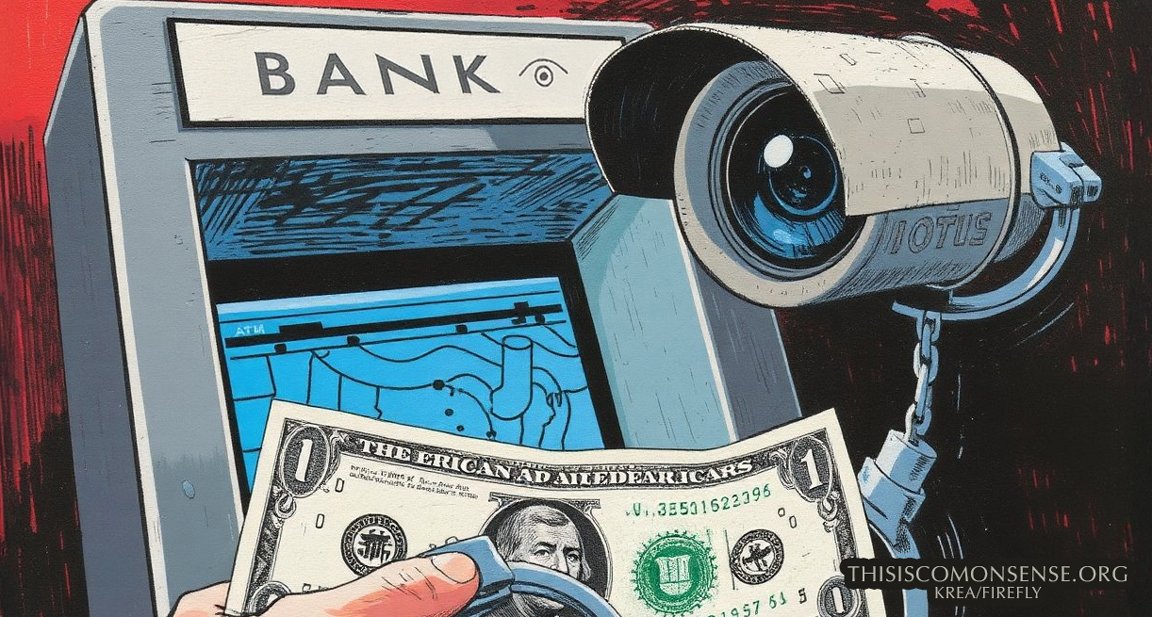
A recent executive order that President Trump issued to stop regulators from abetting and even compelling the “debanking” of bank customers for their political views is clear and on-target.  

On-target as far as debanking by banks goes.

But Reclaim the Net notes a glaring omission. The order’s identifies financial institutions willing to blacklist customers for possessing the “wrong” political opinions or missions. (“Wrong” here means not too pro-criminal or pro-terrorist but too constitutionalist, too much in favor of individual rights of the First or Second Amendment variety.)

The problem is that the order says nothing about major payment processors like Visa and PayPal.

Now, perhaps a penumbra of the new regulatory marching orders would influence the policies of the credit-card companies, whose cards are after all typically issued in cooperation with banks. But this is highly uncertain.

And Reclaim the Net thinks that Visa and Mastercard, “the twin tollbooth operators of the global payments highway,” are, like PayPal and Stripe, untouched by Trump’s order. Yet all of these payment processors have in recent years been blacklisting individuals and organizations that the processors happen to disagree with.

The practice goes back at least to the Obama administration, which instructed regulators that it could regard something called “negative public opinion” as a legitimate risk factor. 

This doctrine “quickly turned into a permission slip for politically driven account closures.” 

The government shouldn’t be issuing such “permission slips” — or implicit instructions — to banks, payment processors, or anybody.

This is Common Sense. I’m Paul Jacob.


PDF for printing

Illustration created with Krea and Firefly

See all recent commentary
(simplified and organized)
See recent popular posts
Categories
free trade & free markets regulation

Debanking Disallowed

President Trump has issued an executive order telling banking regulators to cut it out already.

The order, “Guaranteeing Fair Banking for All Americans,” takes aim at Biden-era regulations that pushed banks to “debank” clients who had the “wrong” political viewpoints: supporters of the First Amendment, the Second Amendment, or whatever aspect of individual rights and freedom the Biden administration was most insistently opposed to.

One key passage requires regulators to “remove the use of reputation risk or equivalent concepts that could result in politicized or unlawful debanking . . . from their guidance documents, manuals, and other materials . . . used to regulate or examine financial institutions over which they have jurisdiction. . . .”

The order also takes aim at banks. It requires regulators to identify financial institutions that have engaged or still engage in “politicized or unlawful” debanking practices and “to take appropriate remedial action” against the banks, including possibly “levying fines, issuing consent decrees, or imposing other disciplinary measures.”

Overall, the order represents a welcome 180 turnabout in very recent policy. The one problem I see, though, is that no clear attempt is made to distinguish between banks that were gung ho about clobbering politically unhip account holders and those that went no further than what they were pushed by Biden regulators to do.

Of course, one could always take a stand and do the right thing despite being threatened. Like the way the debanked individuals and institutions fought for what they believed in despite the risk of being debanked.

This is Common Sense. I’m Paul Jacob.


PDF for printing

Illustration created with Krea and Firefly

See all recent commentary
(simplified and organized)
See recent popular posts

Categories
free trade & free markets regulation tax policy

The New Old Coke

The President of these United States famously drinks Diet Coke.

Despite his preference, however, it’s regular Coca-Cola he’s making waves about.

“I have been speaking to Coca-Cola about using REAL Cane Sugar in Coke in the United States, and they have agreed to do so,” Donald Trump wrote on Truth Social last week. 

The Atlanta-based company has confirmed the story, but it will not be removing High Fructose Corn Syrup (HFCS) Coke from the market. 

What will change? 

“Mexican Coke” (made from refined cane sugar) is available in glass bottles right now, for a premium, in many venues. In effect, Trump is merely helping promote this currently U.S.-made product, allowing it to sit next to regular Coke just as aspartame-sweetened Diet Coke competes on the shelf with Coke Zero, which is made with a blend of artificial sweeteners, including aspartame and acesulfame potassium (Ace-K).

Maybe all Coca-Cola will really do is re-brand Mexican Coke.

To “Trump Coke”?

“I’d like to thank all of those in authority at Coca-Cola,” added the president. “This will be a very good move by them — You’ll see. It’s just better!”

Matters of taste aside, cane sugar may be marginally healthier for you than HFCS. Invented in the Fifties and Sixties in labs, it has been pushed by the USDA, which regulates its prices (as Matt Damon’s 2009 comedy The Informant! makes clear). But both are sugar, if slightly different, chemically.

Behind the proposal to switch to HFCS lies a broader reality: domestic refined cane sugar production from states like Hawaii, Florida, and Louisiana falls short of U.S. consumption needs, while protectionist policies keep its price significantly above global market levels.

For some reason, Donald Trump hasn’t been talking about reducing the sugar tariff!

This is Common Sense. I’m Paul Jacob.


PDF for printing

Illustration created with Krea and Firefly

See all recent commentary
(simplified and organized)
See recent popular posts
Categories
free trade & free markets ideological culture property rights too much government

The Big Decommodification

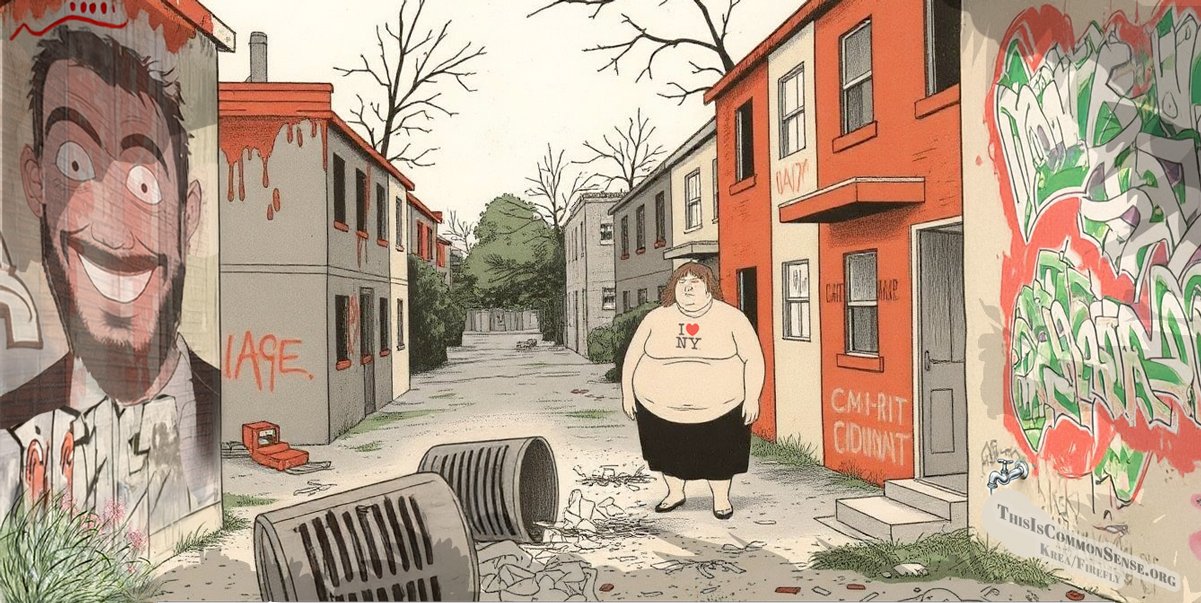
Tired of that rundown shack you live in — for which each month you must cough up the rent money or a mortgage payment? No doubt, you’re chomping at the bit for the chance to move into clean, spectacular, state-of-the-art government housing.

Well, you’re in luck! That is, if you live in New York City.

You see, on Tuesday evening, Sean Hannity informed his Fox News audience that Zohran Mamdani, the Democrats’ mayoral nominee, has a “plan to slowly eliminate home ownership in New York City.”

“If we want to end the housing crisis, the solution has to be moving toward the full decommodification of housing,” Mamdani declares in a 2021 video for the Gravel Institute. “In other words, moving away from the status quo, in which most people access housing by purchasing it on the market.”

He says, “We’ll have to go beyond the market.”

That “has to be” the solution? Why? Because Mamdani’s socialist/communist dogma dictates that government should be the provider of all shelter? The “decommodification” must be “full” and complete. No private home can be permitted to be bought or sold . . . or lived in anymore.

Surely that would solve our problems.

The democratic socialist suggests that the government “gradually buy up housing on the private market and convert it to community ownership,” urging the city to “fully commit to a new era of social housing . . . using our wealth to build beautiful, high-quality social housing projects that offer good homes and strong communities to everyone.”

Yes, taxpayers, get ready to invest in the sparkling future of public housing. Cabrini-Green here we all come! 

This is Common Sense. I’m Paul Jacob.


PDF for printing

Illustration created with Krea and Firefly

See all recent commentary
(simplified and organized)
See recent popular posts

Categories
free trade & free markets national politics & policies

Newsom Defends Gas-Car Ban

Last week, the U.S. Senate voted 51 to 44 to repeal a Biden-era waiver that let California set its own standards for regulating air pollution, stricter than national standards. 

Congress’s action means that California may no longer ban sale of new gas-powered cars by 2035.

With presidential prospects in mind, Governor Gavin Newsom has recently been trying to position himself as one of the less-unhinged Democrats; he has a podcast and talks (!) to conservatives. To keep up this act, he would have had to accept defeat of his autocratic attempt to circumvent markets and outlaw consumer choice in the auto industry.

Instead, Newsom is suing to overturn Congress’s good deed, which he says is all about “making America smoggy again.”

“This is not about electric vehicles,” he says. “This is about polluters being able to pollute more.” More than what? Gas cars aren’t a new thing. And electric cars, for all their novelty and appeal, come with a host of trade-offs from high price to extra weight to battery-charging problems — and EV pollution

Slogans don’t change that.

The tradeoffs hardly make electric cars automatically preferable to consumers free to make up their own minds what kind of car to buy.

When electric cars sell and develop in competition with gas vehicles, fine; no problem. But when government makes gas vehicles disappear by fiat? The salutary incentives provided by direct competition will also disappear. And our roads become filled with ill-fit technology.

The most fundamental issue here is not electric vehicles. And it’s not pollution. 

It’s freedom

To which Governor Newsom, sad to say, remains staunchly opposed.

This is Common Sense. I’m Paul Jacob.


PDF for printing

Illustration created with Krea and Firefly

See all recent commentary
(simplified and organized)
See recent popular posts
Categories
budgets & spending cuts crime and punishment deficits and debt free trade & free markets

The Great Rail Robbery

It’s unclear “what problem Amtrak privatization proposals are intended to solve,” an Amtrak white paper argues.

The authors assert that “giving the United States the passenger rail system it needs will require substantial, assured, multi-year federal funding. . . .”

That flies in the face of experience. But if you are looking for a problem to solve, consider the biggest current story about Amtrak, its thieving employees

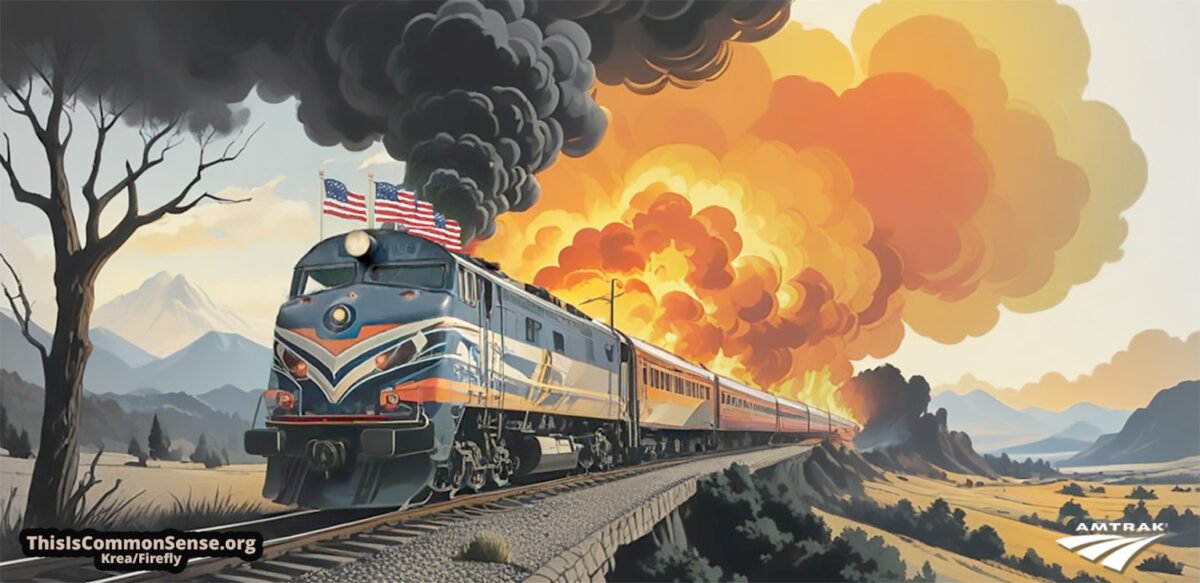
Buckle up, for the rail gets bumpy: Sixty-one of 119 Amtrak employees exposed in 2022 for perpetrating a healthcare scam were kept on the job until a recent internal investigation. 

For several years, these employees had collected kickbacks from doctors willing to file fake medical claims. 

Amtrak now promises that it is (finally) cleaning house.

The organization’s inspector general says that the large number of employees “who cavalierly participated in this scheme to steal Amtrak’s funds suggests not only a serious lapse in basic ethics, but a troubling workforce culture . . . in which blatant criminal behavior was somehow normalized.”

A culture that DOGE has been finding in many governmental endeavors.

What governments lack are decent feedback mechanisms that real markets provide. Amtrak operates in a fake reality of “needs” — those infinite “needs” mentioned in the white paper against privatization.

Businesses succeed; businesses fail — and if the latter, they move aside to let others try to do better. But the white paper treats business failure as proof that government funding is mandatory.

For taxpayers, always on the hook for Amtrak failures, privatization is a solution.

Privatization would also mean less tolerance for keeping thieves on payrolls.

This is Common Sense. I’m Paul Jacob.


PDF for printing

Illustration created with Krea and Firefly

See all recent commentary
(simplified and organized)
See recent popular posts

Categories
free trade & free markets international affairs

Sabotage or Neglect?

“It might not be sabotage,” says Member of Parliament Jonathan Reynolds. “It might be neglect.”

Reynolds serves as the United Kingdom’s Business Secretary. He’s talking about the behavior of Jungye, the Chinese owner of troubled British Steel. 

“The conscious decision not just to not order raw materials but to sell existing supplies of raw materials . . .” Reynolds fulminated, leading him to tell the BBC that “he doesn’t want any future Chinese involvement in British steel making.”

Over the weekend, the UK Government seized British Steel, with Reynolds explaining that “he was forced to seek emergency powers to prevent owners Jingye” from “shutting down its two blast furnaces, which would have ended primary steel production in the UK.”

“They wanted to close down steel production in Britain,” argues Nigel Farage, an MP and leader of Reform UK, “This is a big strategic decision by the CCP.”

Asked if he was accusing the Chinese owners of “lying about the numbers,” the fiery Farage replied, “Yes, absolutely,” adding, “Lying about everything.”

In a single day, Saturday, Parliament passed emergency legislation to facilitate the Business Secretary’s request. 

One opposition MP called it a “botched nationalization,” as the company is still in Chinese hands. It seems more a rescue attempt for Chinese owners who don’t want to be rescued. 

Takeaway? Maybe China isn’t such a great economic partner after all. 

Free countries are reluctantly rediscovering that we still live in a dangerous world, in which we better be able to protect ourselves and not depend on the sworn enemies of freedom. 

This is Common Sense. I’m Paul Jacob. 


PDF for printing

Illustration created with Krea and Firefly

See all recent commentary
(simplified and organized)
See recent popular posts
Categories
free trade & free markets international affairs tax policy

The Tariff King

The fight over the president’s tariffs is taking place in Congress. 

Or is it?

“House Republicans blocked on April 9 an effort by Democrats to force a vote on halting the reciprocal tariffs imposed by President Donald Trump,” explains The Epoch Times, “which are currently paused for three months.”

Let’s make that clearer. These now-infamous/much-debated “reciprocal tariffs” went “into effect” immediately after midnight yesterday. As Republicans “sneakily” worked to change the rules to disallow any congressional move to dissolve the president’s declared emergency — which, by Congress’s own legislation, gives the executive a great deal of latitude to change tariff rates — and Democrats moved to do just that, get rid of the “state of emergency,” President Trump put most of his tariff hikes on hold for three months.

Except for those on China — now in effect, at a rate of 125 percent.

It sure looks like Trump’s main concern is trade relations with China, not Lesotho or Israel or anywhere else. And much can be said about China’s trade policies (try selling American consumer goods in China) or respect for intellectual property. But it is the matter of constitutionality that interests me most.

Whatever the alleged merits of high tariffs, unilateral free trade, or any of these issues, these policies should not be decided by the president; the Constitution gives Congress the responsibility “to lay Taxes, Duties, Imposts and Excises” and “regulate Commerce with foreign Nations.”

By handing the president “emergency” powers to change tariff policy in the first place, Congress has abdicated its role in setting tax policy. Republicans in the House seem gung-ho about Trump’s prerogatives. And Democrats haven’t sought to repeal the International Emergency Economic Powers Act, which gives the president legislative taxing authority.

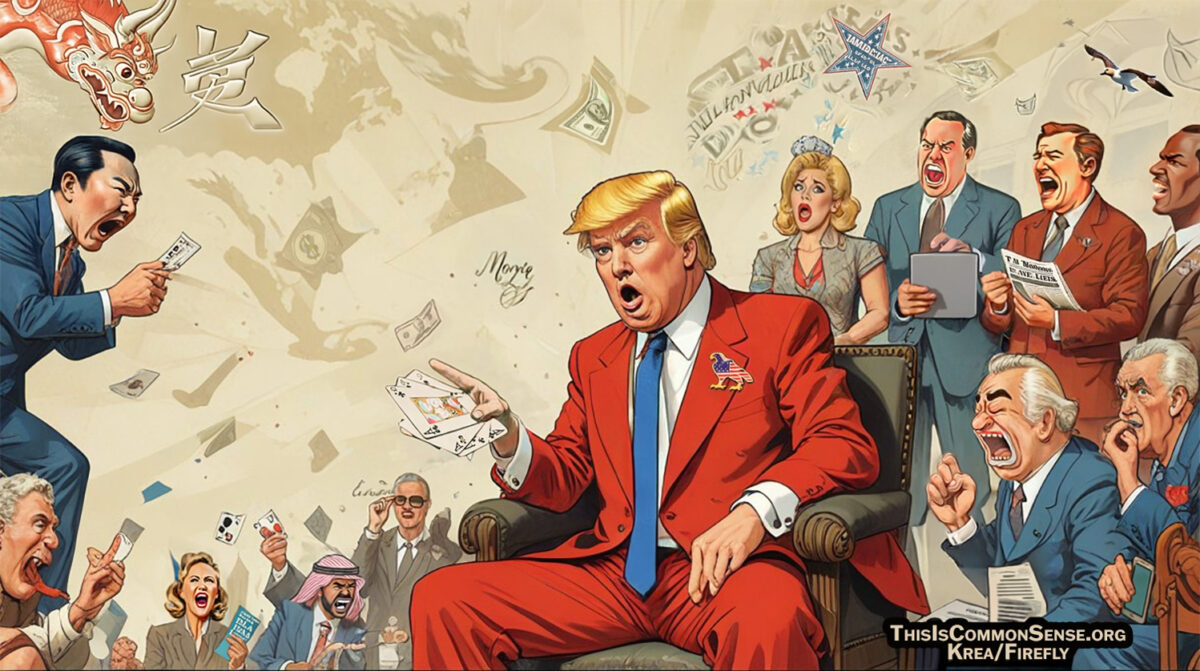
Apparently, Congress wants the president to be king.

This is Common Sense. I’m Paul Jacob.


PDF for printing

Illustration created with Krea and Firefly

See all recent commentary
(simplified and organized)
See recent popular posts
Categories
free trade & free markets national politics & policies regulation

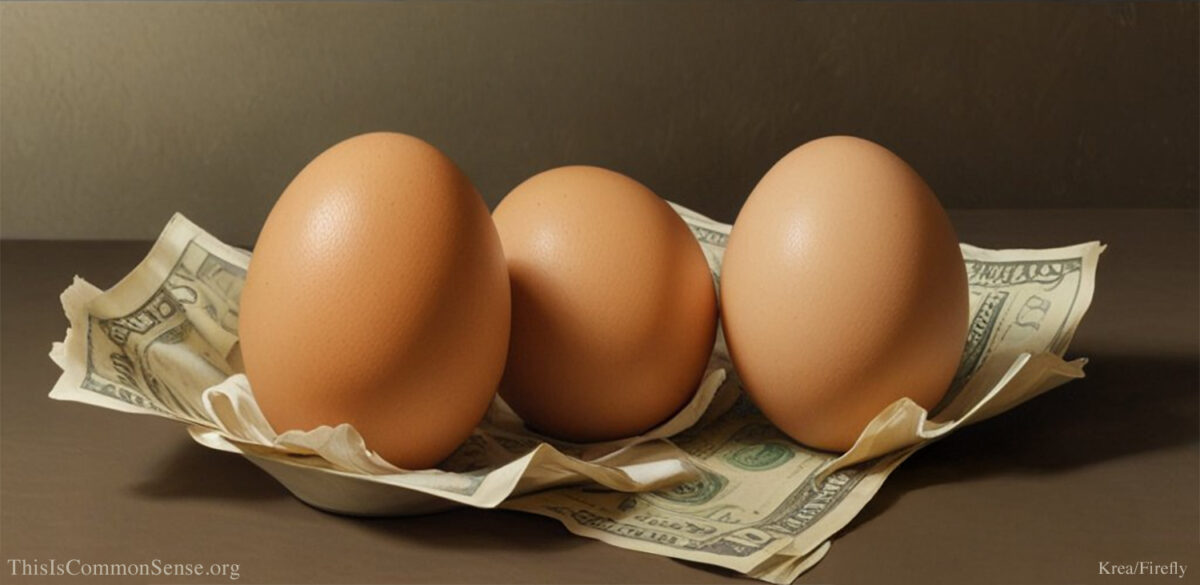
Egg Prices Crisis

“Get used to high egg prices,” The Atlantic blurbed Annie Lowry’s February 27 article, “it was a miracle they were low in the first place.” 

Titled “It’s Weird That Eggs Were Ever Cheap,” it appears to have an agenda: prepare us for yet higher prices, or worse: no eggs.

“Consumers are furious,” explains Ms. Lowry, emphasizing that eggs are a very, very popular food. “Or at least they were, until a highly pathogenic form of bird flu spread to American flocks in 2022. Today, the Department of Agriculture is tracking 36 separate outbreaks across nine states. The disease has led to the death or culling of 27 million laying hens — nearly 10 percent of the nation’s commercial flock — in the past eight weeks alone.”

The culling of flocks — and which birds are selected — could potentially be the most controversial element of the story. Donald Trump, on the campaign trail last year, complained about the cull orders and promised to bring down egg prices fast. 

But his administration’s new five point plan is no quick fix:

  • subsidize on-farm biosecurity upgrades
  • compensation to farmers forced to cull their flocks
  • investing in bird-flu vaccines and therapeutics
  • nixing some regulations
  • increasing foreign imports. 

That comes to $1.5 billion spending increases to lower egg prices!

But it was a jokey comment by USDA Secretary Brooke Rollins that sent Trump critics into paroxysms. “I think the silver lining in all of this is, how do we solve for something like this?” said the Department of Agriculture head. “And people are sort of looking around, thinking, ‘Maybe I could get a chicken in my backyard,’ and it’s awesome.”

Ha ha. 

But taking the joke as a serious proposal? The yolk’s on them.  

This is Common Sense. I’m Paul Jacob.


PDF for printing

Illustration created with Krea and Firefly

See all recent commentary
(simplified and organized)
See recent popular posts
Categories
free trade & free markets international affairs tax policy U.S. Constitution

Legal Trade War

Donald Trump’s imposition and changing of tariffs, all by his lonesome — without Congress — vexes more than a few critics.

His authority to do this, however, derives directly from laws passed by Congress.

The U.S. Constitution gives Congress the power to “lay and collect Taxes, Duties, Imposts and Excises” under Article I, Section 8, which includes tariffs, since they are taxes on imported goods. But Congress has legislated hand-offs to presidents, allowing significant flexibility on tariffs.

The idea seems to be that, as Commander-in-Chief, the president should handle trade because . . . like war, it has to do with foreign countries.

Laws allowing presidential discretion include Section 232 of the Trade Expansion Act, Section 301 of the Trade Act of 1974, and the International Emergency Economic Powers Act of 1977. 

The first says that the president has broad discretion to define as threats to national security all sorts of things and then impose tariffs and other trade restrictions in response.

The 1974 legislation authorizes further along Trump’s favored line, the power to retaliate against “unfair” foreign trade practices.

The IEEPA grants sweeping powers in a declared national emergency.

So if free traders and others are alarmed at Trump’s seemingly dictatorial powers regarding tariffs, it isn’t new. It has been built into the Imperial Presidency. While Congress could take its constitutional authority back, there is certainly no groundswell to do so.

Also not new?

What setting up high tariffs have historically done: elicit similar tariffs in retaliation. 

Yikes: the kind of trade war that made the Great Depression “great.”

This is Common Sense. I’m Paul Jacob.


PDF for printing

Illustration created with Krea and Firefly

See all recent commentary
(simplified and organized)
See recent popular posts