Categories
free trade & free markets general freedom ideological culture national politics & policies

Workers’ Days

Today is Labor Day. But it is worth remembering, “Labor Day” in most other countries is May 1 — also called “International Workers’ Day.”

One thing to be thankful for on our American Labor Day is that we can celebrate labor — perhaps, like me, you will celebrate it by working! — and not have it serve as a celebration of communism.

For yes, it was the socialists and communists who cooked up the original May Day labor celebration, in part to commemorate 1886’s workers’ protest gone horribly wrong, the Haymarket debacle. In the 19th century, much of the impetus for collectivism came from workers themselves, under the impression that they could do better if they rebelled and expropriated the capitalists’ holdings and “worked for themselves.”

For some reason these activists rarely struck out on their own, becoming entrepreneurs.

Nowadays, alas, many top-level entrepreneurs lean toward socialism, and it is the non-government working people who resist more government, and thereby the socialist program. Indeed, the most enthusiastic clade of socialists in America today seem to be in the ranks of the unemployed.*

Oregon was the first of these United States to make an early September celebration an official Labor holiday, in 1887. Seven years later, the federal government got on board. President Grover Cleveland signed it into law soon after the disastrous Pullman strike, to promote a more rule-of-law friendly celebration of workers, and avoid thinking about rioting and murder and police violence.

So, even folks like me, who labor in the vineyards of the people’s politics while still supporting private property and freedom of contract, can celebrate.

Or take a last summer nap.

Without any communists hiding under the hammock.

This is Common Sense. I’m Paul Jacob.


* In less than two centuries, socialism went from proletarian to Lumpenproletarian. Karl Marx? Rolling over in his grave.



PDF for printing


Categories
Accountability folly free trade & free markets general freedom ideological culture media and media people nannyism national politics & policies too much government

Political Regroupings

What’s true for hurricanes is true for the Democratic Party.

After a disaster, it takes a while to regroup, really get a handle on what went wrong. Men and women take some time to absorb new realities.

A few interesting think pieces have come out of the left and center-left, recently, trying to digest what is wrong with the Democrats that they lost so much ground last year — even to someone like Donald Trump. To serious people, the “Russians did it” and “the Deplorables!” are not exactly winners.

Hillary Clinton may be stuck in that mode, but the Democratic Party needn’t be.

The more radical response came from John B. Judis, whose name was big in lefty magazines when I was young. His article “The Socialism America Needs Now,” in his old stomping grounds, The New Republic, tried to make the case for a vague leftism that could be called socialism, if you stretch the term, emphasizing bigger government without seeming too . . . Marxist.

Meanwhile, Mark Lilla has a new book of a somewhat more perceptive nature. Interviewed in Salon, Lilla makes much of the fact that while “smack in the middle” of the GOP’s website “is a list of 11 principles” . . . the Democratic Party could sport “no such statement.” Just a bunch of interest groups.

Interesting. Because, today, I went to GOP.com and saw no such principles list. But I did find a lot of Trump stuff . . . and a bunch of links to “identity groups.”

Talk about regrouping!

This is Common Sense. I’m Paul Jacob.


PDF for printing


Categories
Accountability folly free trade & free markets local leaders nannyism property rights responsibility too much government

How to Ruin a Thoroughfare

Cities require some planning. But the further beyond a certain minimum, the greater the ease with which a central planning authority can be captured — by zealots with more stars in their eyes than brains in their heads.

Portland, Oregon, is a case in point. Students from Portland State University had this brainchild: “Better Naito,” a project to transform SW Naito Parkway to “enhance the lives of pedestrians and bikers along the Waterfront,” as Jessica Miller of Cascade Policy Institute explains. Their notion was to reduce “car capacity from two lanes to one” during the peak season (actually more than half the year), opening up the cordoned-off lane to folks walking and riding bicycles.

I’m not kidding.

Though proponents of the program enthuse about the “positive feedback” from the public, they tend not to deal with complaints from adjacent business owners, who now “see fewer shoppers” and must accommodate “employees who experience longer commutes.”

Opponents are organizing. The Portland Business Alliance promotes its petition with a simple question: “How Exactly Is ‘Better Naito’ Better?

Portland is a prime example of the New Urbanism in action, which seems set on creating cramped places for people to live and discouraging folks from using their own cars. I’ve talked about this before, focusing on planning critic and Cato Senior Fellow Randal O’Toole. He has long been fighting the city planning cranks who appear dubious about their very job: providing roads and sewers and waterways that serve the all a city’s citizens, native, newcomer, and traveler alike.

My advice? Sign that petition, if you vote in Portland.

The rest of us better plan to take a hard look at our city planners.

This is Common Sense. I’m Paul Jacob.


PDF for printing


Categories
Accountability education and schooling free trade & free markets general freedom local leaders national politics & policies responsibility too much government

SEZ Ed

The great barrier to educational advance in our time is the federal government. The second great barrier? Your state government. The third great barrier? Your local government.

Proposals to break up government-subsidized and -enforced school monopolies have ranged from tax credit proposals and voucher programs to charter schools and (the biggest success so far) home schooling.

But it may be time to advance something a little . . . more daring. Break the stranglehold of government on dysfunctional schooling.

How?

Apply the “free trade zone” (FTZ) idea to education.

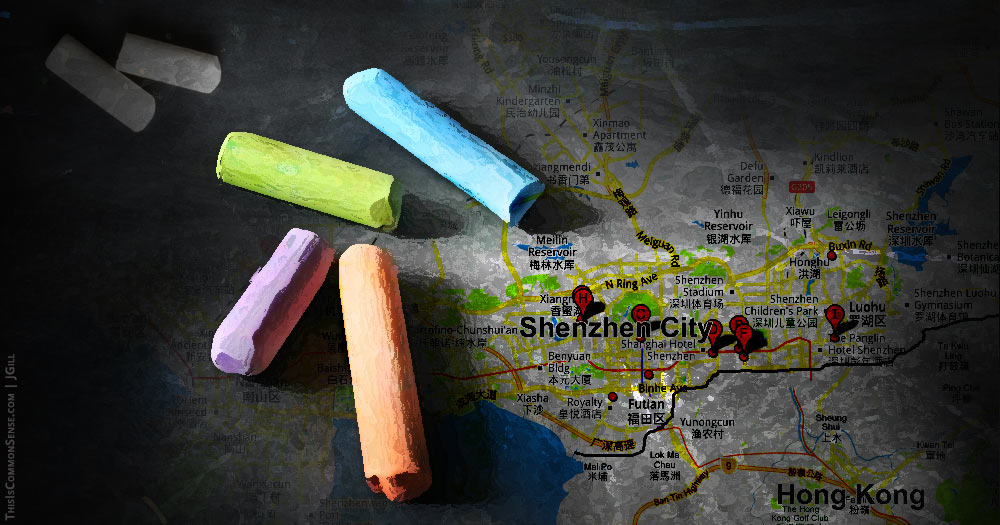
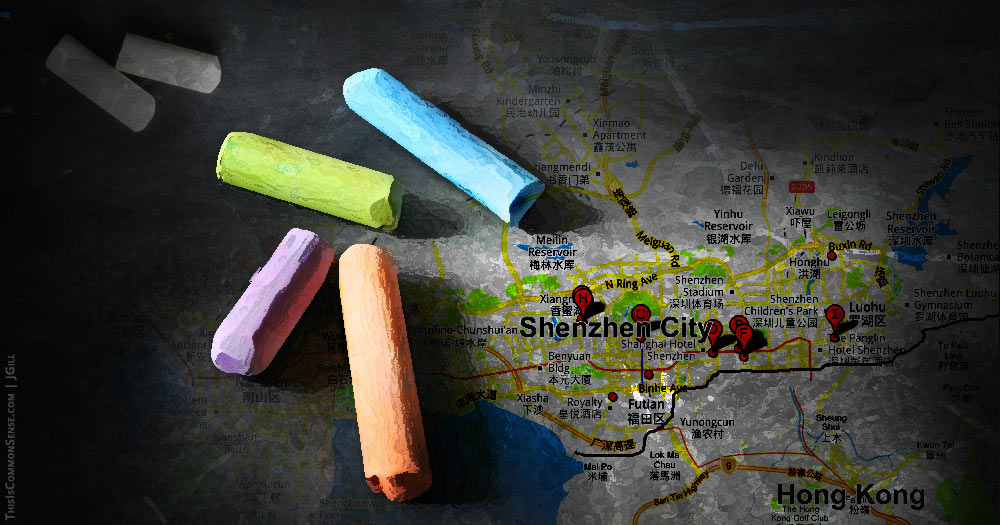
We remember the FTZ proposal because of its rise in popularity amongst academics and policy wonks in the 1980s and 1990s. But the notion is an old one. And in China, where they are called “special economic zones” (SEZs) — and it is this term that is catching on — they have been amazingly successful, the former fishing village of Shenzhen being the most obvious example.

What about America? Take a devastated region, like inner-city Chicago or Detroit,* and simply nullify the regulations and rules. (This probably would require federal enabling legislation on top of state leadership.) With the ensuing freedom and opportunity, entrepreneurs, established businesses and schools, teachers, community groups and activists could cook up new solutions to the oldest schooling problem there is:

actual education.

I’ve heard whispers of this Educational SEZ idea for some time now.

It is time for rational and quite public discussion.

And then the shouting.

This is Common Sense. I’m Paul Jacob.


* Of course, any area could work. The reason to focus on demonstrably failed educational regions is that such areas have lost hope, and thus the politically resistant are likely to give in and allow it.


Printable PDF


Categories
Accountability folly free trade & free markets general freedom ideological culture moral hazard nannyism national politics & policies too much government

ObamaCare’s Casualties

We all know the truth: Partisan “warfare” yields the usual war casualty, truth itself. Now, because of the increasing weight of federal government presence in healthcare markets, partisan untruth incurs medical costs.

Take the goofy Republican plan(s) to “repeal and replace” ObamaCare — pushed with so many half-truths and downright lies that one wonders where to begin. But before die-hard Republicans get too incensed about this judgment, let’s note that the supporters of the mis-named “Affordable Care Act” are no better.

Probably worse.

“Fact-checking,” writes David Harsanyi on the media mishandling of ObamaCare, “has evolved from an occasionally useful medium to an exercise in revisionism and diversion.” Journalists now seem more like spin doctors.

And their patient? The reputation of ObamaCare’s namesake.

One journalist, for example, insists that “Obama didn’t lie or ‘mangle facts’ or mislead anyone,” Harsanyi writes.

What does this journalist claim Obama did in repeatedly promising “if you like your doctor you can keep your doctor”?

Well, “he gave a ‘misguided . . . pledge.’ The word ‘misguided’ intimates that Obama wasn’t misleading anyone on purpose.”

It helps the former president save face if he accidentally got us in this fix. He had the best intentions, you know.

Worse yet, as both sides snipe about these little untruths, they lose sight of the biggest truth, which I wrote about this weekend: that “government-run” means “government-decided,” and that, in turn, means

government deciding matters of your life and your death.

It would be helpful if our leaders took this all a bit more seriously, daring to speak truth . . . to us . . . as well as to themselves and each other.

This is Common Sense. I’m Paul Jacob.


Printable PDF


Categories
Accountability crime and punishment folly free trade & free markets general freedom moral hazard nannyism too much government

Pardon Him, Mr. President

Presidents tend to issue pardons as their tenures draw to a close. But many victims of our government should be pardoned right now. Until the culpable agencies can be dismantled and/or sundry bad laws repealed, a steady flow of presidential pardons would provide the swiftest justice.

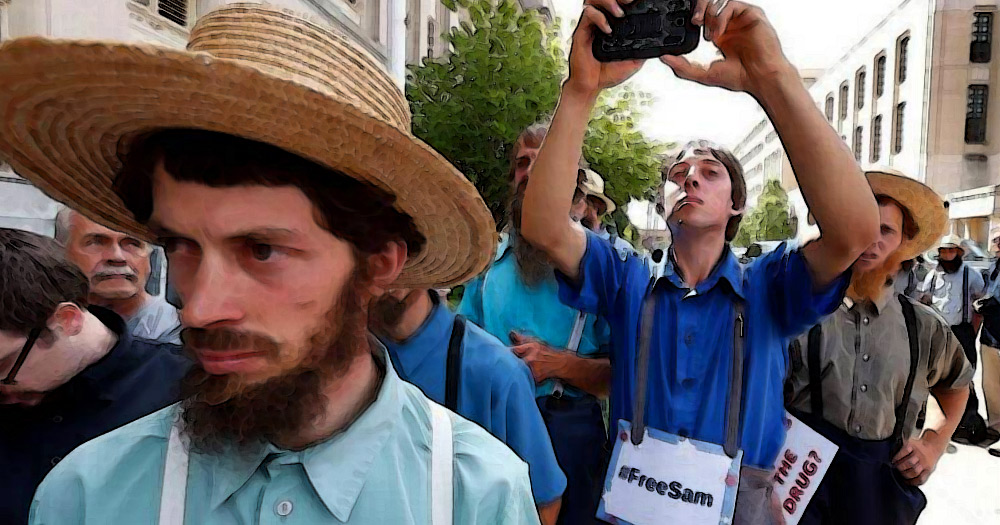
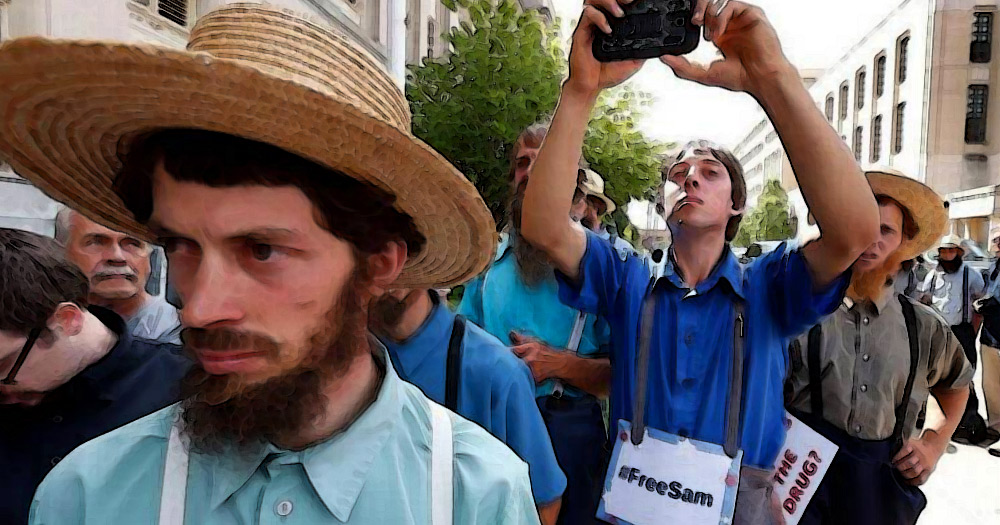
An Amish man in Kentucky, Samuel Girod, has been convicted of selling herbal remedies and such crimes as “failing to appear.” It doesn’t add up to one day in prison, let alone the six years of his sentence.

Girod created a salve from natural ingredients for treating skin disorders. After the state health department demanded that he stopped making certain claims for the product, he changed its name to Healing Chickweed. Told that the word “healing” was prohibited, he changed the name to Original Chickweed. The Food and Drug Administration also hounded him for selling various herbal remedies, which they called “drugs” because of his medical claims.

The man’s worst sin in all this seems to be failure to cooperate with the harassment. When FDA agents tried to examine his “manufacturing process,” he refused entry to his home. When Girod missed a hearing about his case, the government dubbed him a “fugitive.” The local sheriff can’t understand why the government is “victimizing such peaceful and law-abiding citizens.”

Yes, it’s a puzzle. Many historical, political, institutional, ideological and psychological factors would help explain it. More than answers, though, Samuel Girod needs his freedom.

How about it, Mr. President?

This is Common Sense. I’m Paul Jacob.


Printable PDF


Categories
education and schooling free trade & free markets general freedom ideological culture media and media people national politics & policies privacy property rights responsibility too much government U.S. Constitution

According to Economics

“Everywhere you look, economics is despised,” writes Tom Woods in his Tuesday email letter.

You know what isn’t despised? A daily email letter.*

But I digress; back to economics.

“The gimme-free-stuff people hate it because they don’t like being told that there might be undesirable side effects from seizing other people’s things.”

Well, true enough. But turn it around: many people demand free stuff at least in part because they do not understand the bigger picture . . . which Mr. Woods ably provides in his daily podcast and on his weekly Contra Krugman podcast with economist Bob Murphy.

“Politicians hate it, because it imposes logical constraints on what political activity can accomplish.”

True, but, like many in the general public (from whence they come), politicians’ prior lack of economic knowledge also leads, in part, to their hubris.

“Even some folks in the business world hate it, because (1) they’d rather agitate for special privileges than hear the case for free markets, and (2) they’d rather have low interest rates than be warned about the causes of the business cycle.”

Yes, too true. But, again, business people are generally just people, most of whom haven’t even been exposed to something beyond boring and misleading textbook econ, if that. Mr. Woods knows that, since that’s what his mission is, exposing more folks to ideas beyond what he calls “the index card of allowable opinion.”

Well, I’m all about allowing the unallowable — if it’s right!

This is Common Sense. I’m Paul Jacob.


* Historian Woods is now doing what I’ve been doing since 1999, providing a daily common-sense thought that is short and easy-to-read and dropped into your email box every weekday. Mine goes up online at ThisIsCommonSense.com; I don’t see his on his website . . . but I do see a lot of books and podcasts!


Printable PDF


Categories
Accountability folly free trade & free markets general freedom moral hazard nannyism national politics & policies responsibility too much government U.S. Constitution

According to Logic

“Polling on every possible option confounds all logic,” or so writes Tiana Lowe about ObamaCare and its repeal, at National Review.

“Americans overwhelmingly dislike the individual mandate and prioritize lowering the cost of health care over all other health problems in the country,” Ms. Lowe elaborates, “but a majority of Americans do not want to roll back Obamacare’s guaranteed coverage of pre-existing conditions. Just a quarter of Americans are happy with Obamacare as-is, but a mere 12 percent favor the now-dead Senate health-care bill.”

Perceptively, she notes that the situation is as bad or worse for politicians, who want to “have their cake and eat it too.” The problem with politicians is pretty obvious: they lie because they are afraid of confronting the truth.

But it seems to me, on the evidence Lowe herself provides, Americans mostly have it right.

We want to lower costs of health care. Well, that should be the first priority. It should’ve been government’s highest priority, since government caused our predicament.

A huge supermajority is unhappy with ObamaCare, which makes sense. The Affordable Care Act is not affordable. But the Senate health-care bill was worse than ObamaCare, so folks were right to oppose it.

The only real issue? Many Americans don’t seem to understand that the “pre-existing coverage” mandate necessarily raises costs. Forcing insurance companies to pay for non-eventualities* requires them to pass those extras onto customers in general. Here is where leadership would be of help.

And where it has failed, our President most of all.

Lowe criticizes Trump for not pushing the Senate’s bill more effectively. I’m thankful for that.

This is Common Sense. I’m Paul Jacob.


* Insurers wager against unpredictable future illness or accident, not the sucker’s bet of paying for an existing predicament.


Printable PDF


Categories
Accountability crime and punishment folly free trade & free markets local leaders nannyism national politics & policies too much government

Messed Up State

After lamenting Illinois’s fiscal decline into America’s “most messed up” state yesterday, lo and behold, today we find the State of Nevada messed up, too.

On marijuana.*

Question 2, passed by voters last November, legalized recreational use of what we used to call “weed” by those 21 years of age and older. The measure also stipulated that — for the first 18 months only — alcohol distributers are solely permitted to carry marijuana from wholesalers to the new retail dispensaries.

Why provide a monopoly to alcohol distributors?

“[T]he state’s powerful alcohol lobby worried that legalized weed would cut into liquor store sales,” explained the Los Angeles Times. Proponents added that provision as “a concession.”

But still not a single alcohol distributor has been approved to distribute marijuana.

So, with pot now flying off the shelves of Nevada’s 47 marijuana dispensaries, there is no lawful way to replenish those shelves. Nevada’s DOT (which requested from the governor an official declaration of a state of emergency) warns: “this nascent industry could grind to a halt.”

That’s not just a bummer for pot smokers; it has the governor and the DOT in a state, too. “A 10% tax on sales of recreational pot — along with a 15% tax on growers — is expected to generate tens of millions of dollars a year for schools and the state’s general fund reserves,” notes the Times.

Legalize marijuana, sure. And realize that the politics of it can be more toxic than the drug itself.

This is Common Sense. I’m Paul Jacob.


*Is that why the slogan “A World Within, A State Apart” is now featured on the state’s website?


Printable PDF


Categories
free trade & free markets general freedom nannyism national politics & policies property rights responsibility

Mr. Jetson, Call Your Office

Increasingly, people are worrying about robots.

They’re taking our jobs, we’re told. Soon, all we’ll have left are robots. Massive unemployment!

While some find this scenario utopia and bliss,* it sounds dreadful to me.

Silver-plated lining is, I doubt it. This kind of worry about technology making laborers obsolete has been around at least since Ned Ludd, who broke factory machinery to save jobs back in 1779.

How is this next wave of technology any different? If technology destroyed jobs on net, we’d all be unemployed now.

Economist Deirdre McCloskey takes this historical view. Writing in Reason, she says today’s high-tech “innovations have actually raised real wages, correctly measured, because a human supplied with a better tool can produce more outputs. And the point of an economy is production for consumption, not protection of existing jobs.”

We’ve always been losing jobs. And new ones are created. Our worry shouldn’t be the jobs lost to new tech, but the lack of new ones coming into existence because of the oldest tech of all: government.

But you know what industry is least resistant to jobs vanishing to robots? Government itself. Sure, some reductions in public sector jobs have occurred, mainly as a result of decreased revenues in the recent “recession.” The job losses there have not been filled by robots, though. Permanent employee positions have been destroyed . . . too frequently replaced by outsourced consultants.

Could robots replace large swaths of public employees? Maybe that wouldn’t be good, actually. The worst-case scenario might be this: government becoming efficient.

We don’t want bad and efficient government.

Kludge may be better.

This is Common Sense. I’m Paul Jacob.


* Some even see in this development a sort-of science-fiction rationale for making socialism at long last plausible — robots as the new slave class; all the humans in the leisure class! Yeah, right.


Printable PDF