
Categories
Accountability folly free trade & free markets moral hazard national politics & policies porkbarrel politics

Super-Subsidize Me

“In American political discourse, those on the side of the sick, poor, and underprivileged tend to favor more federal government intervention,” writes Heartland Institute policy advisor David D’Amato at The Hill. He explains that many “see government as . . . rather like a charity . . .”

Sure, government can act charitably, except that its money isn’t given voluntarily, and the recipients are often not so needy.

Earlier this month, the stock price of electric car company Tesla, Inc. rose high enough to overshadow General Motors. That’s great news for billionaire Elon Musk, Tesla’s CEO. But an Investor’s Business Daily editorial noted, “[T]he company is heavily reliant on taxpayer support.”

Who benefits (in addition to Musk)? “A study published by the National Bureau of Economic Research found that 90% of electric car subsidies go to the top 20% of households,” the editorial stated. IBD added that it was “a lot of welfare-for-the-rich for very little environmental benefit.”

In addition to funding advanced technology, American taxpayers have spent $6.7 billion over the last few decades to subsidize stadiums for wealthy sports team owners. The latest? In Clark County, Nevada, taxpayers forked over $750 million ($354 for every resident) to bribe — er, bring — the Oakland Raiders to Las Vegas.

The ridiculous Minnesota legislation to feed $5 million in state funds to start two shrimp farms almost seems reasonable in comparison. Almost.

“Maybe growing shrimp in Minnesota is a great idea,” admits John Hinderaker of the Center of the American Experiment. “If so, the owners should do what other small businessmen do: either find investors, or get a bank loan.”

Government’s crony capitalism taxes the poor to give to the rich.

This is Common Sense. I’m Paul Jacob.


Printable PDF


Categories
Accountability moral hazard nannyism national politics & policies responsibility term limits too much government

Ida-Heave-Ho

“Is there any chance the vetoes can be overridden?” asked a reader in response to yesterday’s commentary on Idaho Gov. Butch Otter’s veto of two pieces of common-sense legislation.

It’s a good question, because the bill reforming civil asset forfeiture and the bill easing regulations that block employment in cosmetology both passed by wide margins. Unfortunately, the answer is NO. 

According to the Gem State’s constitution, the governor has ten days after legislation reaches his desk or, at the session’s end, ten days after the legislature adjourns to decide whether to sign or veto a bill. If he vetoes after adjournment, it cannot be overridden — unless the legislature comes back into session.*

Only the governor can call legislators back into session, which is exceedingly unlikely if a new session would entail a veto override.

It turns out that Idaho is one of only six states where legislators are unable after adjournment to override a veto. Still, the problem’s simple enough to solve: legislators could propose a constitutional amendment changing the process.

Senator Steve Vick did just that, in 2014 and again in 2016. But though his amendment garnered the two-thirds majority needed in the Senate, the House never took it up. He plans to reintroduce it next year.

There’s another constitutional change needed: term limits for the governor. A 2015 poll found a whopping 84 percent of Idahoans favor such limits. Yet, legislators may be squeamish, knowing that those same voters (by that same margin) also want legislators term-limited.

Sometimes it is amazing,” Idaho Politics Weekly’s Bob Bernick explained, “how elected officials can just ignore the will of voters.”

This is Common Sense. I’m Paul Jacob.

 

* Gov. Otter also vetoed the legislature’s repeal of the state sales tax on groceries, the timing of which legislators are challenging in court.


Printable PDF


Categories
Accountability general freedom local leaders moral hazard national politics & policies property rights responsibility too much government U.S. Constitution

A Bad Haircut

Eric Boehm over at Reason excoriated Idaho Gov. Butch Otter for giving libertarians “the double bird salute.” Boehm wondered if the governor, in vetoing two bills earlier this month, had been merely “trying to make libertarians mad.”

That’s not exactly fair.

The two blocked bills, one reforming unjust civil asset forfeiture and the other easing pernicious regulation of cosmetology, did certainly appeal to libertarians. But they also appealed to conservatives and liberals. And both passed with bipartisan support.

House Bill 139 would have reduced the number of training hours for a cosmetology license and allowed folks to fix hair at special events like weddings without a license, etc. “The fact that many lawmakers, Republicans and Democrats, liberals, moderates and conservatives, are working together to advance legislation in the interest of economic opportunity and prosperity,” argued Wayne Hoffman of the Idaho Freedom Foundation, “is a thing of beauty for a profession that’s all about beauty.”

But beauty is in the eye of the beholder. Those who run cosmetology schools probably like more mandated hours and folks in the profession might wish for less competition. Governor Otter said as much, complaining that HB 139 was written “without input from interested parties or due regard for the health, safety and welfare of the public.”

Just how dangerous is a bad haircut?

Putting safety in context, Hoffman explained that the current mandated hours of training for a cosmetology license “is more than is required to become an EMT in Idaho.”

Gov. Otter vetoed HB 202, the civil asset forfeiture reform, at the behest of “law enforcement” — the very interested parties who gain from taking people’s stuff without bothering to charge or convict them of a crime.

That makes no sense . . . according to Common Sense. I’m Paul Jacob.


Printable PDF


Categories
Accountability general freedom moral hazard responsibility term limits

Trouble Over Term Limits

Americans are hardly alone in strongly supporting term limits. All over the world, people who care about limited government also care about limited terms for officials wielding government power.

Especially the people of Paraguay, who remember all too well the dictatorship of General Alfredo Stroessner. He seized power in 1954, securing it with fraudulent elections and the arrest, torture and murder of thousands of political opponents, until being removed by a 1989 military coup.

After that ugly 35-year episode, strict term limits were established in the Paraguayan Constitution: one five-year term for the president — no re-election possible.

Fast-forward to the last few weeks, when the country’s Senate violated its own rules by holding a secret session — of which even the head of the Senate was unaware — and approved a constitutional amendment allowing re-election of the president. Under Paraguay’s constitution, amendments can be enacted by the House and Senate — without a vote of the people.

Before the House could vote, however, protests erupted against the deeply unpopular term limits change. (A recent poll showed 77 percent of Paraguayans opposed the amendment.) Angry crowds battled police on the streets of Asunción, the capital, after trashing and setting fires in the National Congress building. Meanwhile, police killed one demonstrator when they attacked the Liberal Party headquarters, prompting Pope Francis to urge dialogue in this 90 percent Roman Catholic country.

Yesterday, President Horacio Cartes announced he would not seek re-election in 2018, whether the constitution is changed or not.

The head of Cartes’s Colorado Party, which was associated with Stroessner decades ago, told Reuters that any change is now “practically impossible.”

This is Common Sense. I’m Paul Jacob.


Printable PDF


Categories
Accountability government transparency incumbents local leaders national politics & policies responsibility

A+ in Arrogance

The folks in Congress represent ‘We, the People’ . . . well, theoretically, at least. They’re supposed to work for us. We are their bosses. We pay their salary.

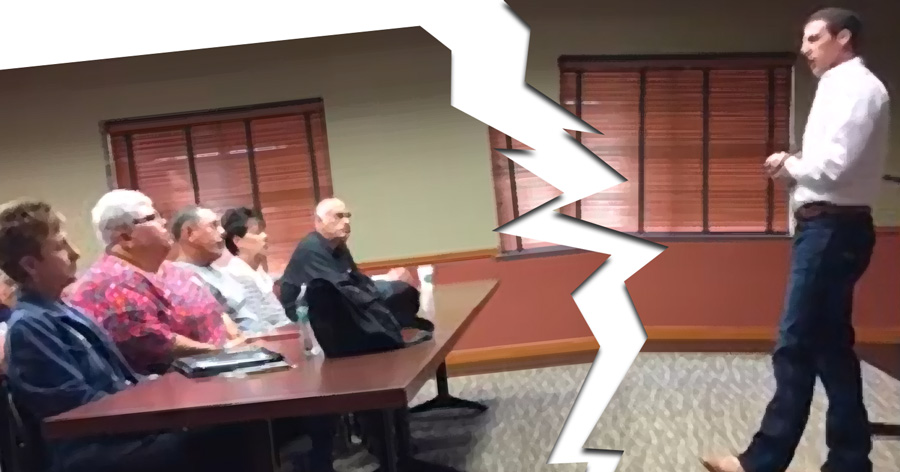
But not U.S. Rep. Markwayne Mullin, the third-term Republican from the rural Second District of Oklahoma. At two recent town hall meetings, the former professional mixed martial arts fighter responded to comments that the people pay his salary and health insurance with a sort of verbal karate-chop.*

“You say you pay for me to do this. Bullcrap,” he aggressively retorted. “I pay for myself. I paid enough taxes before I got there and continue to through my company to pay my own salary. This is a service. No one here pays me to go.”

Mullin’s taxpayer-funded PR professional, Amy Lawrence, was nice enough to explain the prickly, arrogant ranting of her boss, noting that, “Like all business owners, Congressman Mullin pays his taxes, which contribute to congressional salaries.”

Which means — yes sirree! — that of course his constituents pay his salary, when they also “contribute” their taxes. The fact that Rep. Mullin pays taxes, too, doesn’t change that fact.

And, though Mullin claims being a member of Congress is not how he makes “his living,” he does, nonetheless, deposit into his bank account a not inconsequential $174,000 a year in congressional salary.

Moreover, as a member of Congress, Mullin also gets to flout the Obamacare law with a special health insurance deal.

A town hall set for Tahlequah was canceled . . . for security reasons.

This is Common Sense. I’m Paul Jacob.

 

* His comments in Jay, Oklahoma, are available here; his Okemah comments, here. An entire hour video of his Okemah remarks are here (the portion about his pay begins at 24:48).


Printable PDF

Rep. Markwayne Mullin, Oklahoma, salary, congressional, pay, representation, representative


Categories
Accountability incumbents term limits

Calling Hatch Home

Back in 2012, U.S. Senator Orrin Hatch pledged that, if elected, his current six-year term would be his last. On Election Day 2018, Hatch will be 84 years old — and have spent more than half his life in Washington.

Still, Utah’s senior senator just announced he intends to run for re-election for an eighth term.

Why? Our newly-elected president, Hatch told a Salt Lake City TV station, “is all over me to run again.” And so is the leadership in the Republican Senate — and even in the House. Or so he says.

But what about the people of Utah? A poll this past January found that 78 percent of Utahans “definitely” or “probably” did not want Hatch to seek re-election — with 58 percent in the “definitely” camp.

“Hatch’s bid for an eighth term is an endorsement of term limits,” argued Richard Davis, a political science professor at Brigham Young University, yesterday in the Deseret News.

“For many years, I opposed term limits because I felt legislators needed the time to gain knowledge and handle the long-standing bureaucracy and the power of interest groups,” Davis wrote. “However, I have concluded that such knowledge can be gained relatively quickly and would become more effective if there were not highly senior politicians, like Hatch, who dominate a legislative body for many years.”

In 1976, Hatch challenged an incumbent with the line: “What do you call a Senator who’s served in office for 18 years? You call him home.”

Today, having spent over 40 years in power, Hatch only wants more . . . and calls Washington home.

This is Common Sense. I’m Paul Jacob.


Printable PDF


Categories
Accountability crime and punishment moral hazard nannyism national politics & policies property rights too much government

What’s Being Forfeited

What do you call those who prey upon the innocent, illegally snatching their money?

Thieves? Muggers? The Mob?

Government.

Last month, the Treasury Inspector General for Tax Administration (TIGTA) issued a report on the Internal Revenue Service’s use of civil asset forfeiture against Americans accused — well, not accused . . . more like suspected . . . well, not actually suspected of doing anything wrong, but willy-nilly deemed guilty without charge, judge, jury or conviction — of “structuring.” That’s depositing less than $10,000 in cash into a bank to avoid all the paperwork demanded by the United States Congress at that amount.

Congress passed the Bank Secrecy Act, making structuring illegal, supposedly to trip up drug traffickers and money-launderers. But that is obviously a ruse, as the TIGTA report makes abundantly clear. The IRS is simply snatching money — they won’t tell us how much — right out of individuals’ and businesses’ bank accounts.

Pity the cash-oriented business that doesn’t accumulate at least $10,000 to deposit.

The TIGTA report highlights that an incredible 91 percent of the time, the IRS acted “against individuals and businesses whose income was legally obtained,” and whom the IRS did not suspect of criminal activity. Also, through the IRS’s process of thievery “the rights of some individuals and businesses were compromised.”

Why is the IRS using the law to pilfer from the innocent, instead of the guilty?

As I explained Sunday at Townhall.com, it is easier and more profitable to make “quick hits” against innocent businesses rather than devious criminals.

When those responsible for protecting the innocent from criminals, instead, illegally twist the law to victimize the innocent, it’s called tyranny. And what is forfeited is much more valuable than mere money.

This is Common Sense. I’m Paul Jacob.


Printable PDF


Categories
Accountability folly incumbents national politics & policies term limits

Authority and Accountability

Roll, Founding Fathers, roll over. The situation with Congress is grave.

You designed three branches of government, each to check the others’ power. The first branch, and the most essential, is Congress. It not only controls the purse strings, but also the power to declare war.

But today’s Congress cannot even muster the courage to regulate the use of military force through legislation such as the War Powers Act or by passing an AUMF — an Authorization for the Use of Military Force.*

Yesterday on NBC’s Meet the Press, host Chuck Todd raised the issue of whether a new AUMF was necessary after the attack on Syria, especially for any further action. And would Congress dare to debate a new AUMF? 

“I don’t think anybody wants a vote on this,” remarked Danielle Pletka, a defense and foreign policy expert at the American Enterprise Institute. She pointed out that any action would put Congress in line for blame should problems arise. “Look, the problem for Congress is . . . There’s no percentage for them.”

“If Congress doesn’t exert its authority here,” Todd offered, “then they’re ceding it.”

“Yes,” agreed National Review Editor Rich Lowry. “This is something the founders never counted on, that you’d have one branch of government that didn’t want to protect its prerogatives because too much accountability would be involved.”

Must the very foundation of our Republic always take a backseat to the personal political interests of professional politicians? Career congressmen disdain leadership, preferring to lead the cheers when things go well and criticize when they don’t.

Another important reason for term limits.

This is Common Sense. I’m Paul Jacob. 


*The AUMF passed after 9/11 gave the president authority to go after Osama Bin Laden and al-Qaeda. It has become a catch-all authorization due to congressional fear of being held accountable for authorizing — or not — any new use of military force. Instead, Congress has simply pretended that President Obama’s regime-change military intervention in Libya and the military actions against the Islamic State fit under the post-9/11 AUMF. 


Printable PDF


Illustration includes photo by Petras Gagilas on Flickr


Categories
Accountability folly ideological culture media and media people

Gender Offender

Tuesday, April 4, was Equal Pay Day. It’s the day 20 percent into the year some use to mark the supposed fact that women earn 79.6 cents for every dollar earned by a man.

This “gender pay gap” is concocted by taking the median pay for all men working 35 hours a week or more and comparing it to the median pay for all women working 35 hours or more — without regard to the actual number of hours worked* or occupation chosen.

It’s a ridiculously phony statistic. I know that; you probably do, too. But does Sen. Elizabeth Warren?

“The game is rigged against women and families, and it has to stop,” the Massachusetts Senator proclaimed on last year’s Equal Pay Day. “It is 2016, not 1916, and it’s long past time to eliminate gender discrimination in the workplace.”

Gender discrimination. That’s bad, no? Sen. Warren fervently argued that the “gap” is the result of evil, insidious sexism.

The money-grubbing misogynists perpetrating this crime against women certainly deserve to be called out and held accountable!

Thank goodness, the folks over at The Washington Free Beacon did just that. Using public records, the Free Beacon found a U.S. Senator exacerbating the problem with an even bigger gender pay gap — women making a mere 71 cents on every man’s dollar. This Senator has hired five men at six-figure salaries, who make more than all the women employees, with only one woman besting the $100,000 mark.

That Senator? Elizabeth Warren.

On Tuesday, each of her 15 female Democratic colleagues took to the Senate floor to jaw about “equal pay.” But not Warren.**

Not even a tweet.

This is Common Sense. I’m Paul Jacob.
 

* Men, on average, work more. The “gap” also ignores work history, and similar factors that have more direct bearing on the choices of women than the discrimination of employers.

** It is worth noting that Snopes.com “debunked” the Free Beacon’s charge using the same arguments economists and others have used to debunk the “gender wage gap” itself — without acknowledging the ominous parallels.


Printable PDF


Categories
Accountability crime and punishment government transparency responsibility

Ferguson Finally Wins

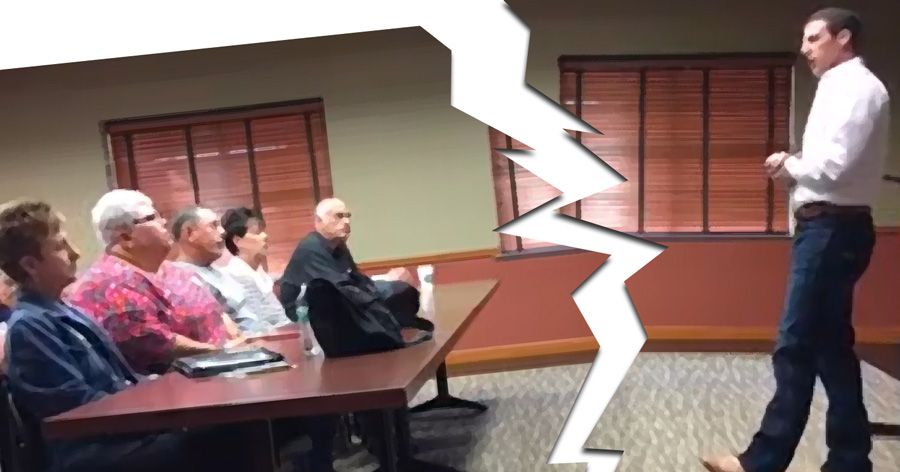
Yesterday, on the 49th anniversary of Martin Luther King’s assassination,* voters in Ferguson, Missouri, passed a charter amendment requiring police to wear body cameras while on duty. The measure also provides the public access to that footage, along with reasonable rules about privacy.

In August 2014, Ferguson came to the nation’s attention — and the world’s — when a black resident was shot and killed by a white policeman. In the aftermath, the nation witnessed a militarized police response to senseless riots that destroyed 17 local businesses.

People there and across the country jumped to fact-free conclusions about who was at fault: the deceased Michael Brown or the policeman, Officer Darren Wilson.

“If there’s one thing that I think everybody in Ferguson would agree on, it’s that we’d like to have a video of what happened on Canfield Drive back in August of 2014,” remarked ballot measure proponent Nick Kasoff.** “If we had that, Ferguson wouldn’t be a hashtag. It would be just another quiet suburb of St. Louis.”

Police began wearing body cameras after the Michael Brown shooting, and the consent decree the city reached with the Department of Justice set some useful parameters. But the rules in the just-enacted charter amendment go much further to guarantee the public access to the video.

Not to mention that just this week, Attorney General Jeff Sessions announced a review of all such consent decrees nationwide. Without yesterday’s victory at the ballot box, the police cams policy might simply be abandoned.

Not now. The voters have spoken, 71 to 29 percent.

Spurred by Ferguson, there’s been a ton of talk about reforming criminal justice in recent years. But I like action a whole lot better.

This is Common Sense. I’m Paul Jacob.
 

* Yesterday also reminds me of 1984, George Orwell’s classic dystopian novel, because the book’s protagonist Winston Smith begins his diary on April 4, 1984.

It’s my favorite book, and has enjoyed quite a surge in sales since last November’s election. Yesterday, the movie was shown in nearly 200 theaters in the U.S., the U.K., Canada, Croatia and Sweden.  

** Nick Kasoff led the six-resident committee that drafted and petitioned the measure onto the city ballot, with assistance from Liberty Initiative Fund (LIFe). Regular readers may remember that LIFe is where I have my day job — and that without contributions like yours, fewer successful measures like this Ferguson body camera initiative get off the ground.


More on the issue

Townhall: “Finding Ferguson

Townhall: “First Step for Ferguson

USA Today: “Ferguson residents push for body cameras

Townhall: “The Citizens Are In Session


Printable PDF