Categories
crime and punishment First Amendment rights general freedom moral hazard property rights too much government

A Cakewalk Case?

The Justices seem split — on the “gay cake” case.

A Christian baker had no trouble selling a gay couple a pre-made cake, out of his showcase, but balked at selling a custom wedding cake of any kind. According to NPR’s Nina Totenberg, the couple understood that requesting a “gay” themed cake would go too far. But the baker’s refusal to decorate any wedding cake seemed unacceptable.

In Colorado, where the cake didn’t get made, there is a public accommodations law that says businesses must serve all customers regardless of race, religion, or sexual orientation. So Colorado went after the baker, the baker hired a lawyer, and Masterpiece Cakeshop v. Colorado Civil Rights Commission was heard by the Supreme Court this week.

Commonly billed as a conflict between First Amendment-guaranteed religious freedom* and the civil rights of citizens as defined and protected by a state law, it almost defies easy solution.

One could argue that the First Amendment right to freely associate (including the right not to associate) should extend to business. But that goes against legislation built up since the 1964 Civil Rights Act, which in many places ended an often violent racial segregation** no one wants back. However, a custom-made wedding cake is also expressive and therefore speech.

One could decide for Colorado on federalist grounds. And the late Justice Antonin Scalia, Ms. Totenberg tells us, argued that a general law not directed at a religion does not allow a specifically religious defense.

But one defense of the baker may work. The Colorado Civil Rights Commission has not applied its rulings equally. It sided with non-Christian bakers who refused to make cakes for Christians requesting Bible-verse cakes.

And that “takes the cake.”

This is Common Sense. I’m Paul Jacob


* In this regard, Justice Kennedy stated from the bench that it seemed to him “that the state in its position here has been neither tolerant nor respectful of Mr. Phillips’ religious beliefs.” Kennedy will likely be the swing vote.

** No small amount of this violence, segregation and discrimination was coerced by state laws in defiance of the Fourteenth Amendment and the Bill of Rights.


PDF for printing


Categories
folly free trade & free markets general freedom moral hazard nannyism national politics & policies property rights responsibility too much government

What’s the Big Deal?

Big news: in a $69 billion deal, CVS Health Corp. plans to buy Aetna Inc. The AP story by James F. Peltz says the move “would shake up healthcare industry.”

Should we worry?

Because corporations aren’t cancerous, growth and consolidation are not to be feared as such.

But speaking of cancerous growths . . . the federal government will not likely take the news of the merger with the tranquility of a Taoist sage.

Over at Forbes, last month, Bruce Japsen predicted that the deal wouldn’t go through, arguing that “a full-blown merger of the healthcare giants would be complicated and unlikely given recent antitrust scrutiny in the sector and given that the drugstore chain is already going into business with an Aetna rival, Anthem.”

Government antitrust to the rescue?

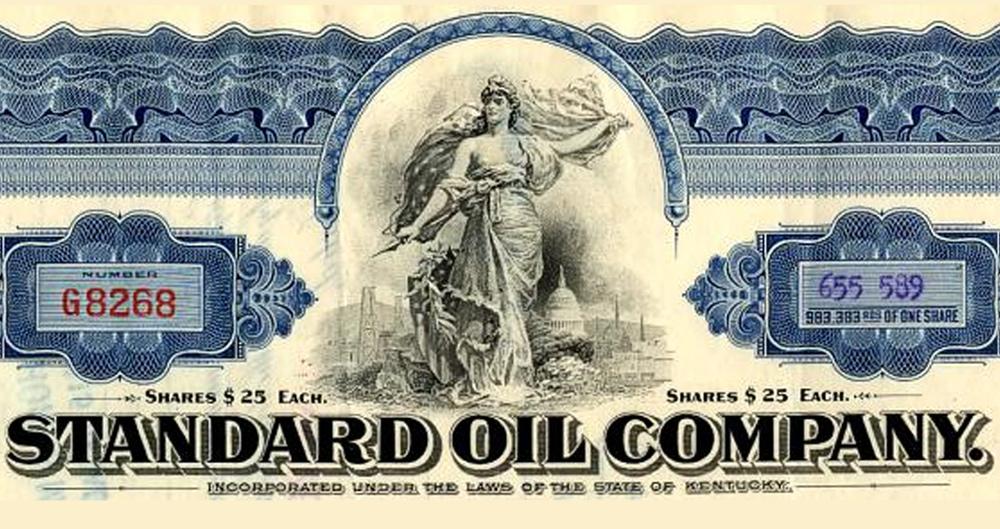
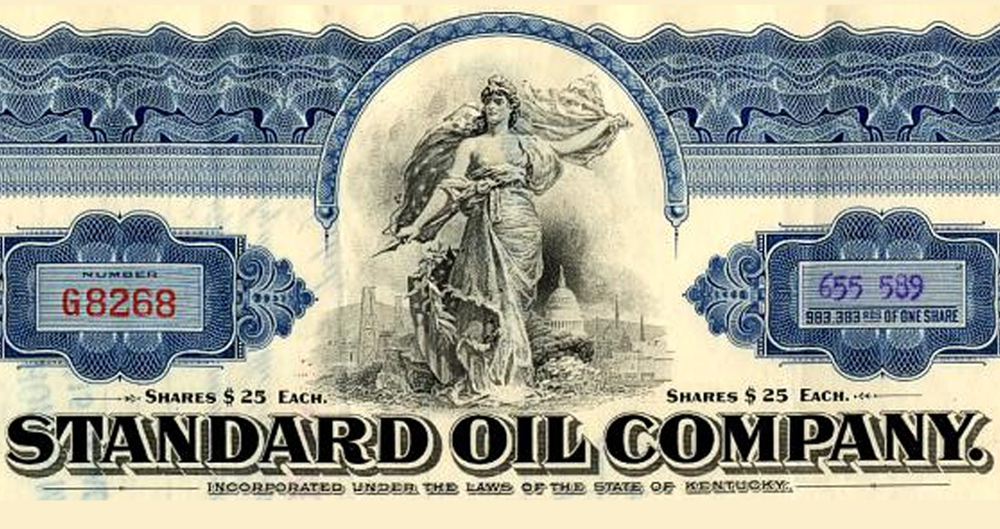
No. We may have been schooled to believe that antitrust “protects competition,” but it has always limited competition, instead. Antitrust was always about fear — of bigness. It was definitely not designed to help consumers. The classic case is the infamous break-up of Standard Oil, which produced more fuel while lowering prices — even as it grew humongous.* Standard Oil grew because it satisfied consumer demand. Which is what businesses are for.

And yet government broke it to pieces, using antitrust rationales, for the benefit of some producers, some businesses.

Think of it as crony capitalism in action.

So, my remaining question runs like this: is the CVS/Aetna merger a response to pure market demand, or as a way to wiggle around insane state and federal regulations?

Health care in America is sick. The merger is not likely the cure. But it would not kill the patient.

We have government for that.

This is Common Sense. I’m Paul Jacob.


* For background, consult the studies of economist Dominick T. Armentano.


PDF for printing


Categories
folly government transparency media and media people national politics & policies too much government U.S. Constitution

Peel Back the Onion

Yesterday, an Onion title caught my attention: “Hooded Members of Congress Drown Another Love Child in the Potomac to Prevent Affair from Getting Out.” This is not funny because it is true, but because it is so close to the truth. Too close for comfort.

A similar story, the day before, sported a title so sublime that you do not really need to read further: “Al Franken Tearfully Announces Intention To Step Down From Role As Harasser Of Women.” The week before that, another satire gave us this extravaganza: “Paul Ryan Announces New Congress Sexual Harassment Training Will Create Safe Work Atmosphere, Plausible Deniability.

But sex scandals are easy. If The Onion were seriously in the satire biz, the farcical-on-the-surface nonsense of the Consumer Financial Protection Bureau brouhaha that I wrote about on Tuesday would get incisive treatment as well.

My advice to Onion writers? Don’t go halfway into the problem, like David A. Graham does in The Atlantic: “The Fight Over the CFPB Reveals the Broken State of American Politics.” Sure, that’s true. But concluding that “neither party sees the political process as effective in resolving these basic issues is worrying” hardly goes far enough, and the next line — “the fact that they might both be right is worse still” — shies from the full extent of the predicament.

The Constitution was designed to avoid problems like the CFPB nonsense. Start there. Something like this comes close: “Politicians Shocked, Shocked to Discover That an Un-Constitutional, Partisan Bureau Becomes Subject to Constitutional Dispute Along Partisan Lines.”

I have confidence that, if The Onion went there, it’d be funnier.

Even without a sex angle.

This is Common Sense. I’m Paul Jacob.


PDF for printing


Categories
Accountability free trade & free markets insider corruption moral hazard national politics & policies porkbarrel politics responsibility too much government

Cry Me an Amazon

My idea of a “free market” is not our politicians’. Their idea is to give away free stuff to their new and old business buddies . . . at everyone else’s expense.

That sort of “crony capitalism” has been writ large per Amazon’s search for a location for a second headquarters (HQ2). The world’s biggest retailer — valued higher on the market than all other major retailers combined — announced it would spend $5 billion and bestow 50,000 new jobs on HQ2’s locale. Subsequently, 238 cities, states and provinces in the U.S., Canada, and Mexico offered to take from their current citizenry to give unfairly to Amazon.

Chicago’s proposal would allow Amazon to keep the income taxes their employees pay. Seriously. This “personal income-tax diversion” would add up to over a billion dollars for the company.

New Jersey state government offered a cool $7 billion in subsidies should Amazon choose to locate in Newark.

Seattle Times columnist Danny Westneat described this sorry spectacle of subsidy as not so much a corporate “takeover” as a government “surrender.”

The most egregious example, though, has to be Fresno, California, where the city “promises to funnel 85 percent of all taxes and fees generated by Amazon into a special fund. . . . overseen by a board, half made up of Amazon officers . . . supposed to spend the money on housing, roads and parks in and around Amazon.”

“Rather than the money disappearing into a civic black hole,” explained Larry Westurland, Fresno’s economic development director, “Amazon would have a say on where it would go.”

Selling out the taxpayers? Moolah in the millions. Referring to a normal city budget as a “black hole”? Priceless.

This is Common Sense. I’m Paul Jacob.


PDF for printing


Categories
Accountability general freedom government transparency ideological culture insider corruption moral hazard nannyism national politics & policies responsibility too much government U.S. Constitution

Invulnerable Government

As of this week, there are two heads of the Consumer Financial Protection Bureau.

Two claimants to the throne, so to speak.

The bureau’s previous director, Richard Cordray, resigned last week, and as he left he appointed a deputy director, Leandra English. Ms. English sent out a nice Thanksgiving email, billing herself as “Acting Director.”

Meanwhile, in advance of Cordray’s exit, President Trump appointed Mick Mulvaney to fill the role. Mulvaney showed up at work yesterday and took possession of the director’s office. He ordered a hiring freeze . . . and brought donuts.

It gets juicier. English has filed suit against the president and his appointee, claiming to be, herself, the directorship’s rightful heir. She cites the enabling legislation, which allowed for deputization by the director. And she cites her commitment to the agency’s mission, of which Mulvaney and Trump have none.

Republicans generally regard the agency as having gone rogue.

And the squabble over the directorship sure seems to validate that charge.

The legality? Presumably, the legislation that established the agency — which deliberately insulated the CFPB from oversight by funding it from the Federal Reserve — does not void an established law, the Vacancies Act, which does allows the president to fill vacated posts.

Sen. Elizabeth Warren has taken up English’s side in the dispute, because she believes in the agency’s mission.

Now, I get it: to make government as impregnable as a high mountain fortress is an idea that many folks flirt with, from time to time. But the results are always the same: government secure from democratic checks and constitutional balance.

Come on, Democrats! Give democracy a chance.

This is Common Sense. I’m Paul Jacob.


PDF for printing


Categories
Accountability crime and punishment insider corruption media and media people moral hazard national politics & policies responsibility too much government

Congress Bites Taxpayers

Is it even humanly possible to be sleazier and more disgusting than the Harvey Weinsteins of Hollywood?

Sadly, and clearly . . . yes. There is the U.S. Congress.

In 2011, after 175 years in operation, the House page program — whereby young people came to work and learn in the capitol — was shut down. Why? For Weinsteinian reasons, because pages were being sexually propositioned and harassed.*

Now, once again, Congress leads the way . . . downward . . . not only into a culture rife with sexual coercion, but also into one with few options for victims and plenty of protections for victimizers. Members of Congress have given more effort to keep complaints quiet and protect misbehavior than to stop misbehaving.

And there’s more . . .

“Between 1997 and 2014,” the Washington Post reports, “the U.S. Treasury has paid $15.2 million in 235 awards and settlements for Capitol Hill workplace violations, according to the congressional Office of Compliance.” That’s shelling out nearly $1 million a year, though the information doesn’t detail how many complaints were for sexual misconduct.

It is despicable when individuals or companies pay hush money to silence accusers, hiding the criminal sexual behavior of powerful men. But, for goodness sake, at least we don’t have to pay for it!

Conversely, Congress’s sexual abuse slush fund comes from you and me, taxpayers.  

Regarding the swirling allegations against Alabama GOP Senate candidate Roy Moore, Sen. Cory Gardner (R-Colo.) argued that Moore “does not meet the ethical and moral requirements of the United States Senate.”

Well, then, he will fit right in.

This is Common Sense. I’m Paul Jacob.


* The program ended several years after the Mark Foley scandal — and there were others. The official rationale? A tight budget (stop laughing) and technology, which purportedly made the work pages were doing unnecessary. But note that the Senate continues its use of pages.


PDF for printing


Categories
Accountability education and schooling folly general freedom moral hazard nannyism national politics & policies responsibility too much government

Eternally Postponing Responsibility

There is a common sense element to economics. We ignore it at our peril. So let’s take a cue from the Democratic Party’s current and de facto leader, Bernie Sanders.

Turn to Denmark for a model.

The Nordic state has what Bernie wants: higher education “free for all.” But there are . . . costs involved.

It turns out that “some Danes, especially older citizens already in the labor force,” explains Business Insider, “say the extra freedom can eliminate a crucial sense of urgency for 20-somethings to become adults. The country now deals with ‘eternity students’ — people who stick around at college for six years or more [not to mention advanced degree work] without any plans of graduating, solely because they don’t have any financial incentive to leave.”

Hardly a shock. Young Danes would not be the first to see in college life what satirist Tom Lehrer identified as the prolongation of “adolescence beyond all previous limits.”

Give young people an incentive to suck up resources year after year, and some will certainly take you up on that.

It’s hard to counter, too. The Danish “eternity student” problem remains even after taking policy steps to discourage it.

Business Insider ends its report by quoting an expert who insists that “motivation to succeed in your studies is in no way linked to whether you’re paying for your tuition or not.”

Yup, that’s what proponents of “free” education keep telling us. But there is more at play here.

Responsibility is on the line. Adulthood is about responsibility. Free tuition is about postponing responsibility.

Do we really want to go further in that direction?

This is Common Sense. I’m Paul Jacob.


PDF for printing


Categories
crime and punishment general freedom ideological culture moral hazard nannyism national politics & policies Second Amendment rights too much government U.S. Constitution

The Good vs. Freedom?

Politicians regularly argue for new “gun control” laws, even while ignoring the execution and enforcement of laws already on the books.

Exhibit A, as I wrote at Townhall.com yesterday, is the failure of the military to provide the FBI with the information that would have blocked the Sutherland Springs church shooter from getting his guns.

Meanwhile, in the Washington Post’s Outlook section, Elizabeth Bruenig takes a more . . . philosophical perspective. She contends that “Western thought moved from seeing freedom as a means to an end — what philosophers call ‘the good’ — to seeing freedom as an end in itself. Thanks to our liberal heritage, we regard freedom as an intrinsic good, perhaps the highest one of all. The more of it we can get, the better off we are. Right?”

Right!

But Bruenig’s answer isn’t in the affirmative.

Instead, she points to Vatican elections during the Middle Ages in which “canon law enshrined the right of eligible individuals to cast their votes. But their choices . . . could simply be overturned [by church officials]. Freedom mattered, in other words, but was always subordinate to the highest good, which could sometimes place limits on liberty.”

Ah, the Post advises us to embrace the Middle Ages . . . just so our freedom doesn’t get out-of-hand.

Bruenig also thinks that “we largely lack the framework to ask what gun ownership is for. . . .”

Huh? The Second Amendment answers that gun ownership is “necessary to the security of a free state.”

In terms of both scholarship and insight, the Founders’ constitutionalism far outshines the Post’s shiny new neo-medievalism.

This is Common Sense. I’m Paul Jacob.


PDF for printing


Categories
general freedom ideological culture media and media people moral hazard national politics & policies too much government

To Anachronism in Heaven

Symbols sure seem important in politics and government. I love the Statue of Liberty. Others may cherish the Lincoln Memorial and Mount Rushmore more. I’ve even heard people wax poetic on the images we find on our coinage.

But what about “The Star-Spangled Banner”? The lyrics are not general at all, but instead an exultation about a moment of victory in a very bad war that our union almost lost way back in 1814.

The melody leaps all over the place, making it difficult to sing.

But its words are what stick in some peoples’ craws.

No, not the florid, old-fashioned* phrasings. What bothers some people is all the violence . . . and a mention of the word “slave.”

Now, if the song were about slavery, or even mentioned the enslaved ancestors of current Americans, I’d side with the California branch of the NAACP, which wants to junk the old warhorse.

But the offending line does not seem to be what these activists say it is, one of “the most racist, pro-slavery, anti-black songs in the American lexicon.” The words refer, instead, to British sailors and soldiers:

No refuge could save the hireling and slave

From the terror of flight, or the gloom of the grave. . . .

The phrase “hirelings and slaves” means “mercenaries and conscripts.” Wednesday, on Fox, Tucker Carlson grilled a cheerful advocate of the NAACP position, whose main point was “unity.” He doesn’t think the anthem promotes “unity.”

But what would? Doesn’t taking on the anthem constitute just another divisive salvo in the culture wars?

We’ve bigger problems.

This is Common Sense. I’m Paul Jacob.


* The tune is by John Stafford Smith, who wrote it for the Anacreontic Society. Because the original version is usually called “To Anacreon in Heaven,” and because the phrasings of Francis Scott Key’s originally titled “In Defense of Fort McHenry” are “old-fashioned” and arguably “anachronistic,” we have the title of this Common Sense outing.


PDF for printing


Categories
Accountability crime and punishment general freedom moral hazard nannyism national politics & policies Second Amendment rights too much government U.S. Constitution

Government Control

When do we say enough is enough?” asked California Senator Kamala Harris after Devon Patrick Kelley murdered 26 churchgoing Texans in cold blood, last Sunday.

“The terrifying fact is that no one is safe so long as Congress chooses to do absolutely nothing in the face of this epidemic,” argued Connecticut Senator Chris Murphy.

President Trump, on the other hand, not only pointed out that criminals will violate gun laws to acquire weapons, he speculated that had Stephen Willeford, the former National Rifle Association instructor, not come upon the scene, armed, “instead of having 26 dead, you would have had hundreds more dead.”

After previous mass shootings, Democrats pushed legislation that, even if it had been the law, would not have prevented that particular killer from obtaining the weapons. This time it’s different, since the killer should not, by current law, have been allowed to purchase the firearms he used. Kelley’s conviction for domestic violence, while serving in the Air Force, disqualified him.*

But the Air Force did not do its job, failing to report his record to the FBI. So the background check found . . . nothing.

The Pentagon has known for at least two decades about failures to give military criminal history information to the FBI,” the Associated Press informed, “including the type of information the Air Force didn’t report about the Texas church gunman.  . . .”

The Obama administration, through its command of the military, failed to execute the law designed to keep guns out of dangerous hands. And it sounds like this failure dates back to Bush and Clinton days.

Where does the buck stop?

We don’t need gun control; we need government control.

This is Common Sense. I’m Paul Jacob.


* Note also that the murderer, as Ben Shapiro recounted at National Review: “escaped from a mental institution in 2012, threatened his superior officers and attempted to smuggle weapons onto a military base to carry out those threats, cracked the skull of his infant stepson, beat his wife, abused a dog.”


PDF for printing