Whoever undertakes to rule the kingdom and to shape it according to his whim — I foresee that he will fail to reach his goal. That is all.
The kingdom is a living being. It cannot be constructed, in truth! He who tries to manipulate it will spoil it, he who tries to put it under his power will lose it.
Therefore: Some creatures go out in front, others follow, some have warm breath, others cold, some are strong, some weak, some attain abundance, other succumb.
The wise man will accordingly forswear excess, he will avoid arrogance and not overreach.
On Feb. 15, 1898, the USS Maine, a battleship, exploded in the Cuba’s Havana harbor, killing 260 American sailors. An official U.S. Naval Court of Inquiry ruled in March 1898 that the ship was blown up by a mine, without directly blaming Spain. Nonetheless, Congress declared war and, within three months, the U.S. had decisively defeated Spanish forces. On December 12, 1898, the Treaty of Paris was signed between the U.S. and Spain, granting the United States its first overseas empire with the ceding of such former Spanish possessions as Puerto Rico, Guam, and the Philippines.
In 1976, a team of American naval investigators concluded that the Maine explosion was likely caused by a fire that ignited its ammunition stocks, not by a Spanish mine or act of sabotage.
Without a special kicker, why should police bother to do their jobs?
The subject is civil asset forfeiture. This legal procedure makes it easy to take property from criminals. For the War on Drugs, civil forfeiture was so loosened as to allow police to take property from anyone . . . without due process.
No wonder citizens in a number of states have demanded limits upon the practice.
But since police departments get to keep the loot they “interdict” — spending it on better cars, weapons, office furniture, plush employee lounges, drug-sniffing dogs — law enforcement personnel aren’t exactly always on board with citizens’ concerns.
Jarrod Bruder, South Carolina Sheriff’s Association executive director, defends the sorry practice, as quoted by Greenville News. He asks what, sans civil forfeiture’s profit motive, could be a cop’s “incentive to go out and make a special effort?”
Dollars to donuts, this will not play well with those who distrust the police already.
And note the biggest incentive police face: to take property away from innocent people. Easier pickin’s. No surprise, then, that in “19 percent of cases, there is no criminal arrest.”*
Meanwhile, Senator Ted Cruz (R-Tex.) has suggested that President Trump take the confiscated billions from the accounts of drug kingpin El Chapo to “build the Wall.”
Genius?
Regardless, this mere suggestion could add incentives for pro-Wall Republicans to go soft on civil asset forfeiture.
There is no point in being secure within our borders if we are not secure within our homes and wallets and cars and . . . any other place jeopardized by this police-state practice.
This is Common Sense. I’m Paul Jacob.
*Blacks represent 71 percent of cases, while only 28 percent of the state population.
On Feb. 14, 278 A.D., Valentine, a priest in Rome during the reign of Emperor Claudius II, was executed. In order to facilitate the raising of an army for his unpopular military campaigns, the emperor outlawed all marriages and engagements. Valentine defied Claudius’s order and continued to perform marriages for young lovers in secret. Once discovered, Valentine was arrested and condemned by the Prefect of Rome to be beaten to death with clubs and to have his head cut off. The sentence was carried out on February 14. Valentine was named a saint by the Roman Catholic Church after his death.
Though February 14th is celebrated as “St. Valentine’s Day,” in today’s vernacular, the 14th of February, 278, was, ahem, “not his day.”
“VOTE LIKE YOU,” read the Election Day sign from last November, pictured above Dan Balz’s Sunday Washington Postcolumn about identity politics.
The implication is clear: one should vote for the candidate with the same skin color, of the same race as your own.
Uh, really?
We do want our elected officials to be “like us.” But in terms of values. Not pigment.
Race is completely meaningless in judging a prospective candidate. I want my candidate to think like me, not win the Paul Jacob Lookalike Contest.
On the other hand, those seeking a new cultural revolution — like the Chinese Cultural Revolution, but based on racial and gender and sexual orientation grievances — think it’s fine to push race-based voting, so long as you aren’t pushing whites and . . . it helps Democrats.
The latest real “culprit” in Hillary Clinton’s 2016 defeat appears to be a lack of enthusiasm and turnout among black voters. Black turnout dropped eight percent from 2012, when President Obama was running for re-election as the first black president, to 2016, when Hillary Clinton, a white woman, was the Democratic standard-bearer.
Balz looked at the 2018 gubernatorial races in Florida and Georgia, where Democrats Andrew Gillum and Stacey Abrams, respectively, both African American, lost but performed far better than Democrats have in recent years in those states in such races.
“Would a white candidate have done better?” he asked.
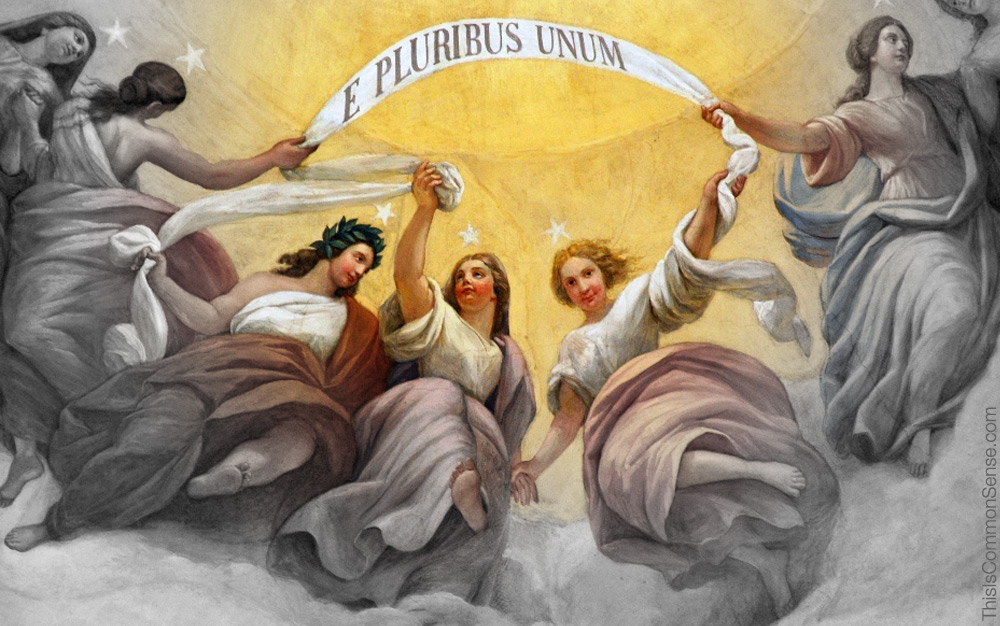
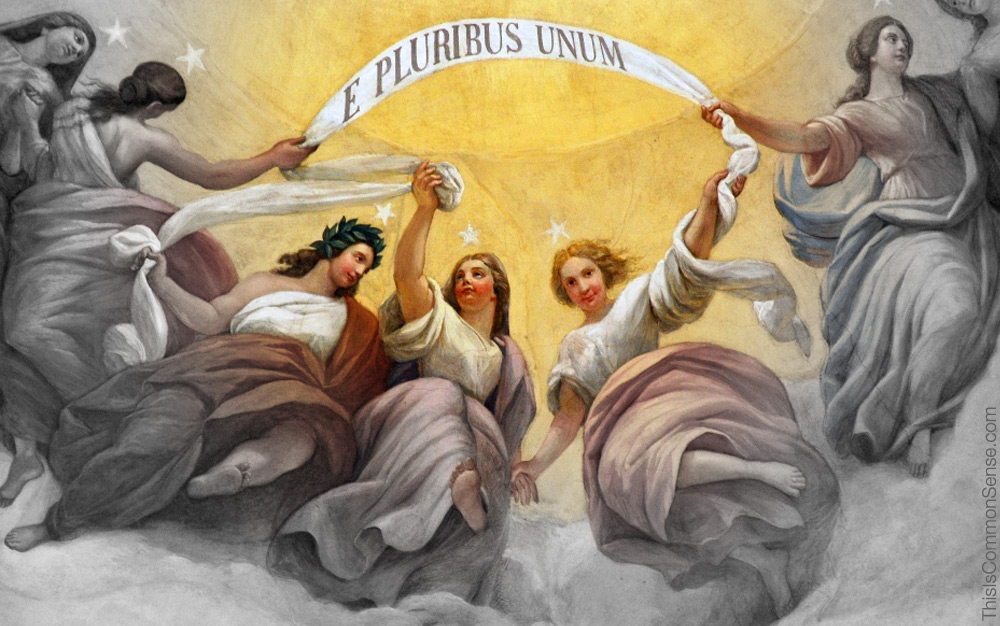
Perhaps not. But the whole approach stinks. Identity politics is openly the politics of division. Surely “e pluribus unum” must not be replaced with “ex uno plures.”
This is Common Sense. I’m Paul Jacob.
N.B. For the Latin, which is not straightforward, see Google Translate.
One who would influence the masses must have recourse to the art of advertisement. The clamour of puffery is to-day requisite even for an intellectual movement.
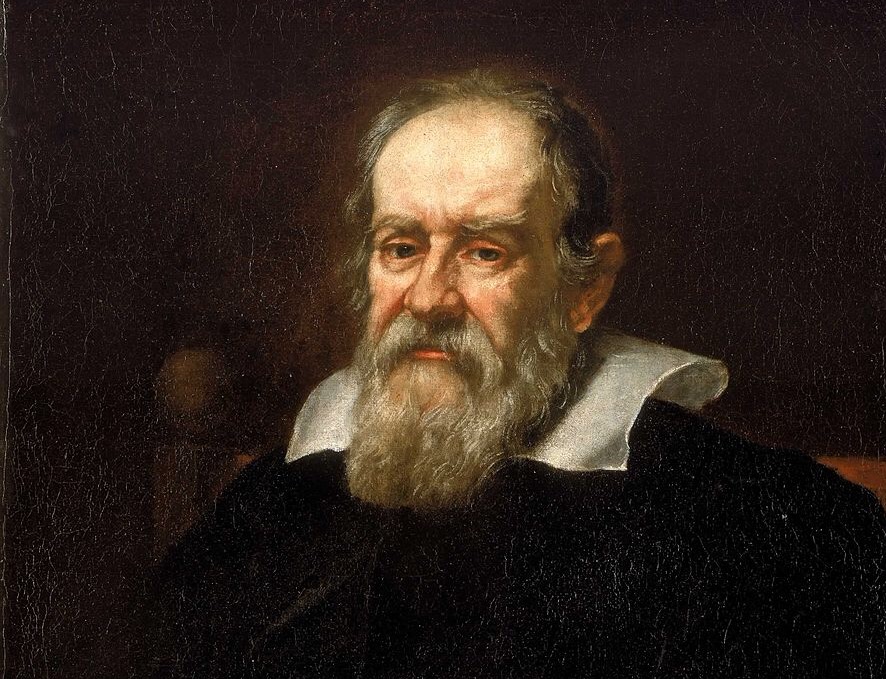
On Feb. 13, 1633, Italian philosopher, astronomer and mathematician Galileo Galilei arrived in Rome to face charges of heresy for advocating Polish astronomer Nicolaus Copernicus’s theory that the Earth revolves around the Sun. In April, Galileo pled guilty before the Roman Inquisition in exchange for a lighter sentence. Put under house arrest indefinitely by Pope Urban VIII, Galileo spent the rest of his life at his villa in Arcetri, near Florence, dying in 1642.
“One of the great myths in official Washington,” writes pollster and pundit Scott Rasmussen at Ballotpedia.org, “is that voters hate Congress but love their own representative.”
Working for term limits, boy have I heard this assertion a lot.
Oh, voters do hate Congress; this we know. Less than one in eight Americans approve of the job being done (or not) by Congress, according to a brand newThe Economist/YouGov poll.
The remaining question, however, is whether we really like our own congressperson. The correct answer appears to be: Not so much.
A recent ScottRasmussen.com national survey, conducted Feb. 1-2, 2019, found that less than one in four voters, only 23 percent, “actually think their own representative is the best person for the job.” A far larger percentage, 38 percent, believe “others in the District are more qualified.”
It is certainly possible, of course, that folks could think there is someone better than their sitting congressperson and, nonetheless, still love their Rep.
Though, doesn’t “love” seem like way too strong a word?
The notion that we are consumed with amorous urges toward our own federal representative is evidenced only by the high re-election rate for incumbent congressmen. But those rates are more likely the result of the powerful advantages of incumbency.
Not gleeful adoration of “our” career politicians.
There is one way to test our level of devotion: Let us vote on term limits and see what happens.
It would lead to a new question: Where did our love go?
[A]ll Value resides in the mind. But people have come to regard Value as an absolute Quality inherent in Things: and the confusion of ideas is the source of bad reasoning. Value is founded on estimation.
Henry Dunning Macleod, Elements of Economics, Volume 1 (1881), p. 118. Relating the leading principles of Étienne Bonnot de Condillac’s Le commerce et le gouvernement, considérés relativement l’un à l’autre: Ouvrage élémentaire, Macleod explains the main idea of modern economics, mutual benefit in exchange: